Category: Farm Animals

EU subsidies and aquaculture – the weakened link.

Photo – Artur Rydzewsk

EU subsidies and aquaculture – the weakened link

13 September 2021

Opinion

Over 1 billion fish are being raised on fish farms in the EU at any one time. These are undomesticated species quite new to being captive in production systems, which are often highly intensive and are themselves new technologies undergoing development. 

While European aquaculture doesn’t have the transparency mechanisms to measure or report welfare conditions and outcomes, mortality rates of 15% to 20% are reported in cage farming in the mediterranean and in third countries that report mortality figures, and the Commission found very limited uptake of the effective stunning technologies commercially available for several fish species.

EU aquaculture and animal welfare policies are pursuing fish welfare objectives, while a new regime governing EU financial support to fisheries and aquaculture has weakened the links between EU investment and EU policy objectives. 

National aquaculture strategies and the implementation of EU financial support mechanisms need a smooth and coordinated implementation by Member States for subsidies to operate in support of policy initiatives and realise improvements in fish welfare. 

When compared to terrestrial farm animals, scientists, producers, policy makers and animal advocates alike were late to understanding fishes’ needs and applying animal welfare approaches to fish in aquaculture. Some milestones were:

  • 2005 the Council of Europe adopted guidelines for fish welfare during farming
  • 2008 EFSA scientific opinion on fish sentience
  • 2009 EFSA scientific opinion on welfare during husbandry and slaughter
  • 2009 The OIE adopted standards for fish welfare during transport and at slaughter
  • 2020 EU Platform on Animal Welfare adopts fish welfare guidelines

With the many EU and external research projects in the intervening years, we now have a wealth of knowledge for practical implementation. Initiatives from sector organisationsthird party certifiers, and policymakers seek to apply knowledge to provide a better life and death for farmed fish, improve product quality and resource efficiency, and better meet consumers’ expectations.

In May 2021 the European Commission published its new aquaculture strategy until 2030 which includes fish welfare priorities including developing best practice codes and guidelines, setting validated indicators, providing training, and supporting a transition to lower-trophic species. 

The Farm to Fork Strategy previously committed the EU’s aquaculture policy to being a part of its animal welfare initiatives, and in August 2021 the inception impact assessment of the revision of all EU farm animal welfare legislation included specific options for fish welfare.

The European Maritime, Fisheries and Aquaculture Fund (EMFAF) 2021 – 2027 regulation seeks to simplify Member States’ administration and programming. One approach to simplification is to only reference high level Union priorities such as sustainable economies and communities, and to maintain weaker links between national and EU aquaculture policies. Opening up the fund for investments to meet legal obligations has also weakened the incentive to invest it now in policy areas marked as important next priorities. This is where the link between the spending of EU funds and the delivery of EU policy is weakened. 

Maintained from the previous regulation is the requirement that financial support is consistent with Member States’ own multiannual national strategic plans, and those plans must themselves use the EU’s aquaculture strategy as their basis. However there is no real requirement that national priorities contribute to specific EU objectives, or even that Member States update their national plans now. Then the EU’s aquaculture strategy is referenced as a more complete set of policy priorities, but there is less impetus for Member States to direct financial support for the delivery of EU policy priorities.

Aquaculture is not an area of exclusive EU competence and Member States operate national policies and licensing regimes specific to their varied geographical and market contexts. Member States should take the fish welfare objectives from the EU’s aquaculture strategy as priorities in their national strategies in support of the moves to advance animal welfare in aquaculture.

The Commission funds aquaculture research and facilitates Member States’ coordination of aquaculture policies, and it needs to do more to provide substance and cohesion for its aquaculture priorities. It needs to look beyond the small portion of the EMFAF that it controls directly and to activate mechanisms in other policy areas including animal welfare. 

Animal welfare policy could consolidate knowledge into implementable indicators and guidelines through a dedicated Animal Welfare Reference CentreThe Commission could mandate EFSA to provide the necessary knowledge, since its last opinion on fish welfare was more than ten years ago. 

The alternative path is that intensive aquaculture systems continue to evolve without accounting for the needs of the animals. Aquaculture takes the production and reputational losses that are seen with intensive terrestrial agriculture systems, and the fish continue to suffer unnecessarily.

The EU has identified the right fish welfare policy priorities, and they are aligned with voluntary measures being taken widely in the market. The new EU financial support regime (EMFAF) has weakened the explicit links between EU financial support and specific EU aquaculture policy objectives, but Member States can take up the common EU priorities and the Commission should use other mechanisms to provide the necessary resources and cohesion.

 Op-ed by Douglas Waley, Fish Welfare Programme Leader at Eurogroup for Animals

Regards Mark

EU: Farm to Fork Strategy own initiative report: vote in committees moving closer to systemic change and higher animal welfare.

Farm to Fork Strategy own initiative report: vote in committees moving closer to systemic change and higher animal welfare

10 September 2021

News

On Friday 10th September the AGRI and ENVI committees adopted with a large majority (94 in favour, 20 against and 10 abstensions) the draft report on a Farm to Fork Strategy for a fair, healthy and environmentally friendly food system.

Thanks to the 48 compromise amendments passed, the Farm to Fork own initiative report is now closer to leading a systemic change and higher EU animal welfare production.

Nevertheless, parts of some compromise amendments would have needed to be altered, such as the one stating that the support of affordable food should not lead to cheap animal products that prompt intensive farming.

The committees also supported theconsumption of algae for a dietary shift, which is welcomed, but at the same time the one of insects. Eurogroup for Animals believes that insect farming should not be promoted as an alternative protein source for animal feed or direct consumption due to serious animal welfare and sustainability concerns. Moreover, insects are not a sustainable solution for the EU’s food system transformation. On the contrary, insect farming is a false solution, given its potential to prompt more intensive farming instead of promoting the much needed systemic change.

Besides the compromise amendments, the AGRI and ENVI committees also adopted favourable amendments concerning trade, animal experiments and PMSG production, specifically: 

On trade, a very clear amendment calling for EU animal welfare standards to be imposed on imported products. With the ongoing review of animal welfare standards and the growing calls by countries like France to see more production standards applied to imports (a concept they call “mirror measures”), there has never been such an opportunity to extend the scope of EU measures, and by doing so, to use the leverage that access to the EU market represent to incentivise foreign producers to improve animal welfare standards. 

On animal experiments, an amendment reminding that structural animal experiments that are not indispensable should have no place in the food chain, as the Animal Experimentation Directive (2010/63/EU) prescribes the replacement and reduction of the use of animals in procedures. 

The amendment also calls on the Commission and Member States to stop the import and domestic production of Pregnant Mare Serum Gonadotropin (PMSG), which is extracted from the blood of pregnant horses that are systematically impregnated and exposed to blood collections, involving health- and welfare issues

The amendment calling on the EC to suspend import of horse meat from “countries where applicable EU requirements relating to traceability and animal welfare are not complied with” was also adopted.

The adoption of amendment 2294 is an important and timely statement from MEPs, proving that the objectives of the Farm to Fork Strategy remain clear and encompass all species. The call underlines the Parliament’s commitment to extend EU animal welfare standards to third countries, similarly to other amendments adopted in this report. Furthermore, it serves as a poignant reminder that the implementation of the Animal Experimentation Directive is far from perfect, a call that reverberates repeatedly from MEPs offices.

Reineke Hameleers, CEO, Eurogroup for Animals

Unfortunately other key amendments for the protection of animals were rejected such as the call for a ban on fur production, and the amendment calling on Member States to ban mink farming.

Besides the serious ethical issues disconsidered in those decisions, they also don’t take into account the recently adopted Report on the EU Biodiversity Strategy, where the EP acknowledged that fur farming can significantly compromise animal welfare and increase the susceptibility to infectious diseases including zoonoses.

The plenary vote on this report is scheduled for the beginning of October.  Eurogroup for Animals and its members urged MEPs to vote for an initiative report that leads to real systemic change and steps up the game for animal protection in Europe. 

Regards Mark

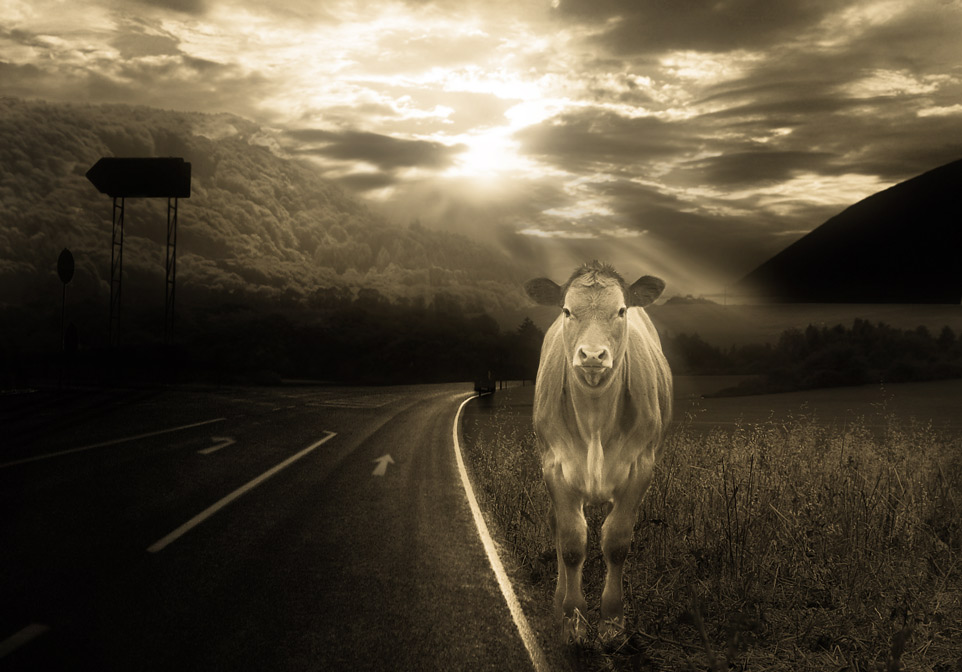
“Downer”cows- like dreck disposed

Fortunately, today and thanks to undercover investigations by animal rights activists, it is already widely known how the dairy industry operates its animal cruelty system worldwide

Cows, goats or even sheep are exploited, tortured and ultimately killed.

Calves are stolen from their mothers so that they can produce milk, udders are simply scorched, animals are tortured while being tethered – all this is unfortunately nothing new and is well known to many.

“Downer cows”, however, represent a previously unknown peculiarity of human ignorance and greed for profit.
In the dairy industry, “downer cows” are female cattle that are too weak to stand up on their own.

Often a calf was born shortly before, the mother is already severely weakened by the birth, but then there is also an acute calcium deficiency due to the unnaturally high milk production that has been bred.

Another reason can be an injury caused by the often terrible housing conditions in the industry.
And now comes the actual, criminal cruelty to animals: These massively weakened animals are often simply brought outside by the farmers in front of the barn.

These cows are called “downers”.
And why not leave them in the stable?
There is only one answer to this: For the farmer, this cow has been written off and its corpse can be removed from the outside more easily and cost-effectively after it has perished miserably.
It couldn’t be more cruel.

So the animals are somehow dragged with their last strength outside to their intended “death bed”.
The farmers often do not care what pain and stress this means for the poor creatures.
In their eyes they are “only farm animals”

Continue reading ““Downer”cows- like dreck disposed”

Germany: 250 mummified pigs – like in a horror movie!

It must have been a horrific sight – the stench was bestial. Residents from the tranquil Nikolaus village in the district of Cloppenburg (Lower Saxony) find 250 dead pigs in an abandoned stable.

Their mummification had already started, probably from drying out. There is no trace of the pet owner!

When police officers opened the stable on the outskirts of Nikolaus village, they came across skeletonized and, in some cases, mummified dead pigs. Experts from the veterinary office had to count the skulls of the animals – and came to around 250.

It is unclear why the farmer left 250 pigs die miserably and helpless, when he left the farm (!!!)

Nobody of the around 1100 inhabitants in the small Nikolaus village suspects what terrible fate must have played out behind the red stable walls.

“We have started an investigation against the pig owner for violating the Animal Welfare Act,” replied a spokeswoman for the Cloppenburg police station. The farmer had moved to another area in 2018.
It is unclear how long the animals had been lying alone in their boxes.

The veterinary office is also investigating the case

The police and the veterinary office in Cloppenburg, which is also investigating the case, do not want to give more precise information about the causes of death of the animals.
“The Cloppenburg district immediately ordered the former livestock keeper to remove the remains of the pigs from the stable and to have them disposed of harmlessly,” reports a spokesman for the veterinary office.
And further: “Then the stable must be cleaned and disinfected. This is monitored by the authorities.”

Pig farming was deregistered from the Cloppenburg district on December 31, 2012 and cattle farming on October 23, 2018, confirms veterinary office spokesman Frank Beumker. Controls after de-registration of the animal husbandry are not provided.

“The company was previously not noticed because of violations of animal welfare regulations,” (!!!) said the spokesman for the veterinary office.

https://www.ndr.de/nachrichten/niedersachsen/oldenburg_ostfriesland/250-mumifizierte-Schweine-auf-verlassenem-Hof-entdeckt,schweine730.html

And I mean…The police found 250 dead pigs on a farm in Lower Saxony. The operator left the farm several years ago and apparently let the animals die.
How could this happen? in a country with the “best animal welfare” in Europe?

Quite simply: because farms that keep animals are checked on average in Germany (at best) every 17 years. Veterinary offices in their current form are part of the problem. They lie and cover up cruelty to animals.

So if the veterinary office has come to the conclusion that… “The company had not previously been noticed for violating animal welfare regulations”, it is an outrageous lie.
Has the farmer deregistered his business and nobody from the veterinary office has asked for proof of the whereabouts of the animals?
It seems like nothing was checked here …

That means that the responsible veterinary office has not done its job.
This is a violation of the Animal Welfare Act due to omission!
But that’s not the only shame in this story.

Didn’t anyone notice how the pigs were roaring to death for weeks after the criminal farmer ran away and let the pigs slowly  perish?
has that only dawned on people after years?
and just because it stank?

We are a society of cowardly accomplices

My best regards to all, Venus

UK: We Welcome Welfare labels on meat to say how animal was killed: New law is in pipeline after campaign on halal and kosher livestock that isn’t stunned before slaughter. Link to take part in Government Consultation which closes 6/12/21.

MPs have also been calling for the change.

Sir Roger Gale said: ‘Brexit has presented us with the opportunity to reform our farming systems.

WAV Comment – For a very long time, welfare campaigners in the UK have been calling for this. ALL food should be clearly labelled to show production methods, nation of origin, and how the animal was slaughtered is clearly identified on the packaging. We very much welcome this decades (far too late) late legislation, but are hugely supported by the fact that so many Brits are demanding to see how their food is produced – and that animal welfare is a ‘high up the chain’ concern.

If you personally wish to get involved with, and submit to the consultation, then please go to;

https://consult.defra.gov.uk/animal-welfare-market-interventions-and-labelling/labelling-for-animal-welfare/

The consultation closes on 6/12/21.

Regards Mark

At the moment, it is not compulsory to label meat as halal, so campaigners have argued that those who eat the products and care about animal welfare should be able to make the choice to buy meat killed in a more humane way [Stock image]

Welfare labels on meat to say how animal was killed: New law is in pipeline after campaign on halal and kosher livestock that isn’t stunned before slaughter

  • It currently not compulsory to label meat as halal but new bill could change that
  • Campaigners argue shoppers concerned with animal welfare should be able to make the choice to buy meat killed in a more humane way
  • The Bill is in the early stages and is currently the subject of a public consultation 

Welfare labels on meat to say how animal was killed | Daily Mail Online

Halal and kosher meat will have to be labelled in a victory for animal welfare campaigners.

As part of the proposed law, all meat will have to be marked with how the animal was killed.

Animals slaughtered to be compliant with kosher and halal rules are often killed without being stunned first and have their throats slit.

At the moment, it is not compulsory to label meat as halal, so campaigners have argued that those who eat the products and care about animal welfare should be able to make the choice to buy meat killed in a more humane way.

The Bill is currently in the early stages and is the subject of a public consultation. But ministers have privately said they aim to bring in the law – and that it is supported by the majority of the British public.

Animals slaughtered to be compliant with kosher and halal rules are often killed without being stunned first and have their throats slit. Pictured: A meat processing plant [Stock image]
Animals slaughtered to be compliant with kosher and halal rules are often killed without being stunned first and have their throats slit. Pictured: A meat processing plant [Stock image] Photo – Getty Images

Victoria Prentis, minister for farming, fisheries and food, said: ‘As a nation, we care enormously about animal welfare and increasingly about environmental standards.

‘Consumer information and labelling are part of the toolbox that we have when it comes to creating a better food system for people and the planet. It is something that we will be considering in detail with industry and stakeholders in the weeks and months ahead.’

The Conservative Animal Welfare Foundation (CAWF), which the Prime Minister’s wife Carrie Johnson has long been a patron of, has been calling for this policy change for years.

Lorraine Platt, chairman of CAWF and a friend of Mrs Johnson, welcomed the news: ‘With the exception of whole eggs, there are currently no legal requirements to label products with information on how the animal was reared and slaughtered.

‘But the fact is the British public do care about these conditions – over 80 per cent of UK consumers are in favour of food labelling.

‘Where labelling does currently exist, consumers have been able to identify higher welfare products and subsequently many farmers have been rewarded with increased demand. It is our hope that through extending labelling to all farmed produce, we can help the growth of higher welfare farms in the UK.’

MPs have also been calling for the change. Sir Roger Gale said: ‘Brexit has presented us with the opportunity to reform our farming systems.

‘Transparency with consumers must be at the heart of these reforms and implementing labelling for animal welfare represents a critical step forward. In doing so we can empower consumers to make informed decisions about which farming systems they want to support – or avoid supporting.

‘There is an overwhelming democratic mandate for such a move, with around eight in ten British consumers stating animal welfare is an important consideration for them when shopping.’

Under new laws, there will also be stricter animal welfare labelling requirements – with how the animal was reared and cared for prominently displayed on the packaging.

This is part of a raft of legislation under the Animal Welfare Bill including plans to ban boiling lobsters alive and outlawing the sale and import of ‘cruel’ animal products such as fur and foie gras.

Halal meat is worth around £2.6billion a year in the UK, according to the Agriculture and Horticulture Development Board (AHDB).

It accounts for around 20 per cent of all lamb and mutton sold, despite Muslims only comprising around 5 per cent of the population.

This is because ‘halal consumers eat more meat per capita than the general population’, says the AHDB.

About 42 per cent of all halal meat is not stunned before slaughter, according to the Food Standards Agency.

Slaughter of kosher livestock – the method is known as shechita – is a small percentage of all animals killed accounting for only 0.5 per cent of all cattle, 0.1 per cent of sheep, 0.3 per cent of chickens. 

Enjoy

Regards Mark

UK: UN COP26 Climate Summit – vegan eating can reduce food-related carbon emissions by 73%. Eating meat and dairy is part of what got us into this mess. So Why No Vegan Food At the Summit ???? – Take Action Below.

Important Note – we have just tried to e mail and telephone the office of Alok Sharma, and everything seems to be closed down – we are even told the wrong number by phone; which we took from his official ‘contact’ area on his site !! – strange. Lets hope he is getting the message about all this. Thus, the action links given below may not now work at present. All I can say is keep trying now and again.

Regards Mark

WAV Comment – Is this not like inviting the senior arsonist as a principal guest to the firefighters annual ball ?

What the hell are these people on ? – and they call themselves experts and politicians who are supposed to be dealing with the climate situation !

The United Nations’ COP26 climate summit—which will be the largest summit that the U.K. has ever hosted—is fast approaching, and we learned that there’s a plan to serve animal-derived food at the convention, even though animal agriculture is devastating for animals and the planet.

Vegan foods have a far smaller carbon footprint than their animal-derived counterparts. Speak out today to ensure that the COP26 climate summit sets a good example for the world to follow. See action below.

The 26th United Nations Conference of the Parties (COP26) Climate Change Conference is fast approaching. Urge the president of COP26, Alok Sharma, to set a meaningful example during this climate crisis by serving a fully vegan menu at the event.

Eating Vegan Is Better for the Environment
The fishing, meat, dairy, and egg industries are not only cruel to animals but also catastrophic for the environment. For decades, the U.N. has identified animal agriculture as a leading cause of deforestation, pollution, ocean dead zones, habitat loss, species extinction, and the spread of zoonotic diseases.

Vegan foods have a far smaller carbon footprint than their animal-derived counterparts—even when comparing imported plant proteins to flesh from grass-fed, locally farmed animals—and a switch to vegan eating can reduce food-related carbon emissions by 73%. Quite simply, eating meat and dairy is part of what got us into this mess.

Animals can feel pain in the same way as humans. Just like us, they value their lives and don’t want to suffer.

In her natural environment, a hen will cluck to her chicks before they even hatch while sitting on the eggs in her nest. They peep back to her and to each other through their shells. In the ways that matter, humans and other animals are the same. There is no moral justification for exploiting animals for human purposes.

The COP26 Climate Summit Should Set an Example
Given everything that we now know about the devastating impact of animal agriculture on the environment, serving meat, dairy, or eggs at a climate change summit would be like distributing cigarettes at a health convention.

Plant foods are the way forward, and a vegan menu would not only allow attendees to dine with a clear conscience but also set an important example for the world to follow.

Take action and tell Sharma to serve only vegan food at the event.

Send emails to:

Alok Sharma
alok.sharma.mp@parliament.uk

Take action against this mentality:

Urge the COP26 Climate Summit to Serve a Fully Vegan Menu | PETA

How Many CO2 Emissions Does the Meat Industry Produce? (Hint: Way More Than You Think).

How Many CO2 Emissions Does the Meat Industry Produce? (Hint: Way More Than You Think)

What we eat impacts our planet – but how destructive is the meat industry?

The effects of the climate crisis are becoming more obvious and more severe. As a result, researchers are eager to dissect the climate breakdown, not only to better understand it, but to find ways to intervene. 

Carbon dioxide (CO2) is a leading driver of the issue. In fact, CO2 makes up the largest portion of anthropogenic (human caused) greenhouse gas emissions, according to the Intergovernmental Panel on Climate Change (IPCC). IPCC is the world’s leading authority on climate science. 

For decades, it’s been widely accepted that transportation is a huge part of the carbon problem, and it is. But another field’s carbon footprint is also problematic – the meat industry. But how many CO2 emissions does animal agriculture actually produce? And is it enough that we must curb our eating habits?

What is carbon dioxide?

Carbon dioxide is an acidic colorless gas that occurs naturally in the Earth’s atmosphere. Plants absorb carbon dioxide and release oxygen, making it integral to life on Earth.

CO2 is harmless in small amounts, but human activity causes levels of the gas to surge. Writing for Forbes, chemical engineer Robert Rapier highlighted that global carbon dioxide emissions have tripled in the last 55 years, sitting at 32.3 billion metric tons last year.

Why is carbon dioxide harmful?

CO2 is a greenhouse gas, meaning it creates a cover that traps heat in the Earth’s atmosphere. When concentrations are too high, the planet’s carbon cycle can’t process it efficiently enough. This causes global temperatures to increase, a phenomenon known as the greenhouse effect. 

Global climate change has led to loss of sea ice, rising sea levels, and more frequent and severe heat waves and droughts, according to NASA. Climate breakdown is also linked to stronger hurricanes, flash flooding, increased wildfires, erosion in coastal areas, ocean acidification, and biodiversity loss, the government agency highlights. 

“The effects of human-caused global warming are happening now, are irreversible on the timescale of people alive today, and will worsen in the decades to come,” NASA sums up.

How much carbon dioxide does meat produce?

Awareness of the transportation and fossil fuel industries’ impact on the environment has been growing for decades. But a sector that often slips under the radar is animal agriculture. 

According to the Food and Agriculture Organization of the United Nations (FAO), global livestock production makes up 14.5 percent of all anthropogenic (human caused) emissions – 7.1 gigatonnes of CO2 equivalent per year.

There is some debate surrounding the widely accepted FAO figure of 14.5 percent. Research published this year claims that this figure is ‘now out of date’. The article argues that the minimum estimate for animal agriculture’s emissions should be updated to 16.5 percent. 

“Some will contest the importance of a few percentage points. Yet even the difference between 14.5 and 16.5 percent is the difference between animal agriculture being responsible for close to one in seven, or one in six of all emissions,” the article reads.

Which foods have the lowest carbon footprint?

In 2019, researchers published the most comprehensive analysis to date of farming’s environmental impact. Looking at emissions per 100 grams of protein, beef emits just under 50kg of CO2 equivalents, according to the analysis. Lamb and mutton emit just under 20kg, while farmed prawns and pig meat emit 18.19kg and 7.61kg respectively. 

For context, grains emit 2.71kg of CO2 equivalents per 100g of protein and soybeans emit 1.98kg.  And peas – a common ingredient in plant-based meat (like Beyond Burgers) – emit just 0.44kg. 

Comparing emissions per kilogram of food (rather than per 100g of protein), plant-based sources are still significantly lower than animal-based ones. 

Producing a kilogram of beef emits 60kg of CO2 equivalents, the researchers concluded, while pea production emits just 1kg per kilogram of food. 

Lamb, poultry, and pork generate 20kg, 6kg, and 7kg of CO2 equivalents respectively. Contrastingly, root vegetables and apples both produce 0.4kg. Rice (4kg), tomatoes (1.4kg), nuts (0.3kg) and bananas (0.7kg), to name a few, also carry a smaller carbon footprint.

“A vegan diet is probably the single biggest way to reduce your impact on planet Earth, not just greenhouse gases, but global acidification, eutrophication, land use and water use,” Joseph Poore, who led the study, said in a statement. He added that the impact of ditching animal products is ‘far bigger’ than flying less or opting for an electric car. 

How Many CO2 Emissions Does the Meat Industry Produce? (Hint: Way More Than You Think) – Plant Based News

Regards Mark

The Unemployed Epidemiologist Who Predicted the Pandemic.

The Unemployed Epidemiologist Who Predicted the Pandemic by Stacey

With thanks to Stacey at ‘Our Compass’ as always;

Regards Mark

This is a 5 page post – pages can be selected from the numbers at the end.

Source The Nation

By Eamon Whalen

In early March 2020, Rob Wallace, an evolutionary biologist who had been adrift after an unceremonious exit from the University of Minnesota, flew to New Orleans and then got on a bus to Jackson, Miss., where he was scheduled to speak at an event on health and racial injustice. Wallace, who turned 50 this summer, has been studying and writing about infectious diseases and their origins for half his life. For almost as long, he’s been warning that the practices of industrial agriculture would lead to a deadly pandemic on the scale of Covid-19—or worse. “A pandemic may now be all but inevitable,” he wrote of the H5N1 avian influenza virus in 2007. ”In what would be a catastrophic failure on the part of governments and health ministries worldwide, millions may die.”

Before his trip to Jackson, Wallace had been closely monitoring the outbreak of a novel virus in Wuhan. Though he’d been spooked by a news report that showed a delivery driver in China practicing extreme social distancing, he went ahead with the trip. As an underpaid academic, he needed the money, and as an American, he didn’t expect anything to happen to him. “I too had been infused with a peculiarly American moment, wherein financial desperation meets imperial exceptionalism,” he wrote.

When Wallace returned from his trip, he threw himself back into writing and research with such fervor that he managed to ignore a pounding headache. When the shortness of breath started, his teenage son yelled at him through the computer screen to see a doctor. After he filled out an online questionnaire, Wallace was diagnosed with Covid-19 over the phone.

He’d been infected with something he’d been warning about for years, and like so many around the country and the world, all he could do was to hope to keep breathing. “No test. No antiviral. No masks and no gloves provided. No community health practitioner stopping by to check on me,” Wallace wrote.

“You can intellectually understand something but still not assimilate the oncoming damage,” he told me later, as he recalled the “sour vindication” of having his worst fears come true. “So there’s an aspect of rage, and an arrival at an understanding.”

I met Wallace for coffee on an afternoon in late June. We sat on benches under the shade on the campus of a liberal arts college near his home in St. Paul, Minn. He was dressed in a pale-red short-sleeve shirt, dark jeans, and sneakers. He wore rectangular black-rimmed glasses and a Minnesota Twins baseball hat and had a five o’clock shadow

Wallace looks more like a dad on the way to his kid’s Little League game than a lab-coat-wearing scientist who used to consult with the Centers for Disease Control and Prevention and the United Nations. That could be because he hasn’t had a job in academia for more than a decade, a circumstance he attributes to his decision to take the implications of his scholarship seriously.

That’s why the book Wallace published last October came with a provocative title—Dead Epidemiologists: On the Origins of Covid-19. Though there are many “brilliant, bright, amazing, and hardworking” epidemiologists whose work he cites, their impact is limited, Wallace said: “They are in the business of cleaning up the mess the system brought about, and that’s the extent to which they’re willing to go.” In his first essay on Covid, “Notes on a Novel Coronavirus,” published in January 2020, Wallace wrote that an epidemiologist is like a “stable boy with a shovel following around elephants at the circus.”

“As an epidemiologist, you’re supposed to want to put yourself out of business,” Wallace said. “Everyone has bills to pay; I understand that. But the extent to which your corruption might lead to a pathogen that could kill a billion people—that’s where my line is.” While he’s not the only Cassandra whose warnings of a pandemic like Covid-19 went unheeded, there are few as clear-eyed about where to direct the blame. “Agribusiness is at war with public health,” he wrote in the March 2020 essay “Covid-19 and the Circuits of Capital,” and if no serious action is taken, the interval before the next pandemic will be “far shorter…than the hundred-year lull since 1918.”

The Truth About Cows Raised for Human Consumption.

Watch, rage and repent

Regards Mark

The Truth About Cows Raised for Human Consumption (animalequality.org)


The public deserves the truth. For this reason, Animal Equality’s investigators take their cameras where the industry does not want you to see.

Animal Equality is committed to exposing the terrible fate of cows, calves, and steers exploited by both the meat industry and the–only seemingly less cruel–milk industry.

Our investigative team has captured images and footage from around the world showing the harsh living conditions, inherent suffering, and brutal abuse that farmed animals endure.

The evidence we have gathered over the years shows calves left outside to die in freezing temperatures in the US, calves beaten and force-fed in the UK, and pregnant cows slaughtered in Brazil.

In addition to documenting animal welfare issues, Animal Equality’s investigative team in Brazil has uncovered the devastating environmental impact of beef production in the Pantanal, one of the world’s most biodiverse areas.

Behind all of this suffering and destruction are industries that treat cows as money-making machines. It’s a system of endless suffering; calves separated from their mothers, females exploited for their milk, and males killed for their meat. That’s why the animal agriculture industry–relentless in its pursuit of profits–is so careful not to reveal what is happening behind closed doors.

The public deserves the truth. For this reason, Animal Equality’s investigators take their cameras where the industry does not want you to see: onto the trucks that transport cows across countries and continents, into the air above the Amazon Rainforest where forests are burned and cleared for cattle farming, and inside factory farms and slaughterhouses. 

Photo – Mark (WAV)

Vegan Meat Price Parity: Why Cost Not Kindness Will End Animal Agriculture.


Vegan Meat Price Parity: Why Cost Not Kindness Will End Animal Agriculture

‘It’s likely that ‘price parity’ between plant-based and animal-derived meats will see the quickest changes made to our food system’

by Dr. Alex Lockwood


It will be cost not kindness that ends animal agriculture – but when will we achieve vegan meat price parity?

As much as we care for animals, it’s likely that ‘price parity’ between plant-based and animal-derived meats will see the quickest changes made to our food system

We love cheap food. When asked, we nearly always say we prefer to buy products that are ethical, sustainable, and healthy. But research shows time and again that what actually drives most of our food choices are cost, convenience, and taste.

Most of all, it’s the price. 

Vegan meat price parity

That’s why the question of ‘price parity’ is a hot topic in plant-based food. With price, especially a cheap price, such a driving force in our food choices, the cost of plant-based meats really matters.

Right now, supermarket customers are paying almost 200 percent more for plant-based products in comparison to meat alternatives. 

It’s also why the European dairy lobby is trying to stop plant-based products being sold in ‘dairy’ packaging. If plant-based providers have to use different packaging, this could make plant-based alternatives more difficult to produce and, critically, more expensive to buy.

But lessons from other industries (such as electric cars) show that as technology develops and demand increases, price parity will arrive. But for plant-based meat products, when will that be? Can it really bring an end to the slaughter-based meat products that are currently cheaper and purchased more often?

‘Cheap food paradigm’

We love cheap food. As the UK government’s Behavioral Insights Team wrote in their report ‘A Menu For Change’, price (alongside convenience and taste) is the most important factor for people when shopping. This includes for healthier alternatives.

This isn’t our fault. Supermarkets, advertising, and government policies have spent 70 years creating what food expert Professor Tim Lang calls our ‘cheap food paradigm’. 

This is especially in the UK and US. Along with Singapore, these are the three cheapest food markets in the world. In the UK, we spend only 8 percent of our household budget on food. This is the cheapest in Western Europe. Greeks spend 16 percent, Peruvians 26 percent, and Nigerians 59 percent.

But when you learn that the UK also has the highest food poverty in Europe in terms of people being able to afford a healthy diet, you know something is wrong.

This cheap food paradigm emerged during World War 2. Farmers were asked to grow more food, quickly and cheaply. They were the heroes feeding a country at war, and rebuilding afterward. 

Farmers were doing what they were asked. They began using heavy chemicals and pesticides. They abandoned rotation farming and replaced them with monocultures. Food got increasingly cheap. There were supermarket price wars (continuing today). We lost touch with the true cost of food.

But at what cost?

The true cost of cheap food is a ‘spiraling public health crisis and environmental destruction’ – according to the RSA’s Food, Farming and Countryside Commission

Last month’s Chatham House/UN report drove home the point: “Cheap food is driving destruction of the natural world.” The constant demand for economic growth has ‘sustained vicious circles’ of agricultural efficiency, coupled with ‘increased economic competition through the liberalization of trade’.

Cheap foods also tend to be more processed. In the UK, we eat the most ultra-processed foods in Europe, nearly 50 percent of our diets. Compare this to around 11 percent in Italy or 16 percent in Portugal. This massively increases the incidence of Type-2 diabetes and other serious health epidemics.

A price transformation

It’s obvious we need a food transformation. And that includes the price we pay for it. 

What we should do is ask those who can afford more to pay more, while supporting those currently in food poverty to be able to buy better. But that’s another article!

We also know that a whole-foods plant-based diet can be much cheaper than a heavily processed, animal-based diet.

Right now, most meat-eaters overestimate the price of plant-based meat products. And they’re not wholly wrong. 

So if we want to see change happen quickly, we have to get people off the slaughter-based meats and into the plant-based aisles. The quickest way to do that is through pricing.

So when will that happen? It will arrive in three stages.

By 2023: Plant-Based Proteins

Back in 2019, the independent think tank Rethink X launched its report on the future of agriculture

Their analysis suggested that price parity between existing plant-based meats (for example, the Impossible Burger) and animal-derived meats would arrive sometime between 2021-23. 

When this happened, they wrote, adoption of more plant-based eating “will tip and accelerate exponentially.”

It is why companies such as Impossible Foods keep slashing their prices to drive demand, knowing that ‘price parity’ will increase not only sales but awareness and acceptability. 

Are we close to the tipping point?

At the moment, buying a vegan supermarket product twice a week would cost an additional £35 a year, a spokesperson for Insure4Sport, who produced research on cost comparisons, told The Times.

Right now, the early-adopter vegan and vegetarian or adventurous meat-eater will pay the premium price for the new plant-based alternatives. That won’t last.

The plant-based producers know they need to compete on price. Demand is growing. In 2019, demand for plant-based meats grew by 18 percent and 11 percent for the plant-based category overall, according to a study from The Good Food Institute.

More people than ever now support improved access to plant-based options. New research last week from The Vegan Society showed one in three (32 percent) believe the government should be promoting vegan and plant-based diets to address the current climate emergency.

Bill Gates recently urged people to buy plant-based products and drive down the price. “You can also send a signal to the market that people want zero-carbon alternatives and are willing to pay for them,” he told the BBC.

The supermarkets will drive this difference. If Tesco’s is setting a target for a 300 percent rise in vegan meat sales, they’ll still want to compete on price.

So perhaps Rethink X’s prediction that we will reach price parity for existing products by 2023 isn’t far off.

But what about the new world of cell-cultured meat, grown in a lab?

Continued on next page