A lot of people simply wish to ignore the suffering of fish – but as seen here; and like the majority of most intensively reared farmed animals today, they, fish, are often raised and slaughtered in the most barbaric ways. It is hoped that by viewing the video below, views will change. The silent screams.
A new investigation is undertaken by Anima Naturalis, who undertake their work in Spain and Latin America, https://www.animanaturalis.org/en have revealed the immense suffering of Rainbow Trout at Spanish aquaculture facilities.
Spain is the largest producer of farmed fish in the EU; accounting for over 23% from figures obtained in 2023. An estimated 254 Million fish are raised and slaughtered EVER YEAR in the country.
Spain’s most farmed species is the Rainbow Trout, which accounts for around 30 Million animals per year.
With the support of photojournalist Aitor Garmendia and video photographer Linas Korta; the investigation https://www.fishfactory.org/es captures:
Extreme overcrowding, with fish forced to swim in waste filled water; struggling for space and oxygen;
Diseased and injured fish, suffering torn fins, gill damage and friction injuries caused by rough handling and suction machines.
Brutal slaughter methods; including the widespread use of thermal shock – submerging live fish into ice or ice chilled waters for up to 90 minutes; causing prolonger consciousness, hypothermia and suffocation.
Ineffective electrical stunning – resulting in fish being eviscerated alive; which is a clear breach of existing EU rules when it comas to ‘avoidable suffering’.
Exacerbated stress during transport including poor water quality, lack of oxygen, and jostling during both loading and unloading make the fishes final life stage an especially traumatic experience..
These acts of cruelty clearly goes against the EU Directive which protects farm animals; including fish – https://eur-lex.europa.eu/eli/dir/1998/58/oj/eng and which obliges Member States to ensure that farmed animals ARE NOT caused ant unnecessary pain, injury or suffering.
The situation here clearly shows that both stronger EU and national legislation is required.
AN’s campaign incudes a citizens petition https://www.fishfactory.org/es urging the EU to grant fish the legal protection they urgently need. Pleas sign it, and then pass the link to others – thank you.
The AN investigation coincides with the EU Commissions drafting of the first Code of Good Practice on Fish Welfare which serves as a practical document for aquaculture producers and the best practices for fish welfare. This is applicable across different life stages and production methods. This Code aims to fulfill the EU Strategic Aquaculture Guidelines strategy for 2030; https://eur-lex.europa.eu/eli/dir/1998/58/oj/eng ensuring that aquaculture progresses in a sustainable and ethical way within the EU.
Sea Shepherd is cracking down on illegal fish-trapping devices off the coast of Sicily (Credit: Sea Shepherd)
Off the coast of Sicily, Sea Shepherd and its volunteers are hunting down illegal fish traps and working with Italian authorities to crack down on this environmental crime.
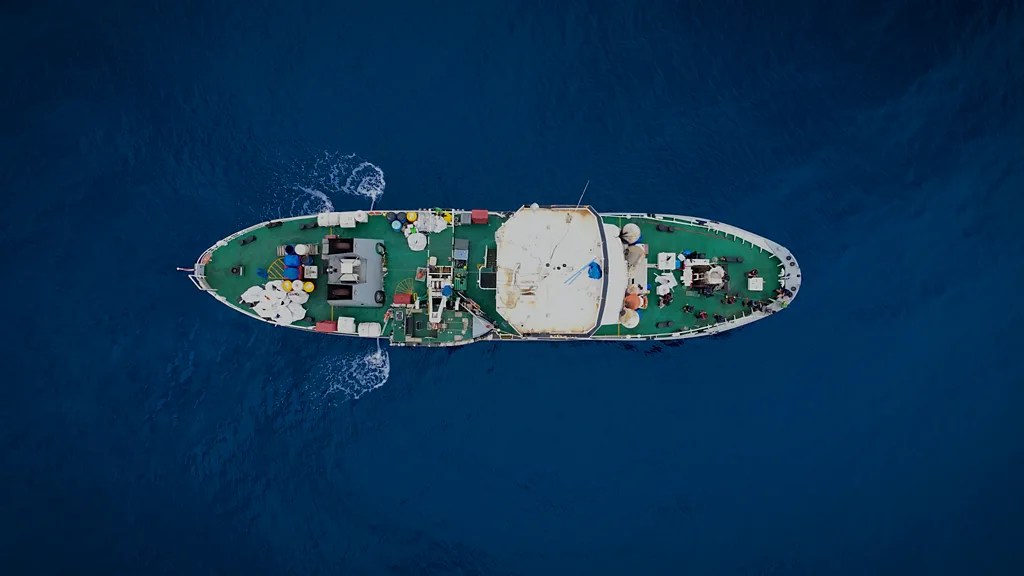
The flat water melts into the teal-coloured sky as a former pilot vessel, the Sea Eagle, sails through the calm Tyrrhenian Sea surrounding the Aeolian Archipelago of Sicily.
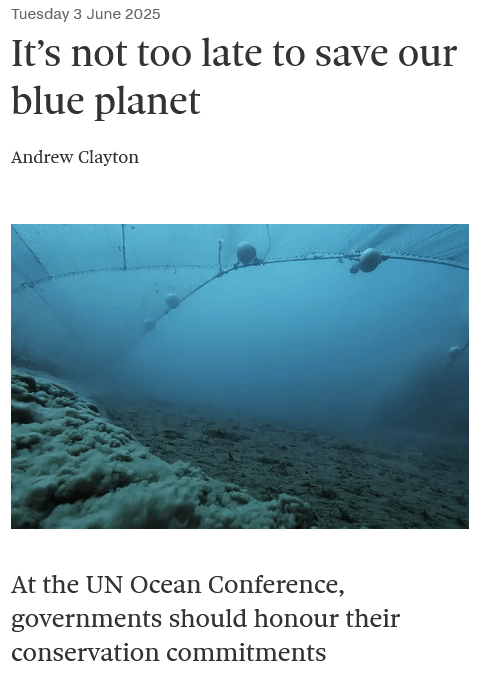
The ship is operated by Sea Shepherd, an international marine conservation non-profit. Today, the team is searching for fish aggregating devices (FADs), man-made plastic structures used to attract fish. They float in the water, anchored to the seafloor, with hanging nets to catch fish. FADs made from plastic, without GPS tracking devices attached, are illegal in Italy.
While listening to techno music, a group of volunteers uses a winch to detach one of the FADs from the seafloor. A large plastic container labelled “corrosive” emerges from the sea.
“The [techno] rhythm gives us the right energy,” says James* (the crew do not wish to use their full names for safety reasons), a young Canadian volunteer who is running the operation and whose arms are covered in ocean-inspired tattoos. The volunteers work tirelessly to extract the plastic FADs from the sea and pile the tangled trash heaps into big bags. The retrieved plastic will be turned into plastic crates for sea turtle rescue operations.
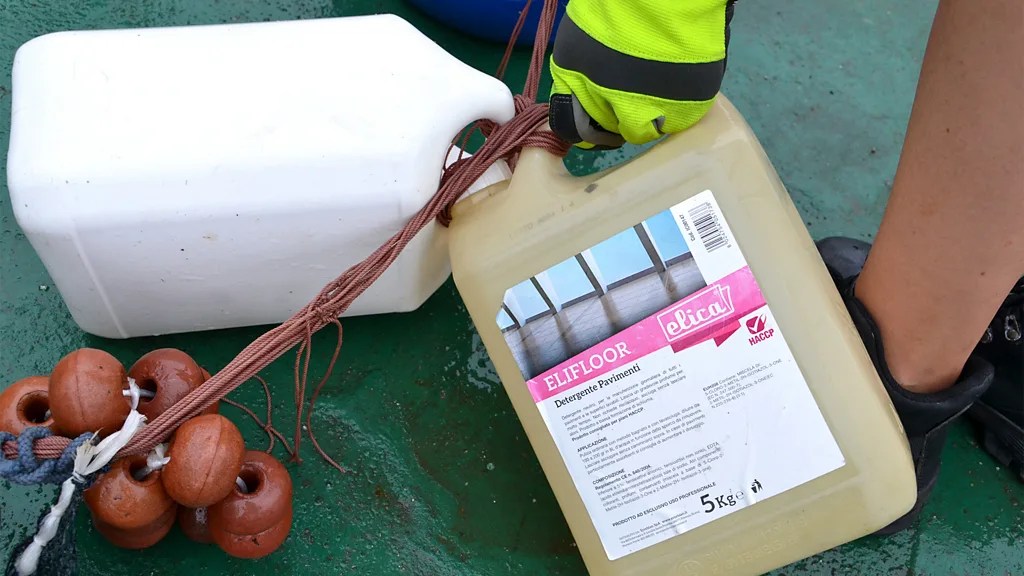
FADs are used worldwide by fishermen to attract pelagic fishes into surrounding nets. These fish-trapping devices are typically composed of used fuel, pharmaceutical and other chemical containers among other types of plastic waste, dark plastic nets and rocks, all of which is held together by a few miles of nylon thread. Marine wildlife is attracted to the shade provided by FADs.
FADs are typically composed of old plastic containers held together by nylon thread (Credit: Sea Shepherd)
The material the FADs are made of matters too. FADs are required by Italian law to be biodegradable. All the FADs removed by the Sea Shepherds from the South Tyrrhenian Sea are illegal and made of plastic, says Nicola Silvestri, frigate captain and head of the Fishing Control Centre area in Western Sicily. They also lack markings which allow them to be traced back to the fishing boat that used them, he says.
“Illegal FADs are very cheap to produce, but at the same time highly dangerous for ecosystems,” says Andrea Morello, president of Sea Shepherd Italy. “These devices are installed by fishers in the month of August, then they catch fish around them in summer. Eventually, winter storms remove the devices, creating tonnes of hazardous and plastic waste floating in the sea.”
In this stretch of sea around Sicily’s Aeolian Archipelago, the target fishing species in the summer are juvenile ricciola, bluefin tuna, juvenile swordfish and pilot fish. FADs can damage the entire population, by preventing juveniles from maturing and reproducing.
The Sea Shepherd mission is part of the organisation’s ongoing Siso operation in Sicily to combat these illegal fishing devices.
“We are witnessing the biggest marine environmental disaster ever,” says Morello. “The sea is like a minefield full of FAD lines in every direction, placed by fishers who split the sea surface among them, threatening biodiversity.”
The Sea Shepherd volunteers remove the long nylon threads attached to the FADs which can harm fish, turtles, humpback whales and dolphins by trapping and suffocating them. According to Sea Shepherd, there are more than 36,000 FADs, each one composed of almost 1.2 km (0.7 miles) of nylon lines in the South Tyrrhenian Sea, part of the Mediterranean Sea.
It takes the volunteers one hour to extract almost 2km (1.2 miles) of a FAD line, it’s the first out of seven removed that day. Not far away, a police coast guard boat is monitoring the work: later it will seize the illegal plastic materials. The use of FADs made from plastic waste, without GPS trackers, is an environmental crime in Italy.
Sarah, a young German volunteer, rings the bell installed on the deck of the vessel, to celebrate and notify the crew that another FAD has successfully been extracted from the seabed. In total, the volunteers haul seven FADs onto the deck that day – their combined mass is the same size as a small car.
The Sea Shepherd volunteers are collaborating with Italian maritime authorities to crack down on FADs (Credit: Sea Shepherd)
organisation maps the FADs using deep-sea radar technology and binoculars and removes them in collaboration with national maritime authorities.
Between 2017 and 2024, the organisation removed 676 FADs from the Mediterranean Sea, says Morello. “We define ourselves as FAD hunters: here to protect the sea. We are also carrying out the first census of FADs ever realised in the Mediterranean Sea,” he says.
The data collected during this mission will be analysed as part of a research project that Sea Shepherd runs with the National Biodiversity Future Centre of the University of Palermo in Sicily and the Cima Research Foundation, based in Liguria, Italy. Using statistical analysis, Sea Shepherd has been producing maps since 2017 to identify for the first time the extent of this ghost labyrinth created by FADs anchored to the seabed.
“With the information provided by Sea Shepherd, we were able to have a precise mapping of the location and composition of these devices,” says Alberto Sechi, a marine biologist at Cima Foundation. “Since 2017, the plastic lines (mostly polypropylene) used to anchor the FADs exceeds 2,500km (1,553 miles): that corresponds to the distance between Paris and Moscow.”
In a single night, Morello says the Sea Shepherds discovered around 912 FADs in the waters surrounding the Sicilian island of Alicudi, each one composed of more than 1km (0.6 miles) of nylon threads. “Multiplying the number of FADs we found by the medium length of each thread, the total length of lines used in this area is a staggering 43,200 km (26.284 miles) of nylon: this is more than the circumference of the entire planet Earth,” says Morello.
Sea Shepherd’s work involves removing as many FADs as possible, but then, the disposal problem arises. In 2022, the non-profit started collaborating with iMilani, an Italian company that specialises in building plastic crates from recycled materials. Together, they have created the Sea Turtle Crates project, which aims to transform the FADs into plastic crates for sea turtle rescue operations. After the entangled turtles have been freed from the FADs, they are put into the crates which Sea Shepherd uses to transport them to veterinarians. Six loggerhead turtles have been rescued to date and 100 turtle recovery boxes have been created from FADs, says Roberto Milani, founder of iMilani and a freediver.
The company is hoping to design other items with FADs waste in future, including pens and other gadgets, which can be sold to finance Sea Shepherd’s activities, says Milani.
Sea Shepherd is creating the first-ever census of FADs in the Mediterranean Sea (Credit: Sea Shepherd)
big bags full of plastic lines extracted from the FADs. In one day at sea, the crew removed seven FADs composed of 6.5km (4 miles) of nylon lines and plastic containers. Their labels reveal their previous lives: from hospital waste and corrosive liquids, to oil, gas and detergent jerrycans. Using radar, the Sea Shepherds map more than 100 FADs throughout the day.
The crew’s work begins early in the morning, and continues until sunset, with brief breaks for meals. Tuti, 23, an Israeli volunteer, prepares a vegan buffet each day. Today’s menu is inspired by Latin American foods, such as empanadas, chimichurri, black beans mole and corn tortillas, which Tuti learned to cook during a Sea Shepherd mission in the Gulf of California, where she worked to protect the last vaquita dolphins.
Onboard are 20 volunteers, from four continents with different ages and backgrounds: from Willie, a 20-year-old German student, to retired engineer and sea captain Gigi, 63, who joins Sea Shepherd’s missions several times a year.
“We are here because we want to be part of the solution. We are sort of part of it, by removing all those plastics from the seas,” says Zafar from Pakistan, who is in charge of measuring and cataloguing each FAD for the database. “I don’t understand people’s insensitivity towards the sea and its inhabitants,” he says.
Many FADs are anchored to the seafloor with stones or buckets full of cement, says Teresa Romeo, director of the Sicily Marine Centre at the Anton Dohrn Zoological Station in Naples, Italy. She has been studying FADs since the 1990s. “They modify the seabed environment and affect all the species living there,” she says.
Romeo says a mandatory recovery of all FADs should be implemented. “We need to establish a spatial management plan to define a specific area [for FADs] and replace floating materials with biodegradable ones, in order to have a more sustainable fishing practice in the Mediterranean Sea,” says Romeo.
Sea Shepherd makes “a great contribution to the mapping actions of FADs and their efforts are useful for monitoring impacts, but in my opinion the aim cannot be drastic removal, but to regulate their use,” she says.
The retrieved plastic FADs are turned into crates for sea turtle rescue operations (Credit: Sea Shepherd)
But creating biodegradable devices from materials such as hemp is difficult due to the high cost, according to Sechi. “Creating a completely biodegradable FAD is a significant challenge, and so far, no one has come up with a solution,” he says. “One alternative could be hemp, but kilometres of hemp thread are very expensive, and no angler would spend that much.”
Experts such as Romeo say that the transition to biodegradable and non-toxic materials would be an important part of the solution to reduce marine pollution from fisheries based on FADs. As well as breaking down in the ocean, biodegradable materials may contain fewer toxins and heavy metals, compared to plastic, says Romeo, though she agrees that cost is a major barrier for materials such as hemp.
In the meantime, the Sea Shepherds continue to sail the seas to map and remove illegal fish-trapping devices, collaborating closely with the local coastguard, researchers and private enterprises to crack down on this environmental crime.
“This alliance is a solution to protect the deep sea,” says Morello.
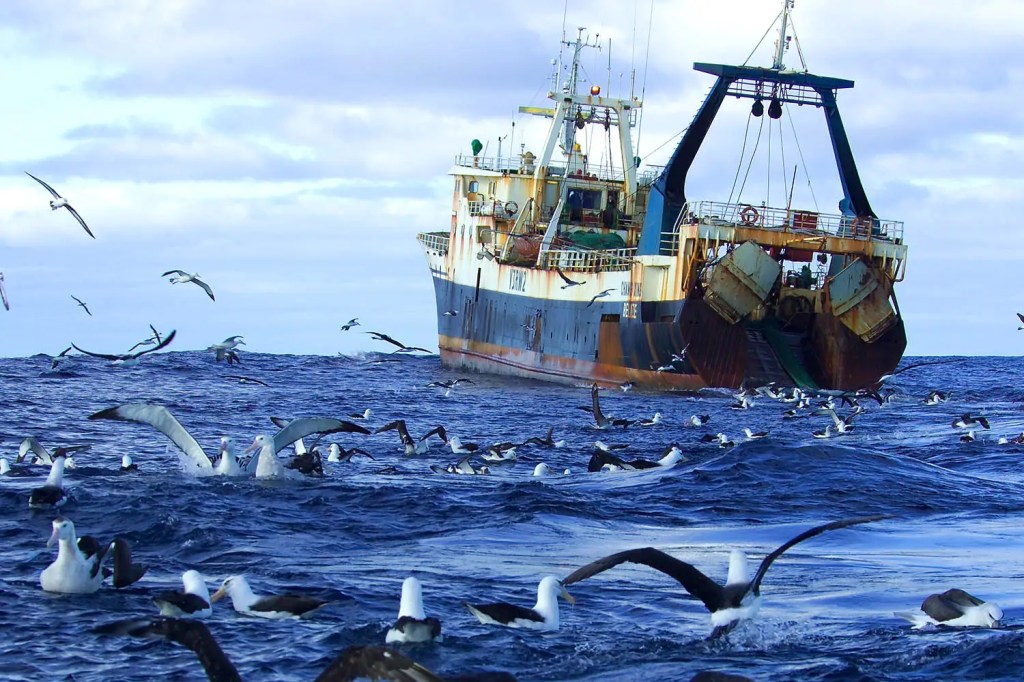
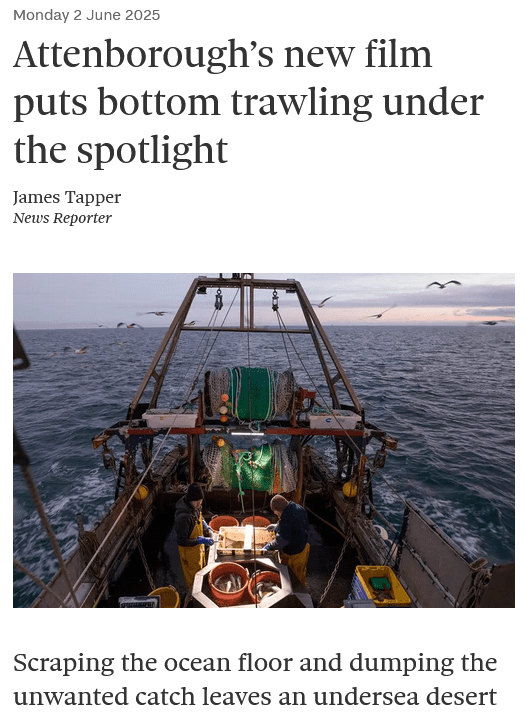
As David Attenborough warns of the damage being wreaked on the oceans by seabed trawling, the role of an army of mystery boats is in the spotlight.
The Ghanaian flag that droops from the mast of the Meng Xin 10 is one of the few African things about the fishing boat.
The deckhands are Ghanaian, and officially it is owned by a company in Accra. But the officers are Chinese, all the instruments and telemetry are in Mandarin, and the people who call the shots are based in the northeastern Chinese port city of Dalian.
For 10 years the blue-hulled vessel, one of at least 30 that investigators have linked to Dalian Mengxin Ocean Fishery, has meandered along Ghana’s coastline, dragging a heavy beam along the ocean floor about 200m below, bottom trawling for squid and cuttlefish.
This course provides an introduction to the problem of wild animal suffering. It covers the situation of animals in the wild as individuals, including the many harms they suffer, and ways of improving their situation, including some of the ways this is already being done.
This is the opening video for the course. It gives an overview of the topics that will be addressed in the videos of the course.
Wild animal suffering: an overview of the course
Concern about the suffering of wild animals and the ways we can help them has increased a lot in the past decade. A growing number of people are now aware that the lives of animals in the wild are not idyllic, and that they face threats that dramatically impair their wellbeing. There is more awareness now that this affects not just a few animals, but large numbers of them. While in the past, concern for wild animals was mostly focused on their ecological roles or their conservation status, many people now are concerned about what happens to them as individuals, as sentient beings.
Some people may think that it is unfortunate that wild animal suffering occurs, but be unsure about how widespread or how serious it is. Others may think this is an important issue, but not know how tractable it is, or what we can do to address it.
This course sheds some light on these questions and helps give a more clear understanding of the reality of wild animal suffering and, what is more important, of what can be done about it. It is intended to provide an introduction to this question for anyone interested in it, and to be especially useful to those involved in animal advocacy who want to know what can be done to help wild animals. The course will also benefit people working in natural sciences with an interest in learning how their work can help animals.
The course will include three parts.
Part I has been completely published already. It explains the ways that wild animals suffer and how we can help them. Part II details the arguments about the moral consideration of animals, and Part III explores the scientific study of the situation of animals from the point of view of their wellbeing. This new field of study has been called welfare biology.
Each part will consist of a set of videos, around 10 minutes each, focused on some specific problems. The entire course contains 28 videos including this one, which you’ll see listed in the course table of contents.
The first part begins with a general presentation summarizing the question of wild animal suffering. Following this, we will clarify in more detail what the concept of “wild animal suffering” entails. The following videos will then explain the different ways in which animals suffer in the wild. We will see the impacts of harmful weather conditions, natural disasters, diseases, parasitism, hunger, psychological stress, conflicts between animals, and accidents. We will also see how the prevalent reproductive strategies significantly increase the proportion of suffering among wild animals. Then, we will see some of the ways to provide help to these animals, including rescues and vaccination programs. Finally, we will see the kinds of things that each of us can do to make a difference for wild animals.
Some people think that we shouldn’t worry about wild animals because we shouldn’t be concerned about what happens to animals at all. We will believe this if we think, for instance, that only humans matter. In order to asess this concern, and to understand better how we can argue for the moral consideration of animals, the second part of the course presents an overview of contemporary debates about ethics and animals. The part will begin by explaining the concepts of speciesism, as well as related concepts like moral consideration. We will next examine the main defenses of the idea that human interests matter more than equally strong interests of other animals. We will then see the main arguments against this view. After that, we’ll cover how the moral consideration of animals relates to different ethical theories. We will then examine the differences between the views defending the moral consideration of animals and those defending other criteria, such as the ones held by some positions in environmental ethics. In the last part of this part, we will see what sentience is, and consider some indicators of its presence in different animals, especially invertebrates.
Finally, the third part of the course will examine the ways to promote research in academia about how to best help wild animals. In the videos of this part, we will examine the concepts of wellbeing, animal welfare, and wild animal welfare. We will also discuss welfare biology, the study of the situation of animals with regard to their wellbeing. We will see how it is different from other fields that currently exist. We will then see reasons to promote academic research in welfare biology, and what some promising lines of research for this field are. We will see how welfare biology can benefit from work in other cross-disciplinary fields. In light of the work welfare biology could carry out, we will see responses to objections to helping wild animals.. Finally, we will share some ideas concerning the advance of this new field of research, and its importance, especially in the long term.
We hope this course will be interesting to you. Our intention is to help you become familiar with the issues discussed in it, and to share some tools that enable you to do further research on them. We provide information about how to take action in defense of wild animals and to help you make informed decisions about which efforts to support or promote.
If you want to learn more, you can visit our website, where you’ll find much more detailed information about many of the issues addressed in the course.
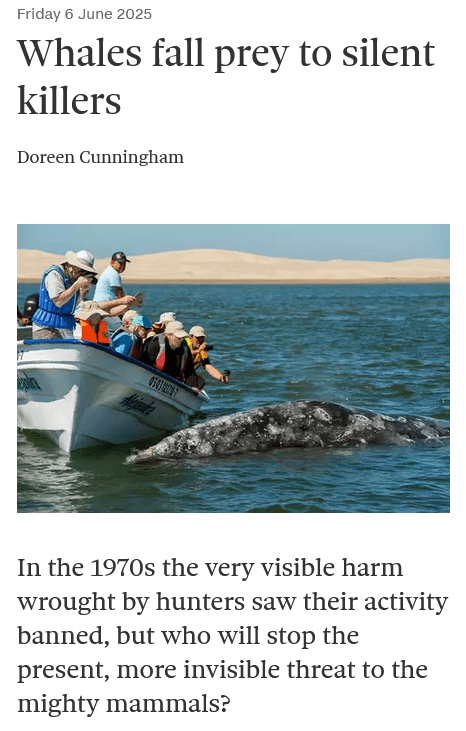
A Pacific manta being photographed by tourists. Photograph: Johnny Friday
The Last Dive tells how a relationship with a giant Pacific manta ray turned a big game fish hunter into a conservationist
Located about 500km off the southern coast of Baja California lies a group of ancient volcanic islands known as the Revillagigedo Archipelago. Home to large pelagic species including whale sharks and scalloped hammerheads, the rugged volcanic peaks were also once the site of an unlikely friendship.
It began in December 1988 when Terry Kennedy, a now 83-year-old American sailor with a storied past, met a six-meter-wide giant Pacific manta ray off San Benedicto island’s rugged shore. He would go on to name him Willy.
The smash-hit movie Jaws was filmed 50 years ago off the coast of New England, on the island of Martha’s Vineyard. It stirred up human fear of sharks, contributing to a popular misconception that sharks were supposedly villains and reckless human-eating monsters.
But of course, that is not true about sharks. In fact, humans are the real threat here. Every single day, we kill an average of 274,000 sharks. That amounts to approximately 100 million sharks each year. Today, many species – like the great white, sand tiger, great hammerhead, and others – are endangered or vulnerable to extinction.
That’s why famed athlete, 55-year-old swimmer Lewis Pugh, just completed a grueling 12-day swim around the island to help raise awareness about the importance of sharks.
Sign the petition to urge the U.S. government to protect sharks by expanding and creating more marine sanctuary areas!
The United Nations named Pugh a “patron of the oceans” due to his use of swimming as a way to raise awareness about marine wildlife and ocean conservation. He’s swum near volcanoes, near glaciers, and alongside polar bears, hippos, and crocodiles. He’s the first person ever recorded to have finished a long-distance swim in each one of the world’s 5 oceans, and to swim across the north pole itself.
And he’s worried about the future of sharks – just like we all should be.
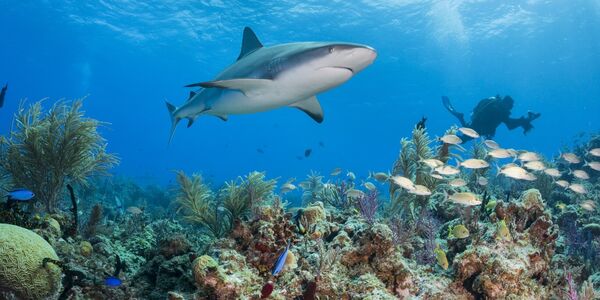
Sharks help maintain a precious balance in marine ecosystems. Without them, the entire natural structure begins to deteriorate. They promote biodiversity and keep other species in check before they spiral out of control, and even keep the oceans healthy by scavenging injured, sick, or dead animals.
But today, humans target them for overfishing. They’re suffering from habitat loss and climate change. And, of course, being maligned by humans has only made their survival more difficult.
We must respect sharks – and we must demand more protections to keep sharks safe, alive, and healthy! One way to do that would be for the U.S. Congress to create and expand more shark sanctuaries. These are special areas or zones that would sharply curtail overfishing and destruction of habitats. Sign the petition to demand the U.S. protect sharks!
***********
‘A horror movie’: sharks and octopuses among 200 species killed by toxic algae off South Australia
Karenia mikimotoi algae can suffocate fish, cause haemorrhaging and act as a neurotoxin, one expert says
More than 200 marine species, including deepwater sharks, leafy sea dragons and octopuses, have been killed by a toxic algal bloom that has been affecting South Australia’s coastline since March.
Nearly half (47%) of the dead species were ray-finned fish and a quarter (26%) were sharks and rays, according to OzFish analysis of 1,400 citizen scientist reports.
Cephalopods – such as squid, cuttlefish and octopuses – accounted for 7%, while decapods – crabs, lobsters and prawns – made up 6% of species reported dead or washed up on beaches.
The opposition stems from serious welfare and environmental concerns: the extreme cruelty of confining intelligent, solitary animals like octopuses in farming conditions, the lack of humane slaughter methods, and the damaging impact such farms would have on fragile marine ecosystems.
The Spanish association of law professionals, INTERCIDS, has presented a legislative proposal to national politicians that aims to establish a proactive ban on octopus farming across the country. The proposal responds to the growing chorus of scientists, animal and environmental protection organisations, and citizens who have spoken out against octopus farming.
Although no industrial octopus farms currently exist in Spain or elsewhere, seafood multinational Nueva Pescanova announced plans to establish the world’s first industrial-scale octopus farming in the Canary Islands.
Submitted to the Parliamentary Association for the Defence of Animal Rights (APDDA), the proposal seeks to amend Spain’s national Law 23/1984 on marine farming/aquaculture in order to prohibit the farming of octopuses for food and any other productive purpose. It would also ban the commercialisation of octopus products derived from such activities.
Octopuses consumed as food are currently caught in the wild, primarily by small-scale fisheries. There are no existing legal frameworks regulating octopus aquaculture in Spain. Therefore, INTERCIDS’ proposal aims to close that gap preemptively by enshrining a ban into law that addresses the grave risks associated with the farming of captive octopuses.
The next steps for the proposal will depend on national politicians, who must decide whether they will move forward with submitting it as a formal legislative proposal to be approved by the Parliament in the coming months.
















 World Animals Voice