Category: Fur and Fur Farming

EU: A European Commissioner for Animal Welfare? 70% of Europeans want it.

WAV Comment: Lets see the EU now put its money where its mouth is; and act !

A European Commissioner for Animal Welfare? 70% of Europeans want it

15 November 2021

GAIA – Belgium

Press Release

The numbers are clear: 70% of EU Citizens want to appoint a European Commissioner for animal welfare, as shown in an international survey conducted in June 2021. Now, Members of the European Parliament have started the process to support the proposal with the signatures collection for an oral question.

Back in June 2021 IPSOS asked 3,500 European adults between 18 and 65 years old whether they think there should be a European Commissioner for Animal Welfare. The study was conducted in the ten largest EU countries, covering 81% of the EU population: France, Germany, Poland, Spain, Italy, Belgium, Netherlands, Romania, Hungary and Sweden. In all these countries 7 out of 10 citizens think there should be a European Commissioner for Animal Welfare. 

Currently there is no European Commissioner for Animal Welfare and the responsibility is attributed to the Commissioner for Health and Food Safety. However, some countries, like Belgium, appointed a minister explicitly in charge of this domain. 

This decision triggered important effects: a clear responsibility in the government for all legislation related to animal welfare, more transparency, and the allocation of adequate human and financial resources to provide concrete responses on this important topic.

In March 2021, Eurogroup for Animals member GAIA, based in Belgium, launched the campaign #EUforAnimals with the support of over forty other animal rights and welfare organisations across Europe, asking the European institutions to finally give animal welfare the attention it deserves, by integrating it explicitly in the job title of the relevant EU Commissioner. 

The #EUforAnimals campaign has already received the support of over 130,000 citizens and 133 Members of the European Parliament (MEPs).  

Twelve MEPs have also launched the signature collection to table a cross-party oral question supporting the demand. The process was initiated by the Niels Fuglsang MEP (S&D, Denmark) and is co-promoted by Sylwia Spurek (Greens/EFA, Poland), Petras Auštrevičius (Renew, Lithuania), Manuel Bompard (GUE/NGL, France), Michal Wiezik (EPP, Slovak Republic), Emmanouíl Fragkos (ECR, Greece), Anja Hazekamp (GUE/NGL, the Netherlands), Johan Van Overtveldt (ECR, Belgium), Emma Wiesner (Renew, Sweden), Sirpa Pietikäinen (EPP, Finland), Maria Noichl (S&D, Denmark) and Francisco Guerreiro (Greens/EFA, Portugal). 

Members of the European Parliament have often well represented the EU citizens’ will to improve the way animals are treated in Europe. It is my hope and the hope of the other MEPs who are co-promoting this oral question, that many colleagues will join us and that the European Commission will respond positively to our proposal, to see as soon as possible Ms Kyriakides’ title changed into EU Commissioner for “Health, Food Safety and Animal Welfare”
 

Niels Fuglsang MEP

The survey clearly shows that the campaign’s demand is supported by a great majority of EU citizens. The EU Commission should not delay giving a positive answer to a proposal that can bring great and lasting benefits to animal welfare both at the continental level and beyond. We hope that Commissioner Kyriakides will decide to support #EUforAnimals and become the first EU Commissioner for Animal Welfare.

Ann De Greef, Director, GAIA

Notes

The full survey results can be found here 

For more information on the initiative visit the #EUforAnimals campaign website

Regards Mark
Portugal / UK: Luxury Fashion Brand Farfetch Pledges To Stop Selling ‘Barbaric’ Angora Wool.

Luxury Fashion Brand Farfetch Pledges To Stop Selling ‘Barbaric’ Angora Wool
Many rabbits in the Angora industry die prematurely due to stress, PETA says. Credit: Adobe. Do not use without permission.

Luxury Fashion Brand Farfetch Pledges To Stop Selling ‘Barbaric’ Angora Wool

Farfetch joins brands like Gucci and Calvin Klein in ditching the animal product

Luxury fashion retailer Farfetch has confirmed it will stop selling Angora wool from April 2022. Animal rights activists have applauded the move, and urged shoppers to opt for animal-free alternatives instead. 

The ban follows pressure from People for the Ethical Treatment of Animals (PETA), purported to be the largest animal rights organization in the world.

This included disruptions of shareholder meetings and more than 100,000 appeals from supporters. Last year, actor Sadie Frost joined forces with PETA, and called on Farfetch to ban Angora for good.

What is Angora wool?

Angora wool is a fabric made from the soft, thick hair of Angora rabbits. It’s long been considered a luxury fiber, however, Angora wool is increasingly falling out of favor.

PETA says the Angora wool industry is rife with animal cruelty, naming it “barbaric.”

A PETA Asia undercover investigator inspected nearly a dozen rabbit farms in China, which produces 90 percent of the world’s Angora, the charity says. 

There, the investigator found rabbits living in cramped, dirty cages. 

When the animals were sheared or plucked, they were suspended in the air or held across boards with their feet bound. Rabbits were “screaming in pain and terror,” PETA says. 

Animals in the Angora industry are first sheared or plucked at around 8 weeks old. Then, they experience the process every few months. After two to five years, the surviving animals are hung upside down where they get their throats slit, and are sold off for meat, PETA reports. 

However, a farmer told the investigator that most (60 percent) of the rabbits die prematurely, after a year or two. 

Animal-free fashion

PETA Director of Corporate Projects Yvonne Taylor commended Farfetch’s decision. 

“From high end to the high street, today’s retailers embrace fashion that leaves gentle rabbits in peace,” Taylor said in a statement. “PETA is celebrating this progressive decision by Farfetch, which will spare countless animals abuse.”

Farfetch – which has previously banned fur sales – joins an ever-growing list of brands taking a stance against the Angora trade. Gucci, Diane von Furstenberg, Calvin Klein, Roland Mouret, Tommy Hilfiger, and Stella McCartney have all committed to not selling Angora items.

Regards Mark

The town Boulder in Colorado made fur history!

Report from Direct Action EverywhereDxE

VICTORY! Voters in Boulder, Colorado passed the Humane Clothing Act prohibiting the sale and manufacture of new fur products!
This is the latest in a series of recent victories for fur-bearing animals.
The towns of Weston and Wellesley in Massachusetts and the city of Ann Arbor in Michigan banned fur sales in 2020 and 2021.

California became the first state in the nation to ban fur sales in 2019, after city bans in Los Angeles, San Francisco, Berkeley and West Hollywood led the way.
Since then, more states have introduced bills to ban fur sales, including Rhode Island, Oregon, Connecticut, Hawaii and New York.

The fur ban in Boulder was a ballot initiative, meaning the people of Boulder made it happen.
The public is rising up to defend animals!

Thanks to Fur Free Boulder for leading the initiative.

And I mean…It is another step in a long fight against fur.
What it really the people done is tell the world that the future is going fur free, and that Boulder is a kind place for animals.

There are alternatives for the look, there are alternatives for the warmth, there are so many different ways to keep ourselves warm besides using the body of an animal who didn’t want to die.

We hope it can lead to for bans in other places, we hope it can lead to more animal friendly legislation down the road.

My best regards to all, Venus

Sweden: Big Disappointment in Sweden: the Board of Agriculture Decided Today to Lift the Mink Ban.

Big disappointment in Sweden: the Board of Agriculture decided today to lift the mink ban

10 November 2021

Djurens Rätt

At the end of this year, the temporary ban on breeding mink for fur production will expire and the Swedish Board of Agriculture has just announced that it will not be extended. The decision means that 2022 may mean that half a million minks will once again be staying in cramped grid cages, with risks to animal welfare and continued spread of infection. Animal Rights are deeply disappointed with the decision.

In January 2021, the positive news came that the mink farms would be closed again for 2021 to reduce the risks of spreading the coronavirus SARS-CoV-2. The breeding animals remained on the farms, almost as a promise to the companies that they would be allowed to start up again. It has now happened.

With today’s decision, the mink farms will be allowed to start their operations again on 9 November.

This is in contrast to Denmark, which recently decided that their ban on keeping minks will be extended for 2022. Other countries have also taken a different path than Sweden: the Netherlands imposed a permanent ban on fur farms following the pandemic, and during the week British Columbia in Canada decided on a plan to close down mink farms due to the spread of infection.

In order for the Swedish mink farms to be able to breed mink again, certain specific restrictions have instead been extended, such as a ban on the movement of live mink and isolation of the farms. But this is clearly not sufficient.

“I am deeply disappointed with today’s message. There are many reasons to stop mink farms from breeding minks in cramped lattice cages, the risk of infection spreading is just one of them. When the authorities made this decision today, they also took a stand for the mink industry to continue to conduct unethical activities in Sweden. I now urge politicians to take a new approach to the issue and introduce a permanent ban” says Camilla Bergvall, national chair of Animal Rights Sweden.

Minks have proven to be extra susceptible to the coronavirus, which also affects humans. The majority of Sweden’s approximately 28 mink farms have had outbreaks of infection, with consequences such as increased mortality and respiratory symptoms. Despite the breeding ban in 2021, the infection came on a farm during this summer.

Investigation in Sweden is ongoing

The Government has commissioned the Swedish Board of Agriculture and the Swedish Veterinary Institute to investigate the risks of the spread of infection between animals and humans in Sweden. That assignment will be presented in February 2022, and may involve other proposals for restrictions than the current announcement. However, there are few indications that a breeding ban will be introduced again. It will be up to politicians, especially in government, to implement other legislative proposals to protect minks from suffering and disease.

Animal Rights, with the support of at least 76% of the population, is not alone in proposing the decommissioning of mink farms for infection control and animal welfare reasons. Other examples are the Swedish Veterinary Association and several farmers.

Read more at source

Regards Mark

Canada: British Columbia will close its mink farms in 2025

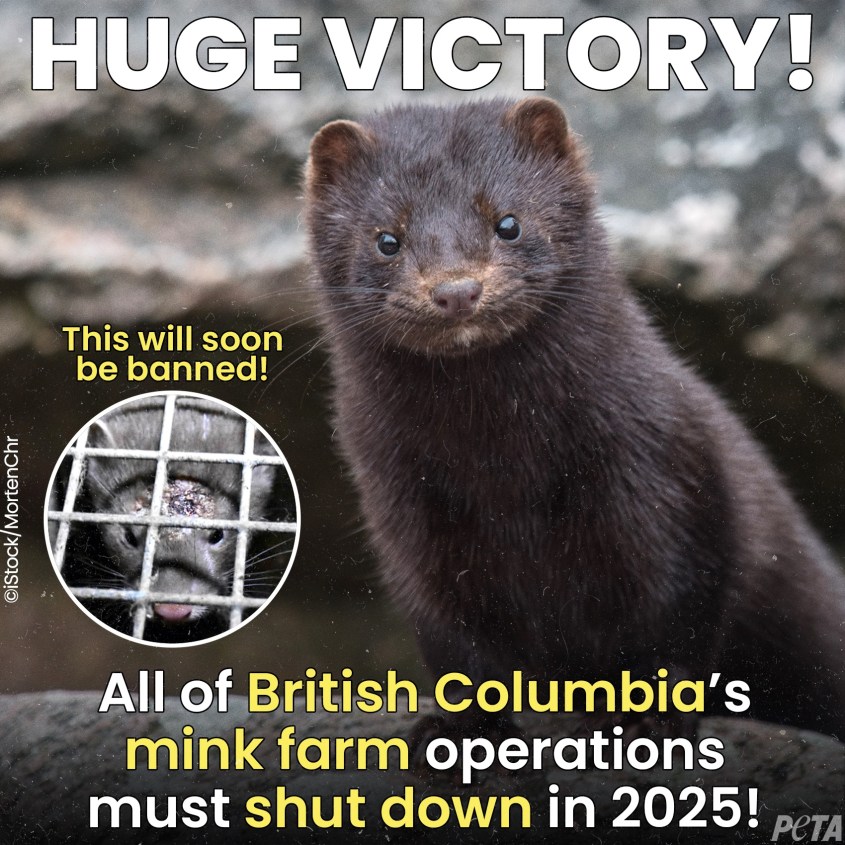
BREAKING VICTORY: Following pressure from PETA and our honorary Director Pamela Anderson, British Columbia’s government is shutting down ALL mink fur farms 🎉

The Canadian province has already banned breeding minks — soon the sensitive animals will be spared from the violent cycle of being jammed together in filthy wire-floored cages and skinned for their fur.

And I mean…Exactly a year ago the following message came in Forbes Magazine:

“Health officials in Canada’s British Columbia have declared a Covid-19 outbreak at a mink farm after eight people tested positive for the disease, with employees and animals now undergoing testing and contact tracing in a bid to control the spread of the virus”.

Most people don’t want to know (or suppress) what exactly is going on in the fur farms.
The fur industry is to blame.

Behind closed doors, hidden from the control of the public and the government, millions of minks are bred, tortured, and skinned alive under brutal conditions for fur, and it is precisely on such mink farms that the coronavirus has been detected and workers who have worked there have turned away infected.

Denmark-2020

We would never have believed that this industry would cease to exist so quickly as a result due to Corona.

After the coronavirus outbreaks on 22 Dutch mink farms, the mink farms there were closed at the end of 2020.
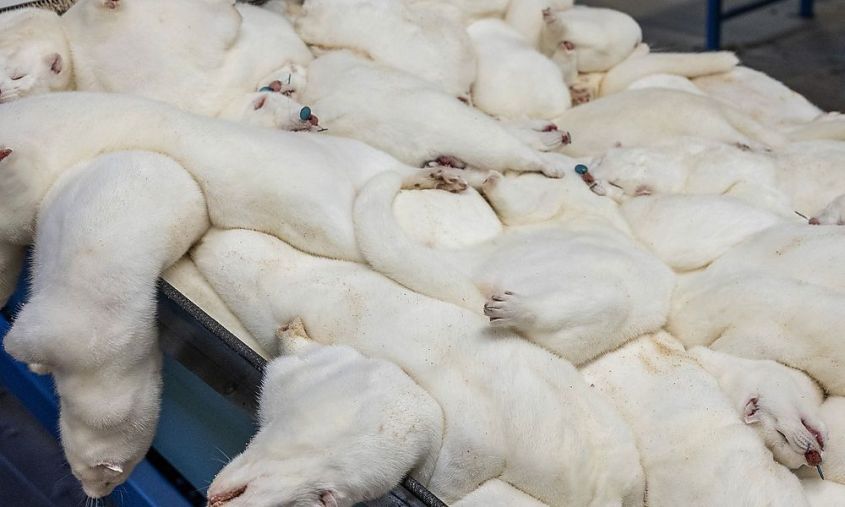
It was followed by Denmark (until 2023), after an unprecedented genocide by Mink with 15 million living beings.

The same reasons have already led other countries to ban fur farming.
These include Great Britain, Belgium, Japan, Norway, Austria, Slovenia, the Czech Republic and Luxembourg.
In countries such as Germany, Sweden, Italy or Switzerland, the rules for fur farms have recently been tightened in such a way that the operation in these countries is no longer financially viable for the breeders.

Mink fur farm-Canada

Canada is home to a large fur industry for mink, fox, marten, chinchilla, and other fur-bearing species.
According to the statistics of Canada, more than 230 registered mink farms and 50 registered fox farms have been counted across the country. In total, over three million animals are bred.
And just like in Europe, the conditions there, under which the animals suffer because of their fur, are catastrophic.

Even after the corona outbreak on mink farms in the Netherlands, public pressure increased in Canada to give health priority and close fur farms.
British Columbia has taken the first step.

Now is the time for ALL countries to follow the example of many fur-free countries around the world and put an end to this bloody business once and for all.

My best regards to all, Venus

Danish Government Makes Progress ?, Whilst UK (COP26) Government Cops Out On Imposing A Meat Tax and Promoting Plant Based Diets.

WAV Comment:

The Danish government are no friends of ours. 

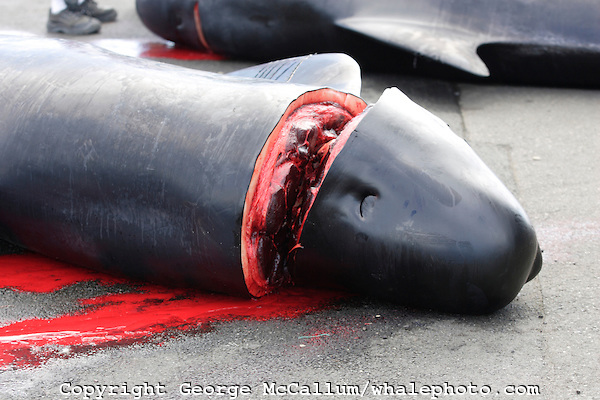
Mass mink murderers; mass murderers of marine mammals in the Faroe islands; take a look:

Search Results for “denmark mink” – World Animals Voice

Search Results for “faroe islands” – World Animals Voice

Also, never having even been polite enough to respond to our letter to the Danish ambassador in London re the mass mink murders:

Denmark: Still No Response From The Danes Regarding Our Letter of 12/11/20. That’s Life – Or Death, If You Are Danish Mink ! – World Animals Voice

And as of today, 22/10/21 we still have never had any response back.

Now we hear (and welcome) the following; ? something for the British government to take note on – see below for more;

Regards Mark

Denmark announces 1 billion kroner for plant-based foods in historic climate agreement

The Danish government has announced over 1.25 billion kroner (€168 million) in funding to advance plant-based foods, as part of an unprecedented climate agreement for food and agriculture.

The Danish government has announced over 1.25 billion kroner (€168 million) in funding to advance plant-based foods, as part of an unprecedented climate agreement for food and agriculture. This funding is the largest investment in plant-based research and development by any EU country to date. 

The agreement, endorsed by all major parties in the Parliament, acknowledges that plant-based foods must be a “central element in the green transition” and commits the government to creating a national action plan for plant-based food with clear targets for production and sales.

Research by Oxford University shows that the world cannot meet its climate targets without shifting away from conventional animal agriculture. Moving to plant-based meat could reduce climate emissions by up to 90% compared with farming animals.

Under the new agreement, Denmark will create a Fund for Plant-based Food Products, providing 675 million Danish kroner (€90 million) over nine years to support product development and promotion. 

For farmers, a five-year Plant-based Eco-scheme will pay 580 million Danish kroner (€78 million) in bonuses to those who grow plant-based protein crops for human consumption. 

An existing EU-funded scheme, which provides funding for “environmental technology”, will be expanded to include processing equipment for plant-based foods.

The government will also devise a strategy for “green proteins” for animals and humans, backed by 260 million Danish kroner (€35 million) over five years. This funding is likely to support fermentation-made proteins and cultivated meat (grown from cells), as well as animal feed.

Rune-Christoffer Dragsdahl, secretary general of the Vegetarian Society of Denmark, said: “It is groundbreaking that we will have a national action plan for plant-based foods with specific objectives, and that Denmark will invest more than 1 billion kroner in this area. This is one of the largest amounts that any country has invested in plant-based development. 

“This agricultural agreement will create thousands of jobs in the plant-based sector. If more funds are set aside later as part of the ongoing negotiations over research investment, we could see tens of thousands of new jobs.”

Acacia Smith, policy manager at the Good Food Institute Europe, said: “With this announcement, Denmark has recognised the huge potential of sustainable proteins to drive down agricultural emissions, and established itself as Europe’s biggest public investor in plant-based innovation. 

“As they prepare for COP26, governments around the world should be factoring plant-based and cultivated meat into their climate plans. If they are serious about meeting the Paris Agreement and building strong, green economies, they must follow Denmark’s lead and invest in bringing sustainable proteins to consumers’ plates.” 

Denmark announces 1 billion kroner for plant-based foods in historic climate agreement – GFI Europe

Meanwhile; in the UK; where COP26 is being held and so very promoted by the UK government; it seems like some information was released (spilled out) when it should not have been – read on::

Plan that suggested meat tax to help people go vegan swiftly deleted

A meat tax should be brought in to tackle climate change and help people move towards a vegan diet, experts have told the Government.

A model for increasing the price of ‘high-carbon foods’ was drawn up for ministers exploring ways to combat rising global temperatures.

The paper was seen by The Telegraph when it was published by mistake on Wednesday morning before it was removed soon after.

The plan was drawn up by the Business department’s Behavioural Insights Unit, known as the ‘nudge unit’.

The recommendations included giving shoppers vegan recipes when they buy new pots and pans and offering students cooking classes that avoid high-carbon foods.

Other solutions included increasing the ‘relative availability’ of plant-based food and providing children with ‘sustainable defaults’ in schools.

But the Government has insisted it has no plans to carry any of these suggestions out, saying the document is an ‘academic research paper, not government policy’.

‘We have no plans whatsoever to dictate consumer behaviour in this way,’ a spokesperson said.

Researchers went on to say that Brits’ hearts and minds could be better won over if the action was directed at farmers instead of consumers.

This ‘bold policy’ would impose a carbon tax on producers of red meat – beef, lamb and mutton.

But experts worry this would just welcome competition from producers which export into the UK that would not be subject to the same environmentally friendly or welfare laws as British farmers.

Indeed, Conservative MP for Thirsk and Malton Kevin Hollinrake said: ‘Most livestock farmers, most hill farmers are break-even at best.

‘You start putting taxes on them, and they are out of business…It will not only hit farming, it will devastate communities.’

The Government stressed a meat or dairy tax was not part of its Net Zero strategy – a goal for the UK to cut carbon emissions to net-zero by 2050 which was set out on Wednesday.

Boris Johnson plans to do this with other consumer-directed measures, including phasing out petrol and diesel cars and replacing boilers with low-carbon electric heat pumps.

The Treasury has warned this could cost the UK £37 billion a year but business secretary Kwasi Kwarteng told Times Radio: ‘The cost of inaction actually could be greater than actually doing things’.

‘Metro’ – London.

Paper calling for meat tax to help people go vegan swiftly deleted | Metro News

I have one thing to say to both the UK, and the Danish murdering governments

Regards Mark

Denmark extends the ban on mink breeding for another year

This is an important decision: Denmark is extending the ban on mink breeding for another year to protect against the corona virus, i.e. until 2023.
This was announced by Agriculture Minister Prehn in Copenhagen.
The mink is the only animal in which it has so far been established with certainty that it can both become infected and infect humans.

The current ban should only apply until 2022.
It was imposed after the coronavirus spread to nearly 300 mink farms in Denmark and prematurely killing all 15 million animals in the country.

The Danish government believes that mink farming could still pose a public health risk next year – hence the extension.
Because mink farms are not only an absolute horror for the animals, which are kept in tiny cages until their painful death.

Fur farms also represent a potential reservoir of disease, because viruses can spread quickly in the crowded confines.

https://www.deutschlandfunk.de/covid-19-daenemark-verlaengert-verbot-von-nerzzucht-wegen.2932.de.html

And I mean…Denmark was once the world’s largest exporter of mink – that’s over now.
When the country ordered the unnecessary mass murder of 15 million minks in 2020, the Ministry of Agriculture announced that the mink industry would now de facto be shut down for several years, but not be banned.

The breeders could actually be very satisfied: Because around 1,000 companies with a total of 2,700 jobs were able to receive the equivalent of up to 3 billion euros in 2020.

The compensation does not exclude a subsequent resumption of breeding. Only in this case would the breeders not be entitled to the total compensation, which is intended for a loss of earnings until 2030.

In other words: the industry was showered with money, although none of the companies had been profitable since 2019 and one in four was even about to go bankrupt.
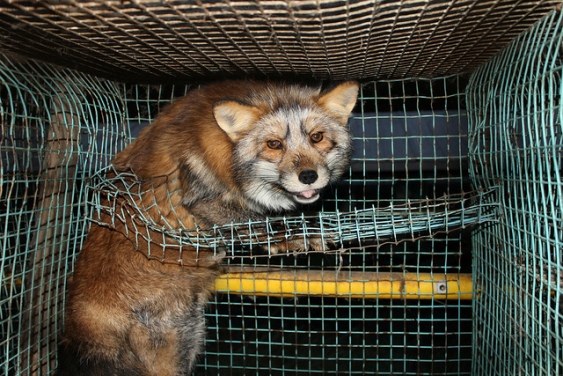
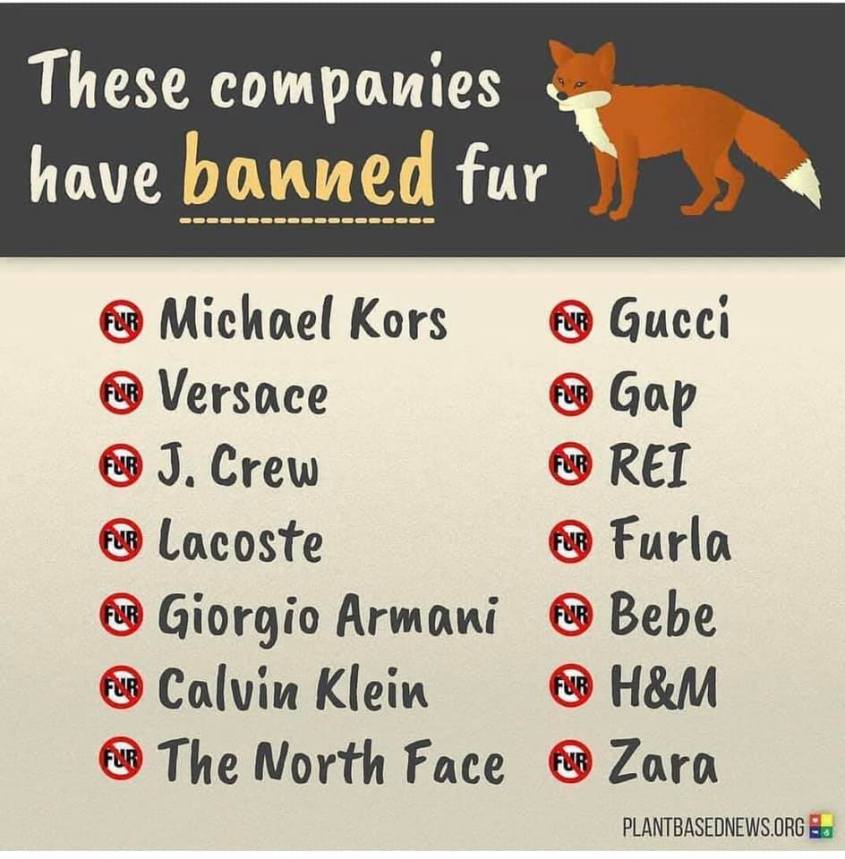
All fur farming must be banned forever!!!
Not to prevent the next pandemic (because it did not come from the mink farms), but to end this unspeakable animal suffering.

My best regards to all, Venus

Kering Group and all of its brands are now fur-free: ‘The right thing to do’

One of the world’s largest luxury fashion companies, Kering Group, is ditching fur for good: citing ethical and ‘modernity’ reasons.

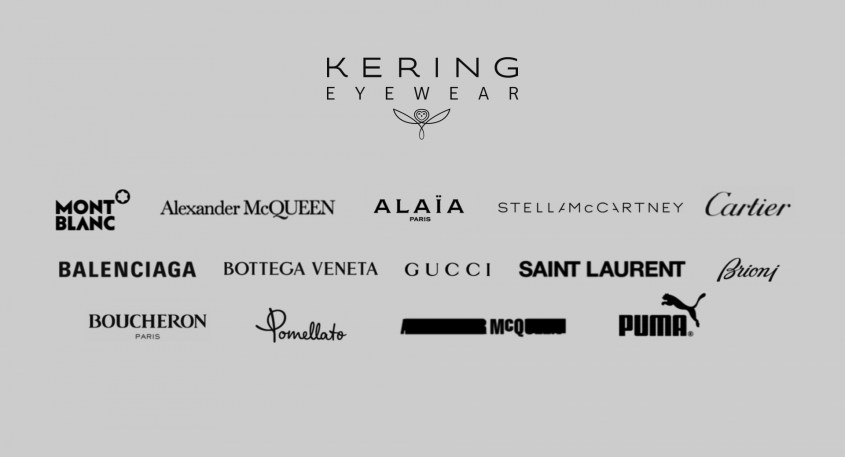
Kering is the parent company of Gucci, Alexander McQueen, Yves Saint Laurent, and Balenciaga.

Additionally, Bottega Veneta, Boucheron, Girard-Perregaux, Qeelin, Pomellato, Ulysse Nardin, Brioni, and more.

Most of Kering’s brands had already dropped fur from their collections.
Now, Yves Saint Laurent and Brioni have followed suit.

This means the entire fashion conglomerate is now fur-free.

‘The right thing to do’

Kering, which brought in €13.1 billion of revenue last year, started going fur-free back in 2017.
This is when Gucci, which was founded 100 years ago, stopped using fur.

François-Henri Pinault is the chairman and CEO of Kering. He said in a statement sent to Plant Based News: “Going entirely fur free is just the right thing to do. We do it out of conviction, for the sake of ethics and modernity.”

In a separate statement, Pinault explained:

“For many years, Kering has sought to take the lead in sustainability, guided by a vision of luxury that is inseparable from the very highest environmental and social values and standards.
When it comes to animal welfare, our Group has always demonstrated its willingness to improve practices within its own supply chain and the luxury sector in general.”

“The time has now come to take a further step forward by ending the use of fur in all our collections. The world has changed, along with our clients, and luxury naturally needs to adapt to that,” he added.

‘A new era’
PJ Smith, Director of Fashion Policy at the Humane Society of the United States (HSUS), commended the move.
HSUS worked with Gucci in 2017 to announce its fur-free policy.

“Kering is synonymous with luxury fashion, and with this announcement, it marks a new era for what is considered luxury to now include what is socially responsible, ethical and innovative,” Smith said.
“We hope the rest of the fashion industry will take notice choosing compassion and innovation over an outdated idea of luxury.”

Starting from the Fall 2022 collections, none of the Kering’s houses will use fur.

However, the group’s brands still produce items with wool and leather.
The company says the production of these materials will be monitored under its set of animal welfare standards, which it published in 2019.

https://plantbasednews.org/lifestyle/fashion/luxury-fashion-kering-group-fur-free/

And I mean…Leather is just skin without fur, so the next step must be leather-free.
Even so, this decision is another blow to the fur industry and makes us happy.

They call it ethical & humane choices, but in reality they’re only going fur-free because of pressure

May not have happened if fur farms weren’t closed due to the COVID outbreak in mink farms.
They realized that sourcing fur from intensive animal husbandry is risky and therefore not a stable investment.

All the same! the result counts! And the result saves millions of animals from torture and murder.
It is still a positive move forward and with it the list of fur-free fashion houses is getting longer and longer

My best regards to all, Venus

Sweden: New Swedish report shows extensive spread of SARS-CoV-2 within and between mink farms.

New Swedish report shows extensive spread of SARS-CoV-2 within and between mink farms

22 July 2021

Djurens Rätt

News

Djurens Rätt, together with about 40 other organisations, sent a combined plea to the Swedish government and parliament on June 23, calling for a decommissioning plan for mink farms in Sweden. The government imposed a temporary breeding ban in 2021 after SARS-CoV-2 was transmitted on the majority of Sweden’s mink farms in the autumn of 2020.

In January of this year, the Swedish government stated that breeding minks would be prohibited during 2021. The decision came after nearly a year of warning reports regarding the development of Covid-19 among minks on Swedish fur farms.

Djurens Rätt, along with 44 other organisations, has written a joint appeal to the Swedish government and parliament, addressed to the Rural Affairs Minister Jennie Nilsson, calling for the permanent closure of mink farms. This is due to the significant dangers of infection propagation on densely populated mink fur facilities. 

Moreover, the Veterinary Institute in Sweden has recently released a report on infectious disease surveillance in animals and humans during 2020, the results of which being disastrous when it comes to mink farms. They found:

  • 23 of 26 farms had minks with antibodies for the virus, but only 13 infected farms were found during the active testing. All farms weren’t tested for antibodies (of approximately 35 farms in total).
  • Active surveillance didn’t start before October 2020 and it was still not mandatory for the farms to test their minks if they didn’t want to.
  • A lot of the farmers and workers were tested and there were indications that minks had been infected by humans, but also that minks infected humans. Some mutations with adaptations to the minks were also found. 
  • ”The high animal density that is typically present in a mink farm, provides ideal conditions for viral replication and transmission, also increasing the risk of virus evolution.”
  • “In Sweden extensive spread within and between farms occurred in spite of implemented biosecurity measures, as shown by the results from the surveillance carried out.”

Sweden has enough evidence to phase out this unethical industry. It is time to ban farming of minks in the country and to make sure that the current ban on breeding becomes permanent 

Camilla Bergvall, President of Djurens Rätt

Read more at source

Djurens Rätt – Stort upprop – stäng minkfarmerna i Sverige permanent!