Category: Fur and Fur Farming

Israel bans the sale of fur – not a novelty, but whitewashing

Recently there has been a boom on the Internet that Israel introduced the fur ban (as the first country in the world).
The animal rights scene is cheering, and the gullible animal rights activist praises Israel with comments, gifs, and emoticons on the Internet.

However, in addition to this mass euphoria about the new novelty, there are two small hooks that, in the case of Israel, allow animals to be bestially killed because of their fur, namely:
On the one hand in science for educational and research purposes, i.e. for unholy animal experiments.
And on the other hand for the production and sale of the so-called “Schtreimel”,( שטרײַמל‎) the headgear of ultra-orthodox Jews.
Once again, religion is tolerated by the state and placed above animal welfare in Israel.

A third but most important hoe makes this ban more than suspect.
Israel has drawn hatred and contempt from around the world after the last Gaza massacre.

It was already time for a diversion from Israel, which works best where there is a belief that animal welfare has nothing to do with politics, and therefore the ban (which is half one) is dated as breaking news.

First of all, one thing has to be said: some restrictions on fur have already existed.

Los Angeles and San Francisco have already banned sales.
California wants to be the first US state to follow the good example of these two cities in 2023.
In the Brazilian metropolis of São Paulo, the export and import of fur goods are already prohibited.

Perhaps very few people know anything about this, because none of these countries wanted to do the white washing of Israel with the ban, and neither did it need to.

So we do not participate, and we do not deserve any praise or recognition for countries, governments or instances that take a good step against animal suffering, but live in the Middle Ages when it comes to human rights and the autonomy of other countries.

My best regards to all, Venus

Estonia Becomes 14th European Nation to Ban Fur Farming.

We commented on this recently:

EU: Final vote on the ban of Estonian fur farms in June. – World Animals Voice

Estonia: Survey: Support for Banning Fur Farming in Estonia is Greater Than Ever Before. – World Animals Voice

Now we have the wonderful news we have all been waiting for – Congratulations Estonia.


Estonia Becomes 14th European Nation to Ban Fur Farming

Estonia is the latest European nation to ban fur farming, and the first-ever Baltic state to do so. The amendments follow a decade of campaigning by animal welfare groups.

Estonia just became the first Baltic state to ban fur farming.

The Riigikogu (Estonia’s parliament) passed amendments to the existing Animal Protection Act and Nature Conservation Act on Wednesday.

The act will now prohibit the breeding and keeping of animals solely or primarily for the purpose of fur farming, thereby excepting sheep and rabbit breeders. According to ERR News, 56 MPs voted in favor and 19 voted against the amendments.

“It’s a great day for the thousands of animals who will be saved from a life of suffering thanks to Estonia passing this law,” said Connor Jackson, CEO of Open Cages, in a statement sent to LIVEKINDLY.

According to a 2020 survey carried out by data and business insight company Kantar Emor, 75 percent of those living in Estonia are opposed to fur farming.

Why Has Estonia Banned Fur Farming?

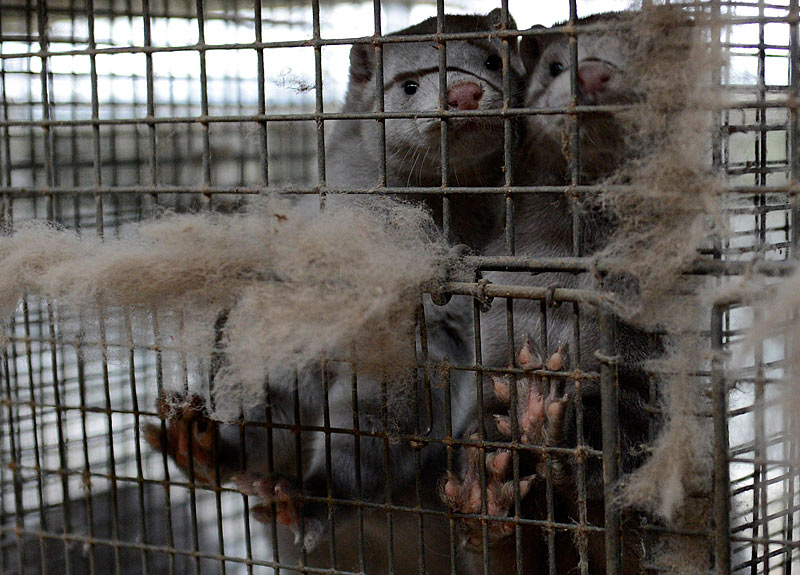
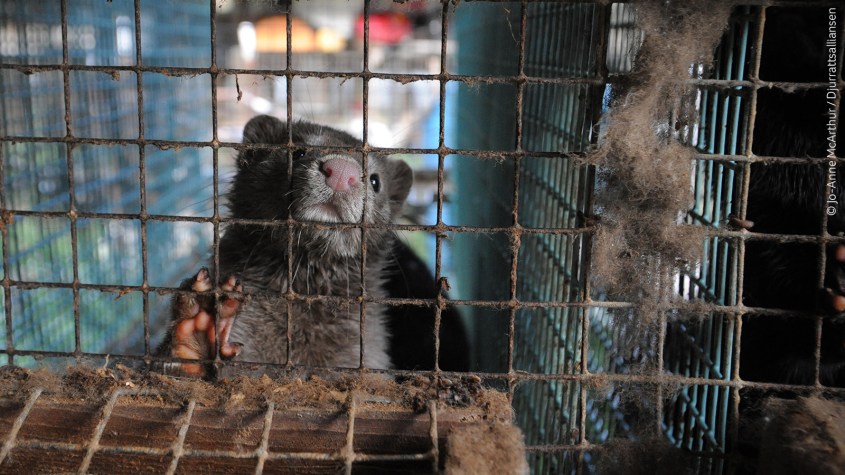
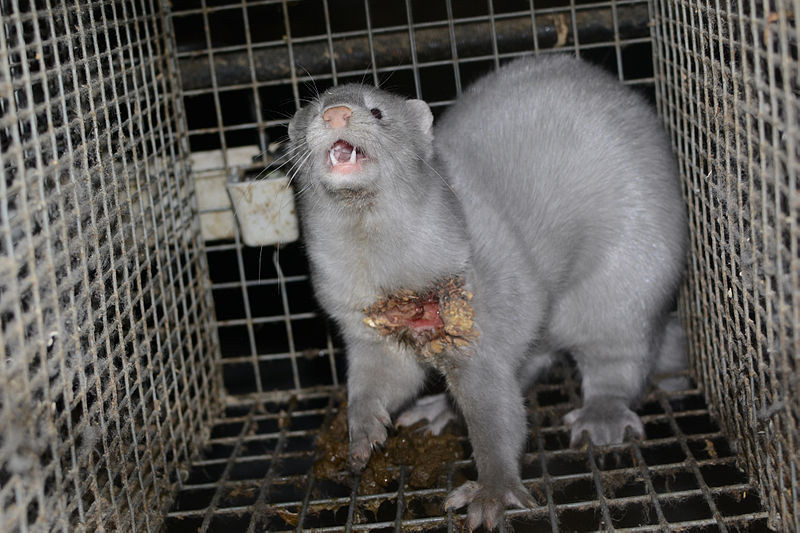
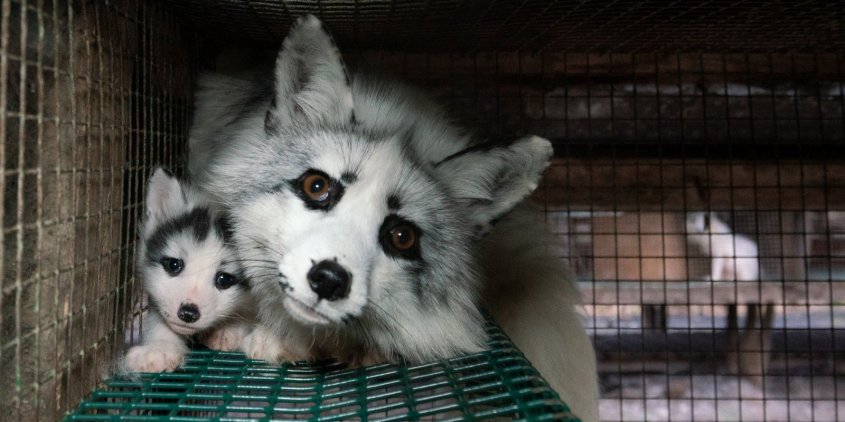
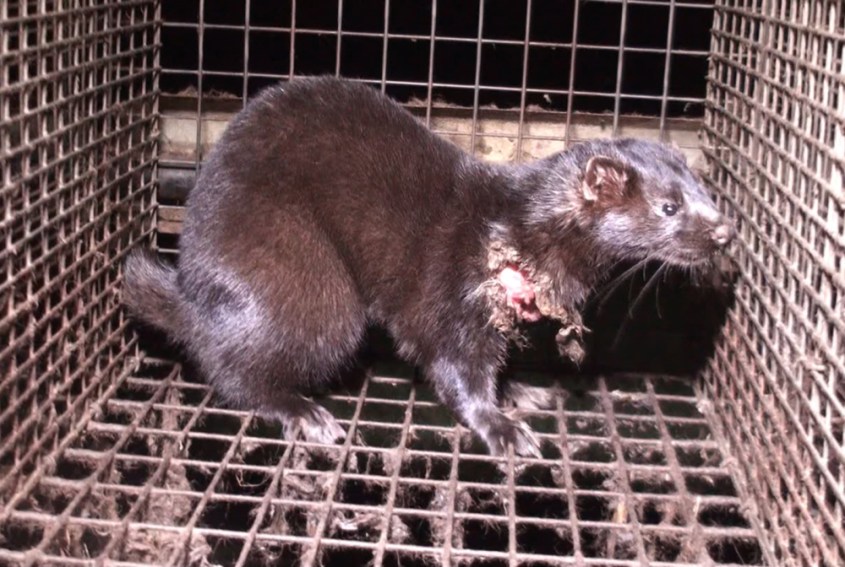
According to the Fur Free Alliance, current European fur farming practices are incompatible with even the most basic animal welfare standards, as well as EU law. Animals typically live in cramped, oppressive conditions and often experience both injury and disease.

Within the context of increasing global environmental efforts, the enormous negative impact of factory fur farms is both unnecessary and incongruous. The industry as a whole creates pollution, reduces biodiversity, and emits greenhouse gases.

Estonia has been discussing a potential ban since 2009, and the overall number of fur farms has significantly decreased since then. Today, the number of animals farmed has fallen from around 200,000 to just under 1,000, as per data from Open Cages.

At the beginning of 2021, the largest fur farm in Estonia (with a peak occupancy of 170,000 animals) announced that it is now empty. The government will issue no new permits for keeping mink and raccoon dogs after July 1, 2021, and will completely prohibit this style of fur farming after January 1, 2026.

The new amendments make Estonia the 14th European nation to ban fur farming. This includes the UK, which has prohibited fur farming for over 20 years but is no longer a member of the EU.

Will the UK Finally Update Its Own Legislation?

The UK government has banned farming itself but not yet restricted the import and sale of fur (neither has Estonia). But as an early adopter of fur farm bans, the UK faces pressure to lead the global shift away from fur. Also, Britain has imported £434,817 worth of fur from Estonia in the past five years, bypassing existing restrictions.

However, the current Conservative government recently published a “call for evidence” that could support more comprehensive legislation on import and sales.

Humane Society International/UK (HSI/UK), the founding organization behind the #FurFreeBritian campaign and coalition, recently revealed that 72 percent of Brits would support further restrictions on fur. Just three percent of the public actually wear animal fur.

“The majority of Brits want nothing to do with the cruelty of fur farming and trapping and support a ban on fur being imported and sold here,” said Claire Bass, executive director of HSI/UK, in a statement sent to LIVEKINDLY. “This is an important opportunity for both individual consumers and fashion businesses to let the government know that fur is firmly out of fashion in the UK.”

Open Cages is also a member of the #FurFreeBritian coalition. Jackson added: “As the latest country [Estonia] to rid themselves of this cruel industry, it’s more clear than ever that the UK must ban fur imports and finish what we started two decades ago.”

As fur becomes increasingly unpopular, many mainstream brands have been quick to distance themselves from the industry. Valentino, Saks Fifth Avenue, Alexander McQueen, Balenciaga, and Adidas are just some of the most recent brands to announce a move away from fur.

Estonia Becomes 14th European Nation to Ban Fur Farming (livekindly.co)
EU: Final vote on the ban of Estonian fur farms in June.

Final vote on the ban of Estonian fur farms in June

20 May 2021

Loomus

WAV Comment – Estonia joined the EU as a member state on 9 December 2010.

The Environment Committee has agreed that the draft Act for Animal Protection and Nature Conservation, which would prohibit fur farms in Estonia, will be put to a final vote on June 2nd.

This announcement has brought joy and optimism to our Estonian member organisation Loomus. “Loomus has been working on the fur ban for years and the decision that the Environment Committee made today takes us very close to finally put an end to this cruel industry. We are glad that the politicians are taking animal-friendly steps and we are very optimistic that this time the farms will be banned,” said Annaliisa Post, Communications Manager and Board Member at the animal advocacy organization.

According to a Kantar Emor poll conducted in September, 75 percent of Estonians are opposed to the breeding of animals such as foxes and minks for their fur. In 2016, 69 percent of respondents agreed, indicating that support for a fur-free Estonia is growing.

Read more at source

Loomus : Estonian parliament will make a decision on banning fur farms in June

Best wishes to our friends at Loomus for a BIG victory in June; the public are behind you with support;

Regards Mark

Great news – click to read more:

Prominent Estonian fashion designer Tiina Talumees is fur free – Loomus

EU: European Commission introduces mandatory SARS-CoV-2 screening in all European mink fur farms.


WAV Comment – yes, we still have never heard back from the Danish murdered regarding the mass slaughter of minks for fur:


England: WAV Writes to the Danish Ambassador In London re Denmark’s Mass Mink Murders. – World Animals Voice


The Year of the Zombie Mink – See latest:

Denmark: year of the Zombie-Minks – World Animals Voice


So much for the EU being in control of things !

Regards Mark


European Commission introduces mandatory SARS-CoV-2 screening in all European mink fur farms

19 May 2021

LAV

On 12 May, the European Commission adopted the Implementing Decision 788 which sets standards for the surveillance and reporting of SARS-CoV-2 infections in mink (and raccoon dogs) bred for fur production.

This decision means that, for the first time, there is a mandatory and harmonised diagnostic screening and reporting system in place for all Member States, after more than 400 fur farms saw outbreaks of SARS-CoV-2 in 2020.

The Commission has deemed it necessary to initiate this monitoring in all Member States “without delay”, demonstrating the considerable risks to public health connected to fur farming.

The EU Commission has recognised the risk to public health connected to the presence of mink (and raccoon dog) farms for the production of fur and now, finally, it has adopted a system of control of these farms with active surveillance (diagnostic tests). In Italy we have already had outbreaks on 2 farms out of 8; the time has come for the Minister of Health to assume political responsibility to permanently ban fur farming.

Simone Pavesi, Campaigner, LAV

Diagnostic surveillance involves carrying out virological tests on a weekly basis, on live or dead animals, for a number equal to at least 5% of the population of any single farm. This sampling level can be adjusted from 5% to 20% in the case of positive results for SARS-CoV-2. 

However, there are possible loopholes in Implementing Decision 788. Competent authorities can decide to switch from active surveillance to passive surveillance on farms that adopt risk reduction measures. Farms under passive surveillance will only be required to test animals if mortality is increased or farm workers test positive for SARS-CoV-2.

This creates the risk of reversing monitoring systems to those of 2020 where surveillance protocol was based on mere clinical observation, in clear contrast with scientific evidence which suggests mink are in most cases asymptomatic. This would increase the risk of creating SARS-CoV-2 reservoirs, with serious public health implications.

In Italy, a country which, while having suspended mink fur farming for 2021, still has operational farms, 77% of the adult population are in favour of the adoption of emergency measures to end fur farming and breeding. This illustrates that by allowing fur production to continue, the European Commission is more concerned with protecting the economic interests of a small group of stakeholders at the expense of the health of all European citizens. 

Eurogroup for Animals urges the Commission to act decisively to protect public health by closing fur farms.

Read more at source

LAV

Regards Mark


Valentino says goodbye to the use of fur

The last Valentino collection to incorporate fur into its garments will be for the 2021-2022 autumn-winter season, and with this change in the firm’s policy, the Milan-based company Valentino Polar will close.

The Italian firm synonymous with luxury and the best “made in Italy” has just announced in a statement that it will eliminate the use of fur from 2022, which is also preparing to reorganize and concentrate all its collections on a single label in 2024.
“We are working on finding different materials to achieve greater attention to the environment,” the firm has announced, according to Ara

“The concept of not using leather is perfectly aligned with the values of our company,” said the firm in a statement released by the Italian media.

The decision is unanimous and surgical, since the information note specifies that his fur company, called Valentino Polar, based in Milan, owned by the Roman brand since 2018, will cease all production at the end of 2021.
It also specifies that the latest leather garments and accessories of the Italian house will be those that appear in the autumn / winter 2021-22 work.

The Italian firm, one of the few in the fashion world based in Rome, was founded in 1959 by designer Valentino Garavani with capital from his father and an investor.
After 45 years, Garavani left the company, which was creatively headed by Maria Grazia Chiuri and Pierpaolo Picciolo. Currently, only Picciolo continues to work for the group, which has focused very directly on connecting with Gen Z.

Valentino Chief Executive Jacopo Venturini, who joined the Italian group last year when the luxury goods industry was hard hit by the pandemic, decided also to stop collections for its younger label RED Valentino.

“The concentration on one, and only one brand, will better support a more organic growth of the Maison”, the former Gucci executive said in a statement. –

Valentino is already working with the syndicates to address the organizational changes within the company caused by these decisions.

Bravo for Valentino!

https://www.animanaturalis.org/n/valentino-dice-adios-al-uso-de-pieles

And I mean...Martina Pluda, Director of Humane Society International, added: “Valentino dropping fur is a major nail in the coffin for the cruel fur trade. Like so many other designers, Valentino knows that using fur makes brands look outdated and out of touch, and fur industry certification schemes are little more that the hollow PR spin of an industry that kills 100 million animals for fur a year.

Compassion and sustainability are the new luxury in a world where dressing in the fur of factory farmed foxes or gassed mink is tasteless and cruel.”

We agree with HSI’s comment.
If the fashion world continues to decide against fur at this pace, soon NO designer will buy fur anymore.
And what the buyer does not find on the shelves, does not buy.

My best regards to all, Venus

Denmark: year of the Zombie-Minks

Millions of minks have been killed in Denmark due to a mutation in the coronavirus. Now the animal carcasses are causing a lot of trouble for the authorities.

Millions of furry animals hurriedly buried break out of their graves: What looks like a scene from a horror film is real in Denmark – and forces the government to act

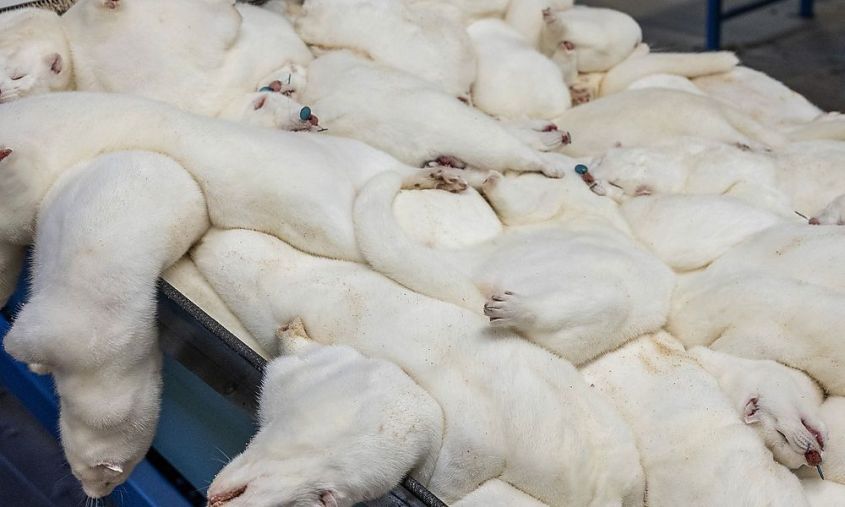
For animal rights activists, it is one of the scariest side effects of the corona pandemic: by order of the Danish government, all 17 million farm minks in the country were killed within a very short time in November 2020.
Previously, more than 200 of a total of 289 mink farms had Sars-CoV-2 infections; Experts feared mutations that could act as a fire accelerator for the pandemic.

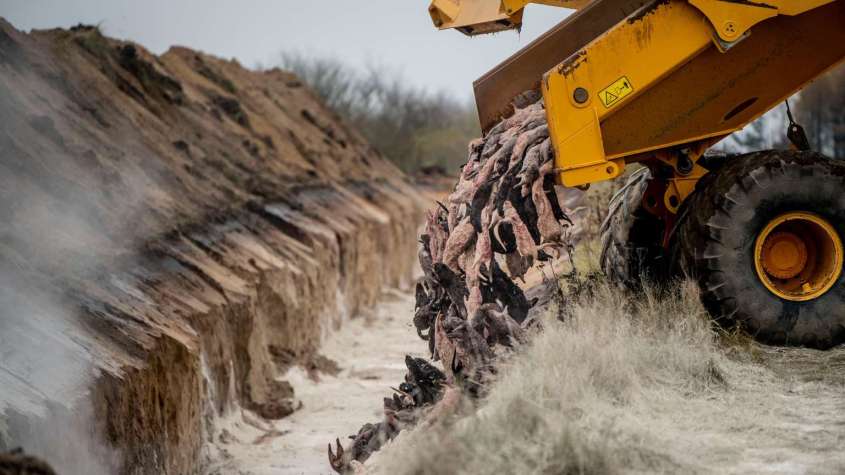
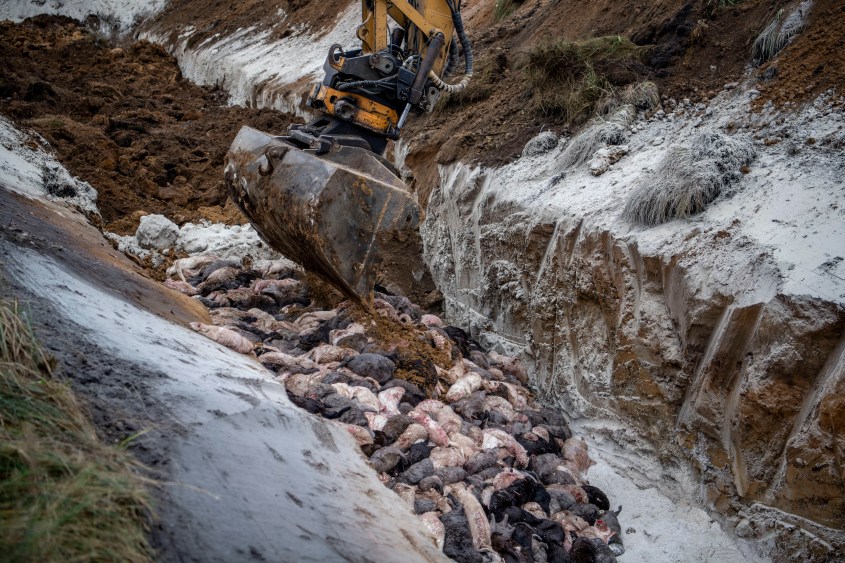
13 million animals ended up in incinerators, four million were hastily buried in mass graves in the west of the country.

Morten Stricker/Dagbladet Holstebro Struer/Jysk Fynske Medier/Ritzau Scanpix.

According to media reports, this is now taking revenge!

Because … Shortly after the animals were buried, the problems emerged – literally. Although the carcasses were at least three feet underground, putrefactive gases in some places caused them to come back to the surface.
The sandy bottom couldn’t prevent it.

The mass graves, which were criticized for their proximity to bathing lakes and groundwater reservoirs, have now become places of horror.

The Danish government has therefore ordered that the buried carcasses also be exhumed and cremated.

13,000 tons of decaying meat are exhumed

As the Danish news agency Ritzau reported, they should be burned in several stages.
In total, it is an estimated 13,000 tons of meat and bones.

The actual work should only start at the end of the month and drag on until mid-July. Only a test phase began on Thursday because none of the 13 waste incineration plants involved had experience with the mixture of mink carcasses, lime, earth and salt, according to the Ritzau report.
Authorities ask residents to keep the windows closed

The soil under the mink graves must also be removed and replaced, it said.
Only then can an end to the odor nuisance for residents be expected.

According to the Danish radio station DR, an employee of the Danish environmental authority advised people in neighboring towns not to have garden parties until the work was completed.
Leaving the windows open or hanging laundry outside is not recommended.

https://www.geo.de/natur/tierwelt/daenemark-exhumiert-millionen-nerz-kadaver-30532246.html

And I mean…For the mink-genocide in November 2020 of 17 Millions animals, it was said that the Danes had no other choice.
And of them, 4 million innocent, uninfected animals went underground in mass graves.

Now it turns out that this crime has contaminated the groundwater, although supposedly experts were at work!

Yes …apparently experts are steering this pandemic! Back to the ground again, a good signal for the destroyer and exploiter – the human animal!
The mink vampires climb out of the graves and will take revenge on us for everything we did to them.

Good thing.

My best regards to all, Venus

Estonia buns fur farms- another coffin nail in the fur industry

Report by Martin Balluch (Chairman of the Association against Animal Factories-VGT) – Austria

Yesterday the Estonian Parliament voted in the responsible committee to ban fur farms.

The final vote in the parliamentary plenary will take place on June 2, 2021.

Another coffin nail in the fur industry!

Martin Balluch was in Estonia in 2004 and 2005 to film fur farms.
There were still some very large farms from the communist era. These farms are now closed.

But the fur farming ban sends an important political signal.
Great Britain plans to ban the import of fur for clothing in the near future. If all EU countries have fur farming bans – and that day is not far away – then an import ban for fur can follow here too.

So whoever looks at the development of the abolition of the fur industry cannot help but see an animal welfare revolution.

At the beginning of the 20th century, Vienna was the central fur trading center, with 1500 pure fur shops.

In the 1990s, every woman on pedestrian zone in Vienna wore a fur coat in winter.

In 1998 the Association against Animal Factories achieved the world’s first fur farming ban, in Austria.
Violent campaigns against fur shops and fur in clothing chains followed.

In 2004 the fur ban came in Great Britain, and then in numerous other states.
Fur import bans for cat, dog and seal fur into the EU have been enacted.

Now there will soon be an import ban on all fur in the UK.

Within 25 years, the fur trade was essentially ended.

https://www.facebook.com/tierrechtedemokratie

And I mean… We’re glad! we are very glad.
Every murder and torture site that closes is free from suffering and that is a good thing.

My best regards to all, Venus

Sea Shepherd: There are many ways to save animals

#ThrowbackThursday# – Sea Shepherd

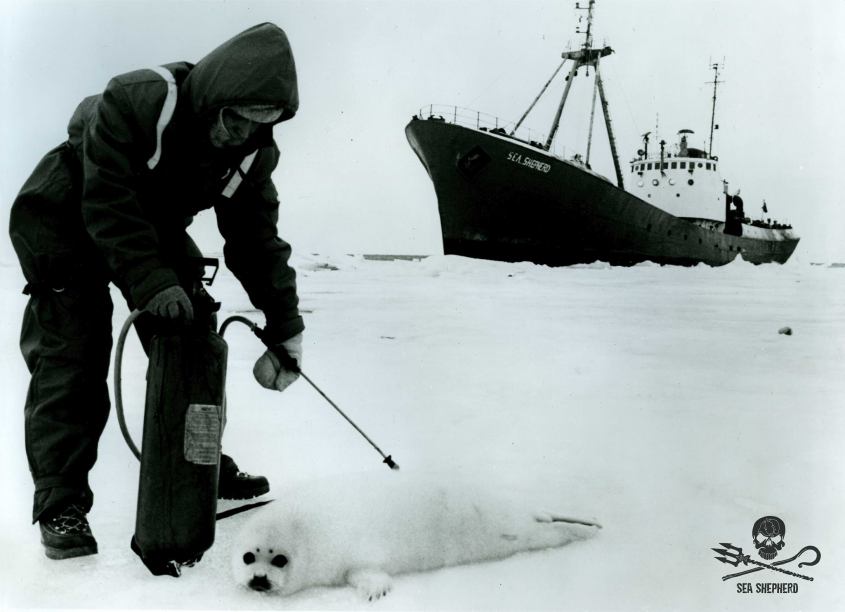
March 1979 – The Sea Shepherd was the first ship to go to the ice fields off the Eastern Coast of Canada for the sole purpose of protecting seals.

Before being arrested for approaching a seal hunt without permission of the government, Sea Shepherd crewmembers saved over a thousand baby seals by spraying their white pelts with an indelible organic dye to render them commercially worthless.

In March 1980, Captain Paul Watson was banned from the ice fields and the sealing areas for three years.

In March 1981 Captain Watson lead a crew with three ocean kayaks to the Gulf of St. Lawrence despite his parole order. Hundreds of seals were sprayed with harmless blue dye effectively saving their lives.

Captain Paul Watson’s conviction of 1980 was later overturned on appeal.
These and later interventions, plus high profile supporters helped start the demise of the Canadian fur seal hunt.

With recent moves by the EU to ban seal imports and major fashion houses across the globe to stop the use of any kind of fur in their designs, the end of a 40-year battle may finally be in sight.

Learn more about our history: https://bit.ly/2ifJ2wO
Support our efforts: https://bit.ly/2fz7okb

#Canada #TBT #Seal

And I mean…When I see how many fashion designers have banned fur from their creations in recent years, how many countries have closed their fur farms and how many department stores in Germany and throughout Europe have said goodbye to fur, then our fight has already had a positive result that strengthens us and we will continue to fight this fight.

My best regards to all, Venus

England: London Mayor Election 6/5/21 – One Candidate Is From The ‘Animal Welfare Party’.

The 2021 London mayoral election will be held on 6 May 2021 to elect the mayor of London

Being Mayor of London city is a very important position. The mayor of London has responsibilities covering policing, transport, housing, planning, economic development, arts, culture and the environment.

They control a budget of around £17 billion per year.

Vanessa Hudson (Animal Welfare Party)

The Animal Welfare Party’s leader of 11 years wants to make London a ‘world-leading city for people, animals and the environment’.

Ms Hudson would promote vegan diets across the capital, partly to help prevent future pandemics.

She also backs improving the NHS and a number of green policies. But her key campaign issue is speciesism – which rejects the idea that animals and humans should be treated differently.

She would like to see London stop selling foie gras and fur products, end the restaurant practice of boiling lobsters alive, and exhibiting captive animals in London’s zoos and aquariums. The media producer and founder of Vegan Runners UK would also champion the phasing out of animal testing at London’s universities.

https://en.wikipedia.org/wiki/Animal_Welfare_Party

WAV Comment – we wish Vanessa masses of victories in her campaign to be London Mayor.

Regards Mark


Fur farming in Belgium will end soon – first Flemish farms close

In Flanders, eleven of the 16 fur manufacturers want to close earlier, and the only producer of foie gras in Flanders is also going out of business.

From the end of 2023, such establishments will be banned in Flanders.

Those who close earlier receive a bonus. A special commission will determine the value of the company and the premium will be calculated on this basis.

In order for the businesses to close as early as possible, the premium will decrease over time.
“Fur-farming is still profitable, but animal welfare comes first,” says the Flemish Minister for Animal Welfare, Ben Weyts (N-VA).

Fur farming has been banned in Wallonia since 2015, but at that time there were no longer any farms.

Foie gras can still be produced in Wallonia.

https://brf.be/national/1473788/

And I mean… From a legal point of view, fur animals are either not protected at all or completely inadequately, and this applies worldwide.

In 1999 the Council of Europe adopted a “Recommendation” on fur animals on farms.

However, this was completely inadequate, as cage management remains permissible in a confined space.


Wire mesh floors live, the animals spend their entire lives in narrow mesh cages living on wire mesh floors, without a sheltered place to sleep, without opportunities to retreat from their own species, without opportunities to move around, and without variety.
In many EU countries, there are no further regulations for fur farms, and in order to continue to earn money with animal cruelty, the mink breeders even ignore the minimal requirements of the legal situation.

While the fur farms in Europe are gradually becoming fewer, the Chinese fur farmers benefit from the non-falling demand and therefore the low supply of European farms is lucrative for them.

Since their biggest competitor Denmark is currently “paralyzed”, prices and products on the Chinese market are rising.

The Chinese government banned the trade in wild animals at the beginning of the corona pandemic, but by reclassifying mink, fox, and raccoon from wild animals to “special farm animals” in April, these animals can still be traded and killed for the fur industry.

The list of countries that pave the way for a fur-free future continues to grow: Belgium, Bosnia and Herzegovina, Great Britain, Japan, Croatia, Luxembourg, Macedonia, Norway, Austria, Serbia, Slovakia, Slovenia, Czech Republic …

In September 2020, France announced a mink farm ban with a five-year transition period.

Strictly speaking, the commercial breeding and killing of fur animals are not prohibited in Germany.
However, from 2022 onwards, the minimum requirements for keeping animals have been tightened to such an extent that keeping fur animals is no longer economically viable.

Coronavirus kursiert erneut in Pelzfarm - HeuteTierisch - heute.at

One can only hope that the economic losses in the fur industry caused by Corona will turn things around.

My best regards to all, Venus