Category: General News

England: True horror of EU live animal transport masked in official records - CIWF Report.

True horror of EU live animal transport masked in official records 

28 November 2023

CIWF

My bold, underline etc – Mark.

Press Release

Shocking new report reveals suffering endured by around 44 million farmed animals a year – including unweaned calves and lambs – on horrific journeys lasting up to three weeks. Inadequate and misleading official records are masking the true horror and scale of the EU’s long-distance trade in farmed animals, a shocking new report released today by international NGOs Eurogroup for Animals and Compassion in World Farming reveals. 

Photo – Mark

The new report  A data dump of suffering: the EU’s long-distance trade in farm animals exposed  analyses a cache of previously unpublished EU records relating to the long-distance transportation of 180,000 consignments of farmed animals within and from the EU during a 19-month period from October 2021 to April this year. It reveals disturbing details of the extent and nature of suffering endured by around 44 million farmed cattle, sheep, pigs and other animals transported annually.

Key insights from the report include:   

Over 370,000 unweaned calves were taken from their mothers shortly after birth and deprived of nutrition during long journeys – many as young as just two weeks old. 300,000 unweaned lambs are also imported by Italy alone each year, enduring long journeys without adequate feed.   

Thousands of sheep and cattle are exported from the EU by road to Kazakhstan, Uzbekistan, Kyrgyzstan, Azerbaijan, Armenia and Georgia in journeys lasting up to three weeks.   

Anti Live Export March – Dover, England. Photo – Mark

France, the Netherlands and Denmark have exported thousands of pigs to extremely distant countries including Brazil, Vietnam, Thailand, and Nigeria. By exporting breeding sows that have been genetically selected for very large litters, the EU is seeding its inhumane factory farming model in other parts of the world.  

Millions of cattle and sheep a year endure long, stressful sea journeys to the Middle East and Africa for slaughter or fattening. Vessels are often in very poor condition and animals suffer greatly during these journeys from heat stress, noxious gases, motion stress and starvation and there are no effective legal protections.   

In 2022, the EU exported around 30,000 pregnant heifers, mainly to central and western Asia, such as Uzbekistan and Kazakhstan, where journeys are up to 6,000 km and can take up to three weeks.  

Above – CIWF Tour for farmed animals in the Netherlands – photo Mark

An estimated 54,000 tonnes of live fish, equal to tens of millions of individual animals, were transported between EU Member States in 2019. Fish often endure routine starvation, overcrowding, and physical injury to scales and fins resulting from handling when loading and unloading during transport.    

The report shows that the EU’s journey records were incomplete, often inaccurate and vastly underestimate the sheer extent of the length and duration of many journeys. Around 60% of journeys are shown as starting at assembly centres but animals may have been transported from the farm of origin for many hours prior to this without any requirement for this to be logged. Many transporters practise ‘assembly centre hopping’, avoiding the requirement for animals to be given 24 hours mid-journey rest before resuming their journey.  

This release comes just days before the expected publication of the European Commission’s proposal on animal transport on 6 December. However, the Commission has failed to publish the other proposals it committed to present as part of a more comprehensive revision of the animal welfare legislation, including the ban on caged animal farming, which was expected by September 2023.   

The two animal protection NGOs are calling on the EU to ban the export of live animals from the EU to non-EU countries, to switch to a trade in meat and carcasses only, and to introduce tougher rules to protect the welfare of animals on journeys within the EU. 

This call for greater protection for farmed animals’ welfare during transportation is supported by the majority of European citizens. The 2023 Special Eurobarometer found that eight out of ten Europeans think the travel time for the commercial transport of live animals within or from the EU should be limited1 and an overwhelming nine out of ten people believe it’s important to protect the welfare of farmed animals.  

The transnational nature of live exports makes it especially challenging to protect the welfare of animals, and this is why we ask for a ban on live exports to non-EU countries. A replacement with meat and carcass exports does not only benefit the animals but has huge economic and environmental benefits. Better measures to protect unweaned and pregnant animals must be put forward, while the misuse of assembly centres needs to be urgently addressed. The immense scale of suffering highlighted by this investigation cannot be ignored – the European Commission must come forward with a more ambitious Regulation.

Reineke Hameleers, CEO, Eurogroup for Animals

Our new report reveals some deeply troubling issues, not least that the official data is incomplete, inaccurate and vastly underestimates the scale of – and the animal suffering caused by – the EU’s long-distance trade in live farmed animals. Although we knew that millions of animals were enduring cruel and unnecessary journeys in the name of profit, this report shows that the situation is far worse than we had feared. The EU must address this as a matter of urgency by banning the live export of farmed animals to non-EU countries and introducing tough new rules to protect their welfare during transportation between and within EU Member States.

Peter Stevenson, Chief Policy Advisor, Compassion in World Farming

Regards Mark

I have had the pleasure of knowing and working with Phil, Peter and all the CIWF crew for decades.

Below – On Tour with CIWF in the Netherlands.

CIWF Campaigner of the year 2003.

EU: The Pecking Order: fast-food chains falling behind on chicken welfare.

27 November 2023

WAP

Some of the biggest fast-food brands in Europe are performing very poorly on their management of and reporting on broiler chicken welfare, a new report from World Animal Protection shows.

The European Chicken Commitment (ECC) is a set of minimum requirements that will improve the welfare of chickens considerably and cost-efficiently.

The Pecking Order report analysed 69 companies across France, Germany, Italy, Poland, Romania, and Spain on their commitment to address chicken welfare throughout their supply chains, and how much progress they are making on implementing the requirements of the ECC.

Photo – act 4 farm animals

Each year, over 7 billion broiler chickens are killed for consumption in the EU. 95% of the broiler chickens currently reared on factory farms are fast-growing, selectively bred to reach slaughter weight in just five to six weeks. Their growth rate has a huge impact on their health and welfare.

The results show that only 49% of the companies analysed have published a broiler chicken welfare policy that demonstrates alignment with some or all of the ECC criteria, with 51% having no commitments on the topic at all.

A staggering 90% of companies analysed are ranked in the lowest scoring tier (very poor) on progress reporting, having published very little or nothing on broiler chicken welfare issues.

While the overall score for the fast-food companies assessed in France has improved, Germany, Spain and Italy have shown slight reductions in their overall company scores. Poland and Romania have overall scores that are significantly lower than the other markets assessed.

Too many companies are still in denial, and close their eyes to the plight of the animals that they are responsible for. If they think they can get away with greenwashing or hide behind misguided excuses about climate footprints and affordability, I have a simple message: They can’t. Companies that use chickens in their supply chains are responsible and must be held accountable for ensuring their wellbeing.

Dirk Verdonk, World Animal Protection

Report link – The Pecking Order 2023 | World Animal Protection

The report is a united project by World Animal Protection, Albert Schweitzer Foundation, Essere Animali, L214, and Humane Society International.

Broiler chickens

Broiler welfare

European Chicken Commitment

European Union

Regards Mark

SAV.

Check out a lot about all the work for Serbian stray animals by visiting our old site at

Puppies drowned and their bodies hung from trees:

There is some fast jet, but that is ‘me’.

Find out more about Serbian strays at:

It was difficult, with many threats from the Serbian government. But, if you believe you are right then you stick with. What we do in life, echoes in eternity.

As a result of continuous “questioning” on the issue; they are now threatening to close the shelter “Alex” as some kind of revenge..

This is not going to stop us – we eagerly await a response from the EU which should definitely give us confirmation that export consignments took place. 

Past links and photos:
https://serbiananimalsvoice.com/2015/09/26/further-news-about-exports-to-israel/
https://serbiananimalsvoice.com/2015/09/18/serbia-breaking-news-serbia-exports-live-sheep-to-israel/
https://serbiananimalsvoice.com/2015/09/21/england-sav-now-write-to-eu-commissioner-hahn-regarding-serbia-israeli-live-animal-transport/
Was our persistence a waste of time ? – we think not.
But the very worrying aspect of this is the threats made to welfare groups by the Serbian Ministry when outsiders question them or anything they do – a shelter could have now been closed and animals back on the street to be killed by shinters and authorities.

Mark

Blue whales: Ocean giants return to ‘safe’ tropical haven.

Scientists think blue whales may breed in the waters around the Seychelles

Blue whales: Ocean giants return to ‘safe’ tropical haven

By Victoria Gill and Kate Stephens

Science team, BBC News

Blue whales – the largest animals on Earth – are making their home in a part of the Indian Ocean where they were wiped out by whaling decades ago.

Researchers and filmmakers in the Seychelles captured footage of the whales in 2020 and 2021. It features in the Imax film Blue Whales 3D.

But a year of underwater audio recording revealed the animals spend months in the region.

This means they could be breeding there, scientists say.

The researchers, including scientists from the University of Seychelles, described the discovery as a “conservation win” after the Soviet whaling fleet decimated the population in the 1960s.

One of the lead investigators, Dr Kate Stafford, told BBC News: “It turns out if you stop killing animals on mass scales and you give them a chance to rebound, they can recover.”

Continue reading at:

Blue whales: Ocean giants return to ‘safe’ tropical haven – BBC News

Regards Mark

EU: Court of Justice of the European Union ruling exposes limitations of cosmetics animal testing ban.

24 November 2023

The Court of Justice of the European Union has ruled against German chemicals company Symrise AG, who challenged a European Chemicals Agency request to perform animal testing on two cosmetic ingredients. This means additional animal testing may be demanded by regulators to assess the safety of cosmetic ingredients, despite the EU ban on animal testing for cosmetics in place since 2013.

In 2004, the EU responded to citizens’ long-standing concerns about animal testing for cosmetic products by introducing a ban to prohibit the testing of finished cosmetic products and cosmetic ingredients on animals. The testing ban was followed by another ban to prohibit the marketing of finished cosmetic products and ingredients in the EU which are tested on animals, which became fully effective in 2013. 

Despite the bans, the European Chemicals Agency (ECHA) has established that in certain cases, widely used cosmetic ingredients with a long history of safe use must be tested on animals to comply with the Registration, Evaluation, Authorisation and Restriction of Chemicals (REACH) Regulation. 

In 2018, the company Symrise AG challenged ECHA’s request to test two ingredients in its sunscreen product on 5,500 animals, refusing to carry out further animal testing that undermines the EU cosmetics bans. Following a legal battle between the two parties, the Court of Justice of the European Union has now delivered its official decision, dismissing the action brought by Symrise AG, and thus allowing ingredients used exclusively in cosmetics to be tested on animals under REACH to assess the safety risks of workers who may be exposed to the ingredients.

But the wishes of citizens are clear: animals must not suffer and die for the sake of cosmetics. The recent European Citizens Initiative (ECI) Save Cruelty Free Cosmetics –  Commit to a Europe without animal testing gave clarity to EU citizens’ voices, calling on the Commission to protect and strengthen the cosmetics animal testing ban.

Following this ruling, it’s clearer than ever that we need a chemicals roadmap.   

Eurogroup for Animals is deeply concerned by this decision, as it goes against the expectations and wishes of citizens and could lead to the demand of animal testing at the cost of thousands more animal lives. In its reply to the ECI Save Cruelty Free Cosmetics, the European Commission mentioned that its response might be affected by the Court’s ruling in the Symrise AG case. Now that the Court has ruled, we are regrettably witnessing a step backwards. This case will set a precedent that will pave the way for more animal testing of cosmetic ingredients to meet the requirement under REACH. 

These loopholes in the cosmetics animal testing ban are indicative of a regulatory system that is, at the moment, unable to follow scientific progress on non-animal testing approaches. This is why it is imperative that the Commission delivers on the promise for a roadmap towards phasing out animal testing for chemical safety assessments. Eurogroup for Animals, together with fellow ECI organiser NGOs, aim to ensure that a concrete and actionable framework with specific milestones is delivered.

Regards Mark

EU: Ombudsman complaint: the EC has failed to deliver on the animal welfare ECI


23 November 2023

Press Release

For the very first time, more than 30 animal protection organisations made an official complaint to the European Ombudsman against the European Commission’s failure to uphold its commitment to a European Citizens’ Initiative in which 1.4 million citizens asked for a ban on cages.

In its answer to the End the Cage Age European Citizens Initiative (ECI), published in June 2021, the European Commission (EC) promised that by the end of 2023, it would put forward a legislative proposal to phase out and finally prohibit the use of cages for the listed animal species. Yet, in the recent work programme for the rest of the political term, the Kept Animals Regulation, which should have included the plan, was missing.. This means that this Regulation will now be left to the fate of the next Commission, creating heavy uncertainty on when the promised Regulation will be published.

In their complaint to the Ombudsman, the organisations said that the EC has failed to act in accordance with the rules governing the European Citizens’ Initiatives after generating legitimate expectations among European citizens. These shortcomings present a case of maladministration, both in light of Regulation(EU) 2019/788 and the very raison d’être of European Citizens’ Initiatives as an instrument of transnational democracy.

Prior to backtracking from its promise, the EC repeatedly confirmed that it was working towards the 2023 timeline, with multiple mentions of this date being made publicly by Commissioner for Health and Food Safety Stella Kyriakides, in the EC’s answers to parliamentary questions, at the EU Platform on Animal Welfare, and in various communications on the Farm to Fork Strategy.

Before making the official complaint to the Ombudsman, the organisations formally asked the Commission to come forward with a definite timeline for the publication of the legislative proposals within the current term, to fulfil its obligation to the ECI End the Cage Age. Yet, the EC has failed to provide an exhaustive reply to this request.

In addition to the cages ECI, 1.5 million citizens also asked for a ban on fur farming and the placement of fur products on the European market. The reply would also have been included in the Kept Animals Regulations, as transpired in the leaked Impact Assessment. In the latest Eurobarometer an overwhelming majority of European Citizens clearly said they want the EU to do more to protect animals.

A delay in the release of updated animal welfare legislation will also cost European farmers and food businesses, as this is a time where they need to reinvest in farming systems, and, unless they get a clear indication, they might invest in systems that are not future-proof.  While the regulation to phase out cages continues to be pending, 700 million farm animals continue to suffer in cages in Europe each year.

The EC made clear expectations to citizens, but in the moment of truth, has let them down. This calls into question a core value of EU Institutions: democracy. The ECI was purposely launched to allow citizens to actively participate in policy-making processes. But what good does that do if their voices continue to be unheard?

Reineke Hameleers, CEO, Eurogroup for Animals

Regards Mark

England: Boxing Day Hero. League Against Cruel Sports.

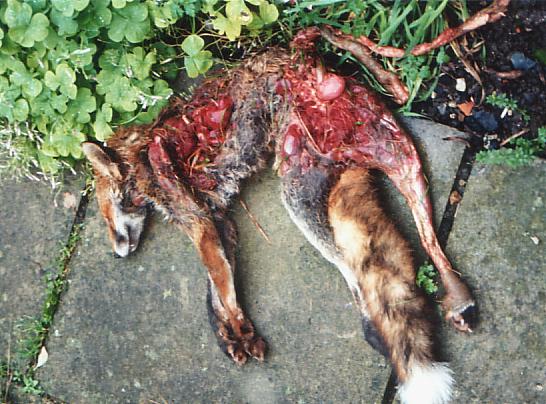
East Kent Murder – Picture Mark

Search Results for “boxing day hunt” – World Animals Voice

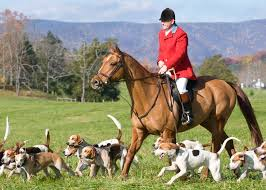
Every Boxing Day, hunting horns sound across the UK, as the hunts come out in force to celebrate the cruel ‘sport’ of fox hunting. 

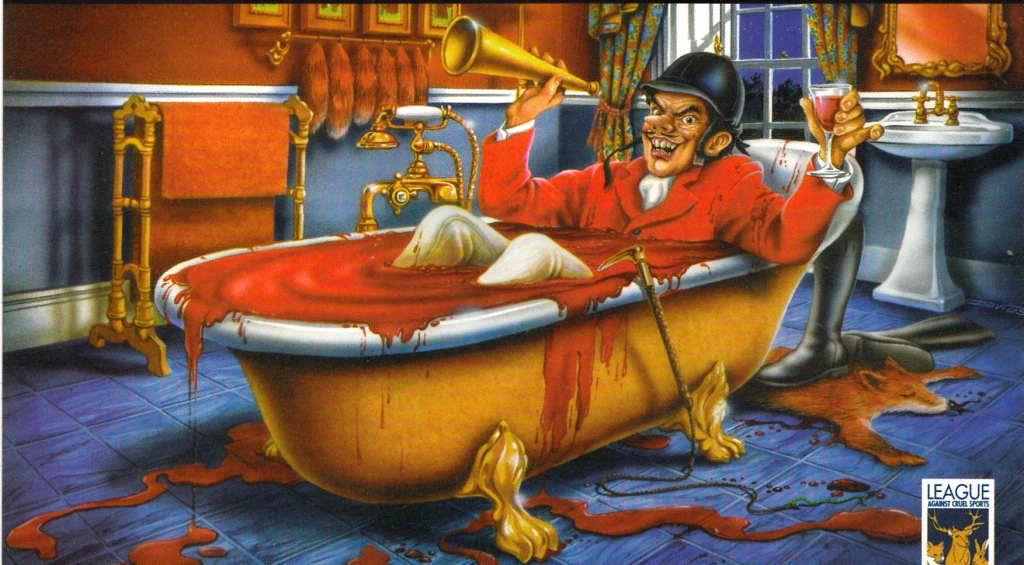
In reality, the pomp and pageantry are just a mask for the cold cruelty of their entertainment – illegally hunting innocent, defenceless animals to exhaustion.  

The countdown to cruelty has began. Will you stand up for the foxes?

Help us stop hunts on Boxing Day and every other day of the year 

£10 could help us call for stronger laws to protect UK wildlife such as getting hunting banned on all public land including our national parks 

£20 could help us persuade landowners to stop hunting, enforce stricter conditions and revoke hunting licenses for criminal activity 

Search Results for “boxing day hunt” – World Animals Voice

£50 could help us continue to run our invaluable Animal Crimewatch service and report illegal hunting, animal fighting and animal abuse to the police 

DONATE AND BECOME A BOXING DAY HERO

SIGN UP FOR OUR NEWSLETTER

We’d love to keep in touch. With your permission we’ll let you know the very latest news on our fast-moving campaigns, as well as appeals and other actions (such as petitions) so you can continue to help protect animals.

Boxing Day Hero (league.org.uk)

Lots more:

Search Results for “boxing day hunt” – World Animals Voice

Regards Mark

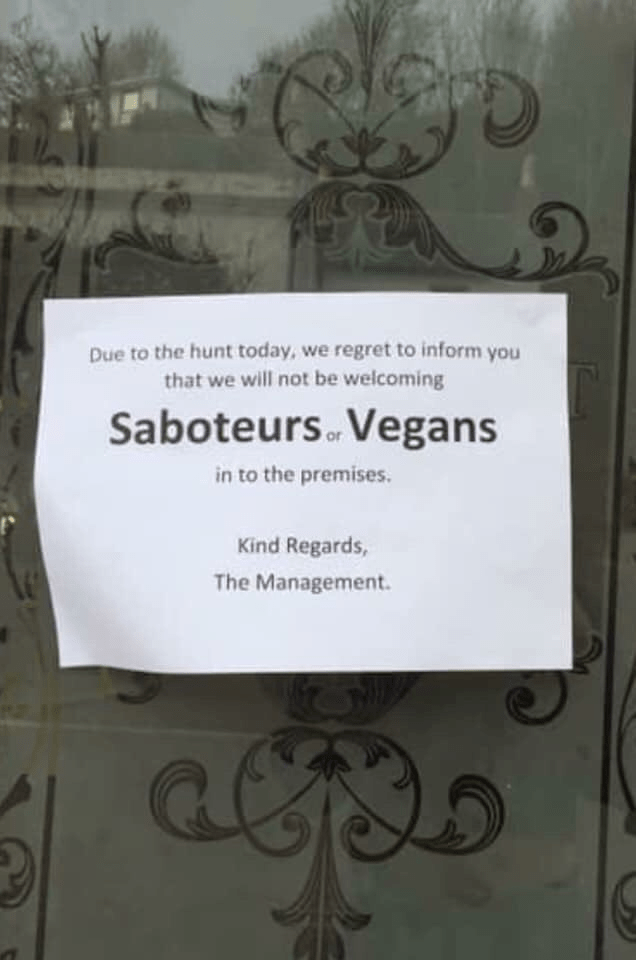
Hunt Sab Attack

My ‘Golda’ in the snow. Real fur in the right place !

“I’m a dickhead, put me into the trough with all the other ‘has beens”

WAV Comment – Get me out of here is just the most pathetic, animal abusive shows you could ever imagine.  Ant and Dec, the presenters; plus the dim wit producers think that it is a real laugh each week for past it has been celebs to eat bugs, sheep eyes and testicles; camel penis, etc etc.

There is nothing funny, or even tv worthy about this show; it just brings together all the dregs of tv under the control of dreg producers.  It should be taken off air.

I propose the programme should be re named “I’m a dickhead, put me into the trough with all the other ‘has beens’”

Take a look:

Real pathetic !!

Mark

The founder of a leading animal charity has shared that she has changed her will to leave her BUM to I’m a Celebrity… Get Me Out Here! producers.

The change comes from PETA founder Ingrid Newkirk who is in protest over the show’s treatment of animals.

Newkirk shared that she hopes to challenge the “cruel and tasteless stunts” on the ITV show that involve live and dead animals.

Discussing the act, the PETA founder said: “The camels, kangaroos, sheep, and other animals whose body parts are served up have more dignity than the moronic producers of this vile show, who think nothing of disrespecting, exploiting, or killing animals for a lark.”

It’s not the first time I’m a Celebrity has faced criticism for their use of animals, with reports that Ofcom has previously received 10,000 complaints over the ITV’s show use of animals. 

Read more:

Animal rights activist to give her bum to I’m a Celebrity producers (msn.com)

Regards Mark

EU / NZ: EU ratifies its first trade agreement with an animal welfare condition.

22 November 2023

Press Release

Today, the European Parliament overwhelmingly approved the EU-New Zealand Free Trade Agreement. The deal sets a precedent in trade policy as it’s the first time the EU ratifies a trade agreement which conditions market access on the respect of animal welfare-related standards.

Under negotiation for five years, the deal liberalises trade in most animal based products, and should hence further stimulate animal agriculture in the EU and New Zealand. It does, however, include an unprecedented condition: the beef quota is reserved for grass-fed animals, explicitly excluding feedlots. And this condition is  motivated by both animal welfare and sustainability reasons.

This is only the second time the EU has negotiated an animal welfare condition in a Free Trade Agreement (FTA) since the controversial EU-Mercosur FTA introduced the first one in relation to shelled eggs. Yet, while the volume of shelled eggs imported by the EU from Mercosur countries is quite low, in the case of New Zealand the EU managed to obtain an animal welfare condition for one of the most traded animal products between the partners. 

Eurogroup for Animals welcomes this animal welfare condition as feedlots, in addition to being a major source of soil, air and water pollution, are highly detrimental to animals: they can provoke respiratory and digestive diseases, the main causes of cattle death under such rearing conditions.

This animal welfare condition shows that with the right political willingness, the EU can take into account animal welfare concerns in its trade policy. As the latest Eurobarometer showed, this is well supported by EU citizens. This FTA should give the right impetus to repeat animal welfare conditions in other trade agreements, especially where a beef quota is negotiated. Why would a feedlot in Mercosur countries be sustainable, but not in New Zealand? Omitting such a condition when renegotiating the EU-Mercosur FTA would certainly be incoherent.

Reineke Hameleers, CEO, Eurogroup for Animals

The EU-New Zealand FTA is also the first EU trade deal integrating sanctions in its Trade and Sustainable Development (TSD) chapter. While this is welcome, the language is non-committal, specifically for provisions related to wild and aquatic animals, with words that focus on “acknowledgement” or “support”. This means that even in case of failure to comply with these provisions, no violation can be found.  

Apart from the animal welfare condition, the FTA also includes a chapter on animal welfare cooperation. Regrettably, the language in this chapter remains weak and also non-committal. This is unfortunate as the EU and New Zealand, two like-minded partners, could work together on issues such as banning live transport which is under discussion as highlighted by the European Parliament’s resolution. For these reasons, Eurogroup for Animals supports the European Parliament’s stand to “quickly establish the domestic advisory groups”, and remains ready to work in this fora to foster effective cooperation as soon as possible. 

Regards Mark