Category: General News

Australia: Finally, Will We Now See An End To The Live Export Trade ?

This is a lot more than fantastic news ! – as anti export campaigners here in the UK for decades, we know the fight involved and send huge congratulations to all of our anti export campaigner friends in Australia.  After decades of fighting, it now appears that the terrible suffering for Australian animals in the live trade will be coming to an end.  It will not happen overnight; it never does, but now at east there is light at the end of a dark tunnel which will stop the suffering of many millions of animals.

Congratulations friends !!

Regards Mark

The pathway to ending live sheep export.

20 years after Animals Australia’s first investigation into the cruelty of the live sheep trade – the Albanese government has enacted a plan to bring it to an end.

The Australian government has appointed an Independent panel to oversee the phase-out of the live sheep export trade. This means that the Albanese government fully intends to keep its election commitment — and that live sheep export will end.

Very soon, every Australian will have the opportunity to contribute to a public consultation which will help determine how and when the phase out will occur. 

You can register here to be part of that process.

The live export of sheep is going to end, and this would never have happened without the unwavering support of thousands of caring Australians over many years

Continue reading about this at:

The pathway cleared to end live sheep export | Animals Australia

Regards Mark

This is a lot more than fantastic news ! – as anti export campaigners here in the UK for decades, we know the fight involved and send huge congratulations to all of our anti export campaigner friends in Australia.  After decades of fighting, it now appears that the terrible suffering for Australian animals in the live trade will be coming to an end.  It will not happen overnight; it never does, but now at east there is light at the end of a dark tunnel which will stop the suffering of many millions of animals.

Congratulations friends !!

Regards Mark

The pathway to ending live sheep export.

20 years after Animals Australia’s first investigation into the cruelty of the live sheep trade – the Albanese government has enacted a plan to bring it to an end.

The Australian government has appointed an Independent panel to oversee the phase-out of the live sheep export trade. This means that the Albanese government fully intends to keep its election commitment — and that live sheep export will end.

Very soon, every Australian will have the opportunity to contribute to a public consultation which will help determine how and when the phase out will occur. You can register here to be part of that process.

The live export of sheep is going to end, and this would never have happened without the unwavering support of thousands of caring Australians over many years

Continue reading about this at:

The pathway cleared to end live sheep export | Animals Australia

Regards Mark

Australia: Not Exactly the Tops When It Comes To Animal Welfare – Savage Shearing Exposed; Mulesing, Live Exports, Useless Trade Deals; Do We Go On ? – World Animals Voice

Australia: The Australian People Have Given Their Opinion On Climate Change, Live Animal Exports, and More. – World Animals Voice

Australia: Breaking News Just In 21/5/22 – Could This Result Be A Positive Towards Stopping Live Animal Exports ? – World Animals Voice

Australia: Live Exports – Update From Stop Live Exports.org. – World Animals Voice

Australia: Chances They (Governments) Take With Live Animal Exports – Crew Member from the ‘Al Messilah’ Livestock Carrier Docked in Fremantle Has Tested Positive for COVID-19. – World Animals Voice

South Africa / Australia: NSPCA WIN Court Case and STOP Live Exports From South Africa After Same Exporter Loses In Australia. – World Animals Voice

Australia: Live Exports – Rural Export & Trading or RETWA, is seeking an exemption to regulations because a disease outbreak on one of their ships meant they couldn’t get their last shipment out before the deadline. – World Animals Voice

Australia: Cattle Station Abuses Exposed – With Live Exports, A Farming Nation at the Top of the Tree When It Comes to Animal Abuse. – World Animals Voice

England: Animal Aid Launch New University Animal Testing Campaign To Help Students Select Animal Free Testing Universities.

New animal testing campaign

Animal Aid, based here in our home county of Kent, have set up a new website called ‘Universities Challenged’; which helps students identify which universities conduct animal experiments and which reveals the scale of animal testing across the UK. 

Since its launch, Animal Aid have received an outpouring of positive feedback from students and non-animal scientists alike.  Furthermore, the resource has sent rumblings throughout the scientific and educational community, as it is the first website of its kind; allowing students to make informed choices on which university to attend based on whether their fees could be funding animal experiments.

Students and community members are already using the AA resources to put direct pressure on universities, and AA are currently working with several student groups who are planning actions at their universities.

For more, go to:

universitieschallenged.org.uk | Universities Challenged

Regards Mark

NGOs call for root causes of pandemic prevention to be put at centre of new pandemic treaty

NGOs call for root causes of pandemic prevention to be put at centre of new pandemic treaty

7 March 2023

Twelve leading NGOs have written to the World Health Organisation (WHO) and its Member States emphasizing that to prevent future pandemics they need to put animal welfare at the center of the WHO Pandemic Treaty currently being negotiated between the 194 Member States.

The treaty, which is being developed in light of the devastating impacts of COVID-19, will be the first legally binding international agreement designed to protect the world from future pandemics. 

NGOs are stressing the need for the treaty to focus on preventing future pandemics by tackling the root causes and drivers of zoonotic outbreaks at the human-animal-environment interface. The implementation of a holistic, unifying One Health approach, which addresses the interdependence of the health and well-being of people, animals and ecosystems, can significantly reduce the risk of pathogens emerging, mutating in animal populations, and spilling over from animals to people, which can lead to pandemics.

By tackling high-risk activities such as habitat destruction, wildlife trade and consumption, and intensive animal agriculture, and transforming our relationship with animals and the wider environment, governments and international institutions can achieve equity for the most vulnerable communities that are most at risk, and by doing so protect us all from future pandemics.   

The letter follows the publication of the Zero Draft of the Pandemic Treaty in early February. The Intergovernmental Negotiating Body (INB), which is tasked by the WHO Member States to draft and negotiate the Pandemic Treaty, is due to meet in Geneva between 27 February and 3 March 2023, to discuss the draft.

As it stands the current Zero Draft will not protect us from the next pandemic. It is a solid foundation to build from, but it lacks teeth.  This is not the time to be timid, but to be bold, because there may only be one chance to ensure the world gets this right. As we have seen with COVID-19 and now with the outbreak and spread of Highly Pathogenic Avian Influenza, time is not on our side. It must be much more rigorous when it comes to setting effective preventive measures, compliance and implementation.”

Nina Jamal, Head of Pandemics at FOUR PAWS

There is a large body of irrefutable evidence and a growing consensus amongst scientific, conservation and animal welfare experts confirming the association between ecosystem degradation, exploitation of wild animals, intensive farming and emerging infectious diseases and other negative impacts on human, animal and environment health. Around 75% of emerging diseases in humans originate in animals. COVID-19 brought the world to a screeching halt and we must learn our lessons. Incorporating sound approaches to animal health and welfare, including that of wild animals, at the very centre of the treaty is vital to its success.“

Iris Ho, Head of Campaigns and Policy at the Pan African Sanctuary Alliance

Wild animals are disrupted, collected, farmed, transported, exported and traded in huge numbers, more often than not enduring appalling conditions. Crowding, stress and injury among such animals provide the perfect environment for pathogen introduction, spread and mutation; cross species transmission and the close proximity to people when they are traded and consumed creates the opportunity for human transmission. Addressing the risks from wildlife exploitation and reducing our impacts on wild animals and their welfare must be essential components of efforts to prevent future pandemics.”

Veterinarian Dr Mark Jones, Head of Policy at Born Free Foundation

Late last year, two key publications by leading scientists provided “compelling evidence” showing that a seafood and wildlife market was at the epicentre of the COVID-19 outbreak. The analyses indicate “that the emergence of SARS-CoV-2 (COVID-19) occurred via the live wildlife trade.” Reducing human interaction with wildlife is a key component of preventing and mitigating the risk of pandemics. Intensive livestock systems are also a dangerous breeding ground for viruses to evolve and mutate and have been associated with the transmission of zoonotic diseases in the past. 

The letter was signed by:

Born Free Foundation

Brighter Green

Ecoflix

Eurogroup for Animals

Farm Forward

FOUR PAWS

Jeremy Coller Foundation

Global Initiative to End Wildlife Crime

Pan African Sanctuary Alliance

Proyecto ALA

World Animal Protection

World Federation for Animals

2022 Scientific COVID-19 Studies:  

https://www.science.org/doi/10.1126/science.abp8715

https://www.science.org/doi/10.1126/science.abp8337

Regards Mark

UK: Mass Pet Cull (11 Million Animals +) Considered BY UK Government In Early Days of Covid, But UK Government, Keep Quiet About Mentioning Wet Markets To The Chinese As Possible Original Source. Say Nothing Then, and Still Say Nothing Now.

UK blast from the recent past.

Personally I feel that whatever the circumstances, introducing legislation to eradicate the entire UK cat population would have been political suicide for government  – and they knew it, that is why it went no further.

Also, what are we seeing and hearing about actions being flagged about the wet markets in places such as Wuhan ? – I have not heard much, have you ?

Seems like business as usual to me.  The UK government have kept their lips zipped about wet markets in China; the probable cause of Covid; yet they talk about wiping out the entire UK cat population just to make UK citizens think wrongly that they are doing something to control.

The control needs to come from source – the Chinese wet markets; no where else.

The current UK government has had it day anyway and I can predict that they will be annihilated at the next general election.  They don’t put pressure on and they do not ask difficult questions about Covid to the Chinese like they should.

Regards Mark

Further reading (BBC) :

Covid origin: Why the Wuhan lab-leak theory is so disputed – BBC News

https://www.nature.com/articles/s41598-021-91470-2

UK mass pet cull considered in early days of Covid:

Mass pet cat cull considered in early days of Covid in UK, says former minister (inews.co.uk)

Government considered cull of all 11,000,000 cats in the UK at start of Covid pandemic (msn.com)

Covid fears prompted Government to ponder ‘exterminating’ 11m cats, admits ex-minister | Politics | News | Express.co.uk

One year on since historic United Nations animal welfare resolution.

One year on since historic United Nations animal welfare resolution

3 March 2023

The World Federation for Animals (WFA) has published a report one year on from the historic United Nations Environment Assembly (UNEA) where Member States passed the first-ever resolution with explicit reference to animal welfare.

The Animal Welfare – Environment – Sustainable Development Nexus recognised that animal welfare can contribute to addressing environmental challenges, promoting the One Health approach, and achieving the Sustainable Development Goals. The United Nations Environment Programme (UNEP) is expected to explore these links in a report that draws on the expertise of other stakeholders. 

The latest WFA report, “Unveiling the Nexus: The Interdependence of Animal Welfare, Environment & Sustainable Development” is being shared to help policymakers, provide a synthesis of scientific evidence, and stimulate public and open dialogue among stakeholders. It highlights the value of an animal welfare perspective to help tackle the planetary crises and accelerate sustainable development.

There is a critical scientific evidence base demonstrating how improving animal welfare can help people and the environment, including reversing biodiversity loss, mitigating climate change, and ensuring public health. This report is aimed to help decision-makers understand those connections, so they can make sustainable and effective decisions to reverse our current crises.”

Dr. James Yeates, World Federation for Animals’ CEO

We hope that by Unveiling the Nexus, we can help others see the potential for animal welfare as a cross-cutting lever for sustainable development. The facts are there. It is time to implement the solutions the Nexus lays out and enable a generational shift in international policy to protect the people, the planet, and the animals.”

Brita Riis, World Federation for Animals’ President

Regards Mark

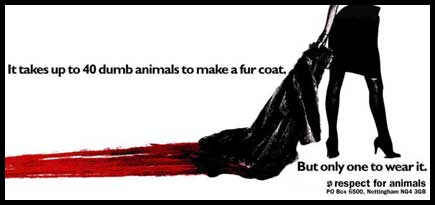
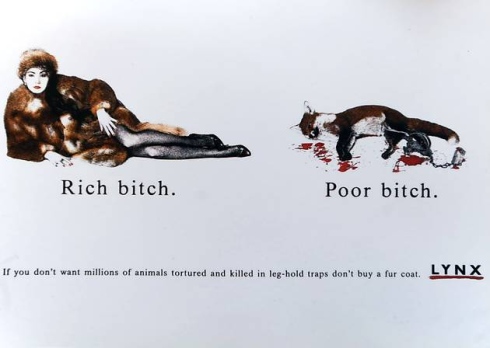
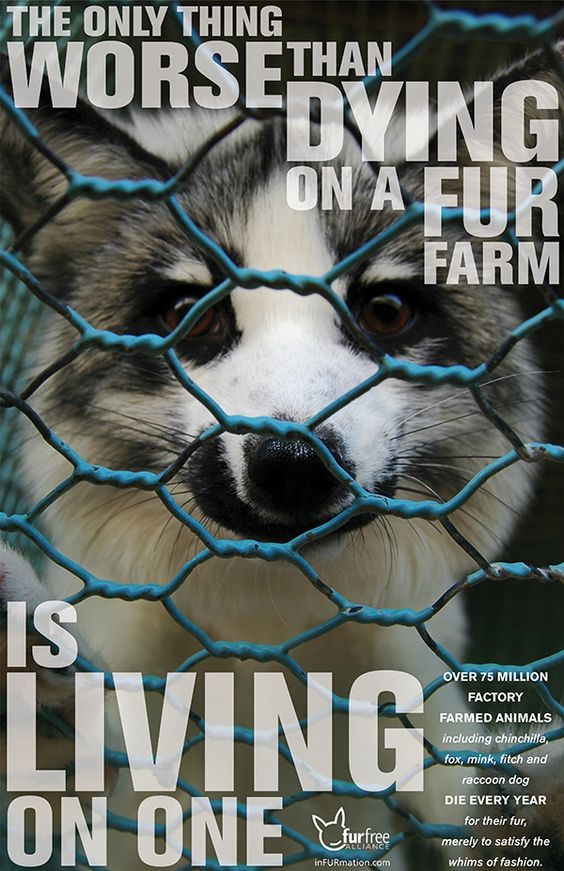
EU: European Citizens Made it Clear: It’s Time for a Fur Free Europe – Over 2 Months Before Official Petition Closes !

European citizens made it clear: it’s time for a Fur Free Europe

1 March 2023

Press Release

The European Citizens’ Initiative (ECI) Fur Free Europe closes earlier than its official deadline thanks to a record number of signatures collected. In less than ten months more than 1.7 million citizens signed to end this cruel practice, sending a strong message to the European Commission (EC).

Fur Free Europe was launched in May 2022 by Eurogroup for Animals and received the support of more than eighty organisations from all around Europe. The ECI calls for a ban on fur farming and on the placement of farmed fur products on the European market. 

Successful from the get go, Fur Free Europe collected 50,000 signatures on its launch day and now, 2,5 months before its official closing deadline, 1,701,892 signatures have been collected, offering a safe margin for the achievement of 1 million validated signatures. The ECI also successfully reached the signatures threshold in twenty one Member States, three times the minimum requirement of seven Member States. 

The decision to close the ECI earlier has been taken due to the potential impact that it could have on the upcoming revision of the EU animal welfare legislation, as part of the EC’s Farm to Fork Strategy. 

By the end of 2023, the EC will publish a proposal aimed at improving the EU’s animal welfare legislation to align it with the latest scientific evidence. While it’s possible to improve welfare standards for domesticated animals, science has clearly shown that this is not possible for wild animals on fur farms. Consequently, a ban on fur farming should be included in the proposal.

Moreover, since imports of animal products should follow EU standards, the ECI also calls for a ban on placing farmed fur products on the European market. Indeed, the organisers didn’t want to export cruelty to third countries but aimed to definitively end the suffering created by the fur industry in Europe.

I could not be prouder of our joint efforts. This citizens initiative gained momentum from day one and proves that European citizens, represented by all the organisations involved, are sending a crystal clear message to the European Commission: it’s high time for a Fur Free Europe. Fur farming represents a massive moral blind spot and, with the new animal welfare legislation coming up, the EC has the opportunity to end this unnecessary suffering once and for all.

Reineke Hameleers, CEO, Eurogroup for Animals

It’s exciting to see that Fur Free Europe didn’t need the full available year to collect the required signatures, proving that the issue is clearly a priority for European citizens. After the validation process is over, the Parliamentary one will start. As chair of the Fur Free Europe working group at the European Parliament, I am honoured to lead the process and make sure that citizens demands are heard and we can finally put an end to fur in Europe.

Anja Hazekamp MEP (Party for the Animals, NL) chairwoman of the Fur Free Europe working group, Intergroup on the Welfare and Conservation of Animals

More info:  Fur Free Europe | Eurogroup for Animals

Regards Mark

USA: ‘Animal welfare comes first’: Puerto Rico permanently closes only zoo after complaints of neglect.


Puerto Rico – Puerto Rico is closing the U.S. territory’s only zoo following years of suspected negligence, a lack of resources and deaths of animals that were highlighted by activists.

The Dr. Juan A. Rivero Zoo in the western coastal town of Mayaguez has remained closed since hurricanes Irma and Maria battered the island in September 2017, with activists questioning the state of the zoo’s more than 300 animals and their future.

Puerto Rico’s government announced the permanent closure of the 45-acre zoo Monday as federal authorities investigate allegations of mistreatment of animals.

“Animal welfare comes first,” Gov. Pedro Pierluisi told reporters. “Questions have been raised for a long time.”

Earlier this month, U.S. Attorney Stephen Muldrow announced that experts from The Wild Animal Sanctuary in Colorado would inspect and evaluate the animals, saying that “the safe and humane care for all zoo animals is a top priority of the Justice Department.”

Sanctuary officials visited the zoo on Sunday – a visit that was supposed to have occurred in 2017 before the hurricanes hit, sanctuary executive director Pat Craig told The Associated Press, noting that people already were concerned about the animals at that point.

“The zoo definitely has been degraded,” he said. “You can imagine the facilities were overgrown and dilapidated to some degree.”

He said the animals were healthy enough to travel for the most part, although he noted that a mountain lion has a growth on one arm that veterinarians are still inspecting.

Craig also said he was concerned about the zoo’s lone chimpanzee because apes require socialization.

He declined to provide further details, saying he was limited about what he could share given the involvement of the U.S. Justice Department. However, he added that the team didn’t find anything that required immediate attention.

In February 2018, the U.S. Department of Agriculture cancelled the zoo’s exhibitor’s license after citing dozens of violations in previous years, including a thin tiger that was euthanized and a distressed cougar living in a cramped space.

Previously, a government-appointed committee had raised concerns about two pumas that died, an underweight chimpanzee and a rhinoceros named Felipe that was limping. It also noted that dozens of animals needed vaccines or physical tests, and that a kangaroo and a porcupine were among animals that didn’t have shelter.

In January, officials announced that an American black bear named Nina who was more than 20 years old died from unspecified health complications after she stopped eating. The results of a necropsy have not been released. Black bears can live up to 35 years in captivity.

Craig, with The Wildlife Sanctuary, said he estimates his group would transfer up to 50% of the zoo’s animals at no cost to Puerto Rico’s government. However, they would not take in primates or unique birds given Colorado’s weather.

Puerto Rico’s Department of Natural Resources has said it is cooperating in plans for transfers and with the continuing investigation in the zoo, which opened in 1954.

“We have not skimped on the search for alternatives so that…the best possible care and safety of all the species that inhabit there are guaranteed,” said the department’s secretary, Anaís Rodríguez, who noted that it wasn’t until four years ago that the agency assumed responsibility for the zoo.

Activists celebrated the zoo’s impending closure, including Christian Ríos, who is also president of an animal rights commission at Puerto Rico’s Association of Attorneys. He called for full transparency as officials prepare for the transfer of certain animals.

“We are not letting our guard down,” Ríos said, adding that those responsible should face the consequences. “We are sorry that all these complaints have taken a long time to be heard.”

Puerto Rico closes only zoo after animal neglect complaints (usatoday.com)

Regards Mark

Malta – Animal liberation activists turn up in onesies to protest Monte Kristo circus,

Above – Animal activists in pyjamas protest the Veterinary Division’s lack of action in stopping a circus act

Malta – Animal liberation activists turn up in onesies to protest Monte Kristo circus

Horse show at Monte Kristo estates should be banned under animal circus rules, say activists protesting VRD inaction

Animal activists in pyjamas and pillows pulled up at the Marsa offices of the Veterinary and Phytosanitary Regulation Division (VRD) to protest the lack of action in stopping another circus act called Cleopatra’s Horse Show that is scheduled to take place at Monte Kristo estates.

Activists from Animal Liberation Malta, Real Animal Rights Foundation, Association for Abandoned Animals AAA and Vuċi Għall-Annimali held up placards saying “VRD wake up! Enforce the Law”, “VRD whilst you are snoozing animals are suffering”, “Żomm kwiet – hawn in-nies reqdin hawnhekk.”

The activists said the Cleopatra’s Horse Show clearly falls under the definition of a circus and cannot be allowed under the current legislation.

“This circus act will have horses performing for three days in a row. We contacted VRD and informed them of this circus act just in case they were not aware. Apart for not answering our communication, it seems no action has been taken to stop this from happening as the show is still being promoted to date,” an ALM spokesperson said.

“The fact that the show will happen clearly demonstrates what animal NGOs and activists have long been saying about the regulator and the law itself. The regulator has repeatedly closed its eyes to breaches in the Animal Welfare Act and the recent changes in the act have been done to regularise this.”

The Animal Welfare Act itself only inflicts a €2,000 administrative fine for breaking the law, meaning the organisers stand to be fined €666 per day for each of the three days that the show will take place.

The ALM said the Animal Welfare Act had been further degraded through recent changes in the law to give powers to the VRD to issue a “special permit” to hold such events.

“In fact, if the event were held just a few days after this, the Director of VRD would have had the authority to issue a permit for this circus act.  Are we going to allow big business continue uncontrolled to the detriment of Animal Welfare as well?”

Animal liberation activists turn up in onesies to protest Monte Kristo circus (maltatoday.com.mt)

Regards Mark

EU: 9 out of 10 animals rescued from EU circuses suffer from trauma.

28 February 2023

AAP

According to a new study conducted by AAP Animal Advocacy and Protection, no less than 89% of the exotic animals they rescued from European circuses suffered from mental or physical trauma. Nearly 8 out of 10 animals even suffered from multiple veterinary or behavioural problems.

The results of their new study are clear: forcing wild animals to live and perform in circuses is unacceptable for their welfare and should be banned.

For their new report ‘The Darkness Behind the Spotlight’, our member organisation AAP Animal Advocacy and Protection analysed the health of 73 former circus animals rescued between 2015 and 2021. The animals rescued from circuses in France, Spain and Germany among others, had been performing for at least a year. Almost half of the cases had external injuries. For example, lions, tigers and pumas were injured or had been forcefully declawed. Twenty animals had severe veterinary and behavioural problems, often requiring multiple veterinary treatments. Three of them had to be euthanised shortly after their arrival at an AAP Animal Advocacy and Protection rescue centre due to their irreversible suffering from severe trauma. However, the trauma is not only physical. More than a quarter of the animals exhibited abnormal behaviour detrimental to their welfare, including self-injury.

Animals in circuses are prone to malnutrition, behavioural and physical problems due to the frequent travel of circuses, the cramped and unsuitable conditions in which they are kept, and the forced interaction between humans and animals. Most EU Member States recognise the threat to animals in circuses and have therefore implemented some form of regulation or ban. The notable exception: Germany still has no regulations to end the use and suffering of exotic animals in circuses. According to a survey we conducted in 2021, more than 150 wild animals still perform in some 75 circuses in Germany. Most of them (45%) are big cats, such as lions and tigers. They will continue to suffer without a ban on exotic animals in circuses. 

While AAP Animal Advocacy and Protection has been able to save many exotic animals from circuses over the years, hundreds are still suffering. Without stricter regulations, these animals will continue to endure trauma on a daily basis. This is why AAP Animal Advocacy and Protection wants to use its 50 years of expertise in animal rescue to work with decision-makers in Germany and the EU for better animal welfare legislation.

The darkness behind the spotlights

Trauma in former circus animals2.47 MB

Wild Animals in EU Circuses: Problems, Risks and Solutions

Browse this publication:

Wild Animals in EU Circuses: Problems, Risks and Solutions | Eurogroup for Animals

Regards Mark

Viewpoint: Animal-rights activism gaining foothold in courtrooms.

Incidents of public demonstrations and protests from animal rights activist groups are climbing. In 2022, extremist groups glued themselves to Starbucks countertops and chained their wrists to basketball hoops during televised games in hopes of channeling public attention to their campaigns.

While these radical tactics may seem like the primary danger is out in the open, a greater looming threat to animal agriculture is emerging from the courtroom: the rise of animal law.

Continue reading via:

Viewpoint: Animal-rights activism gaining foothold in courtrooms | AGDAILY

Regards Mark