Category: General News

Turkey: Brave Volunteers Try To Save Animals From Rubble After Devastating Earthquake.

Not much, but …. please watch the video (link below)

Volunteers in Turkey Try to Save Animals Trapped in Rubble After Devastating Earthquake

Volunteers from Turkey’s Animal Rights Federation are working to save animals trapped under the rubble or abandoned in apartment buildings after a devastating 7.8 magnitude earthquake struck the country last week. Footage from AP.

Click here to see the video footage:

Volunteers in Turkey Try to Save Animals Trapped in Rubble After Devastating Earthquake (yahoo.com)

Regards Mark

Spain: Congress Excludes Hunting Dogs (Galgos) From New Animal Rights Law.

Spain’s Congress excludes hunting dogs from new animal rights law

MADRID, Feb 9 (Reuters) –

Spain’s parliament on Thursday passed a new animal rights bill that has stirred controversy as it excludes hunting dogs and other animals used in traditional rural activities, and which critics say panders to the country’s powerful hunting lobby.

The law will overhaul the treatment of domesticated and wild animals in captivity, ban the sale of pets in shops, impose prison sentences on animal abusers, and turn zoos into wildlife recovery centres.

In a last minute u-turn, the junior ruling coalition partner Unidas Podemos, which had advocated for the inclusion of hunting dogs, backed the law in order for it to pass and asked those fighting to protect hunting dogs for forgiveness.

“To leave hunting dogs out of this law is to leave abusers unpunished,” Social Rights Minister Ione Belarra, of Unidas Podemos, told lawmakers, adding: “We have come as far as we can with the strength we have”.

An intense debate has raged for weeks within Spain’s left wing-coalition after the main ruling Socialists backpedalled in December on regulating hunting dogs, fearing the issue could push rural voters toward right-leaning parties in a general election this year.

Spain’s hunting industry is worth an estimated 5 billion euros ($5.4 billion) a year and has a powerful lobby.

The Royal Spanish Hunting Federation, which represents 337,000 hunters, had argued that some sections of the bill, aimed at reducing the number of abandoned animals, would in practice legislate the disappearance of hunting with dogs.

The Socialists nevertheless hailed the law as a “historic advance” and argued that it would protect all animals from mistreatment and abandonment despite not specifically addressing hunting dogs.

About 167,000 dogs were abandoned in Spain in 2021, many following the end of the hunting season, according to Barcelona-based Affinity Foundation.

Dog rescue groups say the law was important to prevent owners from abandoning their canines no longer fit for hunting.

A few charities are coordinating foreign adoption of abandoned hunting dogs such as ‘galgo’ greyhounds. (Reporting by Corina Pons, additional reporting by Belen Carreno, editing by Andrei Khalip, Alexandra Hudson)

Spain’s Congress excludes hunting dogs from new animal rights law (msn.com)

Regards Mark

Check out all our posts on Galgos at  Search Results for “galgos” – World Animals Voice

Italy: Animal rights group blasts Pope, Krajewski for circus outing with elephants.

Animal rights group blasts Pope, Krajewski for circus outing with elephants

ROME – As the saying goes, “no good deed goes unpunished.” It’s a sentiment with which Pope Francis and his top official for charitable activity, Polish Cardinal Konrad Krajewski, may have a special sensitivity right now.

Thinking he was doing something nice for the poor, Krajewski took them to the circus over the weekend and now finds himself facing a protest from an animal rights group, which believes such spectacles amount to human beings subjecting animals to “painful constraints” for our own amusement.

On Saturday, Krajewski organized an outing for more than 200 poor and marginalized persons at Rome, taking them to a performance of the Rony Roller circus, a famed spectacle in the Eternal City that features musical performances, clowns, trapeze artists, animal tamers, and jugglers. The invitation was extended in the name of Pope Francis.

The guest list for Saturday’s performance included refugees, homeless persons, inmates, families with children from Ukraine, Syria, Congo and Sudan, as well squatters from various occupied buildings in Rome, all accompanied by a number of volunteers, including Missionaries of Charity sisters of Mother Teresa.

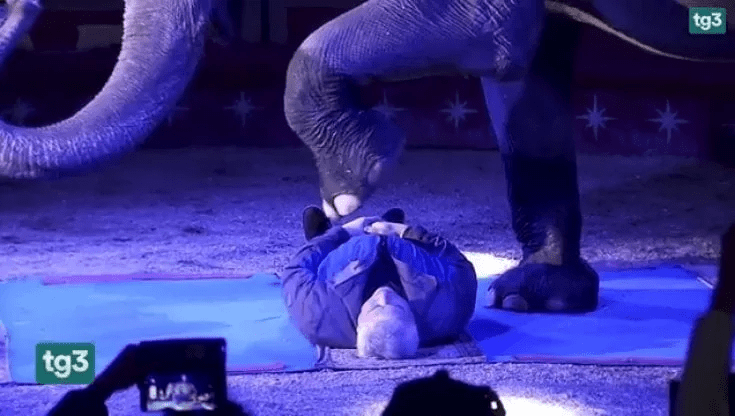
Cardinal Konrad Krajewski lies on stage while an elephant climbs over him during a Fab. 11 performance of Rony Roller Circus in Rome. (Credit: Screen capture.)

The event was part of an ongoing effort by Krajewski to offer not just material aid to the poor, but also opportunities for relaxation and amusement. Over the summers, for instance, he’s used a van to transport small groups of homeless persons from the area around the Vatican to a nearby beach, offering them an afternoon of surf and pizza.

During Saturday’s performance, one highlight came when Krajewski volunteered to stretch out on a stage and allow an elephant to climb over him, the idea being to demonstrate how well-trained the massive pachyderm actually is.

“Making participation in this show possible is a way to give a few hours of serenity to those who face a hard life, and who need help to find hope,” Krajewski said in advance.

Less than 24 hours afterwards, Francis and Krajewski found themselves facing a complaint from the “International Organization for the Protection of Animals,” a non-governmental organization founded in Italy in 1981 which has long objected to the use of animals in circus performances.

“I’m sorry that the pope somehow is sponsoring a circus with animals,” said Massimo Comparotto, the organization’s president, in a statement on Sunday.

“The pontiff often has expressed the importance of a greater respect for nature, above all in the encyclical Laudato si’ of 2015,” Comparotto said. “This choice seems contradictory to his so-called ‘ecological magisterium.’”

“Behind the exercises of the circus performances can be hidden deprivation, mistreatment and suffering for the animals, who live in captivity, behind bars, with limited space available and constantly under stress,” he said.

“They’re animals forced into a life that’s against nature,” Comparotto said.

The statement said the organization has no problem with circuses with human performers, such as jugglers, clowns and acrobats, who, the statement said, “display human talent and not the painful constraints of sentient beings forced by humans to put on a show with the force of heavy training.”

At the same time, Comparotto complained that Pope Francis in the past has suggested that human life is more important than other animals.

“In 2016, he affirmed that facing an injured animal, one feels pity, not mercy,” Comparotto said. “Often he’s put love for animals in opposition to love for children, as if love were something limited, which can be exhausted.”

“He receives and blesses circus performers in the Vatican who keep animals in captivity and force them into the role of clowns,” Comparotto said. “In sum, this is a pope not exactly on the side of the animals.”

“Those who feel that life is sacred love all life, beyond species,” Comparotto said.

Over the years, circus performers have been frequent guests at Vatican events. During the Great Jubilee year of 2000 under Pope John Paul II, a special day for circus performers and traveling shows was among the last events on the jubilee calendar.

Pope Francis has also hosted circus performers in the Vatican, welcoming some 6,000 of them during the Jubilee of Mercy in 2016. In the same year, he also sponsored a special performance of the Rony Roller for 2,000 poor and homeless persons, which opened with a song by a Spanish vocalist who had once been homeless himself.

Animal rights group blasts Pope, Krajewski for circus outing with elephants | Crux (cruxnow.com)

Regards Mark

Zimbabwe: Woman-Led Legal Organisation Fights for Animal Rights – Great !

Woman-led legal organisation fights for animal rights in Zimbabwe

Zimbabwe’s wildlife landscape is gifted with 350 species of mammals, more than 500 birds, and 131 fish species all of which adorn its environment, yet due to the increasing number of poaching cases, the wildlife is seriously threatened.

According to the Africa Wildlife Foundation (AWF), elephants, rhinos and other iconic African wildlife may be gone within our lifetime.

According to a United Nations (UN) 2030 Agenda for Sustainable Development report, despite 15 percent of the land being protected, biodiversity is still at risk. The UNDP 2021 report also stated that approximately 7,000 species of animals and plants are traded illegally.

“Wildlife crime is now rampant in most Southern African countries,” says Ever Chinoda International Animal Law Advocate and founder of Speak Out for Animals Trust (SOFA), an organisation of young passionate lawyers who are committed to combating wildlife crime, using the legal system.

The female-led SOFA is one of Zimbabwe’s leading animal conservation organisations that has for years been striving to promote Animal Law awareness in a bid to achieve protection of animals, raising awareness for the preservation and value of flora and fauna guided by the laws that protect them.

Mary – various sofa.jpeg© Mary Munde

“Our mission as Speak Out for Animals is to influence the human mindset and inspire behavioural change towards animal protection and preservation laws in Zimbabwe.

“Appreciation of Animal Law is not widespread in our country and in Africa, hence the work we do is pivotal in changing this narrative,” says Chinoda.

Founded in 2017, SOFA through case monitoring, legal awareness training, projects linked to animal law, educating students through student chapters and legal literature development has immensely contributed to sustainable protection and the better handling of wildlife crime cases in Zimbabwe.

“We conduct monitoring of animal (domestic and wildlife) cases in courts across Zimbabwe’s 10 provinces. This entails watching in brief and advising relevant stakeholders on gathering of evidence, proper drafting of the charge sheet, ensuring that the accused is brought before the court within 48 hours arguments with a goal to attain a befitting sentence, thus rendering justice for animals. For the past three years, we have assisted over a hundred cases,” she says.

“Currently in Zimbabwe, there is no law school that offers animal law as a course for study and to cover the gap, SOFA conducts animal law training for law students, practising lawyers, prosecutors and judicial officers to equip them with knowledge in animal law. We have also introduced wildlife law as a module at the University of Zimbabwe and the Great Zimbabwe University where I’m lecturing with the hope of catching future magistrates and prosecutors whilst they are still practising,” Chinoda said.

The law is an essential mechanism for protecting animals and many times loopholes in it are used against them. For years, SOFA has also been advocating for the reform of Zimbabwean wildlife laws to align them with international treaties to which the country is party to.

“Through our lobbying efforts, the wild dog was listed as a specially-protected animal for the first time through Statutory Instrument 71 and 72 of 2020. We have also successfully managed to lobby for the change of classification of the painted dog / wolf-dog from problem animal to endangered with the aid of organisations like Painted Dog Conservation.

“Going forward, we are aiming for the creation of an Environmental-Wildlife Court, a development we see as imperative if the conservation of flora and fauna in Zimbabwe is to be attainable,” she added.

This article is reproduced here as part of the African Conservation Journalism Programme, funded in Angola, Botswana, Mozambique, and Zimbabwe by USAID’s VukaNow: Activity. Implemented by the international conservation organization Space for Giants, it aims to expand the reach of conservation and environmental journalism in Africa, and bring more African voices into the international conservation debate. Written articles from the Mozambican and Angolan cohorts are translated from Portuguese. 

Regards Mark

Enjoy !

USA: Ok we got it wrong – Bill Targets Removing Injured Livestock After Not-Guilty Verdict Against Animal Rights Activists.

Bill targets removing injured livestock after not-guilty verdict against animal rights activists

A bill currently before the Utah Legislature would narrow the scope of legal defenses available to people accused of theft for removing injured or sick livestock from farms and ranches.

As introduced by Rep. Carl Albrecht, R-Richfield, HB114 would amend state statutes to prevent defendants accused of theft from using the defense they removed livestock because the animals were sick, injured or were a liability to the owner. The bill would only apply to livestock, not dogs or other domestic pets.

Albrecht’s bill, which cleared the House last Friday by a 65-4 vote, is a direct response to a Washington County jury’s unanimous decision in St. George’s 5th District Court in October to acquit two animal-rights activists of all charges brought against them for removing two sick piglets from Circle Four Farms in 2017.

Continue reading at:

Bill targets removing injured livestock after not-guilty verdict against animal rights activists (msn.com)

Regards Mark

Canada: Animal Rights Advocate Pamela Anderson will now Host a Plant-Based Cooking Show.

REUTERS/Philippe Wojazer

Animal rights advocate Pamela Anderson will now host a plant-based cooking show

Pamela Anderson is set to return to the small screen in support of a cause that has long been close to her heart. The long-time advocate for animal rights has just landed a vegan cooking show on a Canadian TV network

While the “Baywatch” star reflects on the many events that marked her career in a recent Netflix documentary, Pamela Anderson is set to return to the small screen in support of a cause that has long been close to her heart. In fact, the long-time advocate for animal rights has just landed her own vegan cooking show on a Canadian TV network.

Read the full story at:

Animal Rights Advocate Pamela Anderson Will Now Host A Plant-based Cooking Show – Forbes India

Regards Mark

4.5 Tonnes of Cocaine Found on a Ship Carrying 1,750 Cows. Again, We Call for a Ban to Live Animal Exports.

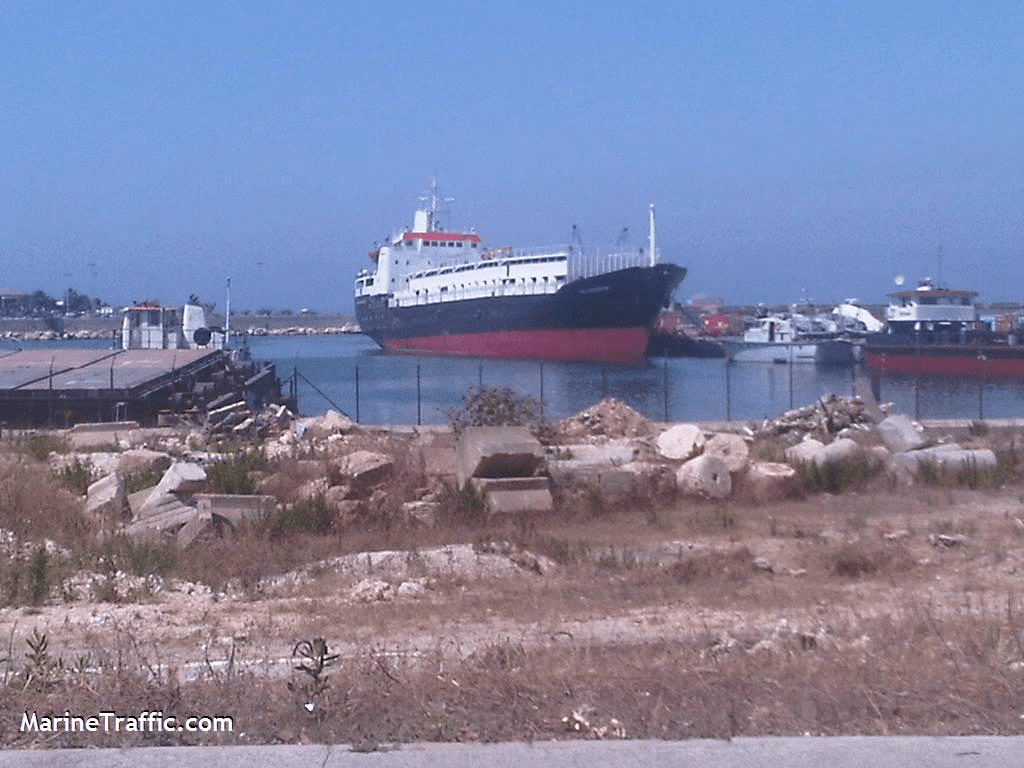
Photo AIS / Marine Traffic.

4.5 tonnes of cocaine found on a ship carrying 1,750 cows

8 February 2023

AWF

On 28 January, the ORION V, a vessel bound for the Middle East from Colombia, was arrested off the Canary Islands: 4.5 tonnes of cocaine were found on board.

After 9 days at sea, the boat was stopped for over 56 hours and a large part of the crew was arrested. The rest of the crew was authorised to go to Algeria, as the animals were not allowed to stay in the European Union.

The 4.5 tonnes of cocaine were disguised as animal feed. National Police and Customs Surveillance Service have suspect that drugs have been transported on board the ORION V since 2020.

The vessel is closely linked to both drug trafficking and animal welfare/human health issues:

In June 2020, during a drug raid, the police noticed 5,000 cattle from Colombia in alarmingly bad condition.

The ship was overloaded and dirty, the animals were emaciated, and some were already dead. They were exported to Egypt without any veterinarian treatment. The drug raid had to be cancelled because the drug dogs could not work due to the ammonia smell.

In September 2021, three workers inhaled a toxic gas emitted from the cattle feed on board the vessel. Two were injured, one died.

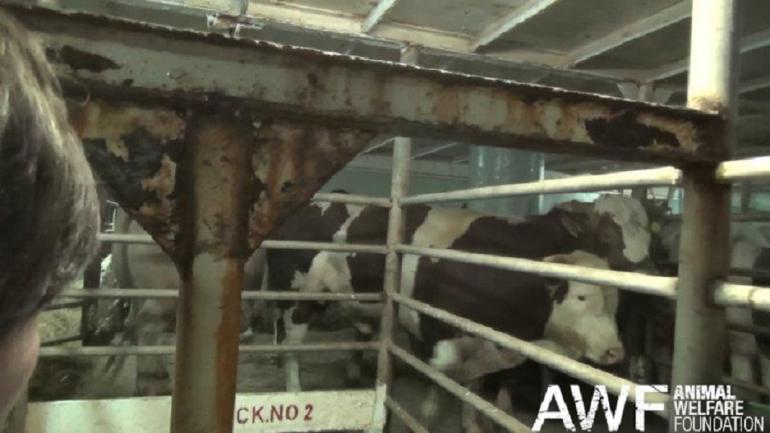
Like most livestock vessels, the ORION V is very old and not suitable for animal exports. The makeshift solutions, sharp edges, sloping sides and dirty bedding pose serious dangers to the animals.

The fact that this trade is being targeted by drug smugglers is yet another wake-up call to ban cruel live exports once and for all.

The European Union needs a fundamental change in its agricultural policy. Long-distance transports of live animals must end. Exporting live animals and accepting their cruel slaughter in third countries is not compatible with the values ​​of the European Union.”

Maria Boada-Saña, veterinarian and project manager at Animal Welfare Foundation e.V.

We have obtained the following additional information:

What kind of ship is this?

ORION V (IMO: 7300992) is a Livestock Carrier that was built in 1973 (50 years ago) and is sailing under the flag of Togo.

Her carrying capacity is 4054 t DWT and her current draught is reported to be 6 meters. Her length overall (LOA) is 97.31 meters and her width is 16.24 meters.

Regards Mark

New Zealand: Fonterra Orders An End To The Killing Of Bobby Calves On Dairy Farms.

I think we have shown in the past that the dairy industry is a grossly sick industry.  Cows, which should produce milk for their baby calves have it stolen from them in order to feed humans.

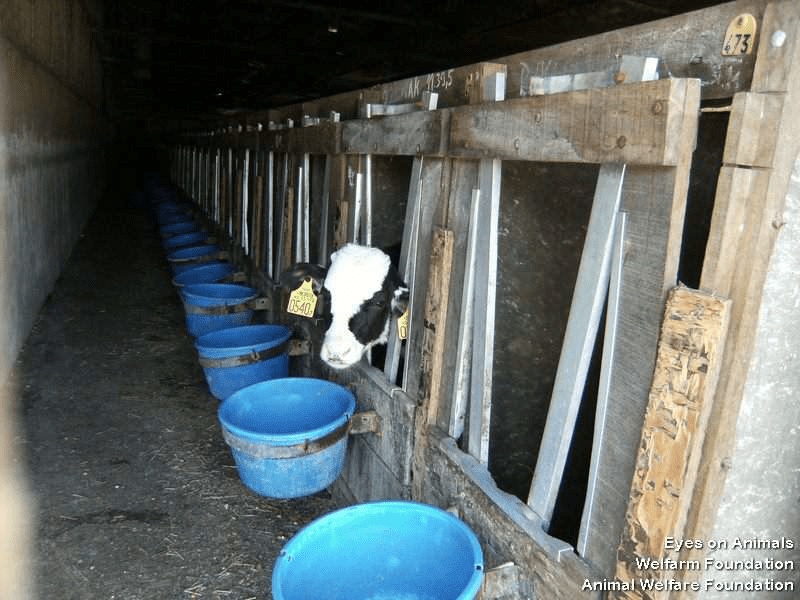
Above – Male Calf in Veal Crate.

In order to produce milk, cows must give birth to a calf. Male calves are generally considered a low-value waste product by the industry and as they do not replace female animals in the dairy herd are usually slaughtered at around five days of age. The RSPCA is concerned about the potential for poor treatment of these ‘bobby calves’ on farm, during transport and at slaughter.

For years in the past, British male calves were exported to Europe to be incarcerated in the dreaded veal crate system.  Despite the British government not allowing veal crates to be used in the UK; they were banned due to their cruelty, they did allow British calves to be exported and put into such systems in mainland Europe – was that not hypocritical ? !

Calves are normally separated from their mothers within 24 hours of birth, mainly to reduce the risk of disease in the calf and to ensure the calf is fed adequate colostrum. Cow-calf separation is a practice which is very stressful for both cow and calf.

The option: dont support the murder of baby calves.

New Zealand:

One of the world’s biggest dairy companies, a New Zealand-based co-operative orders an end to killing bobby calves on dairy farms

Fonterra has ordered its farmers to stop killing bobby calves on their farms unless there is a humane reason for doing so. The company said they should be raised for beef or slaughtered for calf-veal or the pet food market.

The mistreatment of bobby calves has previously come under scrutiny after being killed on farms because they had no financial value, and mistreated by contractors who picked them up to transport them to meat works.

Continue reading at:

Fonterra orders an end to killing bobby calves on dairy farms | Stuff.co.nz

Regards Mark

Remembering dear John:

England: Another Terrible Loss – John Callaghan. – World Animals Voice

Time out:

USA: The federal government is investigating the possible human trafficking of children who cleaned slaughterhouses.

The federal government is investigating the possible human trafficking of children who cleaned slaughterhouses

There is no indication that the sanitation company is under investigation for trafficking the children who worked there.

Federal investigators are looking into whether 50 children — some as young as 13 — who were allegedly illegally employed cleaning Midwestern slaughterhouses were victims of labor trafficking, three officials from the Department of Homeland Security told NBC News.

Homeland Security Investigations agents have interviewed children who worked cleaning a JBS Foods slaughterhouse in Grand Island, Nebraska, the officials say.

There is no indication DHS is investigating the company that hired the children, Packers Sanitation Services Inc., or PSSI, for human trafficking. Instead, said two DHS officials, DHS is investigating to rule out the possibility that outside traffickers may have forced children to work for PSSI and profited off their labor.

Continue reading at:

The federal government is investigating the possible human trafficking of children who cleaned slaughterhouses (nbcnews.com)

Regards Mark

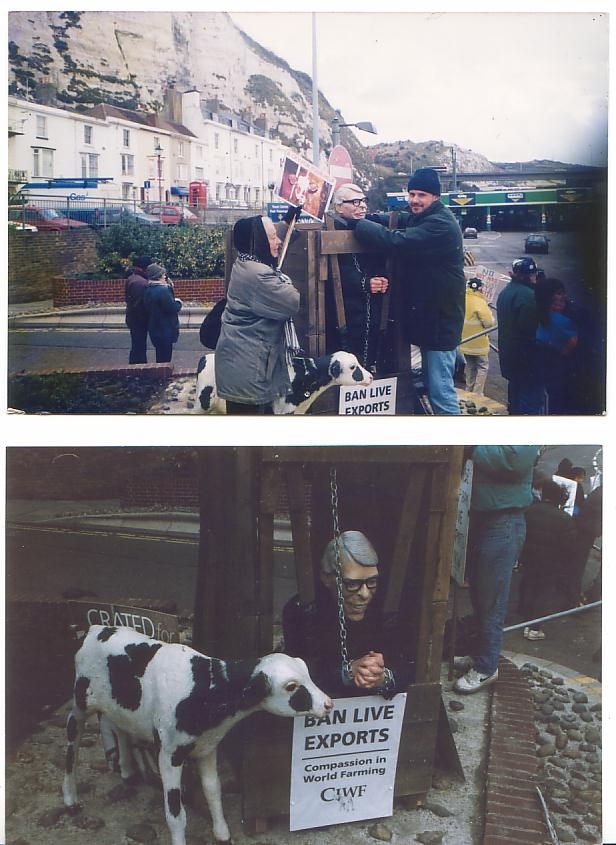
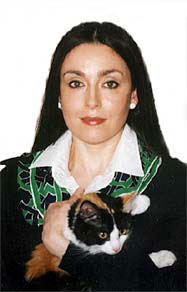
England: Remembering Vicki Moore –  British Animal Activist – Died 6/2/2000. “The fleece of the lamb could not hide the teeth of the wolf.”

By Danny Penman

VICKI MOORE was a leading light in the animal-rights movement and a tireless campaigner against bloodsports across the world. Even the most vociferous of bullfighters acknowledged her determination and bravery.

Moore first hit the headlines in 1987 when she saved Blackie the donkey. Blackie was destined to be crushed to death in Villa Nueva de la Vera, Spain, during the village’s annual fiesta. Every year, the villagers forced a donkey to carry the fattest man around the streets until the unfortunate creature was crushed and died of exhaustion.

After hearing of the donkey’s plight, Moore vowed to stop the festival. Sensing a fight, Britain’s tabloid newspapers all despatched reporters to the fiesta. Within hours of their arrival, rival newspapers started out-bidding each other to buy Blackie and fly him to a British donkey sanctuary.

Over the ensuing days, television crews and journalists from all over the world arrived in the tiny village. Drama soon descended into farce when Blackie was sold to both the Sun and the Star simultaneously. The resulting confusion led to a fist-fight between rival photographers and bitter exchanges between their editors. Moore settled their claims in characteristic style by declaring that “everyone had helped save Blackie”.

She was born Victoria Seel. Her mother was a club singer and gave birth to her daughter whilst touring Northamptonshire in 1956. Vicki followed in her mother’s footsteps and left home in London at the age of 18 and worked as a bunny-girl at the Kingsway club in Southport. It was here that she met Tony Moore, her future husband. The pair married when she was 20 and formed their own band. In the late Seventies, the couple became involved with the RSPCA and soon had a house full of rescued animals.

The publicity generated by Blackie’s rescue in 1987 turned the spotlight on Spain’s blood fiestas. Moore realised that nations could be humbled by exposing their cruel truth to the outside world. To do this she and Tony set up Fight Against Animal Cruelty in Europe in September 1987 in their Southport home. At great risk to herself, she exposed the scale of animal suffering in the blood fiestas using the simple power of the home video camera.

Her first video expose focused on the village of Manganeses de la Polvorosa in 1989. Every year, the villagers celebrated the feast of St Anthony by dropping a live goat off the church tower. Once captured on video, and shown to a horrified world, the festival was quickly outlawed by the Spanish government. Later she would pose as a tourist at fiestas across Spain, all the while gathering the evidence to shut them down. It was during one of her campaigns that she suffered the injuries which eventually led to her death.

In June 1995, in Coria, she was gored by a bull being chased through the village streets. Argentino inflicted massive injuries and no one expected her to survive. But her spirit refused to be cowed. Her first words after regaining consciousness were, “What happened to the bull?” When she discovered the bull’s name, she giggled: her favourite song was “Don’t Cry For Me, Argentina”. In subsequent years, when the pain of her injuries became too great, she would quietly call on the spirit of Argentino to help her.

Despite her ongoing suffering, requiring constant medication, Moore continued to fight for animal liberation. She was a determined campaigner against hunting, and never tired of reminding Labour politicians of their promise to ban blood sports. She also took the fight against bullfighting to Macao.

Vicki Moore’s life was, perhaps, best summed up by a Spanish newspaper after she was gored by Argentino: “The fleece of the lamb could not hide the teeth of the wolf.”

Victoria Lucille Seel, animal-rights campaigner: born Western Favel, Northamptonshire 24 December 1956; married 1977 Tony Moore; died Liverpool 6 February 2000.

Copyright 2000 Newspaper Publishing PLC

Regards Mark

Obituary: Vicki Moore (indexarticles.com)