Category: General News

EU: Winning the race to the top: ensuring (new) EU animal welfare rules apply to imported products.

31 January 2023

Written by Reineke Hameleers

For the first time in over a decade, on the legislative side things are moving forward for animals in Europe, as the European Commission is working on the much needed revision of its animal welfare legislation.

This is certainly something to celebrate. European citizens have been calling for new or better rules on animal protection for years as we witnessed scandal after scandal, particularly concerning farmed animals. Dozens of exposés by animal welfare organisations and damning reports by the Commission’s own services, demonstrated beyond any doubt that too many of our existing laws on farm animal welfare are anachronistic, blatantly disregarded or only partially enforced. This has caused, and is still causing as I write, unspeakable suffering to billions of sentient beings. 

Besides, as time went by, it became increasingly clear that our animal welfare legislation is based on outdated scientific evidence. The most recent opinions produced by the European Food Safety Authority (EFSA) on animal welfare on farm and during transport, which should inspire the revision of EU legislation, point towards the same conclusion: the science has evolved. It is time for legislation to follow suit. The intention is there, finally. 
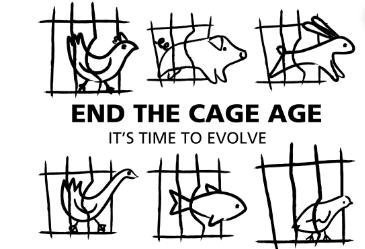
The European Citizens’ Initiative (ECI) “End the Cage Age” was an unprecedented success, which will possibly be mirrored by other ECIs and petitions on animal welfare that are gathering momentum. In its wake, the Commission committed to ending the use of cages in animal farming, which will require a profound rethinking of many existing intensive animal rearing systems (for laying hens, breeding sows, and rabbits, to name but a few). We are ready to use the best available science and defend best practices on animal welfare in the heated debates that certainly await us in the coming months and years. 

We cannot forget that the European Union, much as it is a major global exporter, still imports large amounts of animal products from other geographical regions. In many cases these products are the result of farming practices that would be illegal under EU animal welfare (as well as environmental and labour) legislation. If the EU continues importing animal products from countries with lower or poor animal welfare standards, arguably this poses a moral dilemma for European citizens who in the great majority do not want substandard animal welfare products in the EU market. 

This moral dilemma is only very marginally reflected in trade agreements. So far, only the Slaughter Regulation has been applicable to imported products. Things are not rosy: enforcing EU rules on the protection of animals at the time of killing has proven to be extremely problematic beyond the EU borders, as shown by several international audits and investigations. Certainly, much needs to be improved, yet this is the only way to go. 

Farmed animal welfare laws exist because the EU has acknowledged that animals are sentient beings deserving lives worth living. In light of this, the double standard that is currently in place for imports is untenable. 

It is often argued that WTO rules prohibit trade restrictions based on discriminatory standards as this could hamper equal chances for every nation to trade with each other on the global market. However, accepting imports from countries that do not comply with EU animal welfare rules arguably equates to violating the moral contract that the EU has established with its citizens. 

The successful precedents of the bans on EU imports of cat and dog fur and, more recently, certain seal products – which were declared compatible with WTO rules – clearly show that matters of animal welfare are primarily of moral concern for European citizens and as such they should be legally treated. If carefully constructed, trade restrictions aimed at protecting animal welfare can be compliant with WTO rules

Incidentally, it is often the case that products from countries with weaker rules for farmed animal welfare are cheaper. In the current scenario, where there is no obligation to label non-EU animal products, especially in processed food and in the hospitality industry, it is often impossible for consumers to determine the origin of what they are buying and eating. We are then faced with the paradox whereby citizens strongly demand even stricter rules for farmed animal welfare in the EU but as consumers they might be inadvertently supporting cruel farming practices elsewhere by buying low animal welfare products. 

One might wonder how big this moral issue can be. Looking at Eurostat data, we can only conclude that it is huge. Among the main exporters of animal products to the EU (beef, pig, poultry and lamb meats, eggs, fish from aquaculture) there are Brazil, Argentina, China, the United States, Ukraine, India, Vietnam and Australia. In these countries, farmed animal welfare standards are either vague, fragmentary, non-binding, or non-existent. And there’s more. 

Intensive animal agriculture is booming in many of these countries, a trend which, besides causing animal welfare problems, is environmentally unsustainable and a threat to public health. This should be all the more reason for the EU to impose its animal welfare rules on imports. Rather than seeing it as a barrier, the EU should approach this as a golden opportunity to promote higher-welfare and sustainable food production globally. Realistically, imposing requirements on imports will not force countries to change their entire animal welfare legislation straight away. However, as companies exporting to the EU are usually big corporations that are also pressured by NGOs to improve their animal welfare practices, their shift might eventually have a trickle down effect on federal and national legislations. 

In this way the EU will lead the race to the top on global farmed animal welfare standards, once again heeding the call from its citizens who clearly indicated they expect leadership on this. Nine out of 10 respondents to the 2016 special Eurobarometer said that they want imported products to comply with EU legislation. Additionally, citizens would like the EU to do more to promote its animal welfare standards worldwide.  

What does this mean in practice? Key aspects of the new and updated EU animal welfare legislation (on-farm rearing, transport, slaughter and labelling) should also be applied to imported products. This is the right thing to do, for so many reasons: it is what citizens want; it is a way to guarantee consumer rights; it will trigger positive changes worldwide; and it is compatible with WTO rules as it concerns the protection of public morals. Last, but not least, it will enable the EU to live up to its ambitions as global leader on animal welfare.

Regards Mark
EU: End animal testing European Citizens’ Initiative validated with over 1.2 million signatures.

26 January 2023

Signed, sealed, and delivered! The “Save Cruelty Free Cosmetics – Commit to a Europe Without Animal Testing” European citizens’ initiative (ECI) has smashed the requirement of gathering 1 million validated signatures, reaching over 1.2 million statements of support from European citizens.

The European Commission must now meet with campaigners and address citizens’ concerns. As over 10 million animals suffer in experiments in the EU every year and new non-animal technologies are being developed faster than ever before, the time for change is now.  

The days of forcing cosmetics ingredients down the throats of defenceless animals, intentionally infecting them with debilitating diseases, or drilling holes into their skulls must end – a radical rethink at the EU level is needed to support the transition.”

Sabrina Engel, chair of the ECI’s organising committee, PETA Germany

This European citizens’ initiative powerfully backs up the demand of the European Parliament to phase out animal testing for good. With the voice of the citizens added to the chorus, the Commission cannot ignore the loud calls to accelerate the transition to non-animal science.”

Tilly Metz, MEP, Greens–European Free Alliance

With the threat that the chemicals strategy poses to animals in laboratories, this ECI could not be timelier. From today, no additional animal tests should be requested to fill information gaps about chemicals. We need to move to safer and more humane safety assessments of chemicals.”

Sirpa Pietikäinen, MEP, European People’s Party

The message from citizens has never been clearer or more aligned with the voices of scientists, industry, NGOs, and politicians. Everyone understands that a plan to phase out animal experiments is a win-win situation for humans, other animals, and the environment. Now, the Commission should listen to citizens and finally make it happen.”

Anja Hazekamp, MEP, the Left

European citizens have been asking for cruelty-free cosmetics for a long time. This European citizens’ initiative is another reminder to the Commission that EU citizens will not stand by while loopholes in legislation are not closed to end all animal tests on cosmetics.”

Niels Fuglsang, Progressive Alliance of Socialists and Democrats

The ECI’s three critical asks call for robust implementation of the EU ban on animal testing for cosmetics ingredients, a full transition to non-animal methods for chemical safety tests, and committing to a plan to phase out all experiments on animals. 

The ECI was launched in August 2021 by Cruelty Free Europe, Eurogroup for Animals, the European Coalition to End Animal ExperimentsHumane Society International/Europe, and PETA, with the support of global beauty and personal-care companies The Body Shop, Dove. It has since been actively promoted by companies such as Lush and a coalition of groups and campaigners from every corner of Europe. Hundreds of celebrities also supported the campaign, including Sir Paul McCartney, Ricky Gervais, Finnish heavy metal band Lordi, Italian singer Red Canzian, French journalist Hugo Clément, and actor Evanna Lynch. 

No other ECI has ever received this level of support across so many different countries. To be successful, an ECI has to collect at least 1 million validated signatures and has to meet a minimum target across at least seven different EU countries. This ECI passed the minimum target in 22 different countries, demonstrating pan-European support for ending animal testing.   

Regards Mark

EU: AGRIFISH: Some Unprogressive Member States Try to go “Business as Usual” On Live Animal Transport.

AGRIFISH: some unprogressive Member States try to go “business as usual” on live animal transport

30 January 2023

While EFSA’s scientific opinions and citizens’ demands drive the conversation towards progress on animal welfare, some Member States don’t want to see serious restrictions on live animal transport in the new Transport Regulation. Luckily several voices call for ambitious change, not least the Commissioner’s.

During today’s Agriculture and Fisheries Council (AGRIFISH) several Member States supported an information note tabled by Portugal. The paper states that animal transport is an essential part of the food production chain, and that the primary objective of the upcoming revision of the Transport Regulation should be the continued facilitation of high welfare intra community trade and export of live animals, but not be focussed on measures aimed at prohibiting or limiting certain types of transport.

It’s a completely different scenario compared to July’s 2022 AGRIFISH, when 13 Member States called for an ambitious revision of the Transport Regulation including maximum journey times as well as a shift to a meat and carcass trade.

After the paper was published last week, the Intergroup on Animal Welfare sent an open letter to the European Commissioner for Health and Food Safety Stella Kyriakides, asking her to take into account the recommendations of the Committee of Inquiry on the Protection of Animals during Transport (ANIT), and to ensure that the proposal, which is expected in October 2023, remains focused on alleviating the suffering of millions of animals due to long distance transports.  

Also, during today’s AGRIFISH there were several voices in the room calling for an ambitious revision: The Netherlands was the loudest, clearly opposing the paper and asking for a straightforward ban on live export. Germany, Austria, Denmark and Luxembourg opposed the paper too. 

“If science and experience tell us that certain practices in transport are detrimental to the welfare of animals, which could also pose a threat to animal health and consequently to human health, I believe and you would agree with me we must find ways to adjust those practices. Doing nothing is not an option. Change is necessary because animal welfare is a key component of our sustainable food production system”, concluded the meeting Stella Kyriakides, European Commissioner for Health and Food Safety.

“Several Member States are backing citizens in their demands for the animals: cruel transport practices need to stop, specifically live export, as we have witnessed far too many tragedies at sea and on the road. It was good to hear even “opposing” Member States mentioning a trade in meat and carcasses, as this is the only way forward. And it was important to hear that the Commissioner was firm in her defence of the revision”, commented Reineke Hameleers, CEO, Eurogroup for Animals. 

Regards Mark

New report explains urgent need to protect animals in disasters.

New report explains urgent need to protect animals in disasters

31 January 2023

Russia’s war in Ukraine in 2022 caused a myriad of challenges worldwide, but it also provided valuable lessons by highlighting what is missing for animals in the event of a disaster. Today, animals are not legally protected in disasters at EU level, although they play a vital role in people’s lives for economic and health reason

Animals in disasters: the need for protection and coordination across Europe

Browse the publication here:

Animals in disasters: the need for protection and coordination across Europe | Eurogroup for Animals

The imperative of protecting animals in disasters is underpinned by the human-animal bond, which influences human evacuation behaviour, the emotional support animals provide to people, the potential public health risks that disruption of health protocols can bring, and often the economic value of animals to humans. And as a result of the Ukrainian refugees crisis in 2022 by people’s willingness to save their animals in disasters. However, there is still little recognition among policymakers and humanitarian actors of the role that animals play in human life and in rebuilding communities after disaster.

Our new report suggests that the basis for the protection of animals in disasters is their legal inclusion in EU disaster law. It also outlines various actions that could be implemented by the EU and its Member States to better address the plight of animals in such circumstances. These include aligning efforts for people in disasters with those for animals, including animal welfare actors in a coordinated joint coordinated capacity during the disaster response phase, developing national disaster management plans involving animal experts, and establishing animal-friendly refugee camps in the EU, among many other initiatives. 

The experience of Ukrainian refugees bringing their companion animals with them has shown how much these animals are part of their families. Today, the Directorate-General for European Civil Protection and Humanitarian Aid Operations (DG ECHO) is responsible for humanitarian assistance and civil protection in the European Union. Its main instrument – Union Civil Protection Mechanism – recognises in its recitals the need to “reduce the vulnerability of animal welfare and wildlife” as part of disaster risk prevention and management, but there is no obligation to cover animals in terms of protection. Recognising the vital role these animals play in people’s lives could provide a legal basis for DG ECHO to extend its protection efforts to companion animals as family members. Other categories of animals should also benefit from legal protection in the event of a disaster, the legal grounds for which should be examined. 

While achieving protection for all species in disasters remains a long term goal, the immediate solution lies in the legal inclusion of animals into disaster law in the EU with the aim of involving animal welfare actors in the development of disaster management plans, and in a coordinated disaster response mechanism in the EU. There is great potential for the EU, Member States and NGOs to work together to be better prepared for disasters in the long term.

Regards Mark

1/2/23 – Remembering Jill:

England: 1/2/23 – Remembering Jill. A Brief Insight – The Live Exports Battles of SE England to Be A Voice for the Voiceless.

Above – Jill.

On February 1st it will be the anniversary of the death of Jill Phipps; an animal activist who was murdered at Coventry by a truck carrying live baby calves into Coventry airport for export.  I remember it very well as at the time I was entirely involved with animal exports campaigns from the port of Dover, Kent; England.

But the campaigns, protests and anti export feelings at Dover had reached a real fever pitch; as you can see in the following video – a typical day around Dover re live export – and as such, many of the ferry companies which used to take live animal transporters as part of their daily business decided to say ‘no more’ to accepting the trade and thus rejected it.  The exporters were becoming isolated with their sordid trade and were trying every port (big or small) in Southern England to get their animals over the water. 

Video – a typical protest day at Dover and the surrounding area:

At 27+ seconds you can see a ‘Gilder’ export truck – operated by brother GG Gilder – see Peter Gilder below.

The exporters and hauliers were in utter crisis as Dover port turned its back on the trade and would not accept it – aka people power !, and as a result the export industry had to turn to using other ports in Southern England and other means (ie by air) of getting live animals into Europe. 

Also, at the same time, one of the main exporters / hauliers who constantly used Dover, named Peter Gilder, took Dover port to the high court for refusing the trade.  The exporters and hauliers wanted to get Dover open again for their trade of death.

In the meantime whilst Dover was refusing the trade, small port towns such as Shoreham, Brightlingsea, and Ipswich were all used (as well as a few others) as trial ports in which the exporters attempted to continue their business.

In this next video you can see the huge public outcry and resultant protests at Shoreham (near to Brighton) about this small port being used for the export of live animals.  For each shipment, huge numbers of police from London (the Met police) had to be shipped in to join local police for every export consignment – this is where the saying ‘I’ve met the Met, and got the bruises to prove it’ was originated.

This film below (and dedicated to Jill) follows weeks of daily demonstrations by hundreds and, at times, thousands of everyday people, who converged on a small harbour port in West Sussex, England, to protest and show their disgust about the export into Mainland Europe of thousands of calves, cattle and sheep.

Thousands of young calves were also destined for the veal crates, a system which was already banned in the UK where calves are kept locked into tiny boxes, only able to lay or stand, and are chained or tethered, forced to drink iron deficient milk substitute so as to satisfy those who like their flesh (veal) light rose coloured and tender. This system was already banned in the UK and so farmers were exporting these baby (male) animals to Europe where crating was still legal.  How hypocritical !, the UK government banned the crates and then allowed male calves to be exported to Europe for crating !! – it was only the males which were exported, as male calves do not produce milk and thus are not used as replacements in the herd; they are essentially a ‘by product’; one which was used for veal meat production.

The film demonstrates the power of ordinary animal supportive people, when they get together and fight for the rights of those who do not have a voice.

Within weeks, these advocates for animals across Southern England managed to stop in their tracks, the big business who were profiteering from what people saw as a trade in suffering. Other harbour ports across Southern England also saw these exports stopped, due to persistent, big and daily demonstrations. Ordinary folk, from all walks of life, young and not so young, put their own liberty and personal safety at risk to try and protect animals as well as to highlight this issue of live animal exports.

Video – 1995 – the protest at Shoreham.

.

… and also at Brightlingsea,

Daily protests by the entire town folk of Brightlingsea in Essex against live animal exports in 1995, involved the crazy sight of hundreds of police officers (sometimes in full riot gear) forcing trucks full of sheep through narrow streets against a massive human blockade of outraged local residents. This is as good as people power gets, and the trade was eventually banned.

Video – the battle of Brightlingsea:

It was very hypocritical and involved a government exporting live calves from the UK to be incarcerated into ‘veal crates’, a system which the British had already banned.  So here we were, a ban on veal crates, and a government which allowed calves to be exported to the very systems that they had banned – was it any wonder that people were bummed off (to put it mildly !).

Above – crated calves.

The exporters also attempted to air freight animals to Europe.  Coventry airport, where our Jill was murdered, was one such airport.

Above – BJ – Calf Exporter, Arms Dealer and Drug Smuggler – all round no good.

The live calf shipments from Coventry airport were operated by a fellow named Barett Jolley (BJ).  He was operating an aircraft from Coventry, which crashed in bad weather on the return flight, killing all five crew members.  I wrote more about it recently:

England: There Is More To The Jill Story When You Have the Facts. – World Animals Voice

After the tragic events at Coventry which included the death of our Jill, BJ was handed a 20 year jail sentence due to his attempted smuggling of £22 million of Cocaine into Southend airport which is on the SE coast of England.

He smuggled arms, he exported live veal calves; he attempted to smuggle drugs into the UK, and yet he was given police protection constantly at Coventry during the calf export protests, at which our dear Jill was killed.

I include another link to Jill which covers several posts you can read at your pleasure if you wish ::

Search Results for “jill phipps” – World Animals Voice

There is still, and always has been a lot of anger in the AR movement about the death of our Jill.  28 years on and it still hurts bad.

I hope this gives you a very brief insight to activities in Southern England you now know and understand why I fight the disgusting export trade anywhere in the World !

Please remember Jill on 1/2/23 – thank you.

Regards Mark

India: Gearing Up For An Amazing Year For Animals In 2023 – Animal Aid Unlimited.

Dear Mark,     

We’re gearing up for an amazing year ahead for animals, thanks to your incredible support. 

A major area of focus is staff training and development. To this end, we have recently hired and begun training 10 new veterinary assistants to join our medical team. From dressing wounds, to giving medication, to helping with feeding, they will help make sure that animals get all the care they need to recover as quickly as possible. 

We reach higher every year because the animals deserve it, and your support has made so many dreams come true.

Do you know someone passionate about animal protection who’s ready for a new life adventure? 

Animal Aid is NOW HIRING!

Click here for detailed information about a variety of open positions for Indian Nationals and International applicants both, from Veterinarian to Volunteer Coordinator to Videographer!


Apollo’s jaw was broken, but not his spirit! 

With his jaw broken in two, this beautiful boy seemed to plead to his rescuers to help him. He couldn’t close or move his jaw, and his face showed utter bewilderment. But he shyly turned on his back in an act of pure submission, his tail wagging as if asking for help to stop the pain.

When we sedated him and saw the full extent of the fractures in his jaw, we were worried we might not be able to save him. But we tried our best. And to our delight, he responded extremely well to the sutures, and by his third day was ready to start slurping up his liquid diet.

From that moment, we knew the incredibly sweet Apollo was going to thrive!

To help someone who wants to live, please donate today.

Casper came home to die.

But we came to his home to save him.

The family who feeds him hadn’t seen him for days and thought he was never coming home again. We can only imagine the difficulty he had making his journey home–perhaps from a great distance, and in excruciating pain and confusion. He must have used every ounce of his remaining strength just to make it home.

When we rescued him, he was too weak to resist, and he quietly endured the removal of maggots infesting his wound despite the pain he must have been in. But as he healed, his eyes and entire face transformed. He always had a few words for us during the weeks of wound dressings that followed, but this was a good sign. It meant he was strong enough to fight for his life. He was also strong enough to start demanding cuddles!

Heal a life-threatening wound for a life-loving sweetheart. Please donate today

From around the world, volunteers are bringing love to their beloved animals.

From Handicapped Heaven, to the Rehabilitation area, to Oldies and up to Peace Place and Sanctuary, everywhere we look we see animals basking in the love and attention showered on them from volunteers from around the world! 

Over there brushing a calf we see Dharmada, who has volunteered many times and especially loves spending time with the cows; over here we see Robin at work with an elderly dog in her arms; and busily refilling water bowls, sweeping, and stopping frequently for a cuddle is Sarah. 

In the Rehabilitation area we see Teresa massaging the shoulders of a road accident survivor; here too is Kitty whose multiple volunteering weeks have brought her loving hands to once again massage the hind limbs of paralysed dogs on a chilly morning. 

And there are first-time-but-not-final-time volunteers Jane and Melanie, who “hit the ground running” with gentle grace and so much loving kindness for the animals.

Learn more about volunteering:

No matter where you are on your life journey, having an up-to-date estate plan is essential. You may think estate planning is complex and expensive, but FreeWill’s online tool is free to use and guides you through the process with ease.

Planning your estate is one thoughtful action that puts you one step closer to achieving your goals, taking care of yourself, and finding peace of mind.

If you choose, FreeWill can help you pay it forward to street animals by naming AAU in your estate plan

Note: FreeWill’s self-help estate planning solutions are valid for the disposition of property
located in the fifty states and DC. Will-makers residing outside of the United States should
consult with a local lawyer before using FreeWill’s tools.

Saving the life of a street animal looks good on you.

100% of the proceeds go to our street animal rescues

Go shopping here:

Animal Aid Unlimited Shop

We thank you deeply for all you do, are, and inspire for animals

Founding family Erika, Claire and Jim, and the Animal Aid Unlimited team.

Regards Mark

Above – My Golda waits in the snow.

UK: Crab and Lobster Welfare Takes a Step Forward With First UK Supermarket Benchmark.

Crab and lobster welfare takes a step forward with first UK supermarket benchmark

27 January 2023

Crustacean Compassion

Following the inclusion of decapod crustaceans (such as crabs, lobsters and prawns) – in the UK Animal Welfare (Sentience) Act 2022, Crustacean Compassion have launched the first UK industry benchmark ‘The Snapshot’ to assess welfare standards for decapod crustaceans within the UK food supply chain.

30 UK companies – including all major supermarkets – were evaluated in the benchmark, revealing that only 50% of companies have developed formal policies on some aspect of decapod crustacean welfare, and only one is promoting decapod welfare to consumers.

On average, retailers are leading the way in areas of welfare policy, management and reporting.

The Snapshot report is the first assessment of leading seafood producers, processors, retailers and wholesalers in the UK on welfare standards for decapod crustaceans such as crabs, lobsters and prawns.

Commissioned by our member organisation, Crustacean Compassion, and facilitated by Chronos Sustainability, The Snapshot was released this week. 

Each year, more than 420 million crabs, lobsters, langoustines and prawn/shrimp are caught in the UK with a further 5 billion prawns and other crustaceans being imported from overseas. The Snapshot looks at their welfare at all stages of the supply chain: capture and handling, holding and storage, transport, mutilations, stunning and slaughter.

The Snapshot assessed 30 UK seafood companies, including household name brands, all major supermarkets and more localised seafood specialists. The report reveals that 70% of companies consider the welfare of crustaceans to be a business issue, in part due to growing consumer concerns. Contrary to this, only 50% have developed formal welfare policies.

While retailers are leading the way across several key areas, including policy commitment, enforcing their policies and reporting of welfare standards, only one company assessed is promoting decapod crustacean welfare to their customers – and this is a producer, not a retailer.

The benchmark will be repeated later in 2023 and will show which companies are taking decapod welfare seriously and making improvements in this vital area. Whilst this initial report does not share company scores, subsequent reports will publish all company scores and a ranking table, allowing consumers to make informed choices for higher-welfare products that avoid inhumane practices such as eyestalk ablation and slaughter through drowning, asphyxiation and boiling alive.

The development of The Snapshot involved consultation with industry, and this continued engagement will ensure that decapods, companies and consumers will all benefit.

You can watch the webinar launch recording here.

Since animals like crabs and lobsters were legally recognised as sentient and able to feel pain, companies have rightly been under increased scrutiny about how their practices impact the welfare of the animals involved. The Snapshot will show how decapod welfare is currently being addressed across the industry right now and will drive welfare improvements across the sector. Customers expect to be able to buy seafood that has been produced to high standards of animal welfare and we have been asked which brands and companies have the most humane practices. The food industry has a responsibility to both meet those expectations and provide the necessary information to enable consumers to make informed choices.

Claire Howard, Director at Crustacean Compassion

Read more at source

Crustacean Compassion

Regards Mark