Category: General News

USA: Petition – Workers Rights; We must stand up to the meat industry now!

American meat corporations have bad reputations, and for good reason. These companies have reached near-supervillain status for their inhumane treatment of cattle, pigs, and chickens. Not only do animals that suffer in meat-packing plants — these corporations abuse their workers, too. New reports indicate that this industry quite literally doesn’t care if its workers live or die, and it is time Congress did something about this.

In fact, a new report by the U.S. Congress reveals that even when meat companies knew their workers were at extremely high risk of catching COVID-19, they lobbied to keep their plants open anyway.

These corporations even went so far as to fabricate letters that falsely claimed America’s meat supply was at dire risk if plants temporarily shut down. As a result, former President Trump signed an executive order classifying meat plants as critical infrastructure, forcing their doors open amidst grave danger. Given what we know so far, upwards of 59,000 meat-packing workers caught COVID-19, and nearly 300 died. That’s not even counting the family, friends, and community members they spread COVID to after contracting it at the plants. On top of that, many meat-packing workers are immigrants, low-income, uninsured, or some combination of the three. These are communities that are already at an extremely high risk of contracting severe COVID, yet the industry decided profit was more important than human lives. The government must never allow this deadly manipulation to happen again.

Sign the petition now to put pressure on Congress and tell it: all workers deserve dignity and protection! We must stand up to the meat industry now!

P.S. The industry has blood on its hands — both from the animals mistreated, and from the workers it pushed into the COVID frontline.

Regards Mark

UK: A Party At ‘Buck House’. 70 Years As Queen.

The front of the palace portraying images of the Queen.

There was a party this weekend (4/6/22) at ‘Buck House’; or Buckingham Palace as it is better known.

Why ? – because Her Majesty the Queen is celebrating her platinum jubilee – a celebration held to mark an anniversary. Among monarchies, it usually refers to a 70th anniversary.  So 70 years as the head of the British Commonwealth and all its people.  There have been big events all over the UK and many other commonwealth nations to celebrate this rather amazing event.

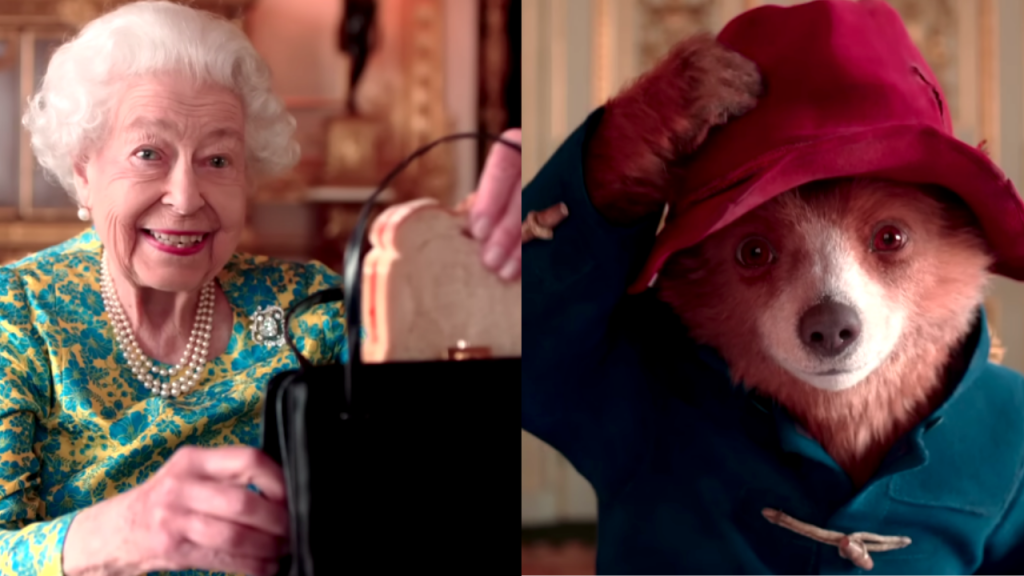
Her majesty joined in the fun by having Paddington Bear to tea, complete with marmalade sandwiches !!

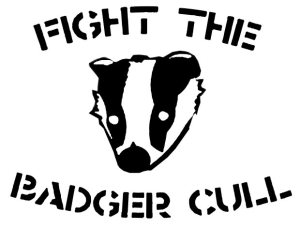
Our great animal advocate Brian May of ‘Queen’ started the party as always; and it was especially great to see him in his Badger suit; having done so much in recent times to help stop the badger cull.

Setts, Drugs and Rock n Roll by Dr Brian May:

Here is Brian in his badger jacket – right hand breast pocket area:  https://youtu.be/RvNYGDQiNWg

As the darkness arrived, the palace became a huge ‘screen’ showing an amazing record of the life of the queen, and a section given by Prince William on the environment and the importance of working to stop climate change and help protect the animal species of the world.

See the princes speech here – and you can see how the palace became an environmental screen for a few minutes on this issue – it was impressive !

Personally, for me, there was just one person who was missing; and that was Princess Diana, the people’s Princess.  If she were still here today then she would have played a major part in the protection of the environment and animals – that was the kind of person we had in her.

Regards Mark

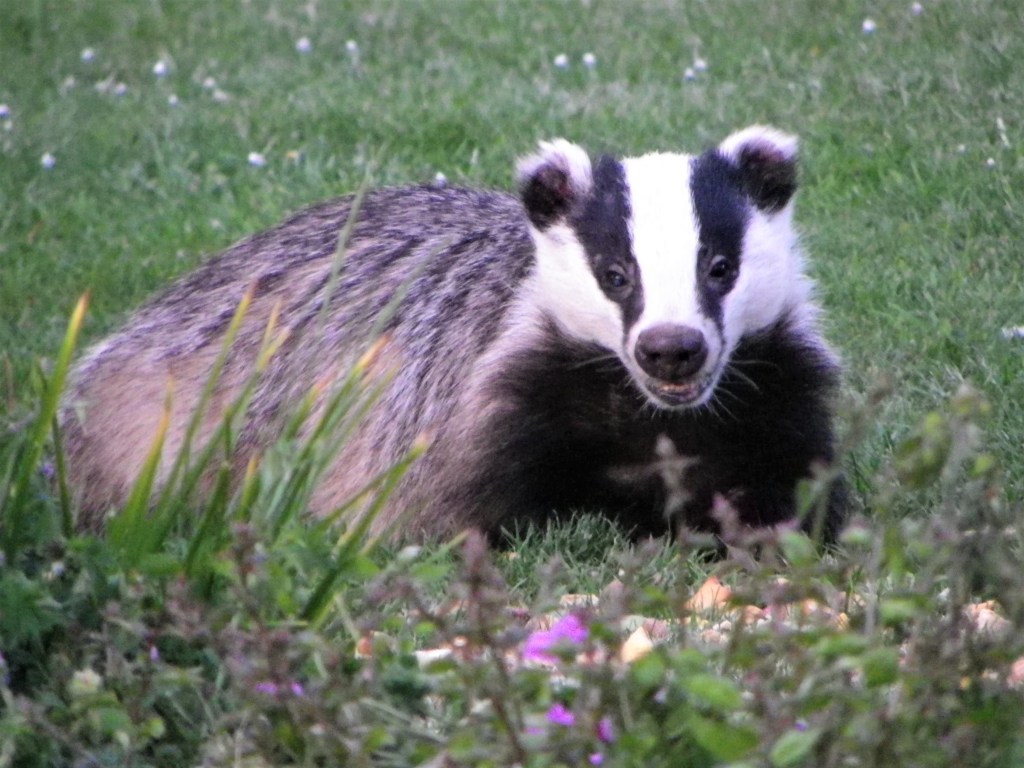
A Badger enjoys his visit to my garden – Photo: Mark (WAV).

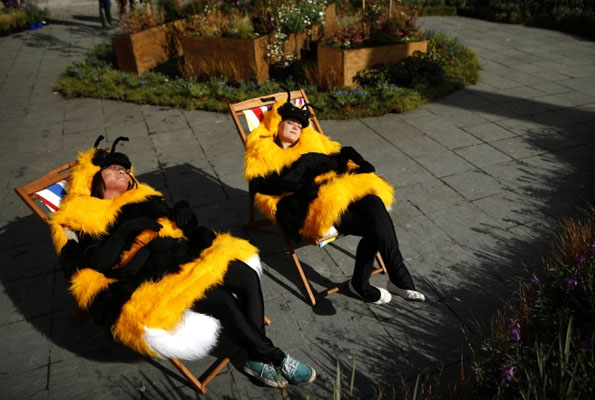
USA: ‘Bees are fish!’ Judge issues bizarre animal rights ruling amid row ‘great day for bees’.

A US Judge has ruled that bees can legally be classified as fish, in a bizarre move to protect endangered bees.

‘Bees are fish!’ Judge issues bizarre animal rights ruling amid row ‘great day for bees’ | Science | News | Express.co.uk

According to the decision made by a California appeals court, bees in the US can now be legally called a fish. While odd, this move will now allow the government in California to protect endangered bee species, many of which are under threat from climate change. The ruling came on Tuesday after agricultural groups sued California wildlife officials for attempting to list four bumble bee species under the California Endangered Species Act (CESA).

The judge reversed a previous ruling by a lower court, which then noted that threatened or endangered species of bees could be listed under the CESA category of fish as the definition of “fish” is broad and includes invertebrates.

Pamela Flick from Defenders of Wildlife, one of the case’s intervenor defendants said: “It is a great day for California’s bumble bees.

“Today’s decision confirms that California Endangered Species Act protections apply to all of our state’s imperilled native species and is critical to protecting our state’s renowned biodiversity.

“Bees and other pollinators are integral to healthy ecosystems and the crucial pollination services they provide serve all of us, making this decision exponentially more consequential.”

According to Xerces Society, a conservation group, this decision will pave the way for critical protections that are needed for four endangered bumble bee species that occur in California.

It will also allow the Commission to protect other imperilled insects under CESA, which provides protection for some of the most vulnerable plants and animal species in the region, providing a pathway for these species to boost their populations to ensure they don’t go extinct.

CESA rules define an “endangered species” to include a bird, mammal, fish, amphibian, reptile, or plant.

The issue arose when activists pointed out that this definition could leave out a number of other threatened species, such as insects.

Regards Mark

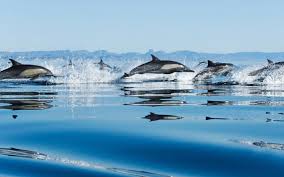
The weird reason dolphins drink each other’s pee.

For dolphins, friendship is a matter of taste.

Dolphins get to know their friends by tasting their pee, a new study finds. By sampling sips of each other’s urine, dolphins demonstrated a type of social recognition that begins with an exchange of whistles that are unique to specific individuals — much like human names. 

Scientists have long known that dolphins identify themselves using so-called signature whistles that are different for each dolphin and that they address one another by imitating such whistles. But researchers were uncertain if this copying showed that dolphins associate signature whistles with individual identity or with a more general concept such as “friend.” 

Recently, scientists learned that not only do bottlenose dolphins demonstrate name recognition, they also replicate this recognition with another sense: taste. 

By tasting each other’s urine and recognizing the source, the dolphins showed that they could keep track of dolphin identities using two types of sensory input. This means the animals could create and store a mental concept of other dolphins, according to the new study.

Flavorful friends

Researchers discovered that dolphins do this kind of identification via pee-tasting while investigating if the animals are truly calling each other by name when they copy whistles. The scientists conducted what is known as a cross-modal study, in which experiments test if an animal can recognize an object or another animal across multiple cues received from different senses. 

Scientists have previously used such experiments in a wide array of animals, including fish and monkeys. But communication systems in most animals lack sounds that are recognizable as labels for individuals, such as dolphins’ signature whistles, the researchers wrote.

However, finding a second sense in dolphins that was testable under laboratory conditions was challenging. Testing dolphin sight or echolocation would “involve moving giant monitors or even the dolphins themselves around, which is impossible,” said lead study author Jason Bruck, a biologist at Stephen F. Austin State University in Texas. But dolphins are known to swim through other dolphins’ urine plumes, mouths agape, and they may do so to get social information “the way a dog sniffs a hydrant,” Bruck told Live Science. 

“Except dolphins would have to do that with taste, not with smell,” as the cetaceans lack olfactory bulbs, he added.

A question of identity

Researchers found that dolphins spent roughly three times as long sampling urine from unfamiliar dolphins as they did from familiar ones. This suggested that the animals could identify known fellows by taste.

To test for persistence of identification across senses, researchers paired recordings of signature whistles with urine from dolphins: in some of the pairings, the urine came from the whistler, while in others it was produced by a different dolphin. The scientists then introduced dolphins to the sound of a whistle and the taste of a urine sample.

Related: This whale-dolphin hybrid is not a ‘wholphin.’ Here’s why.

When the pee matched the whistle, listening dolphins lingered closer to playback speakers. This indicated that the animals recognized the consistency in signals perceived by two senses — taste and hearing — and that both taste and sound came from the same dolphin.

These findings mean that for dolphins, whistles represent the specific dolphin’s identity in other dolphins’ minds, including the taste of that dolphins’ pee.

“We now know that when a dolphin produces that signature whistle, they really are referring to that dolphin they’re copying,” Bruck said. “They are using those whistles in much the same way that we use names.”

Lipid mechanisms?

Future studies could investigate the mechanisms behind this newly discovered dolphin ability, Bruck said. Dolphins’ taste-driven identification may be driven by lipid recognition; if so, dolphin research may reveal a lipid-sensitive taste bud that’s bigger and more robust than the human variety and therefore easier to study. Such a discovery could inform research into obesity in humans, Bruck said.

More fundamentally, these findings could open new avenues of dolphin research, Bruck added. “Transmitting social information from dolphin to dolphin [is] as easy as [using] an underwater speaker” and could offer insights into “how dolphins perceive each other as individuals,” he said.

The findings were published May 18 in the journal Science Advances.

Original article on Live Science.

Regards Mark

What’s the difference between a moth and a butterfly?

Butterflies and moths have numerous behavioral and physical differences.

Say the word “butterfly” and a brilliant, orange-and-black-winged Monarch butterfly may fly through your mind. Say “moth,” meanwhile, and the brain may conjure up an image of a dull, brown-winged pest that nibbles holes through clothing.

But is appearance really the main difference between these two types of winged insects? What exactly is the difference between moths and butterflies?

It turns out the difference is more than wing deep.

Moths and butterflies both belong to the order Lepidoptera, but there are numerous physical and behavioral differences between the two insect types.

Related: How do mosquitoes sniff out humans to bite?

First of all, moths are much more diverse than butterflies. There are about 160,000 species of moths, according to the Smithsonian Institution(opens in new tab), versus about 11,000 of butterflies.

Both types of insects have scales on their wings. But moths tend to have drab, brown or beige wings, while butterflies are typically more brilliantly decorated, Smithsonian Institution notes. 

This coloration difference may in part be due to behavioral differences between the two types of insects. Moths are nocturnal and try to camouflage themselves during the day on dark objects like bark and leaves. 

Butterflies also camouflage themselves in this way, but they are diurnal, meaning they spend the daylight hours flitting from flower to flower sipping nectar. Their brightly colored wings are often an attempt to tell predators that they contain nasty-tasting chemicals, according to Reiman Gardens at Iowa State University(opens in new tab).

Another behavioral difference between the two is that butterflies usually fold their wings back to rest, while moths flatten their wings against their bodies, BBC’s Science Focus reported(opens in new tab).

Their pupal stage (between the larva and adult stages) is slightly different, too. Moths make cocoons wrapped in silk. Butterflies, on the other hand, form chrysalises, which are hard, smooth and silkless, according to the Lewis Ginter Botanical Garden(opens in new tab) in Henrico, Virginia.

Other physical differences abound. Butterfly antennae are thin with club-shaped tips, compared with the feathery or comb-like antennae of moths. 

In addition to the difference in wing coloration, with butterflies sporting more vibrant colors, moth wings, unlike butterfly wings, have a structure called a frenulum, which joins the forewing to the hind wing.

Though these various traits usually distinguish a butterfly from a moth, there are numerous exceptions to these rules. The comet moth or Madagascan moon moth (Argema mittrei) sports brilliant yellow wings dotted with bright red spots and is active during the day, according to the National History Museum(opens in new tab) in London. And the endangered Schaus swallowtail (Heraclides aristodemus ponceanus), which lives in Florida’s swamps, has rather boring brown coloration, speckled with some white spots, according to the University of Florida(opens in new tab).

Regards Mark

Worldwide: 14/6/22 – Ban Live Exports: International Awareness Day – Please Give Your Support.

Photo – Mark (WAV).

WAV Comment:

First; get your cash out (as animal people) and please make a donation to:  Please Support Spencer In His Work To Raise Funds For Our Great Friends At ‘Animal Aid Unlimited’, India. – World Animals Voice

Spencer is doing his bit for AAU despite personal health issues; and a donation is the least that can be done is to support him and the wonderful Animal Aid Unlimited (AAU)..

Second;  live animal transport is happening the world over; on the road, rail and at sea right now, today, 1/6/22.  Everything needs to be done to raise as much publicity about the international live export awareness day on 14/6 as possible.  It does not matter where you are in the world, or how big or little a group you represent; just get involved on your patch.

I have personally seen the suffering of this disgusting business for well over 30 years; and now it is time to confine it as a sick chapter in the book of animal history – abuses.

Please support BOTH these asks for help;

Regards Mark (WAV)

Animals Angels.
Recent Live Export IAW – London.

From ‘Compassion In World Farming’ (CIWF) – London.

Compassion in World Farming | Compassion in World Farming (ciwf.org.uk)

There’s two weeks to go until our seventh annual Ban Live Exports: International Awareness Day!

After two years of exclusively online events due to restrictions on gatherings, we’re so excited to be back with a rally in London. Will you join us on Tuesday 14th June and show your support for a ban on the live export of animals?

Rally location confirmed

The flagship UK event for Ban Live Exports Day will be at Parliament Square in London from 12.30-2pm on Tuesday 14th June. Join campaigners from far-and-wide as we come together with MPs and special guests to help end this suffering.

How to get involved:

■ Join our London rally and help call on the UK Government to progress the Kept Animals Bill, which would ban live exports from Britain, without further delay.
■ If you can’t join us in London, don’t worry. We’ll be livestreaming at the event on our Facebook page so you can watch online.
■ Get your banners ready! Download one here, or make your own, to bring to the rally or post a selfie on social media on June 14th with the hashtag #BanLiveExports.
■ Keep your eyes peeled as next month we’ll be launching brand-new actions to demand the UK Government, and the EU, end this cruel trade for good.

Together we can take the next steps towards ending a cruel, outdated, and unnecessary global trade. I look forward to standing with you on June 14th.

Sarah Moyes
Senior Campaigns Manager UK

PS: Don’t forget to head over to our Facebook event and let us know if you’re able to join us for this day of action.

Regards Mark

On tour in the Netherlands againstall factory farming.

Monteverde Cloud Forest in Costa Rica.

Today we’re taking a walk through the clouds to visit one of the most beautiful and biodiverse places on the planet. Costa Rica’s Monteverde Cloud Forest is in the Tilarán mountain range 5,000ft (1,524m) above sea level. Hundreds of different animal species and thousands of insect and plant species call the forest home. Diligent nature lovers could count nearly 700 types of butterflies and 500 species of orchids during a visit. Famous in the scientific community, the forest also attracts more than 70,000 tourists a year.

You may be wondering, what exactly is a ‘cloud forest?’ They’re forests high enough above sea level to be covered by persistent mist and fog generated by the forest’s own evaporating moisture. This makes for a damp and humid, yet cool environment. Generally tropical, they’re pretty rare. Only 1% of the current global woodland is considered true cloud forest. They are entirely dependent on an area’s local climate, so many of the 736 current ‘cloud forest’ locations are expected to change in the coming years. Monteverde, in fact, is where the first climate-related species extinction was recorded. In the 1980s, the golden toad fell victim to a parasitic fungus that spread into the area due to the changing climate.

Monteverde Cloud Forest Reserve – Bing images

monteverde costa rica – Search (bing.com)

Regards Mark

Please Support Spencer In His Work To Raise Funds For Our Great Friends At ‘Animal Aid Unlimited’, India.

I am putting a link here for an issue which is very close to me; and also for personal reasons.

Spencer has set up a fundraising site at Fundraiser by Spencer Duru : Spencer’s M.S Marathon for our Furry Friends! (gofundme.com) for our great friends and animal advocates at ‘Animal Aid Unlimited’ (AAU) in India.

Please give anything you can to support Spencer in raising funds for AAU, no matter how small or large your donation.

We have shown all the AAU videos over recent years, and you can see them all by visiting the following:

Search Results for “animal aid unlimited” – World Animals Voice

On a personal note, I give my full support to Spencer as we have 2 things in common; and that is Multiple Sclerosis (MS) and efforts for helping animals.  As a sufferer of MS for 23 years, I know exactly what he is experiencing every moment of every single day.

As Spencer says in the fundraiser:

As anyone with M.S will tell you there are many challenges involved in navigating this condition and we all have our good days and bad days.

But just because you have a long term issue such as MS, it does not mean that you cannot continue to live your life and support vital animal advocate issues the world over; as I am attempting with WAV.  AAU in India are doing some incredible rescues as you can see in the links given above;  animals that were literally at deaths door have been saved, helped to heal, and returned to full health by the wonderful team at AAU.  Supporting AAU is for sure one big thing that Spencer and I have in common.

So please support Spencer today by giving anything you can; here is the link once again:

Fundraiser by Spencer Duru : Spencer’s M.S Marathon for our Furry Friends! (gofundme.com)

Thank you;

For the animals

Mark.

UK: ‘Springwatch’ on the BBC. Starts Tonight 30/5/22.

30/5/22 – A new series of Springwatch starts tonight on the BBC television.  Join Chris, Michela and all the team as they bring us the best of UK wildlife.

For overseas visitors – hopefully the links will work and you will be able too see what this few weeks live television is about.  Broadcast every night it gives an insight into the many lives of nature with the great footage and filmwork of the BBC.

Springwatch, Autumnwatch and Winterwatch, sometimes known collectively as The Watches] are annual BBC television series which chart the fortunes of British wildlife during the changing of the seasons in the United Kingdom. The programmes are broadcast live from locations around the country in a primetime evening slot on BBC Two. They require a crew of 100 and over 50 cameras, making them the BBC’s largest British outside broadcast events. Many of the cameras are hidden and operated remotely to record natural behaviour, for example, of birds in their nests and badgers outside their sett.

Springwatch begins on the Spring Bank Holiday and is broadcast four nights each week for three weeks. After the success of the first Springwatch in 2005, the BBC commissioned a one-off special, Autumnwatch, which became a full series in 2006. Winterwatch began in 2012, broadcast in January or February.

Springwatch returns with three weeks of live programmes showcasing the restorative power of nature – Media Centre (bbc.co.uk)

Hannah’s ‘How to’ Videos – click here:

BBC Two – Springwatch, 2020, Hannah’s how to videos

How to help wildlife – click here:

BBC Two – Springwatch – How to help wildlife

Cornish marine safari – Bing video

Live Springwatch: Day 18 🌦 2021 🐣 BBC – Bing video

Live Springwatch: Day 9 🌦 2021 🐣 BBC – Bing video

Live Springwatch: Day 16 🌦 2021 🐣 BBC – Bing video

BBC Springwatch 2013 – Episode 2 – Bing video

Use the following link to watch many more Springwatch videos:
springwatch – Bing video

Regards Mark


Photo – Mark (WAV)

Photo – Mark (WAV).

England: The Better Side of Metropolis.

London, a sprawling, busy Metropolis like many major cities of the world.

But ignore the busy streets, the bustling crowds, the chaotic tubeways, and take a look into the deeper, more natural abundance of wildlife which adorns and is a major, but often ignored aspect of daily city life.

Pauline has sent yet more super images of the nature of South London and Kent county – Kent – our home county.  See the male Robin feeding his female partner; see the urban fox always ready to pick up the leftovers of the vermin human race who cannot bother with litterbins; and see the hedgehogs; which I know are Pauline’s real love and a creature that she devotes a lot of her time to.  Don’t they look amazing and so healthy ?

Enjoy the other side of the busy metropolis; the one of nature and all the wonders that it brings.

Regards – Mark and Pauline.

Adult Starlings with their new Spring born youngsters – learning life on the wing.
A Dunnock.
Mr Vulpine the Fox.

One of my favourite birds – the beautiful Goldfinch.
A male Robin feeds its partner.

Rabbit.

Shellduck with duckling.

Shellduck on the River Thames with youngsters.

A young Starling asks – where is dinner mum ?

Hedgehog.

Our home – Kent County; near to London but not that near:

https://www.google.co.uk/search?hl=en&site=imghp&tbm=isch&source=hp&biw=1276&bih=543&q=kent+england&oq=kent+england&gs_l=img.3..0l7j0i5l3.5391.9629.0.15898.12.12.0.0.0.0.67.621.12.12.0….0…1ac.1.30.img..0.12.621.2HMLYuXgprU
Badger smile.