Category: General News

USA: New MT wolf hunting season will allow baiting and night hunting.

New MT wolf hunting season will allow baiting and night hunting

HELENA — Wolf hunting will look significantly different in Montana this year, with Fish and Wildlife Commission approving new quota and hunting methods for the predators at their Friday meeting.

In a split 3-2 decision, for the upcoming hunting season, a statewide quota of 450 wolves was approved, almost 40 percent of the estimated population according to Montana Fish, Wildlife and Parks (FWP) data presented Friday. There were also individual harvest quotas set for each region that will allow FWP to close hunting should there be too many harvested at a time.

When the state’s or a regional quota is reached, the commission will convene to discuss further options during the season including increasing the number of wolves harvested.

Hunters are able to possess 10 wolf licenses and trappers are allowed a bag limit of 10 wolves. Each wolf harvested must be reported to the state within 24-hours.

The commission approved the neck-snare trapping of wolves and instructed FWP to establish education to inform hunters about good practices and how to avoid conflict with non-target animals such as dogs. If a non-target animal like a lynx or grizzly is snared, the commission will also meet to discuss potential immediate changes during the season.

The commission also approved controversial bait hunting and night hunting on private land of wolves.

Opposing Commissioners KC Walsh and Pat Byorth specifically objected to that aspect of the new rules, noting the ethics of what constituted “fair chase.” Baiting is not allowed for any other animals legally hunted in the state.

“It gives permission to behavior that we’ve been fighting and our game wardens fight on a daily basis, and now we’re giving permission all out of a desire to kill more wolves,” said Byorth. “We could kill more wolves with snares or public land- or private land I’d prefer. But there’s no reason to night hunt. There’s no reason to use bait.”

Vice-Chair Tabor said baiting, night hunting, and methods like snares are necessary to have better success for hunting the animals.

“These are tools. They’re not tools for everybody, but they allow for more opportunity for hunters to give them in essence better odds to be successful because they are an incredibly difficult animal to hunt,” responded Tabor.

During this year’s legislative session, lawmakers passed three bills revising laws on harvesting wolves. Senate Bill 314, sponsored by Sen. Bob Brown, R-Thompson Falls, specifically tasked the commission with reducing Montana’s wolf population to “a sustainable level.” It authorized them to consider increasing the number of wolves someone can take with a single license, allowing the use of bait while hunting and trapping wolves, and permitting hunting wolves at night on private lands.

House Bill 224 and 225 were both sponsored by Rep. Paul Fielder, R-Thompson Falls. HB 224 required the commission to allow the use of snares for wolf trapping, and HB 225 said they could extend the wolf trapping season.

The commission received more than 25,000 public comments on the matter, with the majority coming from out of state. Of the 19,000 letters received, about 1,000 originated from addresses within Montana, which FWP says were about evenly split between support for increased harvest and opposition to any taking of wolves.

Opponents raised several issues on Friday at the meeting, specifically that the new rules were politically based rather than scientific, ecosystems largely depending on wolves suffering and believing snares were inhumane.

Proponents that spoke said snares and baiting were necessary due to the rising number of wolves in the state.

The Associated Press reported Friday the Biden administration said they’re sticking by the decision under former President Donald Trump to lift protections for gray wolves across most of the United States. However, they did have concerns about overly aggressive hunter practices being proposed in states like Montana and worry it may lead to the animal needing protection once again.

New MT wolf hunting season will allow baiting and night hunting (ktvh.com)

Regards Mark

YouTube, Facebook and TikTok ‘earning millions’ from horrific animal-cruelty videos.

YouTube, Facebook and TikTok ‘earning millions’ from horrific animal-cruelty videos

‘These corporations have the power to remove these vile videos, and it’s reprehensible that they haven’t,’ says charity boss

Thousands of animals globally are tortured, maimed and subjected to prolonged suffering for grisly videos that earn money for the world’s biggest social media platforms, YouTubeFacebook and TikTok, according to a year-long investigation.

The horrors include baby monkeys being buried alive or tormented; kittens being stepped on or set alight; people eating live animals and puppies and ducks being crushed to death by snakes.

In videos logged over just three months last year, it’s estimated that YouTube earned up to $12m (£8.8m) from the sharing of animal cruelty content, and the creators themselves earned nearly $15m (£11m).

The stream of videos depicting cruelty “on a monumental scale” – seen by billions of viewers – has prompted calls for social-media bosses to shut down rogue accounts and take responsibility for their content.

Between July last year and this month, a coalition of animal-welfare organisations working in Asia documented 5,480 links to videos containing animal cruelty on YouTube, Facebook and TikTok, posted as entertainment, but also earning money from hits and shares.

The investigators said these videos alone had had about 5.3 billion views, highlighting the scale of the problem.

Analysis of the data showed that producers of the videos can become almost “celebrity-like”, with some channels gathering millions of followers, according to the Asia For Animals Coalition.

Instagram has previously been condemned for allowing videos and images of animal cruelty – some of them violent – on its website, masquerading as entertainment.

Indonesia, the US, Australia, Cambodia, South Africa and South Korea featured highly as countries where cruelty content was made, the new study found.

The UK was the 14th-highest country or region for creation of cruelty content – which was mostly hunting-related but also the deliberate baiting of birds and squirrels for shooting – but was the third-highest country for cruelty content being uploaded.

A video from Thailand last year featured a chimp dressed up spraying disinfectant; another showed a puppy being crushed by a python so the filmmakers could stage a rescue, and a third recorded a dog being set on a live kitten – all on YouTube.

The report authors write: “We documented shocking footage of individual wild animals kept as pets and repeatedly abused on camera. Kittens and other young animals were set alight as the filmmakers laughed.

“Live burials, partial drownings, beatings and psychological torment were also documented.”

YouTube had the most cruelty videos, the investigators said, but Facebook has allowed encrypted groups and pages where unacceptable content can be shared undetected. On Facebook and YouTube, most cases were “obvious and intentional”, the report said.

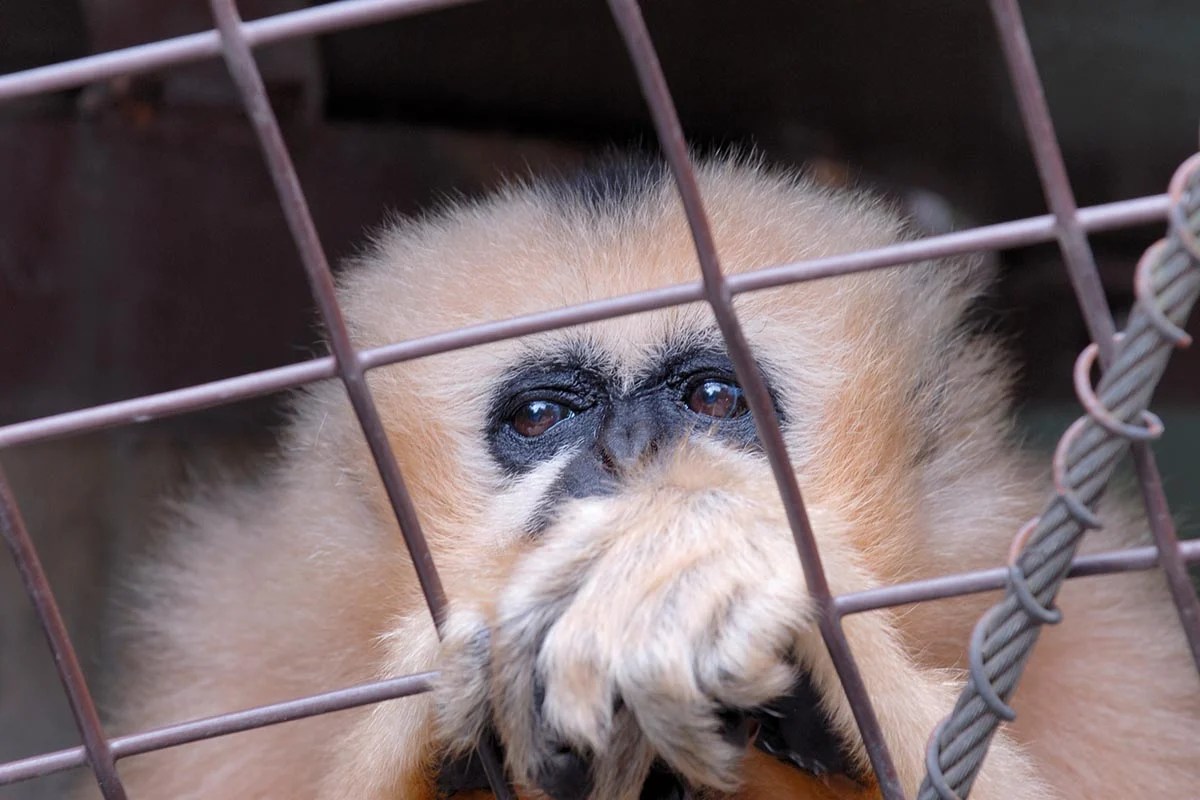
Birds, dogs and cats are most commonly abused, but some species used are classed as threatened, including pangolins, bears, gibbons, pythons and macaque monkeys.

Adverts are embedded in cruelty content, so companies and organisations were unwittingly profiting, including several animal-welfare and conservation groups – some of which have since taken action, the report notes.

Alan Knight, chief executive of International Animal Rescue, said: “It is inexcusable for social media companies to turn a blind eye to the sickening scenes of animal abuse posted on their platforms. It is their moral responsibility to crack down on content showing animals forced to suffer for entertainment and financial gain.

“There’s no doubt these media corporations have the power to remove these vile videos, and it’s reprehensible that they haven’t done so already.

“They feed the basest instincts of a depraved minority and must be denied a platform and an audience to stamp them out.”

The coalition is calling on YouTube, Facebook, TikTok and other social media platforms to work with experts to develop “robust” monitoring systems to identify and remove cruel content without relying on viewers reporting it.

The organisations say that even trying to talk to bosses at the online platforms is difficult. Adam Parascandola, of Humane Society International, described the content as “deeply disturbing but largely overlooked”, saying: “The devastating data revealed by this only scratches the surface in exposing the shocking extent of cruelty promoted on social media.

“Now more than ever, it’s time for social media platforms to stop profiting from animal suffering and instead take action to end this devastating cruelty for clicks.”

In the past, the social-media channels have insisted they do not allow cruelty to be shown, and remove content breaching their guidelines.

But the report authors say they have seen videos remaining live despite being reported multiple times, or channels that were shut down starting up again under a different guise.

Nick Stewart, of World Animal Protection, said: “Exploitation of wildlife is happening on a monumental scale, impacting the welfare of billions of individual animals. We must call out companies that are complicit in this exploitation and urge them to take responsibility for a solution.”

A TikTok spokesperson said: “We cannot comment on the specifics as we have not seen the specific cases. However, as a general principle, our community guidelines make clear that we do not tolerate animal cruelty on our platform, and we take action when people violate these rules – up to and including permanently banning them from the platform. We use a combination of technology and human moderation to identify and remove content that breaches our community guidelines.”

Those guidelines ban “animal cruelty and gore”, as well as “dismembered, mutilated, charred or burned animal remains” and animal slaughter.

The Independent also asked Google, which owns YouTube and Facebook, to comment, but did not receive a response.

YouTube, Facebook and TikTok ‘earning millions’ from horrific animal-cruelty videos | The Independent

Regards Mark

To all pet owners: Sport only for two!

Is that familiar to you?
A cat simply cannot part with its favorite human and climbs into its pants while exercising its abdominal muscles.
“Whenever I try to do some serious exercise at home, my cat comes out and distracts me.
I just never manage to do something, ”complained cat owner Max Wu.

Yes! it sounds very familiar to me.
One of my cats, Blanquita, didn’t just take part in sports sessions that I did at home during the Corona.
I can’t even be alone in the bathroom! she’s always with me.
And I wish it stayed that way until our last day.
Mine or hers

Best regards to all, Venus

Washington: Tracking devices for student athletes! that’s called freedom, chains are not actual anymore.

Washington state high school requires student athletes to wear TRACKING DEVICES for Covid-19 ‘contact tracing’ – reports

A high school in Washington state is reportedly forcing student athletes to don ankle-worn tracking devices during games and practice, as part of what administrators say is an effort to “contact trace” Covid-19 cases.

Eatonville High School will require both student athletes and staff to wear the monitors during the upcoming school year, according to local media reports.

The school argues the devices are needed to track potential coronavirus outbreaks on campus, insisting they do not actually transmit wearers’ locations, instead only tracking players’ proximity to one another and how long they remain nearby.

“We are using these monitors for high contact and moderate indoor contact sports. The monitors are for both staff (coaches) and students on the field, regardless if they are vaccinated or unvaccinated,” the school said in a statement to local outlets, dispelling rumors that the tracking devices would be required for the unvaccinated only.

If a student or coach tests positive, we will have immediate information regarding athletes’ and coaches’ contacts, so we can more tightly determine who might need to quarantine.

While the tracking devices will only be worn during games and practice for certain indoor sports, and left on campus in the meantime, the monitors have proven controversial for some parents.

One mother who spoke with the conservative-leaning outlet the Post Millennial said her 15-year-old daughter was asked to wear a tracker before attending volleyball practice at Eatonville High, prior to obtaining parental consent.

The mom, who declined to be named, said she learned of the requirement from her daughter in a text message, but went to speak with school officials in person after she was unable to get answers by phone.

“The mother spoke to an employee in the school office, as well as a coach and was informed there was a meeting last week discussing the ankle monitoring program,” the outlet reported, adding that a school athletic director later “acknowledged the error and apologized for the ‘slip up’ of not getting her consent.”

Though the mother was able to take a photo of the monitor, she claims she was barred from photographing the gadget while her daughter was actually wearing it.

The devices, which were not mentioned in the school’s Covid-19 guidelines for the upcoming fall semester, are reportedly produced by Triax Technologies, a Connecticut-based tech firm.

They are designed to be worn on a hardhat – the company specializes in products for the construction industry – but can also be attached elsewhere on the body. Similar technology has been used for contact tracing among professional and college-level athletes, though remains almost unheard of for underage high school sports teams.

https://www.livetube.tv/de/news/washington-state-high-school-requires-student-athletes-to-wear-tracking-devices-for-covid-19-contact-tracing-reports

https://www.foxnews.com/us/washington-public-school-student-athletes-tracking-monitors-covid

And I mean…Governments around the world are clearly trying to get us all profitably and proactively involved in this process.
To do this, they have signed a lot of valuable contracts with Pharma.

As a result, all the governments of the world are forced to act … and they have really acted tough on pharmaceuticals.
The times when each of us held fundamental rights are over

In order to acquire them again, I mean the basic rights, it is enough for the little man to free his upper arm and hold it out to receive the redemption along with the remaining basic rights.

There were some very accurate comments …

1. Gulags coming next? They are just training people to accept these restrictions and quarantines. It is all psychological training. #News Unplugged#

2. For how long are people prepared to put up with this circus, this humiliation, this degradation ! #ebbi581#

3. “the East German Stasi could only have dreamed of having a police state like USA’ -Thomas Drake =(an American former employee of the National Security Agency)  #yuri4799#

My best regards to all, Venus

Indonesia: Dog meat traders to be prosecuted for the first time in Indonesian history after truck with 78 dogs intercepted by police.

WAV Comment – Hopefully that will start to send a message. A major turning point as the article says.

August 23, 2021

Dog meat traders to be prosecuted for the first time in Indonesian history after truck with 78 dogs intercepted by police

Humane Society International

KULON PROGO, Indonesia—Indonesia’s first ever prosecution of dog meat traders under animal health laws is set to go ahead, officials have confirmed, in what the country’s animal campaigners hope will be a major turning point in the demise of the brutal trade. Kulon Progo District Police intercepted the gang in May this year when they were illegally transporting 78 dogs bound and gagged in the back of a truck. The dogs were headed for slaughter for human consumption throughout Central Java. This was the first ever such interception in Indonesia, and followed discussions with the Dog Meat Free Indonesia coalition which campaigns for a nationwide ban on the brutal trade.

The Kulon Progo District Attorney’s Office confirmed in a statement its intention to prosecute the traders who are considered to have violated Article 89 of Law No. 18/ 2009 concerning Livestock and Animal Health, with a maximum penalty of five years imprisonment or a maximum fine of 1.5 billion IDR (over $100,000 USD); as well as Article 140 of Law No. 18/ 2021 on Food, with a maximum sentence of two years imprisonment or a maximum fine of 4 billion IDR (over $275,000 USD).

The dogs in this case had all been stolen from the streets where pet dogs freely roam. Many were still wearing collars whilst bound on the truck to be transported from West Java on a gruelling journey lasting more than 10 hours. The traders illegally crossed provincial borders with the dogs, with no record of the animals’ disease or vaccination status. For example, Solo is an epicentre for much of Java’s dog meat trade, with 85 street stalls selling dog meat, brutally slaughtering an estimated 13,700 dogs each month in filthy makeshift slaughterhouses with no way of ensuring the meat is safe for consumers.

The Dog Meat Free Indonesia coalition has conducted numerous investigations over the past several years, exposing the brutal reality of the trade in dogs destined for human consumption. Every month, tens of thousands of these dogs are taken from the streets and illegally transported in many parts of Indonesia. Many die during this horrific journey from heatstroke, dehydration or injuries inflicted during capture and transport. Those who survive are taken to slaughterhouses where they are beaten and strung upside down to bleed out while still conscious or beaten to death in public markets in some parts of the country, in full view of other terrified dogs who await their turn.

Lola Webber, Humane Society International’s dog meat campaign director, who is based in Indonesia, says: “There are thousands of dog trucks across Indonesia just like this one, illegally transporting terrified and disease-vulnerable dogs across provincial borders to slaughterhouses and markets. We have documented first-hand dogs being slaughtered in public alongside myriad wild and domestic species in markets in North Sulawesi. It is easy to see how this trade is not only utterly brutal, but also the perfect breeding ground for the next serious public health disaster. New pathogens could jump to humans in a number of ways – a dog trader wounded during the day’s slaughter, a local consumer eating cross-contaminated dog meat bought at a nearby stall, or a tourist breathing in microscopic blood droplets as they sight-see the markets. So in the face of such an obvious public health and animal welfare risk, it is good to see what we hope to be the first of many interceptions and prosecutions. We cannot allow the dog meat trade to thrive across Asia if we hope to protect the public from future pandemics.”

“We commend Kulon Progo District Police for setting such a good example for the rest of the country by taking direct action, and we congratulate Karanganyar and Sukoharjo Regencies and Salatiga City for explicitly prohibiting the trade in their jurisdictions on the grounds of public and animal health and welfare. We now need to see the same level of activity across Indonesia to stamp out this cruel, dangerous and unwelcome trade.”

Dog meat trade facts:

  • Opinion polls show that only a small minority of Indonesia’s population (4.5%) consume dog meat and only a very small number of those involved in the trade rely on dog meat as their main source of income.
  • Rabies is a grave concern in Indonesia, with just eight out of 34 provinces declared rabies-free. Provinces such as Central Java are jeopardising their rabies-free status by allowing dogs of unknown disease and vaccination status to be imported from surrounding provinces to supply dog meat, despite opinion polls showing just 3% of Central Javans consume it.
  • The illegal movement of large numbers of dogs of unknown disease status into densely populated areas contravenes rabies control recommendations by leading human and animal health experts including the World Health Organization, the Pan American Health Organization, and the Food and Agriculture Organization of the United Nations as well as national disease prevention legislation.
  • There are widely publicised reports directly linking the dog meat trade to rabies transmission in many parts of Asia where the dog meat trade operates, including Indonesia. Scientific reports have documented rabies-positive dogs being sold and slaughtered in markets in Indonesia, as well as in restaurants and slaughterhouses in China and Viet Nam.
  • Dog theft for the meat trade is a serious problem in Indonesia. Dog Meat Free Indonesia has interviewed many residents who have described their terrifying ordeal with armed traders stealing their pets at night. Despite the obvious law-breaking, thefts are rarely taken seriously by law enforcement, so the thieves go unpunished.
  • Across Asia, opposition to the dog and cat meat trades is increasing, with an ever-growing number of countries and territories (Taiwan, Hong Kong, the Philippines, Thailand and two major cities in mainland China) banning the trade in and slaughter, sale and consumption of dogs.
  • The Dog Meat Free Indonesia campaign has received support from global and Indonesian superstars including a letter to President Joko Widodo in 2018 calling for action to end the country’s dog and cat meat trades signed by Simon Cowell, Sophia Latjuba, Yeslin Wang, Nadia Mulya, Lawrence Enzela, Cameron Diaz, Chelsea Islan, Ellen DeGeneres and Pierce Brosnan.

Download Videos of Solo Investigations

Download Photos of Solo Investigations

ENDS

Regards Mark

Blue whales returning to Spain’s Atlantic coast after 40-year absence.

Blue whales returning to Spain’s Atlantic coast after 40-year absence

Some experts fear climate crisis is leading creatures back to area where they were hunted almost to extinction

Blue whales, the world’s largest mammals, are returning to Spain’s Atlantic coast after an absence of more than 40 years.

The first one was spotted off the coast of Galicia in north-west Spain in 2017 by Bruno Díaz, a marine biologist who is head of the Bottlenose Dolphin Research Institute in O Grove, Galicia.

Another was spotted in 2018, another the following year, and then in 2020 they both returned. Just over a week ago a different specimen was sited off the Islas Cíes, near O Grove.

Díaz said it was not yet clear whether the climate crisis was leading the creatures to change their habits and return to an area where they were hunted almost to extinction.

“I believe the moratorium on whaling has been a key factor,” he said. “In the 1970s, just before the ban was introduced, an entire generation of blue whales disappeared. Now, more than 40 years later, we’re seeing the return of the descendants of the few that survived.”

There was a centuries-old whaling industry and a dozen whaling ports in Galicia. Spain did not ban whaling until 1986, by which time the blue whale was all but extinct in the region.

However, not everyone sees the whales’ return as good news.

“I’m pessimistic because there’s a high possibility that climate change is having a major impact on the blue whale’s habitat,” Alfredo López, a marine biologist at a Galician NGO that studies marine mammals, told the newspaper La Voz de Galicia.

“Firstly, because they never venture south of the equator, and if global warming pushes this line north, their habitat will be reduced. And secondly, if it means the food they normally eat is disappearing, then what we’re seeing is dramatic and not something to celebrate.”

Díaz speculates that the creatures may also have returned to Galicia out of a form of homesickness, or ancestral memory.

“In recent years it’s been discovered that the blue whale’s migration is driven by memory, not by environmental conditions,” he said. “This year there hasn’t been a notable increase in plankton, but here they are. Experiences are retained in the collective memory and drive the species to return.”

Researchers believe this type of folk memory, or cultural knowledge, exists in many species and is key to their survival.

A typical blue whale is 20-24 metres long and weighs 120 tonnes – equivalent to 16 elephants – but specimens of up to 30 metres and 170 tonnes have been found.

From The Guardian, London:

https://www.theguardian.com/environment/2021/aug/24/blue-whales-returning-to-spains-atlantic-coast-after-40-year-absence

Regards Mark

With you everywhere

PACMA – Animalista Party

With you everywhere

🤗 When you make plans … It’s more fun with the whole family!

💔 The number of abandoned animals explodes in summer.

Abandoning an animal, a member of your family, is an immense cruelty and is a CRIME.

Be responsible! and never betray a loyal frend🐶🐱

best regards, Venus

EU: Eurogroup for Animals condemns the authorisation of insect-protein in pig and poultry feed.

Eurogroup for Animals condemns the authorisation of insect-protein in pig and poultry feed

20 August 2021

News

On 17 August 2021, the European Commission adopted the decision to amend the feed ban regulation, allowing insect-derived protein in pig and poultry feed. While the European Commission announced it as a step “in our journey towards more sustainable feed chain”, Eurogroup for Animals believes this decision could lead to false solutions and distract from the urgent need to transform into sustainable food systems.

The Farm to Fork strategy recognises the urgent need for a shift in European diets towards more plant-based food, but it also emphasises the role of improved animal welfare in a sustainable food system. Eurogroup for Animals cautions that allowing insect protein for feed will go contrary to the intentions in the Farm to Fork strategy by preserving the status quo of factory farming instead of achieving a dietary shift towards more plant-based diets in combination with higher welfare and sustainable  farming systems. Other than maintaining the status quo of intensive livestock farming, concerns are raised in the scientific literature with regards to environmental consequences, risks to the One Health approach and the lack of knowledge about insect welfare.

We are deeply concerned that insect protein is announced as a sustainable solution to animal feed. Replacing soy with insects, that will be industrially produced on a massive scale, to feed factory farmed pigs and poultry is not the way forward to create sustainable food systems. We need to urgently move towards a dietary shift, with more plant-based diets and systems with fewer animals that allow for higher animal welfare. Unfortunately, the decision to authorise the use of insect-derived protein for pig and poultry feed serves to prop up intensive animal production in the EU rather than supporting the transition to a truly sustainable food system

Reineke Hameleers, CEO of Eurogroup for Animals

Read Eurogroup for Animals’ full feedback

Regards Mark

USA: Factory Farm Cruelty Exposed With The Help Of Drones.

With thanks to Stacey at ‘Our Compass’ for the article and associated video. (below).

Stacey | Our Compass (our-compass.org)

Regards Mark

There are more laws and regulations surrounding my trash and trash disposal than there are for sentient species who have the same capacity to suffer, feel pain, and experience emotion as humans. To treat animals like this, hidden in dystopian waste lands of suffering, toxicity, and greed, means humans have lost the war with good, the human species is apathetically evil towards the most vulnerable and helpless beings. It is estimated that globally greater than 4700 animals are killed each SECOND. How long does it take you to rationalize killing them? Consuming them? Forgetting them? Who are you consuming and how did she suffer and violently die for your 5-minute meal? SL

Download Your FREE Vegan PDF HERE

Order a FREE vegan kit HERE

Dairy-Free Info HERE

Take the Dairy-Free Challenge HERE

Click HERE for more Dairy-Free

Fish alternatives can be found HERE

Learn about eggs HERE

Find bacon alternatives HERE and HERE

Take PETA’s Cruelty-Free Shopping Guide along with you next time you head to the store! The handy guide will help you find humane products at a glance. Order a FREE copy HERE

Searching for Cruelty-Free Cosmetics, Personal-Care Products, Vegan Products, or more?
Click HERE to search.

Free PDF of Vegan & Cruelty-Free Products/Companies HERE

Click HERE to find out How to Wear Vegan!

Want to do more than go vegan? Help others to do so! Click below for nominal, or no, fees to vegan literature that you can use to convince others that veganism is the only compassionate route to being an animal friend:

PETA HERE

Vegan Outreach HERE

Get your FREE Activist Kit from PETA, including stickers, leaflets, and guide HERE

Have questions? Click HERE

Spain- the city of Gijón bans bullfighting

HAPPY NEWS FROM SPAIN – THE CITY OF GIJÓN FINALLY BANKS THE UNTRADITION OF BULLFIGHTING! 💖🐃

The Spanish city of Gijón has decided to renounce the non-tradition of bullfighting, which is widespread on the Iberian Peninsula.
This cruelty to animals lies like a wicked curse over Spain and has always been arousing people around the world.
Now, at least in Gijón, it is over and the whole thing is thanks to a “feminist”!!

This commendable step was sparked last weekend when a bull named “Feminist” and his colleague “Nigerian came to an abrupt end in the city in the north of the country in the 133-year-old bullring “El Bibio”.
This led to the ethically correct decision of Mayor Ana González Rodríguez.

Since their death, the two bulls have become symbols of the fight against the controversial “sport” of bullfighting.

Quote Ana González Rodríguez, who can be assigned to the socialists:
“A city that believes in equality between women and men, that believes in integration, the doors that are open to everyone, cannot allow such a thing.”

“Treating animals this way cannot be part of our culture, nor can we receive public money”

She is now accused of having acted only because of the names of the animals, but the many animals that no longer have to go to the arena in Gijón will not care much – the main thing is that the spook is over in Gijón.

Opponents accuse the mayor’s arguments of idiocy.
Quote Daniel Ruiz, bull breeder in the region:
“Cows are the most important animals on a cattle farm. And the bulls get their names from the females they gave birth.”
So also “feminists” and “Nigerians” who were not explicitly selected for that bullfight.

The socialists in Spain have been vehement opponents of this terrible cruelty to animals for a long time.
Unfortunately, no city leader can simply forbid it, because in 2013 this barbaric torture and murder of innocent living beings was declared a national cultural asset, and thus only the central state can impose a ban according to the constitutional court.
However, the mayor avoided this fact and simply canceled the expiring contract with the bullfighting organization for the use of the arena.
This is very much due to their competencies.

According to her own statements, she is happy to accept the approximately € 50,000 / year loss for the city as a result.
Many suspect a political issue behind the matter, because the torero who killed “feminists” and “Nigerians” in cold blood is a supporter of the opponents of the socialists, the right-wing conservative VOX.

Continue reading “Spain- the city of Gijón bans bullfighting”