Texas A&M University has repeatedly tried to hide what has gone on in its canine muscular dystrophy (MD) lab—and repeatedly failed.
Today, the school can chalk up another loss.
In a first-of-its-kind ruling within the Fifth Circuit, the U.S. District Court for the Southern District of Texas has denied the university’s attempt to dismiss a lawsuit that PETA had filed against it.
The litigation challenges the Texas A&M vice president of brand development’s refusal to allow us to place an ad on the school’s buses featuring Peony, a dog used in the university’s canine MD experiments.
This groundbreaking victory means that we can now collect evidence from Texas A&M regarding its denial of our ad, which we allege is a free-speech violation.
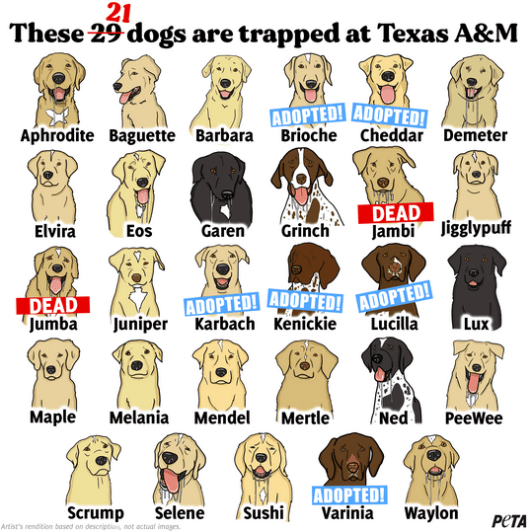
Under pressure from PETA supporters, the laboratory has released dozens of dogs for adoption and ended its breeding program. But the school continues to warehouse 21 dogs—many of whom are completely healthy—in its barren metal cells.
If you haven’t done so already, please take action to help free them
WAV Comment – Hats off to all the crew involved in fighting the dog meat campaign in South Korea. Like live animal transport which we are also fighting and are deeply involved in, we appreciate that these things are never easy to get positive results with. But, in the end, good always wins over evil, and we see their news as a real positive; it also gives us hope with all our own work – the South Korean Ministry of Justice announced plans recently to amend the civil code to remove animals from the category of ‘property’ and designate a possible third category, in a bid to ensure their basic legal rights.”. That is excellent news.
We congratulate the team for all their hard work in efforts to change this despicable trade.
Despite things looking more positive with regard the future, it does not mean that campaigning stops; quite the opposite – it must really go on now until victory.
In the newsletter (link given below at the end of this post), you will find many actions you can continue to take. Actions which must continue to be taken until this abuse is stopped for once and all. Please support the fight to get what we now see as a very positive move froward.
Regards Mark
You can view all of our past work in this campaign by visiting:
Korean Government seeks to recognize animals as ‘living beings,’ not ‘objects’
Our relentless campaign over the years is starting to pay off. 👍
The Korea Times reported on March 16, 2021, “ For a country with around 1.5 million pet owners, Korea’s legal framework for animal protection has been considered relatively weak, leading to low public awareness on animal welfare, and lenient punishment for animal cruelty.
A major reason for this, pointed out by many animal rights activists, is because the civil code defines animals as “objects,” not living beings.
Under the current law, animals are regarded as the property of their human owners, something that can be owned, traded and controlled without any of the basic rights that are given to people. Therefore, animal abusers often face relatively weak punishment proportional to their level of cruelty, as their sentences are based on the Property Damage Law and Animal Protection Law.
But this may change, as the Ministry of Justice announced plans recently to amend the civil code to legally recognize animals as living entities.
In response to an increasing number of people who perceive companion animals as part of their family, the ministry said that it will remove animals from the category of property and designate a possible third category, in a bid to ensure their basic legal rights.”
Click here to read the Korean Dogs newsletter online:
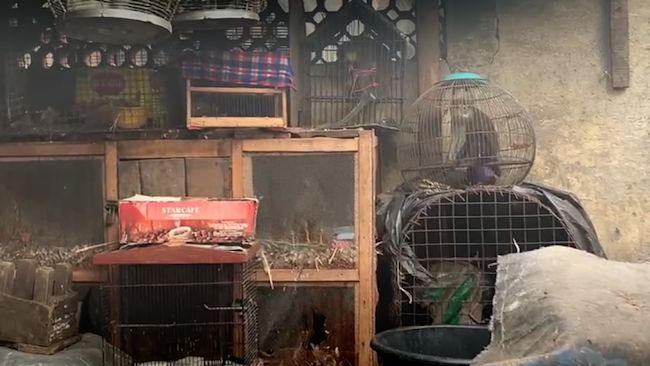
Nigeria: Undercover investigation by UK television shows that wet markets operate as normal; and that this is another Covid pandemic waiting to happen. Disturbing footage, as are all wet markets that involve live animals.
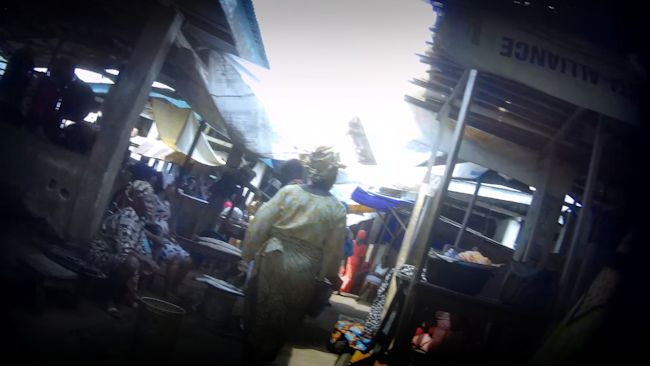
ITV News (UK) has secretly filmed in Oluwo Fish Market, a wet market just outside Lagos, Nigeria’s largest city.
‘It’s going to happen again’: Fears wet markets could lead to another deadly disease
Video report by ITV News Correspondent Lucy Watson
Oluwo Fish Market teems with life. It is a wet market just outside Lagos, Nigeria’s largest city.
ITV News secretly filmed there – a place awash with animals – alive and dead. Scientists believe wet markets are a breeding ground for disease, a high risk environment, from where the next pandemic could emerge.
The very concept of a “wet market” means the presence of blood and bodily fluids.
It is a marketplace selling fresh meat and fish, as opposed to a “dry market” that sells durable products.
Video obtained by both ITV News and the charity WildAtLife shows live crocodiles having their scales removed, pangolins being kicked and abused and dogs boiled alive.
Chinedu Mogbu has rescued many animals from the wet market.Credit: ITV News
Multiple primates were seen imprisoned in cages, the heads of others were for sale. It was difficult to watch when a baby baboon, trapped inside a birdcage, reached out to the camera grasping for freedom, as a decapitated monkey was sold next to him.
One woman reached into a brown sack and pulled out a pangolin. This species is the most trafficked animal in the world. We could buy it there for less than ten pounds.
The pangolin is a species that has been linked to the COVID-19 outbreak in China. Their scales are of high value in Asia for medicines.
The abuse of animals and the health risks for humans at this market were plain to see. It’s what the conservation group WildAtLife want to expose. Chinedu Mogbu works for them, and has rescued umpteen exotic species from there in recent months.
He said: “Nigeria doesn’t have strong laws to protect its wildlife.
There are fears another zoonotic illness could develop at a wet market.Credit: ITV News
“Anyone can go into the forest, take a pangolin and sell it on the street. The law enforcers are not even aware of the importance or the laws that protect these animals.”
We did notice the presence of Asian buyers at this African market.
Any illicit, international trade would undoubtedly increase the risk of spreading disease around the globe, but Nigerian officials say they are doing enough to prevent that.
Joseph Attah from the Customs Service refused to answer more than one question on the matter though.
This was all he would say: “We have been making a lot of seizures about that, we have been seizing them and we will continue to seize them anytime we see them.”
We know, that despite our allegations, the wet market in Epe continues to thrive. Scientists are concerned that such places pose an unnecessary and high risk.
“Every single animal at a wet market is likely to have an infection,” Malcolm Bennett from the University of Nottingham told me. He is Professor of Zoonotic and Emerging Diseases.
“That general concept of bringing lots of animals and people together, and doing lots of things to them in the same place is a high risk thing to do. It’s not just a biodiversity of animals, it’s a biodiversity of disease. Some of which will spread to us.“
He said unflinchingly, “It is going to happen again.”
There is a high security lab at the university where they are analysing the affects of COVID-19 on cells.
Bringing together animals and people that don’t usually mix increases the risk of new infections, so wet markets are ideal places for cross species transmission and disease amplification.
Other viruses we know of that started out as zoonotic diseases are SARS, MERS, Ebola, even HIV.
Stopping the development of such viruses is impossible, instead we need to mitigate the risks.
In many peoples’ eyes what happens at some wet markets is unhygienic, tortuous and brutal, but in African and Asian nations it isn’t simply a case of shutting them down. There are more issues at play. They have a critical role in social interaction and for different cultures. The Deputy Director of the National Zoo, Aminu Muhammad Beli, explained.
“We cannot close the wet markets because there are certain animals that have cultural attributes to certain tribal groups. We have to devise a way of sustaining the industry,” he said.
His words are perhaps difficult to stomach when you see carcasses lying in the hot sun and live animals being butchered. Regulation and surveillance must increase though, else harmful pathogens will breed.
We just can’t predict where or how destructive they will be.
Regards Mark
Comment – I watched the investigation on UK news yesterday (16/3) – and was informed that some of the UK team rescued some of the animals and released them back into the wild where they belong. Well done ITN.
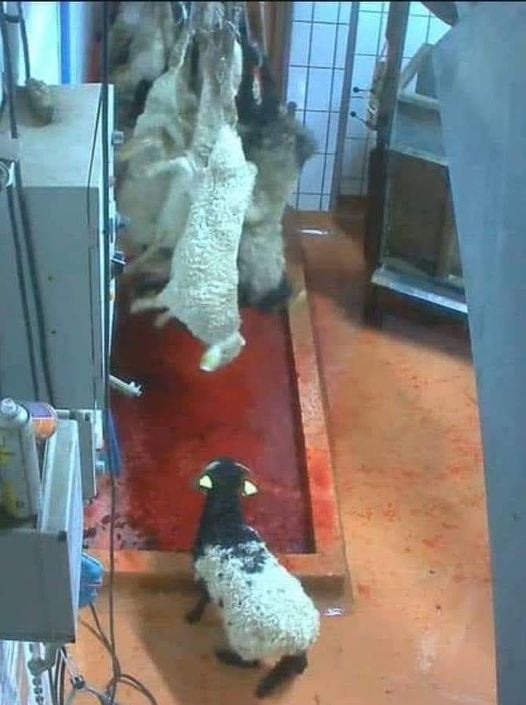
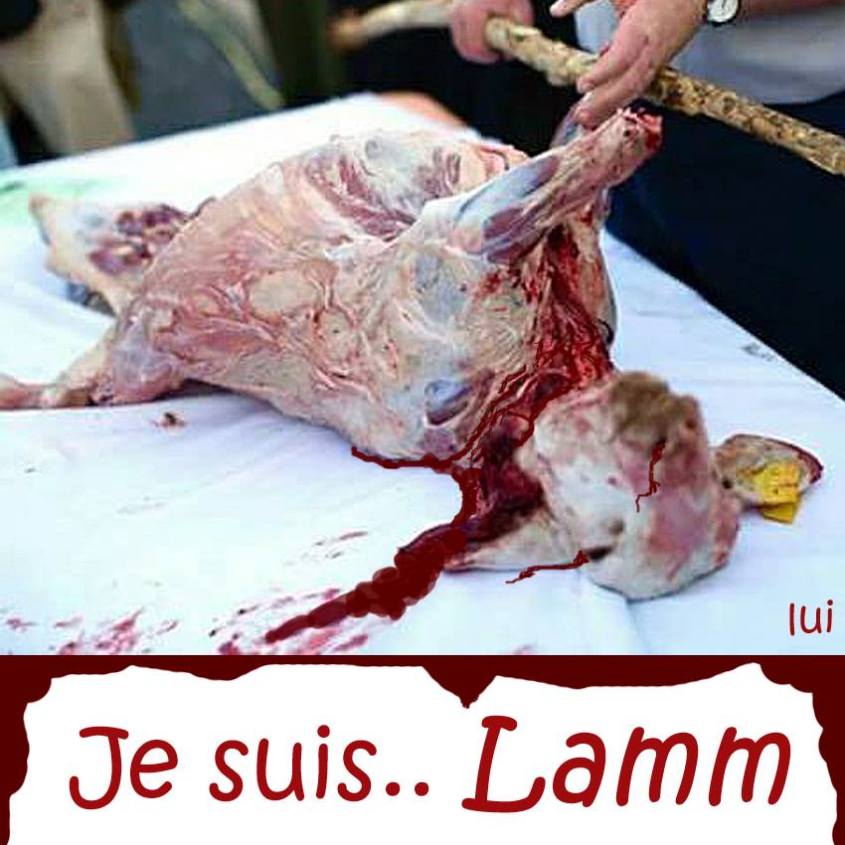
At Easter, not only chocolate bunnies are served, but also lots of eggs, a roast rabbit, or even an Easter lamb. What many are not aware of: Thousands of lambs suffer before the holidays, especially for our enjoyment.
In large parts of Europe, sheep are rarely kept for their wool, because no profit can be made from it, not even from sheep’s milk production.
Lamb, on the other hand, is still considered a delicacy in many places – especially at Easter. The lamb babies are between eight weeks and six months old when they are slaughtered.
As a rule, they have never eaten grass.
Their meat is therefore considered to be particularly tender and low in fat.
In Italy, the demand for the Easter lamb is particularly high. According to the Confederazione Italiana Agricoltori (CIA), the Italian farmers’ association, Italians eat around 260 tons of lamb on the festive days alone, for which several million lambs lose their lives.
The great demand is mainly due to the Christian tradition, in which the Easter lamb is a symbol for Jesus Christ and his resurrection.
For the History: Jesus voluntarily sacrificed himself for the sins of mankind.
For the truth: Nobody asks the lamb, we just kill it.
The right to life should be taken for granted. For all living beings
Therefore: Let animals out of your plate! A tortured animal is an involuntary sacrifice and its suffering cannot justify any tradition or religious belief
Colorado Governor Jared Polis recently marked March 20 as a statewide meat-free holiday named MeatOut Day.
The initiative was founded by Farm Animal Rights Movement (FARM) back in 1985. It aims to ‘educate consumers about the benefits of a healthful, plant-based diet’.
MeatOut Day
“Removing animal products from our diets reduces the risk of various ailments, including heart disease, cancers, and diabetes,”FARM states.
“A plant-based diet helps protect the environment by reducing our carbon footprint, preserving forests, grasslands, and wildlife habitats. It also reduces the pollution of waterways.
“Since MeatOut was launched, more than 35 million Americans have explored a plant-based diet and reduced their consumption of meat, dairy, and eggs. And, major food manufactures and national franchises are marketing more vegan options in response to this growing demand.”
‘A direct attack’
Whilst many commended the move, Ricketts blasted the incentive, claiming it is a ‘direct attack’’ on Nebraska’s ‘way of life’.
According to The Guardian, he said: “If you were to get rid of beef in our country, you would be undermining our food security, an important part of a healthy diet. And, also destroying an industry here in our state that’s very important.”
Pro-meat day
Moreover, Steve Wellman is Nebraska’s agriculture director. He added: “When agriculture does well, Nebraska does well.
“Agriculture is the heart and soul of Nebraska, and our 45,700 farm and ranch families keep our state going year after year.”
Nebraska is now urging citizens and restaurants to participate in ‘Meat on the Menu Day’ on the same day as ‘MeatOut Day’.
❌ Suffering as a craft set – #Triops #primeval crabs
They are filigree relics from # prehistoric times … The graceful little crabs – known as so-called “Triops” – are considered “living #fossils”.
Freshwater is their element.
You can find the animals not only in pools and lakes all over the world – but unfortunately also in children’s rooms all over the world …
The tadpole shrimp family includes three well-known species – one of them – the “fairy shrimp” (Anostraca) – was recently discovered in a temporary lake in Baden Wuerttemberg (Germany)
With their original body and shell structure, their three complex eyes (TRI = three OPS = eye), and their artful movement patterns, the small prehistoric animals exert a great fascination on us.
Many children and young people want to bring a piece of primeval times into their own children’s room by buying a “Triops set”.
Triops eggs can be purchased online and in zoo and toy shops for less than 20 € in the “complete carefree package” with food, mini aquarium, and various auxiliary utensils …
Once the “handicraft set” has been opened and the eggs put in the water, the cute little animals hatch after just a few days and swim around in their cramped, monotonous plastic baskets in the hope of being reliably fed.
The crabs suffer silently.
It is not uncommon for the enclosed instructions to be ignored and the locations for the small water basins to be chosen so inappropriately that the little animals perish in agony, for example in the blazing sun or standing on a heater.
The fascination for the small creatures quickly gave way to another exciting occupation, and they are no longer adequately cared for or simply dumped into the toilet out of weariness.
The “animal experiment sets for the children’s room” are generally approved for children from 8-9 years of age. Such a pronounced sense of responsibility for living beings is not yet sufficiently given at this young age in very many cases.
Entrusting them with such responsible tasks always requires close control by parents, which unfortunately only rarely comes into play.
Apart from the maturity of those providing care, it is absurd to use sentient beings – no matter how small they may be – and no matter how short their life expectancy may be – for experimental ones
Abusing projects that lack any competence framework!
‼ ️ We demand a ban on the sale of “craft kits” with living beings and thus an end to silent tadpole cancer suffering in the nursery! Interested parties of all ages can gain valuable knowledge about animals and nature, for example from non-fiction books and TV or online documentaries.
Under no circumstances is it necessary to expand this in the form of domestic animal experiments!
Follow us & stay up to date.
Text: Animals United e.V. – For animal rights. Because pity is not enough!
And I mean…This disgusting business is booming on the internet.
Instructions for beginners and advanced slave owners on how to breed the animals, what you need for successful Triops breeding. Eggs, food, and a complete set of equipment for rearing and observation are offered in inexpensive presences.
Triops Set
The industry motivates with its ridiculous sets to be there up close when the little crabs hatch after a few days when they change their tanks when they dart through the water …
Teach your children what empathy and correct behavior are towards animals.
Teach them to be on the right side at an early age
This is a global abuse – not confined to just a few nations.
WAV Comment – So this is ‘propaganda’ (according to the NFI, is it ?
For decades, the fishing industry has globally plundered the seas and oceans, not just catching, but depleting the worlds oceans of its fish stocks; getting away with it all. Now someone has come along and has been brave enough to expose it all; for what it is, the lid has been removed from the fishing industry, and they don’t like it.
Please have a look at the following and decide for yourself – reality or propaganda ?
Regards Mark
BREAKING: Leaked Documents From Fishing Industry Expose Plan To Attack Seaspiracy Netflix Release
Seaspiracy seeks to uncover ‘alarming global corruption’ – and is already facing backlash from the fishing industry before it’s reached screens, the leaked document revealed
A US seafood industry body is launching a campaign in response to the discoveries it labels ‘vegan propaganda’ showcased in the upcoming documentary, Seaspiracy – despite the fact the film is yet to be released.
It was revealed in a leaked document sent to Plant Based News.
Protecting the seafood industry
The National Fisheries Institute (NFI) is a trade group that represents the US seafood industry, and actively encourages people to eat marine life. Moreover, it claims to be committed to ‘sustainable’ fishing and ‘responsible aquaculture’.
In addition, the NFI says it works to ensure both the media and consumers ‘have the facts about seafood’.
The letter brands the documentary, soon to be screened on Netflix, a ‘dishonest attack’. This is in anticipation of its discoveries and claims it ‘disingenuously’ targets the fishing industry – despite not viewing it.
Seaspiracy branded a ‘dishonest attack’
NFI said: “But hijacking a lifestyle while disingenuously targeting an industry that provides billions of healthy meals and employs 1.7 million Americans is an unacceptable and dishonest attack.”
As a result, the organization is planning retaliation in order to protect the industry, the leaked private document confirms. The media strategy will ‘combat inaccuracies’ and ‘highlight Netflix’s lack of oversight when it comes to the presentation of facts’, it continues.
As a result, it is ‘reaching out’ to restaurant and retail customers in the seafood sector to arm them with ‘friendly talking points’ once the film debuts on March 24.
Letter to Netflix
It goes on to state that the NFI expects Seaspiracy to be an ‘unabashedly vegan activist production’ similar to that of hit Cowspiracy and What The Health?, as Kip Andersen produced all three.
Additionally, the NFI reached out to Netflix, accusing it of promoting ‘propaganda over facts’.
In a letter, it told the streaming service that both Cowspiracy and What The Health? contained a ‘litany of hyperbole’ over fears Seaspiracy will be similar.
The letter voiced grievances to Netflix’s Co-CEO, claiming the documentary is ‘masquerading’ as facts about seafood.
It reads: “The producers of this film are vegan activists… Veganism is a fine choice for some – but my heavens, they do miss out on the complete array of seafood options like enormous King Crab, buttery Maine lobster, succulent Iceland cod, and omega-rich Alaska salmon.”
In a separate press release, the NFI claims it called on Netflix to create a ‘propaganda’ tab on its website for ‘films based on exaggeration, fabrications and conspiracy theories’.
Plant Based News approached the NFI to comment. “We consider the film vegan propaganda and we’d like Netflix to start a whole new tab for just this type of content,” the organization said in response.
The NFI claims seafood industry workers’ welfare is ‘vital’.
It added: “Mistreatment of workers at any place in the seafood value chain should be exposed. And regulators, policymakers and law enforcement should engage where needed right away.”
This is despite the Seaspiracy documentary trailer showing snippets of a different picture. One clip includes the quote: ‘When the ships are in the ocean, they can throw you overboard’.
Yet the NFI continued to label Seaspiracy as propaganda.
“A documentary is designed to accurately and objectively document facts. That’s not the goal of this film. The producers set out to make a movie that promotes veganism.
“There’s nothing wrong with that at all, but audiences should know these filmmakers have an agenda. And that is to convince viewers not to eat animal protein,” the NFI added.
Defending animal agriculture
The NFI alerted the Animal Agriculture Alliance (AAA), an organization that claims to connect a range of figures in the industry, including farmers, and encouraging its members to eat meat.
On its website, it accuses animal rights advocates of ‘misleading consumers’ – in response to undercover footage obtained from farms.
AAA agreed to ‘push back publicly against Seaspiracy‘, the leaked document states.
WATCH THE TRAILER HERE – Click on the link below:
Seaspiracy trailer
Seaspiracy seeks to uncover ‘alarming global corruption’ and its trailer has already garnered hundreds of thousands of views on social media.
Eight iconic fashion brands including Stella McCartney and Vivienne Westwood are urging UK Prime Minister Boris Johnson to ban fur sales.
Fur farming was banned in Britain in 2003. But, since then, Britain has imported more than £800 million worth of fur from countries such as Finland, China, and Poland.
Stella McCartney and Vivienne Westwood
Designers Stella McCartney, Vivienne Westwood, Katharine Hamnett, ERDEM, Shrimps, Christopher Raeburn, and Helen Moore are backing Humane Society International’s #FurFreeBritain campaign.
The brands have signed a letter addressing Johnson. It states banning fur sales would ‘enhance the UK’s growing reputation as a global hub for innovation in ethical fashion’.
Moreover, it reads: “Our fur-free policies are informed by the beliefs and expectations of the majority of UK consumers, who reject animal fur on ethical grounds.
“We’re proud to support the growing fur-free movement… We know that the majority of British consumers want fashion items without fur.”
‘British consumers reject fur’
Claire Bass is the executive director of Humane Society International/UK. In a statement sent to PBN, she said: “By proudly flying the flag for fur-free fashion… These iconic British fashion designers have their fingers on the pulse.
“They refuse to put cruelty on the catwalk. Because, they know there is nothing glamorous about mentally deprived foxes, anally electrocuted raccoon dogs, COVID-19 infected mink and wild trapped coyotes shot in the head.
Bass then added: “The vast majority of British consumers reject fur. And, as the revolting cruelty of fur is exposed, a global decline in demand for fur fashion has sent this industry into a downward spiral.
“Killing animals for fashion does not reflect brand Britain. Even her Majesty the Queen has stopped buying new fur. It’s time for our government to consign the fur trade to the history books where it belongs and ban the sale of fur.”
‘Long-standing no fur policy’
Luxury department store Selfridges has also backed the initiative and signed the letter to Johnson.
Moreover, Daniella Vega is the director of sustainability at Selfridge. She added: “We’re proud of our long-standing no fur policy which has been in place for more than fifteen years.
“Our customers care about animal welfare and we are committed to providing ethical and sustainable products.
Vega then concluded: “There are many alternative materials for brands and designers to use. The future is fur-free and we support a ban on the sale of fur in the UK.”
A zoo in central China has raised eyebrows this week after it was caught seemingly trying to pass off a dog as a wolf.
Social media footage appeared on Tuesday showing a visitor to the Xiangwushan Zoo in Xianning, Hubei province, visiting the zoo’s wolf enclosure.
He filmed an animal that looked like a Rottweiler lying on its side in a cage, and said to the animal: “Woof! Are you a wolf?” in a short video that has since gone viral.
It has led to a lot of jokes online, but has also sparked debate about whether zoos are necessary in a post-Covid era, with many voicing concern about their maintenance.
Wolf had ‘died of old age’
Mr Xu, who filmed the footage, told Beijing News that he had asked staff at the park why there was a dog in the wolf’s cage. He said he was told that there had been a wolf, but that it had “died of old age”.
An employee confirmed this to local media, and said that the dog, which had been raised as a watchdog by the park, was only being kept there temporarily.
The park, which charges 15 yuan ($2.30; £1.70) and also keeps lions and tigers, has now been told by the local forestry bureau to remove the sign leading to the enclosure.
‘At least get a husky’
The incident has sparked a lot of discussion online. Many users on the popular Sina Weibo microblog say that it has given them a good laugh, although others say that they are “shocked” and that it actually makes them “a little sad”.
“At least get a husky,” one Weibo user says, noting that the breed would at least look more similar to a wolf. Their post received more than 6,000 likes.
Many users said they were relieved just to learn that the dog was not the wolf’s dinner.
Some are talking about their own experiences as kids of visiting “poorly run” zoos, saying that reality never quite meets up to expectation.
There have been a number of well-publicised instances of zoos providing poor substitutes for wild animals.
In 2019, similar video footage showed a domestic dog in a wolf enclosure at the Jiufengshan Forest Park in the nearby city of Wuhan.
Although it has bemused many, this incident has also led others to voice concerns about the continued operation of such zoos.
While they are beneficial to local tourism, the Global Times newspaper notes that many zoos, especially smaller ones, “are struggling to survive nowadays”, especially in the wake of the pandemic. There are users voicing fears that this could lead to animals being neglected. In January, a popular zoo in the eastern city of Nanjing asked the public for donations, revealing that it had not been able to pay its employees’ salaries as a direct result of the Covid-19 pandemic.
Xianning’s local economy suffered significantly last year, as Hubei province felt the brunt of China’s Covid-19 outbreak. The city is not far from Wuhan, the original Covid-19 epicentre, and was one of many cities in Hubei that went into strict lockdown between January and March 2020.
Animal protection laws are somewhat limited in China, but they have gradually been stepped up over the last year, as Covid-19 has led to crackdowns on activities where the hunting, trading or eating of wild animals could lead to disease.
But many in China have also been increasingly discussing how their own experiences of confinement during 2020 have led to them questioning whether zoos need to be “gradually phased out” and replaced by conservation or safari zones.
This was especially apparent last April, when footage circulated online showing a “depressed” tiger walking in circles around a cage at a zoo in Beijing.
Users took to Weibo to talk about how they now felt they had “been there” themselves, and some urged the return of wild animals to the “mountains and grasslands”.
“Patients will no longer wake up from surgery to be greeted with ham, cheese, milk, and eggs – the very foods that may have contributed to their health problems in the first place”
On March 1, Hayek Hospital in Beirut, Lebanon became the first hospital in the world to serve only vegan meals.
The menu change came after a transition period where Hayek offered patients a choice between animal-based and vegan meals, along with information about the health benefits of choosing plant-based foods versus the dangers of consuming animal products.
The hospital announced the switch on Instagram with a poignant post.
A colorful falafel platter of vegetables. Bild: pixabay.com
“Our patients will no longer wake up from surgery to be greeted with ham, cheese, milk, and eggs … the very food [s] that may have contributed to their health problems in the first place,” Hayek Hospital posted.
The hospital went on to address “the elephant in the room” citing examples of why animal products do not belong on hospital menus.
“When the World Health Organization classifies processed meat as Group 1A carcinogenic (causes cancer) – [the] same group as tobacco — and red meat as Group 2A carcinogenic, then serving meat in a hospital is like serving cigarettes in a hospital,” the hospital continued, pointing out that according to the Center for Disease Control and Prevention (CDC), three out of four emerging infectious diseases come from animals.
“When adopting a plant-based diet has been scientifically proven not only to stop the evolution of certain diseases but it can also reverse them,” the hospital posted. “We then have the moral responsibility to act upon and align our beliefs with our actions”.
Taking the courage to look at the elephant in the eye. “
Instead of animal products, Hayek Hospital is now offering a variety of plant-based meals such as a fajita sandwich, vegan burgers, pizzas, and croissants, along with vegan versions of traditional Middle Eastern dishes such as shawarma platters, shish Barak, and labneh sandwiches.
And I mean…The fact that the Hayek Clinic in Lebanon is apparently the first hospital in the world that only wants to offer vegan catering sounds like an exciting – but actually overdue – development to us!
After all, the WHO made its warnings on processed and red meat known to the public many years ago.
Several other international organizations have been warning of the consequences of meat consumption for many decades.
Last year, a survey showed a staggering 83 percent of patients favor hospitals banning processed meat to ‘reduce cancer risk’.
The data came from the Physicians Committee for Responsible Medicine (PCRM) who surveyed 200 patients in two Washington D.C hospitals.
It also found that 69 percent of patients feel it is ‘not important’ that hospitals offer bacon or sausage.
It’s time to create a healthier food environment.
A wonderful initiative, we are very happy and congratulate the Hayek Hospital in Beirut!




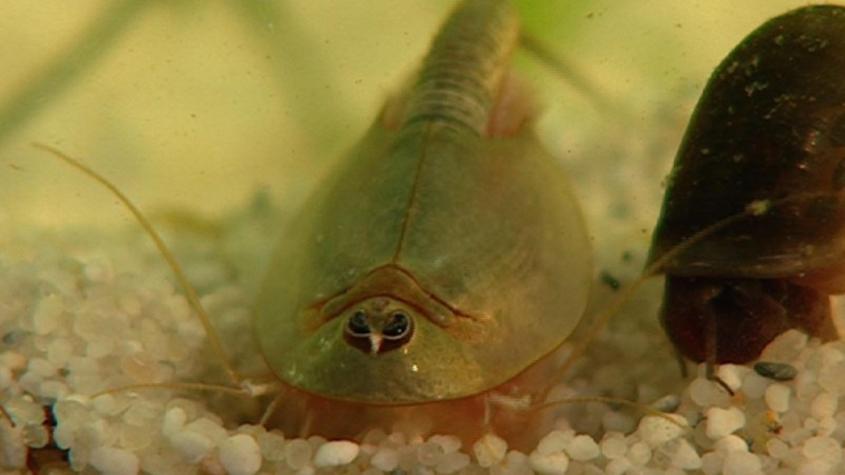
 With their original body and shell structure, their three complex eyes (TRI = three OPS = eye), and their artful movement patterns, the small prehistoric animals exert a great fascination on us.
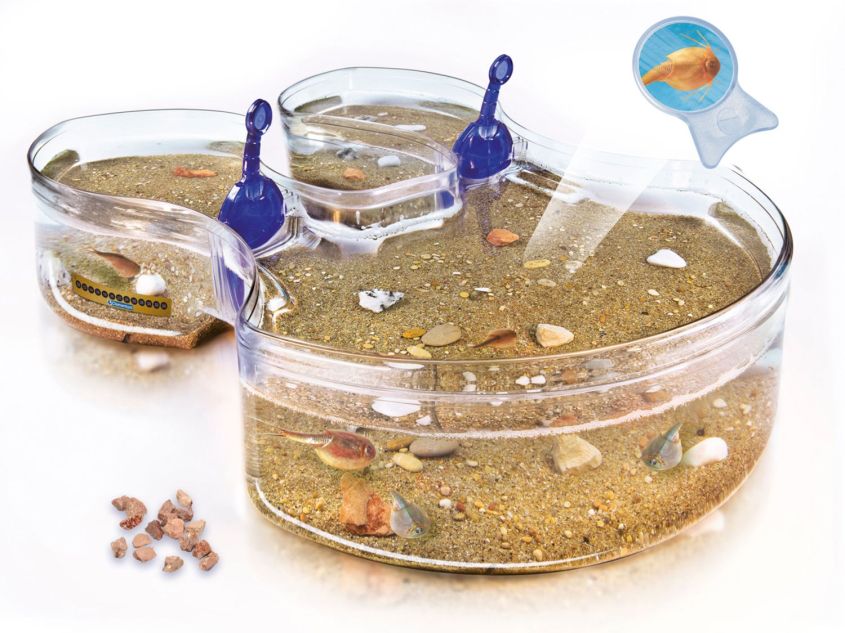
 Triops Set