Category: General News

USA: Petition – Teen Faces Federal Charges For Creating Horrific ‘Crush’ Videos Of Tortured Cats And Dogs – Animal Victory. Please Sign for Maximum Punishment.

WAV Comment – Crush videos are just the worst; kittens and puppies having stiletto heels dug into the eye sockets by bent, sadistic scum like this who want to get more ‘likes’.  They are mentally sick humans; and when caught need to feel the full impact of the law.  Please sign the petition now.

Teen Faces Federal Charges For Creating Horrific ‘Crush’ Videos Of Tortured Cats And Dogs

An Indiana teen is facing federal charges for making and distributing animal crush videos. The authorities arrested Krystal Cherika Scott, 19, of Kokomo, Ind., for Making and Distributing Animal Crush Videos, in violation of Title 18, United States Code, Section 48 (the Preventing Animal Cruelty and Torture Act).  

Scott brutalized innocent animals in unimaginable ways. A press release from the United States Department of Justice’s Southern District of Indiana Attorney’s Office states that Scott posted images and videos of herself torturing and graphically killing cats and dogs by hanging, skinning and other means. 

Scott could be sentenced to seven years in prison and may face up to $250,000 in fines. Please help us as we fight for the maximum punishment – Scott must be put behind bars for as long as possible for her sadistic crimes! 

Petition link : If the first link does not work, try the second – WAV.

Teen Faces Federal Charges For Creating Horrific ‘Crush’ Videos Of Tortured Cats And Dogs – Animal Victory

Teen Faces Federal Charges For Creating Horrific ‘Crush’ Videos Of Tortured Cats And Dogs – Animal Victory

Innocent puppies and kittens were brutally tortured and Scott posted their suffering to social media platforms. Images of the dead animals were posted to Instagram and Tik-Tok as recently as July 8.

FBI investigators found animal parts and skulls at Scott’s residence “that were consistent with the size of cats and dogs.” They also seized a cell phone from Scott which was used to create the videos which were posted on social media. Investigators determined that Scott obtained the animals by responding to online ads from people who were trying to give away their unwanted pets.

Scott’s behavior is abhorrent and dangerous. Special Agent in Charge Paul Keenan, FBI Indianapolis, stated:

“Animal abusers have total power over that animal and, if someone is willing to be that cruel to an animal, evidence suggests they may target vulnerable humans as well.”

Krystal Cherika Scott must pay for the torture and pain she inflicted on the innocent animals who wound up in her possession.

Please sign the petition, which will be presented to Assistant United States Attorney Tiffany Preston. This horrific abuse cannot and will not be tolerated!

USA: Utah Becomes Eighth State to Prohibit Cages for Egg-Laying Hens.

Are There Really Cruelty-Free Eggs? - Humane Facts

Utah has just passed a law prohibiting the confinement of egg-laying hens in tiny wire enclosures known as “battery cages,” becoming the eighth U.S. state to do so.

Just moments ago, Gov. Spencer Cox signed the bill—which the state’s legislature passed earlier this month—marking another major milestone in our campaign to move all egg-laying hens out of cages and into cage-free housing. The new law mandates cage-free conditions and more space for each bird. It also requires enrichments that are vital to the hens’ psychological and physical well-being, including perches, nest boxes, and areas designed for scratching and dust-bathing.

Utah joins a growing list of states where lawmakers and voters, regardless of political affiliation, have prohibited battery cages. This includes Michigan, Oregon, Washington, Massachusetts, California, Rhode Island and Colorado.

This is a particularly exciting moment for us: the Humane Society of the United States has been working relentlessly–and strategically–to transform how egg-laying hens, more than 300 million each year, are raised in this country. We have focused on confinement because since the advent of battery cages decades ago, hundreds of millions of hens have been suffering in these tiny, barren cages so small that they can’t even spread or flap their wings.

Given the scale of this problem, this has been an uphill battle, but we have pressed on with your support. As a result, today we are in the midst of a cage-free revolution. More and more, consumers are demanding an egg industry shift to cage-free, lawmakers are making policy to end cage confinement, and corporations and egg producers are moving to change their practices and embrace cage-free housing.

When we started our cage-free campaign in 2005, the percentage of hens in cage-free environments was in the low single digits. Now, almost 30% of the egg industry is cage-free, representing nearly 100 million hens per year who otherwise would have been caged. This may be the greatest reduction of farm animal suffering in U.S. history.

We recognize that we still have a long way to go and that moving to cage-free systems doesn’t address all animal protection concerns, including partial beak amputation and the routine killing of day-old male chicks. But the freedom of movement and the mandated enrichments do improve the hens’ quality of life significantly.

We are deeply grateful to all the Utah legislators from both parties who voted for the measure ending cage confinement. Some of these lawmakers worked tirelessly to bring together a diverse array of stakeholders to support the legislation. We’re also appreciative of those in the egg industry who worked with us over the past year to find common ground. These egg producers are sincerely working to transform their industry and animal husbandry practices in order to meet consumer expectations. We’re proud of this collaboration, and we’ll never stop working with unconventional allies to make major strides for animals.

This is critical work, and it’s far from over, but we are thrilled about how far we have come. Let’s take a moment to celebrate today’s victory in Utah, even as we pledge to keep working with lawmakers and pressuring corporations until no chicken is ever confined in a cage.

Breaking news: Utah becomes eighth state to prohibit cages for egg-laying hens · A Humane World (humanesociety.org)


Vietnam Suffering Bears: The Life-Changing Moment Of Rescue and Relocation Is Now Just Days Away.

News from Four Paws

FOUR PAWS International (four-paws.org.uk)


We’re hoping the same transformation will be possible for two bears in Vietnam. Bears Xuan and Mo have been suffering in a wet basement since they were cubs. With no light or ventilation, they have been kept in rusting barren cages.

The only time they get to see some light is when their owners come to puncture their gallbladder with a needle to extract their bile.

Since our team has discovered Xuan and Mo’s shocking reality, we’ve been working around the clock to arrange their rescue from their life in darkness and relocation to BEAR SANCTUARY Ninh Binh, where they will enjoy, for the first time in their lives, a species appropriate life in the fresh air.

This life-changing moment is now just days away.

See also our recent WAV post on this:

Vietnam: Urgent Rescue – Kept in a basement: Free Xuan and Mo from a life in darkness – Please Give Right Now ! – World Animals Voice


No more sponsoring the EU Council Presidency!

Don’t you also ask yourself what makes it so difficult to forego EU sponsorship?
Why can’t the EU member states simply finance their Council Presidency, i.e. government activity, themselves?

Apparently, they can.
Germany proved this last year and, following criticism from food watch, has not been sponsored by any company.
Yet Portugal appears to see sponsorship as an opportunity to promote Portuguese brands to a wider and influential audience.
In this case, it is Sumol + Compal, a beverage company that sells sugar giants such as PepsiCo and Lipton or the chip brand Lays.


The other company is Navigator Paper, a paper products company that environmental organizations have linked to monoculture plantations and forest fires in Portugal and land grabbing in Mozambique.
And all of this while the member states in the Council of the European Union decide on important future issues for our continent – from climate protection to agriculture and health policy.
According to the Portuguese Foreign Minister, these sponsorship contracts would not lead to any influence on the relevant policy.
We think: It should never be the case – and also not be given the impression – that a company has an influence on the political agenda of the EU!
If one of the most important political institutions in Europe is sponsored by companies, that is simply unacceptable.

Continue reading “No more sponsoring the EU Council Presidency!” →

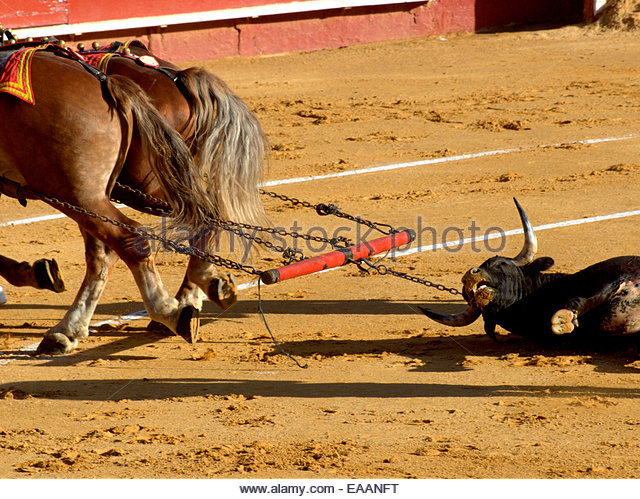
Spain: As matadors return to the ring amid Covid restrictions, campaigners say it is time bullfighting was outlawed.

As matadors return to the ring amid Covid restrictions, campaigners say it is time bullfighting was outlawed

Seen as an art by admirers in Spain, bullfighting has met with fierce criticism in recent years from an emboldened animal rights lobby which has been supported by left-wing parties

As matadors return to the ring amid Covid restrictions, campaigners say it is time bullfighting was outlawed (inews.co.uk)

When Diego Urdiales put on the gold traje de luces (suit of lights) and bright pink stockings for the first time in over a year, he had mixed emotions. “I was scared, yes. I had been thinking about the fight for weeks. There is a responsibility to the public, to the bull,” the matador said the day after coming face-to-face with half-tonne bulls. 

“The situation is complicated right now with Covid-19. It was good to return to la corrida, of course, but I had a mixture of feelings as I had been away from the ring for so long.”

Urdiales did not disappoint his fans and killed his first bull, named Elegante, with ease. Covid-19 restrictions meant only 20 per cent of the normal crowd could watch the victory at the ring at Ubrique, in southern Spain on Sunday.

As bullfighting makes a tentative return with smaller crowds, questions remain – even among supporters – about the future of what Spaniards call la fiesta nacional.

Seen as an art by admirers in Spain, bullfighting has met with fierce criticism in recent years from an emboldened animal rights lobby which has been supported by left-wing parties.

Now after the pandemic has banished the crowds and pushed the industry onto the ropes, matadors, breeders and promoters are staging a fight-back.

“There are more young people at the bullfights than ever before,” insists Urdiales, who is considered one of the best matadors in Spain by admirers.

The slow decline of a spectacle lionised by the likes of Pablo Picasso and Ernest Hemingway is illustrated in the number of bullfights held in Spain over the past decade. In 2012, there were 1,997 fights but this figure fell to 1,425 by 2019, according to Spain’s ministry of culture.

Ruben Amon, a journalist and author of End of the Fiesta, a book about bullfighting, says the art has been badly misunderstood. “It is under an ideological, cultural and political threat,” he says. “Ideological because bullfighting is linked to the political right. Cultural because they will always find ways to get rid of it by saying it is not civilised. Lastly, political because a progressive government seeks ways to rid Spain of the second most popular mass spectacle.”

Amon, an aficionado all his life who also wrote a biography of Plácido Domingo, contends that rearing bulls on huge farms is far kinder to the animals than factory farming of chicken or pigs.

“There are only 2,500 bulls killed every year but there are tens of thousands of pigs or chicken slaughtered,” he said. Another misunderstanding, he claims, is that bullfighting is a man’s world, from which women are excluded.

“It is a masculine world but not a macho world,” he says. Some 245 women work in an industry which employs about 15,000 people, according to government figures.

Amon also suggests there are gay bullfighters who are scared to emerge from the closet. “I know gay bullfighters but they do not want to go public, just like in basketball or football. It is still not easy for homosexuals to come out.”

José Zaldivar is under no illusion about the true nature of bullfighting.

The vet has been campaigning to end what he calls torture. In his office in Madrid, he has a veritable arsenal used by the matador to do battle with the bull, from the sword which ends its life to the banderillas which are punctured into the animal’s back to weaken it.

“In Spain, our law protects animals from cruelty except those which are used in public spectacles like bullfighting,” Zaldivar tells i. “There is no doubt in my mind that the bull is subjected to stress, pain and injuries which I would call torture.”

Zaldivar, who is president of the Association of Veterinarians for the Abolition of Bullfighting, holds out little hope that the spectacle will end in Spain unless its status as part of the cultural heritage is withdrawn.

In 2013, the then conservative government passed a law which established the cultural character of bullfighting as “indisputable”.

This meant in 2016, a ban on bullfighting in Catalonia was annulled by the Constitutional Court, which ruled it undermined the state law on cultural heritage. It meant regional governments could regulate but not ban bullfights.

An attempt to hold bloodless bullfights in Majorca was overruled by the court which said the animals must die or the true nature of the bullfights would be lost.

Torture is Not Culture, an animal rights group, claims that the bloody spectacle could not survive without grants from the European Union Common Agricultural Policy which, they claim, amounted to €130m last year.

However, if the economic damage inflicted by the Covid-19 pandemic has not signed the death knell for bullfighting, some within the industry believe growing indifference may deliver the estocada – the death blow in bullfighting parlance.

Antonio Lorca, the bullfighting critic of El País newspaper, said that bullfighting will recover after the pandemic, but it will never be the same again.

“The biggest problem is the younger generation has so many other things to be interested in,” Lorca told i. “My own daughter is not interested in bulls. She prefers films and music. I think it will become something for a minority and for tourists.”

The Dutch animal welfare party gehts 6 seats in parliament!

Another record result!

The Dutch animal welfare party “Partij voor de Dieren” moves into the national parliament of the Netherlands with 6 seats!
In the capital, Amsterdam, it received an incredible 7.1% and in many other cities and towns, the election results were similarly high.

There are a total of 150 seats in the “Tweede Kamer der Staten-Generaal”, as the parliament is officially called.
The election result has not yet been fully counted, but it is expected to be 3.8% for the “Partij voor de Dieren”, which is an increase of 0.6 percentage points and one seat more than before.

It has been represented at the national level in Parliament since 2006 and in the European Parliament since 2014.

One single success story since it was founded in 2002. The right to vote in the Netherlands is particularly fair and also enables smaller parties to participate in political processes.
In the meantime, the Dutch Animal Welfare Party, initially led by Marianne Thieme and currently by Esther Ouwehand, is no longer a small party!

Even government participation could now be possible!
Some media have already reported on it and if this proves to be the case, an era change in politics could be imminent.

Finally, compassion would have a place in the decisions of a national government.

We keep our fingers crossed for our Dutch sister party!

Source: German animal welfare party

Bravo … respect the Dutch 👍 …. why can’t Germany do it ..?

My best regards to all, Venus

Belgium: GAIA (Belgium Animal Rights) Launches #EUforAnimals Campaign. Show Your Support By Signing the Petition – Link Given.

WAV Comment – GAIA are a great campaigning organisation based in Belgium, supporting a wide range of animal issues,  Check out their website from the link below to see more.  We have enjoyed campaigning with them in Brussels (EU HQ) in the past on the live export issues.

We encourage everyone to sign the petition at EU for Animals – and let the non acting EU that they really need to get into Century 21 and more importantly, reflect the wishes of the vast majority of EU citizens.

Note – you DO NOT have to be an EU citizen to sign this; anyone can contribute.  Just select your nationality at the end of the petition form.

Regards Mark

Website – https://www.gaia.be/en

GAIA launches #EUforAnimals campaign

18 March 2021

GAIA

On 10th March, GAIA, together with various other organisations and the support of Eurogroup for Animals, launched very successfully the #EUforAnimals campaign. Main goal is to explicitly include ‘Animal Welfare’ into the job title of the Commissioner for Health and Food Safety.

GAIA’s key demand is that more relevance is given to animal welfare by making this responsibility explicit in the name of the relevant Directorate-General and the job title of the competent EU Commissioner. In the present context, the Commissioner’s responsibility would become for “Health, Food Safety and Animal Welfare”. 

Animal protection in the EU will increase if this obligation is highlighted, and the appropriate Commissioner is expressly urged to take a more constructive and progressive approach to animal welfare on behalf of the entire European Commission, thereby reacting to the passionate call of European citizens.

You can sign the petition on the EU for Animals website and a space will be added in the coming days to show the list of MEPs who have communicated their support. 

Read more at source

#EUforAnimals

Togo / Spain: Further ‘Elbeik’ Update 1416GMT 18/3/21 – Stranded Cattle Ship Ordered to Dock in Spain after ‘Hellish’ Three Months at Sea.

Following on from our earlier post today regarding the cattle stranded at sea on the ‘Elbeik’:

Togo: Live Animal Transport: Elbeik Still At Sea with 1700 Animals and Over 100 Feared Dead – Expected to Dock In Cartagena, Spain Tonight. ‘Karim Allah’ Killing Team Still In Cartegena. What Happens Later ? – World Animals Voice

We now have the following from UK Press ‘The Guardian’ (London), as follows.

Does this situation not sum up the scum involved in this business, that

“a source said the owner plans to sell the animals “to north Africa”.

All this time at sea, and the suffering involved with it, the numbers of animals now dead, and all this thickhead can think about is still trying to make money from the remaining animals, and sending them on yet further (by sea ) to another destination in North Africa; which we can only view as being ‘Libya’.

Regards Mark

Stranded cattle ship ordered to dock in Spain after ‘hellish’ three months at sea | Environment | The Guardian 

Stranded cattle ship ordered to dock in Spain after ‘hellish’ three months at sea

Almost 180 bulls believed to be already dead as campaigners call for surviving animals to be humanely slaughtered on arrival in port

After three months stranded in the Mediterranean, a livestock ship carrying almost 1,800 young bulls has been ordered to dock at the Spanish port of Cartagena.

The Elbeik is expected to arrive in Cartagena this evening, having left the Spanish port of Tarragona in mid-December.

It has been struggling to find a buyer for the cattle after being refused entry by multiple countries, including Turkey and Libya, over fears the animals had a disease called bluetongue.

Sources have told the Guardian almost 180 cattle are now dead, more than double a previous estimate. An MEP has suggested that the “hellish” stress of three months at sea means slaughter on arrival at port is now the most humane option.

Following recent stops near Cyprus and in Greek ports to reprovision, the Elbeik returned to Spanish waters earlier this week, anchoring off the island of Menorca.

Spanish authorities on Tuesday ordered the ship to dock in Cartagena, describing it as the “most suitable port” for the inspection and possible unloading and slaughter of the animals. A source within the ministry of agriculture said the vessel would be inspected by vets once docked.

The return order comes just weeks after Spanish authorities slaughtered more than 850 young bulls in Cartagena from another livestock ship, the Karim Allah. The ship had also left Spain in mid-December and been refused entry to ports in Turkey and elsewhere because of bluetongue fears.

On Wednesday a source close to the Elbeik said the owner of its cattle hoped to arrange blood tests for the animals when the ship arrives in Cartagena. If the results showed them to be free of bluetongue and other diseases, the source said the owner plans to sell the animals “to north Africa”.

The Guardian has been sent a document, apparently signed by the Elbeik’s captain, saying 179 bulls had died at sea, up from a previous estimate of 80 deaths. Another 1,610 animals appeared “normal and healthy”, which it credited to the crew’s good care , but said “lately they have been frustrated due to staying on board” for so long.

The Karim Allah had likewise arranged blood draws and aimed to sell the bulls if they were disease-free, but Spain’s agriculture ministry ordered the bulls to be put down before the blood samples were analysed.

Some MEPs and NGOs have argued that euthanising the bulls in Spain, rather than sending them on another long journey to face possibly less humane slaughter, was a kinder option.

“For more than three months these animals [on the Elbeik] have been on this hellish ride,” said MEP Thomas Waitz, a member of an EU committee examining animal transport issues and European Green party co-chair.

Waitz said the “constant stress” of being at sea, on top of food and water shortages, meant the young bulls were probably in “a dire state” and euthanasia now appeared “the only responsible thing to do”.

Campaigners blame the EU for continuing to allow lengthy export journeys for farm animals and failing to manage problems.

Unexpected problems, said Olga Kikou of Compassion in World Farming, were exacerbated by a failure to make contingency plans for animals facing hold-ups and a lack of clarity over who was responsible for their welfare.

Sign up for the Animals farmed monthly update to get a roundup of the best farming and food stories across the world and keep up with our investigations. You can send us your stories and thoughts at animalsfarmed@theguardian.com

A comment left by Elvera, one of our supporters:

Three months at sea and then likely euthanized. Spain, EU should be ashamed of their indifference to the suffering they have inflicted on these poor creatures. How many more such tragedies have to occur before live transport is banned. Anyone involved in this trade is sick and lacking any moral compass .

We fully agree !

Togo: Live Animal Transport: Elbeik Still At Sea with 1700 Animals and Over 100 Feared Dead – Expected to Dock In Cartagena, Spain Tonight. ‘Karim Allah’ Killing Team Still In Cartegena. What Happens Later ?

Live animal transport: Elbeik still at sea with 1700 animals | Eurogroup for Animals

Photo – Animal Welfare Foundation

WAV Comment – From our research today (18/3), we understand that the Elbeik is en route to Cartagena in Spain, and will arrive today at about 1900 hours.  As you can read below from AWF, the mobile killing team that was used for the ‘Karim Allah’ is still at Cartagena, so will all the remaining animals on the Elbeik be slaughtered when they arrive there ?

The incidents relating to the ‘Karim Allah’ and the ‘Elbeik’ show without doubt the abuses that the live export business inflicts on live, sentient animals.  The useless EU does nothing as always about the live trade; and so it remains as useless as it always has been.

We hope that both these incidents inflict massive financial losses on all parties involved in what is outright animal abuse and suffering; we have no sympathy for them whatsoever.  If you want to be involved in this business, then expect retribution from the vast majority of people.

They are sick, the operators are sick, the authorities are sick and the EU is definitely sick; it always has been where live animal transport is involved !

Live animal transport: Elbeik still at sea with 1700 animals

16 March 2021

AWF

Three months after its departure the vessel is still wandering around the Mediterranean with no clear destination.

Last Thursday, the Elbeik vessel left Greece heading towards Spain. Since yesterday, it’s anchored in front of Menorca and our member Animal Welfare Foundation got confirmation that there are more than 100 dead animals on board.

Despite the fact that the Greek authorities in Crete provided the vessel with food for the crew and feed for the animals, there are concerns over the conditions of both after 3 months at sea.

Unfortunately the fate of these animals remains unclear: the possibility for them to be exported again to a third country is still there. Indeed, the vessel’s final destination has not yet been indicated. 

Meanwhile, the mobile killing unit, used for the Karim Allah’s animals, is still up in the Spanish port of Cartagena. 

Immediate action is necessary to relieve the animals and the crew. We urge the Spanish authorities to finally step in and put an end to this sad journey.

I crossed over the ‘angry line’ about all this weeks ago – EU top shit – Mark