Action alliance – animals do not belong to the circus
A BAN IN ALL BELGIUM APPLIES FROM 2023
A “wild animal ban” has been in effect in circuses in Belgium since 2014.
Now the “fun” on the back of little horses that have to go around in circles for hours will soon come to an end.
After the Brussels and Wallonia regions, Flanders has now also banned pony riding at trade fairs and annual markets
This means that this old-fashioned “attraction” will be banned across Belgium from 2023 after a corresponding transition period.
The operators of the pony carousels are to receive compensation.
It is time to sensitize parents and children to the quiet suffering of animals and to show that there are species-appropriate ways to show children the “happiness of the earth on horseback” – with respect for animals.
The pony carousel is not an authentic riding experience anyway. Parents who want to give their children an authentic experience of the horse are certainly better advised to visit a pony farm. With the prospect of it, many a whining child can be distracted from the pony carousel.
And I mean…Pony carousel! the underrated cruelty to animals.
According to the guideline, the animals are allowed to do their stupid, monotonous laps for four hours.
No, they are not allowed, they have to!
If someone talks about love for animals, he has to learn the term again.
An anachronistic entertainment genre that not only means immense suffering for the animals circling for hours on end and circling to the point of complete exhaustion, but also makes people insensitive and teaches children disastrous things about animals.
These circling child slaves – “riding ponies” run in circles for hours, usually even at high temperatures, and are treated with violence and brutality by their slave owners.
And German? it keeps sleeping!
Not only wild animals are still allowed in the circus, but we also still use pony carousels as an attraction.
A year ago there was an online petition to stop pony riding at a Christmas market – over 27,000 people signed up.
Without success, because the veterinary office allowed pony riding, the petition was hopeless.
It is a shame that animals are still allowed to be abused for dull entertainment in this country.
We have been trying to support our friends with the South Korean Dog Meat campaign by publishing their regular and very informative newsletters which you can view at:
We found that the (campaign) e mail blocks given on their site gave us constant ‘undelivered’ replies; and so we set out to try and get it sorted by doing a few tests at our end. We made some very small changes to the e mail addresses and sent out our ‘new’ versions. After a few days everything seemed fine and we had no ‘undelivered’ messages from the administrator.
Our first set of RE VAMPED versions were initially given in post
This was an initial trial post and we hoped to move on with the rest. As everything from this initial trial seemed fine, we decided to take the plunge and issue the other amended versions; which we ask you to copy and send as each post is produced. The second amended version is Post 2 and can be found as follows.
Now it is time to move on and do Post 3 which will cover Mungyeong and Pohang – making 6 regions out of 10..
ACTIONS:
Please send e mails to all as per the lists below, along with the regional covering letter which is also supplied. Please note they are different for each specific region – so do NOT use the same one for both regions.
So lets get started now with Post 3 of 5; and the remaining others will follow very shortly.
We ask you to take immediate action to crack down on the illegal dog farms, slaughterhouses, markets and restaurants that serve dog meat in your city. We request that an official document be issued, mandating that the following existing Korean laws be enforced by its government officials, police and judges:
Unauthorized processing of food waste fed to dogs in the meat trade is a violation of the Wastes Control Act, Article 15-2, Article 25, Section 3. Suppliers of food waste and transporters of food waste to dog meat farms are violating this regulation.
Food waste fed to dogs in the dog meat trade is a violation of the Control of Livestock and Fish Feed Act, Article 14, Section 1 & 2. Unauthorized collection of food waste and the act of feeding it to dogs in the meat trade is in violation of this regulation.
Excrement and resulting environmental damage produced as a by-product of the illegal dog meat farm is a violation of the Act on the Management and Use of Livestock Excreta Article 11. The excrement produced at dog meat farms causes environmental damage to the immediate and surrounding area.
The act of the slaughtering of dogs for human consumption is a violation of the Animal Protection Act Article 8, Section 1, Clause 4. The act of the slaughtering of a dog, without justifiable ground – such as out of necessity for veterinary treatment, or in circumstances of immediate threat, harm or damage to human life or property, is a violation.
The slaughter of dogs by electrocution is a violation of the Animal Protection Act, Article 8, Section 1, Clause 1. Inflicting injury or death to any animal by the following means: battery by tools, exposure to drugs, exposure to extreme heat or fire, electrocution and drowning is subject to legal punishment. Therefore, the routine slaughter of dogs by butchers and farmers by these methods is in violation of the Act. Further, electrocution as a method of slaughter is internationally recognized as an inherently cruel method of slaughter and banned globally.
The slaughter of dogs from an unauthorized slaughterhouse is a violation of Livestock Products Sanitary Control Act, Article 7 Section 1. The Livestock Products Sanitary Control Act, states that dogs are officially recognized and classified as “animals” that are “prohibited from being slaughtered and distributed as food for human consumption”. Therefore, those vendors operating dog slaughterhouses are operating outside of the parameters of the law and in violation of the law.
The slaughter of dogs for his/her own consumption is a violation of the Animal Protection Act, Article 10. The intent of the Act is to ensure that no animal is slaughtered in a cruel or revolting manner, and shall be free from unnecessary pain, fear, or stress during the process of slaughter. Therefore, the only humane way of slaughtering dogs would be by euthanasia (lethal injection). All currently practiced methods of slaughter by butchers, farmers and traders excludes euthanasia as a method of slaughter, therefore they are all in breach of this Act. This is also a violation of the Livestock Products Sanitary Control Act Article 7 Section 1 Clause 2. According to the Livestock Products Sanitary Control Act, the slaughter of animals for his/her own consumption is allowed only for the livestock animals that are publicly announced as classification of livestock in the Livestock Products Sanitary Control Act and dogs are not classified here.
The display and sale of dog carcasses in traditional outdoor markets is a violation of the Food Sanitation Act, Article 4, 5. Violation of laws banning the sale of harmful food due to the contamination from unsanitary and illegal slaughter of the animal and display of the dog carcass. For example, dog carcasses are routinely contaminated by microorganisms that cause human diseases and food poisoning; this can lead to serious and life threatening health complications. There are also strict laws that ban the sale of meat from sick animals, due to the fact that there is no quality control or formal monitoring of slaughter practices in the dog meat trade it is very likely that violation of these laws is happening routinely.
Dog meat restaurants’ sale of dog meat soup made with dog carcasses from an unknown source is a violation of Food Sanitation Act Article 44 Section 1 Clause 1. Uninspected livestock products must not be transported, stored, displayed, sold or used for manufacturing or processing of food for human consumption.
International coverage of the brutal dog and cat meat trade in South Korea has stained your city’s image. The time to end this tragedy is now. The favor of your reply is requested.
We ask you to take immediate action to crack down on the illegal dog farms, slaughterhouses, markets and restaurants that serve dog meat in your city. We request that an official document be issued, mandating that the following existing Korean laws be enforced by its government officials, police and judges:
Unauthorized processing of food waste fed to dogs in the meat trade is a violation of the Wastes Control Act, Article 15-2, Article 25, Section 3. Suppliers of food waste and transporters of food waste to dog meat farms are violating this regulation.
Food waste fed to dogs in the dog meat trade is a violation of the Control of Livestock and Fish Feed Act, Article 14, Section 1 & 2. Unauthorized collection of food waste and the act of feeding it to dogs in the meat trade is in violation of this regulation.
Excrement and resulting environmental damage produced as a by-product of the illegal dog meat farm is a violation of the Act on the Management and Use of Livestock Excreta Article 11. The excrement produced at dog meat farms causes environmental damage to the immediate and surrounding area.
The act of the slaughtering of dogs for human consumption is a violation of the Animal Protection Act Article 8, Section 1, Clause 4. The act of the slaughtering of a dog, without justifiable ground – such as out of necessity for veterinary treatment, or in circumstances of immediate threat, harm or damage to human life or property, is a violation.
The slaughter of dogs by electrocution is a violation of the Animal Protection Act, Article 8, Section 1, Clause 1. Inflicting injury or death to any animal by the following means: battery by tools, exposure to drugs, exposure to extreme heat or fire, electrocution and drowning is subject to legal punishment. Therefore, the routine slaughter of dogs by butchers and farmers by these methods is in violation of the Act. Further, electrocution as a method of slaughter is internationally recognized as an inherently cruel method of slaughter and banned globally.
The slaughter of dogs from an unauthorized slaughterhouse is a violation of Livestock Products Sanitary Control Act, Article 7 Section 1. The Livestock Products Sanitary Control Act, states that dogs are officially recognized and classified as “animals” that are “prohibited from being slaughtered and distributed as food for human consumption”. Therefore, those vendors operating dog slaughterhouses are operating outside of the parameters of the law and in violation of the law.
The slaughter of dogs for his/her own consumption is a violation of the Animal Protection Act, Article 10. The intent of the Act is to ensure that no animal is slaughtered in a cruel or revolting manner, and shall be free from unnecessary pain, fear, or stress during the process of slaughter. Therefore, the only humane way of slaughtering dogs would be by euthanasia (lethal injection). All currently practiced methods of slaughter by butchers, farmers and traders excludes euthanasia as a method of slaughter, therefore they are all in breach of this Act. This is also a violation of the Livestock Products Sanitary Control Act Article 7 Section 1 Clause 2. According to the Livestock Products Sanitary Control Act, the slaughter of animals for his/her own consumption is allowed only for the livestock animals that are publicly announced as classification of livestock in the Livestock Products Sanitary Control Act and dogs are not classified here.
The display and sale of dog carcasses in traditional outdoor markets is a violation of the Food Sanitation Act, Article 4, 5. Violation of laws banning the sale of harmful food due to the contamination from unsanitary and illegal slaughter of the animal and display of the dog carcass. For example, dog carcasses are routinely contaminated by microorganisms that cause human diseases and food poisoning; this can lead to serious and life threatening health complications. There are also strict laws that ban the sale of meat from sick animals, due to the fact that there is no quality control or formal monitoring of slaughter practices in the dog meat trade it is very likely that violation of these laws is happening routinely.
Dog meat restaurants’ sale of dog meat soup made with dog carcasses from an unknown source is a violation of Food Sanitation Act Article 44 Section 1 Clause 1. Uninspected livestock products must not be transported, stored, displayed, sold or used for manufacturing or processing of food for human consumption.
International coverage of the brutal dog and cat meat trade in South Korea has stained your city’s image. The time to end this tragedy is now. The favor of your reply is requested.
[Your Name & City/Country]
Please try to copy and send – help the Korean Dogs;
Additional Note –
We will be publishing a combined listing of ALL the 5 posts when we have completed everything; so if you have missed any you can check back; or alternatively, you can copy in full again and re send everything; and really ramp up the pressure !
Making Meat-Based British Meals Plant-Based Reduces Carbon Footprint By 78%, Poll Claims
The poll found that of those interested in eating more plant-based foods, people wanted to switch to improve their health as well as to help the planet.
Trading traditional meat-based British meals for vegan versions can decrease your carbon footprint by 78 percent, a new poll claims.
The data was commissioned by plant-based food company, Merchant Gourmet, and conducted by One Poll.
The data assessed the average carbon emissions produced by popular dishes amongst Brits. Dishes included Roast Dinner, Lasagne, Shepherd’s Pie, and Spaghetti Bolognese.
Swapping the meat ingredients for Merchant Gourmet’s vegan version would decrease the carbon footprint for each dish by between 60 and 88 percent, the data found.
Despite this, a quarter claimed they had ‘no clue’ how to make vegetables a focal part of a dish.
Plant-based food for the planet
Richard Peake, Managing Director at Merchant Gourmet, said: “At the heart of everything we do is the fundamental belief that a world where people eat more plant-based foods will benefit our planet and our health.
“However, we know that the concepts of eating less meat and saving the planet can feel completely overwhelming. We want to help people on this journey by making it simple and easy.
“Simple products, simple ingredients you can pronounce, and delivered in a format this is simple to prepare.”
The company creates pulse and grain products that can replace meat in meals. To help, it is releasing new recipes to help more people switch their meals to plant-based.
Climate targets
The UK has vowed to cut greenhouse gas emissions to meet 2050 targets. Some argue the government isn’t doing enough.
Meat-eating creates risk of future pandemic that ‘would make Covid seem a dress rehearsal’, scientists warn
‘If we could see eating meat as a treat, not a right, we could reduce the speed at which another virus evolves,’ says professor
Demand for regular supplies of affordable meat will create future pandemics that will make Covid-19 pandemic look like a “dress rehearsal”, scientists are warning.
Producing meat is creating the perfect breeding ground for diseases of the same kind to emerge, according to the South African academics.
The risk is created by humans’ interactions with animals and a lack of learning from the past, they say.The coronavirus pandemic, many of the early cases of which were linked to a live-animal-slaughter market in China, has killed around 2.2 million people worldwide in a year.
Experts from both the UN and the European Food Safety Authority have previously identified industrial animal farming as the cause of most new infectious diseases in humans in the past decade, and have likewise warned it risks starting new pandemics.
Zoonotic diseases – those that jump from animals to humans – have become four times as frequent in the past 50 years.
Animals kept in close confinement, either in street markets or intensive farming, are susceptible to disease because the stress of the conditions and even the sight of others being slaughtered weakens their immune systems, experts say.
A report last May, called Is the next Pandemic on our Plate?, outlined how factory farming allowed pathogens to emerge and spread, and was supported by routine use of antibiotics, leading to the drugs becoming less effective.
The World Health Organisation says that globally, about a billion cases of illness and millions of deaths occur every year from zoonoses – diseases that spread from animals to humans – and that 75 per cent of emerging zoonotic infectious diseases originate in wild animals.
Prof Aliza le Roux, assistant dean of natural and agricultural sciences and associate professor of zoology at the University of the Free State (UFS), said: “Our demand for meat is driving cheaper and less controlled agricultural practices, cramming more animals into smaller spaces, feeding them less and less natural fodder.
“Remember mad cow disease? Have you seen chicken batteries? We should not blame ‘exotic’ eating practices, but look at our own.
“If we could see eating meat as a ‘treat’ and not a daily ‘right’, we can reduce pressure on the environment and reduce the speed at which another zoonotic virus can evolve.”
Prof Robert Bragg, of the department of microbial, biochemical and food biotechnology, said: “There will be more pandemics, and there is a feeling among some scientists that this could just be a dress rehearsal for the real big pandemic.
“Many virologists, including me, have been predicting an influenza pandemic for many years. Mankind has been warned about coming pandemics for many years, but people seem to want to listen only when they are in the midst of one.”
The bird flu virus, H5N1, has a mortality rate of 60-65 per cent, he said. If it develops human-to-human transmission, “we could be in for a really serious pandemic”, he warned.
Ebola was traced to people eating bats, and HIV was believed to have emerged from people eating chimpanzee meat, he said.
And the 1918 Spanish flu, which killed 50 million people, started in pigs. “All of these have to do with the mistreatment of animals by man,” said Prof Bragg.
“Mankind should also have learnt from the 1918 pandemic, but man is notoriously slow at learning lessons from the past.”
He also predicted that within a week or two, cases and deaths in the US would “skyrocket” following the demonstrations at the Capitol in Washington before Donald Trump left office.
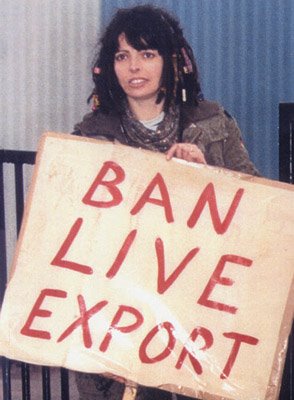
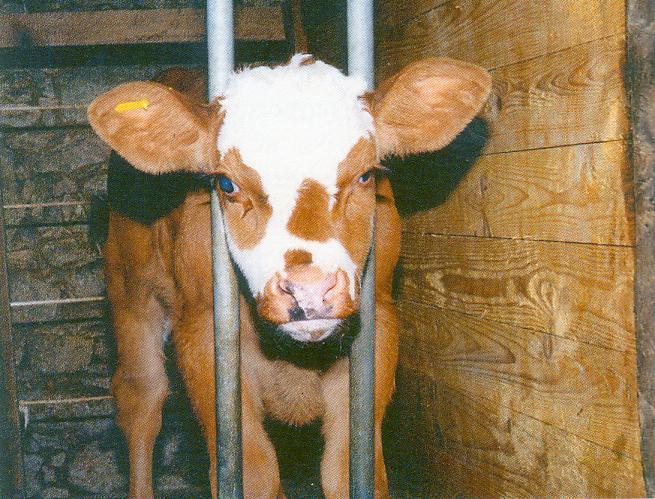
On 1 February 1995, Phipps was one of 35 protesters at Coventry Airport in Baginton, protesting the export of live calves to Amsterdam for distribution across Europe. Ten protesters broke through police lines and were trying to bring the lorry to a halt by sitting in the road or chaining themselves to it when Phipps was crushed beneath the lorry’s wheels; her fatal injuries included a broken spine.[6]
“An hour after she arrived on the day she died, the lorry appeared. Most of the protesters were further down the road but a small group, including Ms Phipps who had arrived earlier, were at the entrance of the airport when the articulated lorry came up the road. As it bypassed the main group of campaigners, she ran, arms outstretched, headlong towards it. She clambered up the front wing. Her sister watched in horror as she slipped and fell beneath the wheels.”[7]
The Crown Prosecution Service ruled there was no evidence to bring any charges against the driver. Phipps’ family blamed the police for her death because the police were working to keep the convoy of lorries moving. The inquest heard that the driver may have been distracted by a protester running into the road ahead of him, who was being removed by a policeman. A verdict of accidental death was returned.[6]
We have been trying to support our friends with the South Korean Dog Meat campaign by publishing their regular and very informative newsletters which you can view at:
We found that the (campaign) e mail blocks given on their site gave us constant ‘undelivered’ replies; and so we set out to try and get it sorted by doing a few tests at our end. We made some very small changes to the e mail addresses and sent out our ‘new’ versions. After a few days everything seemed fine and we had no ‘undelivered’ messages from the administrator.
Our first set of re vamped versions were initially given in post
This was an initial trial post and we hoped to move on with the rest. As everything now seems fine, we are going to take the plunge and issue the other amended versions; which we ask you to copy and send. The second amended version is Post 2 as follows.
Post 2 (this post) covers an additional 2 regions of 10. So now we have covered 4 of 10 regions.
It covers Gyeongju and Gyeongsan regions.
Please send e mails to all as per the lists below, along with the regional covering letter which is also supplied. Please note they are different for each specific region – so do NOT use the same one for both regions.
We have been in contact with KoreanDogs.com to draw attention to what we think are the problems; and we have invited them to copy and use our versions if they wish.
So lets get started now with Post 2 of 5; and the others will follow very shortly.
We ask you to take immediate action to crack down on the illegal dog farms, slaughterhouses, markets and restaurants that serve dog meat in your city. We request that an official document be issued, mandating that the following existing Korean laws be enforced by its government officials, police and judges:
Unauthorized processing of food waste fed to dogs in the meat trade is a violation of the Wastes Control Act, Article 15-2, Article 25, Section 3. Suppliers of food waste and transporters of food waste to dog meat farms are violating this regulation.
Food waste fed to dogs in the dog meat trade is a violation of the Control of Livestock and Fish Feed Act, Article 14, Section 1 & 2. Unauthorized collection of food waste and the act of feeding it to dogs in the meat trade is in violation of this regulation.
Excrement and resulting environmental damage produced as a by-product of the illegal dog meat farm is a violation of the Act on the Management and Use of Livestock Excreta Article 11. The excrement produced at dog meat farms causes environmental damage to the immediate and surrounding area.
The act of the slaughtering of dogs for human consumption is a violation of the Animal Protection Act Article 8, Section 1, Clause 4. The act of the slaughtering of a dog, without justifiable ground – such as out of necessity for veterinary treatment, or in circumstances of immediate threat, harm or damage to human life or property, is a violation.
The slaughter of dogs by electrocution is a violation of the Animal Protection Act, Article 8, Section 1, Clause 1. Inflicting injury or death to any animal by the following means: battery by tools, exposure to drugs, exposure to extreme heat or fire, electrocution and drowning is subject to legal punishment. Therefore, the routine slaughter of dogs by butchers and farmers by these methods is in violation of the Act. Further, electrocution as a method of slaughter is internationally recognized as an inherently cruel method of slaughter and banned globally.
The slaughter of dogs from an unauthorized slaughterhouse is a violation of Livestock Products Sanitary Control Act, Article 7 Section 1. The Livestock Products Sanitary Control Act, states that dogs are officially recognized and classified as “animals” that are “prohibited from being slaughtered and distributed as food for human consumption”. Therefore, those vendors operating dog slaughterhouses are operating outside of the parameters of the law and in violation of the law.
The slaughter of dogs for his/her own consumption is a violation of the Animal Protection Act, Article 10. The intent of the Act is to ensure that no animal is slaughtered in a cruel or revolting manner, and shall be free from unnecessary pain, fear, or stress during the process of slaughter. Therefore, the only humane way of slaughtering dogs would be by euthanasia (lethal injection). All currently practiced methods of slaughter by butchers, farmers and traders excludes euthanasia as a method of slaughter, therefore they are all in breach of this Act. This is also a violation of the Livestock Products Sanitary Control Act Article 7 Section 1 Clause 2. According to the Livestock Products Sanitary Control Act, the slaughter of animals for his/her own consumption is allowed only for the livestock animals that are publicly announced as classification of livestock in the Livestock Products Sanitary Control Act and dogs are not classified here.
The display and sale of dog carcasses in traditional outdoor markets is a violation of the Food Sanitation Act, Article 4, 5. Violation of laws banning the sale of harmful food due to the contamination from unsanitary and illegal slaughter of the animal and display of the dog carcass. For example, dog carcasses are routinely contaminated by microorganisms that cause human diseases and food poisoning; this can lead to serious and life threatening health complications. There are also strict laws that ban the sale of meat from sick animals, due to the fact that there is no quality control or formal monitoring of slaughter practices in the dog meat trade it is very likely that violation of these laws is happening routinely.
Dog meat restaurants’ sale of dog meat soup made with dog carcasses from an unknown source is a violation of Food Sanitation Act Article 44 Section 1 Clause 1. Uninspected livestock products must not be transported, stored, displayed, sold or used for manufacturing or processing of food for human consumption.
International coverage of the brutal dog and cat meat trade in South Korea has stained your city’s image. The time to end this tragedy is now. The favor of your reply is requested.
We ask you to take immediate action to crack down on the illegal dog farms, slaughterhouses, markets and restaurants that serve dog meat in your city. We request that an official document be issued, mandating that the following existing Korean laws be enforced by its government officials, police and judges:
Unauthorized processing of food waste fed to dogs in the meat trade is a violation of the Wastes Control Act, Article 15-2, Article 25, Section 3. Suppliers of food waste and transporters of food waste to dog meat farms are violating this regulation.
Food waste fed to dogs in the dog meat trade is a violation of the Control of Livestock and Fish Feed Act, Article 14, Section 1 & 2. Unauthorized collection of food waste and the act of feeding it to dogs in the meat trade is in violation of this regulation.
Excrement and resulting environmental damage produced as a by-product of the illegal dog meat farm is a violation of the Act on the Management and Use of Livestock Excreta Article 11. The excrement produced at dog meat farms causes environmental damage to the immediate and surrounding area.
The act of the slaughtering of dogs for human consumption is a violation of the Animal Protection Act Article 8, Section 1, Clause 4. The act of the slaughtering of a dog, without justifiable ground – such as out of necessity for veterinary treatment, or in circumstances of immediate threat, harm or damage to human life or property, is a violation.
The slaughter of dogs by electrocution is a violation of the Animal Protection Act, Article 8, Section 1, Clause 1. Inflicting injury or death to any animal by the following means: battery by tools, exposure to drugs, exposure to extreme heat or fire, electrocution and drowning is subject to legal punishment. Therefore, the routine slaughter of dogs by butchers and farmers by these methods is in violation of the Act. Further, electrocution as a method of slaughter is internationally recognized as an inherently cruel method of slaughter and banned globally.
The slaughter of dogs from an unauthorized slaughterhouse is a violation of Livestock Products Sanitary Control Act, Article 7 Section 1. The Livestock Products Sanitary Control Act, states that dogs are officially recognized and classified as “animals” that are “prohibited from being slaughtered and distributed as food for human consumption”. Therefore, those vendors operating dog slaughterhouses are operating outside of the parameters of the law and in violation of the law.
The slaughter of dogs for his/her own consumption is a violation of the Animal Protection Act, Article 10. The intent of the Act is to ensure that no animal is slaughtered in a cruel or revolting manner, and shall be free from unnecessary pain, fear, or stress during the process of slaughter. Therefore, the only humane way of slaughtering dogs would be by euthanasia (lethal injection). All currently practiced methods of slaughter by butchers, farmers and traders excludes euthanasia as a method of slaughter, therefore they are all in breach of this Act. This is also a violation of the Livestock Products Sanitary Control Act Article 7 Section 1 Clause 2. According to the Livestock Products Sanitary Control Act, the slaughter of animals for his/her own consumption is allowed only for the livestock animals that are publicly announced as classification of livestock in the Livestock Products Sanitary Control Act and dogs are not classified here.
The display and sale of dog carcasses in traditional outdoor markets is a violation of the Food Sanitation Act, Article 4, 5. Violation of laws banning the sale of harmful food due to the contamination from unsanitary and illegal slaughter of the animal and display of the dog carcass. For example, dog carcasses are routinely contaminated by microorganisms that cause human diseases and food poisoning; this can lead to serious and life threatening health complications. There are also strict laws that ban the sale of meat from sick animals, due to the fact that there is no quality control or formal monitoring of slaughter practices in the dog meat trade it is very likely that violation of these laws is happening routinely.
Dog meat restaurants’ sale of dog meat soup made with dog carcasses from an unknown source is a violation of Food Sanitation Act Article 44 Section 1 Clause 1. Uninspected livestock products must not be transported, stored, displayed, sold or used for manufacturing or processing of food for human consumption.
International coverage of the brutal dog and cat meat trade in South Korea has stained your city’s image. The time to end this tragedy is now. The favor of your reply is requested.
70% Of Europeans Support Meat Tax And Price Reduction Of Fruit And Veg, Study Says
The majority of Europeans ‘expect their political leaders to tax meat products to use revenues to reduce VAT taxes on vegetables, fruits and meat alternatives’
A staggering 70 percent of Europeans support a meat tax, according to a new study.
German, French, and Dutch consumers also favour a 0 percent VAT rate on fruits and vegetables.
Animal welfare improvements
The data comes from a survey commissioned by TAPP Coalition and Four Paws. It found the majority of consumers agreed with a meat tax. But, only if the revenues will reduce taxes on vegetables and fruit, support farmers on sustainability and animal welfare improvements, and compensate low income groups
80 percent of the German, 63 percent of the Dutch and 67 percent of the French participants said they were willing to pay a tax of at least 10 Eurocents per 100g of meat.
‘A political reality’
Jeroom Remmers is the director of the TAPP Coalition. In an online statement he said: “The consumer survey shows a political reality.
“A majority of West European consumers expect their political leaders to tax meat products to use revenues to reduce VAT taxes on vegetables, fruits and meat alternatives and pay farmers to increase animal welfare and green standards.
“We expect EU Ministers to start the legislation at national and the EU levels. They can reduce GHG-emissions and biodiversity loss from food, while protecting EU farmers, improving public health and reucing health care costs for consumers.”
Meat tax
Last year, the UK government was urged to tax meat and dairy to ‘lessen the economic fallout after COVID-19’.
Vegan charity PETA has written to (UK) Chancellor of the Exchequer Rishi Sunak suggesting the revenue could be used to ease the burden on the NHS. The organzation also says it could help farmers transition away from meat and dairy to more climate-friendly arable ventures.
Moreover, the letter says meat and dairy should ‘take their place alongside tobacco, alcohol, sugar, and fuel. All of which are taxed because of their negative impact on human health or the environment’.
It adds: “This would lighten the burden on the already overstretched NHS. Modeling predicts that a UK tax on red and processed meats could result in 22 percent fewer deaths and save the health service £700 million a year.”
Also …..
Why The New UN Poll On Attitudes To Climate Change Is A Huge Win For The Plant-Based Movement
Close to half (43 percent) of the UK support the promotion of plant-based diets to combat the climate emergency
The UN climate change poll is out. Here’s why it’s a ‘huge win’ for the plant-based movement.
Did you know fishes fall for optical illusions? It’s one of the many things we’ve learned about fishes that shows their sentience—and why we shouldn’t eat them.
Falling for illusions is a sign of intelligence. Both fishes and humans are easily tricked by how we look at things because our brains are smart. Our brains actively process information without us having to consciously stop and compute every bite of data—which takes forever.
So, what we see and understand is determined by our smart brains and the context of what we’re looking at. How big, small, important or irrelevant something looks often depends on what we see it next to. Take a look the famous Muller-Lyer illusion.
UN climate change poll
An illusion of this kind happened in this week’s UN poll on attitudes towards climate change. There is an incredible finding in their report. Getting close to half (43 percent) of the UK support the promotion of plant-based diets to combat the climate emergency. And this was a big survey—1.2 million people from 50 countries.
The reason this huge support for the plant-based movement maybe hasn’t gained the coverage it deserves is down to our brains computing ahead of our conscious attention. The report frames its results to show us that, globally, there were 17 other solutions to the climate emergency that people supported more.
These levels of support are down to context—what people see around them. Where fossil fuels are a major source of emissions, more people supported renewable energy (76 percent in Australia, 65 percennt in the US). Where deforestation is a major visible distress, people supported the conservation of trees, with 60 percent support in Brazil and 57 percent in Indonesia.
‘Transformative shifts’
So let’s look properly at that figure. What does 43 percent of the UK population supporting plant-based diets tell us about the transformative shifts in our attitudes to food and the environment? Only Germany (44 percent) scored higher in the poll for support for vegan diets.It tells us at least three things.
First, a massive number of people in the UK now see plant-based diets as quick, effective action that individuals can take to fight the climate emergency. That 43 percent of the adult population is nearly 24 million people.
That number is even larger than the 37 percent of ‘flexitarians’ who said this time last year that they were looking to reduce their meat consumption. From 37-43 percent shows the trend continues towards less meat and plant-based diets.
If you look at research from market analyst Mintel, the trend is even greater from 28% of meat-reducers in 2017 to 39% in 2020. That same data from Mintel shows 25% of people cited environmental benefits for eating less meat. The new UN poll puts the figure for supporting plant-based diets for environmental benefit at 43 percent. That’s a massive leap.
Advocating for systemic change’
So why has this come about? The second thing the data from the UN poll tells us is that it looks like advocating for systemic change on food for environmental reasons is working. This is having an impact on potential dietary choice.
From street activists to social influencers to plant-based platforms, we’ve done an incredible job changing people’s minds about the possibility and potential of a plant-based food system.
In the UK we have placed animal agriculture’s links to climate catastrophe front and centre. People cannot avoid seeing the link. We have pushed the Overton Window for what’s possible to talk about. The focus on systemic transformation, leveraging people’s demand for action on climate change, is getting us closer to our goal of ending animal exploitation.
The plant-based movement
The third thing this data tells us is how vibrant and mainstream the plant-based movement has become in the UK. Brazil and Indonesia have the highest support for the conservation of trees, because deforestation is so visible. In the UK, we find the most visible vegan food options, culture, and activism. London is regularly HappyCow’s best vegan city in the world.
So let’s not be fooled by plant-based diets being less popular in the poll than conserving trees or tackling emissions when it comes to combating the climate emergency.
Changing a global food system—the ‘Great Food Transformation’ called for by the world’s leading experts of the EAT-Lancet Commission—is unprecedented. We’ve not done it before. That 43 percent of people in the UK support this great food transformation, from an animal-based food system to a plant-based food system, is something to celebrate. We made that happen.
Vegan population
The official vegan population of the UK is 1.16 percent. In more recent surveys such as this one, it is at three percent. What’s brilliant to see are people’s intentions: in that survey, more than seven percent intend to follow a vegan diet by the end of 2021.
We know that not everyone manages to stick to their intentions. We’ve written about that before. But when people try it once, they’re more likely to try again.
So let’s watch the future grow from that seven-43 percent—and then further.
What we can see from people’s urgent desire to tackle the climate emergency is that a plant-based future is visibly on the table. And that is no illusion.