Today Mark drew my attention to the fact that we had reached the number of 200,000 visitors to our blog.
This is very nice news that we want to share with you.
We both feel happy, and your loyalty rewards our work.
We associate every visit with love for the animals
with a personal interest in news and developments in the fight for animal rights
with respect and appreciation for our work, which we try to do conscientiously, seriously, and politically correct.
We hope that we will continue to work as missionaries for animal rights for a long time and we firmly believe that this mission can best be accomplished when we work together and consistently.
Last May, I led a team of investigators inside Iowa’s largest “pork” producer, Iowa Select Farms.
We documented — and ended — the company’s gruesome mass killing of thousands of pigs through “ventilation shutdown.”
Yesterday, my trespass charges were dropped!
Apparently Iowa Select Farms is too scared to face us in court. We just broke this news in a new video, which you can share on Facebook, Instagram, TikTok, Twitter, and YouTube.
But the fight isn’t over. My friend Linda and I are still facing felony burglary charges for the rescue of a piglet named Gilly. Linda has a family at home and she doesn’t want to go to jail. We take risks like this because we know we have a community of people who support us. So will you help?
Call the County Attorney, Eric Simonson, at 641-444-3240 and politely ask him to drop the burglary charges against us because helping animals is the right thing to do.
Thank you for your support through this whole journey — and through everything that is still to come. Together we can expose animal cruelty around the world and achieve revolutionary change for animals. Matt
PS: My birthday also happens to be coming up, and if you’d like to gift me anything, all I’m asking for is donations to DxE. You can donate here.
The brilliant thing about the Birdwatch is that you never know what you might see. Head here for everything you need to enjoy your Birdwatch.
Devote just 1 hour of your weekend time to record all the birds that visit your garden.
Log them all down and at the end, do a final count up of numbers and types.
Then submit your information to the RSPB in order that they can add your data to obtain a nationwide review of how bird species are increasing or declining; and where in the UK this is happening.
Thanks to people like you taking part in the Big Garden Birdwatch, we now have over 40 years of data and this has helped increase our understanding of the challenges faced by wildlife.
It was one of the first surveys to identify the decline of song thrushes in gardens. This species was a firm fixture in the top 10 in 1979. But by 2019, those numbers had declined by 76% – coming in at number 20. And did you know that house sparrow sightings have dropped by 53% since the first Birdwatch in 1979? However, in the past 10 years their numbers have grown by 10% showing that we are beginning to see some signs of recovery.
Results like these help us spot problems. But, more importantly, they are the first step towards putting things right.
Pick a time You can choose any hour between 29 and 31 January. So whether you’re an early bird or a night owl, you can still take part.
Tell us what you see Count the birds you see in your garden or from your balcony*. Ignore any birds that are still in flight. To avoid double-counting, just record the highest number of each bird species you see at any one time – not a running total.
*This year our advice is to take part in the safety of your own home. This could include a birdwatch from your window if you overlook a green space or courtyard.
Submit your results Online: You can submit your results online at rspb.org.uk/birdwatch from 29 January until 19 February. By post: If you’d rather send your results by post, you can download a submission form below. Please post your results to us before 15 February.
Every count is important so, if you don’t see anything, please still submit your result. Finding out which birds don’t visit your area is as important as understanding those which do!
See our resources below for printable bird ID sheets to help you, or posters you can display to show you’re taking part.
Tell us what you saw
By counting the birds in your patch, you’re helping to take a snapshot of how they are doing. And the more people that submit their results, the better picture we will have of how garden birds are faring across the UK.
You’re vital in helping us understand the challenges faced by wildlife. Whatever you saw – even if it was nothing – it still count
WAV Comment – make sure you take part; it is fun and great education on birds for the youngsters. Plus, you are giving a little bit of time but helping to contribute towards a massive annual survey of all the birds in the UK. Good luck !
‘The evidence that switching to plant-based foods can manage or reverse this condition is hugely valuable, particularly as we navigate the peak of this pandemic’
Plant-based diets can slash the risk of heart disease, stroke, and type 2 diabetes, according to a huge UK study.
Health check service Medichecks surveyed 10,000 Brits to explore the effects of a plant-based diet versus eating meat.
The study’s findings
It found that vegan had a lower blood sugar (HbA1c) count, meaning a lower risk of type 2 diabetes. Vegans also showed reduced non-HDL (unhealthy) cholesterol and lower overall cholesterol than meat-eaters – meaning a decreased risk of heart disease and stroke.
Moreover, the study showed vegans had around a 30 percent higher blood level of folate compared to those following a non-vegan diet. Folate is one of the B-vitamins needed to make red and white blood cells and it converts carbohydrates into energy.
The marker for liver health (GGT) was 25-30 percent lower for vegans compared to omnivores.
Plant-based diet
Dr. Natasha Fernando is a GP and Head of Clinical Excellence at Medichecks. In a statement sent to PBN, she said: “An important finding from this 2020 study is the effect of a plant-based diet in supporting the body’s ability to control blood glucose levels, because this is a determinant for type 2 diabetes.
“As published recently in The Lancet, diabetics are 40 percent more likely to have fatal or critical-care COVID. The evidence that switching to plant-based foods can manage or reverse this condition is hugely valuable, particularly as we navigate the peak of this pandemic.”
‘Balanced and nutritious’
Dr. Fernando added: “At this stage in our fight against COVID, everyone can continue to do their bit not just by following the government guidance, but also by taking personal responsibility to safeguard their health. “That means making a healthy, balanced and nutritious diet a priority – that goes both for vegans and meat-eaters. Almost all of the underlying conditions that increase risk factors for coronavirus are preventable and, in many cases, reversible.”
The report below is well worth reading – short and factual;
Every single day before I have my breakfast; I go through what is a routine now – and that is getting the birds breakfast, and daily feed ready.
It normally takes well over half an hour – crushing Digestive biscuits, adding Museli, loads of wild bird seed, crushing up a fat block; grinding down loads of slices of bread; some cold rice boiled up the day before; cheese savoury biscuits crushed up; tiny chopped apple; Niger seed in the feeder for the Finches; I think that’s it !
All mixed together in a large plastic bowl, ready for the feathered visitors throughout the day.
Here are a few photos of what I prepared today – the fox mug is only to give an idea of size and quantity. Our friends happily work their way through this all over the day.
And the reason for this is:
Please remember that the birds are cold and hungry first thing in the morning; so by giving them something to eat it gets them off to a better day. Also, even though it may be freezing; try and make some fresh water available for them so that they can drink and bathe if required.
It may be only a small contribution and effort; but it keeps our garden visitors turning up each morning as they know they are going to get something nice to start their day. This Winter; please look after the wild birds; help them survive !
You know what – once this is done, then I can have MY breakfast !!
Regards Mark
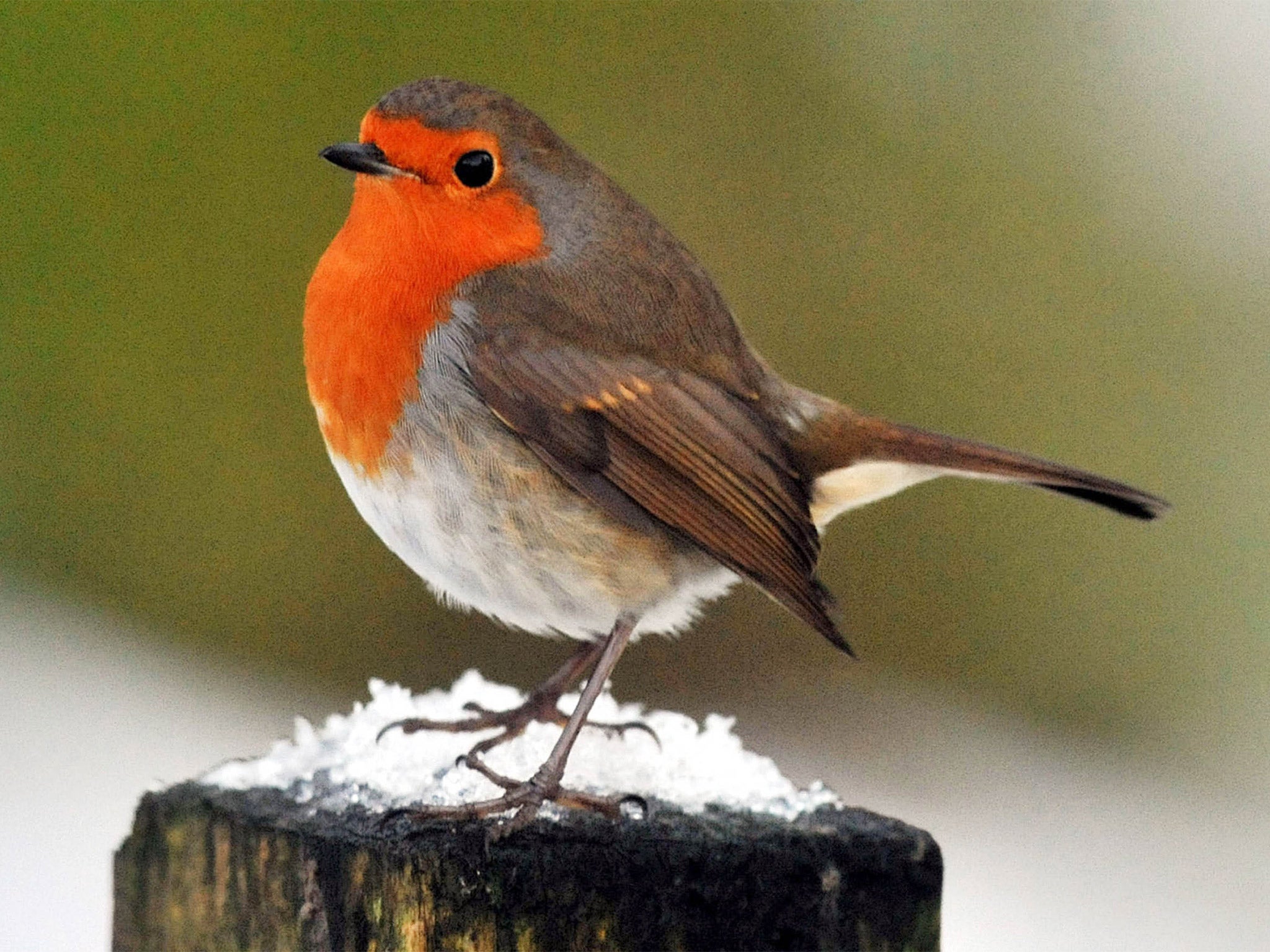
Above – Robin
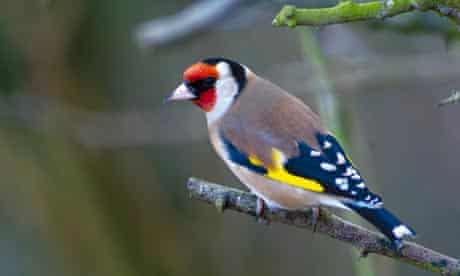
Below – Finch
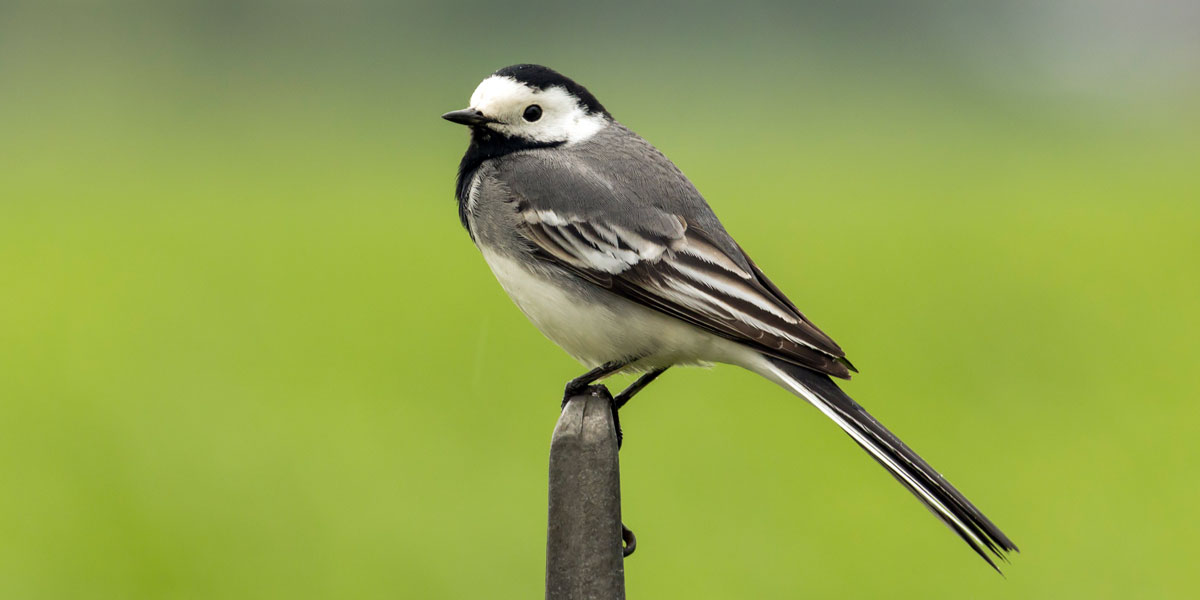
Below – Wagtail (Ark Wildlife photo)
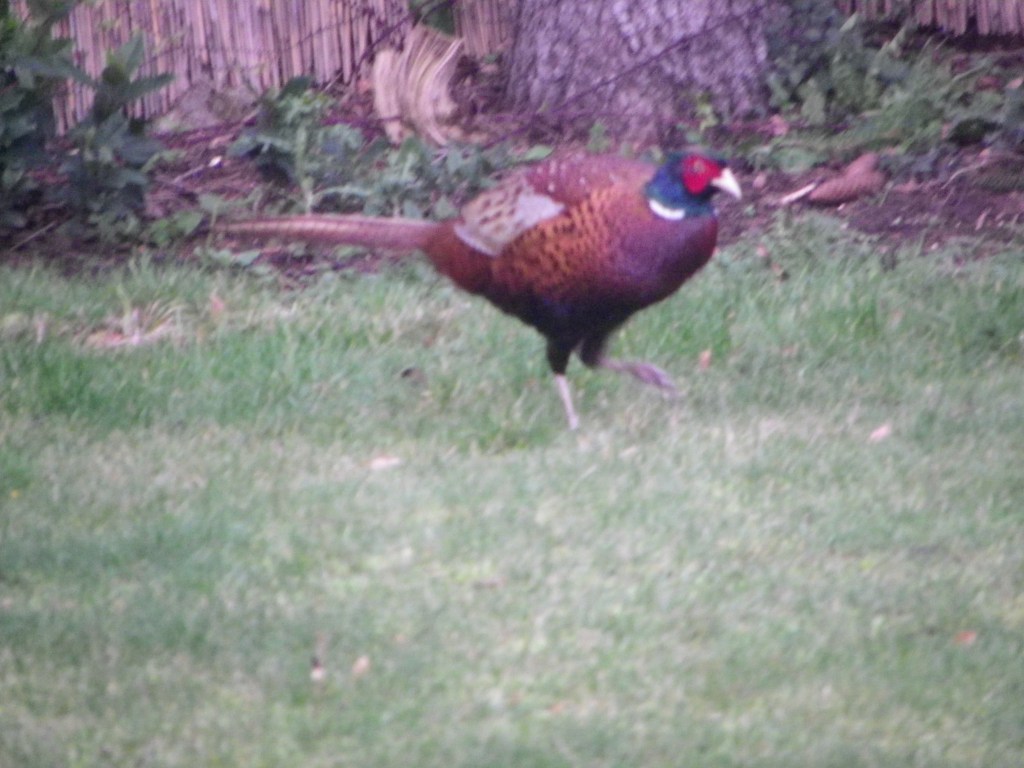
Below – Pheasant in the garden
Below – Doves (of Peace) in the garden
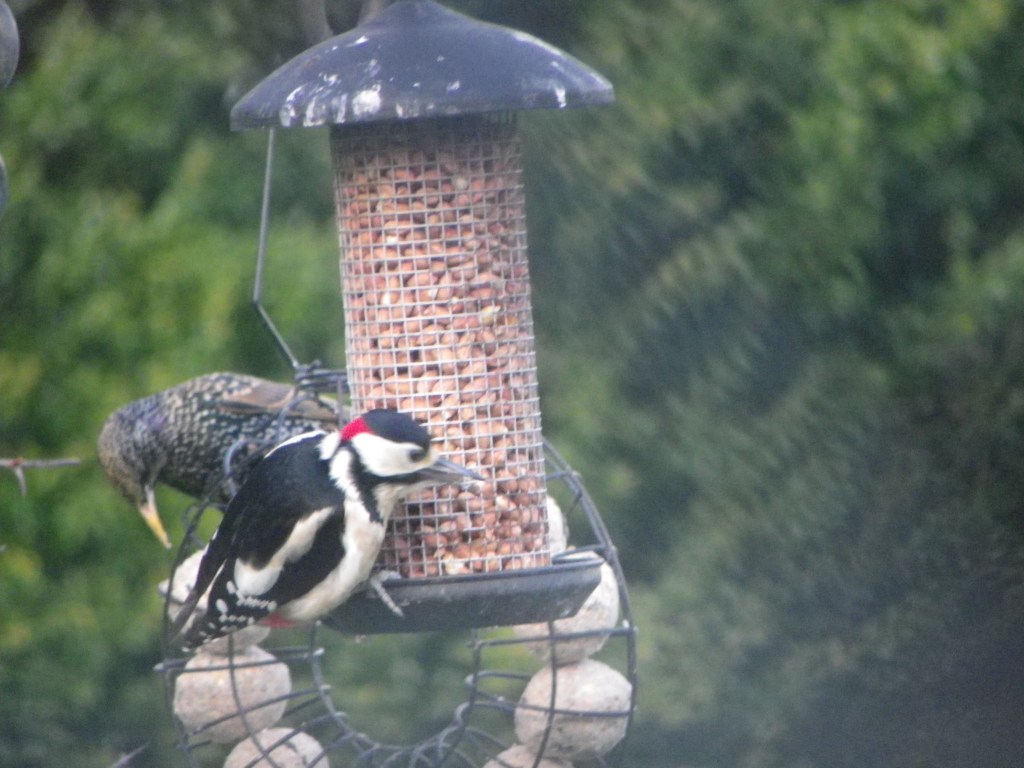
Below – Great spotted Woodpecker enjoys some peanuts
This incident has had a significant impact on orangutans who had grown accustomed to living in open areas such as in the forest school and the pre-release islands, but were suddenly forced to live in cages.
Normally, your regular BOSF January newsletter would talk about the year ahead, but these aren’t normal times.
The team and I have had no choice but to start the new year focused on repairing the islands.
Will you be a part of that effort, ?
With your gift of $25 or more we can come together to repair these orangutans’ homes!
Some of the e mails given appear to be currently closed, and the administrator gets back to you about this if this is the situation. But some are still valid and we strongly suggest that e mails are sent to all regardless.
To make things easier for you, I have taken each province in turn and:
Supplied all the e mail contacts in block form – you only need to copy and paste (the block listing) into a ‘new mail’ on your computer.
Supplied a copy of the letter for you to enclose with your mail. Note these are different for each province, and so you must only use the specific one given for each area.
Over time, we are publishing the e mail block contacts and the covering letter for each of the 10 regions.
Probably 5 posts of which this is the first.
If you feel that this is a lot of work; do it in sections each day; finally, take a look at the videos below and then tell us this issue is not worth fighting for !
We ask you to take immediate action to crack down on the illegal dog farms, slaughterhouses, markets and restaurants that serve dog meat in your city. We request that an official document be issued, mandating that the following existing Korean laws be enforced by its government officials, police and judges:
Unauthorized processing of food waste fed to dogs in the meat trade is a violation of the Wastes Control Act, Article 15-2, Article 25, Section 3. Suppliers of food waste and transporters of food waste to dog meat farms are violating this regulation.
Food waste fed to dogs in the dog meat trade is a violation of the Control of Livestock and Fish Feed Act, Article 14, Section 1 & 2. Unauthorized collection of food waste and the act of feeding it to dogs in the meat trade is in violation of this regulation.
Excrement and resulting environmental damage produced as a by-product of the illegal dog meat farm is a violation of the Act on the Management and Use of Livestock Excreta Article 11. The excrement produced at dog meat farms causes environmental damage to the immediate and surrounding area.
The act of the slaughtering of dogs for human consumption is a violation of the Animal Protection Act Article 8, Section 1, Clause 4. The act of the slaughtering of a dog, without justifiable ground – such as out of necessity for veterinary treatment, or in circumstances of immediate threat, harm or damage to human life or property, is a violation.
The slaughter of dogs by electrocution is a violation of the Animal Protection Act, Article 8, Section 1, Clause 1. Inflicting injury or death to any animal by the following means: battery by tools, exposure to drugs, exposure to extreme heat or fire, electrocution and drowning is subject to legal punishment. Therefore, the routine slaughter of dogs by butchers and farmers by these methods is in violation of the Act. Further, electrocution as a method of slaughter is internationally recognized as an inherently cruel method of slaughter and banned globally.
The slaughter of dogs from an unauthorized slaughterhouse is a violation of Livestock Products Sanitary Control Act, Article 7 Section 1. The Livestock Products Sanitary Control Act, states that dogs are officially recognized and classified as “animals” that are “prohibited from being slaughtered and distributed as food for human consumption”. Therefore, those vendors operating dog slaughterhouses are operating outside of the parameters of the law and in violation of the law.
The slaughter of dogs for his/her own consumption is a violation of the Animal Protection Act, Article 10. The intent of the Act is to ensure that no animal is slaughtered in a cruel or revolting manner, and shall be free from unnecessary pain, fear, or stress during the process of slaughter. Therefore, the only humane way of slaughtering dogs would be by euthanasia (lethal injection). All currently practiced methods of slaughter by butchers, farmers and traders excludes euthanasia as a method of slaughter, therefore they are all in breach of this Act. This is also a violation of the Livestock Products Sanitary Control Act Article 7 Section 1 Clause 2. According to the Livestock Products Sanitary Control Act, the slaughter of animals for his/her own consumption is allowed only for the livestock animals that are publicly announced as classification of livestock in the Livestock Products Sanitary Control Act and dogs are not classified here.
The display and sale of dog carcasses in traditional outdoor markets is a violation of the Food Sanitation Act, Article 4, 5. Violation of laws banning the sale of harmful food due to the contamination from unsanitary and illegal slaughter of the animal and display of the dog carcass. For example, dog carcasses are routinely contaminated by microorganisms that cause human diseases and food poisoning; this can lead to serious and life threatening health complications. There are also strict laws that ban the sale of meat from sick animals, due to the fact that there is no quality control or formal monitoring of slaughter practices in the dog meat trade it is very likely that violation of these laws is happening routinely.
Dog meat restaurants’ sale of dog meat soup made with dog carcasses from an unknown source is a violation of Food Sanitation Act Article 44 Section 1 Clause 1. Uninspected livestock products must not be transported, stored, displayed, sold or used for manufacturing or processing of food for human consumption.
International coverage of the brutal dog and cat meat trade in South Korea has stained your city’s image. The time to end this tragedy is now. The favor of your reply is requested.
We ask you to take immediate action to crack down on the illegal dog farms, slaughterhouses, markets and restaurants that serve dog meat in your city. We request that an official document be issued, mandating that the following existing Korean laws be enforced by its government officials, police and judges:
Unauthorized processing of food waste fed to dogs in the meat trade is a violation of the Wastes Control Act, Article 15-2, Article 25, Section 3. Suppliers of food waste and transporters of food waste to dog meat farms are violating this regulation.
Food waste fed to dogs in the dog meat trade is a violation of the Control of Livestock and Fish Feed Act, Article 14, Section 1 & 2. Unauthorized collection of food waste and the act of feeding it to dogs in the meat trade is in violation of this regulation.
Excrement and resulting environmental damage produced as a by-product of the illegal dog meat farm is a violation of the Act on the Management and Use of Livestock Excreta Article 11. The excrement produced at dog meat farms causes environmental damage to the immediate and surrounding area.
The act of the slaughtering of dogs for human consumption is a violation of the Animal Protection Act Article 8, Section 1, Clause 4. The act of the slaughtering of a dog, without justifiable ground – such as out of necessity for veterinary treatment, or in circumstances of immediate threat, harm or damage to human life or property, is a violation.
The slaughter of dogs by electrocution is a violation of the Animal Protection Act, Article 8, Section 1, Clause 1. Inflicting injury or death to any animal by the following means: battery by tools, exposure to drugs, exposure to extreme heat or fire, electrocution and drowning is subject to legal punishment. Therefore, the routine slaughter of dogs by butchers and farmers by these methods is in violation of the Act. Further, electrocution as a method of slaughter is internationally recognized as an inherently cruel method of slaughter and banned globally.
The slaughter of dogs from an unauthorized slaughterhouse is a violation of Livestock Products Sanitary Control Act, Article 7 Section 1. The Livestock Products Sanitary Control Act, states that dogs are officially recognized and classified as “animals” that are “prohibited from being slaughtered and distributed as food for human consumption”. Therefore, those vendors operating dog slaughterhouses are operating outside of the parameters of the law and in violation of the law.
The slaughter of dogs for his/her own consumption is a violation of the Animal Protection Act, Article 10. The intent of the Act is to ensure that no animal is slaughtered in a cruel or revolting manner, and shall be free from unnecessary pain, fear, or stress during the process of slaughter. Therefore, the only humane way of slaughtering dogs would be by euthanasia (lethal injection). All currently practiced methods of slaughter by butchers, farmers and traders excludes euthanasia as a method of slaughter, therefore they are all in breach of this Act. This is also a violation of the Livestock Products Sanitary Control Act Article 7 Section 1 Clause 2. According to the Livestock Products Sanitary Control Act, the slaughter of animals for his/her own consumption is allowed only for the livestock animals that are publicly announced as classification of livestock in the Livestock Products Sanitary Control Act and dogs are not classified here.
The display and sale of dog carcasses in traditional outdoor markets is a violation of the Food Sanitation Act, Article 4, 5. Violation of laws banning the sale of harmful food due to the contamination from unsanitary and illegal slaughter of the animal and display of the dog carcass. For example, dog carcasses are routinely contaminated by microorganisms that cause human diseases and food poisoning; this can lead to serious and life threatening health complications. There are also strict laws that ban the sale of meat from sick animals, due to the fact that there is no quality control or formal monitoring of slaughter practices in the dog meat trade it is very likely that violation of these laws is happening routinely.
Dog meat restaurants’ sale of dog meat soup made with dog carcasses from an unknown source is a violation of Food Sanitation Act Article 44 Section 1 Clause 1. Uninspected livestock products must not be transported, stored, displayed, sold or used for manufacturing or processing of food for human consumption.
International coverage of the brutal dog and cat meat trade in South Korea has stained your city’s image. The time to end this tragedy is now. The favor of your reply is requested.
lant Based News has remade a TV advert that claims meat and dairy are ‘essential’.
The Agriculture and Horticulture Development Board (AHDB) launched its We Eat Balanced campaign earlier this month to highlight the alleged ‘nutritional benefits of enjoying red meat and dairy’.
The campaign, which costs £1.5 million, consists of an advert currently running on UK TV. It aims to showcase the UK’s world-class standards in food production and sustainability. There are three different endings featuring dishes using beef, lamb, and pork. All of which include a dairy accompaniment.
‘Meat and dairy naturally provide nutrients’
“An ideal diet is one that offers variety, nourishment, and enjoyment whilst remaining in harmony with the environment,” We Eat Balanced said. “To keep you and your family healthy it’s best to follow a balanced diet. Meat and dairy naturally provide nutrients, including the essential vitamin B12 not naturally present in a vegan diet.”
Speaking about the campaign, AHDB’s Head of Marketing Liam Byrne said: “The nation needs a bit of a lift as it’s been a tough time for everyone. So, now more than ever we wanted to create a campaign that feels uplifting and reassuring for consumers who are increasingly being told by the media to reduce their meat and dairy consumption.
“As such this is also a very important campaign for our levy payers as it tells the real story of food and farming from Britain.”However, PBN has decided to remake the advert – showing the harrowing reality of animal agriculture. “We’ve all got a lot on our plates right now but here’s something you’ll want to make room for,” the new ad states.
“The story of a food so brutal it steals calves from their mothers and the flesh of creatures we humans incarcerate. Then, markets it as something edible.
“The nutrients our bodies need to stay healthy exists in plants. Quit meat and dairy. Enjoy food without victims. Eat plant-based.”
Plant Based News’ ad
PBN’s co-founder Robbie Lockie, who produced the new ad, says he was ‘absolutely outraged’ by the claims AHDB made.“We’re in the midst of a climate crisis,” Lockie said. “It is absolutely essential we cut our consumption of meat and dairy.
“However, the makers of the original ad claim they wanted to help people feel good. Because the media is ‘always trying to get people to eat less meat and dairy’. This is not only incredibly irresponsible, it denies the fact that animal agriculture is a leading driver for climate change.”
Are vegan diets healthy?
Despite AHDB’s claims, the American Dietetic Association says ‘appropriately planned vegetarian diets, including total vegetarian or vegan diets, are healthful, nutritionally adequate, and may provide health benefits in the prevention and treatment of certain diseases’.
It adds: “Well-planned vegetarian diets are appropriate for individuals during all stages of the life cycle, including pregnancy, lactation, infancy, childhood, and adolescence, and for athletes.”