Category: General News

England: Coronavirus Again – Hundreds of thousands of chickens to be culled after Covid disruption. Does This Say Something About Intensive Farming Methods ? – ie Crap for Sentient Beings.

Hundreds of thousands of chickens to be culled after Covid disruption

About half of staff at poultry plant in Norfolk have had to self-isolate after 75 tested positive for coronavirus

At least 400,000 chickens are being culled in the UK as Covid-19 infections disrupt slaughterhouse routines. About 300,000 birds are due to be culled in England and 110,000 have been culled in Scotland.

Chickens that cannot be slaughtered for food are usually gassed with CO2 and their bodies rendered for fat and other animal byproducts. They do not enter the food chain.

The UK rears and slaughters about 20 million birds a week, according to the British Poultry Council (BPC). About 95% are chickens and the majority are processed through a few large slaughterhouses, each with a capacity of about 2 million birds a week. Production loss at even one large slaughterhouse can have significant impacts along the food chain and create welfare problems, the BPC said.

Millions of US farm animals were culled on-farm earlier this summer after the closure of meat plants because of coronavirus outbreaks among staff that cut the country’s slaughtering capacity for cows and pigs by 25% and 40% respectively.

Millions of US farm animals to be culled by suffocation, drowning and shooting

https://www.theguardian.com/environment/2020/may/19/millions-of-us-farm-animals-to-be-culled-by-suffocation-drowning-and-shooting-coronavirus

In England, about half of the staff at Banham Poultry in Norfolk have had to self-isolate after 75 staff tested positive for coronavirus. The plant plans “to humanely cull 300,000 birds using a gas system”, said its director, Blaine Van Rensburg, in a statement.

Asked about the risk of further culls, Rensburg said: “Given we don’t know how long this current situation will last, we won’t be speculating on how many others will need to be humanely culled.”

Rensburg denied earlier reports that Banham had culled about 7,000 birds. “No birds have been culled at our site to date,” he said. “We are already diverting a quarter of a million birds to other suppliers and will continue to do so where possible.”

In Scotland, a statement from poultry slaughterer Coupar Angus, which is owned by the 2 Sisters Food Group, confirmed that 110,000 birds had been culled. The slaughterhouse kills “almost one million chickens a week and is the only facility of its type in Scotland,” it said.

There are two standard methods for gas poultry culls in the UK: whole house gassing and containerised gassing. The first involves filling the sheds where chickens live with CO2. The second involves putting the birds in specialised containers that are brought to the farm. The containers are filled with CO2 and sometimes other gasses such as argon.

“Whole house slaughter is very rare, the sheds are not designed for it,” said Penny Middleton, the poultry policy manager at the National Farmers Union Scotland. “The containerised option is more controllable and would be done by someone like Livetec Systems, an approved depopulator, according to welfare regulations,” she said.

No one interviewed would comment on how long gassed chickens take to die, other than to say it was legal and humane.

The Coupar Angus statement said the chickens were “humanely dispatched in line with legislation” and that culls were supervised by the government’s Animal and Plant Health Agency and an independent veterinary officer.

The statement said that although last week’s Covid-19 related decision to “cease production has brought many upsetting consequences” it managed “to successfully process the large majority of birds from Scotland” by sending them to other slaughterhouses in its UK network. The factory was due to reopen on Monday and no further culls are expected, it said.

Middleton said the Coupar Angus plant reopening might take a while to get up to full speed, but that she was not expecting any further culls in Scotland.

UK has ‘little spare’ slaughtering capacity

Peter Stevenson, a policy advisor with UK welfare organisation Compassion in World Farming, said the culls highlighted a food system failure. “Today’s chickens have been bred to grow so quickly that if they are left to continue growing after reaching their slaughter weight, many will become so lame they can barely walk, while others will die of heart disease.”

The BPC’s chief executive, Richard Griffiths, said in a statement that because UK poultry processing was so efficient, with little spare capacity, losing a large slaughterhouse “will not only interrupt our national food supply, create shortages and job losses at a time when we can least afford it, but also result in bird welfare challenges on a significant scale”/

He said coronavirus outbreaks at meat plants demonstrated “that no amount of preparation and vigilance can guarantee complete protection against Covid-19. We have to prioritise the health of people in our community, but we also need to safeguard food supply and the welfare of our animals”.

The BPC was working closely with the Department for Environment, Food and Rural Affairs (Defra) “and other relevant authorities to ensure reasonable steps are put in place to minimise welfare issues and maintain food supply”, he said. “We must ensure that poultry meat plants compromised by a Covid-19 outbreak are able to maintain throughput where possible, even if it means having skeleton staff onsite.”

Defra did not confirm chicken cull numbers but said birds “would be culled using gas … in line with the rules on protecting animal welfare at the time of killing.”

Sign up for the Animals farmed monthly update to get a roundup of the best farming and food stories across the world and keep up with our investigations. You can send us your stories and thoughts at animalsfarmed@theguardian.com

Netherlands: Mink Fur Farms In The Netherlands To Permanently Close Earlier Than Planned In 2021 After COVID-19 Outbreaks.

41 mink fur farms have been hit by the virus (Photo: Adobe. Do not use without permission)

WAV Comment:  Another major nail in the coffin for the fur business.  We warmly welcome the progressive move by the Netherlands (Dutch) parliament to close down all mink farms in 2021 rather than 2024.  A dying trade; literally; which has now witnessed many major clothing manufacturers actually absorb their past links with an abusive industry – and now quite rightly put them into the history books where they belong.

Well done Dutch government !

Regards Mark

Mink Fur Farms In The Netherlands To Permanently Close In 2021 After COVID-19 Outbreaks

‘There has never been a more compelling time for the Netherlands to shut down this industry for good’

LIAM GILLIVER

AUG 30, 2020

The Dutch parliament has announced all mink fur farms in The Netherlands will permanently close by March next year, following a series of coronavirus outbreaks.

The country originally planned to phase mink farms out by 2024 but has fast-tracked the closure after 41 covid-19 farm infections.

In a statement sent to Plant Based News, senior director of public affairs for Humane Society International/Europe Dr. Joanna Swabe commended the government on its decision, which it says ends a ‘completely unnecessary industry and protects citizens’.

‘Virus reservoirs’

“With 41 fur farms and an estimated two million mink now having been infected, the risk of keeping these virus reservoirs operating, is far too great,” Dr. Swabe said.

“Without this early termination of fur farming, up to 13.5 million more animals would be forced to suffer short and miserable lives solely to supply the fickle fashion industry.

“It is a sick industry both literally and figuratively. There has never been a more compelling time for the Netherlands to shut down this industry for good.”

The announcement will not require mink on the 120 remaining fur farms to be preventatively culled unless new infections occur.

Mink on unaffected farms will be slaughtered for their pelts in November this year – but breeders are not permitted to restock.

Vietnam: It’s been a huge week for Cotton Blossom.

Do you remember our recent coverage of bile bear ‘Cotton Blossom’ in Vietnam ?

Here is the latest update news from ‘Animals Asia’;

Our past links:

https://worldanimalsvoice.com/2020/06/29/vietnam-29-6-20-breaking-news-bile-bear-cotton-blossom-to-be-rescued-by-animals-asia-team-on-the-road/

https://worldanimalsvoice.com/2020/07/03/vietnam-breaking-great-news-animals-asia-rescues-a-bear-named-cotton-blossom-that-was-held-captive-in-a-barren-cage-for-over-14-years/

It’s been a huge week for Cotton Blossom.

Following her rescue and vital 45 day quarantine period she’s now moved to her new den and is meeting the neighbours.

She’s also having her first health check so our vet team can assess the damage two decades in a metal cage has done to Cottom Blossom’s body.

Her spirit appears undaunted as Cotton Blossom is a perfectly calm and endearing bear. Now begins her new life, and we hope you’ll join us in watching her blossom.

Watch the latest of Cherry Blossom by clicking on this video link:

Belgium: Flanders lifts hunting ban on Belgian wolves’ land as cubs grow.

Flanders lifts hunting ban on Belgian wolves’ land as cubs grow

Friday, 28 August 2020

Hunting will again be allowed in areas populated by wolves in Flanders after regional authorities announced that a ban imposed to protect newborn wolf cubs will not be renewed.

Flemish Environment Minister Zouhal Demir said that a blanket hunting ban will no longer be necessary as the cubs have grown up.

“The wolves are now also able to move to other resting areas in their habitat, which is quite extensive,” Demir told HLN.Related News:

11 different wolves spotted in Flanders in last two years

First look at the wolf cubs of Flanders

Wolf Noëlla becomes a mother, but danger lurks

The hunting ban had been imposed in March, when a wolf called Noëlla was reported to have given birth to three cubs and was put in place until 31 August.

Demir moved to imposed the hunting ban to protect the wolf and her litter after another wolf named Naya and her newborn cubs were presumably killed by poachers.

Naya’s death sparked outrage with residents and animal conservation groups since it jeopardised their much-celebrated return of wild wolves into Belgian forests.

A thousand-euro reward for any tips leading to the presumed poachers was set up by conservation groups as well as an anonymous Belgian entrepreneur.

Despite the lifting of the ban, other measures to protect the wolves will remain in place, including regular checks by forest rangers and inspectors with the Flemish Agency for Nature and Forests.

Additionally, intensive monitoring with tracking technology and wildlife cameras will also be employed to ensure the animals are safe, while authorities will continue providing support to small livestock farmers active in the area.

The Brussels Times

https://www.brusselstimes.com/news/belgium-all-news/128894/flanders-lifts-hunting-ban-on-belgian-wolves-land-as-cubs-grows/

USA: Support the Wolf Conservation Center – Call on Gov. Inslee to End WDFW’s Assault on Wolves.

Scared wolf


Help the Wolf Conservation Center

Call on Gov. Inslee to End WDFW’s Assault on Wolves

Last fall, Washington Governor Jay Inslee instructed the Washington Department of Fish and Wildlife (WDFW) to better support co-existence between Washington’s livestock industry and the recovering population of endangered gray wolves. In his letter, Governor Inslee instructed WDFW to “make changes in the gray wolf recovery program to further increase the reliance on non-lethal methods, and to significantly reduce the need for lethal removal of this species… The status quo of annual lethal removal is simply unacceptable.”

Two weeks ago, WDFW gunned down the last two known survivors of the Wedge wolf family in response to predation on cattle grazing primarily on public lands. Today, the agency is out hunting for up to two wolves from the Leadpoint pack.

WDFW has killed four state-endangered wolves since receiving Gov. Inslee’s letter, and 34 wolves since 2012, when wolves had just begun to return to Washington after their extermination in the 1930s by livestock interests and government eradication programs.

This full-page advertisement paid for by Predator Defense appears in today’s Seattle Times. Consider amplifying its message by contacting Governor Inslee today!

It’s almost been a year since Governor Inslee instructed WDFW to change the way it manages wolves. The agency cannot continue to ignore this instruction. To change the status quo, Governor Inslee must act now. 

Please take action by respectfully calling on Governor Jay Inslee to end WDFW’s assault on wolves.

Take action now for Washington’s wolves:

Petition action Wording:

Emergency: Stop the Senseless Killing of Washington’s Wolves

On August 17, 2020, Washington Department of Fish and Wildlife (WDFW) Director Kelly Susewind confirmed killing the last two known remaining members of the Wedge wolf pack (an adult male and an adult female) in response to cattle depredations, primarily on public lands.

Although peer-reviewed research demonstrates that killing wolves is an ineffective solution to deter predation on cows and can even result in increased attacks, WDFW gunned down an adult female wolf on July 27, and as science predicted, livestock attacks continued after her death.

Killing is not the answer.

Yet WDFW has resorted to killing wolves living in this same spot rugged forest land for years. In fact, they killed the original Wedge pack in 2012 for the very same reason. The original Wedge pack was accused of preying on livestock in the Colville National Forest eight years ago and, under Washington’s wolf management plan, the state opted to issue kill orders in an attempt to protect the livestock. The state killed the entire family of state endangered wolves.

In the eight years since the original Wedge pack was destroyed, not much has changed. Livestock owners still graze their cows on rugged, forested public lands that are better suited for native ungulates, and WDFW is still killing wolves to benefit the profit margins of private businesses. In fact, at least 26 of the 34 state-endangered wolves that have been killed since 2012 were shot on behalf of the same livestock operator.

While it’s too late to protect the other 34 endangered wolves WDFW has gunned down since 2012, other Washington wolves still need our help.

Please take action to respectfully call on WDFW Director Kelly Susewind and Washington Governor Jay Inslee to immediately end their assault on Washington’s wolves.

Recipients

  • Governor Jay Inslee
  • Director Kelly Susewind

Take action now for Washington’s wolves:

UK: British vets launch battle to stop lobsters being boiled alive after scientific evidence finds the creatures DO feel pain.

boiled lobster – Google Search

Learn How to Cook Live Lobsters at Home | Maine Lobster Now

British vets launch battle to stop lobsters being boiled alive after scientific evidence finds the creatures DO feel pain and chefs are urged to stun them before they are killed

  • Vets demand that boiling lobsters should be outlawed on animal cruelty grounds
  • Researchers have found that the shellfish do experience trauma and are sentient
  • British Veterinary Association call for chefs to stun lobsters before cooking them
  • Celebrity chef Giorgio Locatelli uses the ‘humane’ electronic stunning devices

The British Veterinary Association is, for the first time, lending its weight to calls to protect lobsters and crabs, given the latest scientific evidence shows that shellfish are sentient.

The body, which represents more than 18,000 vets, wants it to become compulsory for chefs to stun the creatures before they are killed and cooked. 

Many leading kitchens already use electronic stunning devices, which they say improves the taste since crustaceans release unpleasant hormones when stressed.

Switzerland was the first country to impose a ban on cooking crustaceans alive in 2018, and Norway, New Zealand, Austria and parts of Australia have since followed suit.

Maisie Tomlinson of Crustacean Compassion said: ‘We call ourselves a nation of animal lovers but crabs and lobsters are Britain’s forgotten animals. What happens to them at slaughter is cruel and unacceptable. Unless these animals have been electronically stunned, it can take up to three minutes for a crab to die in boiling water and even longer for a lobster.’

The vets’ association is also calling for protections for octopus and squid, as well as fish caught on commercial trawlers. 

Some fish, including cod and haddock, suffocate if caught in the middle of the net while those still alive and stored on ice can take up to two hours to die.

The Department for Environment, Food and Rural Affairs confirmed that the UK slaughter welfare standards – already ‘some of the highest in the world’ – were under review.

Read the full article at:

https://www.dailymail.co.uk/news/article-8677803/British-vets-launch-battle-stop-lobsters-boiled-alive-new-scientific-evidence.html?ito=amp_twitter_share-top

Fresh, Living Lobster On Ice Stock Footage Video (100% Royalty-free)  20851993 | Shutterstock

Enjoyu !

Regards Mark

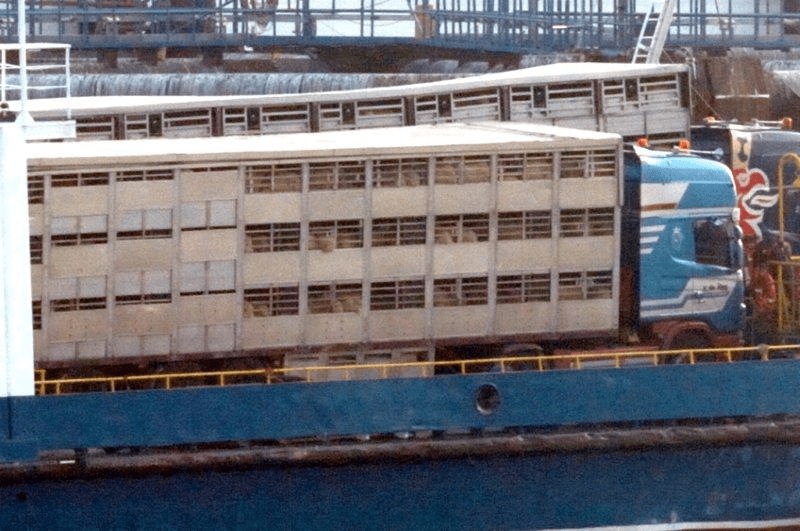
UK; Brexit Is Best Chance to End the Live Export of Animals. Fingers Crossed for 2021 and An End To the Immense Suffering.

WAV Comment – I (Mark) have campaigned against the export of live farm animals now for around 30 years. In the past I have campaigned a lot with Phil L (see Comment in article). At the end of 2020 the UK should be free from the shuackles of the EU – taking back control; which will then allow us (as a nation) to stop live animal exports – something we have not been able to do all the time a member state of the EU. I just hope other EU membvber states follow the UK in getting out of this dinosaur which ignores all the evidence as far as live animal transport is concerned.

See more about all this export work at https://serbiananimalsvoice.com/about-us/ and how the ‘head in the sand’ EU has always ifnored us and the evidence.

Regards Mark

Rabbits and some important facts about them

Did you know rabbit teeth never stop growing? Or that rabbits can jump up to ten feet? As well as being social and sensitive animals, rabbits are incredibly fascinating. We’ve rounded up eleven fun facts about rabbits that you definitely didn’t know!

Kaninchenhaltung
1. Rabbits are escape animals

Rabbits are always on the lookout. This is particularly evident from the fact that they are very cautious and behave more fearfully. For example, when rabbits are fooled by a human, they often become numb or try to free themselves by jumping uncontrollably.

2. Rabbits move as much as cats

Rabbits have the same urge to move around like cats. They need a lot of space and love to exercise in the fresh air.

3. Rabbits digest twice
Rabbits eat a special part of their excrement called appendix feces. This enables them to digest the food that is difficult to digest, such as crude fiber.

4. Rabbits are group animals

In the wild, rabbits live in large groups and have distinctive social behavior. Like us humans, they need conspecifics to be happy.

5. Rabbits defend their territory

Rabbits are very territorial and even defend their territory in a fighting manner if necessary.

6. Rabbit teeth will grow for a lifetime
Rabbit teeth never stop growing. The animals, therefore, wear off their teeth, for example by gnawing on branches. If they do not do this, the teeth may be misaligned.

7. Rabbits warn their conspecifics with knocking noises

Rabbits signal anger, discomfort, excitement, or fear by quickly so-called drumming with their hind legs on the ground. This also warns group members. The knock is usually followed by a quick sprint at high speed in order to outrun the possible enemy and hide in a shelter.

Continue reading “Rabbits and some important facts about them”