Unilever is taking a stance on products tested on animals, and consumers will approve. First, Dove—one of the most widely recognized and conveniently available personal care product brands in the world—has banned all tests on animals anywhere in the world and has just been added to PETA’s Beauty Without Bunnies cruelty-free list!
Dove will begin using our cruelty-free bunny logo on its packaging in 2019.
On top of that, consumer goods giant Unilever—which owns the Dove brand—has banned all tests on animals not required by law for all the rest of its products. Unilever will be added to PETA’s list of companies “Working for Regulatory Change.” This category recognizes companies that test on animals only when explicitly required by law, are completely transparent with PETA about what tests on animals have been conducted and why, and work diligently to promote the development, validation, and acceptance of non-animal methods.
Consumers Want Compassionate Change
We hope other companies will follow Dove’s compassionate choice to spare animals cruel, horrifying tests and go cruelty-free.
Always make sure that the products you buy are from the more than 3,500 cruelty-free companies that are included in PETA’s Beauty Without Bunnies searchable global database of companies that don’t test on animals.
By purchasing only cruelty-free products, you can help save conscious, feeling rabbits, guinea pigs, mice, rats, and other animals from excruciating tests, a lifetime of suffering, and death. Need help finding out which products are cruelty-free? We have you covered:
The cow (Beef) farmer who learnt that each animal is an individual; and he did not want to send them for slaughter.
So, he had his entire heard taken into lifelong care at Hillside sanctuary, Norfolk, England; where they could live out the rest of their time safe from the slaughterhouse.
He became the Vegan farmer; growing cops instead of killing animals.
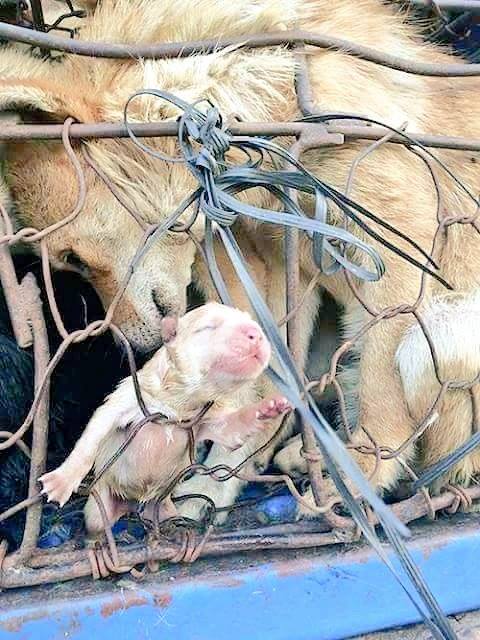
The little puppy was unlucky and was born in Yulin.
In slavery, hell, like his mother.
A cruel death awaits him, like his mother. Also on this day, also this year, the year of the dog in China.
Maybe he will not live anymore.
The World Dog Day was celebrated on October 10, 2018.
The day is a day of honor for the dog, who was always the most faithful companion of man.
But even these faithful pets are brutally destroyed if the human species decides that.
Farming livestock – cattle, sheep, goats, pigs and chickens – contributes around 6 billion tonnes of greenhouse gases (carbon dioxide, methane and nitrous oxide) to the atmosphere each year. While estimates vary, this could represent up to 18% of global emissions.
How does livestock cause pollution?
And their wind and manure emit more than one third of emissions of another, methane, which warms the world 20 times faster than carbon dioxide. Livestock also produces more than 100 other polluting gases, including more than two-thirds of the world’s emissions of ammonia, one of the main causes of acid rain.
How does livestock contribute to greenhouse gases?
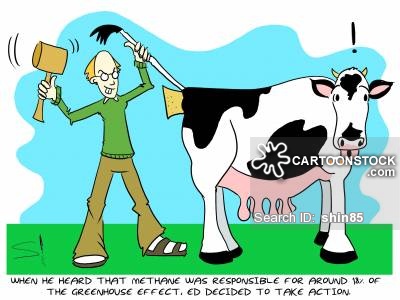
A cow does on overage release between 70 and 120 kg of Methane per year. Methane is a greenhouse gas like carbon dioxide (CO2). But the negative effect on the climate of Methane is 23 times higher than the effect of CO2. … Cattle-breeding is taking a major factor for these greenhouse gas emissions according to FAO.
How does animal manure pollute the air?
Stored for long periods of time in giant tanks or lagoons, the animal waste decomposes and pollutes the air with hundreds of different gases. … Hydrogen sulfide, methane, ammonia, and carbon dioxide are the major hazardous gases produced by decomposing manure.
How does meat production affect the environment?
Air pollution’s effect on human respiratory health.Meat production is one of the leading causes of greenhouse gas emissions and other particulate matter pollution in the atmosphere.… That prolonged exposure to airborne animal particulate, such as swine dust, induces a large influx of inflammatory cells into the airways …
Do cows pollute as much as cars?
A significant portion of these emissions come from methane, which, in terms of its contribution to global warming, is 23 times more powerful than carbon dioxide. … The world’s 1.5 billion cows and billions of other grazing animals emit dozens of polluting gases, including lots of methane.
How much pollution does factory farming produce?
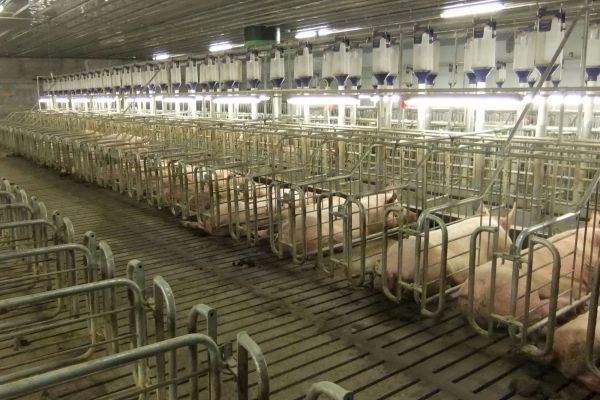
Factory farms typically concentrate tens or hundreds of thousands of animals in one area, and a large operation can produce as much excrement as a small city. According to the EPA, “A single dairy cow produces about 120 pounds of wet manure per day, which is equivalent to the waste produced by 20–40 people.”
Do cows fart?
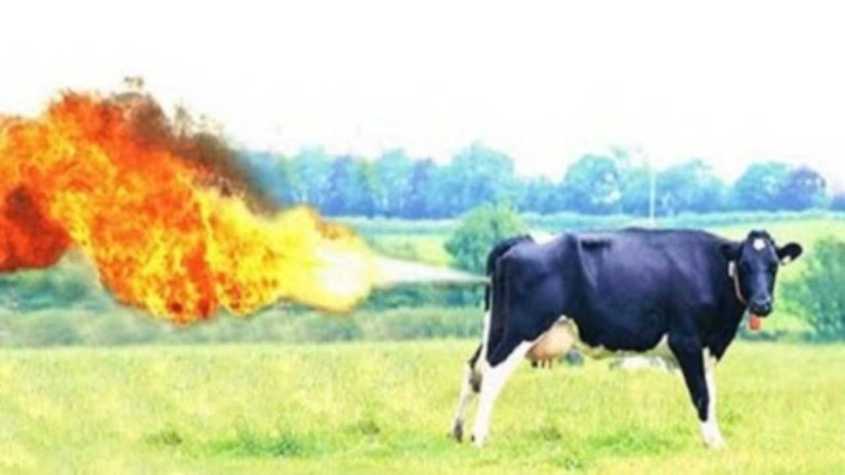
Much like humans, when they eat, gas builds up inside of their guts and has to be expelled. (See Why Beans Make You Fart) Cows fart and burp… a lot. The result is a large amount of methane being introduced into the atmosphere.
Target 2023: The European Parliament is pushing for a global ban on testing cosmetics on animals
With a non-binding resolution adopted by 620 votes in favour, 14 against and 18 abstentions, MEPs call on the European Union to launch a diplomatic campaign for a worldwide ban on testing cosmetics on animals by 2023.
Animal testing for cosmetics is already banned in the EU and now MEPs want the ban extended to the rest of the world.
On 16 November a conference will be held at the United Nations office in Geneva, organized by OIPA, LSCV (Swiss League Against Animal Testing and for animal protection) and ATRA (Swiss Association for the Abolition of Vivisection) under the topic “Animal Tests Ban for Cosmetics: Debate on a EP’s Resolution”. Many issues will be discussed during this meeting, among which the current situation for animal tests and the search for strategies to end cosmetics animal testing globally.CLICK HERE TO SIGN UP AND PARTICIPATE
The protection and welfare of animals is something that can be achieved through diplomacy too.
On 3 May, the European Parliament called for the EU to advocate a global ban “on animal testing for cosmetics and on international trade in cosmetic ingredients and products tested on animals”, and invited EU leaders to “use their diplomatic networks to build a coalition and to launch an international convention within the UN framework” in order to ban all animal testing for cosmetics before 2023.
However, this worldwide operation turns out not to be so easy: around 80% of countries worldwide still allow animal testing and the marketing of cosmetics tested on animals, including large producers such as China.
However, even Europe cannot be considered a safe place for lab rats. This is why the initiative also seeks to improve the effectiveness of the ban within the EU. In fact, MEPs note that there are loopholes in the EU system, as some cosmetic products are tested on animals outside the EU before being re-tested in the EU using alternative methods and placed on the EU market. They also point out another serious problem: most ingredients in cosmetic products are also used in many other products, such as pharmaceuticals, detergents or foods, and may therefore have been tested on animals under different laws.
The data collected since the entry into force of the EU ban in 2013 demonstrates that the ban has not prevented the EU cosmetics industry from thriving and providing around two million jobs, and being the world’s largest market in this sector. In short, MEPs say that, looking at the figures, these products can remain safe for our health while not causing falls of production and preserving the animals’ welfare.
Moreover, it has been demonstrated that Europeans care deeply about animal welfare. According to the Special Eurobarometer survey of March 2016 on Attitudes of Europeans towards animal welfare, 89% of EU citizens agree that the EU should do more to promote a greater awareness of the importance of animal welfare internationally and that it is important to establish high animal welfare standards recognized worldwide.
On 16 November 2018 the United Nations office in Geneva will host a conference organized by OIPA, LSCV and ATRA that will bring together experts in the field. This meeting aims at promoting practical strategies for a worldwide ban on animal testing in view of the future convention that the United Nations will, it is hoped, propose for subscription to non-UE states too.
For those interested in participating at the conference organized by OIPA, LSCV and ATRA “Animal Tests Ban for Cosmetics: Debate on a EP’s Resolution”, please sign up through the following link https://reg.unog.ch/event/25958/.
He had wedged himself between a motorbike and the wall of someone’s garage, hiding in excruciating pain from a wound in his head that had become a deep hole filled with maggots clear down to the bone. So lucky for him, he had chosen to hide in the home of people who cared, who had our rescue number and who called us to help. We found him panting in stress and confusion and hurried him to Animal Aid’s hospital for treatment. We had to sedate him in order to clean out the wound, but even before we started, his eyes melted us with their trust. What a sweetheart we had on our hands-a gentle older boy whose precious life it was a privilege to save. Meet David today.
Cutest little piglet learns to walk again after accident
Dragging his hind legs behind him, Tinku was hit by a car and couldn’t walk. Someone spotted him, and when our rescue team arrived, in terror and confusion he tried to hide in tall grass on the side of the road. He was easy to catch up to though, and we wrapped him in a blanket to cover his eyes to calm him down a bit. Back at the hospital his round black eyes were full of fear. Before rescue, he had never been touched by a person before, but incredibly, he took comfort in being stroked and loved. We found that he had a complete femur fracture and injury to his other hind leg as well that prevented him from being able to stand at all. With 6 weeks of bed rest including cuddles from Kamla and others every day, this determined little boy healed and learned to walk again. Meet Tinku today.
Please donate for rescue and consider adopting a meat-free diet today.
Wounded and staggering in traffic, dog rescued just before collapsing
Staggering and wobbling on a busy road a wounded dog was on the verge of collapsing right in the traffic. When we got up close we saw that he had a wound full of maggots on his neck. We hurried him back to the Animal Aid hospital and sedated him so that we could clean the wound, remove all the maggots, bandage and start him on the road to recovery. Thank goodness we arrived before he collapsed, and what a precious old boy was saved. Meet Marlo today.
Please donate. Because in an emergency, there’s no time to lose.
Celebrate the Care-givers: Radha
Anyone who notices Radha Gameti‘s show-stopping beauty is quickly distracted from it by being even more impressed by her care for animals. Radha joined Animal Aid 10 years ago and she’s been a main-stay of astounding love every day since. The mange treatment area is her current queendom, but she’s worked wonders from puppies to cattle over the years, rushing here and there to feed, hold fearful animals, organise baths, cleaning kennels, assisting vets and nurses, enticing reluctant eaters with hand-fed morsels…but most impressive is the accompanying ingredient of pure radiant love she adds to her every action. Animal Aid would not be the place of vitality and courage without Radha, whose energy and smile lift the hearts of everyone here. And many of the “everyone”s are recovering animals, who without doubt heal faster because of Radha’s shining light.
The claim: £110m a year of EU agricultural subsidies go to fund Spanish bullfighting.
Reality check verdict: The EU does not give any agricultural money specifically for bullfighting, but that doesn’t mean that no EU money reaches the industry. There are no official estimates for how much.
Uxbridge MP Boris Johnson popped up on BBC Breakfast last week to say that more money could be spent on science and the NHS, instead of Greek tobacco or bullfighting, if the UK left the EU.
“£110m a year of CAP money goes on Spanish bullfighting for heaven’s sake,” the former Mayor of London said.
A 2013 report by Green MEPs on bullfighting in Spain found that around €130m (£103m) a year from EU funds was being used to subsidise the industry. The report itself notes that “facts and figures about bullfighting are hard to obtain” and “lines of funding are difficult to track”.
Spanish farmers receive direct payments under the Common Agricultural Policy (CAP) to subsidise food production and support sustainable practices.
Payments to farmers are granted per eligible hectare of land, rather than on what and how much they produce.
The European Commission told BBC News: “To say that some Spanish farmers are receiving payments specifically for breeding fighting bulls or that the EU is somehow pro-bullfighting is disingenuous.”
But the EU has no legal power to stop Spanish farmers raising and selling bulls for bullfighting using CAP money – it’s a matter for Spanish national law.
In October 2015, MEPs voted for an amendment to the EU budget, which called for agricultural payments not to be made to land being used for the rearing of bulls for bullfighting.
While the MEPs’ amendment was included in the EU budget (you’ll have to scroll to page 635), there was a footnote to it.
The footnote says that this decision is “not executable” because it “modifies the legal provisions of the CAP”, so it sounds like although MEPs tried to prevent money being spent on bullfighting, nothing will change unless the CAP is changed first.
Note: An earlier version of this story said that the vote by MEPs would prevent CAP money getting to farmers rearing animals for bullfighting. This version has been amended to make clear that the MEPs’ vote by itself does not stop this happening.
28 October 2015
EU cuts subsidies that support Spanish bullfighting
European Parliament votes to stop EU agricultural subsidies being used to support bullfighting in Spain in latest blow to traditional activity
After confronting PETA Asia’s shattering video about animal cruelty in the Chinese badger industry, Procter & Gamble decided to stop using sheds to make shaving brushes and switch to synthetic bristles.
PETA Asia revealed that protected badgers in the wild are caught illegally using traps and other cruel methods. On farms, they are locked in small cages and finally violently killed to make their hair painting, make-up and shaving brush and sell it around the world.
PETA Asia’s investigation is the first of its kind, encompassing Chinese badger farms and livestock markets audited in 2017 and 2018.
The footage shows workers slapping screaming badgers on the head. For this they use what they have at hand, such as a chair leg. Then they cut the animals through the throat. An eyewitness from PETA Asia was able to document that a badger was still moving for a full minute after its throat was cut. Another animal was missing a foot – according to the farm owner result of a fight with another badger in a nearby cage. The badgers were locked up on the farms in tiny wire cages and vulnerable to any weather. These agonizing conditions often resulted in injuries and severe psychological disorders.
Jason Baker, Vice President of PETA Asia, says, “They hit objects on the mild-mannered badgers, cut them open, and bleed them out – just for make-up and shaving brushes made of badger hair.” “PETA urges companies and all customers not to buy these bloodstained brushes and instead use animal-free brushes that no one has to suffer and die for.”
What we can do
There is absolutely no reason to use animal hair brushes. Especially since there are already so many high-quality synthetic brushes. For the benefit of all the badgers that suffer on these farms: Please only buy synthetic, shaving and shaving brushes. For hairbrushes, we also recommend natural and herbal materials such as bamboo or sisal.
And I can only say one thing: I am grateful to PETA and every organization that informs us and prevents us from using products that come from animals, because we do not know it, and often do not suspect it. It’s a lot of everyday products that are associated with animal suffering. We only learn that when people do this useful research.










 All pictures – Peta.


