Category: General News

EU: Barnier calls for a EU-UK Veterinary Area to LOWER checks on live animals !!


EU flag with hole


15th October 2018

Barnier calls for a EU-UK Veterinary Area to lower checks on live animals

Barnier-614x346

Brexit is coming and, inevitably, so is the deadline for the UK and the EU-27 to conclude the withdrawal agreement. On 17 October, the EU heads of State and Governments will meet in a European Council solely aimed at dealing with Brexit. Only after this meeting will it be decided whether conditions are met to plan an extra summit in November, to finalise the talks. Over the past months, the likeliness of a disorderly Brexit, in the absence of a deal, has strongly increased. In most post-Brexit scenarios, measures will have to be adopted to avoid a huge number of animals suffering due to increased bottlenecks at the borders. Eurogroup for Animals thus welcomes that EU Chief negotiator Michel Barnier has taken on board its proposal to work towards an EU-UK Common Veterinary Area.

The impact of Brexit, especially a disorderly one, will be felt at the borders. Thousands of live animals cross the UK-EU27 borders every day, and not only on the island of Ireland. In common with any type of products, live animals have to be checked at the border, which can lead to huge delays and to animals having to wait, often in poor conditions, for days. To better understand what is at stake, one can look at the border between Bulgaria and Turkey, where animals have to undergo all necessary checks and wait an average of six hours, most often without sufficient care and in horrendous conditions. The number of animals that could be crossing a UK-EU border is far higher and, at the moment, the existing infrastructure is not adequate to ensure the welfare of animals is respected during crossings.

Since its creation, the “Brexit and Animals” taskforce [1] has been vocal about the risks such “no deal” Brexit would entail for animals (see also this article). It is in this context that Eurogroup for Animals had informally raised the idea that the EU and the UK should consider a common veterinary area, on the model of what exists between Switzerland and the EU. The EU-Switzerland “single veterinary agreement” implies the equivalence, and thus a complete alignment, between the EU and Swiss rules and creates a joint mechanism to discuss arising issues. Veterinary checks at the border can thus be reduced and even eliminated.

It is thus a clear progress to hear Michel Barnier, the EU Chief negotiator for Brexit, mentioning the possibility of a future EU-UK veterinary area in a public speech he gave on 10 October 2018, explicitly referring to the aim of lowering veterinary checks between both partners.

Next week will be crucial for Brussels and London. Whatever the result of the most recent discussions, especially around the Irish border, it will be important to continue raising animal-related concern throughout the entire process, to ensure animal welfare standards are not – even de facto – lowered as a result.

NOTES:

[1] The Brexit & Animals Taskforce comprises 11 of the UK’s leading animal welfare organisations, working together to ensure that animal welfare is protected and, where possible, advanced as the UK withdraws from the European Union.
 

https://www.eurogroupforanimals.org/barnier-calls-for-a-eu-uk-veterinary-area-to-lower-checks-on-live-animals 

EU crisis 1

China: In Direct Conflict With All International Regulations; China Is Now Burying Pigs ALIVE As A Result of African SF. See Video here As Proof.

China

WAV Comment

We feel that nothing will really be learned from this.  China and the world will sort this out by killing tens / hundreds of thousands of pigs; without asking themselves if their farming practices and transport regulations (or lack of) have anything to do with it.

From this negative attitude we can only assume that very little will be learned.  Huge and intensive factory farms will continue; and when there is an outbreak of disease or virus; the ‘simple’ solution to slaughter tens of thousands of animals is adopted.  Once this is done; things will resort to ‘normal’ cruelty and the mass production of pork; without giving a thought for the welfare of sentient beings, can begin again.

It is a very, very sad situation, when living animals become literally ‘products’ to be trashed whenever the mighty human wishes.  Shame on them all – pity that they claim to be so intelligent; where as the reality says they have brains  full of pig dung.


http://www.oie.int/wahis_2/public/wahid.php/Reviewreport/Review?page_refer=MapFullEventReport&reportid=28249&newlang=en 


China reports new African swine fever outbreak in Liaoning province

https://uk.reuters.com/article/uk-china-swinefever/china-reports-new-african-swine-fever-outbreak-in-liaoning-province-idUKKCN1MP03I

BEIJING (Reuters) – China’s agriculture ministry said on Monday that 14 pigs have died in a fresh outbreak of African swine fever in the province of Liaoning.

The outbreak in the city of Anshan is the fifth reported in the northeastern province.

China has so far reported some 30 outbreaks of the pig disease, which does not affect humans.

China’s Dabeinong reports suspected African swine fever case on related farm: Report
Read more at https://www.channelnewsasia.com/news/asia/china-s-dabeinong-reports-suspected-african-swine-fever-case-on-10831806


https://www.channelnewsasia.com/news/asia/china-s-dabeinong-reports-suspected-african-swine-fever-case-on-10831806

One of China’s top animal feed producers said on Tuesday an affiliated firm has culled nearly 20,000 pigs due to a suspected case of African swine fever, according to a report by the China Securities Journal.


ASF China: Commercial farm hit; virus reaches Tianjin

African Swine Fever (ASF) appears to have gotten out of control in China. The authorities have reported the first large commercial farm to have been hit, the Tianjin municipality is the 9th province to confirm an outbreak – and it looks like there is more going than is being confirmed through official channels.

The commercial farm that was hit had 19,938 pigs on-site, according to the Chinese authorities.

https://www.pigprogress.net/Health/Articles/2018/10/ASF-China-Commercial-farm-hit-virus-reaches-Tianjin-346354E/


With regard African Swine Fever, China is now burying pigs alive to combat the issue.


12 September 2018

We have received disturbing footage showing pigs being buried alive in China. Apparently, this is a response to a recent outbreak of African Swine Fever.

Please note that this is distressing footage:

watch the video

The footage


shows pigs being dropped from a lorry into a deep pit and then, while still alive, being covered by earth.

A matter of urgency

We have written to the Chinese Ambassador, urging the authorities in Beijing to halt this cruel killing method as a matter of urgency.

The burying alive of animals is clearly horrific. It is in breach of the international OIE (World Organisation for Animal Health) standards on the Killing of Animals for Disease Control Purposes.

OIE standard

There is a long history in several countries of the use of inhumane methods to kill animals when authorities want to halt the spread of a disease. In 2013, tens of thousands of newly hatched poultry were killed by being immersed in boiling water, in China’s Guangdong province during the outbreak of bird flu. Also in 2013, footage showed pigs apparently being burned alive in Russia to control the spread of African Swine Fever.

When animals are to be killed to halt the spread of disease, it is vital that they are killed in accordance with the OIE standards. Nearly all the world’s countries are members of the OIE. We urge them to respect and comply with the OIE standards.

We stand ready to advise any country faced with needing to kill animals in the event of a disease outbreak as to the most humane methods available.


https://www.ciwf.org.uk/our-campaigns/pigs/


40 Pigs Thrown Into the Sea in Animal Transport Horror.

WAV Comment

Bulgaria IS a member state of the European Union.  As such, it is required to adhere to Regulation 1/2005 for the welfare of animals when any livestock is being transported.

This expose shows again that the EU has no control over the transport of live animals; and what’s more, it does not care. Flashy new videos and driver guides etc; which amount to nothing – no changes.  The EU Commission passes the buck of any responsibility back to the member state involved.    The EU just wipe their hands of the situation and turn the other way.   I have experienced this for over 25 years investigating live animal transport within Europe.  Nothing changes despite what the EU thinks. – Mark

Eyewitness: 40 Pigs Thrown Into the Sea in Animal Transport Horror


Dramatic video footage of live-animal transport reveals that pigs suffered and died in the summer heat during a four-day ferry journey.

PETA Germany received the footage, which was shot by an eyewitness on the vessel between 24 and 28 July 2018, showing lorries loaded with pigs being transported by ferry from Bulgaria to Georgia.

So far, it’s not known where the pigs were farmed.

According to the eyewitness, the animals were given no water or food while on board and, because the lorries were in the blazing sun, were subjected to extreme temperatures. Weak pigs were left to suffer, receiving no veterinary care. The eyewitness saw 40 ill or dead pigs being taken from the lorries and thrown into the sea.

PETA Germany is currently unable to report the companies responsible for these animals’ suffering to authorities because it hasn’t received enough information to do so. But the group has written to the Bulgarian and Georgian authorities to inform them of the incident and to call for an investigation.


What You Can Do

Every week, more than a billion live animals worldwide are transported over long distances, often through blazing heat or freezing cold and without food, water, or veterinary care – as if they were nothing more than freight. Their gruelling journeys typically end at an abattoir, where they face a terrifying death. Others end up in pet shop displays or laboratory cages.

The best way to help animals is never to buy them or their body parts for any reason, but we can also help reduce their suffering by taking action now to call for an end to cruel live-animal transport.

PETA Germany is campaigning against long-distance transport to non-EU countries (page in German). And closer to home, PETA UK is asking Ireland to end the live export of cows.


Last year, an estimated 30,000 cows were forced to make long, harrowing journeys from Ireland to Turkey, sometimes in temperatures of up to 41.5 degrees. Exhaustion, dehydration, and death are common during these trips. Ireland plans to export 50,000 cows this year. Contact the country’s Minister for Agriculture, Food and the Marine to let him know that live export is incompatible with animal welfare and must come to an end.


https://www.peta.org.uk/blog/eyewitness-40-pigs-thrown-into-the-sea-in-animal-transport-horror/


Germany : (Reuters) -Germany gives free rein to boar hunters to contain swine fever risk. And What About German Livestock Transporters Biosecurity ? – Do They Have Any ?

deutsche flagge

https://www.reuters.com/article/us-germany-swineflu/germany-gives-free-rein-to-boar-hunters-to-contain-swine-fever-risk-idUSKCN1G51CI

 Jäger mit ermordeten Wildschweine(4)

Germany gives free rein to boar hunters to contain swine fever risk

BERLIN (Reuters) – Germany issued a decree on Wednesday to allow hunters to shoot wild boar year-round to stop the animals, which can carry African swine fever, from passing the deadly infection on to farm pigs.

While no case has yet been detected in Germany’s wild boar population, the spread of the disease in eastern Europe is causing immense concern in Germany, whose pork industry has seen huge growth in exports to countries including China.

A government spokesman said the cabinet’s decision was taken to bring about a “significant reduction” in the wild boar population and contain the risk of farm pigs being infected.

The cabinet also agreed on protection measures which would kick in if a case of swine fever was reported in Germany, such as the creation of security zones around affected areas and mandatory disinfection of animal transportation vehicles.


WAV Comment –

See paras 258 to 274 of this following link for further detail:

http://animaltransportguides.eu/wp-content/uploads/2017/03/Animal-Transport-Guides-Cattle-2017-1.pdf


Disinfection of transport vehicles should always be undertaken after every journey according to EU Reg 1/2005 – otherwise disease could be spread from (possibly diseased) animals that have left the truck, to new animals being loaded onto it.  Its called ‘Biosecurity’ – although in reality, there is little security of disease control.    This is not something ‘new’ from a government; it should be a routine standard for livestock hauliers !

Are we saying that normally German hauliers do not disinfect according to 1/2005 normally ? – seems that way – so according to 1/2005, they should be prosecuted as they are not enforcing EU regulations ! – Does the German government care ? – of course not.

So, blame the wild boar and hunt them all instead.  Much easier to kill rather than disinfecting livestock transporters which haul (infected ?) livestock all over the EU.  Livestock biosecurity and disease control has always been a big issue of mine and I have raised the issue many times with the EU – response – the EU does not give a toss; as with anything associated with live animal transport – this is why EU live animal transport is in such a mess.

– Mark.


The virus, which causes African swine fever, is harmless to humans and other animals. But for wild boar and farm pigs, the disease is deadly in almost all cases within 10 days. There is no vaccine against African swine fever.

 FF9

Germany, a major European Union pig producer, has watched with growing concern as the highly contagious disease has spread westward across Europe. A reported case could trigger mass culls.

Animal protection group PETA criticized the cabinet’s decision, saying the government was subordinating animal welfare to economic interests.

 “The de facto cancelling of the off-season will cause great animal suffering, because the young are dependent on their mother during the rearing phase,” PETA said in a statement. “Countless piglets will starve to death.”

Infected wild boars have been found in the Czech Republic and Poland, while backyard pigs with the disease were found in Romania in January.

German farmers have called for 70 percent of the country’s relatively large wild boar population to be culled.


WAV – why don’t they (German farmers) call for tightening of biosecurity rules in transporters hauling live animals (ie pigs) all over the country and to other parts of Europe.  A kind of link with Bovine TB in the UK – probably not badgers spreading, but the fact that TB infected livestock is transported all over the UK in trucks that may not be disinfected after each consignment.  Again; blame and kill Badgers – it is much easier than enforcing rules for hauliers ! – Mark.

German Agriculture Minister Christian Schmidt has rejected a plea from the farming association to refrain from imposing an export ban if African swine fever was identified in wild boars, saying Germany was not in a position to bypass EU rules.

France: British mountain biker ‘shot dead by hunter’ in French Alps.

FRAN0001


https://www.bbc.co.uk/news/uk-45855897

British mountain biker ‘shot dead by hunter‘ in French Alps


A British mountain biker has been shot by a hunter in the French Alps.

The man, 34, was killed by a stray bullet while riding in woodland near Montriond, close to the Swiss border.

He was biking on a popular mountain track when he was shot by a 22-year-old who was taken to hospital in severe shock.

The victim is believed to be the owner of a local restaurant in the small town of Les Gets – the Foreign Office says it is providing support to his family.

Witnesses said that he was cycling in thick woods but was wearing bright blue clothing that should have made him easily identifiable.

In the past three years, more than 20 people have died in hunting accidents in France.

On a local Facebook group people expressed horror and discussed how to prevent further incidents.

“This has to be stopped. Ban the chasse immediately,” one said, using the French term for hunting. “There are no excuses. People’s lives are shattered.”

But others said hunting is a “lifelong tradition” even if some people think it is “outdated and cruel” and called for safety measures such as restricting hunting to certain days.

An inquiry has been launched into the incident of “aggravated manslaughter,” French prosecutors said.

Intensive Farming Pork Karma !

flying pig


Please read our recent post re swine fever in Germany:

https://worldanimalsvoice.com/2018/10/13/legal-mass-murder-of-wild-boars-murderers-cheer/

So German hunters have to kill 90,000 wild boar to protect the German pig industry from being hit.  Any excuse for a good kill one could say !

FF7


https://www.politico.eu/article/spread-of-swine-fever-raises-alarm-in-europe/


Spread of swine fever raises alarm in Europe

Germany and others are going to extraordinary measures to protect their prized pork.

By Simon Marks

9/3/18, 6:45 PM CET

Updated 9/11/18, 5:38 AM CET

As African swine fever spreads, European countries — especially Germany — are afraid of the damage that could be caused to their farming sectors.

The deadly disease — which causes internal bleeding and hemorrhages in pigs — is moving quickly through Eastern Europe, typically through wild boar, which travel long distances and can infect domestic pigs being bred on commercial farms.

In response, countries like Germany, the EU’s largest pork producer, are stepping up efforts to protect their pig populations, some going so far as to consider building border walls to keep boars out.

Over the summer, Romania recorded nearly 800 outbreaks of swine fever, including one last week that resulted in the culling of 140,000 animals. The epidemic has rocked the government, with Agriculture Minister Petre Daea holding talks with Prime Minister Viorica Dăncilă on Monday about how to contain the escalating situation.

Liviu Dragnea, the leader of Romania’s ruling Social Democratic Party, urged the government over the weekend to step up its efforts to curb the spread of the disease, and the country’s former Prime Minister Dacian Cioloş gave a strongly worded press conference on Sunday where he accused the government of aggravating the spread of the disease through its inaction.

Adding to the sense of urgency on the matter, Bulgaria on Friday announced its first African swine fever outbreak, at a farm located close to the border with Romania.

So far outbreaks of African swine fever have been confirmed in nine EU countries, affecting Estonia, Poland, Latvia, Lithuania and Romania the worst. Outbreaks have also been confirmed in Russia, Ukraine and Moldova. China, the world’s biggest pig producer, has also recently been hit by the disease.

Germany, which is home to massive pig farms in the east of the country, is becoming increasingly concerned about how countries in the east are dealing with the outbreak. The confirmation of just one case of the disease in Germany could put at risk the roughly 250,000 tons of pork meat that’s exported every year to non-EU countries, according to Verena Schütz, head of the meat livestock sector for the German Raiffeisen Federation, which represents agricultural cooperatives.

The German agriculture ministry has gone to extraordinary measures to keep the disease at bay by collaborating with officials in the Czech Republic, Poland and farther afield. As part of these efforts, Germany has dispatched experts abroad, carried out simulation exercises on containment and given lectures to other governments, advising them on how best to stop the disease from spreading.

FF8

https://ec.europa.eu/food/animals/animal-diseases/control-measures/asf_en

https://www.politico.eu/article/belgium-investigating-suspected-case-of-african-swine-fever/

https://www.express.co.uk/news/world/1017519/african-swine-fever-belgium-eu-pork-exports


https://edition.cnn.com/2018/10/02/health/african-swine-fever-europe-china-spread-intl/index.html

Humans are suspected to have caused the recent spread to Belgium, where eight cases were confirmed, as of September 25, according to the World Organisation for Animal Health.

FF4

https://www.agriland.ie/farming-news/african-swine-fever-outbreak-kills-72-pigs-in-china-report/

A total of 72 pigs have purportedly died in another outbreak of African swine fever in China, according to reports.

The outbreak is believed to have occurred in the country’s northeastern province of Liaoning – which Reuters says is the fourth reported incident this week in the province.


https://www.reuters.com/article/us-china-swinefever/china-agriculture-ministry-says-72-pigs-dead-in-new-african-swine-fever-outbreak-idUSKCN1MM117

BEIJING (Reuters) – China’s agriculture ministry said on Friday that 72 pigs had died in another outbreak of African swine fever in the country’s northeastern province of Liaoning, the fourth reported in the province this week.

The highly contagious fever was detected on a farm in the city of Anshan with 120 pigs, of which 88 were infected, according to a statement from the Ministry of Agriculture and Rural Affairs.

FF2

https://www.express.co.uk/news/world/1022009/african-swine-fever-outbreak-china-mongolia

https://www.scmp.com/news/china/society/article/2165501/could-humble-cabbage-help-stop-march-african-swine-fever-china

Common plants such as cabbage, cauliflower and rapeseed could hold the key to stopping the spread of the deadly African swine fever virus threatening pork production around the world, according to research by a major Chinese government laboratory.

China has about 700 million pigs, half the world’s swine population, and reported its first outbreak in Shenyang, Liaoning province, last month, prompting authorities to order tens of thousands of pigs to be culled.

The authorities have tried to contain the virus by banning the transport of live hogs and pig products from 16 provinces and regions, shutting live markets and prohibiting the use of feed derived from pig blood.

But China was still struggling to stop the spread, state news agency Xinhua reported on Friday.

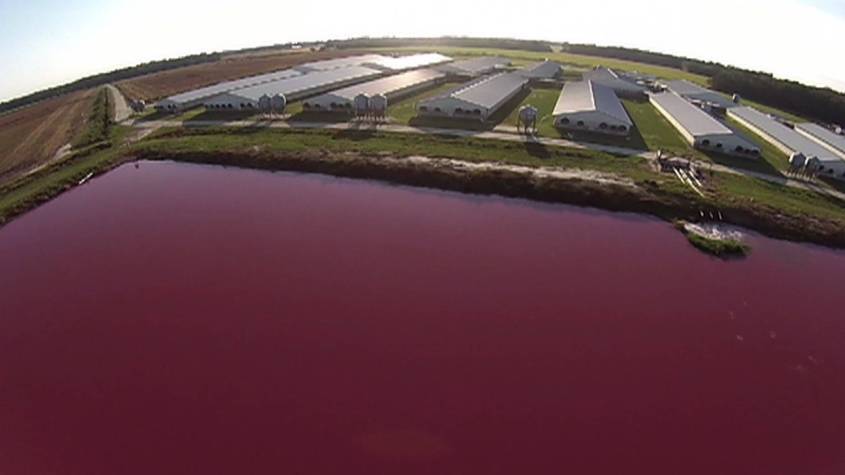
Below – Chinese factory farm pollution.

china factory farm pollution 1

Argentina: Please Sign The Petition Calling For Action Against Animal Abuse.

Argentina


Create a prosecutor’s office against animal abuse

https://www.sosvox.org/en/petition/create-a-prosecutors-office-against-animal-abuse.html?utm_source=highlight&utm_medium=title&utm_campaign=campaign-p131018&uid=fd376f375efd72ffbb9b53f8573be892

Petition created on Oct 12, 2018

I have friends who live in Salta and they told me that they are trying to create a Prosecutor’s Office of Crimes against Animal Abuse. My request is so that this is not only something provincial but it is more national, covering the whole country. Cases of animal abuse go unpunished or the guilty parties receive only a fine and hours of community work, but none are imprisoned.

But the biggest problem I think is when people make complaints about cases of animal abuse, because the police often does not serve the neighbors and they do not receive the complaints because they say they do not have time, or they put any excuse, happened to me in the commissary of my neighborhood when I denounced a neighbor who hit his dog. This makes many people desist from making the complaint and the cases go unpunished. Another serious problem is that many people do not know where to make a report or how to do it.

With a Prosecutor’s Office of Crimes against Animal Abuse these problems would change and the reception of complaints and the investigation of each case would be carried out. I would like you to be able to work together with animal associations.

Thank you.

Created by Antonio Arias
Ingeniero Maschwitz, Argentina


https://www.sosvox.org/en/petition/create-a-prosecutors-office-against-animal-abuse.html?utm_source=highlight&utm_medium=title&utm_campaign=campaign-p131018&uid=fd376f375efd72ffbb9b53f8573be892

Victory! Diane Von Furstenberg is Going Fur-Free.

Victory! Diane Von Furstenberg is Going Fur-Free

Posted by Kenneth C. Wenzer | October 10, 2018

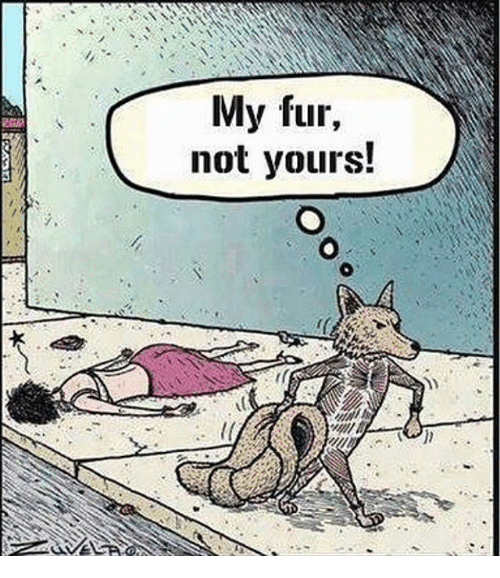
my fur

Diane von Furstenburg has become the latest luxury fashion house to join the international anti-fur crusade, announcing they will discontinue all use of fur in their clothing lines.

“It’s time for us to make this change and accept responsibility,” states Chief Executive Sandra Campos, “to ensure that we don’t promote killing animals for the sake of fashion. We are committed to supporting the shift to a more ethical and sustainable fashion industry.”

Founder Diane von Furstenburg herself exclaims, “I am so excited that technology has provided us a way to feel as glamorous with faux fur.”

Congratulations also go to the Humane Society of the United States and the PETA for partnering with this establishment.

With the rise of human consciousness in our times, the animal rights movement is changing minds about the morality of once-accepted treatment of animals. One realization is the inherent cruelty of trapping and raising animals for their fur, so amply portrayed in many petitions and investigations. This compassion has also been embraced by an increasing number of companies in the garment industry.

One by one, fashion designers and retailers have become aware of the senseless suffering that is the bloody heart of producing fur. But they have also realized that the divesting of fur could help their profitability.

Fur is a barbaric relic of a bygone age. The cruel trapping of animals was part of the commercial impetus, one of the main factors in the development of human history that has been with us for millennia. Trade has facilitated knowledge, basic needs, riches, and wars. Some historians have indicated that the search for fur was a major factor in the spread of civilizations such as Russia, while others have noted that it has also generated friction between countries, most conspicuously with Canada. Massive fortunes, such as that of John Jacob Astor, made for a legend. Before the advances in synthetic clothing production in the Industrial Revolution, the search for garments and the avarice for luxury clothing prompted this international fur and pelt frenzy, which entailed the slaughter of countless animals, such as the beautiful beaver above.

Times are changing for the better, and we hope to soon see animal fur removed from the fashion world completely.