Category: General News

USA: United Becomes the Latest US Airline to Ban Plastic Straws.

USA

United Becomes the Latest US Airline to Ban Plastic Straws

Starting in November, passengers on each of United’s 4,600 daily flights will be using bamboo stirrers — not plastic ones.

United Airlines’ plan to ditch wasteful plastic straws follows American Airlines and Alaska Airlines, who each made similar moves earlier this year.

In 2015, it was reported that 8 million tons of plastic is dumped into oceans each year. The same report suggested that number would increase by a factor of ten in the next decade without significant change. This plastic is literally killing turtles, fish, and birds.

United’s move adds to the growing list of companies, cities, and states that are taking on the scourge of single-use plastics. Bamboo and wood disposable utensils have far  less environmental impact than plastic versions. Environmental activists have been calling attention to this issue for years, but only recently has the movement against a throwaway culture really taken hold.

United Airlines’ shift to bamboo stirrers is a step in the right direction, but there is still room for much improvement. It is essential that activists and concerned citizens do not rest on their laurels, and continue to fight for a society that eschews the convenience of disposable one-time use products and plastic wrapped foods and instead choose healthier, more environmentally friendly options.

England: London’s Fashion Week Goes Completely Fur Free For The First Time.

England


London’s Fashion Week is Finally Going Fur-Free

Posted by Kenneth C. Wenzer | September 13, 2018

 fur farm

For the first time in history, London Fashion Week will have zero fur.

This magnificent gesture by the British Fashion Council represents a milestone in the garment industry and could influence countless consumers to ditch fur themselves. With the results of a survey in hand, this organization announced that there is “a cultural change based on ideals and choice made by designer businesses, international brands as well as consumer sentiment – but also encouraged by the stance of multi-brand stores who are moving away from selling fur.”

Over the past few years, we have witnessed an increasing tempo of humanitarian concerns in the garment industry, many of whose professionals have graciously joined in the fur fight. Designers are coming to the realization that their lines of apparel can be tailored without cruelty. One by one, leading fashion houses have dropped fur without a sacrifice to the most discriminating tastes of their clients.

For millennia, seals, beavers, foxes and other creatures were relentlessly hunted with agonizing trapping methods. More recently, these fur-bearing animals have been subjected to slaughter farms and confined in substandard living conditions. These establishments, located in numerous countries around the world, engage in the most barbaric methods to feed an archaic lust for pelts. One pro-fur group even claims: “The lure of fine fur has never faltered. We all share in this rich and varied history and the traditions that were the cornerstone of this great nation from it’s [sic] beginning.”

Bob Dylan wrote in 1964 that “the times they are a changin’.” And so they are, most especially for the fur industry. A global distaste for the wearing of fur is constantly gaining momentum. With the advent of the internet and the relentless campaign by advocates against the cruelty towards animals, we may soon realize a fur-free future.

fur_is_red_1_610


fur vegan art fox


Victory! Japan’s Proposal to Bring Back Commercial Whaling REJECTED.

Japan


Victory! Japan’s Proposal to Bring Back Commercial Whaling REJECTED

Posted by Carly Day | September 16, 2018

The International Whaling Commission (IWC) has rejected a proposal from several countries — led by Japan — calling for the ban on commercial whale hunting to be lifted.

The pro-whaling nations argue that the ban — which has been in place since 1986 — doesn’t take into consideration the species of whales that have healthy populations and complain that the IWC is too focused on conservation. Their proposal, entitled “The Way Forward,” suggested creating a “sustainable whaling” program.

Fortunately, the motion was denied by a vote of 41 to 27. Iceland and Norway were two of the countries who voted in favor — not surprisingly, as they are the only countries that continue to hunt whales commercially in objection to the moratorium — but the vote was also supported by Cambodia, Kenya, Cambodia, Morocco, and several other nations.

“This decision sends a clear message to governments around the world that the exploitation of animals will no longer be tolerated, and animals must be protected at the highest level,” said Kate Nustedt, global director of wildlife at World Animal Protection. “All eyes are now on Japan to respect this decision. Neither commercial nor scientific whaling have any place in the 21st century, and we urge all governments to increase pressure on Japan to end its whaling once and for all.”

Japan’s proposal to the IWC included a request for permission to hunt minke whales — one of the few species of whales not currently in danger of extinction. The nation claims that minke whaling is part of their economy and history. Although Japan technically — and reluctantly — adheres to the moratorium on commercial whaling of minke, they do still catch and kill hundreds of these whales every year, claiming that the whales are killed for research purposes. Japan’s quota of minke is 333 per year, while Iceland and Norway are estimated to slaughter around 600 each year.

However, the IWC has now agreed to stop supporting Japan’s excuse of hunting whales for “scientific research,” putting the pro-whaling nation further at odds with the commission.

Following the rejection of the proposal, Japan has hinted that it may withdraw from the IWC.

“If scientific evidence and diversity is not respected, if commercial whaling is completely denied … Japan will be pressed to undertake a fundamental reassessment of its position as a member of the IWC,” said Japan’s vice-minister for fisheries, Masaaki Taniai.

But for now, animal activists are breathing sighs of relief after the IWC decision to maintain the whaling ban.

“Japan’s proposal to resume commercial whaling would be like jumping from a plane without a parachute,” said Claire Bass, director of Humane Society International. “Whales face so many threats in our increasingly degraded oceans; it’s critical that the IWC focuses its time and resources on tackling the many problems that we create for whales, such as entanglements in fishing gear and pollution.”

How do you relocate 100 elephants?


simbabwe


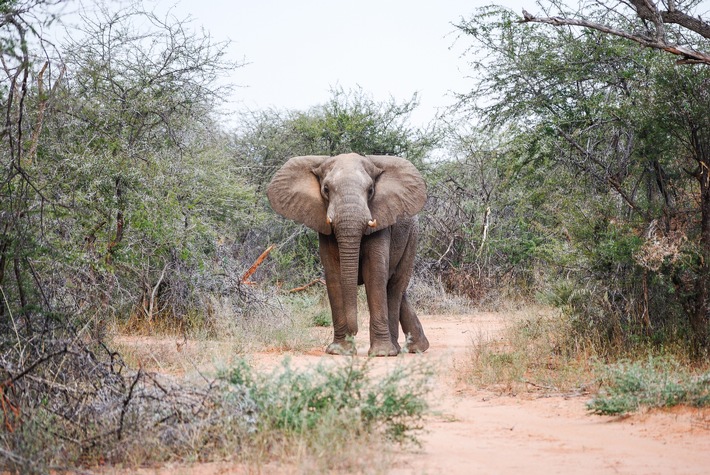
With the kind permission and support of the Government of Zimbabwe, one of the largest wildlife resettlements in the country’s history will take place. The relocation of the 100 elephants is being implemented under the leadership of the Zimbabwean Parks & Wildlife Management Authority as a partner of the Sango Wildlife Conservancy and the Hemmersbach Rhino Force.

100 wilde Elefanten werden in Simbabwe umgesiedeltobs/Sango Wildlife Conservancy/www.sango-wildlife.com”

Over two decades of conservation, supported by the sustainable use of a wide variety of wild animal populations and intensive protection against poachers, impressively demonstrate how successful nature conservation can be in Zimbabwe. “We just have too many elephants on Sango,” says Wilfried Pabst, owner of the 600-square-kilometer Sango Wildlife Conservancy. “Thanks to the support of the government of Zimbabwe and Hemmersbach Rhino Force, we can save 100 elephants from clubbing,” Pabst continued. The gray giants are relocated as part of the “ReWild Initiative” of the Sango Wildlife Conservancy in the more than 700 km away Rifa Safari Area. The entire move is funded by Hemmersbach Rhino Force.

Continue reading “How do you relocate 100 elephants?” →

France: The animal sanctuary “Papillon”!

Frankreich


Today I make an exception, and talk about a personal experience with an animal  sanctuary  in France, which I visited a few days ago.

A friend activist asked me if I would like to go to the “open-door day” of the sanctuary farm “Papillon”, in France.

He was often there, but I did not know the farm.

My first thought was: Sanctuary for animals … well! a lot of animal suffering. But I wanted to go.
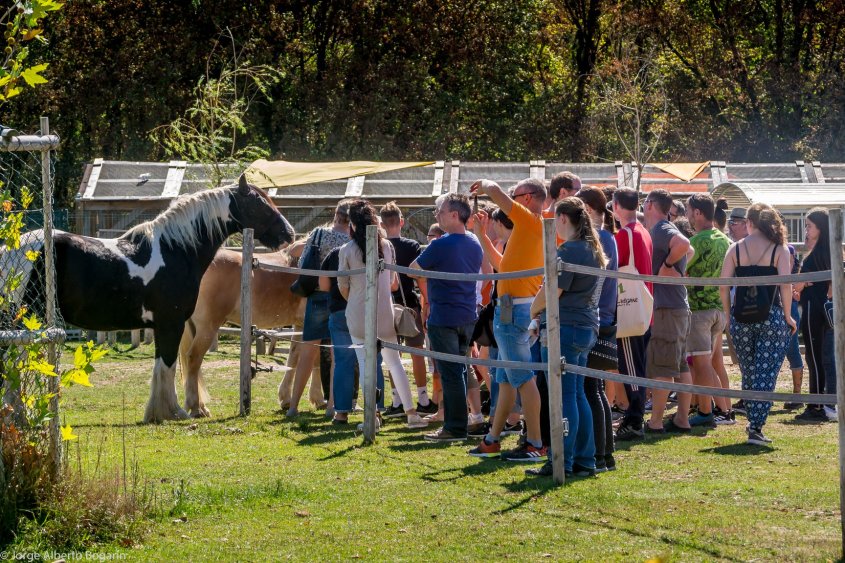
When I arrived at noon, the yard was already full.
Papillon Pferde_o

A happy crowd of people of all ages enjoyed the delicious vegan buffets under the mild sun, and used every opportunity to exchange love greetings with the farm animals.
It was a very open and familiar atmosphere.
The entire team of “Papilion”, led from the Swiss couple Olivier and Rebecca Bieli, is doing a great job!
Together with their shelter in Romania and the Swiss Dog and Cat Rescue (SHKR)  it has become a life’s work.

The animals have space, loving care, and medical control that goes above average.
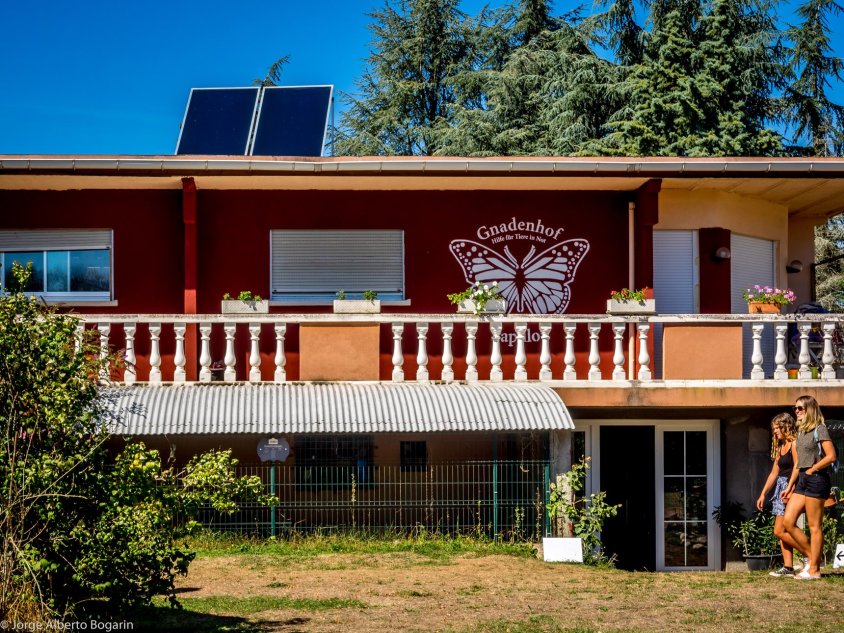
The “Papillon” is in France, in Alsace (Munchhouse) on the borders with Switzerland and despite its young age has made a name and is already quite well known, even up to Germany.
 

Papillon Gebäudeo

 It provides lifelong protection to animals that have already bad experiences with us, and also serves to show the visitors the importance of the work for animal welfare.

They have a fantastic nature environment in which one might self want to live …
I spent three full hours in front of the meadow with the horses, and did not want to leave. It was a pleasure for my eyes to experience satisfied, well-groomed and humane animals (and animal-friendly people).
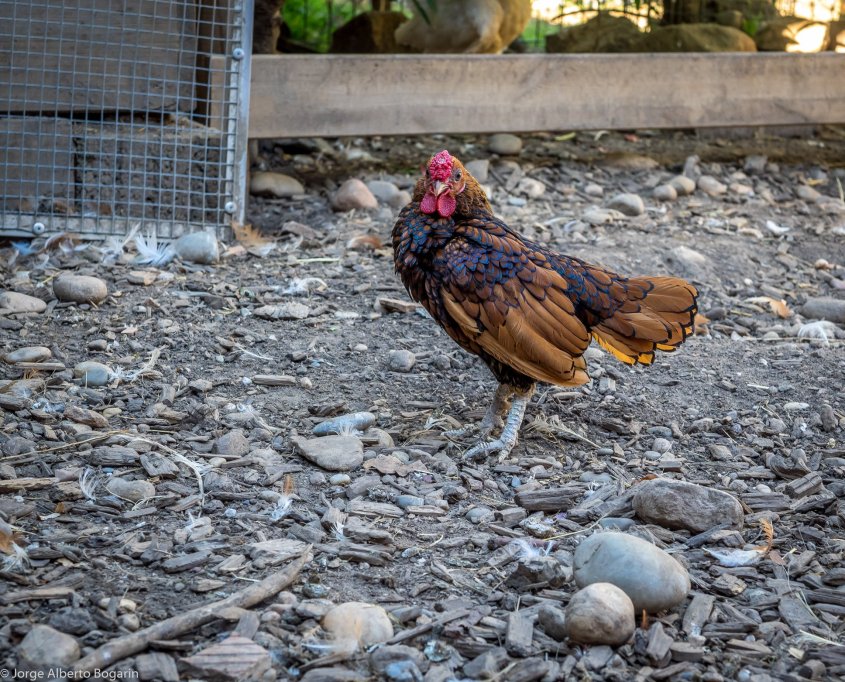
I found out from the guide that there are animals that are unique specimens because they were bred so extra, and therefore were condemned to suffering. The smallest cock in the world, which should look cute and doll-like, so that it can be sold. He lives there now.
Papillon Hahn o
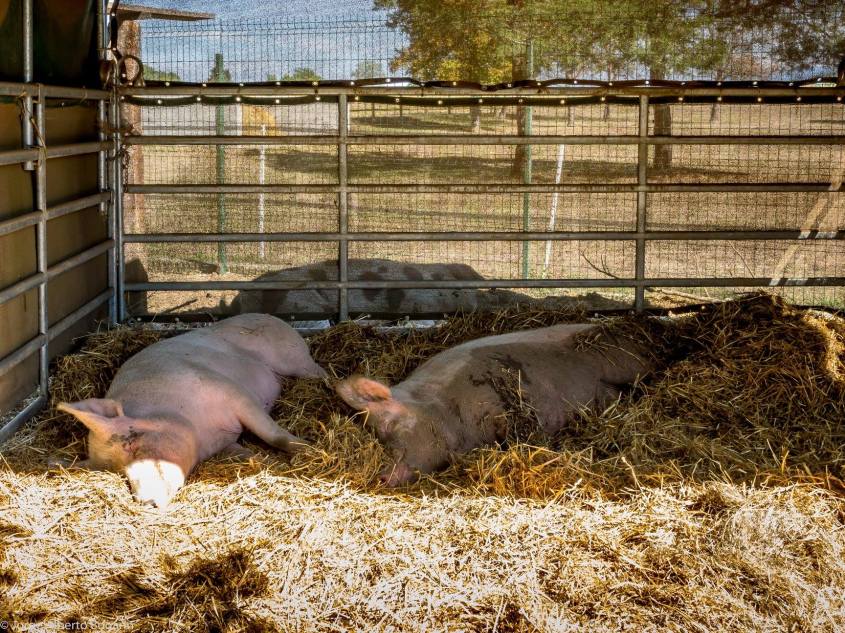
The pigs, which instead of 18 ribs (which is normal) were only bred at 16, so they are easier to sell as small objects.
The Canadian Schwann, who was cleaned up sick and injured and now can not fly, but lives happily with his conspecifics.
And there are also rabbits from fattening, and pigeons and sheep that were planned for slaughter ….
Papillon-Schlafende Schweine_o

The little dog with the two legs and the rollator, from Romania, who was paralyzed after an accident, might not live without the sanctuary farm.
And although the operators have their profession, always find the time to provide the farm animals lovingly and conscientiously. Each animal is called by name, and Olivier tells the story of each one.

Robbie01_kleinThose who live in this area, Switzerland or France but also southern Germany, would absolutely have to visit this farm; they will spend a nice day with happy and non-suffering animals.
And so they can determine for themselves how much commitment, work and love is invested for the animals, so that they should really have a peaceful and dignified retirement.

But also what educational work the operators make at the visitor tours!!

My best regards to all, Venus

http://www.gnadenhofpapillon.org/


Ferdinand escapes the schafts massacre!


Türkei


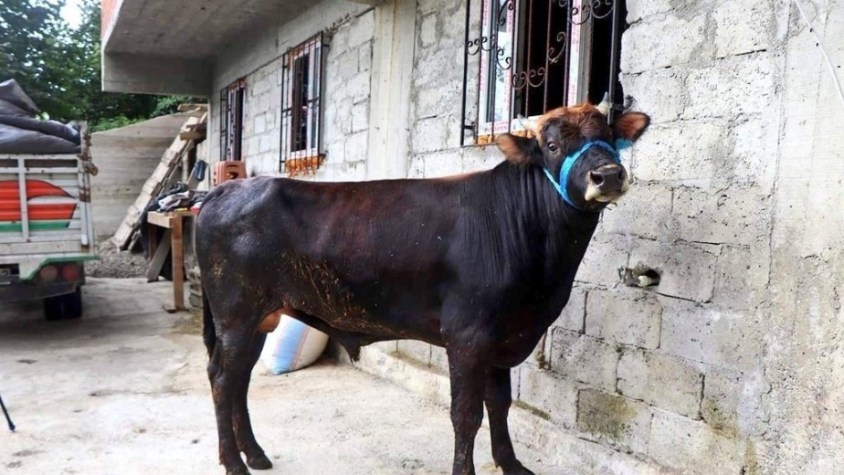
The bull “Ferdinand” saves himself with a jump into the Black Sea before the slaughter – and swam 25 kilometers. Now he is a star and can live on!

Stier FerdinandDoes not look like a good swimmer, but is one: the bull Ferdinand!

Abdurrahman Köksal could not believe his eyes. The fisherman on the Turkish Black Sea coast was on his boat when he noticed a dark figure in the water. Maybe a swimmer or a diver in trouble, Köksal thought.
He headed for the apparition. But then he saw a bull in front of him paddling off the coast, his nose just above the surface of the water.

Continue reading “Ferdinand escapes the schafts massacre!” →

USA: Good News – Wildlife (Road) Crossings Are Helping To Save Wildlife Lives.

USA

We’ve all experienced the sickening sight of a dead animal on the side of the road. Deer, opossums, raccoons, and even bears are just not evolved to avoid vehicles. Our human need for speed causes countless deaths. But there are some major efforts out there to cut back on these tragic occurrences. Overpasses and underpasses are being built on highways across the U.S. to give safe passage to animals.

Interstate 90 in Washington State passes through the Cascade Mountains, some of the wildest places in the country. Elk, deer, moose, wolves, and grizzly reside in the area and too many come into contact with the interstate and cars that speed by at 70 miles per hour. The four lanes don’t just endanger animals that happen to be in the area; they also cut through major north-south migration routes.

But thanks to a collaboration of conservationists, government, and citizens, the I-90 Snoqualmie Pass East Project has become the biggest wildlife crossing project in North America and a model for other animal crossing projects.

wildlife tunnel

Watch the documentary Cascade Crossroads here!

After a number of bridges and tunnels were built across U.S. Hwy 93 in Arizona, incidents of vehicles hitting bighorn sheep went down to almost zero. Fences along the highway funnel the animals towards the bridges and allow them to safely roam a larger territory. In addressing the issue for sheep, other animals benefited like coyotes, tortoises, foxes, and most likely others that leave no trace of their passing.

https://ladyfreethinker.org/wildlife-bridges-tunnels-saving-animals-lives/

Tiger: Endangered But Still Used for Medicinal Body Parts, Tourism and Home ‘Decoration’.

tig1

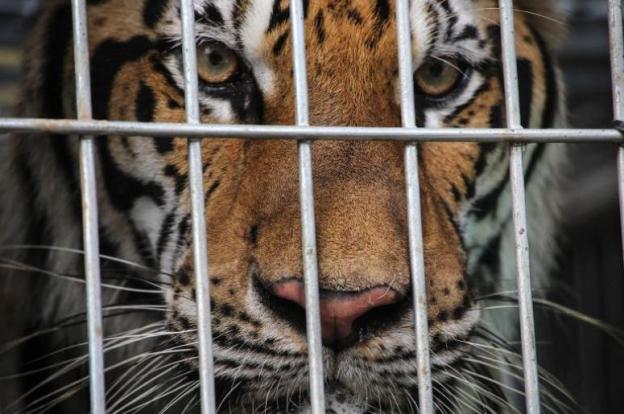
Today, fewer than 4,000 tigers remain in the wild, but as many as 8,000 are still being held captive across China, Laos, Thailand, and Vietnam.

Some of these tiger facilities across Asia are licensed by national governments and are open to the public. Many are promoted and marketed as zoos, conservation centers, or tourist entertainment venues. But most are basically factory farms, speed-breeding tigers like livestock to satisfy mainly Chinese and Vietnamese demand for their body parts. The rest are small-scale basement or backyard breeding mills existing outside the law.

According to The National Geographic,the tiger breeding industry is still rampant throughout Asia and it’s fueling the illegal wildlife trade. Captive-bred tigers slip into the illegal international trade and feed a growing demand for tiger products, primarily in China. Especially popular are tiger pelts, which are used in luxury home decor, and their bones, an ingredient in expensive tiger-bone wine. This high-end market places a huge price tag on the head of every remaining tiger, and the wild populations are being decimated.

 tig2

The commercial international trade in tigers and their parts has been banned since 1987 after a vote by CITES, an international treaty regulating the wildlife trade. In 2007, the CITES parties approved a measure stating that tigers shouldn’t be bred for trade either. Yet captive tigers are increasingly showing up alongside wild tigers on the illegal wildlife market.

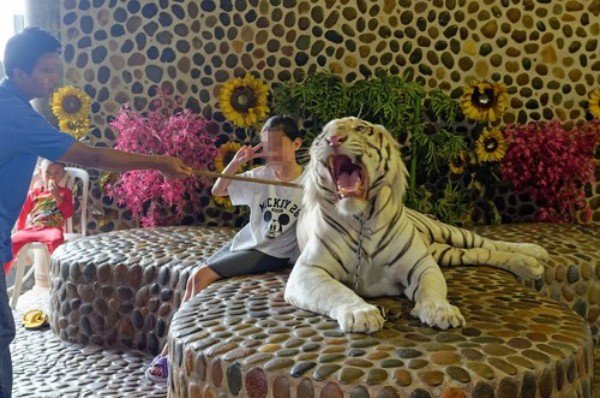
Captive tiger breeding is a huge problem throughout Asia, but particularly in Thailand. These animals are being bred to fuel the cruel wildlife tourism and traditional medicine industries. At wildlife tourist attractions in Thailand, the baby tigers spend their lives being used and exploited as photo props for tourist selfies. When they are no longer cute or become too difficult to control, the tigers are then killed to meet the demand for traditional Asian medicine.

World Animal Protection is now urging Thailand authorities to enforce a ban on captive tiger breeding by 2020. The hope is that without captive breeding, fewer tigers will become victims of this horrific cycle of exploitation and abuse. Tigers are wildlife and all wild animals belong in the wild, but unfortunately the tiger cubs bred in captivity will never get to live in their natural environment.

 tig3

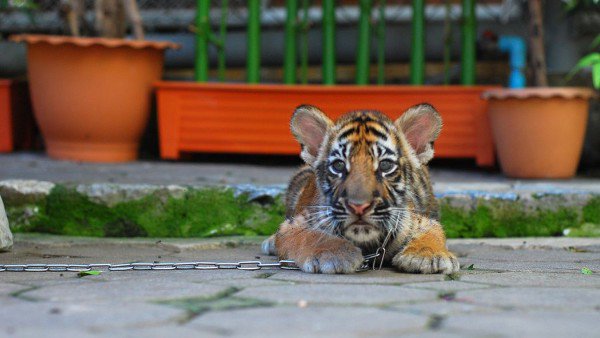
Just like all animals suffering in the tourism industry, captive-bred cubs at tourist attractions endure immense cruelty. They’re kept in barren enclosures, with limited access to fresh food and water. Baby animals in tourism are cruelly trained, chained, and forced to frequently interact with visitors. They are forced to take selfies with tourists all day long, while loud noises and constant camera flashes surround them.

An official ban on captive tiger breeding from Thailand authorities would be a significant step in the right direction, since captive breeding continues to fuel the abusive tourism industry. Any captive animal that is being forced to perform tricks or take selfies with tourists is suffering immense abuse behind-the-scenes. And when they are not cute anymore, their future becomes even more grim. Ongoing investigations are still finding that many tigers in tourism end up killed for their body parts, used in traditional medicine and as home decorations.