Category: Hunting

EU: Help the elephants! Public consultation on new EU measures to ban trade in ivory – Be Quick – Closes 25/2/21.

Help the elephants! Public consultation on new EU measures to ban trade in ivory

16 February 2021

On January 28th the European Commission published draft measures aimed to effectively ban EU trade in ivory.

The draft Commission regulation and guidance are now open for final public feedback before being adopted by the Commission. The period of public feedback will last until 25 February 2021.  

Across Europe, ivory continues to be traded online, in auction houses and markets. The EU and Japan are among the last countries with large, legal domestic ivory markets, while other major markets in the USA, China and the UK are now closed or in the process of closing. 

Luckily, there is wide support in the EU for the closure of domestic elephant ivory markets, from the EU Council to the European Parliament, and among EU citizens and civil society. 

Help the elephants and take part in the EC public consultation

You have time until February 25th

The European Commission has the mandate to introduce comprehensive measures aimed at closing the EU domestic ivory market, thereby showing global leadership. Only by so doing, the EU will remove any financial value from ivory, reduce the opportunity for new ivory to be laundered through legal markets, and send a clear message to the rest of the world that the EU no longer considers ivory a commodity.

We therefore welcome the European Commission’s draft measures to ban the ivory trade in the European Union (EU) and urge the EU and its Member States to support and implement them without further delays.

We would nevertheless like to highlight the following recommendations for the European Commission’s public consultation:

  • We strongly recommend that the EC assess within the next few years the real effectiveness of both the implementing Regulation and the Guidance.
  •  We ask that the changes made to the guidance document on the EU regime governing trade in ivory is integrated into the EU Commission Regulation, in order to ensure that the guidance becomes legally binding and a consistent language in both the Guidance and the proposed Regulation is used.
  • We fully support the proposed measures which provide that antique worked ivory may only be traded within the EU with a certificate. However, only independent approved/recognised experts should be authorised to assess whether an item has been legally acquired or not in order to avoid conflict of interests.

Read more about Wildlife trade and trafficking.


UK: Director of the Masters of Foxhounds Association, has been charged with intentionally encouraging or assisting others to commit an offence under the Hunting Act 2004.

We have tremendous news tonight (12/2/21) with regard to the leaked zoom calls from the Master of Fox Hunting Association and Countryside Alliance – after some months of deliberation, Mark Hankinson, director of the Masters of Fox Hounds Association, has been charged with intentionally encouraging or assisting others to commit an offence under the Hunting Act 2004, contrary to Section 44 of the Serious Crimes Act 2007.

We are delighted – here are our statements for you to share.

On Facebook  – https://www.facebook.com/LeagueAgainstCruelSports

Director of MFHA charged over webinar | League Against Cruel Sports


Posted 12th February, 2021

The League Against Cruel Sports has welcomed the news that Mark Hankinson, director of the Masters of Foxhounds Association, has been charged with intentionally encouraging or assisting others to commit an offence under the Hunting Act 2004, contrary to Section 44 of the Serious Crimes Act 2007.

It follows the publication of leaked webinars by the Hunt Saboteurs Association and a subsequent investigation by Devon and Cornwall Police. He is due to appear before Plymouth Magistrates’ Court on 4 March.

However, the charity is seeking answers as to why more charges were not forthcoming.

Andy Knott, League Against Cruel Sports chief executive officer, said: “We welcome the news that a director of the Masters of Foxhounds Association is being prosecuted as a result of the leaked training webinars in which trail hunting was described as a smokescreen by senior members of the hunting lobby.

 “Given the content of the webinars, we are astonished that more people were not charged. As the official complainant in this case we will be asking for a meeting with the Crown Prosecution Service to discuss this with them further. We always felt that Mark Hankinson had breached the law in these films and we are very pleased to see that a criminal charge has been brought against him.”

ENDS

The League Against Cruel Sports is Britain’s leading charity that works to stop animals being persecuted, abused and killed for sport. The League was instrumental in helping bring about the landmark Hunting Act. We carry out investigations to expose law-breaking and cruelty to animals and campaign for stronger animal protection laws and penalties. We work to change attitudes and behaviour through education and manage sanctuaries to protect wildlife.

Find out more about our work at www.league.org.uk.


Regards Mark

In loving memory of Mike Hill


Hunt saboteur Mike Hill was killed by members of the Cheshire beagles hunt on Saturday 9th Feb 1991.

Mike Hill became the first hunt saboteur to be killed whilst trying to protect wildlife. Mike was only 18 and for two years lived and breathed animal rights, not just dogs and cats but every living creature. He was a VEGAN, worked at both Heavens Gate Sanctuary and Freshfields Animal Rescue Centre, and was an active sab with Yeovil sabs and Merseyside sabs.

Mike was too nice a person for this world. There was no hurt nor malice in his soul.
He thought good of everyone and everything. He was quiet, unassuming, softly spoken, and gentle.
He lived and died for his beliefs.

No charges have yet been proffered against the two huntsmen.

No one has ever been brought to justice for his death.
The killing of Mike Hill has devastated his family, his friends, hunt saboteur groups all over the country and at Freshfields Animal Rescue Centre and Heavens Gate Sanctuary. His name, his love, affection, caring for all, and dedication to the movement will live on.

He will be in our thoughts forever.💚

The story: On 9. February in 1991, Mike Hill was deliberately run over and killed during a meet of the Cheshire Beagles.
His death came about at the end of the day’s hunting, when huntsman Allan Summersgill, with no-kill under his belt, boxed up the hounds in a small blue trailer being towed by a pick-up truck.

Mike and two fellow Merseyside sabs jumped onto the back of the truck in order to prevent the huntsman from driving to another location to continue hunting. Summersgill sped off down winding country roads for five miles with the terrified sabs clinging onto the back.
It is thought that Mike jumped from the pick-up as it slowed to take a bend. He failed to clear the truck and was crushed between the truck and the trailer. Mike died on the spot.

Despite the thud of Mike’s body and the screams of the other sabs, the heartless huntsman continued driving for a further mile.

The truck only halted when one of the sabs smashed the rear window of the cab. The sab was hit with a whip as he tried to stop the truck.

Once it had stopped one sab ran back to Mike’s prone body while the other ran to a nearby house to call for an ambulance. Summersgill drove off, later turning himself in at a police station.

Despite the details of the case, an inquest improbably arrived at a verdict of “Accidental Death” no charges

http://Jayaseelan TD

And I mean…when such “accidents” occur during hunting sabotage, the hunters are happy.

They think this will bring fear and anxiety to future actions. But to this day there are still hunting sabotages, and many with success.

Most likely the judges of that time were also hunters. Therefore most of them are not interested in finding out the truth at all.

And offenders are declared innocent. Even Hit and run leads to no accusation.

We live in a perpetrator-friendly justice and society

regards and good night, Venus

Spain will ban wolf hunting!

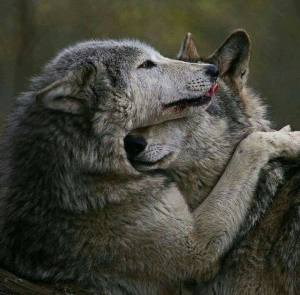
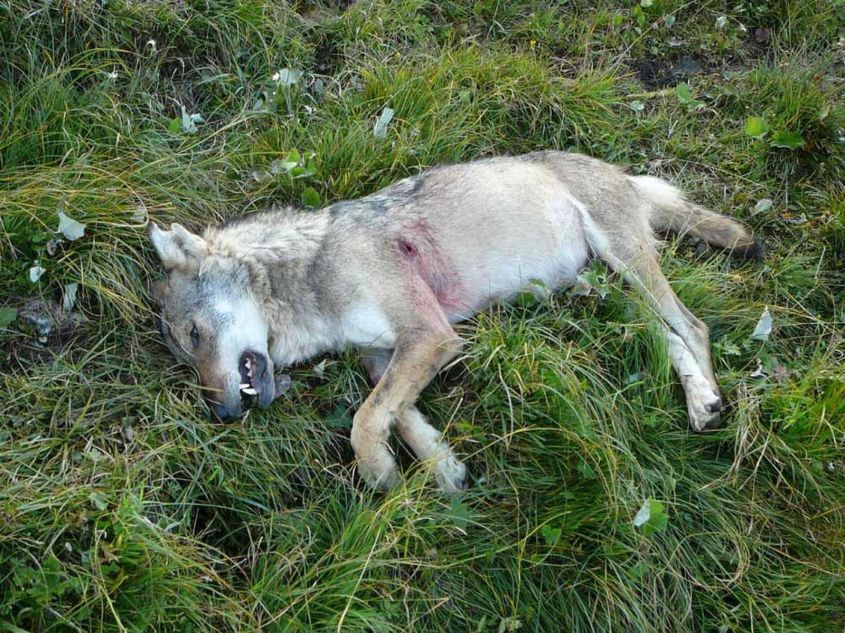
The State Commission for Natural Heritage of the Ministry of Ecological Transition and Demographic Challenge has proposed this Thursday, February 4, the inclusion of all existing wolf populations in Spain in the List of Wild Species in the Special Protection Regime, so it will automatically stop be considered a hunting species.

This implies that they cannot be hunted as soon as the new law takes effect.

The proposal has required a double vote because in the first a tie was reached. Finally, a simple majority, necessary to adopt the decision, has given the go-ahead, thereby homogenizing the status of wolf populations throughout the national territory.

Cantabria, Asturias, Castilla y León, and Galicia, all of them regions with wolf populations north of the Duero, have voted against the proposal, a position to which other autonomous communities governed by the PartidoPopular have joined.

In any case, the proposal has gone ahead with the favorable vote of the rest of the regions.

The inclusion of all Spanish wolf populations in the list of wild species in the special protection regime is based on the opinion of the Scientific Committee, which recommended their protection because it takes into account “their importance as a cultural and scientific heritage, as well as the environmental benefits resulting from the presence of this species in natural Ecosystems “.

“The fact that it is a key species for the functioning of ecosystems, that its area of ​​distribution includes territories of several autonomous communities and that the number of these has increased in recent times as well as the threats that affect the species they made a common approach to action necessary so that the management and conservation of the wolf are coherent throughout the Spanish territory, ensures its populations and long-term distribution and guarantees coexistence with man ”, they add.

The creation of a working group was proposed to develop a new strategy for the management and protection of the wolf in Spain. The objective of this document is to achieve the conservation, management, and restoration of viable populations of wolves as an integral part of Spanish ecosystems, ensuring coexistence with human activities in the areas where they live.

From AnimaNaturalis we hope that they will prohibit the hunting of these animals from now on, and do not wait for the new law to come into force, which will still take a few months to come into force.

https://www.animanaturalis.org/n/45819/espana-prohibira-la-caza-del-lobo

We warmly welcome the decision.
All that remains now is the abolition of bullfighting!

My best regards to all, Venus

Maltese bird smuggler caught in Italy

Committee against Bird Murder e.V. (CABS)

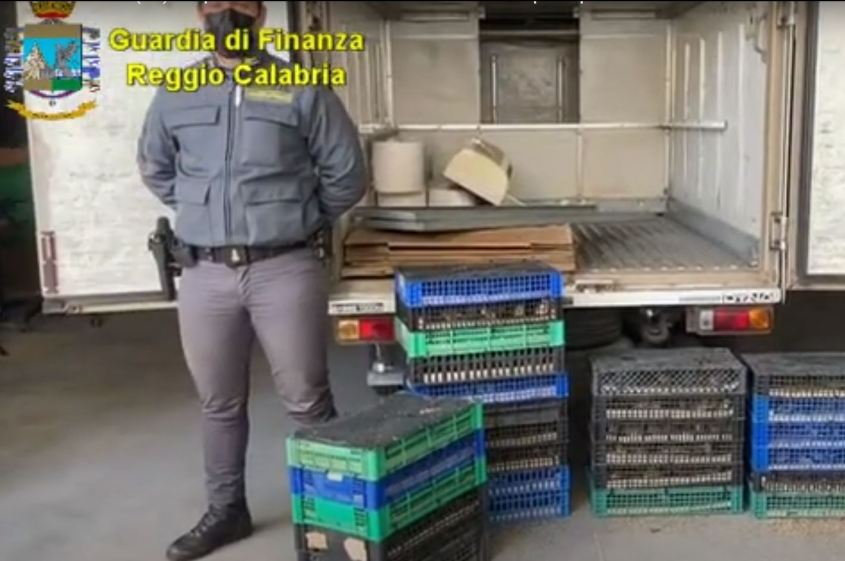
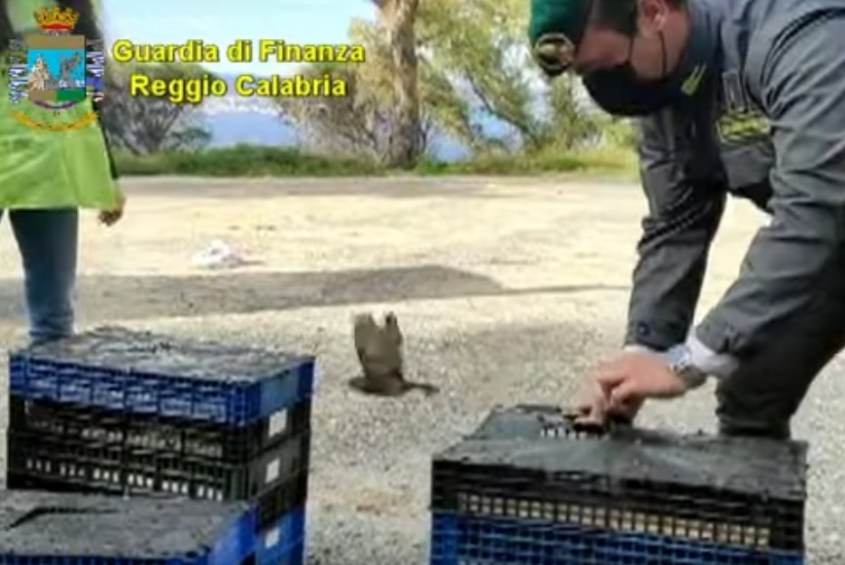
Strike against bird smuggling from Italy to Malta – After months of surveillance in Villa San Giovanni (Calabria), the Italian financial supervisory authority (Guardia di Finanza) has caught a well-known Maltese businessman with more than 1,000 illegally caught goldfinches, chaffinches, and hawfinches.

The birds were hidden in a van that the former diamond dealer wanted to use to take the ferry to Malta. On the black market there, the charge would have been worth between 75,000 and 100,000 euros.
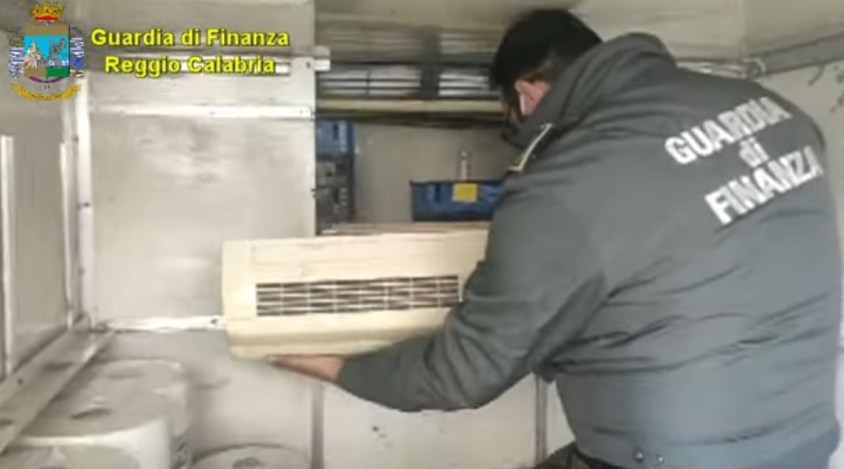
The birds are now flying free again, a video of the release and the smuggling vehicle has now been published on Youtube:

The committee congratulates the Italian police on this great success but also points out that the Maltese authorities had already been informed about the smuggling activities of the man who was now arrested since 2018 and apparently remained inactive.

In order to combat the illegal fishing of finches in Malta in spring, the committee will be present on the Mediterranean island with two teams in March and April 2021.

https://www.facebook.com/Komitee.CABS/

And I mean…Criminal methods are used by hunters on the Mediterranean island of Malta at a mafia-style!

With 385,000 inhabitants, of which 14,000 are registered as hunters and 8,000 as trappers, the archipelago has the highest population density as well as the highest “hunter density” in Europe.
Another 3,000 or so illegal hunters are added, making a total of 25,000 bird hunters in Malta.

And that on a land area (316 km2) that is smaller than Lake Garda

Bird hunting and trapping have a long tradition in Malta. The so-called “trapping” in particular has an important social component. Instead of going to the football field, people catch birds on Sundays.

80% of the hunters collect shot birds stuffed as trophies. That is, the motivation to hunt does not result from the desire to have something edible on the table, but to complement the missing species in the living room showcase.

When Malta joined the EU, in 2004, it was required to integrate the directive into its national legislation, but according to Birdlife Malta and CABS, successive Maltese governments have been lax in preventing trapping.

In June 2018, the European Court of Justice ruled that Malta had violated the directive by introducing too many exemptions and failing to implement adequate enforcement measures.
In October 2018, in response to the June ruling, Malta lifted its rules on the fall live capture of finches and only allowed the catching of golden plover and song thrush.

But Birdlife Malta and CABS, which were searching the island for illegal activity, reported that nothing had changed.

My best regards to all, Venus

Germany: successful year against the hunt

This year we have an excellent record against the hunt.

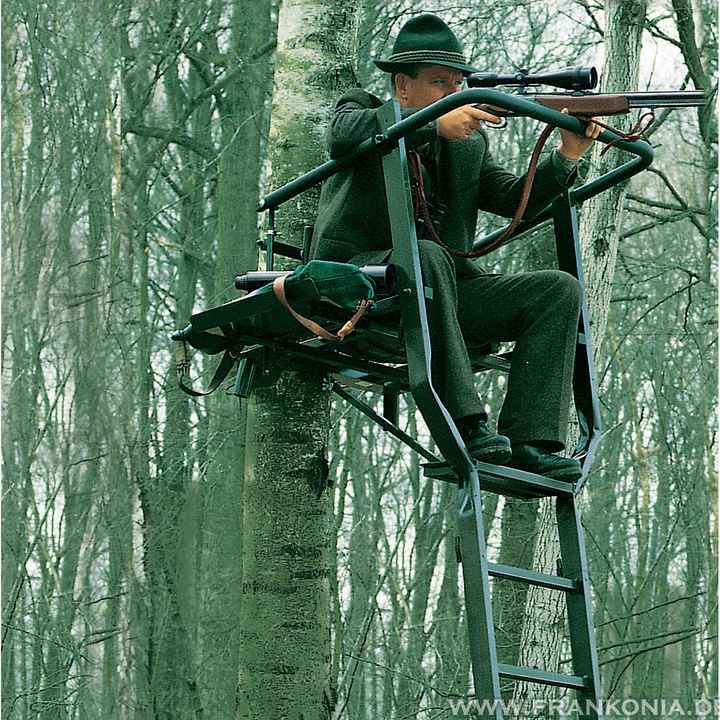
1) According to the New Press” _Magazin in Frankfurt, 100 high seats had been eliminated by animal rights activists until July 2020.

Quotes from the newspaper report: “The perpetrators used brute force. Where they couldn’t saw, they bent the metal ladders.” Everything is now unusable, “says the tenant.

(Brute force is only used by hunters against defenseless animals.
Therefore we are pleased that at least from these places no animals are shot anymore)

2) It is a concerted action that began in Hessen in February with the destruction of 42 high seats in the city forest.
The damage is estimated at 20,000 euros.

(What a crap!!
The hunters build a high seat with wood, which they loot from the trees of the forest, and costs a maximum of 100 euros each. And most of them aren’t  legal!)

3) The police and the public prosecutor are currently investigating who is responsible for the destruction.

Senior Public Prosecutor Nadja Niesen confirmed: “We are investigating unknown persons because of property damage.”
The police are not investigating for property damage, but for “politically motivated crime” (!!!)

(The crime is not that someone destroyed the cruel high seats, but that they exist at all).

4) So announces the hunting tenant to go hunting with mobile high stands in the future – smaller, collapsible ladders that can be leaned against a tree.
However, it is inconvenient. “When hunting wild boar, we often have to wait for hours in the raised hide in winter.”

(Clear! who is looking for a victim in the forest has to work hard.
And most of the murder seats will be paid – like the others – with money from the community)

https://www.fnp.de/frankfurt/hessen-frankfurt-schwanheim-bergen-enkheim-tierschutzaktivisten-faellen-hochsitze-polizei-staatsanwaltschaft-13835089.html

My best regards to all, Venus

Finland: Wolf killers on the go

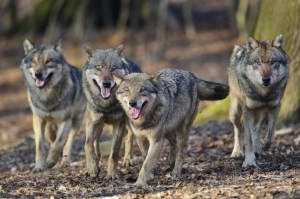
A TRAGEDY IS LAID DOWN IN THE HIGH NORTH – FINLAND PLANS TO REDUCE ITS WOLF STOCK TO 25 PACKS!

Wolves have always had a difficult time globally.
They are feared and persecuted and the hatred of these wonderful animals has developed into a veritable witch hunt, similar to the fox.
Nowhere is this useful top preacher welcome.

Finland is currently planning the next chapter in the book of cruelty against this pitiful species.
For the winter season 2021/22, an ethically reprehensible and terrible model for wolf management was presented in the icy land in the north.
Among other measures, the population is to be reduced to only 25 wolf packs, i.e. the execution of many of this species is planned, despite massive opposition from nature and animal rights activists, and thus wants to make it equal to neighboring Sweden, where these wonderful animals are already regulated.

A working group was set up by the Ministry of Agriculture to determine the best conservation status for the wolf and this questionable “SOKO Wolf” came to the number of 25 packs.
According to Agriculture Minister Jari Leppä, the legal requirements have been regulated and the massacre is planned for winter 2021/22.
The stock hunt should take place during this time.

This represents an ethical catastrophe and probably only pleases the over-anxious farmers who hate the wolf and the hunters who are already “sharpening their knives” or oiling the barrels of their deadly shotguns.

Continue reading “Finland: Wolf killers on the go”

February 1: Dia de Galgos – Day of Shame for Spain

The hunting season in Spain is officially over on February 1st.

At the end of the season, thousands of hunting dogs lose their use and thus their raison d’etre every year.

Galgos, Podencos, Bretons, and other dogs.

Bred to be acquired by hobby hunters for precisely this purpose – and to be used for mostly one hunting season.

Then it will be disposed of again, as cheaply as possible.

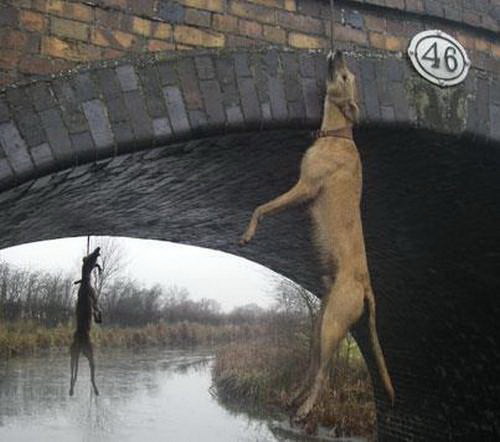
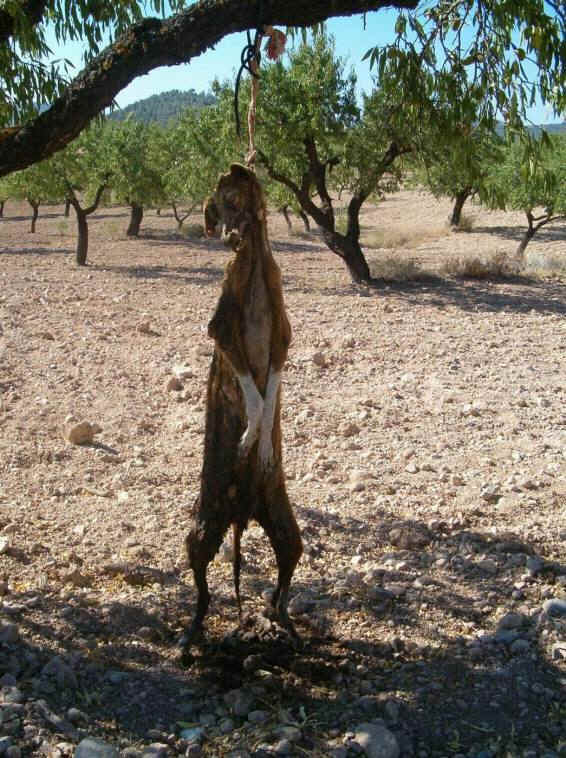
From this, a terrible custom has developed, they are hung up, mostly in trees.

The “best” dog hangs highest, the others below.

Dogs that have proven to be less successful hunters are often made to “dance” out of mockery.

So panicked, the animals dance for hours (up to 2 days) from one rear paw to the other until they run out of strength in their legs and their air is choked off.

A cruel and long agony, full of fear and pain.

This procedure is called “playing the piano” by the hunters and these loyal and intelligent animals are humiliated to the point of death.

Most of the dogs that are found are half-starved, injured, and in dire need of medical attention.

This can be traced back to the custom of breaking the legs of the galgos before they are released.

Continue reading “February 1: Dia de Galgos – Day of Shame for Spain”

Kenya: Stop the Illegal Wildlife Trade: The former naval officer now leading Kenya’s fight against poaching.

Stop the Illegal Wildlife Trade: The former naval officer now leading Kenya’s fight against poaching

With tourism on pause due to coronavirus, Kenya Wildlife Service has stepped up its battle against illegal wildlife trade, says Director General Brigadier John Waweru

Last year, for the first time since 1999, Kenya recorded zero rhino deaths to poaching.

“We are incredibly proud of that,” says Brigadier John Waweru, who left the navy to take up the role of Director General of Kenya Wildlife Service (KWS) two years ago. “It’s not just luck, it’s down to lots of hard work and dedication, especially in a pandemic year.“

Elephant poaching has also reduced from 350 a year five years ago to just 11 in 2020, which is the lowest recorded yearly total ever. “I believe it is not a pipe dream to get Kenya’s poaching level to zero.”

In the past the east African nation’s high levels of rhino and elephant poaching have threatened the survival of both species and fuelled the corruptive, corrosive illegal wildlife trade.

In 2016, 14 Kenya rhinos were slaughtered, and nine the following year. The deaths don’t just decimate critical wildlife populations, they also put the livelihoods of millions who depend on tourism for a living at risk.

Last year was a year like no other. Mr Waweru says the pandemic caused a 92 per cent drop in tourism revenue in Kenya, and there were widespread fears of a poaching uptick due to fewer eyes on the ground. Yet those fears proved to be unfounded.


“While Covid continues to be a huge crisis, there was no poaching increase,” said Mr Waweru. “Wildlife has flourished.

“Without tourists I think poachers might think KWS had gone to sleep, but instead we did the reverse and enhanced our efforts.

“At the start of the pandemic we found there was more interest in bushmeat poaching, but thanks to a sustained, aggressive campaign to help people understand it is not an alternative to beef, we were able to curtail it quickly.”

Mr Waweru says that it is only by educating and empowering Kenyans in the protection of wild animals that the war against poachers will eventually be won.

“To succeed there must be a very close interaction with the people that live alongside wildlife,” he says.

“The KWS provides training and support to help people to co exist with wildlife and to understand their value to all of us.

“Poachers do not operate in isolation. Thanks to the interaction we have with communities, anyone who sees or suspects wildlife crime alerts us. In this way we can alienate or apprehend potential poachers.

“Wildlife does not belong to KWS, it belongs to every Kenyan; it is our shared heritage.”

You could be forgiven for thinking the camo-uniformed, highly regimented KWS is an arm of the military rather than sitting under the department of tourism.

Set up in 1989 amid widespread corruption and insecurity in African parks, the KWS has worked alongside charity partners to transform wildlife security and stabilise the tourism sector.

In the three decades since, Kenya’s elephant population has more than doubled to an estimated 34,000, along with 1,258 rhinos.

Protecting these endangered animals, in addition to the mosaic of other wildlife, is a hugely complex and unending task.

Mr Waweru believes his military background enables him to face the challenges of being KWS’s Director General.

“When I was a naval officer I patrolled and apprehended those involved in illegal fishing or dumping.

“As an enforcement arm, when you go out and you expect to see resistance; to meet someone who is armed, just like you.

“So I understand what kind of dangers KWS troops face daily. I have been shot at when I was a UN military observer in Bosnia.”

When Mr Waweru began his new role after 36 years of public service, he announced that there would be changes in KWS, with all staff encouraged to focus their efforts on implementation, in line with his mission to restore the organisation to its former glory.

There was also warning that anyone who attempted to “pull in the opposite direction” would have to be let go. Collaboration, conservation and enterprise are Waweru’s ethos, with a strong emphasis on mutually beneficial partnerships.

“Kenya has suffered heavy poaching in the past, and inefficiency and low morale within the teams conserving and managing wildlife,” says Mr Waweru.

“I think there was a time of a bit of lethargy, but now there is a feeling of renewed energy in KWS. And we can see the results of that energy in how we are successfully protecting wildlife.

“KWS does not work in isolation, but through strong relationships with the police, intelligence services and other organisations such as Kenya Forest Service or charity Space for Giants.”

KWS established the Case Progression Unit, unique in Kenya, with the close support of Space for Giants, the international conservation organisation that The Independent‘s Stop The Illegal Wildlife Trade campaign supports. 

“What used to happen was rangers would put in all the effort, and face all the risk, to arrest suspected wildlife criminals, but they’d walk free from court days later because cases against them were flawed,” said Katto Wambua, Space for Giant’s Wildlife Justice Senior Advisor.

“The illegal wildlife trade will be defeated just as much in the courtroom as in the bush. It’s a testament to KWS’s coordinated approach to beating wildlife crime, and the DG’s leadership, that they set up and continue to support the Case Progression Unit. It allows the law to be the strong deterrent against wildlife crime that it should be.”

Mr Waweru says KWS feels “privileged” to work with Space for Giants on this pioneering initiative, and he welcomes the work being done by The Independent‘s Stop The Illegal Wildlife Trade campaign.

Mr Waweru adds “by strengthening partnerships wth stakeholders and communities, working with huge dedication to secure wildlife in all spaces we operate in – which is about 18 per cent of Kenya’s landmass – we will continue to see the results.

“No one has a better job than me. I’m one of the luckiest people on earth”.

Stop the Illegal Wildlife Trade: The former naval officer now leading Kenya’s fight against poaching | The Independent