Category: Live Transport

England: The Prettiest Star !

I liberated a wasp this morning.  It was in the bird bath and would not have survived had it not been fished out of the water.

This afternoon (4/8/22), and it has kind of broken me at the moment; I have had to have my prettiest star, Sally the cat, put to sleep. She was 22 years old, which makes her around 110+ in human years (if we have to do a comparison).  She was my one shining light on many depressing days and dark corners, and believe me, there are many now days.  She wanted nothing but affection, love and (plenty of) food, which she enjoyed a great deal; simply giving back love and enjoyment, entertainment, in return.  She had love and affection, and comforting voices right up to the very end, the moment she passed.  Most animals in the current ‘systems’ do not experience this.

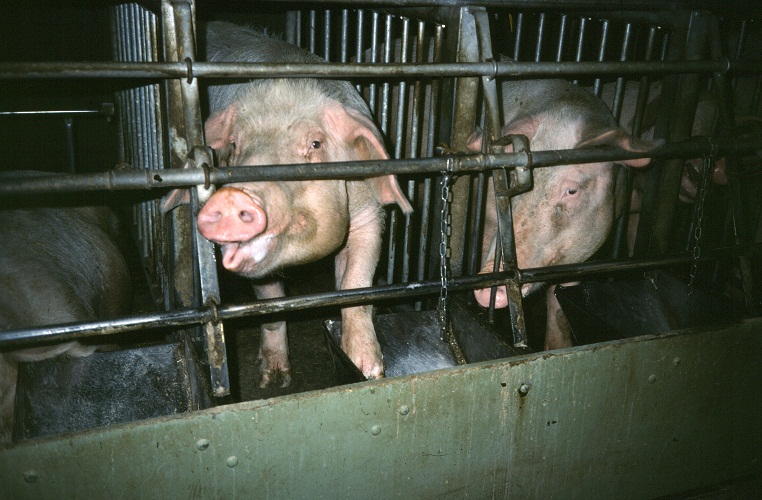
What about the millions of male chicks that are thrown alive into the crusher and turned into mincemeat every day because they are considered a waste product in farming  – Chick Culling Laws – Global Map. – World Animals Voice .  What about the animals in intensive farming systems (cage systems) across the world – England: Caged Conditions We Found in the EU Were Nothing Short of Hellish. Ban the Cage Age Now. – World Animals Voice;
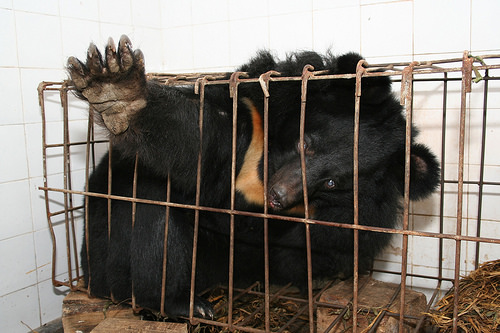
What about the bile bears that spend their entire lives crammed into tiny cages, and milked for their bile every single day ? – Search Results for “bile bears” – World Animals Voice ;
What about all the millions of animals that are reared to be blasted by shooting parties ‘enjoying’ a day out ?. 
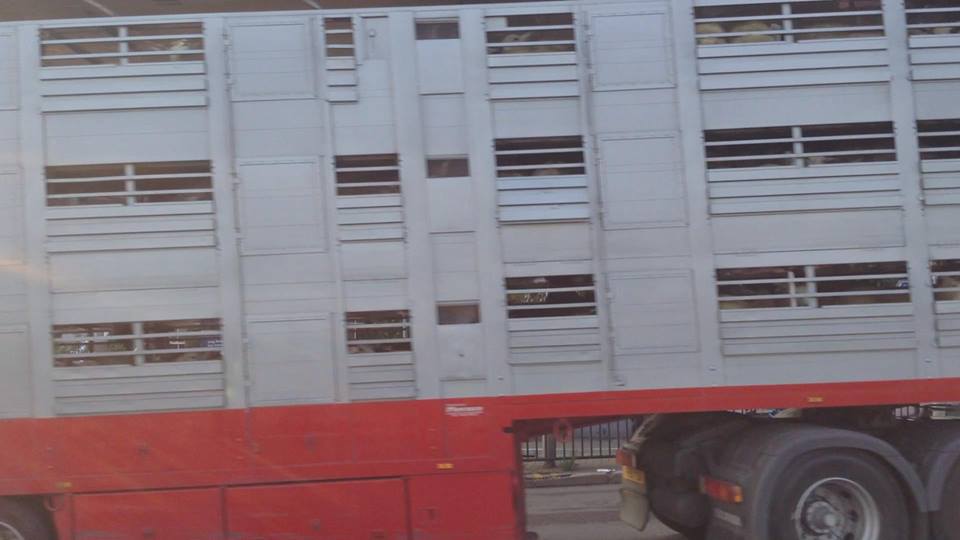
What about all the animals who are live crammed into transport trucks or death ships as they are hauled all over the globe for a few pennies more ? – Live Transport – World Animals Voice

What about all the animals in the labs that are abused and injected with god knows what; having their skulls sliced off in the name of something which has gone on for decades and yet, never really brings anything in the way of medical advancement or progress ?. 

What about the badgers who are being culled by the tens of thousands in the UK to simply win votes from the farming community ? – Search Results for “badger culling” – World Animals Voice.  What about the Krebbs report which said that culling badgers was unnecessary ?. 

What about the dogs and horses that are bred to be raced against each other so that humas can win a tenner on a bet ?. 

What about all the animals abused and tormented in slaughterhouses ? – Search Results for “slaughterhouse” – World Animals Voice

What about the day old dairy calves taken from their mothers in order that humans can consume a glass of milk – My Story – Please Do Not Do Dairy. – World Animals Voice

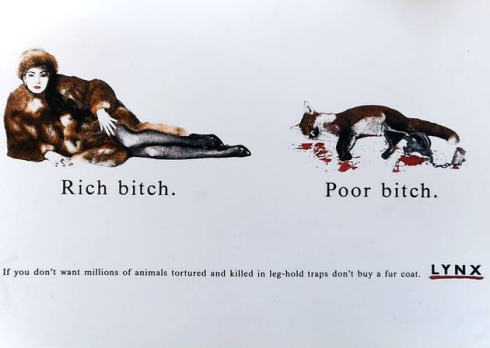
What about the dogs held in Korean cages for their meat; what about the animals who are farmed (the poor bitches)and skinned alive for their fur to adorn the body of some fur hag who is sometimes known as a rich bitch ? – Search Results for “fur” – World Animals Voice
Lots of ‘what abouts’; and by no doubt I have missed many other subjects who deserve just as much.

Yup; all issues constantly and thankfully getting a lot of campaign attention by the mob that goes under the umbrella of animal rights.  If that pigeonholes you as part of the mob, then am glad, no very glad, to have been part of the mob for 45+ years.

Sally was fortunate; she had a loving environment.  Many animals as shown above suffer nothing but abuse from the moment of birth through to the moment of death.  They never experience a kind hand, only abusive ones.

For Sally:

Remember when you were young?
You shone like the sun
Shine on, you crazy diamond

Nobody knows where you are
How near or how far
Shine on, you crazy diamond

Pile on many more layers
And I’ll be joining you there
Shine on, you crazy diamond

Then we’ll bask in the shadow
Of yesterday’s triumph

Shine On You Crazy Diamond

Pink Floyd

You will be my rest and peace child
I moved up to take a place, near you
The prettiest star
One day though it might as well be someday
You and I will rise up all the way
All because of what you are
The prettiest star
One day though it might as well be someday
You and I will rise up all the way
All because of what you are
The prettiest star

The Prettiest Star

 By David Bowie

Shine on you animal saving diamonds !

Be yourself, no matter what they say.

Regards Mark
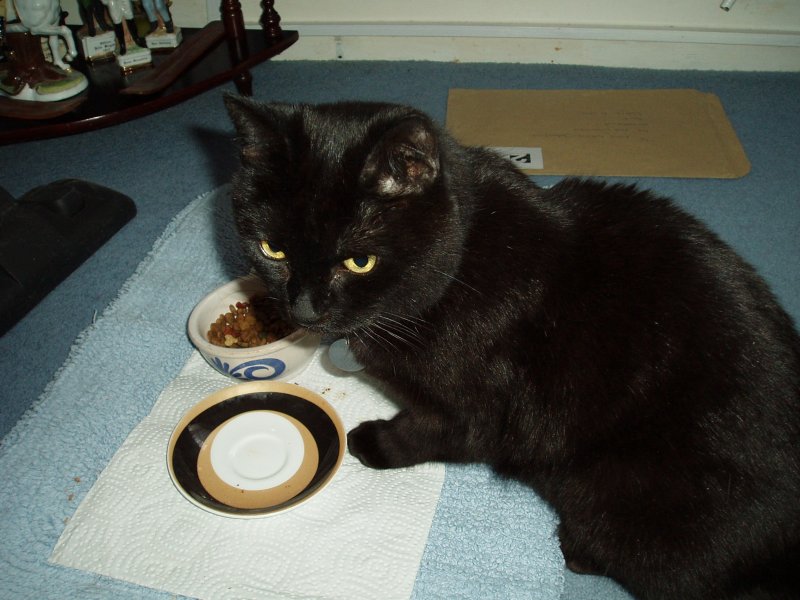
Sally

Italy: Roadside Checks Document Transport of Live Animals in Temperatures Over 36°C Without Water.

Roadside checks document transport of live animals in temperatures over 36°C without water

25 July 2022

Essere Animali

Roadside checks by Essere Animali investigators document trucks parked in the sun with pigs inside, gasping, visibly out of breath. These are dramatic scenes, but they do not constitute any violation of law, thanks to “an absolutely inadequate EU regulatory system in terms of concretely protecting animals” the organisation states.

Bologna, 21 June 2022 – In these days of extreme heat, the organisation Essere Animali carried out monitoring activities along the A1 motorway, between Lodi and Bologna, to document the conditions of the animals transported for food production.

The organisation’s investigators monitored trucks used for the transport of live animals, intercepting them en route and following them until they arrived at the slaughterhouse. The temperatures were detected through the use of a heat gun, with which it was possible to ascertain the exact temperature inside the compartment of the truck in which the animals were transported.

We have documented trucks that travelled with external temperatures of 36°-38°C and that, upon arrival at the slaughterhouse, stopped for 30 minutes in the sun before unloading the animals. In these cases, it was possible to verify that the pigs were forced to remain in the truck with internal temperatures above 40°C. Unfortunately, the current regulations do not provide for temperature limits inside or outside the vehicle for journeys with a duration equal to or less than 8 hours, merely requiring that the means of transport should be able to protect animals from ‘extreme temperatures’, and prohibiting them from being transported in conditions that expose them to ‘unnecessary injury or suffering’. The lack of objective parameters of reference therefore creates a vast unregulated grey area, which does not facilitate appropriate intervention when the welfare of the animals is not respected.

President of Essere Animali, Simone Montuschi

Regulation (EC) No. 1/2005 on the protection of animals during transport does not place any limit on journeys that last up to 8 hours (or 12 hours if an exemption is granted) with regards to either the temperature inside or outside the vehicle, or the possibility of accessing water; provisions are only in place for long journeys of more than 8-12 hours. In this case, it is specified that the ventilation systems on the means of transport must be designed, constructed, and maintained in such a way that, at any moment in the journey, regardless of whether the means of transport is stationary or in transit, they can maintain a temperature between 5°C and 30°C inside the vehicle, with a tolerance range of +/- 5°C depending on the external temperature.

In a note issued at the beginning of June addressed to the Direction of the Traffic Police and to the trade associations of lorry drivers and veterinarians, the Ministry of Health requires that the transport of live animals must not be carried out with atmospheric temperatures above 30 degrees at the start of or during the journey. However, the reality documented by the investigators of Essere Animali shows that these provisions are not effective in practice, and there is an urgent need for greater legislative protection during transport operations.

If we allow transport for several hours when the outside temperature touches or exceeds 30°C, the pigs inside the trucks, due to crowding and the body heat produced, will be forced to withstand temperatures around 40°C. But the scientific literature indicates that for adult pigs, the thermoneutral zone – that is the range of temperatures within which the animal is able to maintain its normal body temperature – is approximately between 8°C and 25°C. The animals transported in these days of high temperatures were therefore subjected to stress and suffering.

Simone Montuschi adds.

Essere Animali believes that new European laws are needed as soon as possible to better protect animals, as the current ones are too generic, and do not take into account various species-specific requirements and with serious shortcomings, such as the lack of regulatory protection for animals during trips lasting up to 8 hours.

Through the Farm to Fork strategy, the European Commission has set itself the goal of carrying out a complete review of the legislation on animal welfare, including transport and slaughter of animals raised for food, by autumn 2023.

Through the No Animal Left Behind campaign, coordinated by Eurogroup for Animals and supported by dozens of NGOs from all over Europe, Essere Animali calls for the transport of live animals over long distances (longer than 8 hours) to be prohibited. Furthermore, they request the introduction of a range of acceptable external temperatures between 5°C and 25°C, outside of which any transport is prohibited. Finally, fundamental parameters must be clearly defined, such as species-specific and categories-specific conditions for the suitability for transporting animals, as well as the availability of space and method for water administration.

Allowing the transport of live animals when the measured external temperature is 30°C or more, and not providing access to water, is equivalent to not guaranteeing the welfare of the animals. It is clear that the current European laws for the protection of animals are incomplete and inadequate, so we ask the European Union and the Italian government to align the new legislative proposal with current scientific and ethological knowledge.

Simone Montuschi concludes.

The transport conditions documented by Essere Animali are disturbing, and bring to light a reality completely ignored in Italy. A country which, not by chance, was not among the thirteen member states that — on the occasion of the Agrifish Council, among the Ministers of Agriculture and Fisheries on 18 July — came out in favour of an ambitious revision of the regulation on the transport of live animals, which is planned to be presented by the European Commission in 2023. The deafening silence of Minister Patuanelli on such an important issue as animal welfare is unacceptable. Italy once again shows total indifference towards this issue and, on the contrary, unconditional support for a food system based on profit at all costs, as well as on intensive and industrial farming practices that not only exploit other sentient beings as if they were commodities, but also destroy forests, pollute soil and water, increase greenhouse gas emissions, and bankrupt small farmers. This is an unsustainable model for the entire planet, so it is urgent to reverse course without wasting any more precious time.

Eleonora Evi MEP, member of the Committee of Inquiry on the Protection of Animals during Transport (ANIT)

Regards Mark

EU: Finally, Decades Too Late, Have The Old Fossils At The EU Woken Up and Decided That Live Animal Transport Really Does Need A Major Overhaul ?

Photo – Mark (WAV)

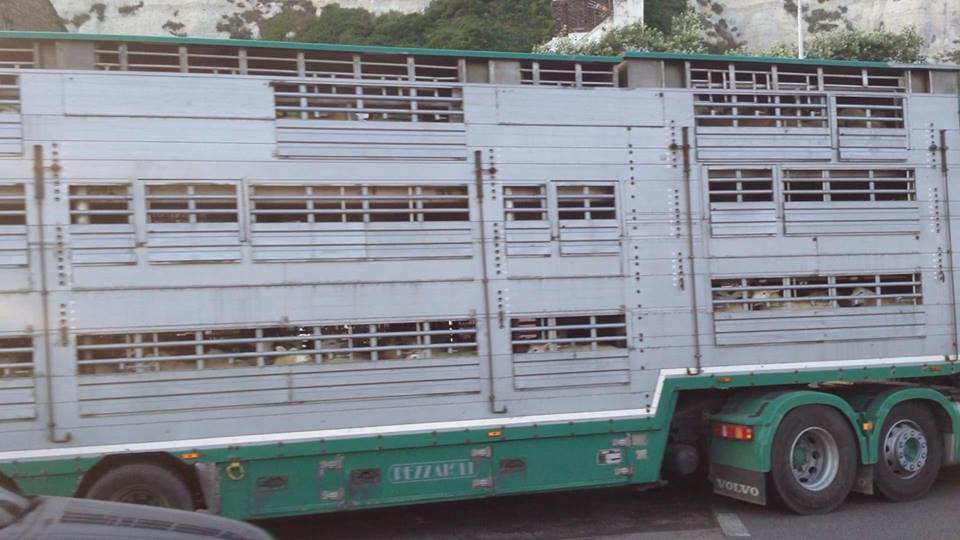
Battleground Dover around 1990 – Photo – Mark (WAV)

WAV Comment:  Masses of EU and British animal welfare organisations, including us, have been calling for the introduction of a one off maximum 8 hour journey time for decades.  In our specific case, 35+ years. As part of this requirement, they also demanded that the industry change as much as possible to a (dead) meat and carcass only trade.  So why, only now, is the fossil called the EU just getting round to taking this issue seriously ?

EU citizens (and non EU citizens from the UK) are on the ball and want major change.  It is only the EU Commissions and their lobbyists who appear to want to stick with the status quo.  These days are now gone and people want, or demand change.  The EU should get a clear message of what will happen if it ignores the wishes of its own citizens.  MEP’s have woken up to the fact that they will be deselected if there is no change; so it is essential that they keep constant pressure applied on this issue, or they face the consequences.

We watch from the UK side lines now (having done Brexit and thus being allowed to change the live transport laws ourselves) to see if the EU fossil actually steps up to the plate and meets the demands of the EU citizens.  God forbid the EU if nothing changes !

AGRIFISH Council – Member States step up their game for animals

18 July 2022

Press Release

Today’s Agriculture and Fisheries Council discussed two key dossiers for animals, specifically live animal transport and aquaculture: 13 Member States call for an ambitious revision of the Transport Regulation including maximum journey times as well as a shift to a meat and carcass trade. Now it’s time for the European Commission to incorporate these views in the revision which is due at the end of 2023.

Eurogroup for Animals is pleased to see concrete demands from Member States that can effectively have an impact on the welfare of animals. Indeed, the Belgian, Danish, Dutch, German and Swedish delegations (Vught Alliance) presented an information paper which received the support of 8 other Member States (Austria, Bulgaria, Estonia, Finland, Malta, Luxembourg, Slovakia and Slovenia). 

The paper calls for a maximum of 8 hours for animals transported for slaughter, restricted journey times for unweaned animals, a ban on certain long journey exports, temperature intervals tailored for each species, specific rules for fish, amphibians, reptiles, dogs, cats, as well as transitioning to transporting meat, carcasses and genetic materials

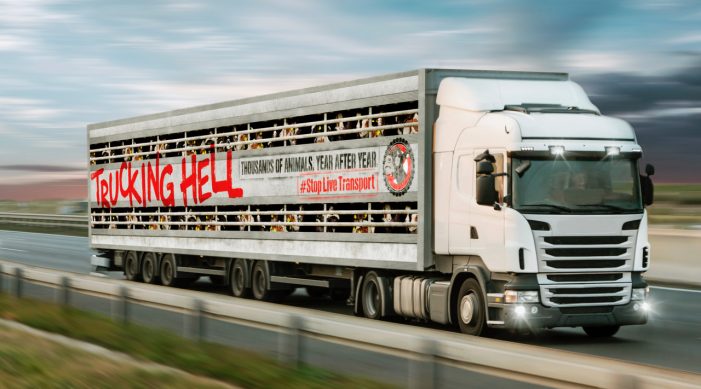
Trucking Hell – Part of the CIWF campaign to stop live animal exports.

.

Eurogroup welcome the introduction of species-specific maximum journey times and requirements for all animals, including cats and dogs, fish, and other vertebrate animals, 8 hour journey time for animals for slaughter as well as the acknowledgement that “it would be much more advantageous to transport meat, carcasses and breeding materials instead.” Clearly citizens expect even more ambitious changes but the paper is a step in the right direction

Reineke Hameleers, CEO, Eurogroup for Animals.

Despite the fact that the wording on certain key topics, such as live export and the transport of breeding animals, could have been much stronger, and while the specific needs of animals used for scientific purposes could have been better specified, Eurogroup for Animals believes this ministerial proposal is an important step towards the refinement, reduction and replacement of live animals transport. 

In January 2021, Eurogroup for Animals published a White Paper on the revision of the Transport Regulation, in which species- and category-specific provisions for the transport of terrestrial and aquatic farm animals, equids, cats and dogs, as well as animals used in science are presented. Eurogroup trust that the European Commission (EC) will take Eurogroup for Animals’ position into consideration for the preparation of the draft legislative proposal.

Eurogroup are pleased to see the support the Paper obtained at the Agri-Fish Council, this encouraging result should provide the EC with a green light to proceed in line with these recommendations and ensure that the revised Transport Regulation will deliver towards its objective: the protection of animals during transport, and that it will be coherent with the EU sustainability ambitions.

Photo – PMAF *France).

On fish welfare in aquaculture, Eurogroup welcome the Council supporting the objectives that the EC has established for Member States and for itself, including developing best practice guidelines and validated indicators for fish welfare in aquaculture, and providing training to operators and competent authorities. To meet these objectives, the EC needs to leverage its own resources, including the European Food Safety Authority, and to create an EU Animal Welfare Reference Centre for fish, while Member States need to prioritise these fish welfare objectives in their national aquaculture plans and distribution of EU fishery subsidies.

Regards Mark

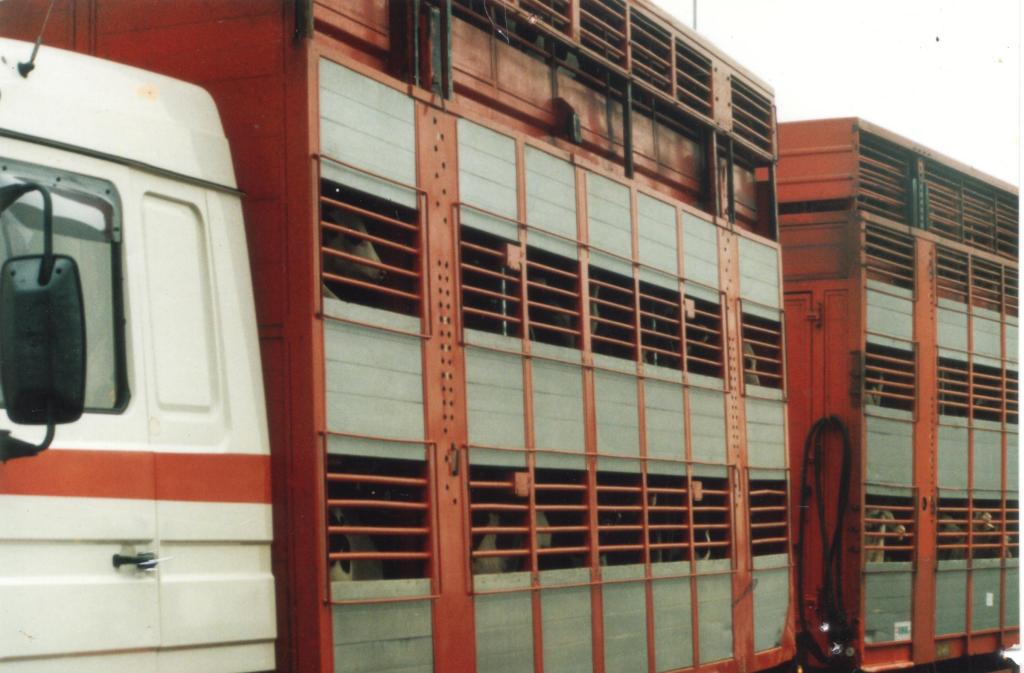
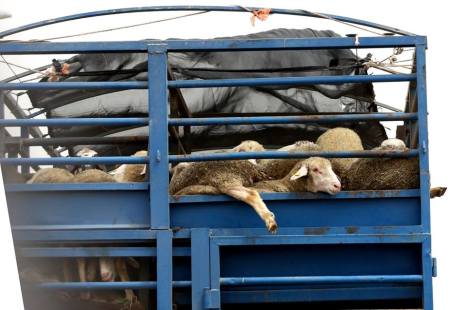
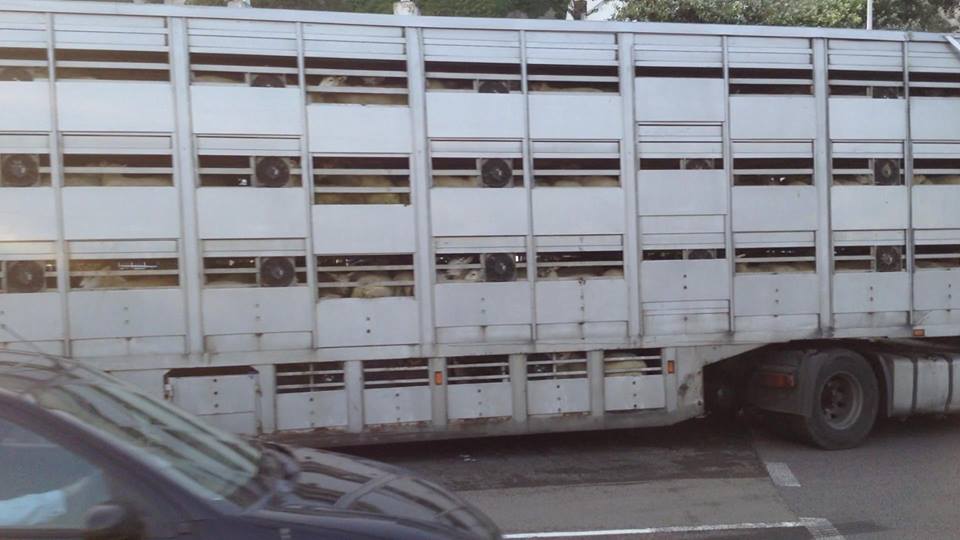
There are live sheep (yes !) in this box trailer.

France: Amazingly Brilliant News: In a Campaign That Started Back In 1996, Air France Now (2022) Announces It Will Put an End to Future New Primate Shipment Contracts to Laboratories. Brilliant !!

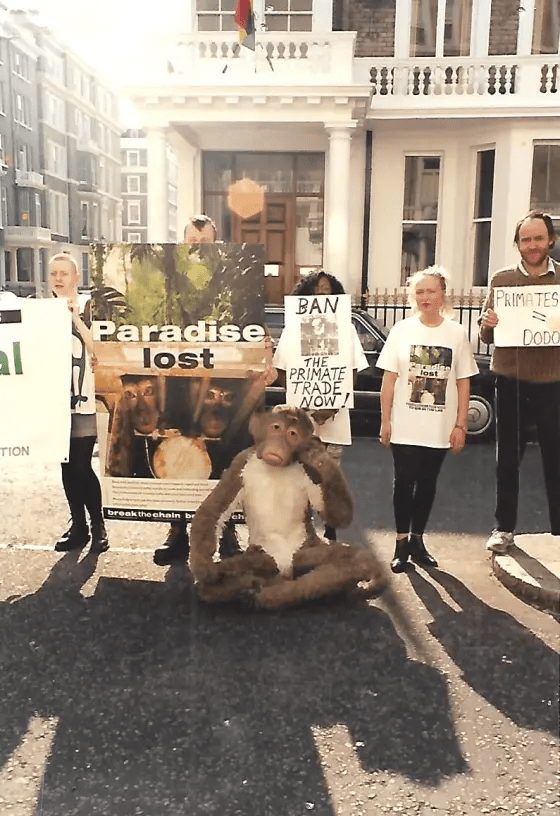
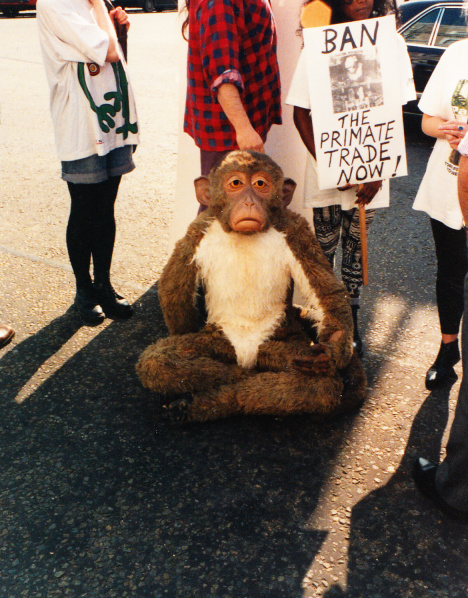
Doing Our Bit for the Primates In London (Mauritius Embassey) – Photo: Mark (WAV).

Hi all;

Have been dealing with specific animal issues over the last few days, but here now there is some good news for you all to read about.  I will put each story on as an individual post in order that you can read and copy link if you wish.

Lets start with some amazing news, and huge congratulations to each and everyone involved with this campaign, for their tenacity and continuation of the fight for the primates.  Since 1996; wow; I knew it was a long campaign as we have followed and done our bit here in England over the years; but I did not quite realise it was that long.  Excellent and so very well deserved – well done all !!

London Mauritanian Embassey Demo. – Photo – Mark (WAV).
Sad Primate destined for the labs – Paradise Lost. Photo – Mark (WAV).

Click here to see us doing our bit in the past (37 years ago actually) in London for Mauritius caught primates:

UK / Mauritius: ‘Paradise Lost’ – 35 Years On (for us) and Mauritius Still Supplies Primates to the UK for Research. – World Animals Voice

Regards Mark
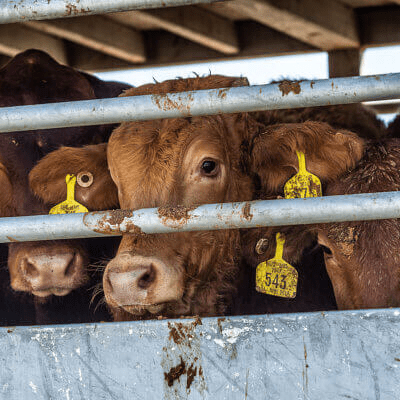
Air France puts an end to primate shipments to laboratories

1 July 2022

On Thursday 30 June 2022, Air France publicly announced that it would stop carrying primates for animal experimentation. After years of hard fighting, One Voice has succeeded in getting Air France to stop transporting primates.

France is one of the countries in Europe that continues to experiment on primates, experiments in which the suffering inflicted on our cousins is particularly severe. Since 1996, we have been asking Air France to stop taking part in this torture inflicted on primates. We are extremely happy with this decision, even if it comes late in relation to the issue and other companies.”

Muriel Arnal, President of One Voice

Air France was one of the last major national airlines to continue to take part in the cruel trade in animals for use by laboratories, and in particular monkeys, most of which come from the Republic of Mauritius, where they are violently captured in the wild and destined for reproduction. Many of them are sent abroad, turning France into the hub of this trade, which is certainly legal, but dreadful. 

This decision comes against the backdrop of the collection of one million signatures for the Save Cruelty Free Cosmetics European Citizens’ Initiative to stop animal testing for cosmetics and the unanimous vote by MEPs to phase out animal testing in the EU by September 2021, and the effective implementation by the end of the year of the ban on the use of F1 primates(first generation primates born in captivity from wild-caught parents), with many other national and cargo companies having ceased these activities.

We have a thought for the macaques from Indonesia, Cambodia, Mauritius, transiting via the Silabe platform (in connection with the University of Strasbourg), for those still transported by other companies (Wamos Air, Egyptair or AirBridgeCargo), but also via Russia or the United States.

The decision will not be effective immediately but at the end of Air France’s current contracts with research laboratories.

Read more at source

One Voice

Australia: Not Exactly the Tops When It Comes To Animal Welfare – Savage Shearing Exposed; Mulesing, Live Exports, Useless Trade Deals; Do We Go On ?

WAV Comment:  Lets face it, we always hear promises from all the Australian governments about how things are going to get better.  Australian sheep have a bad time from the minute they are born until they have been live exported to and barbarically slaughtered in the dregs that are other parts of the world.  And lets not forget the mulesing which takes place in the Australian farms; – hacking off chunks of flesh without any form of anaesthetic.  And now the UK says it is setting up a trade deal with them ! – for example:

Pesticide limits in Australia are 200 times higher than the UK’s. Australia also have 144 licensed pesticides, whereas the UK only licenses 73 of these substances. 

Mulesing.

England: Response From UK Government Over Our Letter Of Animal Welfare Concerns In UK – Australia FTA. – World Animals Voice

UK – Australia: UK Trade Deal with Australia Amounts to ‘Offshoring’ Pesticide Use, (UK) Members of Parliament Say. – World Animals Voice

Australia: The Link Between Leather and Live Export – Graphic Footage. – World Animals Voice

Shame on the UK government for being such dim wits and eternal shame on Australian animal abusing farmers.

Watch the video here via the following link, or, via the ‘shocking new footage’ link just below in the text.

Sheep Left Bloody After Savage Shearing in Victoria – News – PETA Australia

Dear Mark,

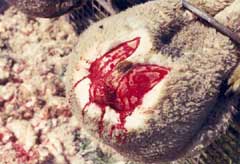
I’m writing to share shocking new footage filmed inside a Victorian shearing shed earlier this year. The video shows a ewe – injured during shearing and badly bleeding – being held between the knees of a shearer, who is crudely stitching up her gaping wound without administering any pain relief. The shearer then mops up her blood with her own fleece.

This is far from the first time cruelty has been documented at an Australian wool operation.

Hours of eyewitness footage compiled by PETA over the years shows shearers hitting sheep with closed fists and electric clippers, kneeling on their necks with their full weight, and slamming them into the floor.

Sheep deserve better, and Australians deserve to know the truth about wool jumpers. Will you please help us speak up for sheep by sharing this exposé far and wide?

Once people know better, they can do better. Sharing information is the first step towards creating a kinder world for animals.

Want to know more about wool? The wealthy wool industry loudly and consistently extolls the virtues of the material, so it can be hard to sort fact from fiction. That’s why we’ve launched a new website, WoolFacts.com, to help consumers and designers develop a deeper understanding of the impact wool production has on animals and the planet.

Please share:  Post to Facebook

Learn more:  How Much Do You Know About Sheep and Their Wool? | Wool Facts

For animals

Laura Weyman-Jones
PETA Australia

Regards Mark
Australian sheep suffer going to their deaths on live exports ships.A

Israel: Government deal to boost beef industry pilloried as bad for climate and public health.

We have had the following sent through from Ana;  she asks ‘what can we do ?’.

Sadly Ana, probably very little now, as this all appears to already be done and dusted according to the article.  The new deal has already been done.  We agree with the statement in the article:

“Animals Now said the measure would provide an economic incentive to “an industry that abuses animals.”

“To continue to give a customs exemption for the import of live calves is to give benefits to a handful of businessmen, and to transfer hundreds of millions of shekels from the public purse to the meat industry, while humanity is dealing with the climate crisis, is simply absurd,” it said.

Article:

Government deal to boost beef industry pilloried as bad for climate, public health

Agriculture minister says NIS 420 million accord will help cut prices, while rights activists say permanent customs tax exemption on import of live calves is a license for abuse

Government deal to boost beef industry pilloried as bad for climate, public health | The Times of Israel

A range of activist groups on Thursday denounced a new deal between the Agriculture and Finance ministries and the Israeli Cattle Breeders’ Association to boost the beef industry.

The agreement, reached Wednesday, commits the government to investing more than NIS 420 million ($122 million) into the local beef industry over the next seven years; removing customs duties on imported beef products; turning a temporary exemption on customs duties for livestock imports — which is renewed annually — into a permanent exemption; and increasing the number of foreign workers that can enter Israel to work in the sector.

Agriculture Minister Oded Forer described the agreement as, “more good news for dealing with the high cost of living,” that would help cut the price of beef, “a product that is in increasing and constant demand from year to year,” while also supporting the cattle breeders and giving the sector certainty.

The Israeli Association of Public Health Physicians and the Israel Forum for Sustainable Nutrition, however, warned in a statement that encouraging beef consumption was bad for public health, the environment and for fighting climate change.

According to UN estimates, livestock is responsible for around 14 percent of human-generated greenhouse gases, especially methane.

“To continue to give a customs exemption for the import of live calves is to give benefits to a handful of businessmen, and to transfer hundreds of millions of shekels from the public purse to the meat industry, while humanity is dealing with the climate crisis, is simply absurd,” it said.

According to Agriculture Ministry figures, a record 856,630 calves and lambs were shipped to Israel in 2021 for fattening and slaughter, an increase of 42% over a year earlier.

Per capita, Israelis are among the highest consumers of beef in the world.

Regards Mark
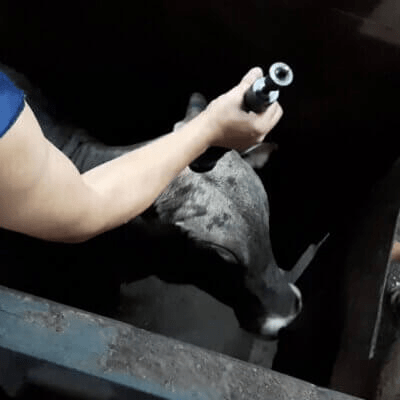
https://www.timesofisrael.com/numbers-of-animals-imported-for-fattening-slaughter-up-42-last-year/

Australia: The Link Between Leather and Live Export – Graphic Footage.

The Link Between Leather and Live Export

More than 1.4 billion cows, sheep, and goats as well as millions of other animals are killed each year to feed the fashion industry’s demand for skin – but how much do we really know about the journeys of the sensitive individuals whose skin is stolen?

The global leather supply chain is complex, making it difficult for consumers to determine the origins and sometimes even the species of the animals used for the items they purchase.

Live export is a process in which trembling animals are pushed onto a severely crowded truck or ship and transported many thousands of kilometres.

A new PETA video tells the story of how the leather trade fuels the live-export industry from the perspective of an investigator who has witnessed it firsthand.

Butchered Alive: Australian Cattle Killed Overseas for Leather Shoes

In 2021, PETA Asia investigators visited seven Indonesian abattoirs at random, some of which were part of the Australian government’s Exporter Supply Chain Assurance System.

At these facilities, the investigators found botched stunning or sometimes none at all. They witnessed animals being prodded repeatedly with metal rods and gasping for air as blood filled their throats.

The investigators learned that the skins of some Australian cattle were sold to a fashion brand that exports leather shoes worldwide.

Butchered Alive: Australian Cattle Killed Overseas for Your Leather Shoes – News – PETA Australia

Chilling scenes of abuse of Australian animals have been documented at Indonesian abattoirs this year, prompting a fresh set of complaints to be filed against Australia’s live-export industry, but consumers must take action as the government has shown no inclination to lift a finger. 

The footage is a harrowing glimpse into the trade that supplies flesh to dangerous wet markets and skin to the global leather industry. Some of the facilities visited by PETA Asia investigators are even part of the Australian government’s Exporter Supply Chain Assurance System (ESCAS), dispelling all doubt about government inaction.

In the same month this abuse occurred, Australian Livestock Exporters’ Council (ALEC) CEO Mark Harvey-Sutton expressed his “full confidence in the standards the Australian industry upholds”. Watch the footage below and decide if you can say the same. If not, please stop buying leather right now!

Botched Stunning or None at All

PETA Asia investigators visited seven randomly selected abattoirs in Indonesia in April and May 2021 and filed an official complaint.

They found steers and bulls being forced into restraint boxes and shot in the head with captive-bolt guns. The cattle were often fully aware of what was happening to them. They slammed their bodies against the metal chute they were trapped in, in a futile attempt to turn around and escape.

Workers repeatedly failed to stun cows adequately. Clearly still conscious after being shot in the head, one steer was jabbed 64 times in the face and on his torso with a steel rod to try to force him to stand back up so a worker could shoot him again.

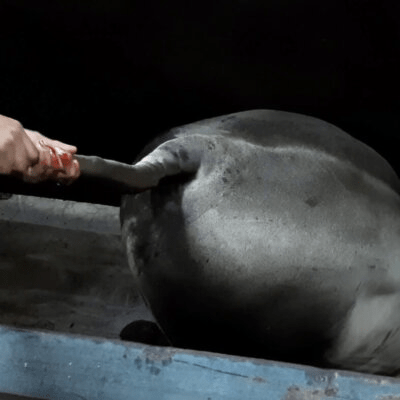
Workers also violently twisted his tail until it was broken. In a last-ditch attempt to move the struggling, panicked steer, they pulled on his broken tail a dozen times.

Then there were those for whom stunning wasn’t even attempted at all. Some cattle were simply physically restrained before their throats were slit – which, believe it or not, is a killing method approved by the Australian government.

ALEC boasts on its website that 95% of Australian cattle in Indonesia are now stunned prior to slaughter. But based on what investigators saw, that’s not the case.

Butchered Alive

Abattoir workers viciously yanked and deliberately stepped on animals’ tails, apparently in a crude attempt to check for consciousness. Some cattle still kicked, but they were butchered anyway, with no further attempts at rendering them unconscious.

Steers who were still moving and whose heads dangled by only a strip of flesh after their throats had been slit were hung by the neck on metal hooks. Their legs continued to thrash as they were dragged across the bloody floor and then hoisted up.

Investigators saw animals blinking after their throats were cut, gasping for air as blood filled their throats. Some suffered this way for up to 12 minutes after being shot with a captive-bolt gun.

Monica KH Bando, a veterinarian with more than 13 years of clinical and research experience, said the footage captured by investigators depicted “egregious violations of acceptable animal welfare standards for livestock” including “[p]oorly designed facilities, unsanitary conditions, substandard handling, restraint methods that induce stress and distress, lack of stunning and ineffective stunning, and inhumane killing methods”.

10 Years of Failure

Workers told investigators that the cows being slaughtered came from Australia, and most wore Australian National Livestock Identification System ear tags.

These are just a tiny percentage of the millions of animal victims of Australia’s live-export trade. Australia exported more than 1.8 million animals in 2020, and the vast majority of them were cattle.

It’s been a decade since cruelty in the live-export trade to Indonesia was exposed by Animals Australia on national TV in the programme Four Corners, after which a traceability programme – Export Supply Chain Assurance System – was put in place.

The programme hasn’t provided “assurance” of any kind. In fact, it’s been a colossal failure. It was supposed to stop this kind of cruelty. There have been 184 reports of non-compliance (just reports – the number of incidents would be far higher) since it was established.

When this latest footage was filmed, the Department of Agriculture was still investigating cruelty complaints against Indonesian abattoirs made by Animals Australia in 2020.

The Government Ignores This, but We Have the Power to Stop It

The Australian government should be preparing for a future without live exports, but it’s not. Every new exposé is “shocking” to those in power, but are you really surprised? When animals are crammed onto ships as though they were inanimate commodities and then sold for slaughter, how can anyone expect them to be treated as if their pain mattered?

Australia is a nation of self-proclaimed animal lovers, so many of us blame somebody else for the cruelty – the government or people overseas. Never mind that these cattle were slaughtered for meat and leather sold all over the world, potentially even in Australia.

The live-export industry is the meat industry and the leather industry. If you buy meat at an Australian supermarket or purchase a pair of leather shoes, you’re putting money in the pockets of the same people who send these animals to be slaughtered in hideous, painful ways overseas.

And since the leather produced in Indonesia is exported globally, you could be wearing or sitting on the skin of the same animals you’ve just watched in this video. PETA Asia investigators found that the skins of some Australian cattle were sold to a fashion brand that exports leather shoes worldwide.

If you continue to buy the flesh or skin of animals, you send the same message to producers that the government does, i.e. that this industry has a social license to continue and a sustainable future. Please, act now to change the market and spare animals’ lives every time you buy a meal, a pair of shoes, a jacket, or a belt. Personal responsibility will end this trade. Let’s go!

START YOUR VEGAN JOURNE

Australia: It’s Time to Abandon Ship

In April 2021, New Zealand announced a ban on all live exports (including breeding “stock”) by sea, citing the need to “stay ahead of the curve in a world where animal welfare is under increasing scrutiny”. New Zealand actually banned export for slaughter all the way back in 2008. In May 2021, the UK announced that it intends to ban the live export of animals for slaughter and fattening.

Meanwhile, Australia is still leaving a bloody trail around the world, causing animals misery en route and in every port they reach.

This investigation shows that no regulations, reviews, or reports are making the barbaric business of shipping and killing live animals more humane

TAKE ACTION

Demand an End to ALL Live Export – NOW! | PETA Australia

Regards Mark
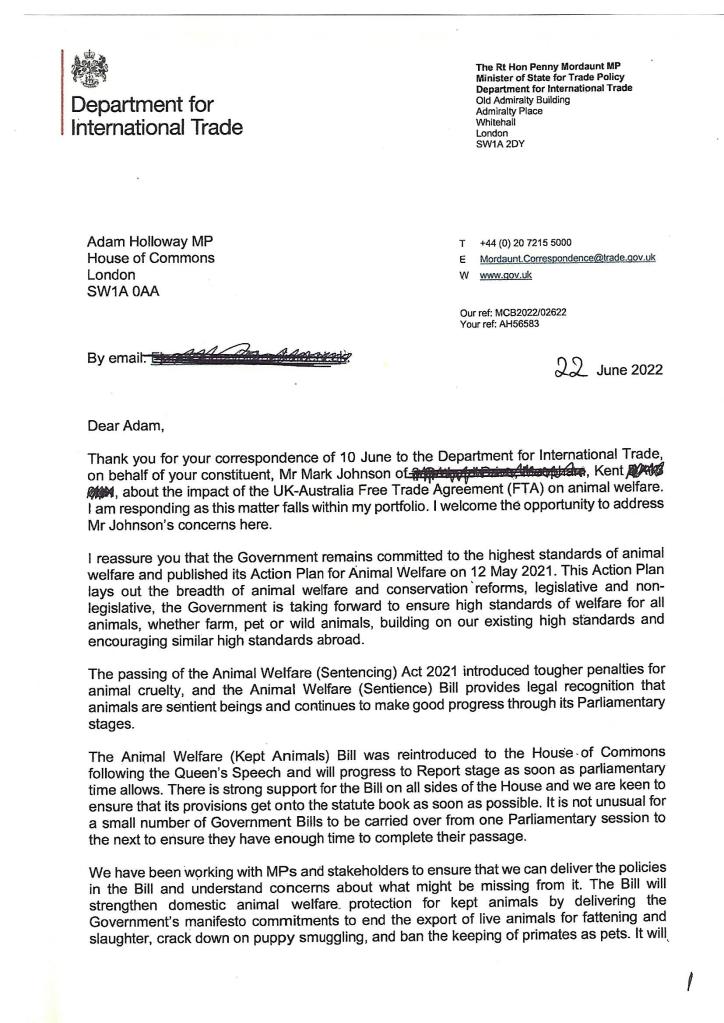
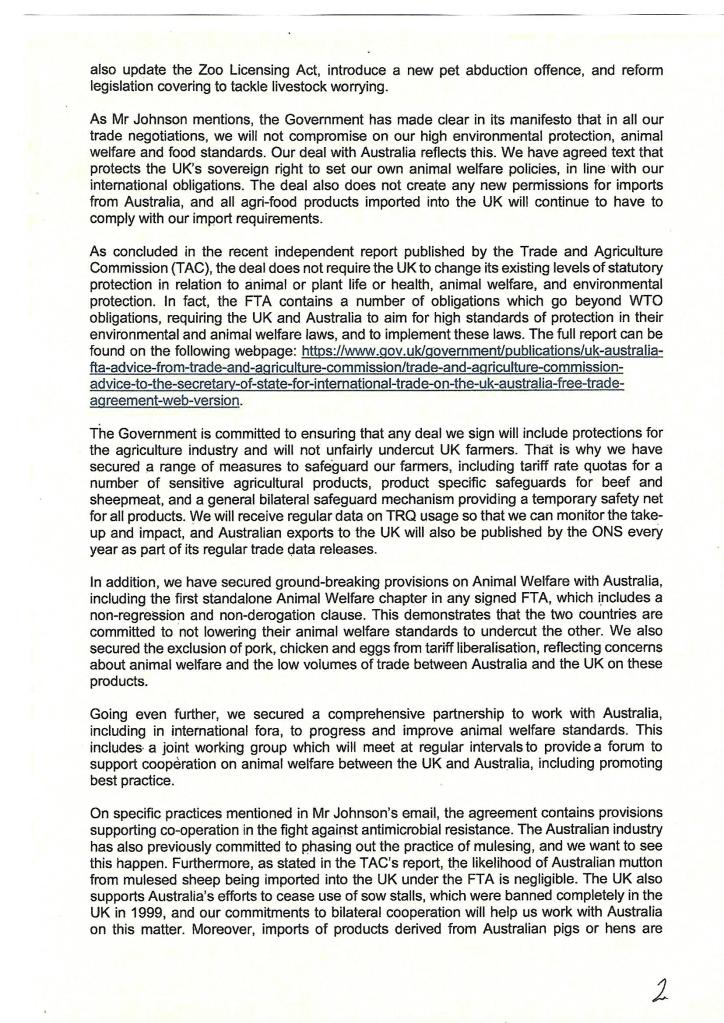
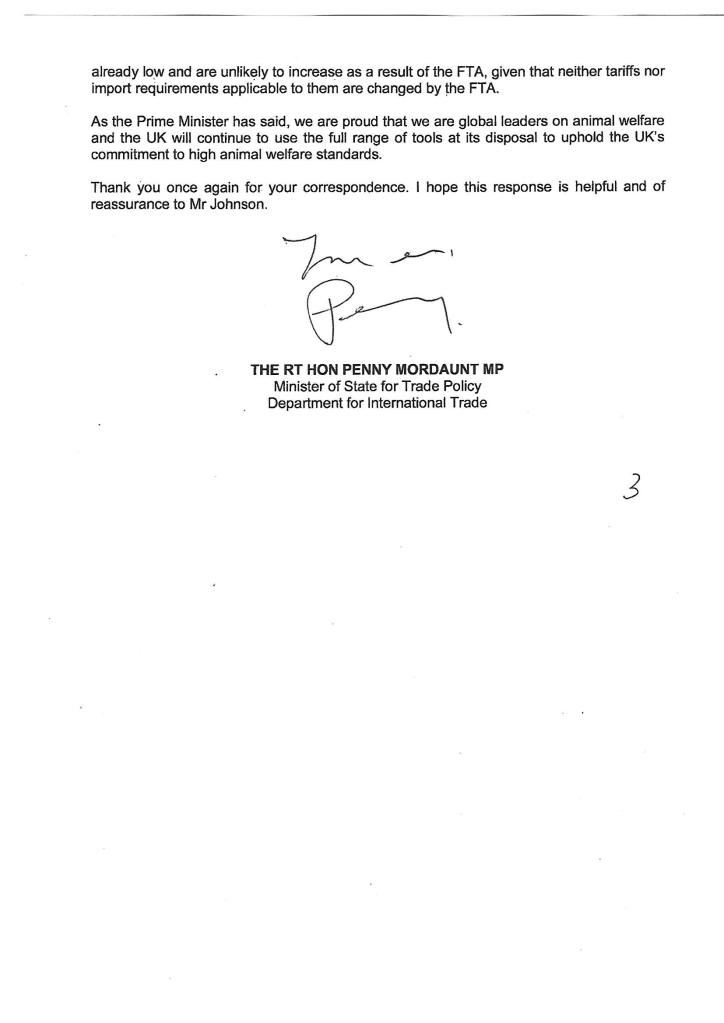
England: Response From UK Government Over Our Letter Of Animal Welfare Concerns In UK – Australia FTA.

Around 8/6/22 we wrote to our (UK) Member of Parliament (MP) expressing our concerns over the UK-Australia Free Trade Agreement (FTA) and animal welfare issues.  We had serious concerns over the UK animal standards being lowered down to Australian levels by this deal, especially with Australia still undertaking the mulesing of sheep, using up to 16 times as many antibiotics on Australian farms compared to those being used in the UK, and of course, the continuation of live animal  exports from Australia to the Middle East.

You can read our letter of concern by clicking here:

England: WAV Write To UK Member of Parliament Over UK – Australia Free Trade Agreement (FTA). – World Animals Voice

We now have a letter returned to us dated 22/6/22 from Rt Hon Penny Mordaunt MP; the UK Minister of State for Trade Policy at the Department for International Trade.

I am publishing the letter below for everyone to read if they wish.

Minister Penny Mordaunt (MP)

Today is the 24/6; and I need to inform people that yesterday, the 23rd; the British government led by Boris Johnson, suffered 2 defeats in by elections in the South West of England and also in the North. 

Awful results for the Tories, but there’s something else that party’s ranks should fear (msn.com)

Will others follow Tory chairman out of the door? (msn.com)

We at WAV are non politically biased; we just fight for the better treatment and welfare of living, sentient beings.  These defeats though cannot simply be dismissed as a mid term ‘thing’ that happens in politics; many see this as something deeper, possibly a reflection of a government in crisis which is doing little and expecting the ‘normal working man (and woman)’ to pick up the tab.

Animal welfare deals included in the UK – Australia FTA are a concern to us here in the UK.  Australia has lower standards, the UK has better. We are keen to read in Penny’s letter that things are still moving on to deliver the (UK) Governments Manifesto commitment to end the live export of live animals for both further fattening and slaughter.  We are pleased to announce that despite the Bill not reaching law yet; live animals have not been exported to any degree (when compared to the past) for many months now. The Bill is working its way through both houses of Parliament in order to become law; and as we have campaigned against this sick business for nearly 35 years, we want to see action now !

The second page of Penny’s letter declares that the UK government has “secured ground breaking provisions on animal welfare with Australia, including the first stand alone animal welfare chapter in any signed FTA”.  We welcome the comprehensive partnership with Australia to progress and improve animal welfare standards.  These include a joint working group who will meet regularly to provide a forum to support cooperation on animal welfare issues between the UK and Australia, which includes best practices.

A ‘mulesed’ sheep in Australia.

Time to stop this abuse Australia.

We also welcome and support the UK governments and Australian efforts to stop the use of sow stalls, which were banned in the UK in  1999, 23 years ago !, and the commitments for bilateral cooperation which will see this practice also being stopped in Australia.

I will leave you to read the response to us from Penny, outing the UK government approach  to animal welfare ‘move forwards’ with Australia.  If we can make more efforts to stop live exports, the mulesing of live sheep, get the pigs out of sow stalls, and make differences for caged animals in Australia, then we may be on the road to further progress.

Finally, the massive government defeats in the UK yesterday sent a clear message to government that the common man and woman are not happy; and that things need to change, or else we change you by electing a different government.

So, get on and pass the (UK) animal welfare legislation to give animals a voice.

Forever hopeful ! (and continually fighting);

Regards Mark

Australia – BAN LIVE EXPORTS – NOW !!

Similarities of ‘Reworked Rust Buckets’; Resulting In the Deaths of Many Thousands of Live Animals. Disgusting !

Al Badri 1 – Sudan – Maritime Executive

WAV Comment:

The use of vessels which have exceeded their ‘scrap by’ dates and then purchased to be converted into livestock carriers are something which is seen all too much (unfortunately) by those of us monitoring the live animal export industry. 

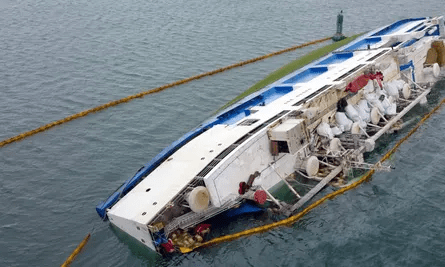
When the ‘Queen Hind’ sank after leaving the Romanian port of Midia in November 2019, many thousands of sheep also drowned there. Who is pulling one when they paint ‘Safety First’ on the vessel ?

180 out of 14,600 animals survive – Safety First !
Queen Hind

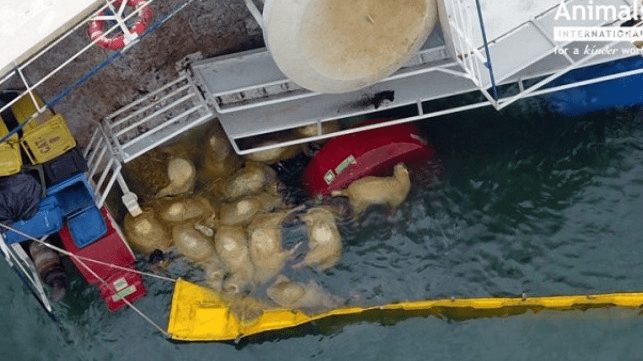
Only 180 sheep survived the ‘Hind’ incident out of the 14,600 initially believed to have been onboard, which was carrying them from Romania, the EU’s biggest exporter of the animal, to Saudi Arabia.

But the revelations uncovered during salvage about the Hind having secret decks only increased the death toll of the sheep carried by several thousands, and also raised fresh questions on whether overloading was to blame for the capsize.

Seems strange does it not, that the Sudan incident happening very recently, included the failure of an official PSC ministry inspection of the vessel over a 10-year gap from 2008-18.  Were the extra 4 decks fitted onto the vessel during this time ? – yes; and could this have been what caused the vessel to become ‘top heavy’ and overturn when fully loaded with animals ?

We are not afraid to say, but we also question if these incidents are about compensation issues.  If you have a very old ship and it is written off, do you not get insurance money which will probably buy you a better one ? – and the livestock ?; somebody somewhere is going to get compensated for the ‘loss’ of the cargo one assumes.

A disgusting business which belongs in the history books.  No doubt it will happen again, what once, twice or more ?

I simply ask the question; how are these old rust buckets allowed to cross the oceans of the world carrying livestock when they have not had an official inspection for over 10 years ? – when I have a car, it has to be inspected and pass rigorous (MOT) testing by the authorities each and every year.  ‘My car’ carries 4 or 5 people, not 15,000 live animals; so should ithe floating death traps not be inspected more regularly to higher standards when operating ? – especially when they are that old in the first place.

Baffled ? – yes I am, just like many others.

Regards Mark

—————————————————————–

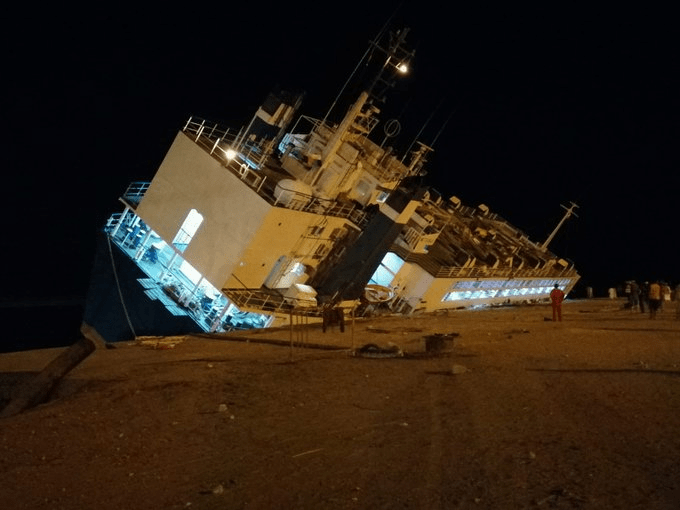
The vessel Al Badri 1 (misreported as the Badr 1) began sinking at the pier at Suakin, Sudan in the early hours of a recent Sunday morning. The vessel capsized slowly, officials told The Guardian, and the crew had enough time to disembark. Only some 700 sheep escaped and survived. 

The loss of the Al Badri 1 may affect the port’s operations, as well as the environment, given the potential for a fuel oil spill and the effluent from the decay of thousands of sheep. The vessel is now submerged next to its berth, interfering with the pier’s use until the wreck is cleared.

The Al Badri 1 (ex name Henry Stahl, Ester 1, Ytong 1, Malak 1) was a stern-ramp ro/ro freighter originally built in 1973 and converted into a livestock carrier later in her lifespan.

She had a history of port state control deficiencies in recent years, as well as a 10-year gap from 2008-18 in which she had no PSC inspections. 

Images from before and after the Al Badri 1’s conversion suggest that four extra decks were welded on above the ship’s main deck level to add more space for livestock. 

Worldwide, livestock carriers are generally older than the average merchant ship, and the average fleet age for the class exceeds 40 years. Almost all are conversions, often from ro/ro vessels.

The ships selected for the conversion process have usually already arrived at the normal age for demolition (about 30) when they begin their new life, based on a 2021 study by Animal Welfare Foundation, Tierschutzbund Zürich and Robin des Bois. 

A similar incident occurred aboard the livestock carrier Queen Hind in November 2019. The vessel capsized off the coast of Romania under unusual circumstances, drowning almost all of the 15,000 sheep on board. 

WAV article on this – Romania: Secret Decks of Sheep On The ‘Queen Hind’ Which Sank at Midia ??. We Still Wait For EU Action and the Report Promised by the Romanian Government. – World Animals Voice

From the Romanian incident – Secret decks for extra animals have been found in a livestock carrier that sank off the Romanian port of Midia in November drowning thousands of sheep, according to the company carrying out the massive salvage operation.

Only 180 sheep survived out of the 14,600 initially believed to have been onboard the Queen Hind, which was carrying them from Romania, the EU’s biggest exporter of the animal, to Saudi Arabia.

But the revelations about secret decks are likely to increase the death toll by several thousands, and raise fresh questions on whether overloading was to blame for the capsize.

The vessel was left on its side in the water as it sank not far from port, with sheep corpses piling up around it. Images of the tragedy made headlines worldwide and led to renewed calls by animal activists to impose a ban on live exports from Europe to non-EU countries, particularly the Middle East and north Africa.

We also understand that the vessel in the Sudanese incident was officially only allowed to carry 9,000 animals; yet 15,800+ being carried drowned. Thus, it would appear as we always suspect with these cheap rate bathtubs which are used in this business, the vessel was carrying twice as many animals as it should have been; which we expect (are very certain of) being the cause of the incident in the first place.

It has happed before – see the ‘Queen Hind’ secret decks data above.

Regards Mark

Welfarm’s new campaign exposes the suffering of farm animals in hot weather.

10 June 2022

WELFARM

News

As the summer season approaches, Welfarm launches its new campaign to end the suffering of farm animals in hot weather.

Climate change will increase the intensity and frequency of heat waves, posing increased risks to farm animal welfare. The IPCC Sixth Assessment Report recently showed that climate change is causing a steady increase in temperature. This increase is not without effect on farm animals.

For several years, Welfarm has been reporting on the suffering of animals transported by extreme temperatures. On 19 May, Welfarm decided to go one step further by alerting the general public and institutional actors to the consequences of global warming for farm animals whether on farms or in trucks and boats. 

With this new campaign Welfarm calls on authorities to radically change the conditions under which animals are kept and transported to put an end to the suffering they endure during heat waves.

Welfarm’s demands are as follows:

With regard to livestock

  • Reduce densities,
  • Ensure an appropriate environment for the animals (access to open-air for terrestrial animals, shaded ponds for fish).

With regard to transport

  • No transport of animals at temperatures above 30°C,
  • Ban on export of live animals to non-EU countries.

Regarding transport, Welfarm has relaunched its Truck Alert application, which makes it possible to report trucks transporting animals during hot weather. 

For more information on the campaign or to sign the petition: click here

Read more at source

Welfarm

Regards Mark