Major airlines apparent illegal monkey shipment prompts complaint from animal rights activists Image: WICHAI WONGJONGJAIHAN/Shutterstock.com
AN alleged illegal transportation of monkeys by China’s Hainan Airlines has prompted a complaint from animal rights activists, PETA.
The American non-profit animal rights organisation People for the Ethical Treatment of Animals (PETA) filed a complaint with the US Department of Agriculture (USDA) and the US Fish and Wildlife Service’s Office of Law Enforcement after Hainan Airlines reportedly shipped 720 endangered long-tailed macaques in the month of August from Cambodia to Chicago.
The USDA confirmed that it had cancelled Hainan Airline’s registration in May, making this shipment an apparent violation of the federal Animal Welfare Act (AWA), the organisation said on Thursday, August 25.
“Based on a whistleblower report, the monkeys were sent to a facility operated by Envigo Global Services Inc. in Alice,” PETA said in a statement.
It added: “Envigo has repeatedly shown that it values profits over animal welfare.
“Following PETA’s undercover investigation into Envigo’s beagle-breeding facility in Virginia last year, the USDA cited the company for 48 violations of the AWA and a US Department of Justice civil case led Envigo to announce that it will shut down the facility.
“In 2019, the USDA also cited the company’s monkey facility in Texas with a critical violation of the AWA for failing to provide 25 monkeys with food for six days. Envigo had to euthanise two of these animals because they were so severely starved.”
PETA Senior Science Advisor Dr Lisa Jones-Engel said: “Whether you’re talking about beagles or monkeys, Envigo cannot be trusted to take care of animals or safeguard public health.
“Monkeys brought in from squalid farms in Asia endure terrifying, gruelling journeys and can harbour everything from Ebola to malaria. If Hainan can’t be bothered to do the minimum of registering itself as required and Envigo doesn’t ensure that its carrier is legitimate, we have to ask whether they’re following any of the protocols required for public safety.”
Long-tailed macaques are now recognised as an endangered species by the International Union for Conservation of Nature, the company noted.
“[This is in] large part due to their exploitation as part of the international wildlife trade to U.S. laboratories, where they’re mutilated, poisoned, deprived of food and water, forcibly immobilised in restraint devices, infected with painful and deadly diseases, psychologically tormented, and killed.”
Hainan appears to be one of the last airlines still shipping monkeys to laboratories.
Bella Hadid has encouraged her followers to end carriage horse abuse following the collapse of a carriage horse in New York City.
In a recent Instagram post, the 25-year-old supermodel shared photos of the horse, Ryder, while it was collapsed on the street, and screenshots of an article about him.
She also shared an image that reads: “Take action to end carriage horse abuse with one call/email.”
She tagged multiple New York City Instagram accounts, including mayor Eric Adams and the NYC council in the caption, and asked them to “phase out cruel carriage horses” and “protect them while it’s still here”.
Hadid also acknowledged that she hopes the horses will one day be replaced by “a humane & electric alternative”.
WAV Archives.
Hadid went on to show her support for Ryder by asking the Manhattan district attorney and the New York police department to do an investigation on the horse’s owner, Ian McKever, who was driving the carriage when the animal fell.
“This has been going on for WAY too long in this kind of environment,” she wrote. “Another sick, malnourished carriage horse collapsed in distress on the hot pavement of New York City while his driver whipped him repeatedly.”
“We are also calling on the Manhattan District Attorney & the NYPD to investigate criminal animal abuse charges against Ian Mckeever for his abusive behaviour,” Hadid continued. “Ryder needs immediate help and to be released from his abuser.”
She concluded the post by expressing how “barbaric” it is that horses have to “pull” large carriages through NYC and specifically called out Mayor Adams.
“It’s barbaric to force horses like Ryder to pull heavy carriages in extreme heat in the busiest part of the busiest city in America without a place to break or eat,” Hadid wrote. “We have to do something now. This should have been done years ago. Eric Adams, The world is watching!!
Please do what is right for these animals. Take action.”
WAV Archives
Hadid then included a link to NYClass Act, a non-profit organisation with the “core mission of saving NYC carriage horses, enacting animal rights legislation into law, and electing pro-animal candidates to office”.
Ryder collapsed and buckled at the knees on 10 August in midtown Manhattan, at 45 St and 9th Avenue. Videos online showed the carriage driver yelling at the animal and slapping his back. The owner also appeared to be pulling on the horse’s reins, even though onlookers told him to stop.
Following the incident, Tony Utano, president of the local Transport Workers Union, which represents carriage drivers in New York, gave an update on Ryder’s condition.
“The veterinarian believes Ryder has EPM, a neurological disease caused by possum droppings,” he said. “This is another example why people shouldn’t rush to judgement about our horses or the blue-collar men and women who choose to work with them and care for them.”
New book reveals factory farming a threat to humanity as big as climate change
18 August 2022
Compassion In World Farming (CWF)
Taking its title from a chilling warning made by the United Nations that the world’s soils could be gone within a lifetime, “Sixty Harvests Left” uncovers how the food industry threatens our world.
Author Philip Lymbery is the President of Eurogroup for Animals and Chief Executive of Compassion in World Farming.
Sixty Harvests Left takes us behind closed doors and into the boardrooms of industrial agriculture, investigating the dark side of food production. It confronts ‘Big Ag’, whose mega-farms, chemicals and animal cages are sweeping the countryside and jeopardising the very air we breathe, the water we drink, the food we eat and the nature we treasure. It spotlights the pioneers who are battling to bring landscapes back to life, in a world where wildlife, hens, pigs and people thrive by protecting the very thing that our civilisation is built on: soil.
At the heart of sustainable change lies a recognition that all life on our planet is interconnected, and that our future depends on treating it with compassion and respect. In so doing, we can protect the world’s wildlife and soils as if our life depends on it – because it does. The life expectancy of farmland soils would change from just sixty harvests left to one of infinite sustainability, while regenerative, agroecological farming can help end cruelty to animals, save wildlife, stabilise the climate and safeguard the planet for future generations. And to me, that seems like a future worth having.
Philip Lymbery
Combining insightful analysis, storytelling and research, award-winning author Philip Lymbery demonstrates why food and future harvests matter more than ever, and shows us how we can restore our planet for a nature-friendly future.
In this beautifully written book Philip Lymbery describes how intensive agriculture harms the environment and inflicts suffering on sentient animals. But after visiting with and talking to those on the front line – scientists, farmers and food providers, he is able to show that there are sustainable alternatives. And that they are working. There is indeed hope for the future of our planet, and each one of us can play a part. I urge you to read ‘Sixty Harvests Left’.
Dr. Jane Goodall, DBE, Founder of the Jane Goodall Institute
Regards Mark
WAV Comment: Phil and I have known each other for about 40 years; in earlier days we both became very involved with campaigning at Dover, Kent, England; against the live export of lve animals. Phil is now the CEO of CIWF, which you can visit at:
Many of you know that live animal transport (exports) are one of our main issues.
Here are some stories and links, and videos, from ‘Animal Equality’. There is a lot to take on, and so at the end I have given a link for you to complete the reading.
The top right ‘wire globe’ (in the link) allows you to convert translation into several languages if you desire.
Regards Mark
.
What are we doing to stop the transport of live animals?
The transport of live animals is one of the topics on which our team of researchers has focused the most in the last 10 years of research.
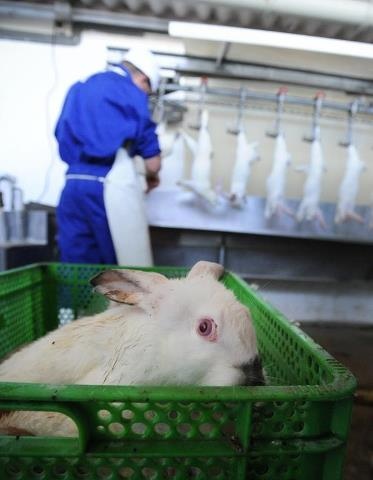
After a miserable life on a farm, every animal destined for human consumption ends up in the slaughterhouse.
But first, he is forced to endure another intolerable injustice: the transport phase.
A suffering that can last for days, weeks, months: an absurd journey towards death.
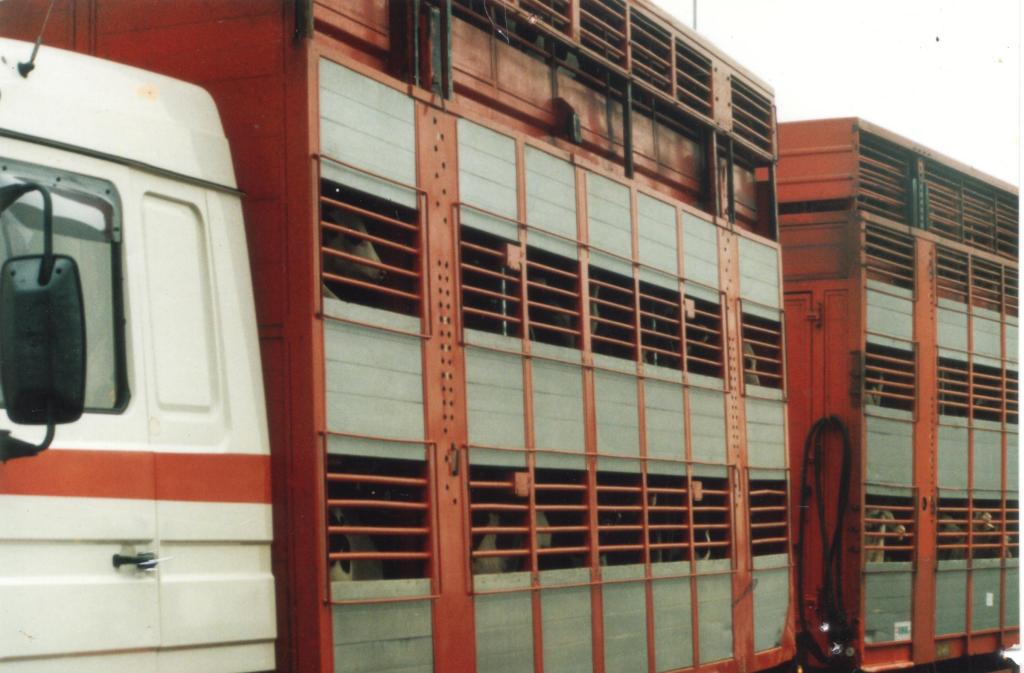
How many times have you traveled next to a truck from which you could glimpse, through small slits, animals crowded inside?
If you’ve ever encountered their eyes, you know what it means to see a living being suffer and not be able to do anything to ease their pain.
Because that is our job, what we have been doing tirelessly for more than 15 years around the world: we fight to end the suffering of animals raised for food.
To combat the transport of live animals, we are moving on several fronts: research is not enough, we need a precise strategy and that the institutions perceive us as authorised partners.
Here’s what we’re doing to counter the transport of live animals:
We have filed a complaint with the Directorate-General for Health of Agricultural Production;
We have filed a complaint that “is valid for an entire country”;
We have denounced and sanctioned non-compliant carriers whenever possible;
We have conducted 10 investigations in 10 years;
Thanks to our research work and political pressure, the Committee of Inquiry into the Transport of Live Animals (ANIT) was set up in the European Parliament;
We are working with ENPA and the Ministry of Health to increase roadside inspections.
THE LAWSUIT FOR IRREGULARITIES IN THE TRANSPORT OF LAMBS TO SAUDI ARABIA
Thanks to the images obtained during the shipment of lambs in the Port of Cartagena bound for Saudi Arabia that revealed acts of mistreatment, we were able to file a lawsuit with the General Directorate of Health of Agricultural Production.
The workers resorted to violence to force the lambs to move.
These practices are in breach of the European Union Regulation on the protection of animals during transport.
In addition to this demand, we also initiated a petition addressed to the European Commission and the Ministry of Agriculture, Food and Fisheries demanding the end of long-distance transport that has already been signed by more than 46,000 people.
THE COMPLAINT AGAINST SPAIN
THE CASE OF DRIFTING BOATS
The case that has led us tothe decision to file a complaint with the European Commission against Spain is the one that affects the ships Elbeik and Karim Allah, which left the Spanish ports of Tarragona and Cartagena, respectively, in the spring of 2021.
On board these ships were hundreds of thousands of animals, specifically 895 cattle in the Karim Allah and 1789 calves in the Elbeik. The animals were to be sold in Tripoli (Libya), but once they were denied disembarkation due to an alleged animal disease, the boats were leftadrift and remained so for more than two months.
During these very long weeks, the animals traveled locked in pens in chilling hygienic conditions, going back and forth from one country to another, without the possibility of being unloaded in a port or even being able to rest or feed.
TheSpanish authorities – which would be responsible for enforcing EC Regulation 1/2005 regulating the protection of live animals during transport – did not take any measures to put an immediate end to the extreme suffering of animals on board.
All this despite the fact that the authorities were aware of the situation.
Already on February 18, 2021, when the karim Allah ship was near the port of Cagliari, Animal Equality – in collaboration with ENPA and the Foundation for Animal Welfare – sent a petition to the Italian Ministry of Health requesting an immediate inspection of the ship and livestock on board.
Following our request, the Ministry had scheduled an official inspection, but the ship left Italian territorial waters before it could be done.
In addition to this report, Animal Equality, again in collaboration with ENPA, sent two petitions to the Spanish Ministry of Agriculture requesting urgent action to safeguard the health of animals still alive in karim Allah.
However, the Spanish Ministry did not react with the speed required by the case and did not immediately force the animals to be docked and unloaded, despite the fact that EC Regulation 1/2005 considers that it is a perfectly legitimate measure in case of infringement.
This decision came much later: the Karim Allah was forced to dock in the port of Cartagena after weeks of travel and the Elbeik, also in the same port, after three months of its departure.
In both cases, all the surviving animals were sacrificed, while others, in both the Karim Allah and the Elbeik, died on board. Some animals were also torn to pieces and thrown into the sea, according to the sources.
The condition of the animals was terrible: the cattle were injured, hungry, in obvious pain and dehydrated; some were in a state of stupor, unable to open their eyes or respond to stimuli.
Equally shocking were the conditions of the boats: the pens were overcrowded, in sanitary conditions so extremely inadequate that the animals could not even lie down; the pens were built with iron pipes with rusty and broken areas; the drinking troughs were closed and fodder and straw were totally absent, with numerous rodents present on the decks.
THE COMPLAINT
Animal Equality, in collaboration with ENPA, filed a complaint with the European Commission against Spain, pointing out the incorrect procedures and omissions carried out by the authorities of the ports of Tarragona and Cartagena, which should have controlled compliance with the minimum standards of protection of animals on board the ships Elbeik and Karim Allah.
We have asked the European Commission for an audit on the correct application of the Regulation on the protection of animal welfare during transport by the Spanish authorities and the possible opening of a procedure for infringement of European legislation.
In addition to bringing these testimonies to light, we have done much more:
We protest against the Spanish and port authorities, even filing a complaint with the European authorities against Spain for incorrect procedures and omissions on the part of the port authorities, which should have monitored compliance with the minimum animal protection standards. These practices are widely in breach of the EU regulation on the protection of animals during transport, which explicitly prohibits excessively long journeys without adequate veterinary care, food and water;
We have also submitted a petition to the European Parliament, asking MEPs to take the measures they deem appropriate to ensure compliance with EU legislation on the protection of animals during transport, with particular reference to their export by sea from Spain, and other affected Member States, to third countries.
UPDATE: THE COMMISSION HAS RESPONDED TO US!
A year has passed since our complaint against Spain to the European Commission and the sending of the petition to the European Parliament, which followed the case of the ships Elbeik and Karim Allah, left adrift for months by the omissions and incorrect procedures applied by the competent authorities.
A news that has confirmed, for the umpteenth time, the serious violations that the Spanish authorities continue to commit of European legislation on the welfare of live animals transported.
The Commission has finally responded to the comments we included in the petition to the European Parliament, specifying some measures it has taken or intends to take.
The European Commission has informed us that:
It will carry out 4 new audits, i.e. in-depth assessments, during 2022, including one in Spain;
The Commission has carried out audits in the Member States responsible for the authorisations granted to the Elbeik and Karim Allah vessels, namely Romania and Croatia, in order to clarify possible shortcomings related to the approval of the two vessels. What is clear from these findings is that these two vessels are not currently authorised to transport live animals;
The Commission is developing rules to step up official controls on cattle ships and at exit points from EU ports.
The Commission also gave us important news about Spain’s intentions:
“Spain has submitted to the Commission a series of corrective measures, including its protocol on the protection of animals during the export of livestock by ship, its new national legislation on the welfare of animals during transport and its working agreement with the General Directorate of the Merchant Marine of the Ministry of Transport to help the competent authority to carry out official controls for the granting of authorisations to ships.”
We are sincerely pleased that our request has been accepted and that Parliament has asked the Commission for explanations: although on this occasion the demands of animals have been taken into account, our work does not end there.
In fact, we have requested a copy of this document to know the deadlines and to be able to verify that these actions are really executed by Spain.
PENALTIES FOR NON-COMPLIANT CARRIERS
The work of denouncing that we have carried out over the years has been crucial not only in paving the way for inspections by the authorities and obtaining sanctions, but also in supporting political and media pressure, in denouncing those responsible for animal offences and – very importantly – also in calling on the European Parliament to shed light on infringements of transport legislation.
With our latest investigation at the Slovenian border to document animals destined for Italian slaughterhouses, we managed to denounce and fine two transporters.
After constant surveillance to intercept suspicious vehicles, our investigation team discovered a truck from Hungary, chased it and quickly reported it to the traffic police.
And the following irregularities were found:
The drinking fountain system did not work and lost water, but not only that, the system was prepared for pigs and not for sheep;
The temperature control system inside the vehicle was damaged;
The space for the lambs was insufficient: the animals could not even stand;
The carrier was sanctioned for the first two points with a total fine of more than 3000 euros.
In addition to those “officially” recognized by veterinarians called by the police, there were many other problems:
There were animals of different species and ages in the same transport;
The vehicle had metal parts and internal obstacles, a possible risk to the animals transported;
The lambs were in an obvious state of stress.
We have a duty to show and document everything, even what escapes inspection and what is not taken into account by the authorities, because every detail represents real suffering for these animals.
I liberated a wasp this morning. It was in the bird bath and would not have survived had it not been fished out of the water.
This afternoon (4/8/22), and it has kind of broken me at the moment; I have had to have my prettiest star, Sally the cat, put to sleep. She was 22 years old, which makes her around 110+ in human years (if we have to do a comparison). She was my one shining light on many depressing days and dark corners, and believe me, there are many now days. She wanted nothing but affection, love and (plenty of) food, which she enjoyed a great deal; simply giving back love and enjoyment, entertainment, in return. She had love and affection, and comforting voices right up to the very end, the moment she passed. Most animals in the current ‘systems’ do not experience this.
What about all the millions of animals that are reared to be blasted by shooting parties ‘enjoying’ a day out ?.
What about all the animals who are live crammed into transport trucks or death ships as they are hauled all over the globe for a few pennies more ? – Live Transport – World Animals Voice.
What about all the animals in the labs that are abused and injected with god knows what; having their skulls sliced off in the name of something which has gone on for decades and yet, never really brings anything in the way of medical advancement or progress ?.
What about the badgers who are being culled by the tens of thousands in the UK to simply win votes from the farming community ? – Search Results for “badger culling” – World Animals Voice. What about the Krebbs report which said that culling badgers was unnecessary ?.
What about the dogs and horses that are bred to be raced against each other so that humas can win a tenner on a bet ?.
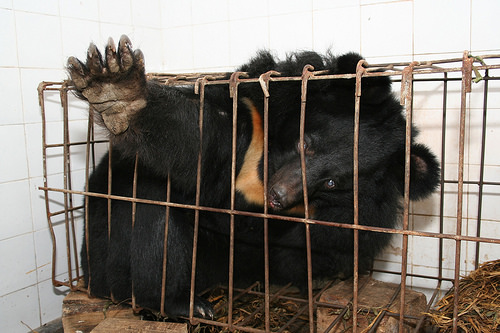
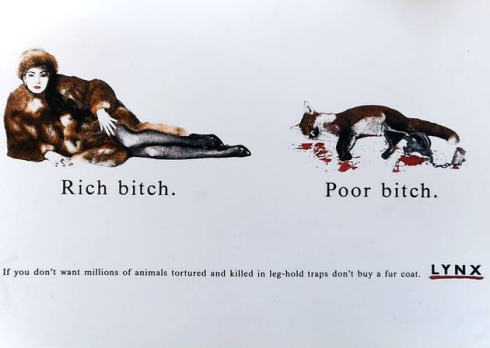
What about the dogs held in Korean cages for their meat; what about the animals who are farmed (the poor bitches)and skinned alive for their fur to adorn the body of some fur hag who is sometimes known as a rich bitch ? – Search Results for “fur” – World Animals Voice
Lots of ‘what abouts’; and by no doubt I have missed many other subjects who deserve just as much.
Yup; all issues constantly and thankfully getting a lot of campaign attention by the mob that goes under the umbrella of animal rights. If that pigeonholes you as part of the mob, then am glad, no very glad, to have been part of the mob for 45+ years.
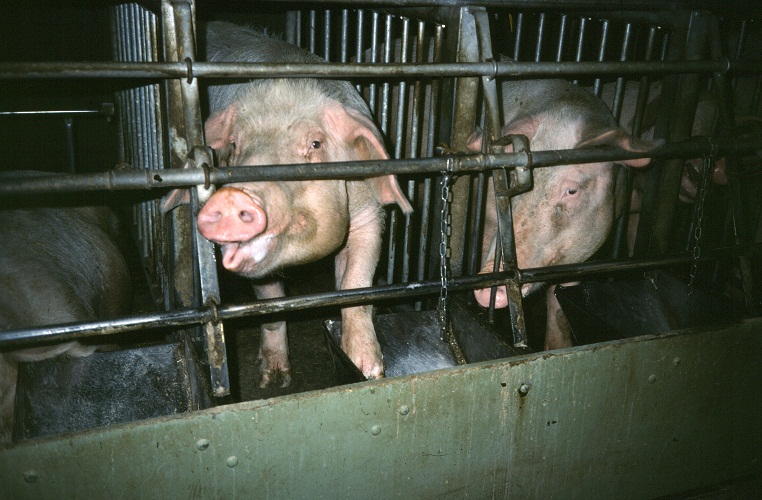
Sally was fortunate; she had a loving environment. Many animals as shown above suffer nothing but abuse from the moment of birth through to the moment of death. They never experience a kind hand, only abusive ones.
For Sally:
Remember when you were young? You shone like the sun Shine on, you crazy diamond
Nobody knows where you are How near or how far Shine on, you crazy diamond
Pile on many more layers And I’ll be joining you there Shine on, you crazy diamond
Then we’ll bask in the shadow Of yesterday’s triumph
Shine On You Crazy Diamond
Pink Floyd
You will be my rest and peace child I moved up to take a place, near you The prettiest star One day though it might as well be someday You and I will rise up all the way All because of what you are The prettiest star One day though it might as well be someday You and I will rise up all the way All because of what you are The prettiest star
Roadside checks document transport of live animals in temperatures over 36°C without water
25 July 2022
Essere Animali
Roadside checks by Essere Animali investigators document trucks parked in the sun with pigs inside, gasping, visibly out of breath. These are dramatic scenes, but they do not constitute any violation of law, thanks to “an absolutely inadequate EU regulatory system in terms of concretely protecting animals” the organisation states.
Bologna, 21 June 2022 – In these days of extreme heat, the organisation Essere Animali carried out monitoring activities along the A1 motorway, between Lodi and Bologna, to document the conditions of the animals transported for food production.
The organisation’s investigators monitored trucks used for the transport of live animals, intercepting them en route and following them until they arrived at the slaughterhouse. The temperatures were detected through the use of a heat gun, with which it was possible to ascertain the exact temperature inside the compartment of the truck in which the animals were transported.
We have documented trucks that travelled with external temperatures of 36°-38°C and that, upon arrival at the slaughterhouse, stopped for 30 minutes in the sun before unloading the animals. In these cases, it was possible to verify that the pigs were forced to remain in the truck with internal temperatures above 40°C. Unfortunately, the current regulations do not provide for temperature limits inside or outside the vehicle for journeys with a duration equal to or less than 8 hours, merely requiring that the means of transport should be able to protect animals from ‘extreme temperatures’, and prohibiting them from being transported in conditions that expose them to ‘unnecessary injury or suffering’. The lack of objective parameters of reference therefore creates a vast unregulated grey area, which does not facilitate appropriate intervention when the welfare of the animals is not respected.
President of Essere Animali, Simone Montuschi
Regulation (EC) No. 1/2005 on the protection of animals during transport does not place any limit on journeys that last up to 8 hours (or 12 hours if an exemption is granted) with regards to either the temperature inside or outside the vehicle, or the possibility of accessing water; provisions are only in place for long journeys of more than 8-12 hours. In this case, it is specified that the ventilation systems on the means of transport must be designed, constructed, and maintained in such a way that, at any moment in the journey, regardless of whether the means of transport is stationary or in transit, they can maintain a temperature between 5°C and 30°C inside the vehicle, with a tolerance range of +/- 5°C depending on the external temperature.
In a note issued at the beginning of June addressed to the Direction of the Traffic Police and to the trade associations of lorry drivers and veterinarians, the Ministry of Health requires that the transport of live animals must not be carried out with atmospheric temperatures above 30 degrees at the start of or during the journey. However, the reality documented by the investigators of Essere Animali shows that these provisions are not effective in practice, and there is an urgent need for greater legislative protection during transport operations.
If we allow transport for several hours when the outside temperature touches or exceeds 30°C, the pigs inside the trucks, due to crowding and the body heat produced, will be forced to withstand temperatures around 40°C. But the scientific literature indicates that for adult pigs, the thermoneutral zone – that is the range of temperatures within which the animal is able to maintain its normal body temperature – is approximately between 8°C and 25°C. The animals transported in these days of high temperatures were therefore subjected to stress and suffering.
Simone Montuschi adds.
Essere Animali believes that new European laws are needed as soon as possible to better protect animals, as the current ones are too generic, and do not take into account various species-specific requirements and with serious shortcomings, such as the lack of regulatory protection for animals during trips lasting up to 8 hours.
Through the Farm to Fork strategy, the European Commission has set itself the goal of carrying out a complete review of the legislation on animal welfare, including transport and slaughter of animals raised for food, by autumn 2023.
Through the No Animal Left Behind campaign, coordinated by Eurogroup for Animals and supported by dozens of NGOs from all over Europe, Essere Animali calls for the transport of live animals over long distances (longer than 8 hours) to be prohibited. Furthermore, they request the introduction of a range of acceptable external temperatures between 5°C and 25°C, outside of which any transport is prohibited. Finally, fundamental parameters must be clearly defined, such as species-specific and categories-specific conditions for the suitability for transporting animals, as well as the availability of space and method for water administration.
Allowing the transport of live animals when the measured external temperature is 30°C or more, and not providing access to water, is equivalent to not guaranteeing the welfare of the animals. It is clear that the current European laws for the protection of animals are incomplete and inadequate, so we ask the European Union and the Italian government to align the new legislative proposal with current scientific and ethological knowledge.
Simone Montuschi concludes.
The transport conditions documented by Essere Animali are disturbing, and bring to light a reality completely ignored in Italy. A country which, not by chance, was not among the thirteen member states that — on the occasion of the Agrifish Council, among the Ministers of Agriculture and Fisheries on 18 July — came out in favour of an ambitious revision of the regulation on the transport of live animals, which is planned to be presented by the European Commission in 2023. The deafening silence of Minister Patuanelli on such an important issue as animal welfare is unacceptable. Italy once again shows total indifference towards this issue and, on the contrary, unconditional support for a food system based on profit at all costs, as well as on intensive and industrial farming practices that not only exploit other sentient beings as if they were commodities, but also destroy forests, pollute soil and water, increase greenhouse gas emissions, and bankrupt small farmers. This is an unsustainable model for the entire planet, so it is urgent to reverse course without wasting any more precious time.
Eleonora Evi MEP, member of the Committee of Inquiry on the Protection of Animals during Transport (ANIT)
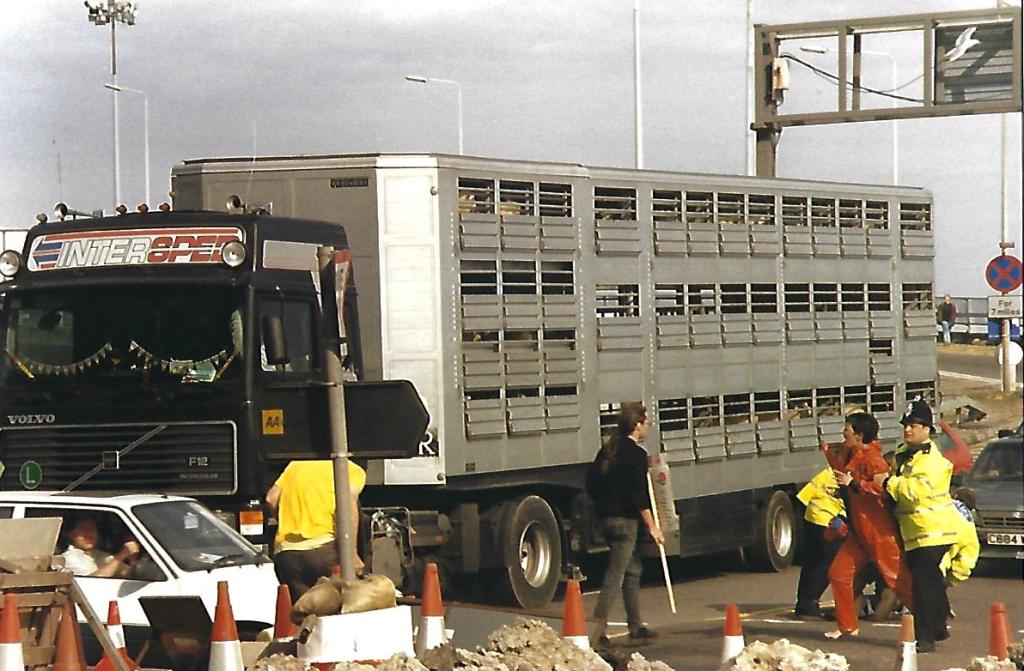
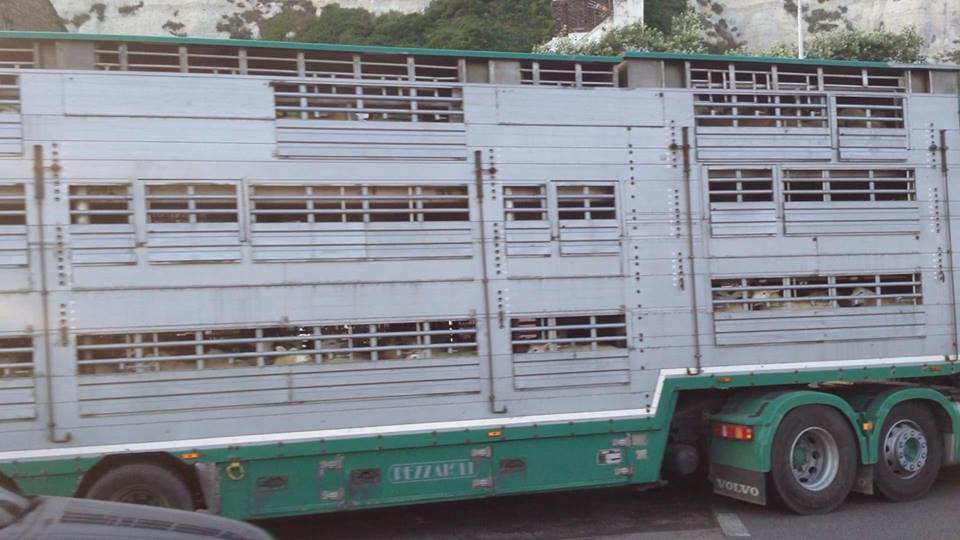
Battleground Dover around 1990 – Photo – Mark (WAV)
WAV Comment: Masses of EU and British animal welfare organisations, including us, have been calling for the introduction of a one off maximum 8 hour journey time for decades. In our specific case, 35+ years. As part of this requirement, they also demanded that the industry change as much as possible to a (dead) meat and carcass only trade. So why, only now, is the fossil called the EU just getting round to taking this issue seriously ?
EU citizens (and non EU citizens from the UK) are on the ball and want major change. It is only the EU Commissions and their lobbyists who appear to want to stick with the status quo. These days are now gone and people want, or demand change. The EU should get a clear message of what will happen if it ignores the wishes of its own citizens. MEP’s have woken up to the fact that they will be deselected if there is no change; so it is essential that they keep constant pressure applied on this issue, or they face the consequences.
We watch from the UK side lines now (having done Brexit and thus being allowed to change the live transport laws ourselves) to see if the EU fossil actually steps up to the plate and meets the demands of the EU citizens. God forbid the EU if nothing changes !
AGRIFISH Council – Member States step up their game for animals
18 July 2022
Press Release
Today’s Agriculture and Fisheries Council discussed two key dossiers for animals, specifically live animal transport and aquaculture: 13 Member States call for an ambitious revision of the Transport Regulation including maximum journey times as well as a shift to a meat and carcass trade. Now it’s time for the European Commission to incorporate these views in the revision which is due at the end of 2023.
Eurogroup for Animals is pleased to see concrete demands from Member States that can effectively have an impact on the welfare of animals. Indeed, the Belgian, Danish, Dutch, German and Swedish delegations (Vught Alliance) presented an information paper which received the support of 8 other Member States (Austria, Bulgaria, Estonia, Finland, Malta, Luxembourg, Slovakia and Slovenia).
The paper calls for a maximum of 8 hours for animals transported for slaughter, restricted journey times for unweaned animals, a ban on certain long journey exports, temperature intervals tailored for each species, specific rules for fish, amphibians, reptiles, dogs, cats, as well as transitioning to transporting meat, carcasses and genetic materials
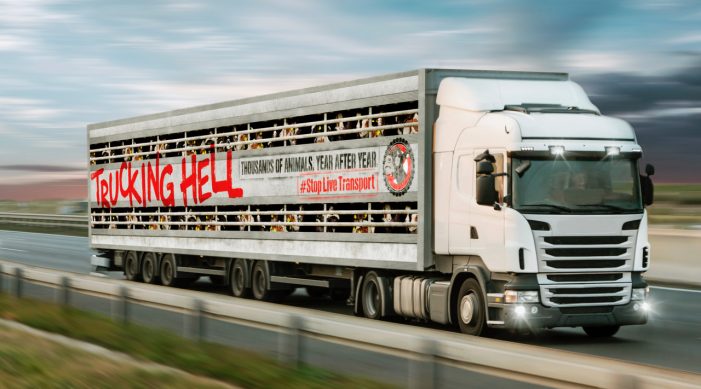
Trucking Hell – Part of the CIWF campaign to stop live animal exports.
.
Eurogroup welcome the introduction of species-specific maximum journey times and requirements for all animals, including cats and dogs, fish, and other vertebrate animals, 8 hour journey time for animals for slaughter as well as the acknowledgement that “it would be much more advantageous to transport meat, carcasses and breeding materials instead.” Clearly citizens expect even more ambitious changes but the paper is a step in the right direction
Reineke Hameleers, CEO, Eurogroup for Animals.
Despite the fact that the wording on certain key topics, such as live export and the transport of breeding animals, could have been much stronger, and while the specific needs of animals used for scientific purposes could have been better specified, Eurogroup for Animals believes this ministerial proposal is an important step towards the refinement, reduction and replacement of live animals transport.
In January 2021, Eurogroup for Animals published a White Paper on the revision of the Transport Regulation, in which species- and category-specific provisions for the transport of terrestrial and aquatic farm animals, equids, cats and dogs, as well as animals used in science are presented. Eurogroup trust that the European Commission (EC) will take Eurogroup for Animals’ position into consideration for the preparation of the draft legislative proposal.
Eurogroup are pleased to see the support the Paper obtained at the Agri-Fish Council, this encouraging result should provide the EC with a green light to proceed in line with these recommendations and ensure that the revised Transport Regulation will deliver towards its objective: the protection of animals during transport, and that it will be coherent with the EU sustainability ambitions.
Photo – PMAF *France).
On fish welfare in aquaculture, Eurogroup welcome the Council supporting the objectives that the EC has established for Member States and for itself, including developing best practice guidelines and validated indicators for fish welfare in aquaculture, and providing training to operators and competent authorities. To meet these objectives, the EC needs to leverage its own resources, including the European Food Safety Authority, and to create an EU Animal Welfare Reference Centre for fish, while Member States need to prioritise these fish welfare objectives in their national aquaculture plans and distribution of EU fishery subsidies.
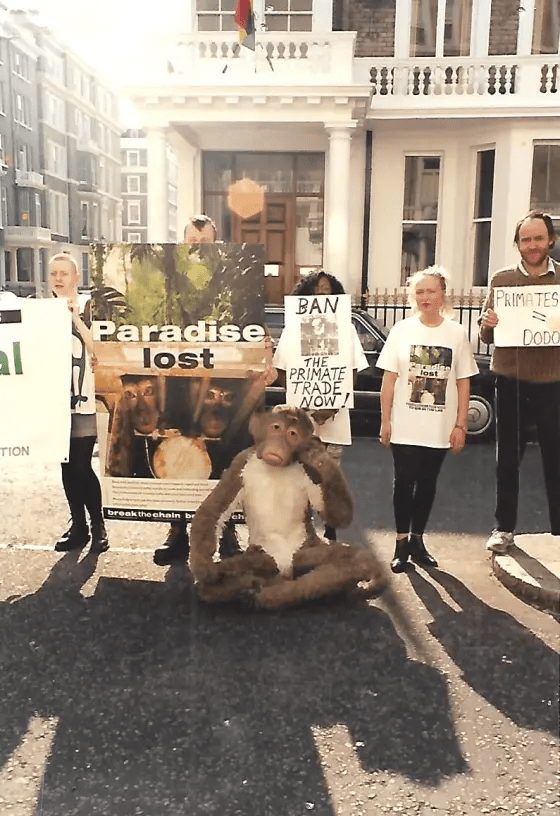
Doing Our Bit for the Primates In London (Mauritius Embassey) – Photo: Mark (WAV).
Hi all;
Have been dealing with specific animal issues over the last few days, but here now there is some good news for you all to read about. I will put each story on as an individual post in order that you can read and copy link if you wish.
Lets start with some amazing news, and huge congratulations to each and everyone involved with this campaign, for their tenacity and continuation of the fight for the primates. Since 1996; wow; I knew it was a long campaign as we have followed and done our bit here in England over the years; but I did not quite realise it was that long. Excellent and so very well deserved – well done all !!
London Mauritanian Embassey Demo. – Photo – Mark (WAV).
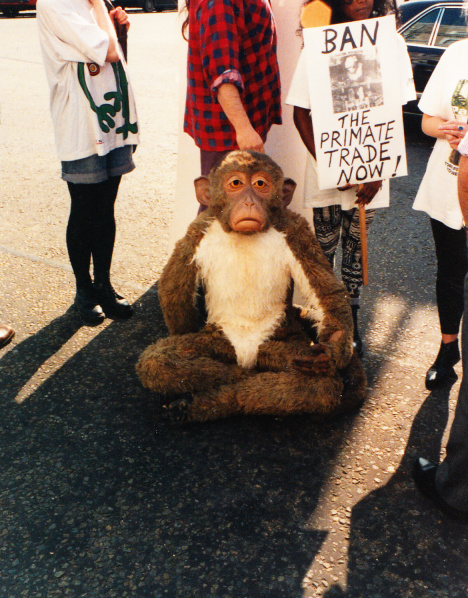
Sad Primate destined for the labs – Paradise Lost. Photo – Mark (WAV).
Click here to see us doing our bit in the past (37 years ago actually) in London for Mauritius caught primates:
Air France puts an end to primate shipments to laboratories
1 July 2022
On Thursday 30 June 2022, Air France publicly announced that it would stop carrying primates for animal experimentation. After years of hard fighting, One Voice has succeeded in getting Air France to stop transporting primates.
France is one of the countries in Europe that continues to experiment on primates, experiments in which the suffering inflicted on our cousins is particularly severe. Since 1996, we have been asking Air France to stop taking part in this torture inflicted on primates. We are extremely happy with this decision, even if it comes late in relation to the issue and other companies.”
Muriel Arnal, President of One Voice
Air France was one of the last major national airlinesto continue to take part in the cruel trade in animals for use by laboratories, and in particular monkeys, most of which come from the Republic of Mauritius, where they are violently captured in the wild and destined for reproduction. Many of them are sent abroad, turning France into the hub of this trade, which is certainly legal, but dreadful.
This decision comes against the backdrop of the collection of one million signatures for the Save Cruelty Free Cosmetics European Citizens’ Initiative to stop animal testing for cosmetics and the unanimous vote by MEPs to phase out animal testing in the EU by September 2021, and the effective implementation by the end of the year of theban on the use of F1 primates(first generation primates born in captivity from wild-caught parents), with many other national and cargo companies having ceased these activities.
We have a thought for the macaques from Indonesia, Cambodia, Mauritius, transiting via the Silabe platform (in connection with the University of Strasbourg), for those still transported by other companies (Wamos Air, Egyptair or AirBridgeCargo), but also via Russia or the United States.
The decision will not be effective immediately but at the end of Air France’s current contracts with research laboratories.
WAV Comment: Lets face it, we always hear promises from all the Australian governments about how things are going to get better. Australian sheep have a bad time from the minute they are born until they have been live exported to and barbarically slaughtered in the dregs that are other parts of the world. And lets not forget the mulesing which takes place in the Australian farms; – hacking off chunks of flesh without any form of anaesthetic. And now the UK says it is setting up a trade deal with them ! – for example:
Pesticide limits in Australia are 200 times higher than the UK’s. Australia also have 144 licensed pesticides, whereas the UK only licenses 73 of these substances.
I’m writing to share shocking new footage filmed inside a Victorian shearing shed earlier this year. The video shows a ewe – injured during shearing and badly bleeding – being held between the knees of a shearer, who is crudely stitching up her gaping wound without administering any pain relief. The shearer then mops up her blood with her own fleece.
This is far from the first time cruelty has been documented at an Australian wool operation.
Hours of eyewitness footage compiled by PETA over the years shows shearers hitting sheep with closed fists and electric clippers, kneeling on their necks with their full weight, and slamming them into the floor.
Sheep deserve better, and Australians deserve to know the truth about wool jumpers. Will you please help us speak up for sheep by sharing this exposé far and wide?
Once people know better, they can do better. Sharing information is the first step towards creating a kinder world for animals.
Want to know more about wool? The wealthy wool industry loudly and consistently extolls the virtues of the material, so it can be hard to sort fact from fiction. That’s why we’ve launched a new website, WoolFacts.com, to help consumers and designers develop a deeper understanding of the impact wool production has on animals and the planet.
We have had the following sent through from Ana; she asks ‘what can we do ?’.
Sadly Ana, probably very little now, as this all appears to already be done and dusted according to the article. The new deal has already been done. We agree with the statement in the article:
“Animals Now said the measure would provide an economic incentive to “an industry that abuses animals.”
“To continue to give a customs exemption for the import of live calves is to give benefits to a handful of businessmen, and to transfer hundreds of millions of shekels from the public purse to the meat industry, while humanity is dealing with the climate crisis, is simply absurd,” it said.
Article:
Government deal to boost beef industry pilloried as bad for climate, public health
Agriculture minister says NIS 420 million accord will help cut prices, while rights activists say permanent customs tax exemption on import of live calves is a license for abuse
A range of activist groups on Thursday denounced a new deal between the Agriculture and Finance ministries and the Israeli Cattle Breeders’ Association to boost the beef industry.
The agreement, reached Wednesday, commits the government to investing more than NIS 420 million ($122 million) into the local beef industry over the next seven years; removing customs duties on imported beef products; turning a temporary exemption on customs duties for livestock imports — which is renewed annually — into a permanent exemption; and increasing the number of foreign workers that can enter Israel to work in the sector.
Agriculture Minister Oded Forer described the agreement as, “more good news for dealing with the high cost of living,” that would help cut the price of beef, “a product that is in increasing and constant demand from year to year,” while also supporting the cattle breeders and giving the sector certainty.
The Israeli Association of Public Health Physicians and the Israel Forum for Sustainable Nutrition, however, warned in a statement that encouraging beef consumption was bad for public health, the environment and for fighting climate change.
According to UN estimates, livestock is responsible for around 14 percent of human-generated greenhouse gases, especially methane.
“To continue to give a customs exemption for the import of live calves is to give benefits to a handful of businessmen, and to transfer hundreds of millions of shekels from the public purse to the meat industry, while humanity is dealing with the climate crisis, is simply absurd,” it said.
According to Agriculture Ministry figures, a record 856,630 calves and lambs were shipped to Israel in 2021 for fattening and slaughter, an increase of 42% over a year earlier.
Per capita, Israelis are among the highest consumers of beef in the world.