Regarding the issue of the 70,000 live sheep exported from Romania to the Middle East recently, which we covered on a daily basis; we then raised the issue with EU MEP’s as to what injunctions were going to be taken by the EU against Romania.
Yesterday, 19/9, we finally had one e mail back to us regarding the issue. It was from the office of Judith Bunting MEP (for SE England). The letter was worded:
Dear Mr Johnson,
I apologise that you have not received a response from our office regarding this issue.
This is a notice to say that we have received your email and Ms Bunting will be in touch with answers to your questions in due course.
For now, we are waiting on responses from other MEP’s offices regarding:
– The Commission’s infringement proceedings against Romania
With regards to the other questions in your letter, we have contacted both the European Parliament’s Research Service as well as the Health and Food Commissioner’s office. They should be able to provide more clarity on the issues you discuss.
Kind regards,
————————————
Finally; someone is addressing our concerns ! – it is worth looking at the ‘motion for resolution’ submitted by Dominique Bilde MEP via the link given above.
So now we wait to see what we get back from the EU.
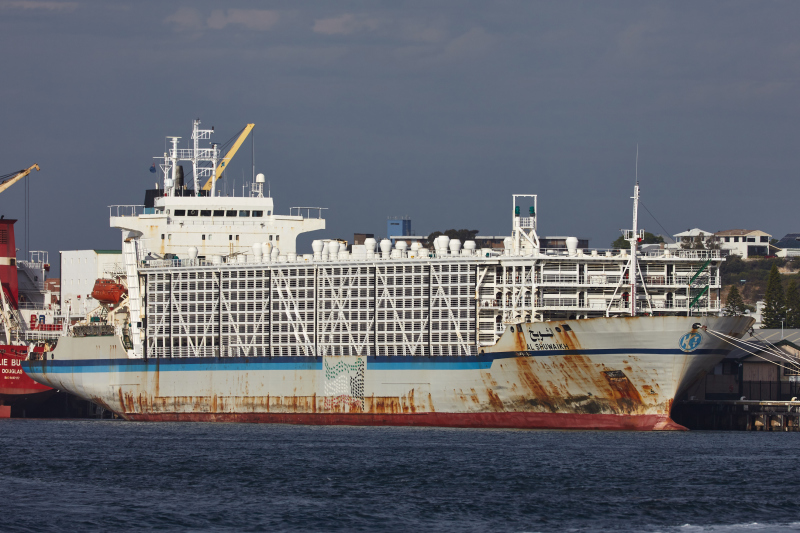
In the meantime; the same vessel (the Al Shuwaikh’) which carried all the suffering Romanian sheep to the Middle East is now trying desperately to get a consignment of sheep from South Africa – you can read more here:
We have yet to hear if the SA government are going to allow the shipments both now and in the future.
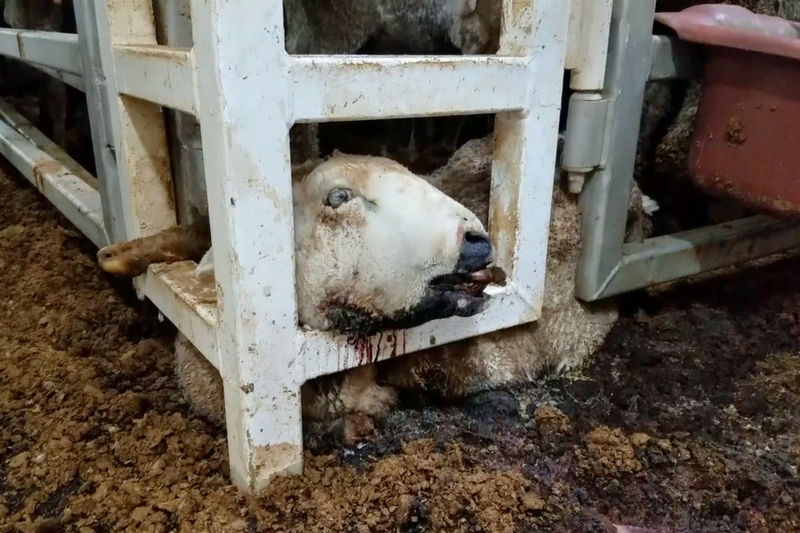
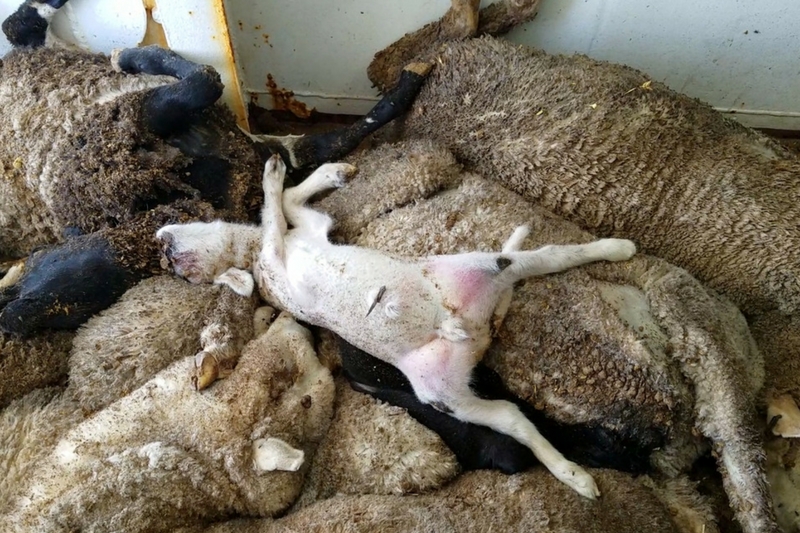
Here is a video showing the conditions in which the sheep are transported; and how they suffer during the voyage.
This is the reason why we fight the live export trade so vigorously; be it by road, sea or air. We will never give up with our exposure of the terrible suffering animals endure during live transport.
The Carte Blanche TV show says: “Facing prolonged loading processes, poor ventilation, stifling heat and overcrowded quarters, some 65,000 sheep will soon be packed onto a mammoth livestock vessel due in the East London harbor later this month. The livestock will be transported for weeks on the high seas, standing in their own filth, with no space to even lie down. Amid methane gas and ammonia accumulating in the cargo hold, this controversial trade deal between South Africa and the Middle East will eventually see millions of our sheep sent abroad.”
The TV show notes the whistleblower footage released by in Australia in 2017 that focused on the Awassi Express but also included footage from the Al Shuwaikh. The Carte Blanche presenter said the footage was so disturbing that it was decided not to show it on the program. He interviews Australian Dr. Lynn Simpson, a former live export veterinarian who has sailed on the Al Shuwaikh and who has been raising the issue of poor welfare on live export ships since 2001. Simpson says when she saw the footage, she was just seeing her experience from 57 voyages repeated.
The controversy surrounding the whistleblower footage continues in Australia – and an Australian Department of Agriculture observer report from a May 2018 voyage of the Al Shuwaikh revealed suffering and death as a result of the vessel’s design and management of livestock on board. The report indicated that for eight days sheep were open mouth breathing, indicating severe heat stress, as they “attempted to gain position around the ventilation vents on all open and closed decks.” Multiple instances of “death by smothering” occurred as a result of this. Heat stress was worsened by “oil fuel heaters being left on during the equator crossing” and poor ship design with “dark colored steel roof surface absorbing radiated heat from above.”
Additionally, the observer noted that water troughs were fouled with manure, particularly towards the end of the voyage when a skeleton crew were available to attend the livestock due to discharge preparations. There were significant welfare concerns during discharge, with the livestock, vocalizing loudly, left without fresh feed for over 30 hours. Moldy food was observed in the bottom of troughs for both sheep and cattle on numerous occasions. Dusty pellets were also observed, and on some decks this was largely attributed to the workings of the automated feeding system. The observer also noted that during rough weather a ballast tank overflowed into one of the sheep pens.
A Kuwaiti export company is apparently planning to export two consignments of around 70,000 sheep from South Africa to the Middle East this year, followed by 600,000 sheep, goats and cattle annually for the next three to five years.
Shatha Hamade from Animals Australia, says on the Carte Blanche program: “Every animal welfare organization on the planet opposes the live export trade by sea, and for good reason. The inherent suffering and risks in this trade are actually unavoidable.”
Regarding the export voyage planned for departure from South Africa later this month, she says: “I challenge the farmer that might be contracting with the Kuwaiti company, I challenge him to sit down and watch this [whistleblower] footage and talk to me and tell me that he thinks that it’s okay.”
WAV Comment – remember we recently covered the entire shipment of the ‘Al Shuwaikh’ when it was transporting 70,000 live sheep from Romania to Kuwait and Iran – well now it is setting its sights on live exports from South Africa – read more below.
From Animals Australia:
The Kuwaiti company responsible for Aussie sheep ‘cooking alive’ at sea is trying to gain a foothold in South Africa.
Little did they know, we were already there waiting for them.
On Sunday night, their hopes of loading South African sheep onto the notorious Al Shuwaikh without any scrutiny or opposition were fully shattered when the country’s premier current affairs TV program, Carte Blanche, aired an unforgettable ’60 Minutes’ style segment as to why South Africa should not export live sheep.
Please take a moment to see how our efforts to protect animals from the live export industry are going global: WATCH NOW!
Along with former live export veterinarian Dr Lynn Simpson, I was interviewed for the program. Caring South Africans are now venting their outrage that this company — having been stopped from getting Australian sheep during the Middle Eastern summer — has turned its sights on South Africa.
The Al Shuwaikh is currently sitting off the South African coast hoping to wait-out the public furore created by the Carte Blanche program. We are teaming up with local animal protection group, the NSPCA, to lobby the South African government to not allow this shipment.
The NSPCA would love Animals Australia supporters to band together with caring South Africans to call on their government to say ‘no’ to live sheep export. You can sign their petition here:
When I landed in Johannesburg to be interviewed for Carte Blanche, it was impossible not to reflect on the enormity of our efforts to bring an end to the global live export trade and the different continents it has taken us to.
Little by little, these powerful export companies are realising that their industry is now being held accountable globally due to the efforts of a relatively small animal charity from ‘down under’ and our band of compassionate and generous supporters.
Achieving this unprecedented exposé on South Africa’s highest-rating current affairs TV programme would not have been possible without our investigations, and without your support. As an investigator and an advocate, I send you a heartfelt thank you.
For the animals,
Shatha Hamade
Legal Counsel – Animals Australia.
From the RSPCA Australia:
Mark, we know how strongly you feel about ending the cruelty of live animal exports.
So we wanted to update you on some recent developments in the trade.
Despite the clear evidence that suffering is inevitable, live sheep exports resume
After a moratorium was placed on live sheep exports from June to 22 September, exports are due to resume this week. This is despite the overwhelming evidence that heat stress is unavoidable for the entirety of the high risk May to October period.
We will be watching this space closely, and are continuing to call for the Department of Agriculture to heed the evidence and protect sheep from suffering by ending this trading period.
What is the Department of Agriculture trying to hide?
Late August, the RSPCA was advised that the Department of Agriculture would refuse to release video footage from live sheep export journeys to the Middle East (footage we requested under the Freedom of Information Act).
On the day the footage was due to be released, we instead received a letter from the Department stating that the footage could not be released, because it could result in adverse criticism of the live animal export industry as a whole and be used by those who are opposed to the industry to lobby for the banning of the trade.
It’s extraordinary. How bad must this footage be (captured under the watch of the government observer), if the Department is concerned it could be used to advocate for an end to the trade altogether?
If the footage is so risky to the future of live export, it’s even more important that we see it.
We’ll continue to challenge this decision, and bring you updates.
Inspector-General of Live Animal Exports Bill passes Parliament
The establishment of an independent Inspector-General to oversee the Department of Agriculture’s regulation of live export was a key recommendation of the 2018 Moss Review.
The Moss Review found that the Department’s focus on trade facilitation negatively impacted its culture as a regulator of animal welfare.
As long as the regulation of animal welfare falls to the Department of Agriculture, the need for strong oversight by the Inspector-General will remain.
More evidence of cruelty to Australian cattle in live export
Sadly last week, we also saw more horrific footage coming out of Indonesia, showing Australian cattle suffering shocking slaughter conditions after they were ‘leaked’ outside the approved supply chain.
Once again, we have evidence of the Exporter Supply Chain Assurance System (ESCAS) failing to protect Australian livestock.
The RSPCA is urgently calling for a review into the ESCAS, and will be watching developments on this issue closely.
We will keep bringing you updates, and letting you know how you can help end the suffering in live exports. Thank you for your support.
We wrote to ‘our’ reps at the EP Parliament recently, asking what the EU is doing about live Romanian sheep being exported to the Middle East in temperatures way exceeding EU Reg 1/2005 on the protection of animals in transport, and also about the use of ‘box’ trailers to carry livestock in the EU.
Here is the link to that article; which involves a copy of our letter as well as a report associated with the box trailer issue:
At the time of writing this, 15/9; we have not even had any acknowledgement to our issues from ANY of the MEPs who are allegedly representing us. So also today, we have sent yet another e mail to them all asking for a response or acknowledgement in the very least.
Or, does this show the true face of the EU ? – people allegedly representing us in Parliament who do not even bother to contact us on issues ? – for which they are paid:
For that money, at least you would expect an acknowledgement of your letter; if nothing else.
In our letter of today we have at least asked for the basics; if these are not even met then we will be doing another post in the near future providing you, our supporters and visitors, with updated information.
A few days ago, the following report appeared on the website of the Animals Angels Organization, Germany, known for its excellent work against animal transports.
Great success: Lower Saxony prohibits long animal transports of cattle to Russia, Uzbekistan and Kazakhstan!
This was announced by Agriculture MinisterBarbara Otte-Kinast(Christian Democratic Union, CDU) on Friday. The Minister acknowledges that the animals on these routes are not adequately cared for.
Our stakes on the route to Uzbekistan in February contributed to this decision.
Three Animals’ Angels teams followed 66 pregnant cows from Germany over 6,000 kilometers to their destination for nine days. Locally, it became clear to us: The animals can not be so supplied – and get rest breaks – as required by EU law. In addition came extreme weather. Freezing cold and frozen potions, snowdrifts and slippery roads. Animal transports on certain routes will no longer be approved in the future.
“I have current information on the official side, that certain unloading and supply stations in the Russian Federation do not exist or only in insufficient condition,” said the Minister of Agriculture. “Therefore, I have arranged that the processing of cattle transports on the main route Kazakhstan-Uzbekistan-Southeast Russia will be stopped.”
Last year, about 3,600 cattle were transported from Lower Saxony to Uzbekistan and around 630 cattle to Kazakhstan.
In total, living animals worth just under € 42 million were transported to countries outside the EU in 2018. There was criticism, as the routes are often extremely long and can be difficult to check how well the animals are supplied with water and food on the way.
Animals Angels:“We welcome the Minister’s decision and hope that it sets an example nationwide and beyond, and we ask all authorities involved to take the next steps now”.
The turnaround of the minister surprised!
In the spring of 2019, Schleswig-Holstein, Bavaria and Hesse had already temporarily banned transport of animals to several countries outside the EU. The background was information from the animal welfare organization “Animal Angels” about a livestock transport in Lower Saxonyto non-EU countries where apparently animals were tormented. Corresponding information from the animal welfare organization “Animal Angels” about this transport has been available on the Minister of Agriculture’s table since the end of February.
Nevertheless: Otte-Kinast had still refused a ban of these transports.
The minister said at the time: “We simply do not have the legal basis to ban animal transports to third countries” !!
My comment: every step in the direction of “no animal suffering, no animal transports” makes us all happy and of course we also welcome such decisions.
We have demand the same ban from the EU Commission against animal transports from EU countries to the Arab countries. Without success, only with many victims.
Therefore, some questions arise openly: why did the Minister of Lower Saxony banned animal transports to Russia so quickly?
And six months ago, when it came to transports to North Africa, she rejected this prohibition on the grounds that it lacked the legal basis for this?
Under what reason is this basis now existing?
I have a guess: because the whole German policy is currently directed against Russia.
Forced by Trump’s anti-Russian strategy.
The move is good, but if this is only politically motivated, it will stay there and the animal transports in the “other” third countries will continue as they did before.
It’s been weeks since our Investigators returned home from their deployment for the Festival of Sacrifice, and I just wanted to drop you a quick line to once again convey how grateful I am to you.
I am now able to speak to you about what we found in Indonesia as this investigation was made public through the media this week.
Because of your support, we have again been able to document and expose the brutal treatment and slaughter of Australian cattle in Indonesia, and lodge a legal complaint with the Department of Agriculture.
I won’t go into detail within this email, because I know that many of you prefer to be spared. But if you would like to read about what our Investigations Unit documented, you can do so in this media article, published yesterday. It’s been eight years since I stood in a slaughterhouse in Indonesia and watched, with abject horror, the treatment that Australia’s live export industry had knowingly been supplying Australian animals to. I know for many of you, the images of one terrified animal who stood trembling as he watched his friends butchered around him, remain with you to this day.
‘Tommy’, the gentle Australian steer who we saw trembling in an Indonesian slaughterhouse in Indonesia, 2011.
What ‘Tommy’ endured — along with so many others — epitomised in the most tragic of ways, the callousness of Australia’s live export trade. The willingness of exporters to supply animals to brutal treatment was starkly exposed through that investigation, resulting in the then Gillard government implementing a new system of live export regulation.
The fact that Animals Australia has since had to police this ‘regulatory system’ in importing countries, is something that a charity should never have had to do. But I am proud that we have not shied from embracing the risks and challenges to be there for our animals, and call exporters to account. We’ve only ever been able to do this because of your support.
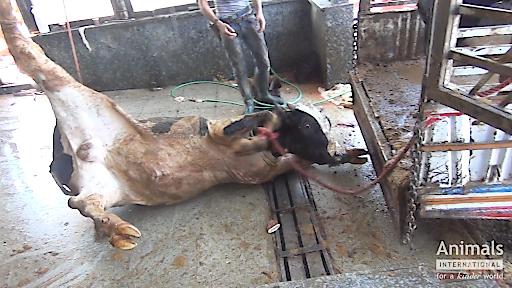
Once again, the critical nature of our investigative work is revealed through our recent evidence documented in Indonesia. Had we not been there, no-one would know that Australian cattle had been subjected to terrible ‘roping slaughter’ in the basement of a construction site.
Had we not been there, the exporter responsible, International Livestock Exports — recognised in the industry as the ‘cattle arm’ of the disgraced Emanuel Exports — would not now be under investigation and facing serious sanctions.
Had we not been there, the industry could have continued to operate, business as usual, as a law unto themselves.
So this is why I felt compelled to write to you today. Because had it not been for your caring and your generous support of our Investigations Unit, our team could not have been in Indonesia.
That such cruelty continues reveals exactly why live export, in its entirety, should end. Every piece of evidence we gather, whether in Indonesia, Kuwait, Vietnam or Egypt, continues to build that case.
There’s a reason why nearly a decade later, we still think about Tommy. For many people, coming face to face with him was the first insight they’d ever had into the fear and distress of animals raised and killed for food — the first time they were able to witness their desire not to be harmed.
Thank you for entrusting us with your faith and support and allowing us to dedicate every single moment to them. Thank you so much for your kind and generous heart.
Because of you, we can dedicate every day to Tommy and friends, and creating the kinder world that they so need and deserve.
Many years back; 20 or more; the live animal export trade from the UK via English ports such as Dover, was at its peak. I used to travel down to Dover and other ports several times a week and do (undercover) monitoring of the (live animal export) trade. There were several of us at Dover and we all got together to wait for the livestock truck carrying ship(s) to arrive at the harbour late in the evening. They were special ships which had to be chartered because we had made some massive wins in getting the normal ferry companies to stop taking live animals to the continent. Animal transporters were banned from normal passenger ferries – people did not want to share their holiday crossing experience with animals going to their deaths; so those same people spoke out and the ferry companies buckled. That was a big win; but the trade did not stop entirely. The industry was forced to charter its own ships to take the trucks; along with the financial overheads that came with it.
The special (livestock transporter) boats usually arrived late in the evening; like 11pm or midnight. From our vantage points on the cliffs, we watched them arrive a few miles off the harbour at a section of the English Channel which is known as ‘The Downs’. From there they had to get a pilot to bring their ship into the harbour; that was fine with us – ship charter; paying for a pilot etc; all extra costs to the industry involved with live animals.
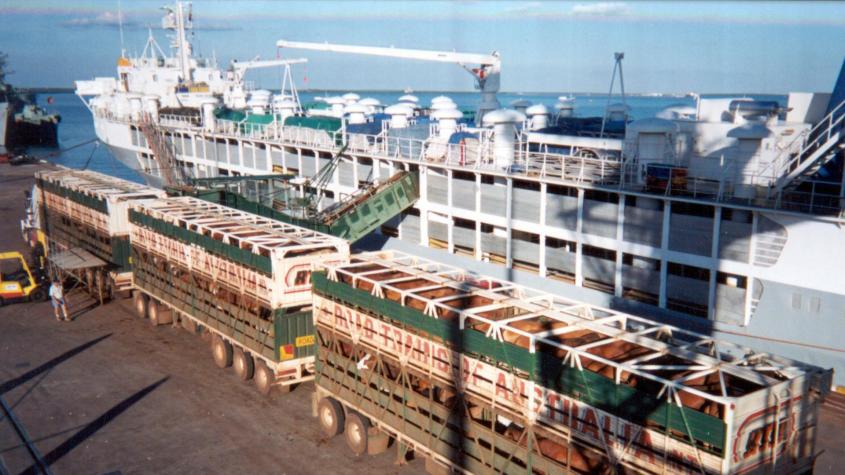
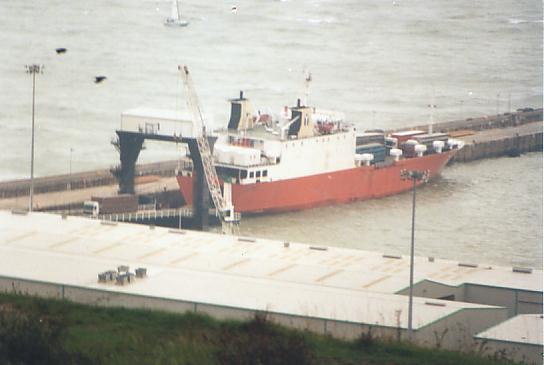
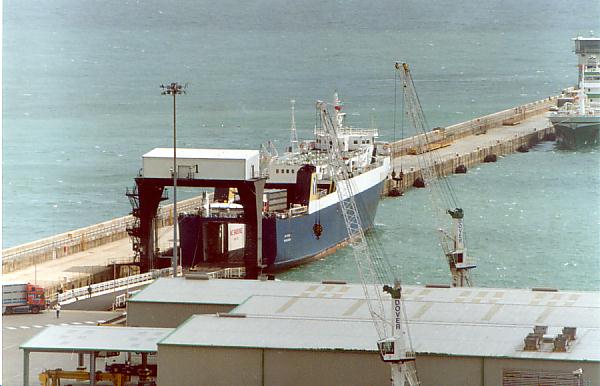
I took these following photos many years ago – some time on the odd occasion when the livestock ships had no choice but to dock during the daytime. In both you can clearly see the livestock transporters. This operation was normally undertaken under the cover of darkness in the middle of the night – away from the eyes of the public.
So late at night we (campaigners) congregated in a region up on the famous Dover White Cliffs which overlooked the harbour; at a place known as ‘Langdon’. We watched the ship come into the harbour under pilot control until it berthed at the far end (left pier) of the harbour. You can see the kind of view we had from the cliffs in this video:
On the left hand side of this video you can see the Eastern arm at which the ship photos above were taken.
At night, with all the lights in the harbour, it was impressive to say the least. A sort of ‘Close Encounters’ situation. Once the ship had docked on its usual left hand pier; we then had to hang around and wait for the rear doors on the ship to open and the ramp be lowered. Then was the first real signs of the nights trade for us – how many empty livestock trucks were going to discharge from the ship and make their way up to the local lairages to collect the animals; which had been specially brought down to these farms ready for export. Usually, most nights, we counted somewhere between 6 and 9; sometimes more, sometimes less.
One of the local farms (or ‘lairages’) where the animals were kept ready for export was also operating a business on the side as a caravan park. So, what do you do in such situations ? – you buy a caravan and place it in the farm caravan park; right next to the old pathway which the trucks used to get down to the animals sheds. With people there having a great nights caravanning !; and the use of mobile phones and a kettle for a cup of tea ; we could keep each other informed exactly of the trucks, their registration numbers; haulier, and type of animals they were carrying. Observers literally within a few feet of the transporters as they arrived empty, and left loaded with animals. It was a well organised arrangement; livestock trucks monitored from the minute they arrived at the harbour on the ship; all the way up to collect the animals at the lairage; and then still monitored at all times on the to their return to the harbour; where they were always greeted by a ‘reception group’ even at 2 or 3 in the early hours of the morning; who had been informed who exactly was on their way down. We never let up; they were monitored and tracked from the moment they arrived until the moment they left. Our system was good; very good.
Eventually, and to get a good view of the loading of the trucks onto the ship, we returned from our reception duties at the docks to Langdon up on the cliffs. Up there it was wild, dark and bleak; with the forever Dover cold wind blowing in off the English Channel. We kicked around; talked, drank hot tea and waited for all the trucks to load back onto the ship ready to head over to France and god knows where else. Sometimes the odd ‘lady of the night’ would appear and offer her services to some of the blokes. They were never taken up as we were decent folk and there was much more important things to do !
The whole exercise from unloading the empties off the ship, to driving up to the lairages, loading, and then getting back to the harbour to load the full animal transporters that had come back from the lairage usually took about 3-4 hours. It was always in the darkest of dark times of the night; the trade did not want to be seen by the general public – but they were; we watched their every move; and we always followed up with reports and publicity on what was happening in those ‘dark hours’.
Once all the full livestock trucks had loaded back onto the same ship that they arrived on; we sat and watched as the rear ramp and doors closed up; the signal that the ship was ready to leave the harbour once again with all the innocents on their final trip to god knows where.
Watching the loaded ship sail out of the harbour destined for France with what, 6, 8, 10 animal transporters loaded was always a difficult time for me personally. We had done everything we wanted to do each night; gathered the information and let the industry know that even at that time we were around; but for me also, we had failed the animals by allowing them to sail away to their deaths. Saving and stopping all the trucks was impossible; we knew it; but witnessing the situation always made you feel like you had let the animals down by not saving them. I was quite a big ‘U2’ fan at the time; and I always sat in my car up on the cliffs and played ‘Exit’ from the ‘Joshua Tree’ album – the haunting Bass and a time of real despair; as I watched the ship sail out of the harbour with its cargo of death. The music; the experience yet again; everything seemed to come together at that moment in time.
‘Exit’
Music has a real power – often to be the right track at the right time to hold memories –‘Exit’ was right for the betrayal of animals that I witnessed so regularly at those cold, dark; upsetting nights at the docks. Even now; 20+ years later, that track (Exit) always takes me back to those cold and windy nights up on the cliffs watching the livestock carrier departing for France. That track always brings back that situation to me of being there and witnessing the suffering for a few pennies more. Sometimes I would stay on longer and watch – from high on the cliffs you could watch the ship sail across most of the Channel almost until it had arrived in Calais; what, some 23 miles away. Sad times, bad times, but in the end we stopped it completely at Dover. It felt good to be of the crew that did that !
Regards Mark
In the UK people have always detested the live animal export trade. Part of our national way towards being an animal welfare nation I guess. Here are a few scenes from around Dover in the past of what good, decent folk will do to stop animal abuse with the animal exports:
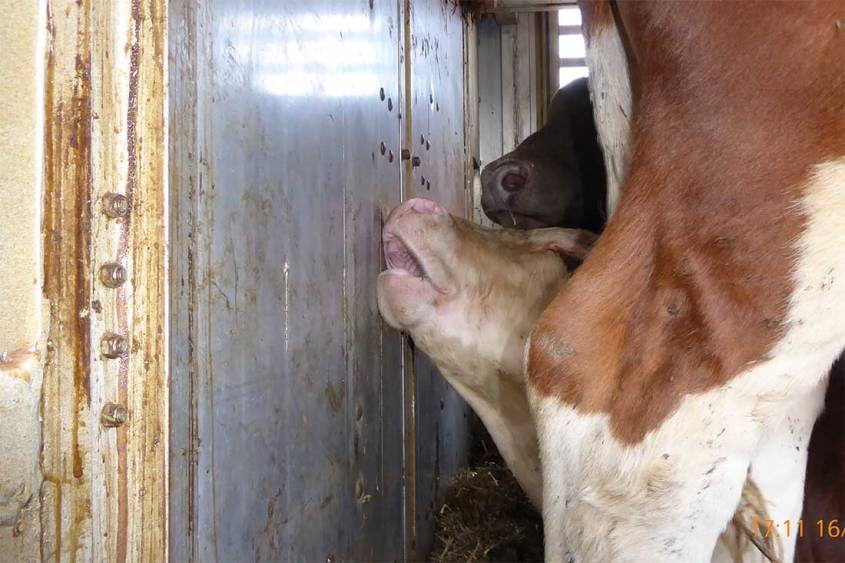
Suffering of calves on 1700km road journey to Israel
Calves being transported from Lithuania to Israel have been found in extremely overcrowded conditions on the trucks, lying in a thick layer of manure and suffering from heat and extreme thirst.
These conditions – suffered on a journey of two weeks for a distance of 1700km – caused the death of some animals, but also made others so exhausted that they had to be dragged by their legs from the trucks.
The investigation by Animal Welfare Foundation (AWF) and Israel Against Live Shipments (IALS) trailed the calves along their journey and called Road Traffic Inspection in Poland when they spotted evidence of suffering on the trucks. Official veterinarians were called and found multiple violations of Regulation (EC) No. 1/2005, which states that animals shall not be transported in a way likely to cause injury or undue suffering.
“This was the most tragic sight I have seen in all my years working as an investigator in animal transportation,” says Maria Boada-Saña, investigator and project manager of AWF. “It is incomprehensible how official veterinarians in Lithuania approved these transports.”
Polish officials immediately decided to unload the suffering animals and started administrative proceedings against the Polish transport company Konrad. However, after a 24-hour-long rest at a stable, the animals were carried in three trucks instead of two to Slovenia, where investigators from IALS found terribly weak and exhausted calves upon arrival at Koper.
From here, the transport continued by sea, and the animals were loaded onto the livestock vessel Holstein Express, destination Israel. The calves spend four days at sea without any authority to assess their welfare, or ensure they are treated in compliance with EU legislation.
“Our experience shows that sick animals are usually left untreated, and their dead bodies are regularly dumped into the Mediterranean Sea,” says Yaron Lapidot, spokesperson of IALS. “Investigators have repeatedly found European cattle and calves washing up dead on the beaches of Israel, having been thrown overboard from livestock vessels.”
After arrival in Haifa, the journey of these animals is not over yet. The calves are loaded onto small trucks in which the temperature can exceed 37°C and carried on to quarantine stables where they are kept for a month before being sent to fattening farms.
“By removing the live import tax in 2014, the Israeli government sealed the fate of hundreds of thousands of animals going through hell on the journey to Israel. Ever since then, promises by our agriculture minister to reduce the numbers have not materialized and essentially the public continues to subsidise the imports,” says Yaron Lapidot. “This year we expect that Israel will import about 850k live animals, an increase of 400% since 2014.”
The two organisations have sent a film highlighting the suffering of these animals to EU Commissioner Andriukaitis, and are calling on the European Commission to stop the long-distance transport of live farm animals to Israel and other Third Countries.
“AWF and IALS are the latest of many organisations which are constantly revealing serious welfare problems in the long-distance transport of animals,” says Reineke Hameleers, director of Eurogroup for Animals. “The suffering of animals on such journeys is inevitable, and the European Union must stop this cruel and archaic practice.”
Live export footage shows Australian cattle dragged by ropes before slaughter in Indonesia
Exclusive: An investigation is under way after cattle were allegedly sold illegally outside supply chain
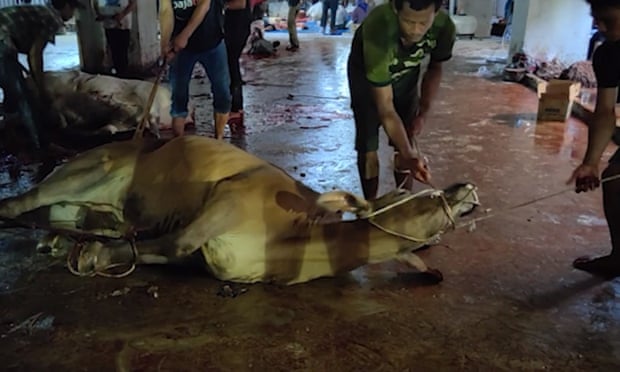
The Department of Agriculture is investigating a live export company after it received footage showing Australian cattle being pulled to the ground with ropes and slaughtered without being stunned in a carpark underneath an Indonesian mosque.
International Livestock Exports has suspended all supply to one of its Indonesian abattoirs over the breach, which was reported to the department by Animals Australia.
ILE identified itself as the exporter after the department shared the footage it received from Animals Australia with all relevant exporters, in an attempt to identify the cattle.
The footage, seen by Guardian Australia, shows about a dozen cattle in an underground carpark near the grand mosque in Medan City in North Sumatra. They were killed as part of Eid al-Adha last month and a complaint was lodged with the department on 13 August.
Four of the cattle were identified as Australian. The footage shows them being pulled to the ground by ropes around their legs and rope halters, then being dragged by their tails. The slaughter happened in full view, and sometimes within metres, of other cattle.
Ear tags had been removed but a combination of ear notches and brands identified them as cattle produced on a station in the Northern Territory and shipped to Indonesia by ILE.
The slaughter was reported to the department as a breach of the Exporter Supply Chain Assurance System (Escas), which was introduced after a 2011 Four Corners investigation. Exporters dealing in Australian animals can sell only into an approved supply chain
Read more
A director of ILE, Mike Stanton, told Guardian Australia the cattle had been illegally sold outside the supply chain from a facility in Indonesia, and ILE had suspended the facility it believed was responsible. “We did that as soon as we were able to work out where the leak has been,” he said.
The department told Guardian Australia it did not comment on investigations that were still in progress.
Legislation to appoint an independent inspector general for live exports passed the Senate on Tuesday.
Stanton said there were 140 facilities in Indonesia approved as part of ILE’s supply chain. “If you’re exporting a lot of cattle there’s going to be issues along the line,” he said. “We do our best. “I know a lot of people think we don’t, but it’s bloody hard.”
He said the treatment of the cattle shown in the footage, particularly the long minutes taken to drag them to the ground, was “awful”.
“We are in the business of selling animals for slaughter but we want it done in an appropriate manner,” he said.
ILE shares an office in West Perth with Emanuel Exports, the company responsible for the 2017 voyage of the Awassi Express in which 2,400 sheep died of heat stress.
An investigation by the department into allegations Animals Australia paid for the footage from the Awassi found no evidence to suggest the footage was manufactured or illegally obtained.
ILE was issued a show-cause notice in October because of its association with Emanuel and another sister company, EMRS Rural Exports, which both had their export licences cancelled. ILE handles 70% of live cattle exports from Broome.
The Australian Live Export Council chief executive, Mark Harvey-Sutton, said the slaughter was “unacceptable” but had to be put in context of the industry’s broader track record.
“Let’s not forget that exporters are also very proactive in this space and often actions are undertaken by exporters ahead of what the regulator looks to do, and that was the case this time,” he said.
Harvey-Sutton said Australian exporters had “very good systems in place” and the council worked “very closely” with both producers and exporters to keep them informed in cases of Escas non-compliance.
There have been 172 complaints of non-compliance since Escas was established in 2012 – 70 by Animals Australia.
Its strategy director, Lyn White, said: “It is deeply concerning that Australian cattle have once again been subjected to roping slaughter in Indonesia, and that the only reason this has become known is because of the efforts of a charity.
“Escas was established to prevent such horrific treatment. The fact that it can still occur speaks to the ever-present risks of exporting animals and losing control of their welfare.”
White said Escas breaches should result in the automatic suspension of an export licence.
Self-reported breaches by exporters are not publicly listed and investigated if they are made and rectified within a set timeline.
The chief executive of the Northern Territory Cattlemen’s Association, Ashley Manicaros, said the slaughter involved just four of the 400,000 cattle exported from Darwin to Indonesia each year.
WAV Comment – Theresa Villiers has always spoken in defence of the animals; especially calling for a live export ban. As the (now) Minister at Defra, she now has the chance to take this issue further and get a ban. Please follow the links below and add your voice.
The live export trade causes immense suffering for animals and must be stopped. During journeys of hundreds, sometimes thousands, of miles, animals frequently experience exhaustion, overcrowding, stress, pain, hunger and thirst – in many cases, simply to be slaughtered on reaching their destination.
Worse still, once these sheep and young calves are exported, we have no control over the conditions in which they are kept and then killed – conditions that would often fail to meet UK standards.
Live exports are not only cruel, but unnecessary. The vast majority of British farmers find UK markets for their products, or export meat instead of live animals. There is simply no excuse for this trade.
Theresa Villiers has consistently supported the campaign against long distance live transport, most recently by joining our 2019 Stop Live Transport event in London. The new Secretary of State has also worked to raise the profile of this issue in Parliament: in 2017, she tabled a Bill calling for a ban on live animal exports for slaughter and fattening after the UK leaves the EU.
Now, Theresa Villiers is in the perfect position to deliver on that demand by making sure that the Queen’s Speech includes a Bill that will end the suffering of thousands of British animals each year.
Compassion supporters like you have always been on the frontlines in the fight to end live exports. Now, with such vocal support for our cause from the new Secretary of State, this could be a landmark moment for our farm animals. But it’s crucial that we call on Theresa Villiers to act now to end the export of live farm animals for fattening and slaughter.
Now is the time for change – let’s unite our voices to end the needless, cruel UK live export trade









![everybody[1]](https://serbiananimalsvoice.files.wordpress.com/2008/03/everybody1.jpg)



 Minister Theresa Villiers

