Category: Live Transport

EU: What The Hell Is Wrong With Some MEP’s ? – Policy Makers Propose Making The Transport Sector A Damn Site Worse !

I say ‘some’ in the heading; but will acknowledge there have also been some brilliant MEP’s fighting very hard in the defence of animals who are suffering during transport; one immediately springs to mind: Anja Hazenkamp – A Dutch MEP and true hero for all animals:

Those of us who have many decades of experience in investigating the immense wrongs of long distance live animal transport across Europe have always had a saying – ‘Crowd all the negative thinking MEPs together in a transporter truck; with temperatures exceeding 35 degrees; with them crapping and peeing all over each other – THEN SEE HOW QUICKLY THEY WOULD CHANGE THE LEGISLATION WITHIN EUROPE FOR IMPROVEMENTS !!’

Sadly; but realistically; you have to ask what planet some of these people are from; as over 3,000 amendments to the draft update of the Transport Regulation proposed by Members of the European Parliament (MEP) ARE CERTAINLY NOT looking at improving the welfare of animals suffering live transportation across the EU. MEPs represent you – EU Citizens; so are they not supposed to have a certain level of intelligence ?

Several negative thinking MEPs have put forward ideas and suggestions which would weaken or even remove laws that are grossly outdated anyway; and certainly NOT welfare supplements for the billions of sentients being hauled all over Europe each day. Some of the suggested amendments are so bizzare they should be up with the fairies; but they are not; these are proposals presented by some realistic members of the European Parliament.

The Transport Regulation was created over 20 years ago to ‘protect the welfare of animals during transport’ – it never did, and has never worked in the defence of animals – full stop. This chance to now rework the existing joke of legislation should be an ideal opportunity to make thing so much better; but we have some very serious concerns about some proposed changes being put on the table by some MEPs.

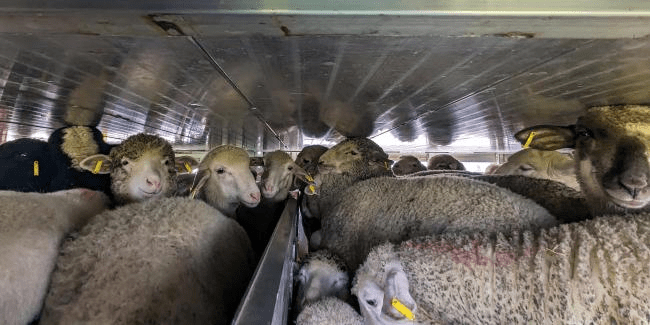
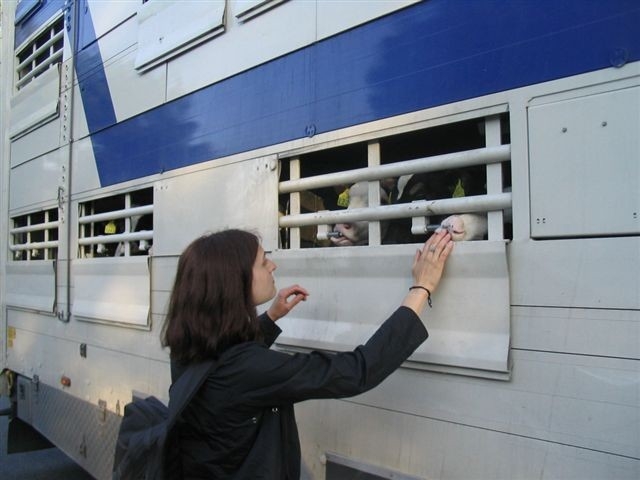
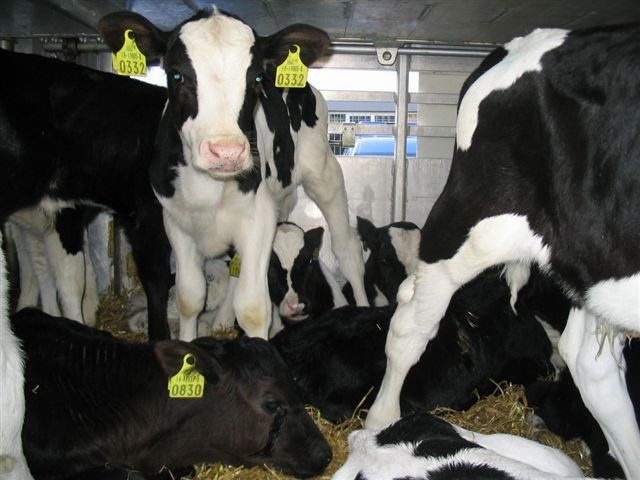
Here is just as one example – one of thousands of recent undercover investigations, here is where current legislation fails the animals. Please take note of stoppage time failures = meaning extensive additional suffering for the animals.

Photo above – Essere Animali

By bringing the policy in line with the latest welfare led science; as well as the recommendations by the European Food Safety Authority, and outlawing some useless, harmful and unnecessary practices, policy makers, the MEPs, could significantly improve the legislation for animals in transport; as well as eradicating the worst aspects of live exports. Unfortunately at this present time, this is not the way things appear to be currently going.

Of the most concern are that if voted on and implemented, in the final policy; some of the legislation would, rather then could, harm rather than help the animals.

Thin I am joking when I say this ? it’s no joke when animal suffering is involved;

The worst amendment put forward on journey times

  • Each transport journey should consist of multiple parts, EACH lasting up to 29 hours
  • Journey times for unweaned calves; lambs, kids, piglets and foals could last for up to 66 sixty six hours.

Transport is inherently stressful for any animal at the best of times, especially those in the early times of their lives. Numerous studies have shown that young animals being transported suffer more than than their elderly peers; as they suffer more due to higher stress and the inability to regulate their own body temperatures. Unweaned animals suffers more as they cannot reach; or are not familiar with drinkers carried of transporters. the only source they know is from their mothers.

Welfare organisations have always stated that journey times should last for a ONE OFF maximum of 8 hours for adult ovines, bovines and swine; and a ONE OFF MAXIMUM OF 4 hours for very young farm animals, which should also include all birds and rabbits.

The worst amendments put forward on extreme temperatures include;

  • Provisions to protect terrestrial animals in extreme road and rail temperatures SHOULD BE REMOVED !
  • Thermal provisions to protect the welfare of animals in containers; including birds and rabbits SHOULD BE REMOVED

Extreme temperatures, especially in Summer, is one of the biggest problems of the live export industry. Past investigations by NGOs have shown that temperatures inside trucks can reach 50 degrees C; leading to severe welfare problems; sometimes fatalities.

The EFSA authority recommends the implementation of lower maximum standards during transport; and that welfare organisations demand that specific species maximums must be defined by official legislation.

The worst amendments on space allowance include:

  • New space allowance provisions, written in line with recommendations by the European Food Safety Authority SHOULD BE REMOVED.

Animals usually suffer from a lack of adequate space during transport. This makes it impossible for them to lie down, move naturally or even move at all to reach essential drinkers. This incapacity exacerbates several of the problems animals already feel, including stress, exhaustion and dehydration.

Welfare science strongly suggests that species and category-specific space allowances must be set by law. Removing or weakening space allowances is clearly a step in the wrong direction.

Getting back on the right path.

The policy of updating the Transport Regulation should be to ensure better protection for all animals undergoing transportation, and not to make a bad situation even worse. MEPs need to unite; accept the latest welfare solutions to them; which is BASED ON SCIENCE. They need to accept the solutions to improve welfare rather then try to score cheap political points as the priority. Only then will the new legislation deliver what it was intended to do.

Further Information

EU based animal welfare anti live export campaign organisations:

https://www.ciwf.org.uk/our-campaigns/ban-live-exports-internationally/

https://www.eyesonanimals.com/

https://www.animals-angels.de/en/

(CH) SENTIENCE – Politics For Animals / Campaign “Invisible Animals”

https://sentience.ch/en/

************

Campaign, “Invisible Animals”

https://sentience.ch/en/invisible-animals/

Invisible Animals

In Switzerland, animal welfare issues are mainly discussed with regard to wildlife, companion animals and so-called “farmed animals”. In doing so, we forget about the individual whose interests we neglect the most and who are hardly – if at all – protected by the law. We are talking about the “invisible” animals – pigeons, rats, bees and fish.

These animals are subjected to immense daily suffering. Pesticides strip bees of their navigational abilities; rats face an agonising death from rodenticides; sick pigeons lie lifeless on the streets of our cities; and fish are confined in aquaculture basins under conditions that would be deemed unacceptable even in factory farming.

Considering the capacity for suffering as a crucial moral criterion is the core concern of Sentience. Therefore, we believe that all these animals deserve more attention, consideration, and protection. To eradicate today’s injustices, we must, together with you, sharpen public awareness and advocate for animals’ interests in politics.

Even small changes – such as banning certain rodenticides or pesticides, maintaining pigeon lofts, and improving water quality in aquaculture – can improve the well-being of billions of animals. By signing our petitions today, you help bring political attention to the “invisible” animals.

Against human exceptionalism

https://aeon.co/essays/human-exceptionalism-is-a-danger-to-all-human-and-nonhuman

This January, a 57-year-old man in Baltimore received a heart transplant from a pig. Xenotransplantation involves using nonhuman animals as sources of organs for humans. While the idea of using nonhuman animals for this purpose might seem troubling, many humans think that the sacrifice is worth it, provided that we can improve the technology (the man died two months later). As the bioethicists Arthur Caplan and Brendan Parent put it last year: ‘Animal welfare certainly counts, but human lives carry more ethical weight.’

Of course, xenotransplantation is not the only practice through which humans impose burdens on other animals to derive benefits for ourselves. We kill more than 100 billion captive animals per year for food, clothing, research and other purposes, and we likely kill more than 1 trillion wild animals per year for similar purposes. We might not bother to defend these practices frequently. But when we do, we offer the same defence: Human lives carry more ethical weight.

But is this true?

Most humans take this idea of human exceptionalism for granted. …..

EU’s Long Term Budget Must Support Farmers In The Transition Towards Better Animal Welfare.

I sadly accept that there will always be some folk who enjoy eating dead animals as part of their diet. Saying that, a reduction in meat consumption and the associated reduction in animal murders (slaughter houses) can only be seen as a positive from my corner.

But I am a realist also, accepting that everyone on the planet will never move to plant based. Thus as welfare campaigners, we have a responsibility to ensure that we get the best for animals that we can. The global tide is rather rapidly moving towards plant based diets – and that can only be positive; very positive. In other ways, a negative global tide is surrounding us in the form of global warming and the ‘master human’ who knows best – no, ask the whales !

The more posts I can write about on this site re the ‘killing factories’ (they are SLAUGHTER HOUSES, not abattoirs – a place where animals are killed for their meat) BEING CLOSED DOWN; then the better.

We all saw that the recent closure of Arley ritual slaughterhouse; a closure really attributed to their own non conformances with national UK laws which are supposed to give animals the maximum protection ?? at the times of their deaths. Does frightening the shit out of a sheep about to be slaughtered by playing a recording of a howling Wolf in the background constitute UK laws regarding slaughter legislation? – no, they do it for kicks which really shows the types they are.

They failed in many areas, they were closed down – end of. WONDERFUL.

So, as the EU Parliament now commences votes on its priorities for the next long term EU budget, all of us in the welfare camp are calling for higher funding in the transition to better animal welfare practices in accordance with the vast majority of EU citizens demands.

The ‘Multiannual Financial Framework’; or MFF, is a seven year framework regulating the EU’s annual budget. The current long term budget runs until the end of 2027; so now we have to start work !

Ahead of the proposals in the next long term budget; expected in July; the Budget Committee of the European Parliament; has set out its priorities in an own-initiative report. It emphasises the need to meet more ambition to meet citizens expectations in the context of the US retreating from its global role; Russia’s war on the Ukraine; economic and social challenges, EU competitiveness and the worsening climate and biodiversity crisis.

The report implies that the budget should finance public goods, support the resilience and competitiveness of EU small scale farms and better help protect the environment. It highlights that the ‘Common Agriculture Policy’, or CAP, is crucial for food security, and that spending must persue EU objectives.

The Eurogroup for Animals call for the long term spending on the CAP to consider the expectations that EU citizens have on improved animal welfare. These expectations are not yet fully met, and the importance of animal welfare as a public good has been repeatedly demonstrated by the European Citizens’ Initiative ‘End The Cage Age, as well as the latest barometer on animal welfare. More than 9 out of 10 Europeans state that it is important to protect the welfare of farmed animals; with an absolute majority deem it as very important. More than 8 out of 10 believe that farmed animals in their countries should be given more protection than they are at present.

There is a crucial need for adequate funding from the long term budget for the transition to new animal welfare rules and regulations. The proposal for a review of the EU farm animal directive is envisaged in 2026.reduce production costs;

Financing better animal welfare in the EU is not just an ethical priority, it is a financial security for the EU’s future. Improved animal welfare can and would reduce production costs, enhance the product quality, drive innovation and strengthen the EU’s global market postioning.

Adequate funding from the MFF for the CAP is crucial to support farmers in transitioning to the new animal welfare rules. There needs to be higher funding for farmers to transition to higher animal welfare standards; and the need to support early transitioners is a vital element.

As someone with a special interest in campaigning for, and stopping long distance live animal transports; enough evidence has been supplied over decades by investigators to show the abuses with the ‘EU system’.

It is now time for them to step up to the plate; ACCEPT THE MASSIVE ABUSES UNCOVERED, and DO SOMETHING ABOUT IT !!

Introducing ‘Our Compass’ – Exposing The Suffering Of All Animals Due To Human Exploitation. A Site Dedicated To Going Vegan / Veganism.

We would like to introduce you to an excellent site; named ‘Our Compass’ https://our-compass.org/about/ which is run by friend Stacey in the United States.

OC, as will now refer to it, is a ‘vegan abolitionist community focused on nonhuman animals, the harm inflicted on them due to human exploitation and speciesism, and the necessity of veganism as the only meaningful and humane response to support animals and their liberation from humans’.

As you will see by clicking on the above link, OC provides an insight into many major animal abuse / suffering issues, as well as photos, videos, and sample letters which you can use as a baseline for taking your own campaigning further.

For example:

OC has many different resources and subjects. I (Mark) know that Stacey (OC) will agree with myself and Diana when I say that like this WAV site, it is often harder; no, impossible; to give every subject animal around the world the coverage that they deserve for their individual cases – by trying to cover everything, you simply touch on a host of activities – Fur; Live transport; Intensive farming; Donkeys in the brick brick industry; Vivisection and big pharma; Hunting; The environment; Saving the Whales; Veganism; Cruelty free; AND Human Rights when coverage is necessary; human traffiking; or in our case, being a voice for the wonderful Tibetan people and their suffering under Chinese rule; – we become an information / reference source on so many issues rather than the ‘specialist’ covering just one.

Whatever; both OC and ourselves are more than happy to push for the day when ALL the cages are opened and the occupants liberated; when you do not cover your body with the skin of an animal that has lived and died under the barbaric fur production industry; when the hunts no loger hunt or animals are spared from the suffering of live transport / live exports.

If you have not visited OC yet; we know that you will find an endless resource the of information and links:

Enjoy this amazing site – we do !

https://our-compass.org/

Regards Mark, Diana and Stacey (OC).

(UK) Chris Packham is no saint. He’s an environmental extremist to us country folk

https://www.telegraph.co.uk/news/2025/05/16/chris-packham-is-an-environmental-extremist/

The Springwatch host saw no issue being likened to St Francis of Assisi, making his holier-than-thou attitude worse than ever this week

Vanity is a bewitching drug for some of the BBC’s biggest stars. Jostling for most luminous position in the media firmament this week, next to Gary Lineker (who completely by mistake, and in the knowledge that the media watches his every social media move, managed to post to Instagram the suggestion that Jews were rats) was Chris Packham. …..

Please ref. to previous post:

(UK) Chris Packham poses as St Francis of Assisi in new portrait

Well, novel certainly … not sure we may hope for Chris, CBE, being sainted by the Vatican any time soon … even with the link to S. Francis.

https://www.telegraph.co.uk/news/2025/05/14/chris-packham-poses-saint-francis-of-assisi-new-portrait/

14 May 2025 7:39pm BST

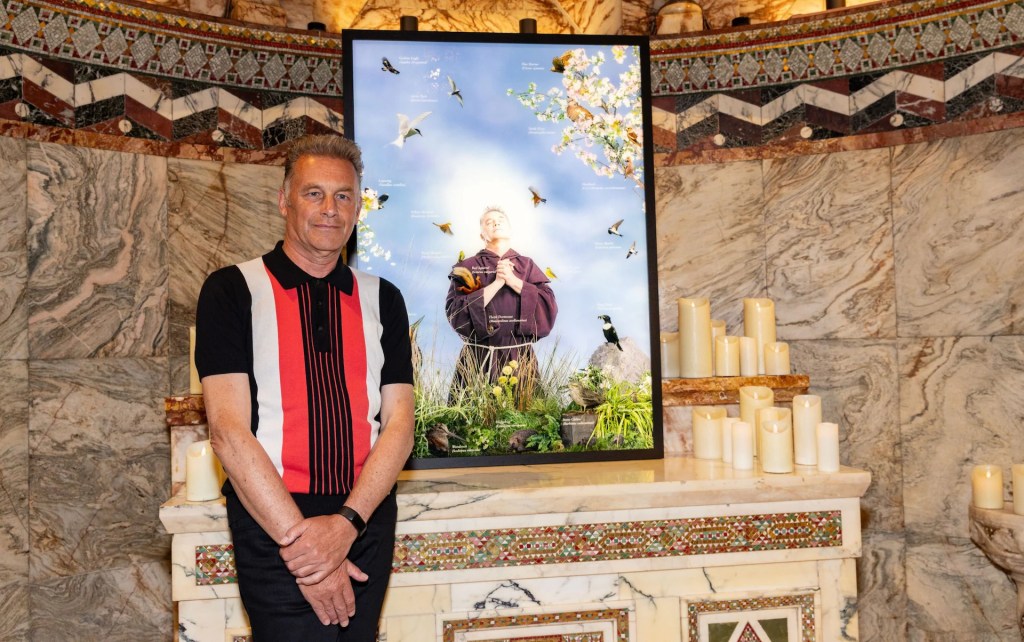
Chris Packham with his portrait, which it is said depicts him as “a living saint”, in the Fitzrovia Chapel Credit: Richard Ansett/Radio Times

Chris Packham has posed as St Francis of Assisi in a portrait celebrating him as a “living saint”.

The portrait of the presenter and environmental campaigner is now on show on the altar of the Fitzrovia Chapel, central London.

Originally commissioned by Radio Times magazine to mark Earth Day, it is the work of photographic artist Richard Ansett.

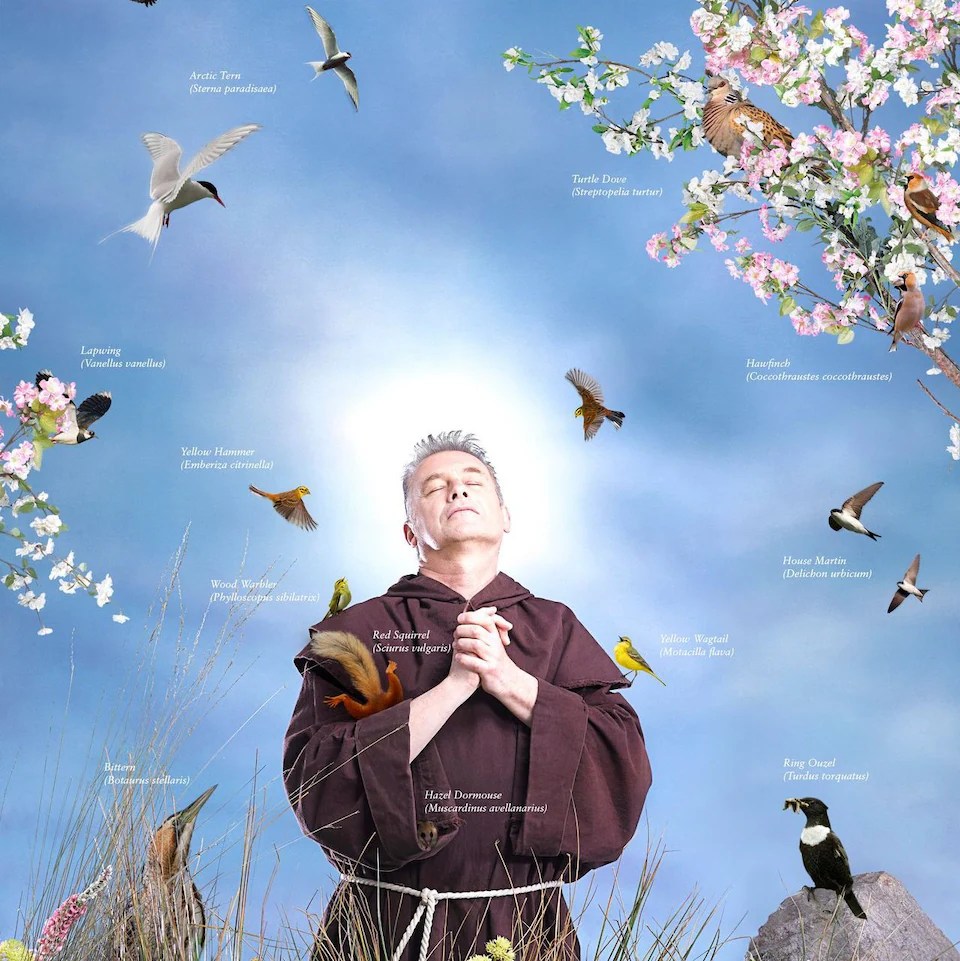
Packham is surrounded by images of some of the UK’s most endangered species. Mr Ansett said it also made reference to Packham’s neurodiversity – the presenter was diagnosed with autism in his 40s.

“I hope that every pixel of this portrait offers a safe space for anyone challenged by neurodiversity. Packham’s remarkable connection to the natural world drives him relentlessly to save us from ourselves,” Mr Ansett said.

The portrait of Packham is available to view until May 21 at the former chapel, where it is described as a work “elevating him to the status of living saint”.

Chris Packham is surrounded by some of the UK’s most endangered species in the artwork Credit: Richard Ansett/Radio Times

Packham said: “This photo is about a fundamental level of engagement, an engagement of equals. It conveys the importance of nature to heal us, provide us with a sanctuary in times of terrible trouble.

“But the species featured are also rare or declining so it serves to remind us that our one and only home, our Earth, is on a brink too many are refusing to see and act to protect and repair.

“This is a photograph about love, a love of life, all life.”

The featured species include the red squirrel, the house martin, the woodcock and the hedgehog.

Mr Ansett, an award-winning photographer whose previous works include Sir Grayson Perry in the style of the Madonna and Child, added that the Packham portrait “recognises the difficulties that he has prevailed over to become a success in his career and a positive light for so many people”.

It is “a personal tribute to Packham’s humanity in challenging the worst parts of ours, in our ambivalence to the destruction created in the wake of our own needs”, the photographer said.

England – Supermarkets Suspend Ties With Pig Farm Over Animal Abuses.

Meat producer Cranswick’s shares have plummeted after UK supermarkets suspended supplies after alleged supplies against pigs.

Covert footage appeared this last weekend from the Animal Justice Project – AJP – showed workers at Northmoor Farm in Lincolnshire, abusing piglets by holding them by their back legs as they were smashed into the floor.

Other videos showed the botched killing of a sow, leaving the animal screaming and writhing in pain. A sow was also shown being beaten with metal bars.

PHOTO – AJP

A worker who failed to kill a sow using a bolt gun reportedly said to an undercover investigator ‘Don’t let nobody see you doing like what we did’.

Supermarket chains Asda, Morrisons, Sainsbury and Tesco have now suspended Northmoor Farm as a supplier of meat; shares at the London Sock Exchange fell around 7.5% 0n Monday. It made £2.6 Billion in revenue in 2024, with around 24% coming from its fresh pork sector.

Cranswick owns Northmoor Farm; with around 6,000 pigs being processed there. Cranswick as a whole SLAUGHTERS AND PROCESSES IN EXCESS OF 34,000 PER WEEK; yes you read it right, 34,000 deaths PER WEEK. On their website they claim that animal welfare is at the heart of their business.

Images on their website show pigs and piglets in green fields with wide open spaces. The AJP has now filed a complaint to national agency TRADING STANDARDS as a result of its excellent investigation.

A spokesperson for Cranswick said that the animals they rear is of the utmost importance and that they were extremely disappointed to see the unacceptable lapse in welfare standards shown at Northmoor Farm. Evidently, as soon as they saw the footage from the farm, the working team were suspended and an ‘urgent and thorough investigation’ commenced. They have also suspended the farm from supplying any pig meat until the investigation is completed.

AJP founder Claire Palmer said they were demanding immediate enforcement of the ban on blunt force trauma; in addition to the prosecution of Cranswick. She continued that there must be a public enquiry into pig farming practices and regulatory failures.

AJP is calling for a legislative phase out of pig farming in favour of a food system that no longer depends on animal suffering.

We at WAV fully support what Claire says, and the work undertaken by AJP to expose this abuse.

(CA – JP) Flying Above the Law: Inside Canadian Horses’ Long Journey to Japan

***************

https://canadianhorsedefencecoalition.org/horse-dies-on-korean-air-flight-from-winnipeg-to-japan/

***************

https://www.theguardian.com/environment/2021/mar/27/protests-at-inhumane-export-of-live-horses-to-japan-for-food

*******************************

https://www.cbc.ca/news/canada/manitoba/horses-japan-aircraft-1.7321374

*******************

https://humanecanada.ca/en/your-humane-canada/news-and-reports/news/ottawa-eyeing-new-ways-to-ban-export-of-horses-for-slaughter-in-japan

Ottawa eyeing new ways to ban export of horses for slaughter in Japan

Published Feb 13, 2025 at 11:00am

Ottawa is eyeing fresh ways to ban the export of live horses to Japan for slaughter to produce an expensive sashimi delicacy, after the proroguing of Parliament last month halted a bill sponsored by a Liberal MP that would have outlawed the practice.

The Liberal government is considering introducing regulations blocking the exports so it can keep a 2021 election promise before Canadians return to the polls this year.

An estimated 50,000 horses, many of which are large draft horses, have been exported since 2013, with some journeys exceeding the permitted limit of 28 hours.

In 2022 and 2023, 2,500 live horses a year were flown from Edmonton, Calgary and Winnipeg to Japan for slaughter for their meat, including to produce basashi, an expensive sashimi delicacy.

Animal-welfare groups and several Canadian celebrities, including singer-songwriters Bryan Adams and Jann Arden and classical guitarist Liona Boyd, have been applying pressure on Canada to follow the lead of other countries, including the United States, and ban the export of live horses.

“It breaks my heart that thousands of horses endure extreme suffering in terrifying transports every year, only to die in a senseless slaughter. Horses are not commodities; they are loyal companions,” Ms. Boyd said in a statement.

“As a lifelong horse lover, I can’t stand by while they endure such cruelty. I’m urging the government to honor its promise – Canadians have spoken, and we beseech an end to this suffering now.”

In December, 2021, Prime Minister Justin Trudeau issued a mandate to the then-agriculture minister to ban the export of live horses, to honour the Liberals’election pledge.

But a private member’s bill banning the export of live horses, supported by the government, was held up in the Senate for months last year, and had not passed the stages required to become law when Parliament was prorogued.

Bill C-355, sponsored by Liberal MP Tim Louis, was sharply criticized by Don Plett, leader of the Conservatives in the Senate, and the Tories are unlikely to support it when Parliament returns, destroying its chances of becoming law before the election this year.

Agriculture Minister Lawrence MacAulay is now looking at other ways to enforce a ban, including by issuing regulations that would not require a vote or debates by the Commons and Senate.

In 2023, Ottawa introduced regulations to ban the import of elephant ivory and rhino horn, including by trophy hunters.

“The Government remains committed to ending the export of live horses by air for slaughter,” Mr. MacAulay’s spokesperson, Annie Cullinan, said in a statement, noting the commitment set out in the minister’s mandate letter and the government’s support of Mr. Louis’s initiative.

“We believe that a legislative change would be the most efficient and concrete way to end this practice, however, given that Parliament is currently prorogued, we are exploring other options.”

Animal-welfare groups have been urging the government to implement a ban before the next election, warning that the Liberals could face accusations of failing to keep their promises.

Kaitlyn Mitchell, director of legal advocacy at Animal Justice, said that “the vast majority of Canadians –across political lines – want a ban, and the government explicitly promised to deliver it.”

“Minister MacAulay has the power to act, whether by introducing regulations now or through a bill when Parliament returns,” she said. “This is a chance to follow through on a commitment that matters to many voters and for the Liberals to show before the next election that they can be trusted to keep their promises.”

But Mr. Plett warned against a ban, and shutting down the export trade in horses for meat.

“When our entire nation is on edge due to the U.S. President’s attack on our export markets, it would be outrageous for this government to pile on by shutting down a premium agricultural export market. This is a time to stand behind our farmers, not be caving in to animal rights extremists,” he said.

A Japanese animal-welfare organization, Life Investigation Agency, last year obtained official government reports of shipments of horses from Canada, including pregnant mares, in crates.

The records, acquired through Japan’s freedom of information laws, showed that some horses had difficulty standing and fell during flight. Some suffered injuries such as a fractured leg, or died on board or in quarantine after arriving in Japan. Several experienced heat stroke, dehydration and physical compression on the journey, with one horse subjected to accidental suffocation.

On one flight from Edmonton in January last year, 85 horses were flown in crates to Kagoshima, and four horses fell within their crates during the flight. A mare was severely injured from the fall and died. Upon arrival in Japan, the three other horses were found collapsed in their crates, and were suffering shortness of breath. Two had injuries so severe they died shortly after arrival.

The Canadian Food Inspection Agency, which monitors the transports and inspects the animals in Canada to ensure welfare standards are adhered to, called the reports troubling when they came to light last year and said it was looking into them.