Category: Live Transport

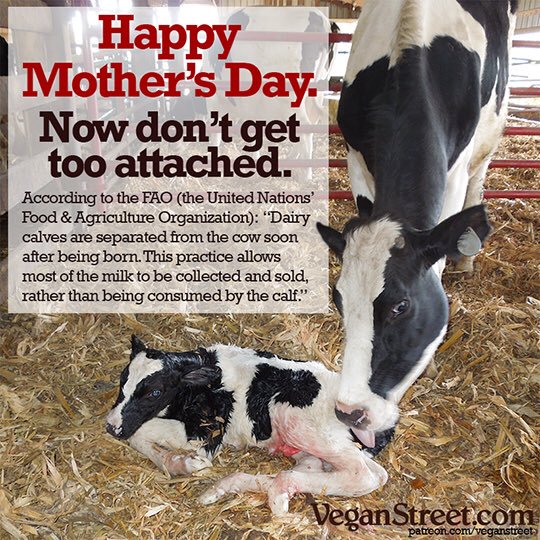
England: Happy Mothers Day !

flagge-england_jpg

………… Not such for Calves.


mother day calf


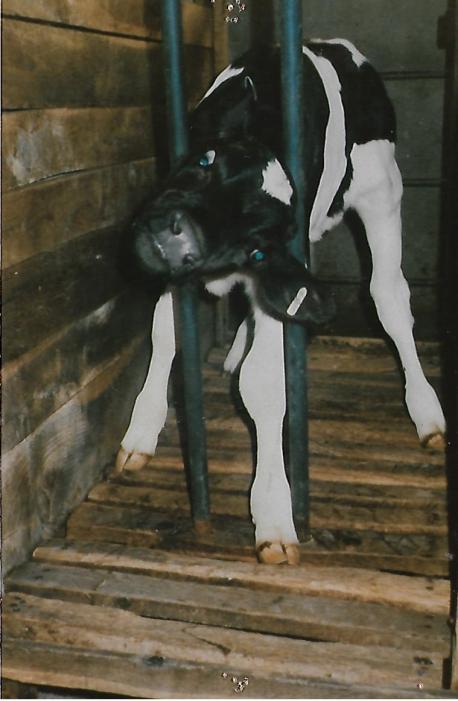
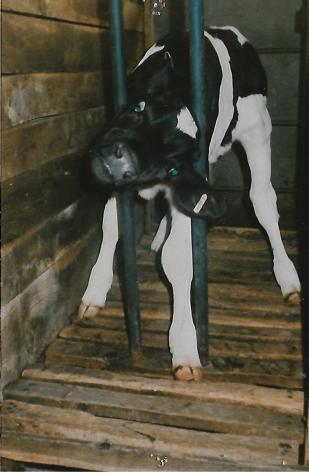
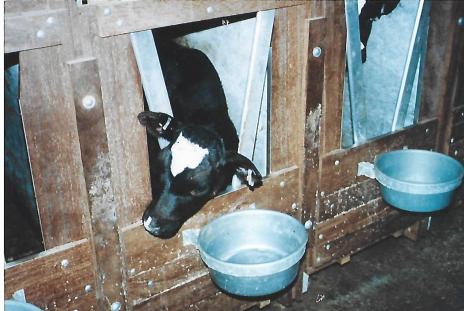
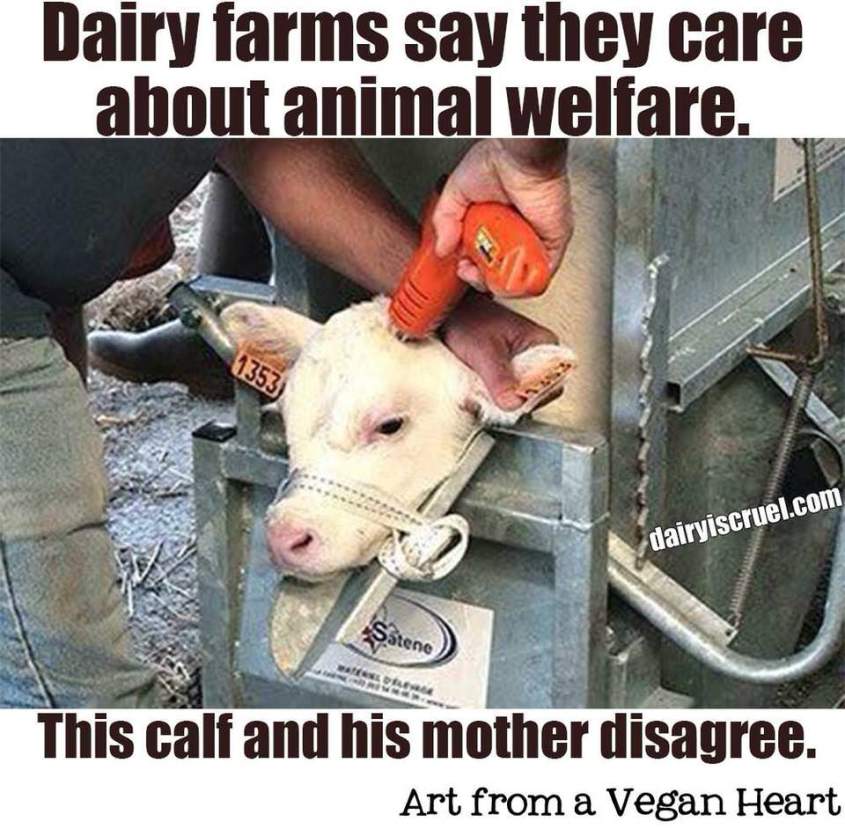
Male calves are a by product of the dairy industry.

Cows have to be in calf to continually produce milk.

Only females are kept in order to be continually impregnated to produce more calves and thus milk for human consumption.

The males are either slaughtered or kept for a very short time – further fattening or veal production.

Boycott dairy and think about these videos each time you consume cows milk.


breast milk

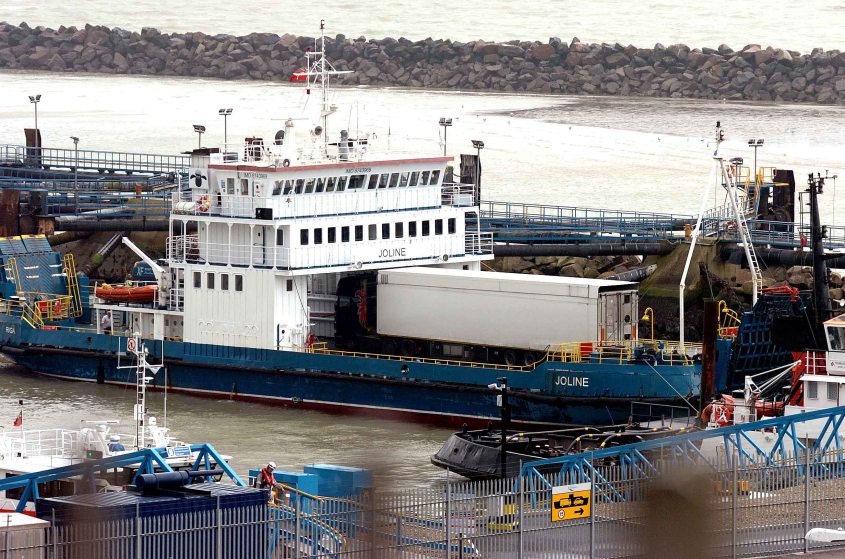
Below 2018 – Live calves (from Scotland) being exported by the Dutchman ‘Onderwater’ out of Ramsgate, England – protester footage here.

Onderwater runs a business associated with the export of live animals from the UK.  He operates a bathtub ship named the ‘Joline’ which the English AR consider is not worthy enough to operate cross Channel sailings – he runs the Joline between Ramsgate in England and Calais in France.

lesley-last-5


The Joline is an ex Soviet battle tank carrying vessel which was used on rivers; not as a cross Channel transporter carrier. See the video above of the Joline and decide if you consider it is fit for carrying any live animal transporters.


mothers day 2

zerissene EU-Flagge am Stock


European elections to select new Members of the European Parliament (MEP’s) are taking place between Thursday 23 May and Sunday 26 May 2019.

Venus and I; both as Europeans; will be presenting posts onto this site relating to the animal welfare situation within the EU. We hope that by using our posts; which will be informative; along with your obvious concerns for the welfare of animals; you will be better equipped on this issue prior to going out to vote in May.

Regarding the UK and European elections; what will happen in May is currently unknown due to Brexit. If there is a request by the UK government to extend Article 50; then it is possible that the UK will have to have candidates for the elections. If the UK can finalise with Europe in the next few weeks, then EU elections will not be required in the UK, as it will no longer be an EU member state later in the year.

We have already produced a few posts which relate to intensive farming in the EU:

Rabbits – https://worldanimalsvoice.com/2019/03/16/rabbit-farming-in-the-eu-a-shame-on-eu-subsidies/

And Salmon – https://worldanimalsvoice.com/2019/03/16/the-poison-from-the-salmon-farm-industry/

… and we will be connecting with national animal welfare campaign organisations to inform more in the lead up to the May elections.

Here below is an article which recently appeared in the respected ‘Guardian’ newspaper from the UK.

Link: https://www.theguardian.com/environment/2018/nov/14/farm-animal-abuses-widespread-across-europe-warn-auditors


Article:

Abuse of animals rife on farms across Europe, auditors warn

Europe-wide investigation says intensive farming systems increase the risks of poor animal welfare

Farm animal abuses are widespread in the European Union, with pig tail docking, long-distance transport and slaughterhouse stunning all areas of immediate concern, according to a report out this week.

Intensive farms are particularly problematic, the report by the European Court of Auditors (ECA) reveals, with economic interests often trumping welfare rules. “Our audit and other reports show it’s difficult to introduce improvements on intensive farms and enforce laws,” Janusz Wojciechowski, the ECA member responsible for the report, told the Guardian.

“In intensive farming systems the risk for animal welfare is increased. When there are 100,000 pigs it is very difficult to control. Small farms are easier places to achieve high animal welfare standards.”

Inherent system failures are equally to blame. Unnaturally high number of animals living together leads “to aberrant behaviour in laying hens such as feather pecking and cannibalism, aggression and tail biting in pigs and aggression in calves”, according to the report. To address that behaviour “it is common practice to perform painful physical alterations … in particular beak trimming, tail docking, castration and teeth clipping.”

Clear evidence of pig tail docking was found on German and Romanian farms, and has been seen in many other countries by other observers, including the UK and Italy. Docking pigs’ tails has been illegal in the EU since 2001, but it is still widespread. One Romanian farm visited by the ECA had evidence of tail docking, but was simultaneously receiving EU funding to improve animal wellbeing.

Just two countries in the EU – Finland and Sweden – have properly controlled pig tail docking and provided useful ‘enrichment materials’ to ease boredom, according to the report. Dr Joanna Swabe, public affairs director for animal lobby group Humane Society International, said proper environmental enrichment, good stockmanship and simply providing straw would all help avoid mutilations.

Slaughterhouse processes were a problem too. One abattoir in France visited by the ECA team was using the less reliable back of the neck ‘occipital stunning’ on calves rather than front of head stunning. Their aim, said the report, was to reduce bone splinters in brains sold for food. Inadequate ‘waterbath’ poultry stunning (where a hen is leg-shackled to a moving line and pulled head down through electrified water) is another risk area, auditors found, as is excessive use of non-stun killing.

Using a supposedly limited EU derogation, slaughterhouses can quicken their line speeds and process more animals by skipping stunning – the part of the slaughter process which renders the animal unconscious and therefore unable to feel the actual killing. Although there is a shortage of data, non-stun derogation overuse appears to be a problem around Europe, other than the few countries where it is currently banned.

Live animal transport was also a significant issue. The French authorities had still not carried out a 2009 promise to improve their inspection procedures, while other countries, according to campaigners, were simply ignoring rest stop recommendations altogether. As a result, say campaigners, young animals that normally feed regularly they may spend 18 hours in trucks in a ship’s hold, or even more sealed up in a truck on the road.

Achingly slow response to European guidance was a regularly cited issue. Italy, for example has taken 13 years to tackle forced moulting, where hens are starved, dehydrated and deprived of light, until they lose all their feathers. The practice is used to boost egg production but, along with the suffering involved, forced moulting has been linked to salmonella infection risks. Asked if the ill treatment was now under control, Wojciechowski said “at the time of our visit to Italy, the European commission recommendation on forced moulting was still open, which might mean that this issue was still problematic.”

A significant number of the EU’s farms are also excluded from controls because they are too small: the report estimated that as many as 40% of farms fall outside the EU’s remit. Another control loophole noted in the report is the issue of ‘landless farms’ – these are often intensive pig farms, which do not use agricultural land and therefore do not benefit from Common Agricultural Policy (CAP) subsidies, setting them free from related controls and fines.

Entitled Animal Welfare in the EU: closing the gap between ambitious goals and practical implementation, the ECA report is one of about 30 published by the auditors each year, as part of their responsibility for making sure that EU funds are correctly spent. With farm subsidies accounting for about 40% of the EU’s budget, the ECA regularly examines agriculture issues. This topic, it said, was chosen because EU citizens are increasingly concerned about farming’s effects on animal welfare, and the impact on both public and animal health. ECA reports are used by various EU select committees and the parliament as a basis for policy and legislative development.

On a broader level, Wojciechowskione said the EU lacks long term agricultural vision. Given the EU’s current CAP overhaul, due to be completed by 2020 for the 2121 to 2027 period, the next two years will be pivotal. “We need a long term vision. Not for seven years, but for 30. If that vision is of intensive farming, the risks animals will be badly treated is higher.”

Describing his feelings about the welfare risks animals face in the EU, Wojciechowski said he believed the words of Mahatma Gandhi. “That the greatness of a nation can be judged by the way its animals are treated.

I would say the greatness of the EU could also be judged on this.”

To address the failings identified, the report proposes multiple actions. These include improvements to enforcement, compliance, the animal welfare portion of EU rural development programmes, inspections and the penalty system. The European commission has accepted almost all the recommendations and the report will shortly be presented to the EU parliament and agriculture committee. From there, debates on legislative and other actions will follow.


Regards for now

Mark and Venus.

 

UK: I Animal -Do YOU Want to See The Modern Animal Farming Systems Through the Eyes of Farm Animals ? – If Yes, Read On.

UNKG0001

We have covered this project before but feel it is worth looking at again as the 360 degree panorama made available gives un an insight directly into the world of the animal at the facility.  At the end of this post we give details on how to view in 360 degrees if you are not familiar;

Regards Mark – WAV

—————————

Dear Mark,

In 2016 we launched our virtual reality project iAnimal. This innovative project provides a unique and immersive view behind the scenes of the meat and dairy industries.

To see the world through the eyes of an animal, to feel their fear and desperation, to share their suffering – iAnimal has the potential to change our attitude towards animals permanently.

iAnimal is narrated by our famous animal-loving friends: Evanna Lynch, Amanda Abbington and Peter Egan. The modern 360° technology literally places the viewer in the world of a farmed animal. For many people it is a life-changing experience.

With the help of our generous supporters and volunteers, we take iAnimal to events, festivals, universities and other public places to raise awareness about farmed animal suffering.

Education is the first step to helping animals.

For the animals,

Dr Toni Shephard

Exec Director – UK.


WAV Comment – To Use:


Click on this link – https://ianimal.uk/

Click on the Yellow box – 360

Then you can hold down the LEFT button of your computer mouse, and move your mouse left, right, up or down to get a wider view of the situation.

On the left side of the screen there is a box where you can select to watch other videos if you wish.


Turkey: Comparing Slaughterhouses – ‘Eyes on Animals’ Investigation.

TURK0001


From good friend Lesley at ‘Eyes on Animals’ – The Netherlands.

Working in Turkish slaughterhouses is always frustrating. It is crucial that we are there, because the animals suffer horrendously and need help. It is also not hopeless; numerous improvements are now in place and a shift in thinking has begun. However, after hundreds of years of bad habits, religious traditions and a lack of information on new, more humane slaughter techniques in the Turkish language, change is slow and unpredictable… Never before was that so evident as last week.

Read the full article from Lesley at:

https://mailchi.mp/f198ac8f9130/updateturkey?e=9e201ab50f


The vocabulary of the slaughterhouse society🐷


Germany


On the 4th of March in Wettringen, North Germany, a pig transporter caught fire. Half of the animals died or had to be killed, according to the police.

schwertransport mit schweine verbranntpeg

According to the police of the district of Steinfurt, the livestock transporter with 112 pigs caught fire on this Monday at 11.50 am on the B70. When the driver noticed the smoke on the tractor, he stopped the van.

However, the animals could only be partially released from the trailer of the truck:

64 of them died at the scene of the accident.

Four of them had to be shot by local policemen as their injuries were so severe.

Other animals were euthanized by employees of the district veterinary office.

schweine verbrannt peg

The surviving pigs were taken to the slaughterhouse – the original destination of the trip (!!!)

https://www.noz.de/deutschland-welt/nordrhein-westfalen/artikel/1669775/viehtransporter-geraet-bei-wettringen-in-brand-viele-schweine-verenden

My comment: If we had a fair press, the message should be written as follows:

In Münsterland Wettringen burned a pig transporter. Half of the animals are burned painfully or had to be shot because of their heavy burns.
The creatures that survived the accident were taken to a nearby slaughterhouse to die just as painfully as their conspecifics recently died painfully at the time of the fire!

Anyone who reads this message should be aware that the torture of animals in transports, farms and slaughterhouses is the result of the boundless indifference of a slaughterhouse society that cares about the suffering of other beings for a shit.

My best regards, Venus


Australia: Over 13,000 Respond to RSPCA Action Against Government Over Live Export Heat Stress.

australia


RSPCA Aus sheep


Update – Submission to Australian Government re Live Exports.

AUS RSPCA


Mark, we want to thank you for speaking up for Australian sheep.

Today, we delivered our submission to the Department of Agriculture’s review into how heat stress is managed for sheep in live export.

The response to our call to support the important reforms being made through the heat stress review has been INCREDIBLE.

Over 13,000 Australians have joined our submission, on what is a fairly complex and technical issue. These reforms could not only better protect our sheep, but they could ultimately spell the end of the live sheep export industry.

It’s now almost a year after the horrific Awassi Express footage of sheep suffering on journeys to the Middle East was aired, and it’s clear that we as a community feel more strongly about this issue than ever before.

The truth is Australians don’t support live sheep export, and that’s not going to change.

THANK YOU to everyone who has added their voice to our call and made a submission to this review, not to mention the countless other actions you have taken to end the suffering of sheep in live export.


More than 200 sheep killed as lorry overturns in Scotland.

scot

William Armstrong – the livestock haulage specialist.

https://www.warmstrong.co.uk/livestock-haulage-specialist


Source – https://www.standard.co.uk/news/uk/more-than-200-sheep-killed-as-lorry-overturns-in-scotland-a4076486.html

Over 200 sheep died in the crash

More than 200 sheep killed as lorry overturns in Scotland

More than 200 sheep have died after a lorry transporting the animals overturned on a road in Scotland.

The crash happened on the A76 in Dumfries and Galloway on Monday evening.

Nithsdale Police tweeted an image of the Wm Armstrong transporter on its side near Enterkinfoot.

They wrote online: “Crash happened around 10:50 PM last night (Monday 25th) near to Enterkinfoot, south of Mennock. The driver received minor injuries, however over 200 sheep onboard died. ”

The driver received only minor injuries.

The route has since reopened and officers have appealed for witnesses to the crash at around 10.50pm.

UK: Government Confirmation of ‘Strengthened Protections’ for Animal Welfare / Sentience When the UK Leaves the EU (March 2019 ?).

UNKG0001

26/2/19

We very recently contacted the UK government about the issue of ‘animal sentience’ once the UK leaves the EU – which we hope will be very son at the end of March 29019.

eu uk 4

Here below is a written reply that we have had on this; and we are very satisfied to see that the UK government has pledged “the sentience of animals will continue to be recognised and protections strengthened when we leave the EU

We have always said that once we can get away from the un-enforced welfare regulations of the EU; the UK will improve animal welfare legislation due to the demands of the British public.  The letter really confirms this by talking of ‘protections strengthened when we leave the EU’.

Here is a copy of the formal response sent by the government.

Regards Mark

AH 26 2 without address

RSPCA Australia Asks You To Take Part In Public Consultation Over Sheep Exports – Links Below.

australia


RSPCA Aus sheep


WAV Comment – you now have your chance via this public consultation to make a difference and help Australian animals from never having to be (live) exported again.  Please read the article from the RSPCA below and click on the link to make your voice heard.  Be a voice for the suffering sheep ! – Thanks, WAV.

All pictures below are from our archive and are not associated with the RSPCA document.

sheep123

Mark, you have been with us in our ongoing fight to end the suffering of sheep in the live export trade.

You – along with tens of thousands of other supporters – have already taken countless actions.

But we need your help one more time to help end the cruelty for good.

The government review panel has got the science right (at last!), when it comes to heat stress experienced by sheep onboard these journeys.

We’ve said all along that the evidence shows heat stress is unavoidable on board journeys to the Middle East in the high risk May to October period.

Now, the recently released Heat Stress Risk Assessment Review has been opened for public consultation, and all recommendations support what we have been calling for:

  • a risk assessment based on welfare, not mortality,
  • and one that will ultimately mean the end to the most horrific conditions experienced by thousands of Aussie sheep each year.

This is the review we’ve been waiting for – but live export lobbyists are desperately trying to stop these improvements and roll back these reforms.

Mark make no mistake – these reforms are the bare minimum of what needs to be done to protect our sheep.

Please take action today and add your voice to the RSPCA submission, supporting these vital improvements to protect Australian sheep from the live export industry.

live ex ship

WAV Note – Or Use the following link to make your submission and speak up for the sheep who suffer:

https://www.rspca.org.au/campaigns/live-export-australia/hsra-review?utm_source=Email%20Campaign&utm_medium=email&utm_campaign=27921-55271-HSRA%20pubic%20consultation%20eBlast%2022/02/19