This is what happens to farmed animals when they’re transported in freezing conditions.
These pigs have literally froze to slaughterhouse truck and need to be cut apart piece by piece in order to be removed.
These are the victims of the animal farming industry. This is happening in North America.
The meat mafia, the truck driver, the average person sees in these pictures no more animals.
They see that a product has collapsed due to extreme weather conditions. The only question is how cleaners can cleanse the body.
No one cares that sentient beings were killed by negligence and sent to their deaths.
The more consumers become desensitized to this disease, the more normal, natural, and unavoidable the crime appears to be. Therefore, the corrupt media are constantly busy with the consequences of the cold for the people.
The business has to run, and such damages lead to heavy losses in the cash register.
The band never stops on the Dachaus of this world.
On the truck, in the slaughterhouse, in the farms … The death gang never stops.
Thanks to the dull moral of those, who tomorrow will eat the frozen remains of the tortured corpses without guilty conscience.
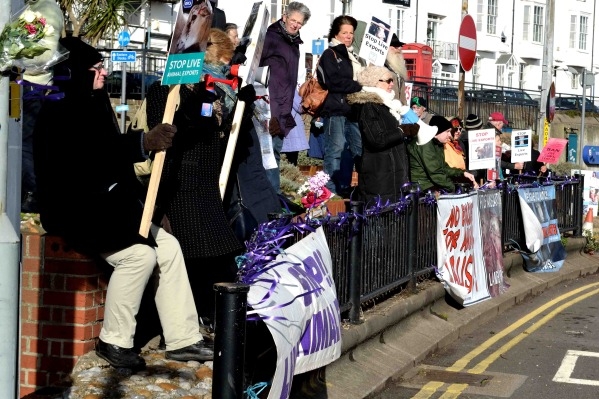
Today, 1/2/19 is a day of great sadness for all of us who have been involved with live animal exports in the UK. Today marks the day when in 1995 our beloved Jill was crushed to death under the wheels of a livestock transporter carrying live calves into Coventry Airport for them to be flown to Europe and the crate systems that existed at the time – 1995.
On 1 February 1995, Phipps was one of 35 protesters at Coventry Airport in Baginton, protesting at the export of live calves to Amsterdam for distribution across Europe. Ten protesters broke through police lines and were trying to bring the lorry to a halt by sitting in the road or chaining themselves to it when Phipps was crushed beneath the lorry’s wheels; her fatal injuries included a broken spine.
She died on the way to the hospital accompanied by her brother Zab.[2] Phipps’ death received a large amount of publicity, being brought up at Prime Minister’s question time in the House of Commons.[1]
Jill was killed at the Coventry protests; Veal calf exports from Coventry Airport ended months later, when the aviation firm belonging to the pilot responsible for the veal flights, Christopher Barrett-Jolly, went bankrupt following accusations of running guns from Slovakia to Sudan in breach of EU rules.
In 2002 he was charged with smuggling 271 kg of cocaine worth £22 Million from Jamaica into Southend airport in Essex, England. He was given a 20 year prison sentence. Read more:
All these years (24 to be exact) on after Jill’s death fighting for animals; ceremonies and tributes are still held at this time to remember the ‘warrior of the rainbow’ who simply wanted the world to be a better place, and for animals to be respected in parallel to the human race.
Give a minute please to remember Jill today and what she died fighting for.
Even today; I still personally get upset a the loss of this beautiful person – there is no justice ! – I have seen, heard and smelt the calf export transporters – they bring shame to us all.
1/2/19 – Still Scottish farmers try to export live calves through England to Europe !
Even today (1/2/19) , this very morning; Scottish farmers intended to send their male calves; and unwanted ‘by product’ of the dairy industry, from Ramsgate port in England, to their deaths in Europe for meat eaters. Fortunately, todays sailing has been cancelled due to snow and bad weather conditions between Scotland and Ramsgate here in Kent on the SE coast of England, my home county. As Rab says in the fil, the common link throughout is one of mothers being separated from their children – dairy cows crying for their baby calves; and Nancy Phipps being separated from her daughter Jill who was killed at the protests.
Thank You
Mark.
1/2/19 Ramsgate sailing Update:
The proposed sailing of the Joline today has been cancelled due to the weather conditions for loading in Scotland. Thank you to all the efforts of our supporters who have made this happen.
WE ARE STILL HOLDING THE MEMORIAL SERVICE FOR JILL PHIPPS AT RAMSGATE TODAY 12 TILL 2PM AND KEITH TAYLOR MEP IS STILL COMING SO YOU CAN QUESTION THE GREENS POLICY;
We are still holding the service at Dover tomorrow (2/2/19) 12 till 3pm.
THE SHIP IS STILL COMING ACROSS, IT SET OFF 30 MINUTES AGO AND IT IS TO STAND IN RAMSGATE UNTIL EITHER SUNDAY, WHEN THE EXPORTERS WANT TO SAIL OR MONDAY WHICH THE POLICE WOULD PREFER
WE WILL LET YOU KNOW AS WE NEED TO SEE THESE CALVES WHO HAVE BEEN WAITING FOR SEVERAL DAYS NOW
For animals exported from Chile to China and the Middle East, the voyage is pure torture.
Living in filth and faeces, the animals endure excruciating heat, no veterinarian care and overcrowding that crushes them to death. Sick animals may be cruelly thrown overboard into the sea while still alive and conscious.
More than 60,000 cows, pigs and other animals have endured such live export from 2014 to 2017. Those who survived were sent to countries with little to no animal welfare laws; once off the boat, they faced brutally inhumane transport and slaughter for consumption or even sacrifices.
But there is new hope.Chilean Senator Guido Girardi, along with the nonprofit organizations ProAnimal of Chile and Animals International of Australia, plan to propose a law to the National Congress of Chile banning live animal exports by sea.
Despite evidence and international public outcry, governments worldwide continue to fail to ban live exports and refuse to protect these helpless animals from the torture they endure.
But we cannot give up; the animals need us to speak up for them now more than ever.
With your signature, you can support legislation to save thousands of animals from the horrible suffering endured during live exports, and help ensure the current efforts are not made in vain.
Please sign this petition to show Senator Guido Girardi your support of ending live animal exports, and encourage him to keep up the fight until the cruel practice has ended.
All photographs in this post are for educational reference only. No copyright infringement is intended and no financial gain made by WAV rom the showing of these images.
Religious texts set down traditional methods of slaughter; simply using a knife to kill the animal. The right to continue using these methods is strongly contested between members of the Jewish and Muslim faiths and animal rights / welfare activists.
Opponents of the practice feel that animals should be stunned before slaughter – stunning; which is a standard industry practice worldwide – if undertaken properly, this makes animals unconscious and reduces the pain as they are cut (stuck / sticking) and bled to death. We say ‘if undertaken properly’; because there is a lot of evidence and undercover footage in existence which shows that in the ‘stun usage’ environment; many animals are not being stunned correctly or for long enough; thus regaining consciousness before their throats are cut.
However, there is no definitive scientific evidence that an animal does not feel pain whilst unconscious. Indeed, a counter argument put forward by ritual slaughter advocates is that stunning may only stop an animal from displaying pain.
While the Jews accept absolutely no stunning, some Muslims have accepted it as long as it can be shown that the animal could be returned to normal living consciousness.
EU law requires animals for the food chain to be stunned (made unconscious) prior to killing, so that death should be ‘painless’. Is any slaughter ‘painless’ we ask ?
Saying this, there are within the EU exceptions to stunning prior to slaughter for religious reasons, notably for Shechita (the Jewish method of killing animals for food – Kosher meat) and Muslim Halal. The Muslim and Jewish communities, totalling nearly 25% of the world population, have similar philosophies in this regard.
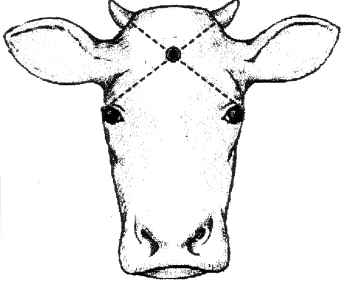
The recommended position which a captive bolt gun should be located on cattle’s head.
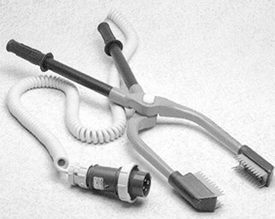
Stunning tongs deliver an electric charge. They must be positioned either side of the head to be effective.
Conventional Slaughter
Animals are generally made unconscious by stunning and then killed by cutting their main blood vessels; the carotid arteries in the neck.
Just prior to slaughter, individual animals are supposed to be separated as they are walked into a stunning box. Within seconds an operator stuns the animal. Separation is not as common as the industry would like people to think.
There are three different methods of stunning, each used for specific animals.
Captive bolt: a gun-like device delivers a concussive blow to the skull. Usually used for adult cattle and sometimes sheep and calves,
Electrical: A current is applied across a sheep’s (or sometimes cattle’s) brain allegedly rendering it senseless. Electrical stunning is undertaken using ‘tongs’ held by the slaughterman. It is essential that to produce the required result, the tongs are positioned correctly on the animals head. Again; a lot of video evidence shows that tongs are either positioned incorrectly in the first place; and / or they are not held in position for long enough time to render the animal unconscious.
There is very much a risk that some cattle, pigs and sheep may not be stunned effectively, causing them to regain consciousness before they die from blood loss during sticking Therefore, for stunning to be effective it is vital that:
the stunning equipment such as tongs are working properly – they should be regularly checked and maintained
the stunning equipment is positioned correctly on the animal’s head/head and back. In large processing facilities; this is not always correctly undertaken.
during electrical stunning, enough current is applied for a long enough period
during captive bolt stunning, the correct charge cartridge is used to fire the captive bolt
the time between stunning and sticking (cutting) is not too long to prevent an animal regaining consciousness
A sheep is electrically stunned using tongs.
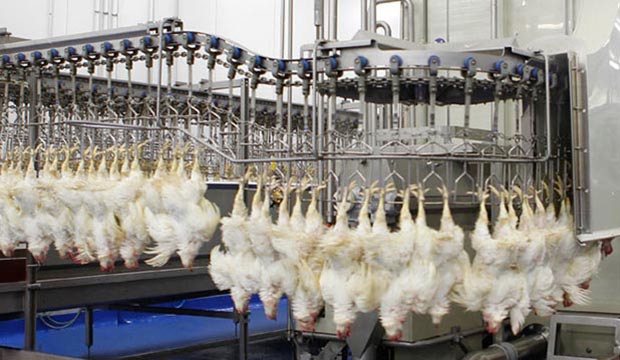
Waterbath: Used for the killing of chickens. Birds are hung by their feet in metal holders (shackles) on a moving belt and their heads are supposed to be dipped into electrified water.
Above and Below – Chickens hanging on shackles.
The problems involved with the stunning of poultry are complex. Welfare concerns include the following:
the shackling of live birds – which is painful.
Waterbathing can result in some birds raising their heads and subsequently missing the water bath stunner.
Can result in the birds receiving painful pre-stun shocks as they enter the stunner.
Can result in an insufficient electrical current flowing through the bird’s body to ensure the bird is unconscious (effectively stunned).
Can be designed so birds passing through an automatic neck cutter only receive a single cut to the neck, which reduces the rate of blood loss.
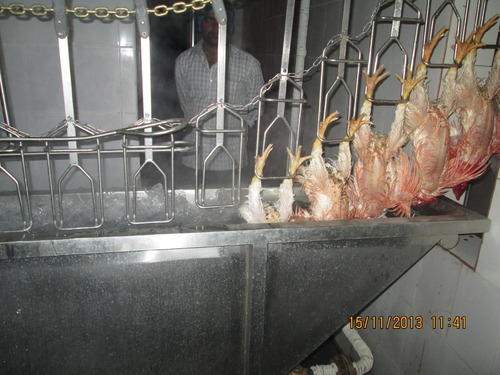
Can result in birds accidentally missing the automatic neck cutter. If these birds are not noticed by the slaughter person, they may still be alive when entering the scalding tank – a tank of boiling water that helps to loosen the feathers prior to plucking.
Chickens going through the scalding tank.
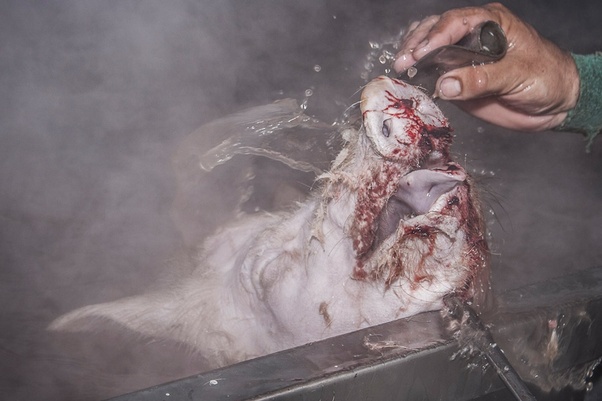
Above and below – A pig still alive within the scalding tank.
Gas: carbon dioxide or other inert gases are used, mainly for poultry; but also for pigs.
Stunning with CO2 gas is in our opinion terrible, but it offers some benefits over electric stunning including the ability to stun animals in groups, with minimal restraint, less handling, and therefore potentially less stress before stunning. There is also less reliance on the skills of the people operating the equipment.
However, recent studies have revealed a number of welfare issues with CO2 stunning. These include:
the gas is very unpleasant for pigs (who are highly aversive animals)
there is variability between individual pigs’ responses to CO2
pigs are not rendered unconscious immediately
high concentrations of CO2 gas can cause significant pain and distress to pigs when inhaled (by causing acute respiratory distress)
Studies of pigs’ behaviour have found that most pigs will avoid high concentrations of CO2 gas if possible, and that almost 90% of pigs preferred to go without water for 72 hours than experience exposure to CO2 gas.
Further research is urgently needed to develop stunning systems which retain the benefits of CO2 stunning while minimising the disadvantages. Evidence suggests that potential alternatives to be investigated may include:
non-aversive (not unpleasant and do not cause pain) gas mixtures such as argon, nitrogen, or nitrous oxide
a combination of argon with CO2
anaesthesia with non-aversive gases, followed by killing by CO2 or electrical methods
genetic selection for pigs which do not find CO2 to be painful.
The RSPCA (in the UK) recommends that stunning/killing pigs with high concentrations of CO2 should be phased out quickly, and replaced with a more humane alternative. The development of more humane gas mixtures and suitable equipment should be urgently prioritised.
Pigs being killed by the use of CO2.
Bleeding out comes from having at least both carotid arteries in the animal’s neck severed (“sticking”) to ensure maximum blood loss.
Cutting actions required
In poultry and sheep the throat is cut behind the jaw.
The knife cut for chicken cuts muscle, trachea, oesophagus, carotid arteries, jugular veins and major nerves.
For cattle, the skin is opened at the neck through a 30cm longitudinal cut. A clean knife is then used and inserted at a 45° angle to cut the jugular and carotid blood vessels.
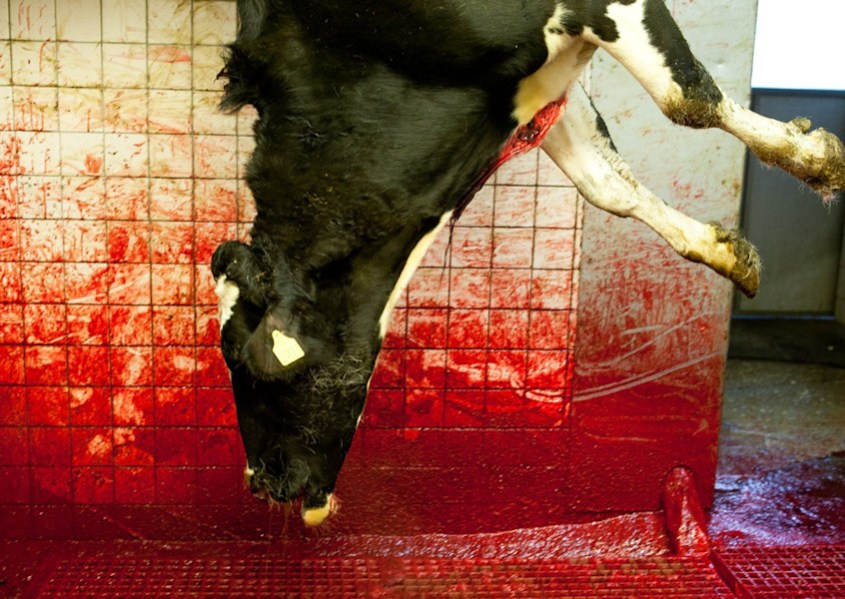
Slaughtered Cattle hung and bleeding out.
According to the ‘system’, the knife should be ‘very sharp’, without blemishes or damage and be at least double the width of the neck. It should be used in a fast, aggressive cut across the throat with the least number of strokes in order to bring about immediate and massive blood loss.
The animals are then inverted, having been shackled by a back leg – attached using a metal fastener – just after stunning (except poultry which are already inverted), to allow the blood to drain away faster.
Religious
Halal slaughter
For cattle there was no stunning in Italy and most Belgian and French slaughterhouses, unlike in Germany and the UK. Cattle were restrained upright in Italy, the UK and 80% of abattoirs in Belgium, but turned on their back in a pen in Spain. The most common stunning method was the penetrating captive bolt.
For sheep, there was no stunning in Belgian, Dutch and most of the Italian, French and Spanish abattoirs surveyed, whereas stunning was the most common practice in the UK and Germany. The animals were upright in the UK, on their sides in Belgium, France and Italy and mainly hoisted in Spain. The most common stunning method was head-only electrical stunning,
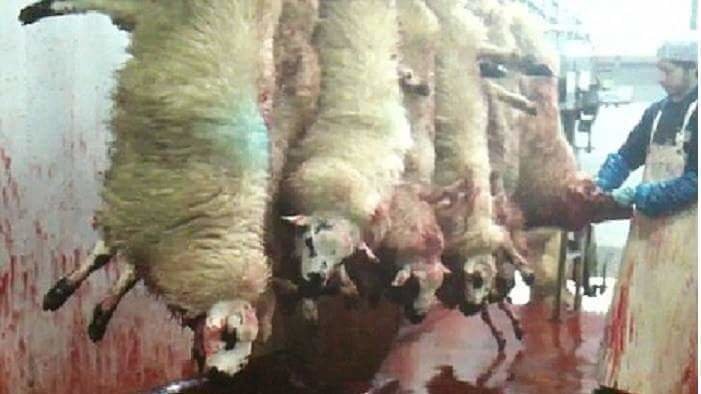
Sheep hoisted for Halal slaughter.
Poultry were not stunned in Italian abattoirs surveyed, but stunned in Germany, Spain and the UK. The stunning method used was the waterbath.
Shechita slaughter
Data from French, Italian, Spanish and UK abattoirs showed that no stunning (pre- or post-cut) was used. For cattle, slaughter was in the upright position in Italy and the UK and with animals on their backs and restrained in Spain and France. For animals such as sheep, they were turned on their sides in the UK, but hoisted in Italy.
Of importance for any slaughtering, but more so for Halal and even more for Shechita, is secure restraining. This particularly relates to the head and neck since movement results in a poor cut, slowing death, reducing meat quality and possibly retaining blood and ‘spoiling’ meat.
Religious customs
Muslim
The Qur’an sets out the rules with respect to animals and slaughter and teaches that animals should be well treated:
Restraining equipment should be comfortable for the animal, whatever ‘comfortable’ is for an animal about to die !
Invoking the name of Allah immediately before the slaughter is either compulsory or highly encouraged, although (in the UK) it is known that the name of Allah is simply continuously played via a tape during the daily process.
The cut must sever at least three of the animal’s trachea, oesophagus and the two blood vessels on either side of the throat,
Multiple acts of slaughter on one animal are allegedly prohibited, so the knife must not be lifted off the animal during the act of slaughter: a single continuous back and forth motion is required, and animals should not be shackled and hoisted before bleeding, and further actions on the carcass must wait until there are no more signs of life.
It has been claimed that the Qur’an contains nothing forbidding the consumption of stunned animals. However, there is no single authoritative body that can definitively rule as to the Muslim law on the issue of stunning before slaughter. Some Muslim authorities have approved stunning so long as the animal can regain consciousness and eat within five minutes.
Jewish
Jewish rules are set out in the Talmud and Midrash:
Shechita slaughter, necessary for orthodox Jews, always requires no pre-stunning. This reflects a need for animals to be healthy and without injury at the time of slaughter. No pre-stunning for the Shechita method has yet been accepted,
Appropriate animals must only be slaughtered by a specially trained person, and traditionally slaughter has been with the animal on its back, but an upright position has been approved.
Animal suffering
Correctly performed conventional slaughter procedures (stun then cut) results in animals rapidly becoming unconscious, and remaining so during cutting, until their death by bleeding out.
However, animals can feel stress when being prepared for slaughter, for example during restraining, and in the case of poultry there are concerns about their shackling before stunning.
In large, high-volume slaughterhouses with a focus on fast, cost-effective throughput; some personnel can be poorly trained and animal welfare regulations simply ignored, with low levels of inspection. Religious slaughter brings extra challenges to these abattoirs since it requires more attention in animal handling, specialised equipment, greater slaughtering skill and overall the process is slower.
In practice, animals may suffer pain, a slower death and stress through procedures in religious slaughter not being carried out as laid down:
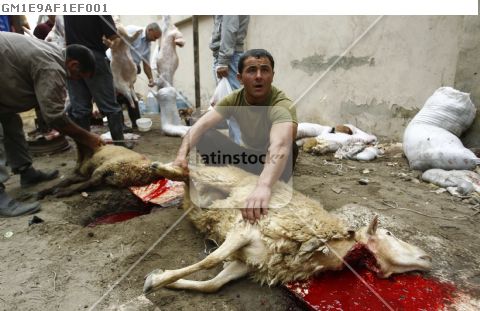
A sheep is slaughtered on the street during Muslim Eid.
Stunning procedures in ‘normal’ slaughter procedures are also not always performed correctly,
During slaughter, operator and general factory competence is very important,
A lack of experience or skill may mean that more than the required one or two movements of the arm for cutting. There have been reports of 3.2 cuts being required for Jewish and 5.2 for Halal slaughter.
Death for the animal takes longer where arteries were not correctly severed (generally reported as occurring for one out of ten animals).
Pain
The determination of the exact point; if any; when an animal becomes insensible to pain is the key animal-welfare issue. Though it is clear that animals do not lose sensitivity to pain immediately on stunning, the state of consciousness of an animal and its level of insensibility cannot be quantitatively measured.
One side argues that although science cannot provide a definitive position no-stunning slaughter is more likely to cause pain given the many nerve receptors in the neck and time taken to bleed whilst the animal is not unconscious.
However, some counter arguments put forward are that stunning:
may only paralyse an animal, preventing it from displaying pain,
Does not always work – due to operational problems, and
May be painful and the process cause stress to the animal involved.
Certainly, most people observing the process would suffer less discomfort through seeing animals first stunned.
Consciousness
A concern is that after stunning, animals regain (some) consciousness. This is particularly so for electrical stunning. Periods of less than one minute are considered desirable for “stun-to-stick”, though the UK’s Farm Animal Welfare Council considers the maximum legal interval should only be 15 seconds.
In ritual slaughter, non-stunned animals can be conscious after neck-cutting for up to 2 minutes for cattle, 20 seconds for sheep and 2.5 minutes for poultry, according to the European Food Safety Authority.
If correctly and properly performed, Shechita results in calm cattle collapsing within 10 to 15 seconds. Observation shows in 30% of cases however, that animals remain conscious for more than 30 seconds.
Alternatives
Most people would never want to witness and animal being slaughtered; yet meat eaters are seemingly happy to let someone else do the job for them behind high walls.
Fortunately, many people in the Western world especially have now decided to ditch meat for a plant based diet instead. Religious slaughter is one reason why so many people are opposed to live animal exports – all Australian sheep exported live to the Middle East are slaughtered using the Halal method. The general treatment of live animals is another.
A Major Cause of Concern – Australian sheep on a ship destined for the Middle East.
According to PETA, 198 animals are saved each year, per vegan person, but technically, none are. Animals are not saved or spared due to the amount of vegans in the world. However, less animals are “produced” to be slaughtered. So, maybe 198 animals per vegan are not produced to be killed is a very reasonable statement.
And get this: One person who goes vegan can save approximately 219,000 gallons of water a year. It takes 1,000 gallons of water to produce just one gallon of milk, and beef has an overall water footprint of roughly 4 million gallons per ton.
So, make the change to a plant based diet and do not have this terrible suffering on your conscience.
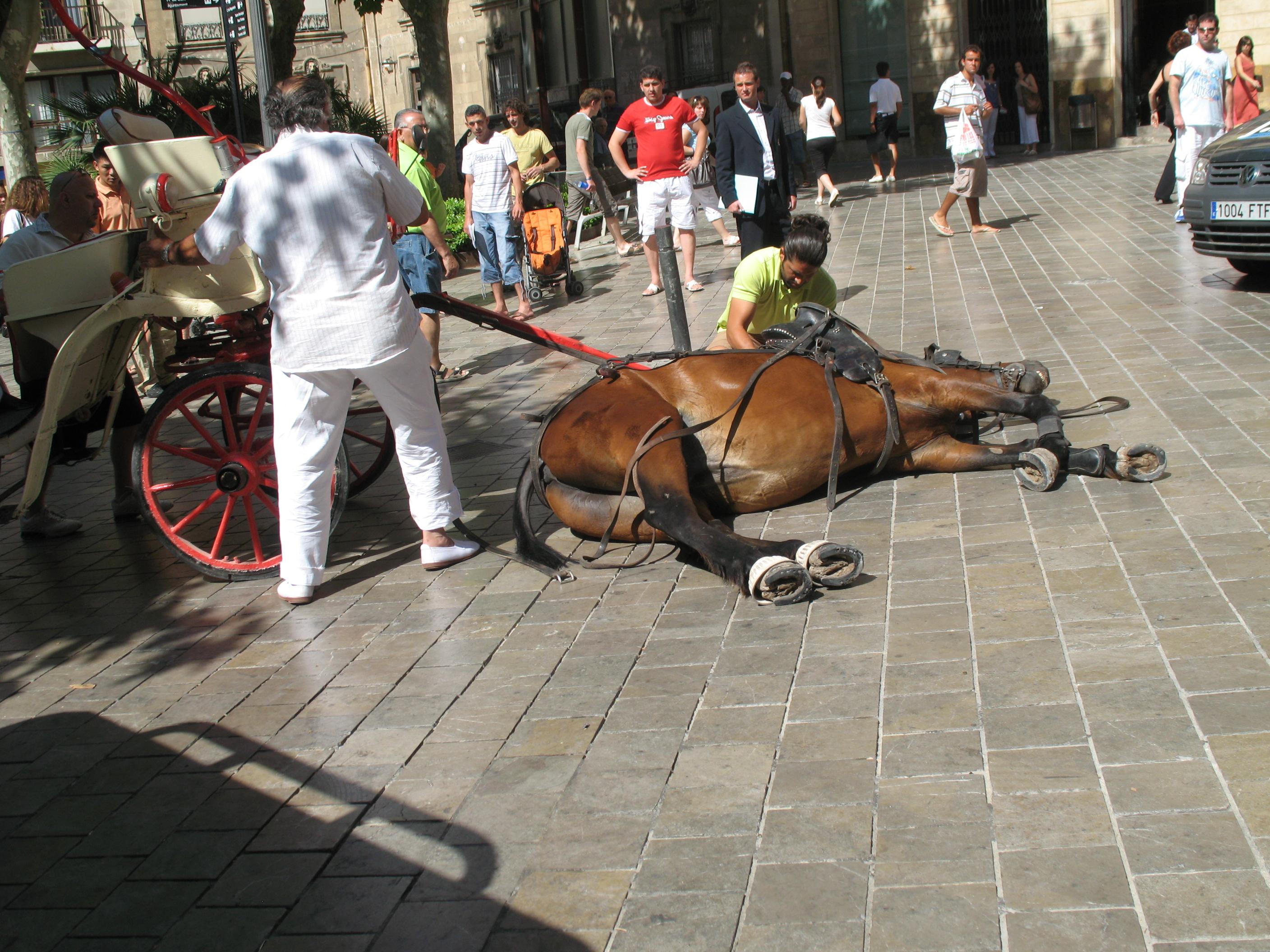
Dozens of horses on the Spanish island of Mallorca are forced to pull heavy tourist carriages through busy streets, day in and day out.
Photo PeTA.
Cruel carriage rides like these have already been banned in Oxford, Barcelona, New Delhi, and Tel Aviv – and for good reason. In Mallorca, many horses collapse from exhaustion – especially in summer, when temperatures regularly reach 40 degrees.
Some horses get caught up in noisy traffic, which often leads to accidents. The honk of a car’s horn or even just an insect bite can be enough to trigger their instinct to bolt.
Several cities that prohibit horse-drawn carriage rides instead offer animal- and eco-friendly means of transport such as electric vehicles, which are a much safer way for tourists to explore local sights. There’s no reason why Mallorca can’t do the same.
Mark, horses belong on pastures where they can rest in the shade, move about freely, and interact with members of their own species.
Will you urgently send a message asking Mallorca’s mayors to ban horse-drawn carriages?
Around half a billion poultry, pigs and cattle are transported on European highways every year. Just so that the animal can be slaughtered cheaply, it is transported to a low-wage country and then back as meat back to the meat counter.
EU Commission rejects the 8 hour transport limit.
The EU promotes cruel practices in the meat industry with subsidies.
A tragic consequence of globalization and global trade is the increase in animal transport and the expansion of transport distances. The specialization in the agricultural sector, the liberalization of markets, the international orientation of companies and the new information and communication technologies make it possible today to market animals internationally. Animals have long been piece goods in the consciousness of producers and suppliers.
The German government is running a kind of “greenwashing” to support the meat industry, as it is making every possible effort to grow. Alone the transport to the slaughterhouse are cruel, but although there is so much evidence that the guidelines are very often not respected in animal transports, the EU has rejected in mid-March a committee of inquiry into live animal transports! A black day for the animals, a cessation of tormenting animal transport conditions is therefore not in sight.
So it is known. The accidents on the transports continue to increase.
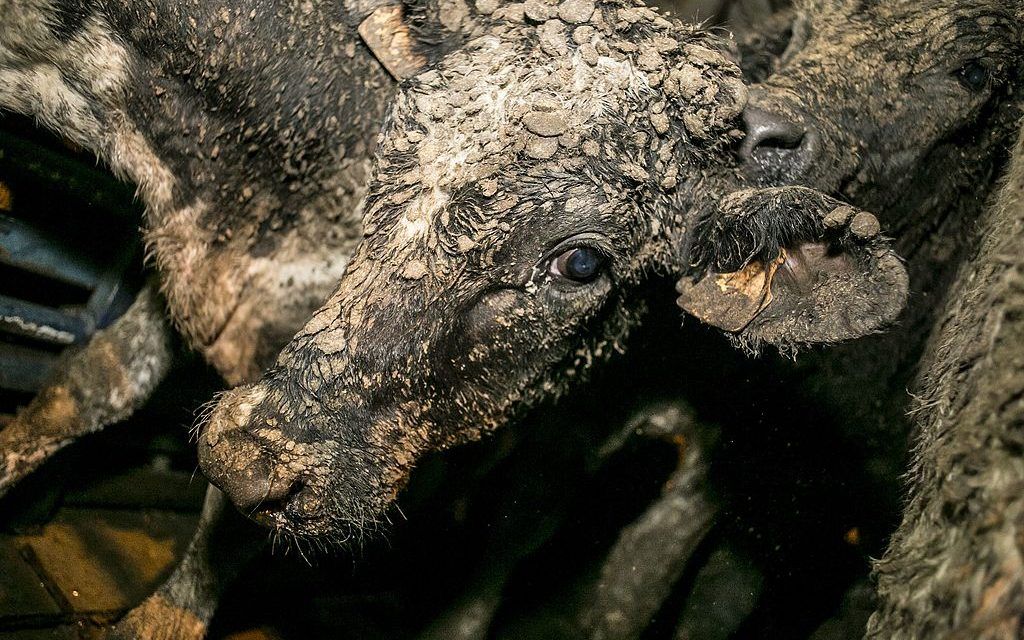
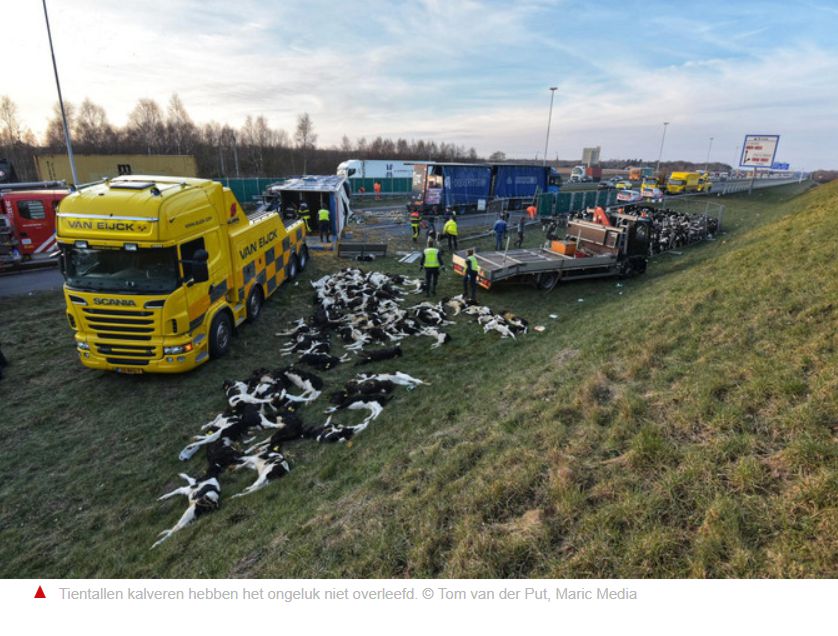
On March 08, 2018, cruel images of dozens of dead calves appeared. Victim of a collision between two trucks. They were Irish calves. On the way to Groningen. Because Ireland and the Netherlands are member states of the European Union, there are free shipments of goods or animals. At the moment of their early death, these calves had already made a long journey. First through Ireland, then crossings by ferry and another trip of about three hundred kilometers. Why are a few hundred calves carting across Europe? Now these calves are dead. Again and again, accidents occur when one considers the cruel reality: Annually, around 170 million livestock transports take place in Europe alone.
But the EU Commission rejects the 8 hour transport limit.
Although animal welfare violations in animal transport have increased, the EU is fully supporting the meat and milk mafia. They are cruel pictures and you often hear them screaming: the animals in trucks.
Every day you see them driving, the trucks with their cargo: live animals!
September 2018, Germany: 109 piglets have died. According to the ministry, the carrier must be overloaded. Altogether 180 piglets were loaded. The pigs did not die due to illness. How exactly they came to death and who is responsible, is not known and was not explained to us until today. According to previous findings, the driver of a delivery service has transported 180 piglets, 109 were already dead. The operator had discovered the dead animals fortuitously and then notified the authorities, it said.
And here are (some) the damages inflicted directly by the oligarchs of the EU – Germany on animal welfare during the five years of their rule:
-Ministers of Agriculture, who run their own horror slaughterhouses
-Criminalization of covert work in slaughterhouses
-Ex-Minister of Agriculture Christian Schmidt (CSU) had given the controversial pesticide glyphosate single-handedly its vote
-Extension of piglet castration without anesthesia
-Mass murder of wild boars (99,000 in 2018)
-Killing millions of chickens and other poultry as bird flu protection.
-Chicks should be further shredded
-No prohibition of wild animals in the circus, although other countries, even from the Third World, have done so long ago
-No ban on transporting animals over 8 hours a day.
And many, many more…
Animal abusers at all levels, that’s the EU.
EU is animal hostile.
It supports slavery, exploitation and brutal trade with animals.
It deserves no respect, no voice.
It eserves only contempt.
With the taxpayers’ money, it pursues a dirty, disgusting policy in favor of the meat and milk mafia, the transport mafia, the hunters, the laboratory crime.
The EU no longer has a right to exist.
I do not go vote and would recommend it to anyone.
All photographs are not associated with the article – they are publicly available via Google “no copyright infringement is intended”
Animals in Iowa just got a little safer.
A law was struck down that would have made it illegal for a person to get a job at a livestock farm, slaughterhouse, or puppy mill with the purpose of conducting an undercover investigation on animal welfare, environmental health and safety, or working conditions. A person doing this type of work could have faced up to two years of jail time.
This “ag gag” law was passed in 2012 and supported by the livestock industry. A federal judge found the law violated the First Amendment right to free speech.
Challengers to the the law were the ACLU of Iowa, the Animal Legal Defense Fund, PETA, and Bailing out Benji, as well as others.
Rita Bettis Austen, legal director for the ACLU of Iowa, said, “Ag gag clearly is a violation of Iowans’ First Amendment rights to free speech. It has effectively silenced advocates and ensured that animal cruelty, unsafe food safety practices, environmental hazards, and inhumane working conditions go unreported for years.”
Animal Legal Defense Fund Executive Director Stephen Wells said in a statement, “Ag-Gag laws are a pernicious attempt by animal exploitation industries to hide some of the worst forms of animal abuse in the United States.”
Since the law went into effect in 2012, no undercover investigations have been conducted. However, investigations in the past have revealed Iowa workers throwing piglets onto a concrete floor and beating pigs with iron rods.
Ag gag laws inhibit not only journalists and activists from conducting investigations, but also prevent other employees from reporting code violations, pollution, and cruelty.
The Iowa Attorney General’s office stated it is considering whether or not to appeal the decision. The Iowa Pork Producers Association said they would continue to fight, feeling the need to protect their production from those who would reveal what really goes on.
Laws in other states banning undercover work for animal cruelty have also been stuck down. Idaho, Utah, and Wyoming all passed similar legislation that failed to stand up in federal court. North Carolina is currently defending yet another attempt to stifle activists’ work for animals.
But the precedent has been set that undercover work is legally protected, and as ag gag laws fail in court again and again the hope is that the livestock industry will no longer be able to use this type of legislation to prevent the truth about conditions to get out.
Although this doesn’t end the suffering of the thousands of animals suffering in factory farms and puppy mills right now, it is a positive step moving forward. Those with the best interest of animals, the environment, and communities at heart have the ability to bring transparency and awareness in the future.
We have been personally saying on both SAV and WAV sites for many years that the ‘average / normal’ citizen of the EU is basically being ignored by the ‘maters’ (Junker, Tusk etc) when it comes to issues that they have strong feelings about, such as the live transport of animals and the 8 hour rule.
8 hours was a major campaign across the EU to limit the journey times for animals in transport to a maximum of 8 hours; thereby cutting down on the suffering which is forever being presented to the EU ‘masters’; which is then completely ignored by them. The Status Quo rules you could say.
Well now, Professor Cedomir Nestorovic of the ESSEC Business School; has said that the EU elections in May 2019 are the biggest ‘fear’ for the EU; as well as Brexit; as there will be a rise in populistic parties all over Europe. In other words; the normal EU citizen is getting ‘bummed off’ with the dictatorship of Brussels and will this time vote for parties that reflect their views a lot more comer the May elections for Members of the European Parliament (MEP).
“I am not really confident that we will have some kind of Europe building capacity in the future as we have in the past.” said the Professor.
He added: “I think the higher fear is the elections in May because for the major part of the European countries, the UK is over, the UK has left the European Union.
The European elections to elect new MEP’s throughout Europe to represent ‘the normal EU citizen’ will take place between May 23 and 26, less than two months after Britain’s exit from the Brussels bloc.
The situations in Italy and France for example represent such problems. French President Emmanuel Macron and Italy’s deputy prime minister Matteo Salvini are expected to become the symbols of the two sides at the upcoming vote. Neither of the two leading politicians will actually stand for a seat in the European Parliament elections; but the two political forces have made it clear they will fight for their respective political sides to determine the future of the continent.
The French President (Mr Macron) has been battling in France f9or weeks now to control the so-called “yellow vest” protests which have paralysed parts of France since erupting last month with demonstrators clashing with police, torching cars, erecting roadblocks and burning barricades. Signals that the ‘normal’ EU citizen is not happy with what is coming from EU governments as well as from Brussels (EU).
The Italian eurosceptics will likely team up with MEPs from (French) Marine Le Pen’s National Rally and (Hungary) Viktor Orban’s Fidesz party, who are also expected to gain votes.
The UK should not be presenting any MEP’s for election in the May votes; as the UK should have left the EU by this time – the process of ‘Brexit’; which again was introduced in 2016 by British citizens being given the option of remaining or leaving the EU. Again here; the majority of citizens in the UK voted for Britain to leave the EU; as they felt they were not being listened to; represented or actions taken to support their wishes at the EU in Brussels.
So; the elections in May 2019 will be very interesting throughout Europe. We at WAV do expect that the ‘common man / woman’ of Europe will have their say at the election booth and that post May; there will be major changes in the make up of the European Parliament.
Junker, Tusk and others have been presented with real evidence for change over the years. They have decided to ignore it; putting themselves on a higher pillar than the people of the EU. In May, we envisage that the ‘worm will turn’ and the pillars will come crumbling down.
Who knows; in the post 2019 elections; we may even witness animals being transported throughout the EU for a maximum of 8 hours ! – They were warned that they needed to change the rules; they ignored it; maybe in May they will pay the price !

















 But the EU Commission rejects the 8 hour transport limit.