For all of us who see it as a mission to fight for the rights of animals and to give them a better world, there is always a balance sheet exclusively dealing with this mission.
What have we achieved in this direction is often a difficult decision for us personally, how much do we write that is good, how much do we write that is sad.
We all know that we are always faced with a perfectly equipped system of violence, lobbying and exploitation that makes our struggle ever more difficult.
Witnessing the suffering of any animal(s); through video, photos or other media routes is never an easy one for any of us. It takes its toll; but we have to be strong against an often stronger opposition of abusers, bureaucrats and politicians.
Through our blog sites, ‘Serbian Animals Voice’ https://serbiananimalsvoice.com/ and ‘World Animals Voice’ https://worldanimalsvoice.com/ , we aim to cover as many issues as we can in often, the harshest of blogs – with us, what you see is what you get; cruelty is cruelty and we will never disguise the daily system of abuse and suffering that many animals have to endure the world over.
On the other hand, we know that only if we all fight together against this ‘system’ of abuse, do we then have any chance of winning campaigns.
Looking back, we realize that all the best this year has already been achieved by many using this very same approach, because we participated in solidarity and cooperation in actions, that wanted to abolish the suffering and slavery of animals.
So we have to continue to move forward into next year: active, solidary, united!
Also in the New Year (of 2019) we will do a part in this fight with our two blogs. With information, education, criticism, and facts !
Stay true to us, we all remain faithful to the animals, and faithful to you, our dear campaigner friends !
What one alone does not achieve, many unite to create victories together. Be part of our team uniting in achieving victories !.
In this Sense and with this hope, we wish you all a healthy and happy new year of fighting for the voiceless in 2019.
Best wishes – Venus and Mark.
Here is a message from Erika at Animal Aid Unlimited that shows this exactly:
In the name of the thousand animals that are no longer transported over the sea painfully, Thank you Lyn White. Thank you for your strength, your perseverance and your tireless struggle!
“Sheep trade is finished…” Sydney Morning Herald, 13 December 2018
Mark, this was a very welcome media headline to end what has been a huge year in our efforts to end live export. It refers to a new ‘heat stress assessment model’ which would effectively stop sheep exports for half the year, presenting another huge blow to the future viability of the trade.
So much has happened this year. And with politicians heading home for the summer break, and with four live export bills yet to be voted on — I thought you may be wondering, what now?
The short answer is that politicians have 13 more chances over 13 parliamentary sitting days to bring on a vote to end live sheep exports. If they don’t, then the Australian people get to make the decision for them at the next Federal election. And, as you know, for the first time in our history there is a point of difference on this issue between the two major parties.
Let’s pause for a moment to take that in.
After 50 years of condemning animals to unconscionable cruelty — after half a century of thinking their secrets would stay hidden at sea — the live sheep export industry’s days are well and truly numbered.
They’re numbered because compassionate and determined people like you, Mark, have refused to stay silent. Because, day and night, for eight months, you have answered our call for help every time we found a strategic opportunity to fuel this campaign for the animals onwards.
Now, as a result of our collective efforts, live exporters no longer enjoy majority political support. Two additional live export bills were introduced to the Federal Parliament during the final parliamentary sitting week, sending a striking message from a powerful new cross-bench straight to the Morrison government that this issue is more palpable than ever, and will not go away.
South Australian MP Rebekah Sharkie cited that she gets dozens of emails every single day calling for live export to end. The new Independent member for Wentworth, Dr Kerryn Phelps, said her electors made it clear during the by-election that they will no longer tolerate the trade. And long-time friend of the animals, Andrew Wilkie, reminded his fellow parliamentarians that every poll ever conducted has made Australia’s opposition to this cruellest of trades clear.
These are your voices, your emails, your phone calls, your letters, being echoed by your political representatives.
Mark, I would have loved nothing more than to head into Christmas with a parliamentary decision to end the trade. However, after 15 years investigating and exposing the horrors this industry inflicts on animals, I can wait a few more months. After all, it’s already been a year of truly milestone moments:
More than 500,000 sheep were spared from ‘cooking alive’ at sea during the deadliest Northern summer months.
Australia’s biggest sheep exporter — the company exposed on 60 Minutes — was banned from operating, permanently.
We hauled the live trade before the Federal Court, and won, and now the regulator remains under investigation for covering up cruelty.
New standards being forced on the industry will effectively end shipments during the hottest months, and impact the commercial viability of all export voyages — for both sheep and cattle.
So fearful is the industry of a pending political vote that they ‘voluntarily’ committed to stop shipments across the sweltering June to August period next year. And now, this ‘heat stress’ review will likely mean there will be no sheep shipments for 6 months next year.
So, while the year is rapidly drawing to a close, 2018 will be remembered as the year Australia’s cruellest trade began to unravel. Mark, with your help, we are determined to ensure that 2019 will be commemorated as the year Australians voted to bring it to an end.
Millions of animals are transported across Europe every year, to North Africa and the Middle East. Main customers for German and EU cattle for years are third countries such as Lebanon, Libya and Egypt, but also Turkey.
In 2018, Germany granted import licenses for half a million cattle from the European Union.
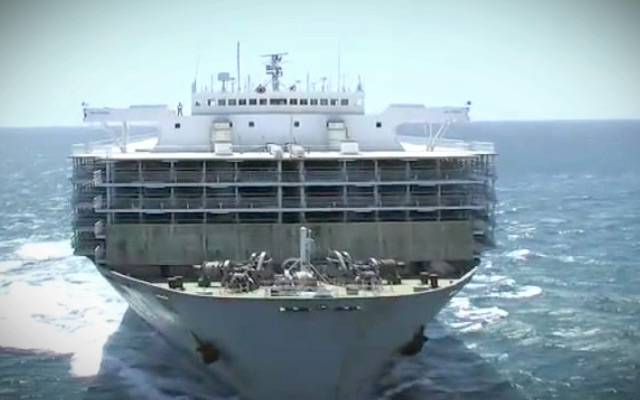
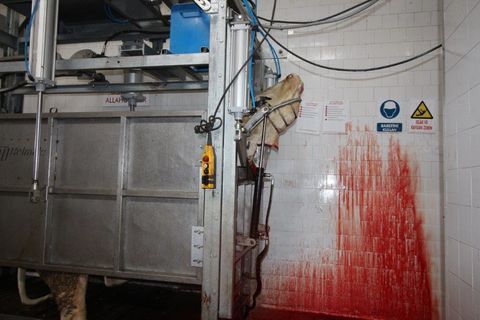
The transport of animals is a profitable business, because the tariffs for meat, for example, in Turkey are much higher than those for live animals. But the cattle are often penned for days or weeks on trucks and ships or have to endure at much too high heat without water at the border crossings. Even small calves are transported over 3000 kilometers. Arriving at their destination, the animals await a torturous end in the slaughterhouses of third countries.
Tormenting on livestock freighters
Animal rights activists raise the alarm: NO ONE cares about the law any more, as soon as our animals leave the EU, they say. They report, for example, on thirsty cattle at the Turkish border crossing, on unspeakable torture on old livestock freighters, and on their arrival in the Middle East and North Africa.
The fact that animal transport is often not complied with EU standards over a long distance was demonstrated by the ZDF (second german television program) with the film from Manfred Karremann “Geheimsache Tiertransport” (“Secret thing animal transport”)in November 2017, which brought the grievances into the consciousness of the general public again. In the meantime, politics has also recognized the need for action.
Members of the European Parliament from Germany, Austria and the Netherlands had taken a picture of animal transports in July 2018 and documented violations of the EU Animal Transport Directive.
After broadcasting these unbearable pictures of the cattle export to third countries in the TV on 2017, green agriculture spokesman Friedrich Ostendorffattacks the Federal Government sharply. These “scandalous animal transport conditions” have been known to the government for years. Only last winter, the Green parliamentary group has submitted an application to the Bundestag with the aim of improving the conditions for the animals and to limit the transport.
“But instead of supporting this initiative, the federal government relied on increasing exports with devastating effects: the number of long-distance transports of cattle exploded in Schmidt’s (Former agrarian minister of Germany) term;They were tripled to Lebanon and more than tenfold to Turkey and Russia, “said Ostendorff.
Although all experts have called for greater control of animal transports to third countries, the Agriculture Committee of the federal daily, end of September 2018 with the voices of the Christian Democratic Union / Christian Conservatives, the Social Democratic Party and the right populist party, rejected the request.
No control of transport outside the EU
Just recently, one million protest signatures were handed over to the European Commission in Brussels. The background: The European Court of Justice has ruled that the welfare of the animals must be guaranteed to the last destination.But nobody controls the transports once they have left the EU. This is also confirmed by the doku film from author Manfred Karremann, “37 degrees” . Shortly after the EU’s external borders, he encounters thirsty cattle, as well as breeding cows, who give birth to the truck and die.
Manfred Karremann wanted to know: Are the pictures of animal suffering exceptions? Or is a law systematically abused? In a several-month, investigative research that has led him from German farms to Bulgaria and Turkey to Lebanon, he pursues this question. With a terrifying result. “37 degrees” shows the result.
Manfred Karremann about the movie
“The scream from the slaughterhouse” was my first movie in 1989. During the filming I saw how miserable cattle and pigs have just arrived at slaughterhouses after a transport through Germany. That was the reason to take a closer look at the international animal transports.
This is a section from the film by Manfred Karremann and I have deliberately attached, because there is the possibility of an English translation in subtitles here.
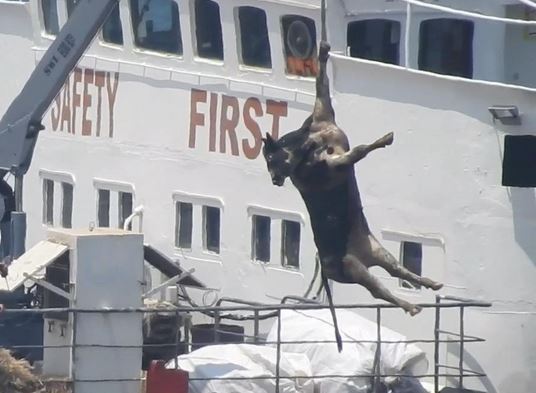
Many films were made in the episode. They look like one, because some pictures are similar in a frightening way: “Then the picture of the hanging cow, which is already fifteen years old, will surely come again”, an exporter told me recently about the current film. In fact, but there were many different ships and each time other cattle, which were unloaded at winches and cranes of ships. The current film deals with the question: What does animals expect once they have left Germany or the EU?
the whole film from Manfred Karremann
Annotation: This Video is unfortunately in German without the possibility of an English translation with subtitles. At least I could not find an English version.
The following is a relevant video for animal transport abroad
Hell’s torments: Animal transport by ship (Video aus VGT (Association against animal factories, in Austria)
(The video material was shot by Animals International in 2016)
The text translation of the video is mine:
Every year millions of live animals are exported from the EU. Among other things, they are sent to Turkey and the Middle East or to North Africa
The animals travel for hours in transports, loading the ships takes several days
Punches and electric drivers are the order of the day. On the ships, the animals are poorly cared for. It is very tight and hot.
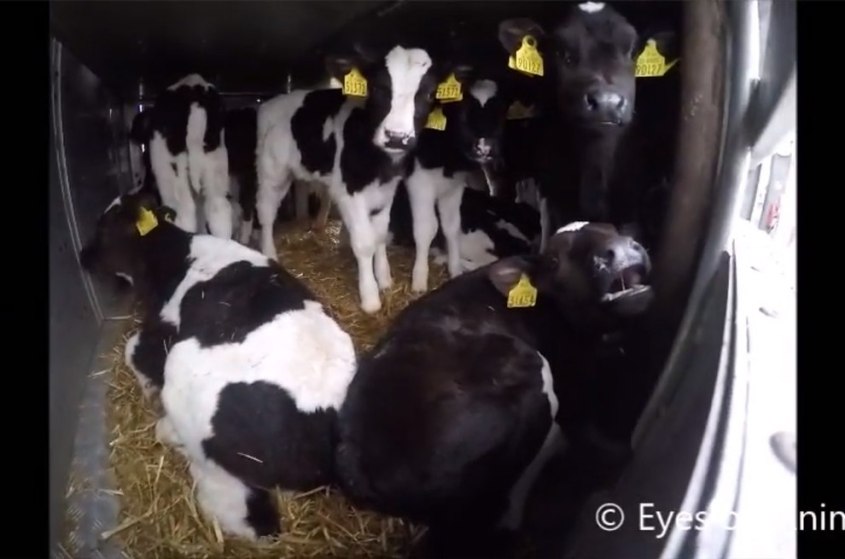
Even small calves are exported to thousands.
After days on the ships, the animals are completely dirty.They are transported on inappropriate transports.
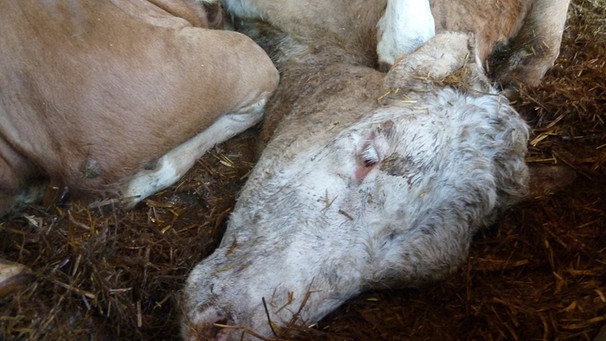
Some are already dying on the way. The local conditions are terrible. Most of the exported animals are killed soon.
Even in larger slaughterhouses, the animals are killed without anesthesia.
European agriculture DOES NOT CARE about the fate of exported animals
My comment: Today, I read to a web page, what the head of Vegetarian Federation Germany, Proveg, said: “Our goal is to halve the meat consumption in the world by 2040.”
Maybe the Mister is one who believes in Santa, and Christmas is coming soon too.
The European Commission is going to evaluate its animal welfare strategy, it has said in response to a report by the European Court of Auditors published on Wednesday (14 November).
The review of the strategy comes almost three years after the European Parliament asked for it.
The auditors said in their report that animal welfare in the EU has improved, but that member states were slow to implement recommendations from the commission.
One example of slow implementation was found in France.
In 2010, the EU commission had recommended that French inspectors use better equipment to check conditions of animals’ environment on farms and during transport.
According to French legal requirements already in place since 2000, inspectors were supposed to have specialised equipment to make measurements.
“The French authorities had not, however, procured all the required equipment by the time of our audit,” the auditors wrote.
“During our visit to a laying hens farm certified as free-range, where the presence of ammonia inside the building was evident, the French inspector did not have the necessary equipment to measure the level of gas concentration. The inspector noted in the inspection report that the related requirement had been met,” they added.
Following the auditors’ visit, French authorities told the EU commission in spring 2018 that they had bought measurement equipment.
“However, inspectors were only asked to use this on farms raising chickens for meat,” the report said.
Meanwhile, Romania had been told several times between 2009 and 2011 that it needed to have legal sanctions in place for those who broke EU animal welfare rules.
“At the time of our audit, the Romanian authorities had not yet approved the necessary changes in the legislation to apply such sanctions,” said the report.
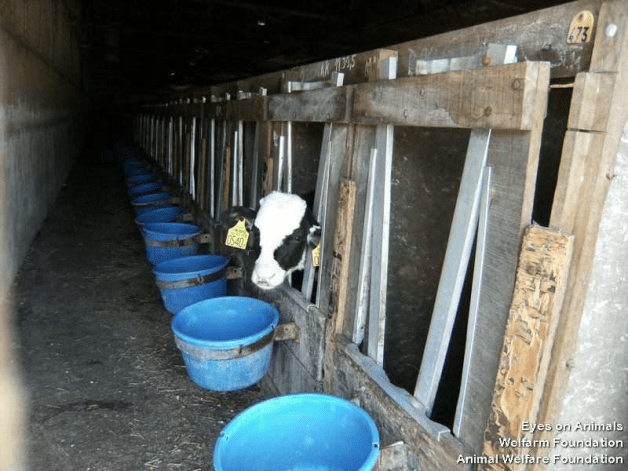
Above – A Calf peers out of a veal crate which should have been banned in the EU 6 years earlier !!
A review, finally
The EU’s animal welfare strategy was published in 2012, and was specifically designed for the period 2012-2015.
However, some of the proposed measures were delayed until after 2015, and the commission has not published a new strategy paper since.
On 26 November 2015, the European Parliament adopted a non-binding resolution urging the commission “to evaluate the existing strategy and to draw up a new and ambitious strategy for the protection and welfare of animals for the 2016-2020 period in order to build on the work of the previous strategy and ensure the continuation of a framework for delivering high animal welfare standards across the member states”.
In March 2016, a group of northern and western European ministers also called for new rules to improve animal welfare standards.
The European Court of Auditors said in a report out on Wednesday that the commission had not assessed if the strategy had achieved its goals.
“There are no baseline indicators or target indicators to measure how far the strategy objectives have been achieved and the commission had not yet evaluated the results of its actions as requested by the European parliament,” said the report.
In response, the commission acknowledged that, and said that it planned to perform an evaluation of the strategy.
“Its actions have not yet been evaluated since they were completed only by early 2018, and therefore, the impact of all actions has not yet materialised,” the commission said.
Improvements, but slowly
The report stated that there were “still some significant discrepancies between the animal welfare standards established in the EU legislation and the reality on the ground”.
They audited the situation in Germany, France, Italy, Poland, and Romania.
“The member states visited generally followed the European Commission’s recommendations, sometimes took a long time to address them,” auditor Janusz Wojchiechowski told journalists in a briefing on Tuesday.
He did not want to say whether the commission should introduce a new animal welfare strategy.
“This is not our role, to suggest or recommend to have a new strategy,” he noted.
The report stated that some of the measures announced in the 2012 strategy, like the publication of EU guidelines on the protection of animals during transport had been delayed by up to five years.
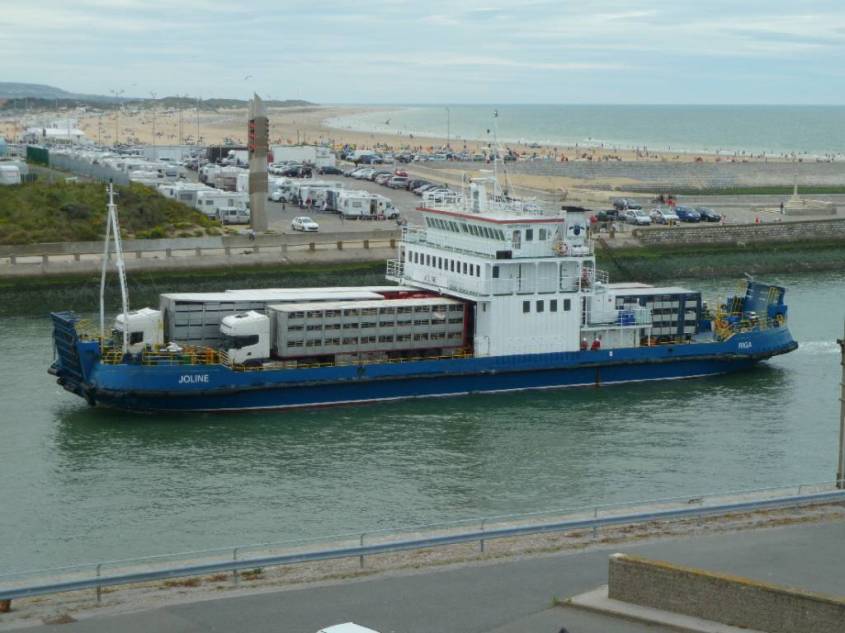
Below – Live exports of animals from the UK to France by Dutch convicted criminals !
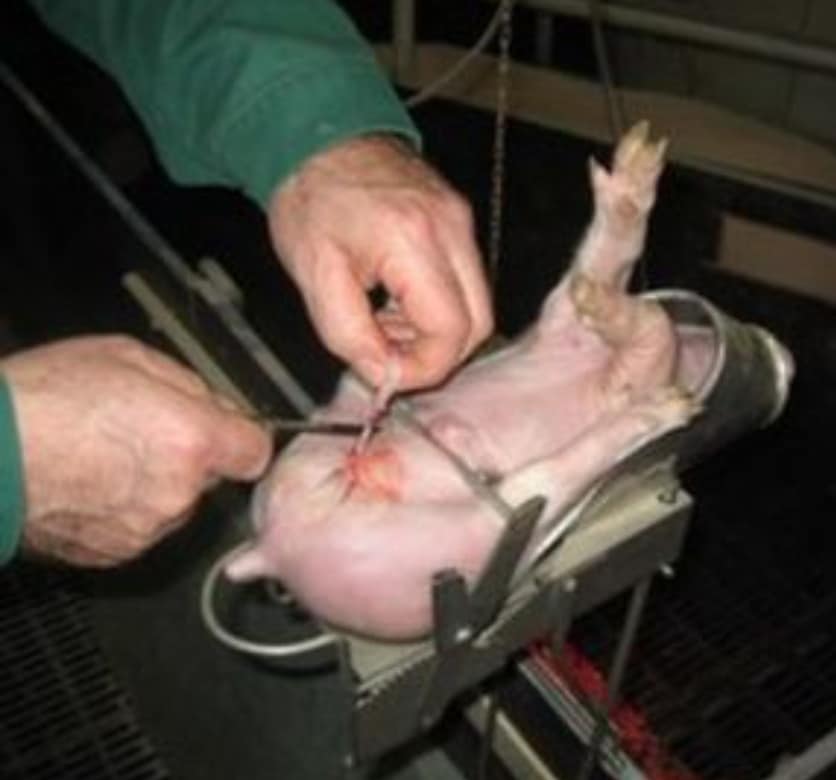
Above – Germany – A piglet is castrated without any veterinary involvement or use of medication.
“The guidelines on pig welfare and on the protection of animals at slaughter were also delayed due to lengthy discussions with stakeholders,” the report said.
“Most reports were based on external studies, which were sometimes delayed due to lack of staff at the commission to manage the procurement process and review draft content,” it continued.
Further reading of our posts relating to EU lack of involvement for EU animal welfare issues:
An overwhelming majority of EU citizens expect the EU to offer better protection for farm animals and 23 EU countries no longer accept force-feeding.
On 26th November, 79 MEPs formally prompted the commission to take its responsibilities by engaging to take firm action on a topic so many EU citizens feel strongly about, and committing to a meeting with MEPs at short term.
In January such meeting was promised for “early this year”, but a date has never been fixed.
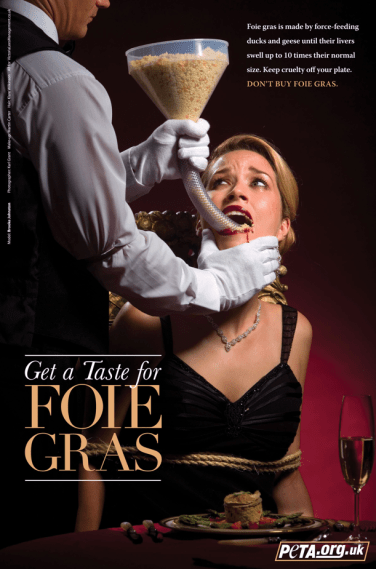
With Christmas approaching, retailers’ windows fill themselves with festive products including end-of-year high end ‘delicacies’ such as the fatty goose or duck liver foie gras.
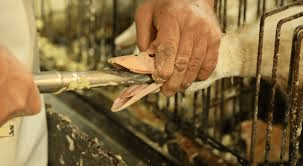
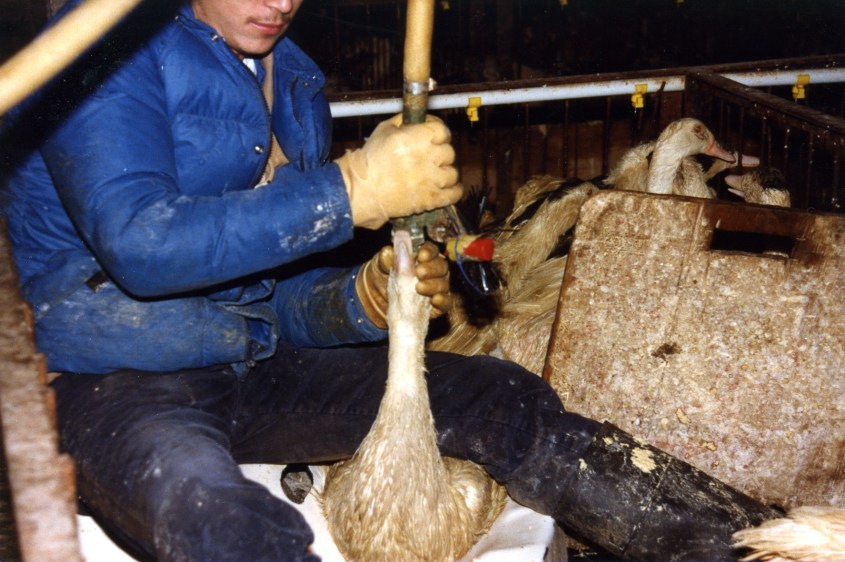
Because of the tricky requirement of minimum liver weights introduced in EU legislation as recently as 1991 and contained in Regulation 543/2008, foie gras is systematically the result of ‘gavage’, or force-feeding.
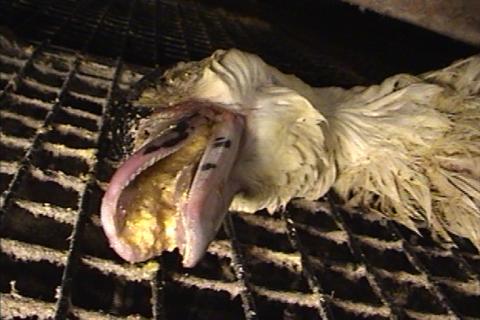
This means producers force tubes down geese’s and duck’ throats and pump the birds’ stomachs with more grain over the course of a couple of weeks than they would normally eat in a lifetime.
Extrapolated to our own body, this would equate to the ingestion of 20kg of spaghetti every single day by a human being.
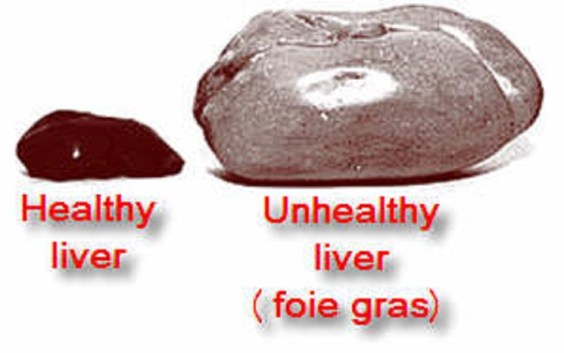
As a result, their liver pathologically grows up to 10 times bigger, with large deposits of fat.
Incapable of moving or even breathing normally, the animals face constant pain and infections loom.
It is therefore no surprise that 23 EU member states have already banned this practice, which they rightly consider as animal abuse.
The 2016 special Eurobarometer on animal welfareshowed that 94 percent of EU citizens think protecting the welfare of farmed animals is important and 82 percent think they should be better protected by the EU than they are now.
Interestingly, alternatives exist and are widely embedded across the EU member states where the practice was banned.
But for such alternatives to really root in the market, we now need to see some legislative change, which is what 79 MEP’s formally called for at the end of November through a written question to Commissioners Hogan and Andriukaitis in the European Parliament.
It is not the first time MEPs call on the Commission to act on this issue, however this question exceeds all previous actions by the quantity of parliamentarians it rallied and feasibility of its simple call to action.
This written question was promoted by a diverse group of MEPs: Marlene Mizzi (S&D, MT), Sirpa Pietikäinen (EPP, FI), Mark Demesmaeker (ECR, BE), Petras Auštrevičius (ALDE, LT), Pascal Durand (Greens, FR), and Anja Hazekamp (GUE, NL).
The EU has uncontested animal welfare laws, such as directive 58/98, applying to farming practices stating among others that “No animal shall be provided with food or liquid in a manner, nor shall such food or liquid contain any substance, which may cause unnecessary suffering or injury.”
This clearly rules out the acceptability of forced feeding.
Nevertheless, in open contradiction with such requirements, regulation 543/2008 imposes minimum weights on the livers of ducks and geese, which can be reached only by force-feeding the birds, in order to be allowed to market such products as foie gras.
Today, only five EU countries continue to allow force-feeding in foie gras production, namely France, Hungary, Bulgaria, Spain, and Belgium (Wallonia only).
79 Parliamentarians representing the seven main political groups and all 28 member states have demonstrated, in the second-most-signed parliamentary question of this term, that EU citizens no longer want pockets of tolerated animal cruelty to exist in the way farmed animals are reared for our food.
They have strongly made the case that the marketing regulation on foie gras is an unjustified barrier preventing products of higher morality to prosper and gradually allow consumers to create market opportunities for foie gras production without force-feeding, based on their preference and ethical values.
As long as the requirement of minimum liver weights is maintained, foie gras production is bound to produce huge animal suffering.
This is why, jointly with 79 MEPs, we call on commissioner Hogan and commissioner Andriukaitis, in reflection of today’s European public moral, article 13 TFEU and the will of the EU citizens, to support a simple, cost-free proposal – deleting the requirement of minimum liver weights contained in Regulation 543/2008 – that would empower consumers to drive change.
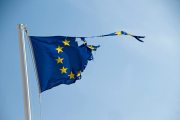
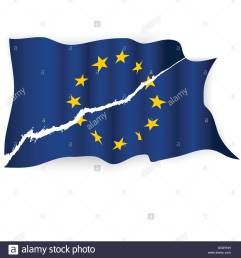
As we have often said and shown, the EU is NOT enforcing its own legislation.
The ‘club’ that means nothing and wields no power.
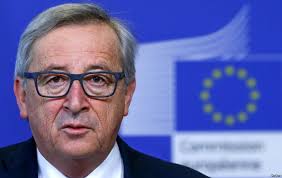
Another reason why the UK wants to break free from this farce that is called the EU club – a club that wants to pretend that all is well whilst the animal abuse continues all day, every day. People like Junker and Tusk should be ashamed of themselves; not place themselves on the high platforms that they do.
Live exports exposed: “U.K. Calves” a film by the Animal Cruelty Investigation Group – ACIG
Published on 13 May 2013
This film shows what happened to calves exported to Europe through Brightlingsea, Essex. Calves are filmed being unloaded at Nieuport, Belgium on May 10th 1995. On June 7th 1995, a different consignment of British calves were followed some 200 miles through Belgium into Holland where they were filmed being pushed into veal crates. This investigation project was undertaken by Janet Taylor from the Farm Animal Sanctuary and by Lawrie Payne and Mike Huskisson from the Animal Cruelty Investigation Group (ACIG). For more information about the ACIG please go to: http://www.acigawis.org.uk
This is why the British people hate live animal exports and ‘veal’ meat which is produced from these young calves. They take to the streets to stop it – old footage from the Dover live exports campaigns.:
This is old footage; fortunately it does not happen this way now, or does it ??