How you can support animal protection organisations in Ukraine
1 May 2024
Four Paws
In the third year of Russia’s war in Ukraine, inflicting suffering on both humans and animals, many are still looking for ways to show practical support. We’ve updated our list of ways to provide aid to animal protection organisations working on the ground.
Donations
Some of our members are actively working, or collaborating with other organisations, on the ground. If you would like to support those protecting the animals caught up in Russia’s war on Ukraine, you could consider making a donation to these organisations:
Please note that we cannot verify the work of each actor on the ground in Ukraine, and it is the responsibility of the donor to review these sources before making a gift. We have made every effort possible to verify the quality of work of the organisations listed above. Splitting your donation among several NGOs may help to improve the effectiveness of your gift.
NGOs
NGOs can get involved by coordinating collections of aid to be sent directly to Ukraine, in collaboration with local NGOs (see the Humanitarian aid law). Organisations can also raise awareness about what is happening to animals in Ukraine.
Want to learn more? Reach out to our Ukraine Task Force if you need help with making a donation, to learn more about organisations working in Ukraine or with translations.
“The sentence reflects Korean society’s increasing concern for animal welfare and intolerance for senseless cruelty such as this,” said Borami Seo, a director of the South Korea office of the Humane Society International.
“This cruelty case also emphasizes the importance of passing the Civil Act amendment that will legally recognize animals as living beings and further strengthen their protection in law,” Seo added.
In putting together posts for WAV, you learn quite a lot.
One thing that has been interesting me lately is the issue of children who abuse animals during their childhood have been shown (by lots of research) to often progress more into domestic offenders, sexual offenders, women beaters / abusers, and serial killers and murderers of humans.
Unfortunately, in the past this link between the two has been largely overlooked by persons in authority; ie. those who can make a difference; when in fact, realisation, earlier intervention and acceptance of ‘something (weirder) being there’ by these very same may in some cases have stopped things getting more out of hand.
Obviously; not every person who abuses animals has committed or will commit other crimes. But harming people is statistically more likely when animal cruelty is previously involved. So, animal cruelty must be taken seriously.
Kip Kinkel, before his attack on Thurston High School parents and students, blew up cows and decapitated cats.
Luke Woodham, who murdered his mother and two schoolmates at Pearl High School, wrote in his journal about setting his dog Sparkle on fire.
“Animal abuse is often the first sign of serious disturbance among adolescent and adult killers,” Gail F. Melson, professor emerita of developmental studies at Purdue University, wrote in Psychology Today.
Domestic violence survivors have reported in studies that their abusers threatened to kill, torture, or otherwise harm their companion animals — or actually followed through on the threats — to prevent them from leaving their abusive situations.
88% of families surveyed that had incidents of child abuse also had incidents of animal abuse.
63% of children entering shelters admitted to incidents of pet abuse in their families.
More than 80% of families being treated for child abuse reported animal abuse in their homes.
Engaging in sex with animals is actually legal in four states — Wyoming, Hawaii, New Mexico, and West Virginia — and the District of Columbia. In more than 20 states, bestiality (sex with an animal) is only a misdemeanor crime.
Jeffrey Dahmer, the “Milwaukee cannibal” who dismembered 17 people three decades ago had first practiced his butchery by cutting up dogs and cats and impaling their heads on sticks.
Ian Brady, the (UK) Moors murderer who tortured and killed five children in the 1960s, boasted of killing his first cat when he was just 10, and went on to burn another cat alive, stone dogs and cut off rabbits’ heads before going on to target people.
Robert Thompson and Jon Venables (UK) would shoot pigeons with air rifles and tie rabbits to railway lines to watch them be run over – until in 1993 they killed toddler James Bulger.
Many infamous serial killers harmed animals when they were children, including Jeffrey Dahmer, Ted Bundy, Gary Ridgeway, John Wayne Gacy, and the Boston Strangler. It’s long been a popularly held belief that children who are abusive toward animals are serial killers in the making.
If there is a trait in the triad that’s especially concerning, it may be animal abuse.This behaviour is a well-established early indicator of future assault, murder, rape, partner abuse and child abuse. Again, not all kids who harm animals will go on to hurt people — but some will.
Research has revealed that 25 percent of aggressive inmates had committed multiple acts of animal abuse as children. Forty-five percent of school shooters had histories of alleged animal cruelty, and 21 percent of serial murderers admitted to childhood animal abuse.
Psychologists point to harming animals as proof of a lack of empathy. Such behavior also indicates a propensity towards aggression. While there isn’t any hard data claiming the percentage of infamous offenders who began their career of pain by hurting animals, many believe that this is a serious warning sign.
Many of these offenders have admitted that harming animals was the first time they realized that they liked to cause suffering and, in fact, wanted to hurt people. Often neighborhood cats, dogs, and even crabs were the earliest victims of these menacing childhood “games,” which often led to painful demises. One notorious offender even began targeting animals after seeing his father do the same.
“This is a worrying development, but no surprise really. It reinforces what was said earlier, that youthful individuals engaging in animal abuse pose a high threat to Humans in adult life. A taste for cruelty developed in early life, and at a time when a personality is impressionable and as yet to be formed, tends to take firm hold, and influence a person’s conduct in later life”.
“This is why the activity of these “Cat Torture Rings” is so dangerous, and must be dealt with severely – they must be destroyed wherever they are found. Once and for all”.
“Young kids of school age appear to be the primary members of many of these groups. As we have said before, and it is shown many times over, people often start as animal killers and then move on to being human killers. SO WHAT IS CHINA ACTUALLY DOING ABOUT THIS ? – Very little it appears”.
Further, here in the UK, and again as published on this (WAV) site recently:
“It is getting worrying now – animals killers go on to kill humans”. FACT
“Children using catapults to kill and torture animals before sharing ‘sick’ images on WhatsApp”.
“A Sky News investigation finds hundreds of members of catapult groups on WhatsApp, where pictures and videos of animals killed or injured with the weapons are shared”.
“The youngsters – including some of primary school age – have been sharing footage and photos of their kills in groups on the messaging app.
In some videos, injured animals are shown dying slowly after being shot with hand-held catapults.
Sky News has discovered 489 members – including young children, teenagers and some young adults – across 11 catapult groups on WhatsApp”.
“In one video shared on a group, a deer lies twitching on the ground, severely injured with a head wound, having just been shot with a catapult by a child.
The young person who attacked the deer then stands over the animal while bringing a hand-held catapult in front of the camera for viewers to see”.
We say that the written word is mightier than the gun. Here we attempt to let the written word speak.
How many videosare uploaded toYouTube every day? Around 3.7m new videos are uploaded to YouTube every day – that’s around 271,330 hours of video content based on an average length of 4.4 minutes.
Over 1 billion messages are sent on WhatsApp every day.
Call me a liar for sure if you wish; but I suggest that neither YouTube, WhatsApp or Tik Tok, despite what they say, have any real control over what is published daily on their sites.
Or, by showing and allowing such communications, are we saying that WhatsApp are perfectly supportive of animal abuse and cruelty being shown on their site ?
Sky News has discovered nearly 500 members of catapult groups on WhatsApp, in which more than 350 photos and videos have been shared of animals that have been killed or wounded with the weapons.
They will say they don’t condone animal abuse – so the question is, why are they allowing it to be shown by such groups on their sites ?
Organisations such as these have a massive responsibility to control what is being shown on their sites. As said, with the huge quantities of uploads each day it is just not physically possible to control what is going on. So what is the driving force with these which allow this uncontrolled mass relay of abusive data to be beamed around the globe each day ? – can I suggest ‘money’ ?
Until we see more action by CEO’s etc of these organisations to actually do as they preach – that is taking action and taking down such sites; are we moving each day to a more frenzied; anti social; abusive; don’t give a damn as long as I get ‘likes’ situation. When will these sites be just as abusive as the dark web in allowing footage that currently shows kittens having screws driven into their eye sockets and their nostrils as the norm ?
Through these sites, how many additional animal abusers and human killers are going to be matured into further grievous action ?
These sites should have a responsibility; one of taking action to remove data which breeds killing and abuse. I do not see it; thus I close by saying; “through these sites the world is becoming amore abusive and harmful to both animals and humans each and every day. CEO’s, it is over to you to take action, and ACT NOW !”
Without an arrest, investigators fear the still-at-large suspect will continue to torture animals, and potentially one day people. Cops and animal officials’ investigation, as of writing, remains ongoing
‘It’s important that these individuals are identified because usually these things progress,’ said Gary.
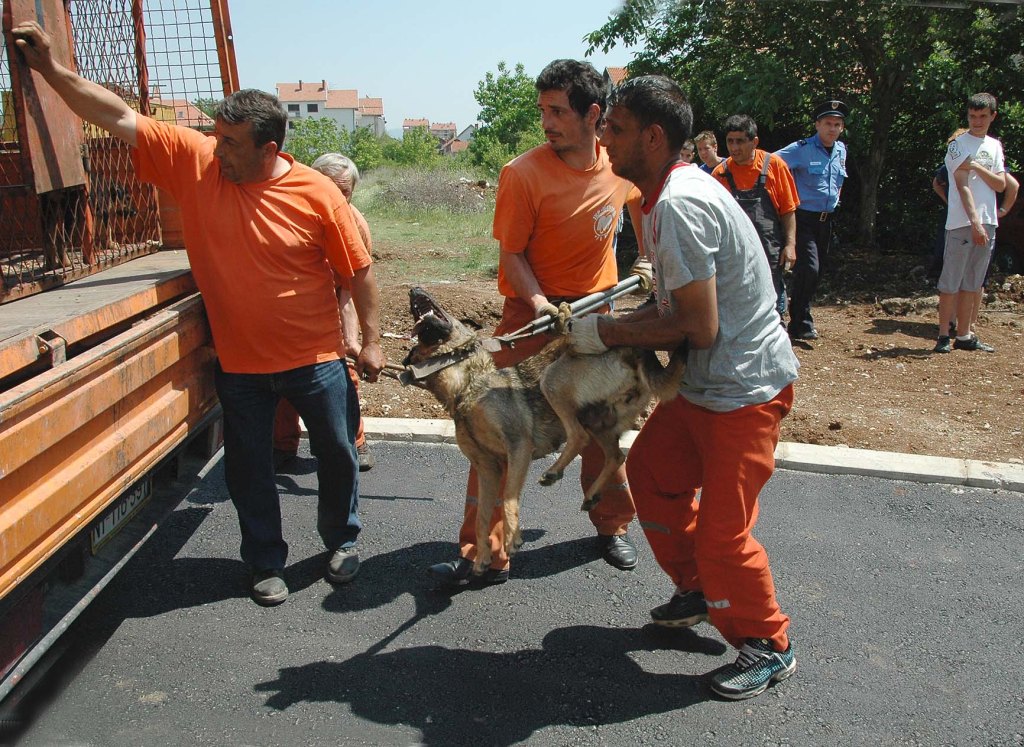
Although the Republic of Azerbaijan joined the European Convention for the Protection of Pets in 2007, according to which the government was supposed to adopt possible measures to reduce the number of homeless animals (through neutering) without causing them suffering, pain, or discomfort, stray dog killings in the capital Baku and other regions have never stopped for all these years.
The mass killings are directly ordered and performed by government’s executive authority, but often government’s cruel behaviour towards homeless animals shapes the same attitude among citizens, who feel free to get around shooting and poisoning innocent dogs at night, in broad daylight and many times even if front of children.
No dogs are safe in Azerbaijan. Every day, dozens continue to be exterminated despite being neutered/spayed, notched on ear homeless dogs or roaming owned pets.
OIPA International has been exposing these slaughters for years, becoming the voice of local volunteers and animal activists who have never been heard.
This time, we ask for your help to call on the United Nations Framework Convention on Climate Change secretariat to reconsider their decision to host the next 2024 UN Climate Change Conference, commonly known as COP 29, from 11 to 22 November 2024 in Baku. A country that does not respect and protect its animals and its humans, it cannot be a country able to respect the climate, the environment and a positive example of a global #OneHealth approach.
Animal Abuse, Animal Abuse, and Sadly More Animal Abuse.
This country, for animals, is hell on Earth.
Once we have a petition link or other action that can be taken it will be posted here.
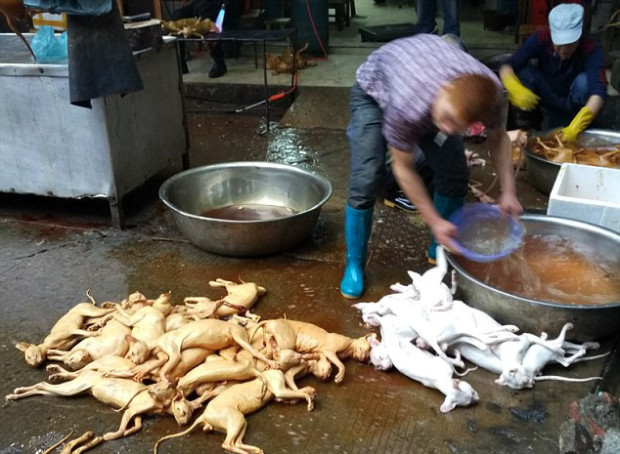
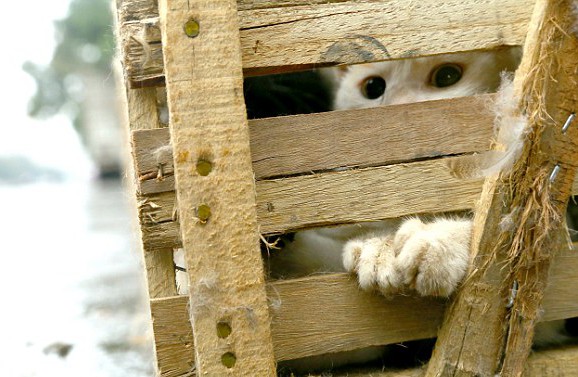
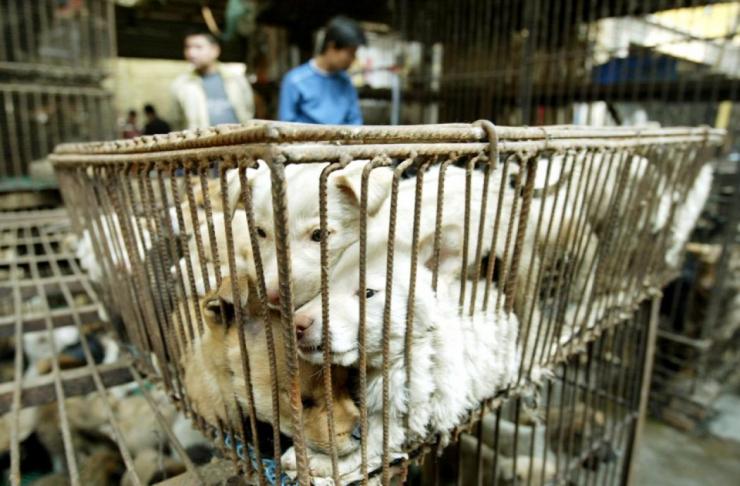
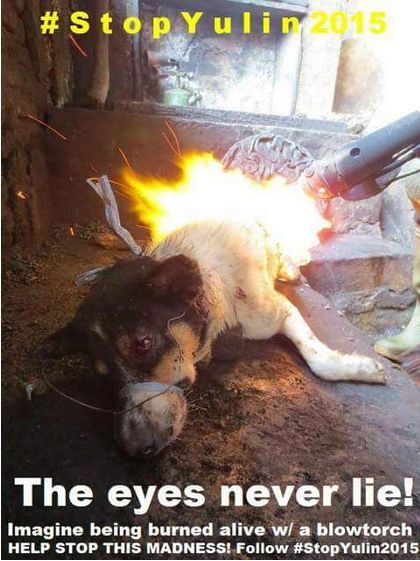
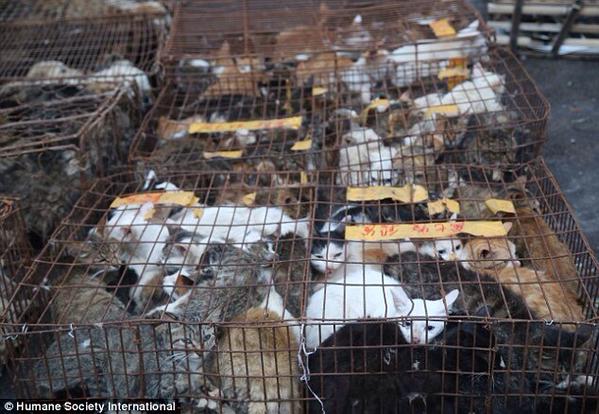
About 10000 dogs will be killed for human consumption for 10 days at Yulin dog meat festival. Most of those angels used to be someone’s family. They were stolen !!
This year too…The Yulin Dog Meat Festival will be held for 10 days starting June 21st.
Over 10,000 animals are abandoned each year in Croatia.
It’s not only a problem for domestic animals like dogs and cats, but also farmed animals.
An amendment of the country’s Penal Code has now made abandoning an animal a criminal offence punishable by up to 2 years in prison, as well as increasing penalties for causing unnecessary pain or suffering, killing or abusing animals.
Amendments to the Croatian Penal Code came into effect on 2 April, bringing with them the long-awaited positive changes in animal protection.
Under the new legislation, individuals who abandon any animal they are responsible for will face imprisonment for up to one year. If the abandonment results in the death of an animal or involves the abandonment of multiple animals, the perpetrator could be sentenced to up to two years in prison.
This significant victory for animal welfare is the culmination of extensive efforts by Animal Friends Croatia, which initiated a petition in 2021 urging for animal abandonment to be treated as a criminal offence. Notably, 80% of the population supported this campaign.
Animal abandonment can now be directly reported to the police or municipal prosecutor’s office, rather than to veterinary inspectors. This streamlined process aims to expedite responses and facilitate the prosecution of offenders. It also serves as a deterrent against animal abandonment, as individuals are now aware that they risk imprisonment and may take the long-term care of animals into consideration before acquiring one.
The penalties for causing unnecessary pain or suffering to animals, and for killing or severely abusing animals, have been increased from a maximum of one year to two years. In cases where these offences are committed for financial gain, perpetrators may now face imprisonment for up to three years instead of two.
Another new measure allows courts to impose restrictions on individuals who have committed animal-related offences if there is a risk of reoffending; a ban on owning or acquiring animals for a period of one to five years.
Animal Friends Croatia is now urging citizens with information about law violations to promptly report any instances of animal abandonment and abuse to the police.
Regards Mark
Excellent, and we congratulate our friends at Animal Friends Croatia for getting this fantastic result.
We have experienced similar issues in the past in Serbia – another Balkans nation.
Coming Soon – the Story of Tiger Trapa and the ex Dancing Bears.
Back in 2005 I was heavily involved in starting an organisation which focused on the Stray (Street) Dogs and Cats of Serbia. I set up SAV as a platform for them to get a voice – you can still visit it now at https://serbiananimalsvoice.com/ to see all the work we were involved with as well as our ‘fights for strays’ with the Serbian government.
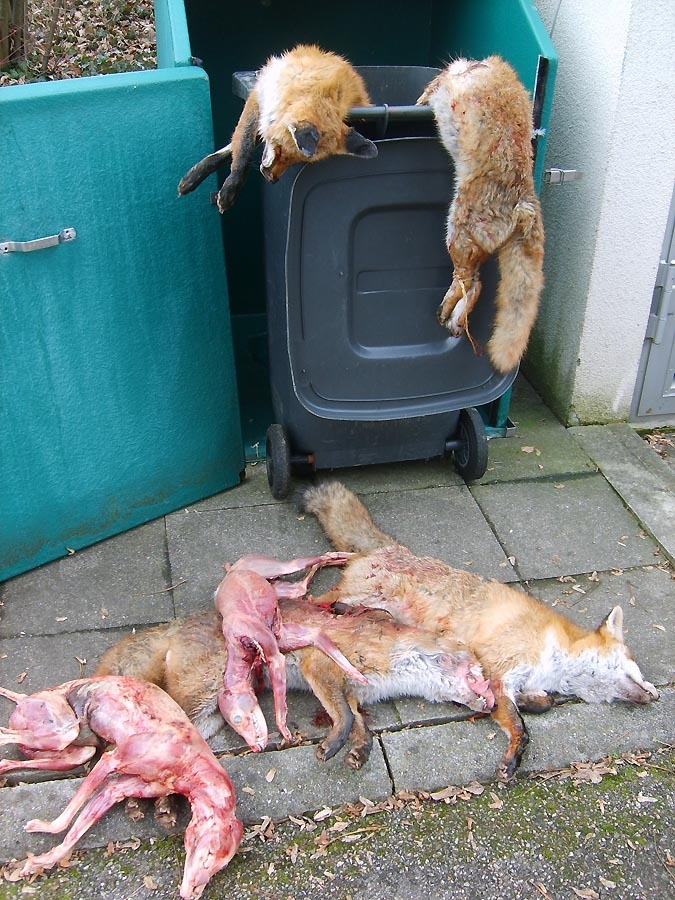
It was here that Diana first made contact with me; and as well as fighting for strays in Serbia, we decided to take on the challenge of fighting the hunt(ers) in Germany; exposing their underbellies and how hunter killed wildlife was being disposed of.
Diana still works with me and together we have produced a lot of info and data on the dark web system that operates out of China regarding cat torture and killings.
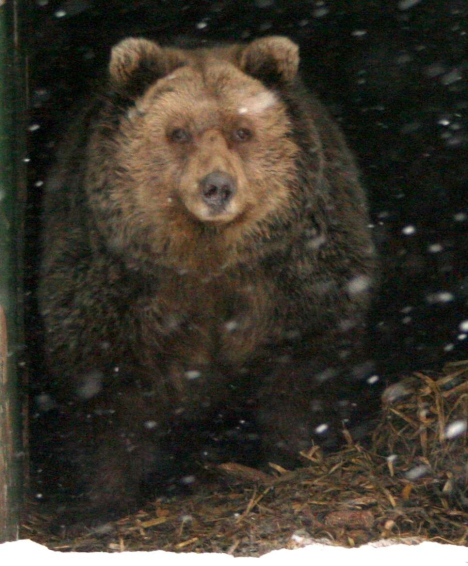
During SAV operations relating to Serbia, I made many wonderful friends involved with helping animals. Two of them are Branka and Pavel; who are devoted to rescuing dancing bears; and providing sanctuary; as well as their story relating to the rescue of Tiger Trapa; which at the start was a very young Tiger being used by a Circus for photographs After just a few months the baby tiger had grown large and so the Circus Director decided there was no way he needed the animal; and so it could be destroyed.
This is where friends Braka and Pavel immediately stepped in to rescue the young tiger from certain death.
So, there are several stories to tell here; and over the last month or so I have been communicating with Branka and Pavel to do a lot more about Tiger Trapa and the ex dancing bears rescues. We are still working together to ‘make stories’ of these issues which we hope you will enjoy reading about in the near future.
In the meantime here a few photographs and a video link relating to the rescue of such beautiful animals by such very good people.
More to come soon;
Regards Mark
Branka with Tiger Trapa after rescue –
Ex Dancing bear Sanctuary video featuring Pavel and Branka) – note the size of the claws ! –
US judge in Nevada hands wild horse advocates rare victory in ruling on mustang management plans
In a rare legal victory for wild horse advocates, a judge has ruled U.S. land managers failed to adopt a legal herd management plan or conduct the necessary environmental review before 31 mustangs died during the roundup of more than 2,000 horses in Nevada last summer.
U.S. District Court Judge Miranda Du in Reno ordered the Bureau of Land Management to complete a formal herd management plan for the Pancake complex in eastern Nevada by next March 24. She also ordered the agency to reopen an environmental assessment to include the potential impact of roundups on wildfire risks.








 Repost and share in groups