Category: Uncategorized

Taiwan: Be A Voice for Animals – The TFDA is Now Accepting Public Comments on a Regulation Through Till March 1.

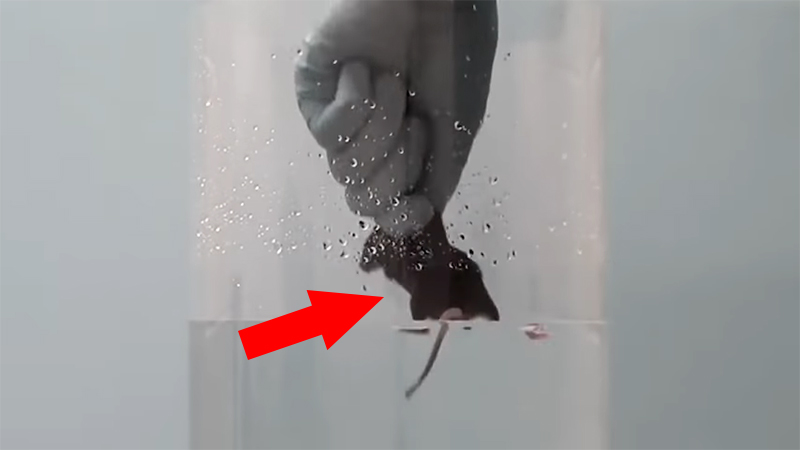
photo of forced swim test

As we told you earlier, after hearing from PETA, the Taiwan Food and Drug Administration (TFDA) took the historic step of deleting outrageous animal tests—including drowning mice and rats and making them run to exhaustion on an electrified treadmill—from its draft regulation for marketing foods and beverages using dubious anti-fatigue health claims.

The TFDA is now accepting public comments on the regulation through March 1, before finalizing its decision. Please contact the agency to help ensure that it deletes these animal tests in the final version of the regulation.

ACT NOW to speak up for animals suffering in these experiments before the MARCH 1 deadline.

TAKE ACTION HERE:

URGENT: Help Finalize Taiwan Ban on Drowning, Shock Tests on Animals | PETA

URGENT: Help Finalize Taiwan Ban on Drowning, Shock Tests on Animals

Following years of pressure from PETA, the Taiwan Food and Drug Administration (TFDA) has announced a groundbreaking decision to delete all animal tests—including drowning mice and rats and making them run to exhaustion on an electrified treadmill—from its draft regulation for marketing foods and beverages using dubious anti-fatigue health claims.

The agency is now accepting public comments through March 1 before finalizing its decision, and it needs to hear from you.

Prior to the TFDA’s announcement of its decision to remove the animal tests from its draft regulation, the agency had endorsed these horrific experiments, which are irrelevant to human health, and PETA sent the TFDA a detailed scientific critique of these tests at the agency’s request.

If the final draft regulation is approved as is after the public comment period ends, for companies that want to make anti-fatigue health claims for marketing food and beverage products, only safe and effective human tests would be required and allowed.

Permanently removing animal testing from the draft regulation would save countless animals’ lives.

During the notorious forced swim test, experimenters fed mice or rats large quantities of the test foods and then starved them for up to 24 hours. Afterward, experimenters dropped them into beakers filled with water and observed how long they struggled before they drowned or remained underwater for eight consecutive seconds. If the animals learned to float and conserve energy, experimenters would stir the water to force them to struggle. To speed up the drowning process, experimenters tied lead wires to animals in order to make it harder for them to swim.

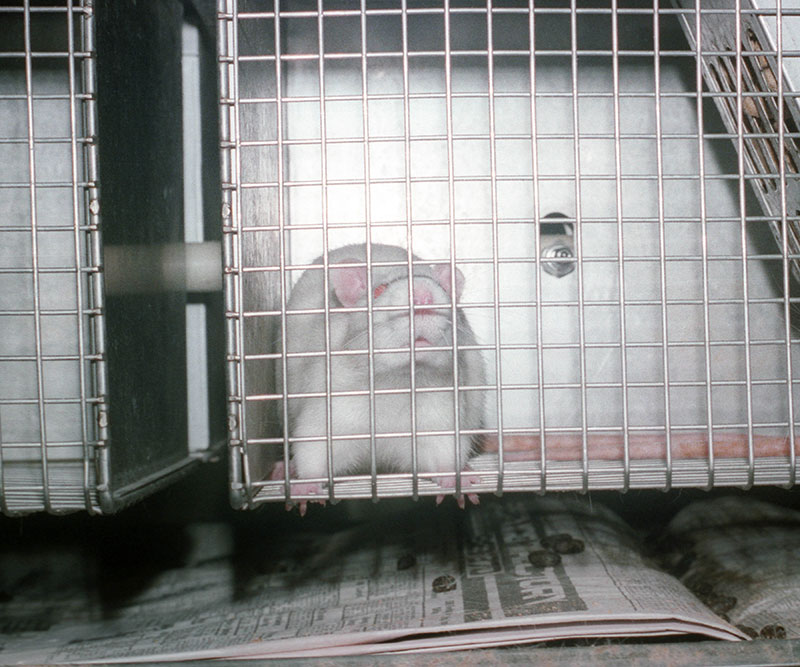
photo of rat in a cage

During the treadmill-running test, experimenters also fed rats large quantities of the test foods and then put the animals on treadmills equipped with electrified plates. Experimenters forced them to run at increasing speeds and on steepening inclines and observed how long it took for them to choose repeated electrocution over continuing to run. At the trials’ end, experimenters killed and dissected them.

Not only is animal experimentation cruel, it’s also a colossal failure. Specifically, 90% of animal tests fail to lead to treatments for humans and more than 95% of new pharmaceutical drugs that test safe and effective in animals fail in human clinical trials.

Rats, a preferred target of experimenters worldwide, are highly intelligent. They are natural students who excel at learning and understanding concepts and are at least as capable of thinking about problems and figuring them out as dogs. They have excellent memories, and once they learn a navigation route, they never forget it.

Please TAKE ACTION (link above) and let the TFDA know that you support its deletion of animal testing from the draft regulation for anti-fatigue health claims and that you support keeping such testing banned in the final version of the regulation.

USA: L’Oréal Group has pledged to ban not just badger hair but all animal hair from its products. But Other Action Still Needed – Speak Out – See Below.

PETA US and nearly 80,000 members of the public urged Baxter of California – owned by L’Oréal Group – to ban badger-hair brushes. As a result, L’Oréal Group has pledged to ban not just badger hair but all animal hair from its products.

Although we’re celebrating this wonderful news, there are still companies profiting from China’s abusive badger-hair industry.

PETA Asia’s investigations have even exposed one abattoir worker bashing badgers in the head with a chair leg.

Speak out for badgers and ask these companies to switch to high-performing vegan bristles

Speak out – TAKE ACTION

Badgers Held in Cramped Cages, Beaten, and Killed for Their Hair – Take Action Now! | People for the Ethical Treatment of Animals (peta.org.uk)

EU: Taxonomy Regulation: industrial livestock farming must be declared unsustainable.

Taxonomy Regulation: industrial livestock farming must be declared unsustainable

20 January 2021

In a series of social media actions, Eurogroup for Animals is asking the European Commission to amend the current version of the draft Delegated Act under the Taxonomy Regulation (Regulation EU 2020/852) as regards livestock farming. The text currently contains no language suggesting that industrial livestock production is unsustainable.

The Taxonomy Regulation was published in the Official Journal of the European Union on 22 June 2020 and entered into force on 12 July 2020. It establishes the framework for the EU taxonomy by setting out four overarching conditions that an economic activity has to meet in order to qualify as environmentally sustainable. It will influence not just how financial institutions regard industrial livestock farming but how this industry is viewed in the overall sustainability and climate debates.

The draft delegated act does not in any way acknowledge that industrial livestock production harms the Regulation’s objectives on water, pollution and biodiversity. This is because the delegated act does not take into account the indirect environmental degradation caused by the production of cereals for animal feed destined to industrially reared livestock. This production is nearly always carried out intensively with monocultures relying on the massive use of agro-chemicals, leading to soil degradation, biodiversity loss, overuse and pollution of water, and air pollution.  It is currently very difficult to ensure the “sustainable procurement of animal feed” because the existing certification schemes for soy have so far largely failed to halt the expansion of soy into pristine habitats and cereals are not generally covered by certification schemes.

Eurogroup for Animals takes the view that the delegated act’s section on livestock is out of step with the European Green Deal, including the Farm to Fork and Biodiversity Strategies, and Council Conclusions on these, of July 2020

Eurogroup for Animals is asking the Commission to amend the draft delegated act to make it clear that industrial livestock productioncauses significant harm to several of the Regulation’s environmental objectives and socannot be regarded as a sustainable activity. Additionally, the delegated act’s livestock section should include the transition to a circular economy.

Petitions – and South Korean Dog Meat Actions.

Hi all; here are a few petitions which need your support if possible – Thanks and regards – Mark:

Badly Injured Dog Reportedly Dragged Behind Speeding Car Deserves Justice

Petition Link – Badly Injured Dog Reportedly Dragged Behind Speeding Car Deserves Justice – Animal Petitions

Target: Gizat Nurdauletov, Kazakhstan Prosecutor General

Goal: Give person who reportedly dragged dog behind moving car the toughest sentence punishable by law.

A dog was allegedly tied to the back of a car and forcibly dragged as its driver sped down the road. Kazakhstan police have not named the suspect involved. However, he was detained and is now being questioned by authorities. This person needs to be put behind bars for the maximum amount of time if it is found he committed this unthinkable act of animal cruelty.

Video footage appears to show the dog being dragged behind a moving car with a trail of blood following his injured body. A witness told police that they honked their horn until the driver finally stopped. After the witness asked the motorist why they were mistreating the animal, he allegedly picked up the dog and threw the animal inside his boot before leaving the scene.

The dog was swiftly taken to a veterinary clinic to receive treatment after the suspect was detained. The animal reportedly needs to take pain killers to sustain any quality of life. Sign this petition to demand the person allegedly responsible for this blatant act of animal cruelty be given the longest prison sentence possible.

PETITION LETTER:

Dear Prosecutor General Nurdauletov,

An unnamed suspect was recently detained for tying a dog to the back of his car and then speeding down the road,  dragging the helpless animal behind him. He needs to be given the strictest sentence under the law if it is found he committed this horrific crime.

The alleged incident was captured on dash camera. The driver was allegedly going so fast that it would have been impossible for the animal to run behind the car. Instead, the poor dog was dragged and badly injured. Witnesses described a trail of blood left in his wake.

The dog fortunately lived and was treated for his injuries. However, the wounds were reportedly so bad that the dog will experience prolonged pain and suffering. We therefore demand you suggest the person allegedly responsible receive the most stringent sentence allowed by law if it is found he committed this heartless act of animal abuse.

Sincerely,

[Your Name Here]

SIGN: JUSTICE FOR DOLPHIN BEATEN TO DEATH WITH AXES AND STICKS

Petition link – PETITION: Justice for Dolphin Beaten to Death With Axes and Sticks (ladyfreethinker.org)

SIGN: Justice for Dolphin Beaten to Death With Axes and Sticks

PETITION TARGET: Minister of Environment, Forest and Climate Change Prakash Javadekar

India’s Ganges River turned red with blood as a group of attackers beat a critically endangered and protected Gangetic dolphin to death with wooden rods and an axe.

Disturbing video footage captured by a witness shows one of the men yelling, “Hit it now, hit it now” and the attackers then holding the dolphin’s head underwater until he drowned. A local official later found the dolphin floating dead, with multiple lacerations and other wounds to its body, The Guardian reported.

The highly threatened Gangetic dolphin population is now an estimated 1,800 or less, and they are moving alarmingly closer to extinction.

Police in Uttar Pradesh arrested three suspects in connection with this horrifying act of cruelty. Several others who may have been involved in the senseless killing are reportedly still free.

Anyone who assisted in bludgeoning and suffocating this defenseless dolphin must answer for their actions.

Sign this petition urging Environment Minister Prakash Javadekar to push authorities to thoroughly investigate this appalling crime, use all available resources to find and charge any yet-unidentified suspects, and prosecute all perpetrators to the fullest extent of the law.

Korean cat and dog meat

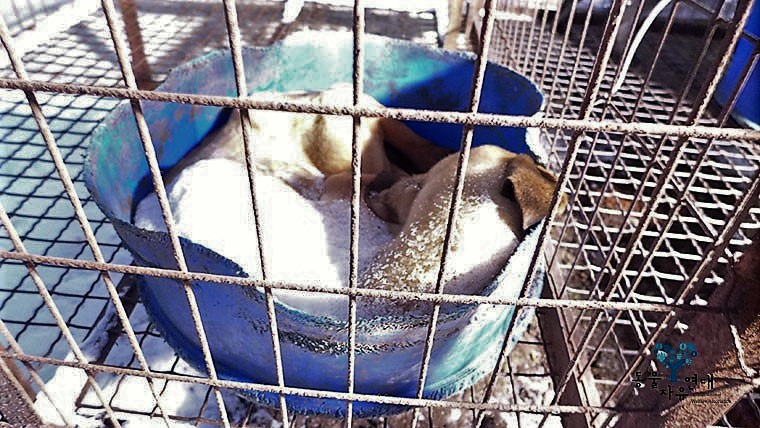
Above Photo: Dogs are frozen to death in South Korea’s dog meat farmsKorea Animal Welfare Association(KAWA)..
 

Despite the fact that dog and cat meat consumption is an everyday occurrence and is being carried out all over South Korea, it is NOT LEGAL in that country. Their Government does nothing to stop this illegal practice and they seem happy to ignore it; many Korean citizens are just as apathetic and must also be held accountable.

This is the 21st Century, and it is high time that all South Koreans, leaders and general public alike, stand up and take responsibility to enforce their own country’s laws. South Korea and South Koreans cannot continue to ignore these brutal and unethical trades, so let us campaign to urge each of South Korea’s cities to enforce their laws and to put an immediate end to these illegal dog and cat meat trades. 

The e-People petition is the South Korean government’s official petition site and your petition will receive a response from the Korean government. Anyone from all countries can file a petition using the e-People petition.  It’s quite simple to file e-People petitions, but you can find help on (1) how to file e-People petition and (2) how to check the status of your e-People petitions on our website.

Read the full newsletter with plenty of actions at:

Further Action

Please click on the following link to see loads of other petitions which you can support; go to:

https://animalpetitions.org/

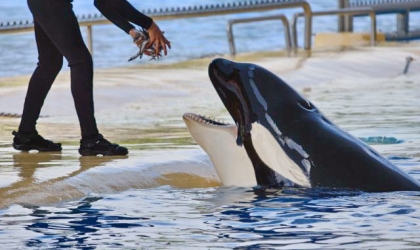
SeaWorld must empty its tanks!

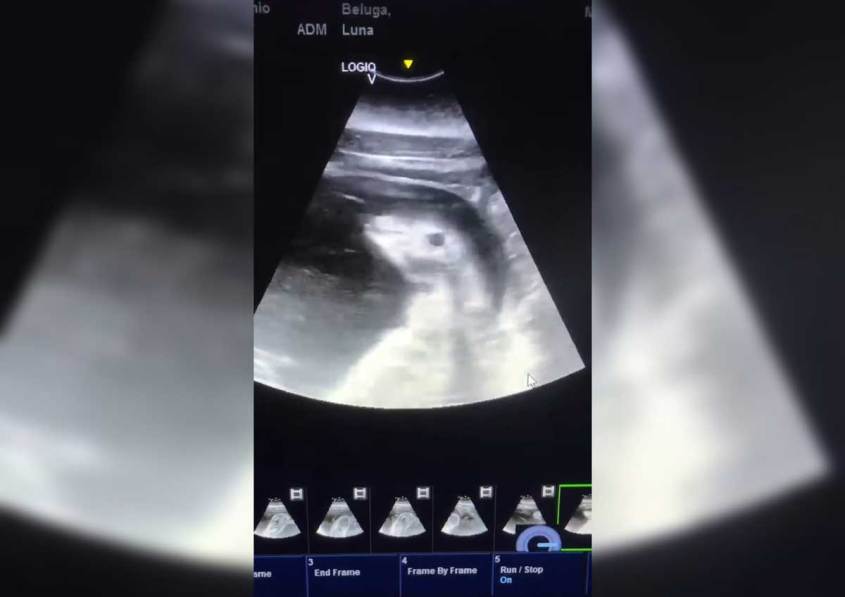
It’s the reminder no one needed: SeaWorld is beyond out of touch. The abusement park company took to social media on January 11 to flex its speciesist muscles, posting a sonogram depicting the unborn baby of Luna, a beluga whale who has been confined at SeaWorld San Antonio for more than two decades.

The publicity stunt is seemingly a vain attempt to attract new visitors to its park in Texas (where Luna resides in a cramped tank), making it clear that SeaWorld has forgotten (or perhaps just doesn’t care) that no one wants to buy tickets to a place that dooms newborns to a lifetime of exploitation.

Such cringe-worthy abuse is not new to Luna. In order for her to conceive her first calf, workers sexually abused her by forcibly impregnating her with the sperm of Nanuq.

Despite rejecting her calf, Alta (who was one of the first belugas conceived through artificial insemination), Luna gave birth to two more babies—and now she’s been impregnated again, possibly by forced insemination.

Torn away from his family and Canadian home waters when he was just 6 years old, Nanuq was held captive and then made to participate in an intensive, experimental artificial insemination program at SeaWorld: He was shipped around Canada and the U.S. repeatedly and removed from the water roughly 42 times so that workers could collect his sperm.

He fathered 13 babies (including one with Luna), but six died at birth or shortly thereafter. Nanuq died in 2015 while being treated by SeaWorld staff for an infection from a jaw injury that he had sustained while interacting with another animal.

SeaWorld continues to masturbate male dolphins forcibly and rape female dolphins by tearing them out of the water and sometimes drugging them so they can’t fight back while staff shove tubes filled with semen into their uteruses.

Some animals endure this process repeatedly, only for their babies to die or be shipped off to other SeaWorld parks.

SeaWorld Needs to Empty Its Tanks

When not ripped from their natural habitats or born into captivity at places like SeaWorld, beluga whales enjoy exploring thousands of miles of ocean every year.

They are social animals who communicate with each other using a language of clicks, whistles, and clangs. SeaWorld robs victims like Luna and Nanuq of the opportunity to do any of this, and now Luna’s baby, not even born yet, is doomed, too—unless SeaWorld acts, now and fast.

We and countless others have been urging it to empty its tanks for years.

Most recently, after the company ended its wretched orca-breeding program and its demeaning “dolphin surfing” shows (only after succumbing to successful PETA campaigns), we’ve increased our calls for the company to stop breeding other dolphins and whales.
SeaWorld failed Nanuq and so many others, but we hope it will now do the right thing and transfer Luna and her baby to a seaside sanctuary to live as close to a normal life as they can.

SeaWorld should take a page from SEA LIFE Trust and Whale and Dolphin Conservation’s book—in August, the pair proved to the world that seaside sanctuaries are a sure thing when Little Grey and Little White (two female beluga whales) were moved from a marine park in China and released into a seaside sanctuary in Klettsvik Bay in Iceland.

Now it’s time for SeaWorld to end its use of animals, stop breeding all dolphins and whales, and relocate them to seaside sanctuaries, where they could live in large areas of the ocean while still benefiting from human care for as long as they might need.

Please urge SeaWorld to establish a firm and rapid plan to end its use of animals, stop breeding all dolphins and whales, and relocate them to seaside sanctuaries.

Petition: https://support.peta.org/page/1943/action/1


And I mean…At least 166 orcas have been taken into captivity from the wild since 1961 (including Pascuala and Morgan).

– 129 of these orcas are now dead.

-At least 166 orcas have died in captivity, not including 30 miscarried or still-born calves.

-SeaWorld holds 20 orcas in its three parks in the United States.
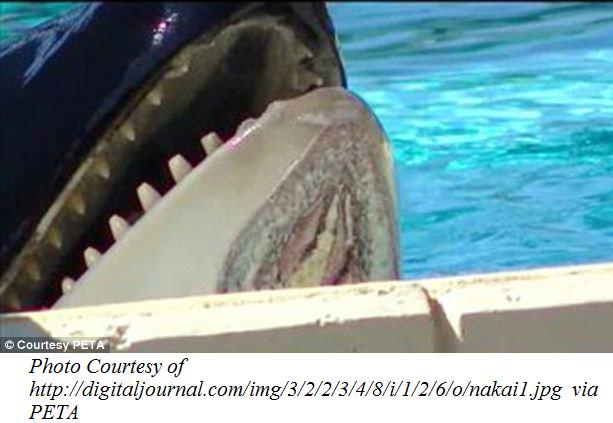
At least forty-nine orcas have died at SeaWorld.

A growing catalogue of ‘accidents’, illnesses, failed pregnancies and premature deaths has helped to show up this industry for the cruel circus that it really is.

Orcas can live anywhere between 50 to 80 years, but in captivity, they are lucky if they can make it to twenty-five.

They are incredible fast swimmers, and get up to 48 km/h in the ocean, and will eat about five-hundred pounds of food a day. Females don’t start breeding until they are close to fifteen years old, and once they start breeding they might produce a new calf every 3 to 10 years, and gestation last 17 months.

Nature has intended them to live free, exempt from domination, but the human species, with its self-proclaimed fascist right to exploit other animals, has predetermined a pathetic fate for many of these animals.

The right to life, freedom, integrity and protection must be given to all species.

Only then is it a right and not a privilege of the ruler.

My best regards to all, Venus

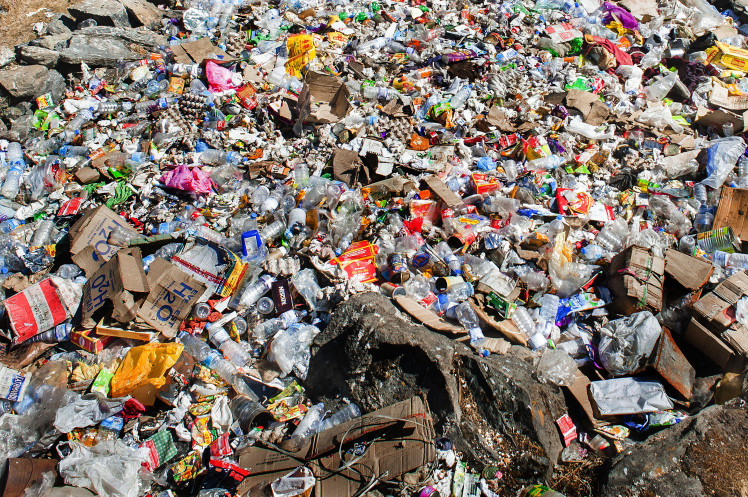
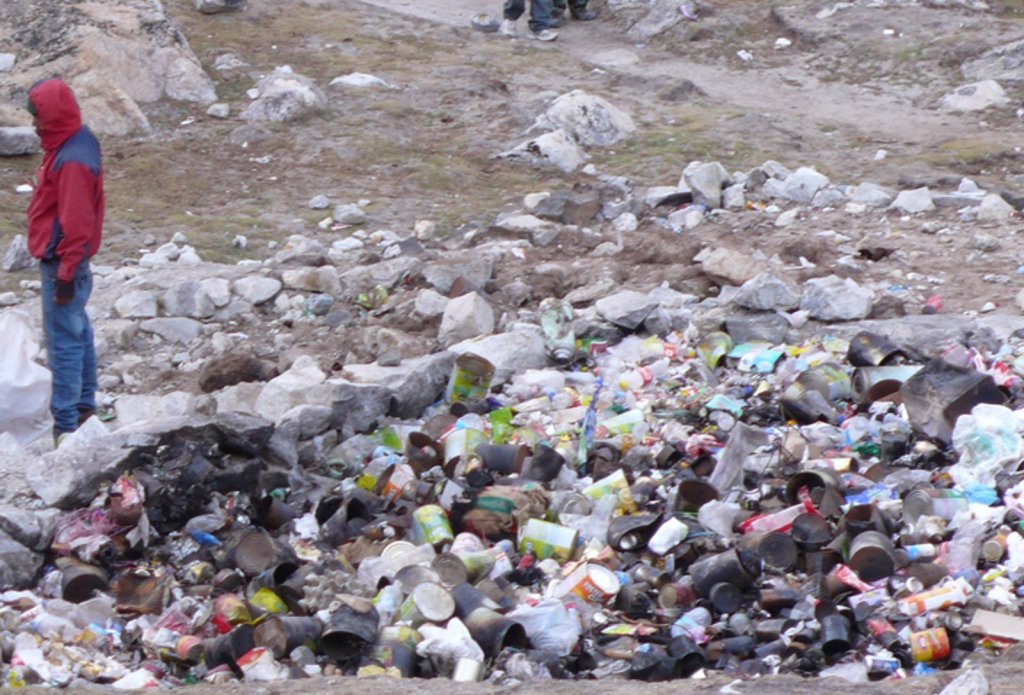
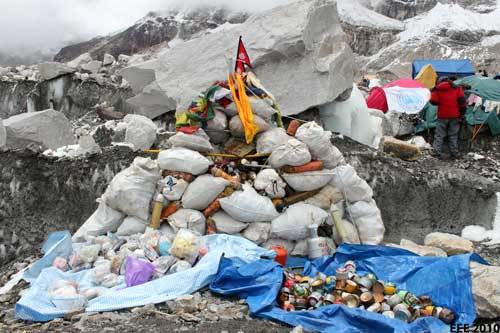
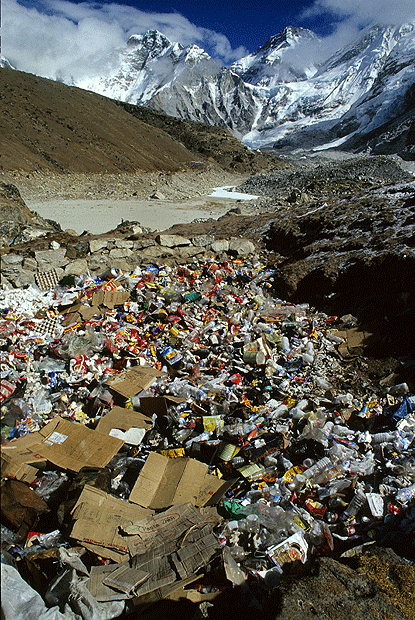
England: Mount Everest; The Sacred Mountain Of Dreams and Mystery; Now A Dumping Ground of Excrement, Plastic and Garbage, Made By; Guess; Mankind !

By Mark – When I was a young lad (16 /17’ ish), I was ‘into’ mountaineering in a big way.  Then, I can remember reading and enjoying ‘Everest the Hard Way’ by British mountaineer Sir Chris Bonington  https://en.wikipedia.org/wiki/1975_British_Mount_Everest_Southwest_Face_expedition

– a beautiful book detailing the 1975 British Mount Everest Southwest Face expedition, which  was the first to successfully climb Mount Everest by ascending the South West face.  For me, being young and influential I guess you could say; this was a trip into the unknown – the High Himalaya; mystery, danger, Rhododendron forests; the big unknown – all the things that gripped me and let my imagination do overtime.

If you ever get the chance, then read it – superb !

Decades later it was still ‘a thing’ with me; and finally, I made it to the big walls of El Cap and Half Dome in the incredible ‘Yosemite Valley’ in California.

Below – El Cap

and Half Dome

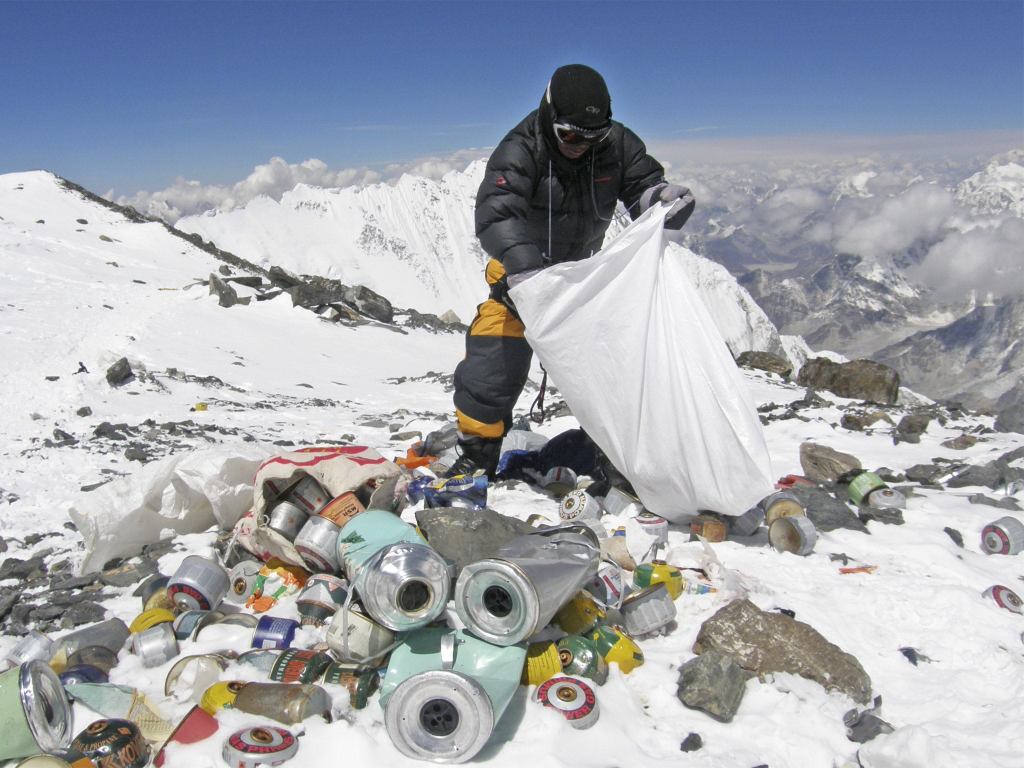
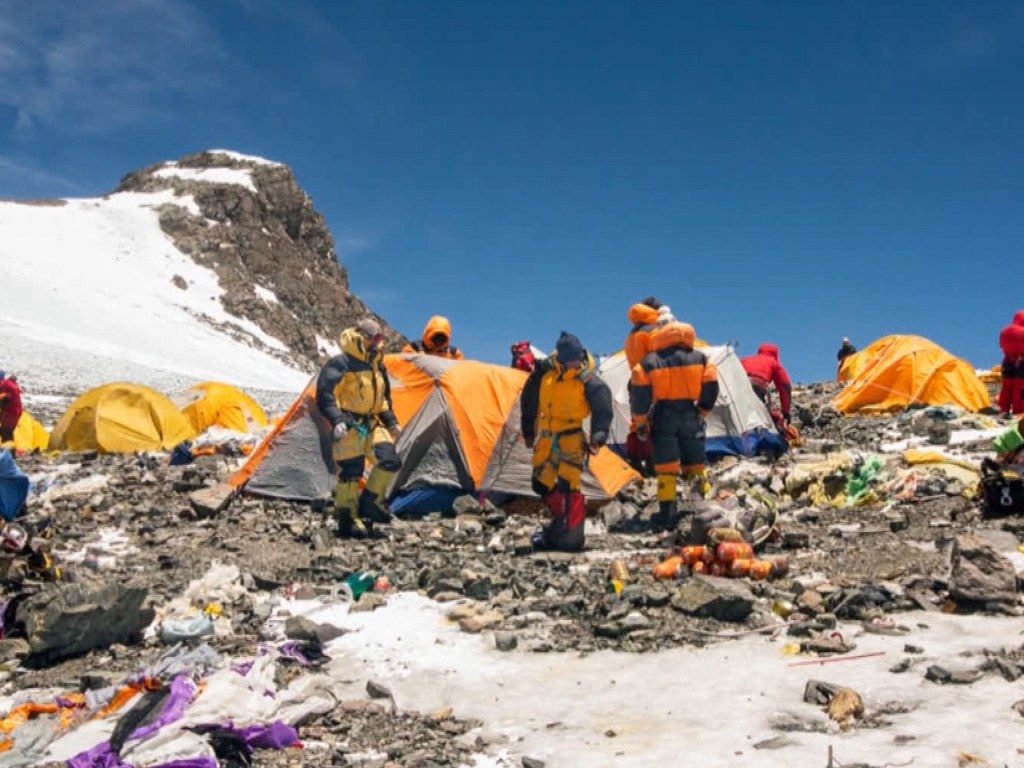
This morning (16/1/21) on the BBC; I watched a news story about how Everest was being turned into the highest rubbish tip on the planet.  My dreams of the magic of the few reaching the summit of the worlds highest mountain was well and truly shattered in learning that each year nowdays, around 900 – 1,000 people make it to the summit during the March – May period when they are only allowed to climb because of weather extremes at other times.

But even worse than ‘making the summit’ just being another ‘bragging’ item to be boasted about at the local; or at least I now view it in the modern non magical days, it was most sad for me to see that microplastics and human waste (literally), in the form of both rubbish, plastic bottles and shit; were now contaminating an enchanted, most sacred place that should still be the place of dreams for the very few that it was in the past.

Again, as always in my opinion, the wrecker called ‘man’ has managed to destroy the natural and majestic beauty of the Himalaya by leaving his personal calling card in a place that should be left in isolation, as what it was to me as a lad; that place of desolation and wonder; (then) untouched by the human being (fortunately) and a place of superfluous natural wonder and amazement.

So today, 16/1/21, I decided to look into the destruction a little more; and here below is what I found.  You can check it out a lot more if you want to.  Summary – Destruction by mankind as always with everything; it now seems that Everest is not the ‘Hard Way’ that it was in the 70’s; but yet another dumping ground made by the ‘many hundreds’.  Take a look;

Regards Mark

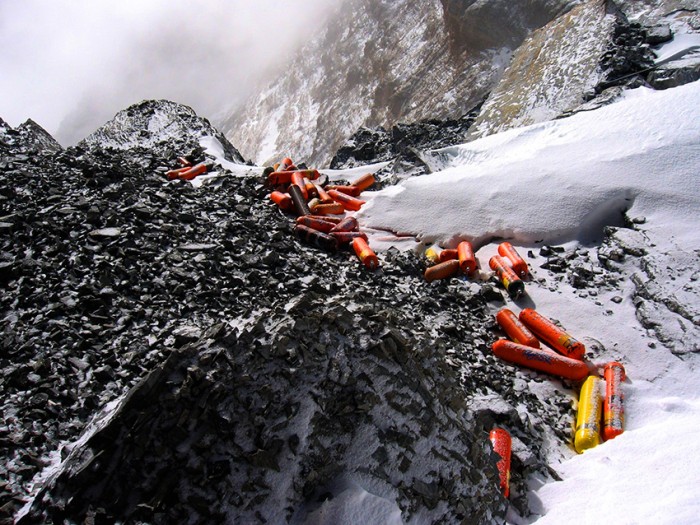
Below – bags and bags of human excrement (literally) on the mountain.

———————————————————————————

It’s being described as the ‘world’s highest rubbish dump’. That’s because Mount Everest, the tallest mountain in the world, has a problem with climbers leaving their waste on the slopes – both rubbish and poo. The mountain is home to three tonnes of climbers’ rubbish, left by adventurers visiting the mountain.

The mountain is home to three tonnes of climbers’ rubbish, left by adventurers visiting the mountain. The waste includes tents and equipment left behind, as well as human waste from mountaineers who need to go to the loo while they’re up there.

As the climbing season comes to a close for another year, Nepal Army helicopters are being used to lift some of the waste off the mountain.

The problem is that the rubbish is not only bad for the environment, but it could also spread disease for other climbers on the mountain.

People living at Base Camp use melted snow for drinking water, which could be contaminated with germs if other climbers aren’t getting rid of their waste properly.

Some climbers carry disposable travel toilet bags to use in the higher camps, while at Base Camp, there are toilet tents which have special drums where human waste goes. These can be taken away from the mountain and emptied safely.

But the camps further up, between the base and the top of the mountain, don’t have loos, which is why waste is often left behind.

Climbers can only go up Mount Everest during a specific period of the year, which begins in March and ends in May. Throughout the rest of the year, the weather is too bad.

This means that it is more difficult to clear away any rubbish left on the mountain at the end of the climbing period.

It is impossible to know exactly how much litter is spread across Everest because it only becomes visible when the snow melts.

Speaking in the Himalayan Times, Dandu Raj Ghimire – director general for the Nepal Department of Tourism – said: “The clean-up campaign will be continued in the coming seasons to make the world’s tallest mountain clean. It is our responsibility to keep our mountains clean.”

What are the rules about rubbish on Everest?

Nepal’s government hasn’t made rules about dealing with poo up the mountain yet. However, it is trying to stop the amount of rubbish that is left on the slopes.

The government is working on a plan to scan and tag climbers’ equipment and gear.

All climbers would have to pay a deposit of $4,000 (£3,100) before they go up the mountain and might not get their money back if they return without their items.

https://www.bbc.co.uk/newsround/31711591

Microplastic pollution found near summit of Mount Everest

This article is more than 1 month old

Humans now known to have polluted Earth from deepest ocean to highest peak

https://www.theguardian.com/environment/2020/nov/20/microplastic-pollution-found-near-summit-of-mount-everest

Microplastic pollution has been discovered in snow close to the peak of Mount Everest, the world’s highest mountain. With plastic debris revealed in 2018 at the deepest point on Earth, the Mariana Trench, it is now clear that humanity’s litter has polluted the entire planet.

The tiny plastic fibres were found within a few hundred metres of the top of the 8,850-metre mountain, at a spot known as the balcony. Microplastics were found in all the snow samples collected from 11 locations on Everest, ranging from 5,300 metres to 8,440 metres high.

The highest concentrations of microplastics were found around Base Camp, where climbers and trekkers spend the most time. The fibres were most likely to have come from the clothing, tents and ropes used by mountaineers, the scientists said. Other recent discoveries of microplastic pollution in remote parts of the Swiss Alps and French Pyrenees indicate the particles can also be carried by the wind from further afield.

“It really surprised me to find microplastics in every single snow sample I analysed,” said Imogen Napper, at the University of Plymouth, who led the new research. “Mount Everest is somewhere I have always considered remote and pristine. To know we are polluting near the top of the tallest mountain is a real eye-opener.”

Below – Majestic Everest

“With microplastics so ubiquitous in our environment, it’s time to focus on appropriate environmental solutions,” she said. “We need to protect and care for our planet.”

Reducing, reusing and recycling larger items of plastic waste is important, Napper said, as they can be broken down into microplastics when discarded into the environment. But many microplastics are shed from clothing made from synthetic fabrics, and she said a focus on better fabrics was needed, as well as using natural fibres such as cotton when possible.

Millions of tonnes of plastic are lost into the environment every year. It can contain toxic additives and carry harmful microbes and is known to injure wildlife that mistake it for food.

People also consume microplastics via food and water, and breathe them in, although the health impact is not yet known.

There have been longstanding concerns about litter on Everest, which was climbed by at least 880 people in 2019. But the new study is the first to assess microplastic pollution, which is less than 5mm in size and therefore too small to be picked up.

The study, published in the journal One Earth, analysed samples collected by a National Geographic expedition in 2019. The scientists found an average of 30 microplastic particles per litre of water in the snow samples and 119 particles per litre in the most contaminated sample. They also assessed stream water samples from eight locations, but only three had microplastics, perhaps as the streams were able to wash away contamination.

In her previous work, Napper has found that each cycle of a washing machine can release 700,000 microscopic plastic fibres, and that plastic bags that claim to be biodegradable were still intact after three years in the natural environment.

 

USA: Over Half Of Young Americans Describe Themselves As ‘Flexitarian’.

flexitarians

Over Half Of Young Americans Describe Themselves As ‘Flexitarian’

More than half of Americans aged 24-29 years-old identified themselves as ‘flexitarians’ in a poll carried out on diet

Over Half Of Young Americans Are ‘Flexitarians’ | Plant Based News

More than half of young Americans (aged 24-39) identify as ‘flexitarians‘, according to a new poll.

The survey of 2,000 Americans was commissioned by Sprouts Farmers Market and conducted by One Poll. It revealed that 47 percent of respondents overall describe themselves as such.

In addition, 63 percent said they’d be ‘willing to swap meat for a plant-based alternative if it met certain criteria’.

Flexitarian

Flexitarians – or meat reducers – tend to consciously cut down on meat and replace it with plant-based foods. The poll showed that 43 percent of respondents see it as a ‘permanent lifestyle change’.

Of those quizzed, 68 percent said they would swap meat for a plant-based alternative if it tasted the same. 60 percent would make the switch if it had the same nutritional value.

Nearly two-thirds (63 percent) would swap because the plant-based alternative is ‘more ethical’. However, over a third (36 percent) were ‘completely unaware of what being a flexitarian means or what’s involved. This is even if they classify as one’.

“Flexitarian interest is evident”

In a statement sent to Plant Based News, Sprouts Chief Executive Officer Jack Sinclair, said: “The interest in plant-based foods and a flexitarian diet is evident.

“Shoppers are more engaged with their food than ever. [They] are seeking innovative and alternative products to mix up the meals they prepare for themselves and their families.”

Flexitarians and sales

He added: “Plant-based product sales grew exponentially last year, indicating consumers are craving innovative items to try at home.

“We believe consumers will remain focused on incorporating healthy foods into their lifestyles to support immunity and overall wellbeing in 2021. 

“This includes introducing consumers to things they never considered before, like plant-based foods and meat alternatives.”

USA: Michigan Teenager Wins $50,000 In Writing Competition and Donates It All to Cat Shelter Where She Volunteers !! – Fantastic !

WAV Comment – Double wow ! – is Sidney not a special little lady !

At 13 years of age, there could be so many other things that she could be putting her win into; mobile phones, clothes, shoes, etc, etc; but how amazing that she has given this wonderful sum of money to the local cast shelter at which she volunteers.

Congratulations on your win and what a fantastic win for the animals at Ferndale Cat Shelter,

We would suggest this little lady is gonna go a long way in the world of animal welfare; she has our full support. Watch the video via the link below.

——————————————————————————————-

Michigan Teen Wins $50,000 And Donates It To An Animal Shelter (wkfr.com)

This 13-year-old just changed 2021 for a small animal shelter in Ferndale, Michigan.

Meet Sidney Hertzberg.  She loves cats.  In fact, she volunteers at the Ferndale Cat Shelter.  She recently enter a Petco contest by writing an essay about her cat.  Her survey paid off to the tune of $50,000.  You can see the moment she finds out that she won in the video below from ABC 7 at about the :15 second mark.

Sidney told WXYZ,

I have an illness called POTS and so with some of the symptoms that come with the illness are dizziness, fatigue and muscle aches. My cat Mr. Mittens, I got him when he was 4 ounces and he was about a week old, so he was very, very small and he had to be bottle-fed. And I really thought I was going to help save his life, but I did not even know he would actually help save mine.

The 13-year-old then donated the entire $50,000 prize to the Ferndale Cat Shelter where she volunteers.  This story could end there and it would be incredible.  However, Sidney’s not finished.  Not even close.

She has also created a program called Sidney’s Seniors for Seniors.  The program not only places older cats with elderly humans but also pays for the cat’s food and medical bills.  If this what the next generation looks like.  We’re in great hands.


Read More: Michigan Teen Wins $50,000 And Donates It To An Animal Shelter | https://wkfr.com/michigan-teen-wins-50000-and-donates-it-to-an-animal-shelter/?utm_source=tsmclip&utm_medium=referral

Russia: Petition – Justice for Young Lion Cub Blinded By Result of Illegal Wildlife Trade. Sign Now !

SIGN: Justice for Smuggled Lion Cub who Lost Both Eyes

I found this really terribly sad when I found it yesterday.  A beautiful lion cub who has had to have both eyes removed due to the scum involved with illegal wildlife trafficking.  It once could see; now it cannot – blinded for life.

Please support the petition.

Read more from the UK press:

Tragic lion cub forced to have both its eyes removed after horrific cruelty by big cat smugglers (thesun.co.uk)

Lion cub has both eyes removed after being smuggled 1,200 miles across Russia in box without food | Daily Mail Online

PETITION TARGET: Russian Ministry of Internal Affairs

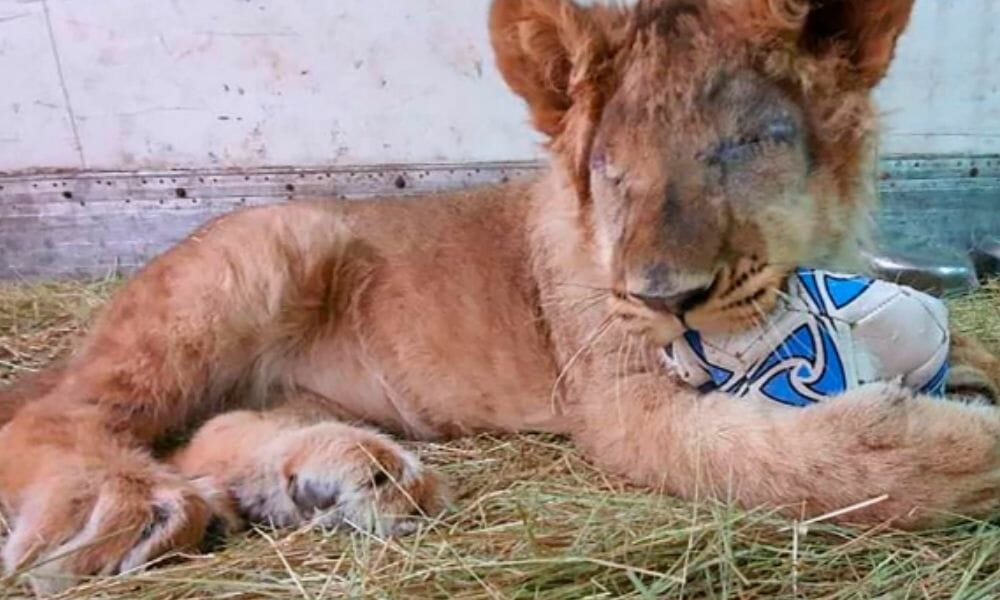
Snatched from his mother almost immediately after his birth, a helpless lion cub named Grom is now blind after smugglers forced him into a tiny box with no food or water and crammed him into the luggage compartment of a long-haul bus in Russia, according to the Sun.

Police discovered the sick and dying lion cub in deplorable conditions with severely inflamed and ruptured corneas. Several surgeries failed to save Grom’s eyesight, and he ultimately lost both his eyes, Daily Mail reported.

The baby lion is frustrated and doesn’t understand why he can’t see, said Nikolay Dovgalyuk, who initially took care of the cub after his rescue.

Grom now needs lifelong care, and his future remains uncertain. He’s also just one of the victims of the illegal animal trafficking trade that caters to a demand for exotic pets, according to officials.

This lion cub deserves justice.

Police have not yet identified the criminals who cruelly caged and transported Grom. Sign this petition urging Russia’s Ministry of Internal Affairs to use all available resources to fully investigate this heartbreaking crime and bring Grom’s traffickers to justice before more innocent animals are harmed or killed.

Please support the action for justice – sign and pass on to all your contacts:

Petition Link

PETITION: Justice for Lion Cub Forced to Have Both Eyes Removed After Cruel Smuggling (ladyfreethinker.org)

There are currently over 30,000 signatures here – lets ramp it up and get loads more.

Thank you

Regards Mark