Category: Uncategorized

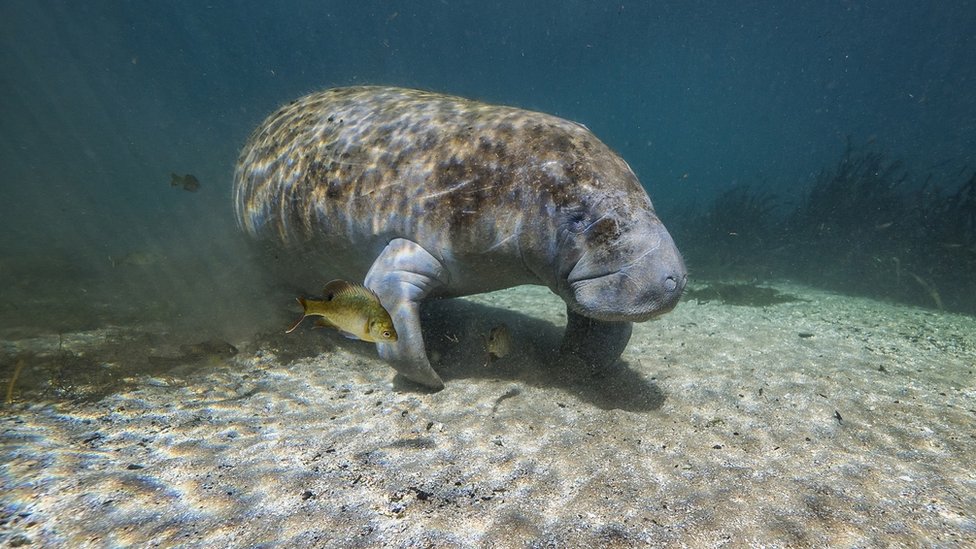
USA: Florida manatee with ‘Trump’ etched on back prompts investigation.

WAV Comment: How low do people go ? – and these cretins think that a dipstick like Trump should be the President ? Roll on 20/1 and someone who respects wildlife and the environment.

US wildlife authorities have launched an investigation after a manatee was discovered with the word ‘Trump’ scraped on its back.

The marine mammal was spotted on Sunday in Florida’s Homosassa River, with the US president’s surname on its body.

Officials told AP news agency that the animal does not appear to be seriously injured, and the word was scraped onto algae growing on its skin.

But a video of the West Indian manatee has led to public outcry.

Manatees, nicknamed “sea cows,” are protected under US law, and anyone found guilty of harassing them faces up to a year in prison and a $50,000 (£37,000) fine.

Manatee pictured in the warm water of Florida, USA
Photo Jeff Hester

https://www.independent.co.uk/news/world/americas/us-election-2020/manatee-trump-florida-investigation-b1785720.html

https://www.bbc.co.uk/news/world-us-canada-55631498

https://www.scotsman.com/news/world/investigation-launched-after-manatee-florida-has-trump-scraped-its-back-3093126

USA: Animal Outlook Demands Investigation of Bravo Packing.

Animal Outlook Demands Investigation of Bravo Packing

 DECEMBER 11, 2020 ANIMALS INVESTIGATIONS NEWS LEAVE A COMMENT

Pet food maker Bravo Packing has long, sordid past of filthy conditions, contaminated products

Animal Outlook’s legal team filed a complaint with the Food and Drug Administration (FDA) and the New Jersey Department of Health (NJDH) regarding Bravo Packing. Bravo Packing (not affiliated with Bravo Pet Foods) produces and distributes food for dogs and exotic animals. The company has a long history of troubling animal abuse allegations and food safety concerns. Yet it has failed to resolve dangerous contamination issues despite complaints, FDA warnings and at least one recall. 

Past violations include exotic animal food made from horses that was contaminated with the euthanasia drug Pentobarbital as well as repeated instances of Salmonella contamination in the plant’s Performance Dog Diet food. Government inspection reports cite egregious violations of food safety protocol, threatening the health and welfare of thousands of people and animals exposed to Bravo’s tainted products. 

Evidence of Salmonella

In October 2020, Animal Outlook obtained a sample of Performance Dog Diet food from one of Bravo’s distributors in California. A laboratory test revealed evidence of Salmonella. This makes four times in as many years that Bravo products intended for animal food were found to contain dangerous contamination.

In addition to food safety issues like those discovered at Bravo Packing, many consumers are unaware that farmed animals suffer immeasurably within the loosely regulated pet food industry. One study found the DNA of eight different species of animals present in a selection of commercial pet foods, including cows, pigs, chickens, goats, sheep, geese and turkeys. Many of these animals—often sick, injured, or unable to walk—were deemed unfit for human consumption and their bodies, including “blood, hair, hoof, horn, hide trimmings, manure, and stomach and rumen contents” make their way into pet food. 

For years, Bravo has used the bodies of horses and cows to produce food in filthy, squalid conditions with utter disregard for the safety of humans and animals alike. Animal Outlook’s complaint urges the FDA and the NJDH to penalize Bravo to the fullest extent of the law, including criminal charges, fines and a permanent suspension of operations. The agencies must act swiftly to protect consumers and their cherished animal family members from Bravo’s reckless disregard for health and safety. 


THE STARTLING LINK BETWEEN ANIMAL CRUELTY AND HUMAN ABUSE.

violence against women


THE STARTLING LINK BETWEEN ANIMAL CRUELTY AND HUMAN ABUSE

By Jason Bales | January 6, 2021

In the early 1970s, notorious serial killer Ted Bundy began a brutal killing spree that likely resulted in the death of more than 100 innocent victims. He admitted to the murder of 36 women.

About two decades earlier, Bundy tortured defenseless dogs and cats.

Similar stories are true of Jeffrey Dahmer, John Wayne Gacy, “The Boston Strangler” Albert DeSalvo, and many others. But the connection between early animal abuse and later human abuse isn’t confined to serial killers.

Animal cruelty is linked to all forms of human abuse, from domestic violence to sexual assault.

Despite clear evidence suggesting the connection between animal abuse and future criminal behavior, authorities have failed to treat cases of animal cruelty with the same severity as violence against humans. They allow murderers like Bundy to hone their sadism without consequence.

Until January 2017, the Federal Bureau of Investigation (FBI) filed animal abuse under the “All Other Offenses” category in their National Incident-Based Reporting System.

But then John Thompson, the current deputy executive director of the National Sheriffs’ Association, stepped in.

Thompson, who has close to four decades of law enforcement experience, didn’t initially recognize that harming animals is a strong indicator of future violent crimes against people – what some call “The Link.”

“I spent 35 years in law enforcement and couldn’t have cared less about animal abuse,” Thompson admitted to The Atlantic“I was stupid. No one was educated.”

When he did make the connection, Thompson pressured the FBI’s policy advisory board to create a separate category for filing animal abuse, which the agency did.

That decision may save lives.

It’s worth noting that not every person who abuses animals has committed or will commit another crime. But harming people is statistically more likely when animal cruelty is involved. And animal cruelty must be taken seriously.

ANIMAL CRUELTY AND MURDER

The link between animal torture and the world’s most sadistic serial killers has long been established.

Ted Bundy tortured his pets. Jeffrey Dahmer decapitated dogs and nailed cats to trees. John Wayne Gacy set turkeys on fire with gasoline-filled balloons. Albert DeSalvo stuffed helpless dogs and cats into boxes and shot them with arrows.  Dennis Rader, or the “BTK Killer,” hanged cats and dogs.

All of these heinous crimes occurred during the killers’ childhoods.

Recent studies also have revealed that many school shooters also abused animals prior to turning their guns on people.

Eric Harris and Dylan Klebold, of the Columbine High School shooting, bragged about mutilating animals to their classmates. Kip Kinkel, before his attack on Thurston High School parents and students, blew up cows and decapitated cats. Luke Woodham , who murdered his mother and two schoolmates at Pearl High School, wrote in his journal about setting his dog Sparkle on fire.

Unfortunately, animals are easy first victims for killers.

Animal abuse is often the first sign of serious disturbance among adolescent and adult killers,” Gail F. Melson, professor emerita of developmental studies at Purdue University, wrote in Psychology Today.

Without severe consequences for animal cruelty, killers will continue to escape the penalty and psychological intervention needed to prevent future crimes.

ANIMAL CRUELTY AND DOMESTIC VIOLENCE

Household pets are often used as a way to control or further harm victims in cases of domestic violence. 

Domestic violence survivors have reported in studies that their abusers threatened to kill, torture, or otherwise harm their companion animals — or actually followed through on the threats — to prevent them from leaving their abusive situations.

Abusers also use animal abuse or threats against survivor’s beloved animals to isolate victims and children, to eliminate competition for attention, and to force the family to keep violence a secret, according to an article published via the Animal Legal and Historical Center.

This cruel behavior is commonplace for domestic violence victims, with more than 85% of women entering shelters discussing incidents of pet abuse in their families.

Another study, published in Violence Against Womenfound that women in domestic abuse shelters were 10 times more likely to report their partner had hurt or killed their pet, compared to a group of women who had not experienced intimate violence. 

The violence toward animals harms more than just the pets; victims of domestic violence also suffer trauma and fear, which makes escaping their abusers. 

ANIMAL CRUELTY AND CHILD ABUSE

In households prone to family violence, animals are often the first victims of abuse, followed by children, according to Cynthia Hodges.

The statistics supporting a direct link between animal and child abuse are staggering:

  • 88% of families surveyed that had incidents of child abuse also had incidents of animal abuse
  • 63% of children entering shelters admitted to incidents of pet abuse in their families
  • More than 80% of families being treated for child abuse reported animal abuse in their homes
  • More than 60% of families with child abuse and neglect also had pets that endured abuse and neglect

But it gets worse: When violence becomes “normal,” some children sometimes push the boundaries of their own desensitization by becoming animal abusers themselves.

More than 30% of pet-owning victims of domestic abuse reported that their children had hurt or killed a pet, according to a survey by the Humane Society of the United States. 

Why do children who are abused, or witness abuse, sometimes become abusers themselves?

A report published by the International Journal of Environmental Research and Public Health posits that severe and prolonged trauma, especially when experienced at a young age, can stunt children’s emotional and social development.  Some children therefore become less empathetic toward animals and more likely to copy the abuse they see in their homes.

Randall Lockwood, the American Society for the Prevention of Cruelty to Animals (ASPCA)’s senior vice president for forensic sciences and anti-cruelty projects, also described how witnessing animal abuse can have a severe psychological impact on children.

Lockwood described how children suppress their feelings toward pets as a coping mechanism for the pain they experience when watching persistent animal abuse. This negatively impacts healthy empathetic development. In certain cases, children kill their pets themselves to gain control over the situation and end the animals’ suffering, Lockwood said.

Animal cruelty must be taken more seriously if this vicious cycle of abuse is ever going to end. 

ANIMAL CRUELTY AND SEXUAL ASSAULT

Bestiality is a taboo subject, but the practice exists and is part of the animal cruelty problem.

According to one study, of the juveniles who admitted to sexually abusing animals, 96% also abused humans. 

“The results suggest that animal sex offending may be linked to other criminal behavior,” the study concluded. 

While reliable scientific data on the prevalence of bestiality is limited, preliminary studies suggest sexual abuse toward animals is a pervasive and underreported issue with infrequent penalties. Complicating the matter is a lack of state and federal legislation prohibiting the inhumane acts.

Engaging in sex with animals is actually legal in four states — Wyoming, Hawaii, New Mexico, and West Virginia — and the District of Columbia. In more than 20 states, bestiality is only a misdemeanor crime.

There are no federal laws against sexual abuse to animals.

The leniency in existing legislation means that people who commit bestiality often go unpunished. Of 456 bestiality-related arrests made over the last 40 years in the United States, less than 40% resulted in prosecution.

The lack of prosecution also means the animal abusers are free to go on to commit crimes against people: More than 50% of animal sex offenders had prior or subsequent criminal records, including human sexual abuse. 

ANIMAL CRUELTY AND NON-VIOLENT CRIMES

Research also shows a positive correlation between animal abuse and nonviolent crimes, like theft and drug use.

One study, published in Between Animal Abuse and Human Violence, found that men who abused animals were four times more likely to have committed property crimes and three times more likely to have committed drug and disorderly conduct offenses.

Another study, on the relationship of animal abuse to violence and other forms of antisocial behavior, published in the Journal of Interpersonal Violencesampled persons ranging in age from 11 to 76 years. Of those sampled, over 40 percent of animal abusers had committed property crimes (compared to about 10 percent of non-abusers), and over 35 percent of animal abusers had committed drug and disorderly conduct offenses (compared to slightly over 10 percent of non-abusers).

ANIMAL CRUELTY IS A HUMAN PROBLEM

Animal cruelty is a serious offense and is predictive of past and future criminal activity, from violent mass murders to minor drug offenses. In this area — as in many others, ranging from  zoonotic disease to combating climate change — helping animals is helping people. 

By taking animal cruelty more seriously, policymakers and law enforcement will save lives. Animal and human victims will be safer. Abusers can receive the psychological intervention necessary to prevent violent crimes in the future. Ultimately, the world will be a more peaceful and compassionate place. 


USA: Save Tule Elk From Being Killed / Baby Trump Vetoes Bill that Would Eliminate Use of Large-scale Driftnet Fishing in Federal Waters. Please Support Campaigns.

SAVE TULE ELK FROM BEING KILLED (seaturtles.org)

Next week, the fate of the free-roaming tule elk at Point Reyes National Seashore will be decided.

I need your help right now to protect these magnificent animals from being removed—or worse, killed—from the National Seashore.

Tell California officials to vigorously oppose the Point Reyes-North District Golden Gate NRA General Management Plan and Environmental Impact Statement at next Thursday’s hearing of the California Coastal Commission.

The plan will eliminate the free-ranging tule elk in Point Reyes National Seashore, despite vehement opposition from California residents and wildlife advocates.

Up until a few decades ago, tule elk, endemic to California, were thought to be extinct as a result of unfettered commercial hunting and displacement by cattle. Many California residents and groups, including the National Park Service and U.S. Fish & Wildlife Service, spent decades working to re-establish a free-ranging herd on the National Seashore.

Today, the tule elk are living proof of the success of conservation. 

Please let California officials know that it is unreasonable to support the Point Reyes-North District Golden Gate NRA General Management Plan and Environmental Impact Statement—a plan that will eliminate the free-ranging tule elk that were so recently brought back from the brink of extinction, and that the Park Service and many others fought so hard to re-introduce.

This disastrous plan is up for a vote NEXT THURSDAY, January 14.

Please let California officials know that you oppose this proposal not only for its plans to eliminate tule elk from the Point Reyes National Seashore but for the additional and expanded agricultural uses which are certain to cause further conflicts between ranching operations and native wildlife.

Thank you for your support,  

Our ocean just suffered a huge loss.

On Friday, President Trump vetoed a bill that would gradually eliminate the use of large-scale driftnet fishing in federal waters off the coast of California.

The West Coast driftnet fishery is the only one remaining in the United States for good reason — this antiquated fishing method catches and kills marine animals in horrifying amounts. In addition to potentially saving the Pacific leatherback sea turtle from extinction, the Driftnet Modernization and Bycatch Reduction Act would have provided funds for fishers to transition to more sustainable fishing methods with less bycatch of non-target species.

This attack on protected marine species is an attack on our ocean, our environment, our climate, and YOUR voice, Mark.

And Turtle Island Restoration Network and our partners will respond immediately — and do everything within our power to ensure the legislation is re-introduced under the Biden administration and signed into law. We won’t be able to respond so effectively without the support of activists like you.

Please help us share this disappointing news on Facebook and Twitter.

If Trump’s veto is allowed to stand, innocent marine animals — like whales, dolphins, fish, and sharks — will continue to be captured, injured, and even killed with little-to-no environmental review, public input, or analysis of long-term impacts on the environment, our economy, or the people who live near this habitat. 

Make no mistake: this decision is a clear attempt to put politics above common-sense wins for wildlife and for fishers.

We must — and will — do everything in our power to stop the Trump administration’s veto and save our ocean, including fighting back in federal court if necessary.

Thank you for standing with us at this critical moment.

Sincerely,  

Annalisa Batanides Tuel
     Policy & Advocacy Manager 
     Turtle Island Restoration Network

Trump cartoon posted on Port Washington-Saukville District Facebook

Eurogroup for Animals: Our Major Wins for Animals in 2020.

From ‘Eurogroup for Animals’ – Brussels.

Our major wins for animals in 2020

23 December 2020

What a special year 2020 was – not only for the world, but also for animal welfare. With the many tough events we faced this year, we want to take a moment to acknowledge and look back on the positive sides and the success stories for animals in 2020.

Farm Animals 

With the adoption of the Green Deal and the Farm-to-Fork Strategy, the European Commission sent a strong message and put animal welfare back on the EU’s agenda in early May resulting in the European Commission performing a ‘fitness check’ of the current rules in place on animal welfare in 2021. 

The European Parliament approved the setting up of a special Committee of Inquiry on animal live transportwhich is a crucial step towards making the revised Transport Regulation an effective tool to protect the welfare of animals transported within and outside the EU. 

After hosting a high-level online event on labelling of animal products and the publication of our report on animal welfare and food labelling, we welcomed to see the Council setting the course for a comprehensive labelling system that displays the well-being of animals over the whole animal food production cycle in the adoption of Council Conclusions in December

Next to our labelling report, we also published our report on broiler welfare – a groundbreaking new report presenting the first comprehensive scientific overview on the welfare of broiler chickens, showing improvements are feasible, urgent and should inform future EU legislation.

Groundbreaking news reached us in November when the European Parliament approved funding of a research project to find alternatives to high-concentration CO2 stunning or killing of pigs. Now the European Commission will invest 2 million Euro in applied research in an effort to move away from the inhumane procedure.

Lastly, we welcomed the Court of Justice of the European Union’s ruling which confirmed Member States’ right to introduce mandatory pre-slaughter stunning.

Companion Animals & Equines

While it is often agreed that our pets are not on the front stage when it comes to EU developments and protection, 2020 has set the scene for several strategic opportunities for dogs, cats and equids.

The Croatian Presidency of the Council of the European Union and Eurogroup for Animals’ expert workshop “The Illegal Pet Trade: Game Over” took place on 21 April 2020, in the middle of the COVID-19 crisis and just a year before the EU Animal Health Law will take effect. 100 participants from European institutions, Member States, academia and the animal welfare sector debated this pressing issue. They explored the shortcomings of the control systems of the online pet trade that are currently in place and looked at best practices in how to better protect animals, consumers and ultimately taxpayers, including how these could be rolled out across Europe as a whole. All these outputs have been collected into a major publication, the “Illegal Pet Trade: Game Over report”, and was handovered soon after the release to Commissioner Kyriakides. On 27th November, Eurogroup for Animals had a pleasure to meet Claire Bury, Deputy Director General of DG SANTE, the Directorate-General for Health and Food Safety of the European Commission.

Equines were not left aside. The seventh meeting of the EU Platform on Animal Welfare in June saw the announcement that the European Commission is to mandate a new reference centre for ruminants and equines. The 8th meeting of the PAW finally acknowledged the 3 documents Eurogroup for Animals developed with its member organisations, namely the Horse Guide, Donkey Guide and Horse Factsheets.

Wildlife

To counter the growing national calls to reduce the level of protection of large carnivores in the EU, member organisations joined forces to showcase the opinion of million citizens to keep protecting wolves.

In the aftermath of World Kangaroo Day, Eurogroup for Animals, with the support of the Intergroup on the Welfare and Conservation of Animals, held the event ‘Animal welfare in the EU-Australia trade negotiations and the EU’s role in commercial kangaroo hunting’.

Wildlife issues have been more than ever under the spotlight this year, mainly because of the pandemic and how the way we treat animals has an impact on zoonotic diseases.In the preparation of the release of the major EU Biodiversity Strategy, Eurogroup for Animals and its members started the Stop Pandemics Start here campaign to make sure the upcoming work of the EC will address the sources of pandemics; in other words, of we treat animals. As part of this major campaign, the keeping of exotic pets is a major issue. Earlier in June, we released the Updated legislative report on Positive List and we have  launched an EP petition on exotic pet trade.

With the outbreak of the virus in several mink farms, we decided to seize the opportunity to call for an immediate closure of mink farms and sent our Joint Open letter to the EC on mink farming and COVID-19.

Animals in Science

On 22 September, 10 years after the Directive, we joined the celebration of the First European Day for Humane Science with our members and other NGOs to call the EU to really start the work for Humane science and the phase out of animal testing.

Following calls from EU authorities for cosmetics ingredients to be tested on animals, Europe’s leading animal protection groups have sent a joint statement to MEPs urging them to uphold the groundbreaking cosmetics testing and marketing bans.

Early December Scientists acknowledged that COVID could spell the end of animal testing as drug makers turn to human organs on microchips

Trade

On 28 June 2019, the EU and Mercosur announced the conclusion of an unprecedented free trade agreement (FTA). As the text grants more market access for animal products without any condition related to animal welfare or sustainability, it will further fuel the intensification of animal farming, both in the EU (dairy and pig meat) and in Mercosur countries (beef, chicken). In addition, the cooperation mechanisms put in place on animal welfare and on Trade and Sustainable Development are weak. They cannot be enforced in the absence of political willingness or resources. Subsequently, Eurogroup for Animals believes the EU-Mercosur agreement is a bad deal for animals. 

Eurogroup for Animals called then for a renegotiationof the EU-Mercosur agreement and was satisfied to see the issues to be pushed back for further discussions.

‘Veganuary’ Expects More Than Half a Million Participants Worldwide in 2021.

Veganuary Expects More Than Half a Million Participants Worldwide in 2021

Every year, nonprofit organization Veganuary encourages people to choose plant-based food for January and beyond. For 2021, the group aims to attract more than half a million participants around the world!

The COVID-19 pandemic has only highlighted the urgency of plant-based eating, as raising animals for food can promote the creation and spread of dangerous diseases. Consumers are growing more aware of this connection, with sales of plant-based meat jumping 35 percent from April to May 2020. Tofu is also flying off the shelves. According to Nielsen, tofu sales in the first half of 2020 were a whopping 40 percent higher than last year. And Google searches for tofu recipes have nearly doubled since March. Actor and Veganuary supporter Alec Baldwin said:

During the pandemic, we have cooked all our meals at home and have moved to a completely plant-based diet in this house. When you prepare your own food, it’s interesting how your tastes change. And any animal products become less appetizing when you prepare them, from start to finish, yourself.

Last year, Veganuary expected 350,000 participants and ended up with more than 400,000 from 192 countries! Among participants were rock legends Brian May and Meat Loaf. Veganuary also launched the first-ever vegan advertisement for mainstream U.K. television.

Since Veganuary was founded in 2014, over a million people have participated. Of those surveyed, 47 percent said they were committed to staying vegan, while 77 percent of those not committed said they were “very likely to try veganism again.”

People who take the Veganuary pledge get support through emails, social media content, and membership in a Facebook group. Veganuary also encourages brands, manufacturers, and retailers to expand their plant-based options. In fact, several huge companies, including Yelp, Mendocino Farms, Tofurky, Follow Your Heart, and Violife, have agreed to offer Veganuary promotions, giveaways, special menu items, and more.

Programs like Veganuary are a powerful way to introduce people to plant-based eating. Get started on your New Year’s resolution by taking the pledge, and order a FREE Vegetarian Starter Guide for recipes and tips!

Vegan Faces

PETA Victories for Animals in 2020.

WAV Comment – 2020 has been a ‘different’ year for everyone; but just take some time out here to reflect on what an amazing year 2020 has been for the betterment of animal rights – and this is just from the PETA campaign angle. There are many others also.

Be proud if you were involved; and better still, make your 2021 new year resolution one that you will continue the fight. Who knows what victories will be achieved in 2021. ?

Be part of it – be a voice.

Regards Mark

Picture of the year 2020

This is the most beautiful picture from the Ocean Photography Awards 2020

With this picture, the photographer Tobias Baumgartner won the Community Choice Award at the Ocean Photography Awards 2020. 📸
The story behind it is touching: The two penguins have both lost their partner. Since then they have mourned together.

Tobias Baumgartner found out about this from a volunteer who looks after the penguin colony on the beach at St. Kilda in Australia. ❤️
Baumgartner waited three days and three nights before he could take this picture.
“They looked at the skyline for hours,” said the photographer. 🐧

We congratulate the winner!
Really a beautiful picture.

Regards and good night, Venus

A Christmas Message and Video of the Latest Rescued Bears First Christmas From Animals Asia. But for Many; Christmas Day Will be the Normal – Constant Suffering.

WAV comment:  we have just had this Christmas message, and video of the rescued bears from Jill – Animals Asia founder.  We are attaching a link below, so if you can give anything to support their rescue work this Christmas; please do.

https://www.animalsasia.org/uk/?gclid=EAIaIQobChMI3Kf3nb7m7QIVCbTtCh2b3Q-MEAAYASAAEgKJhfD_BwE

We have tried on this site to cover some bear rescues this year; Cotton Blossom is one I especially remember; and it is great to see several of them having their first Christmas without cruelty; away form the suffering they endured in their confinement and bile extraction.  Lets wish them all a super cruelty free first Christmas; but also; remember that there are hundreds of bears out there for whom Christmas Day will be just like any other – bad food, cage confinement; no medical attention; all topped with the suffering of bile extraction.  It wants to make you continue and bring this terrible cruelty and suffering to an end – the sooner the better,

Regards Mark

——————————————————–

I’m so thankful for you, Mark.

It truly warms my heart that despite everything the world has thrown your way this year, you’ve continued to support our work to improve the lives of Asia’s abused animals. You should feel proud.​

I want to wish you and yours a bear-y merry Christmas, on behalf of everyone here at Animals Asia, including, of course, the beautiful rescued bears whose lives you’ve filled with so much joy – 11 of whom will be celebrating their first-ever Christmas!

I know that it’ll be a Christmas unlike any other. But I hope that after such a turbulent year, you’re able to spend some time with those you care about most and can enjoy some festive cheer. 

As a small token of our appreciation, we’ve put together a special Christmas video for you.

You see, Mark, not a single one of our rescued bears was on Santa Paws’ Jill Robinson, MBE, Dr med vet hc, Hon LLD
Founder and CEO, Animals Asia

naughty list this year. Not even cheeky Sunshine who likes to give her furry friends a nudge on the bottom and quickly run away before they notice. So he paid our brave, beautiful rescued bears an early visit.

Watch as Cotton Blossom, Alice, James and more precious bears open their Christmas gifts and fill up those big round bellies with some of the most delicious festive treats… 

Once again, thank you so much. Your love and compassion for Asia’s animals have been a warming ray of sunshine in these dark and uncertain times. 

Wishing you and your family good health and so much happiness this special festive season,

Jill Robinson, MBE, Dr med vet hc, Hon LLD
Founder and CEO, Animals Asia


 Older videos: Enjoy !

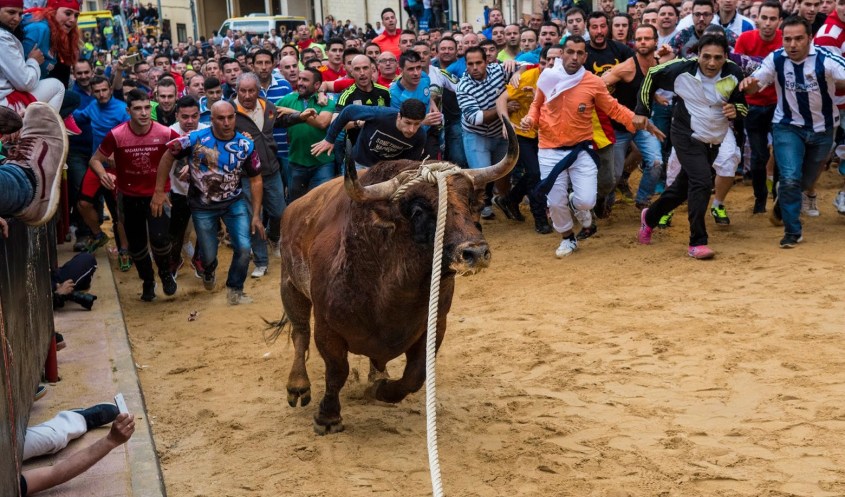
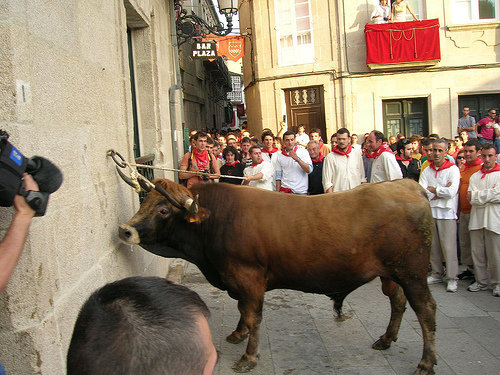
Spain: toro ensogado is medieval tradition!

AnimaNaturalis España

🐂 Do you know what the ensogado bull consists of?

It is the popular form of bullfighting celebration consisting of the release in a locality of a bovine cattle with one or more ropes tied to its head to control its movements and attacks.

The rope bull is probably the most atavistic spectacle and also the most distressing for the animal, as it is the one that limits its movements the most and for the longest time.


Suffering is accentuated in this type of celebration due to the great physical fatigue that they accumulate, as they are taken to the limits of their aerobic capacity.

In all the celebrations you can see how, shortly after starting, the horns resort to abdominal breathing with their mouths open, their tongues sticking out and profuse salivation.

Help us end this atrocity! Sign now and share. 👇

https://www.fiestascrueles.org/

And I mean…How primitive and anti-social can people in the middle of Europe be?
It is a shame for the country that some dull, mentally weak proletarians still uphold this primitive tradition and get excited about something that ordinary people only disgust.

If torture, mistreatment and exploitation of innocent, defenseless beings is a culture for Spaniards, why don’t they burn witches anymore?
Wasn’t that a sad culture in Spain?
That would be good business.

My best regards to all, Venus