



“ASF is harmless to humans but in pigs and wild boar the fatality rate is nearly 100%, and there is no vaccine against it.
Safety depends on controlling animal movement and ensuring hygiene in farms, slaughterhouses and abattoirs. In Nigeria, many farms are not up to the task”.
From ‘The Guardian’ press – London.
‘Worst outbreak ever’: Nearly a million pigs culled in Nigeria due to swine fever
Farmers report devastating losses as poor control measures are blamed for spread of infection across the country
Source:
Hundreds of thousands of pigs have been culled by Nigerian farmers in response to an explosion of African swine fever (ASF). The outbreak began around Lagos and parts of neighbouring Ogun state earlier this year, pig farmers say, but has now spread to many other parts of the country.
In the absence of official data, farmers who spoke to the Guardian estimated that nearly a million pigs had been put down so far. Mrs Bello, a farmer at Lagos-based Oke-Aro, the largest pig co-operative in west Africa, who preferred not to give her first name, said the co-operative alone had culled around 500,000 pigs. So far the virus has spread to more than a quarter of Nigeria’s 36 states.
In the past decade, ASF has regularly surfaced in several parts of Africa. Between 2016 and 2019, more than 60 outbreaks were reported across the continent.
But the recent wave of infections is the worst by far. “We have never experienced anything of this scale in the past. This is the worst and largest outbreak ever,” says Ayo Omirin, a pig farmer at Oke-Aro, who has lost more than 600 of his 800 pigs.
Another farmer, Lawrence Adeleke, who had been in the pig business for decades, recently died. The outbreak struck his farm in April, his son Adeleke Adedayo told the Guardian. Within two months, nearly all of the 100 or so pigs had died and the pens were shut down. In 2007, when a similar outbreak hit the farm, only three of nearly 100 pigs survived.
“When he returned from the farm the day we lost the last set of pigs, he stopped talking to anybody for three days. He was always absent-minded and withdrawn,” said Adedayo. “He only spoke about the losses in the farm. He talked about all his labours for many years vanishing in a few days. He felt he was too old to start all over again. We all felt helpless. On the morning of 2 June, his birthday, he died.”
The farmers who spoke to the Guardian estimated that the pig industry in the country has lost up to 20bn naira (£40m), and that more than 20,000 jobs are at risk. The outbreak comes at the same time as coronavirus, which has infected 17,148 people and led to 455 deaths, according to figures released by the Nigeria Centre for Disease Control.
“A lot of pig farmers may not fully recover from their losses even in the next two years. Some farmers have left the industry already. At the moment, we have no clear picture of how the industry is going to bounce back,” said Omirin.
In recent years, the popularity of pig farming has grown in Nigeria. It is seen as an escape from poverty for low-income households and is also popular with the expanding middle class. By 2009, the pig population had risen from 2 million in 1984 to over 7 million, according to figures from the National Veterinary Research Institute (NVRI). Numbers have probably doubled since then. Read more
The government has taken some action in the crisis, distributing bags of seed and fumigating infected pens. But farmers say this is rarely enough to see them through the rough road to recovery or offset their losses.
“The government did nothing much,” said Bello, “when you consider that most farmers are now plunged into serious debts because of the loans they took to keep their farms.”
ASF is harmless to humans but in pigs and wild boar the fatality rate is nearly 100%, and there is no vaccine against it. Safety depends on controlling animal movement and ensuring hygiene in farms, slaughterhouses and abattoirs. In Nigeria, many farms are not up to the task.
“I suspect the outbreak started last year but the farmers were perhaps selling the infected pigs before it was noticed. This year the disease exploded,” said Dr Pam Luka, ASF researcher at the NVRI. “Activities like this only keep the virus circulating in the country in a cycle.”
A further problem comes from poor record keeping. According to Luka, local authorities rarely have any data for the outbreak. Figures kept by the World Organisation for Animal Health (OIE), which should be notified of ASF cases, are significantly lower than the numbers quoted by farmers. OIE told the Guardian that they had received a notification about the recent outbreak on Tuesday.
Nigeria currently has no database for issues related to animals and disease outbreaks, says Luka; he is currently working with the government to build one..
He is also working with other scientists to understand how the virus is transmitted among pig farms in Africa. But he believes that the situation will only improve when farmers are more proactive and local authorities intensify safety measures and support for the pig industry.
We’ve never had a better chance …
… to make a greener world. Covid-19 has delivered unusual environmental benefits: cleaner air, lower carbon emissions, a respite for wildlife. Now the big question is whether we can capitalise on this moment. The Guardian aims to lead the debate from the front.
As an open, independent news organisation we investigate, interrogate and expose the actions of those in power, without fear. Our independence gives us the freedom to make important organisational choices in service of the environment: we have committed to carbon neutrality by 2030, divested from the oil and gas sectors – and renounced fossil fuel advertising. With your help we can bring about improvement.
The Guardian believes that the climate crisis we face is systemic. We will inform our readers about threats to the environment based on scientific facts, not driven by commercial or political interests. We will keep reporting on the efforts of individuals and communities around the world who are fearlessly taking a stand for future generations and the preservation of human life on earth. We want their stories to inspire hope.
We’re determined to provide journalism that helps each of us better understand the world, and take actions that challenge, unite, and inspire change – in times of crisis and beyond. Our work would not be possible without our readers, who now support our work from 180 countries around the world.

Satisfy, healthy, safe: shouldn’t every child feel this way?
Together we can do it. If we respect their fundamental rights to freedom, life and self-determination.
Regards and good night from Venus
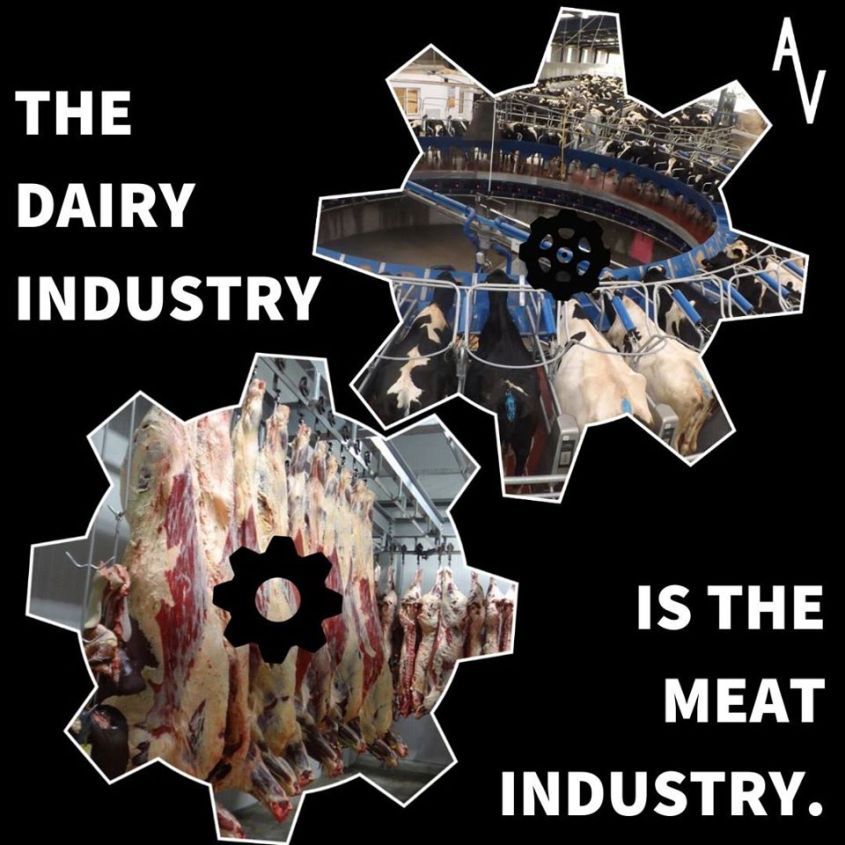
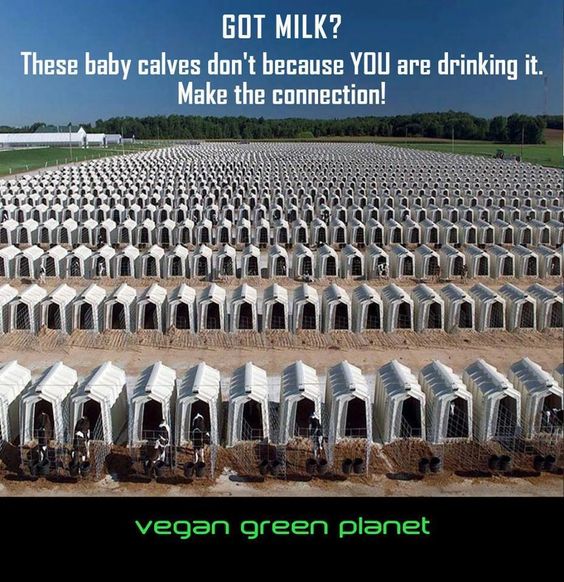
Many people seem to be under the impression that by buying a glass of milk is somehow “different” to buying a steak—not true.
The reality is that dairy is beef and beef is dairy.
You CANNOT fund one without funding the other.
Here’s how: when you buy a dairy product like cheese or milk, you pay for a cow to be fisted in order to impregnate them (so they can lactate) and create someone’s future steak.
Males will be murdered shortly after birth, and females will grow up as sex slaves having that whole process repeated to them until they, too, are sent to the slaughterhouse.

And the same is true of the other products of abuse that people buy.
The egg industry is the chicken industry.
The wool industry is the lamb industry.
To buy eggs or wool is to fund murder and slavery.
Stop being a cog in the evil machine.
Regards and good night from Venus
Re our recent post about wolf hunting in Latvia:
https://worldanimalsvoice.com/2020/04/29/latvia-organized-hunting-criminality/
We have been sent the following message from Sandy – thanks Sandy for your important information which says it all really.
Again, the EU looking the other way when it wants to.
As per this update from Sandy; we would encourage any of our followers to provide us with further updates or information to our posts.
We are keen to hear more from Dawn about the bullfighting issue / experience she has been getting – contact us Dawn please if you have anything more to provide.
Regards Mark
Dear Venus!
Thank you for your information about the egregious situation of lynx and wolf hunting in Latvia.
As to the large carnivores Latvia has signed the European Council’s Directive 92/43/EEC on the conservation of natural habitats and of wild fauna and flora.
Lynx is listed under Annex II (lynx habitats have to be designated as strictly protected areas) and Annex IV (need of strict protection). In 2004 the hunters’ lobby group from Latvia with no appropriate scientific assessment of the species wolves and lynxes made efforts in the EU to get exemption for Latvia as to wolves and lynxes hunting.
For lynxes the exemption from Directive was reached only to Annex II (no need to designate specially protected areas), but there is no exemption as to Annex IV for Latvia as the EU member state.
As lynxes are subject to the Habitats Directive’s Annex IV regime in Latvia, the only way provided in the Directive to make exceptions to the killing prohibition is through derogations.
The EU should know that there is a blatant violation of Directive 92/43/EEC as regards the hunting derogation of lynxes and wolves in operation in Latvia.
Thank you and
best regards,
Sandy
Worldwide, 1,500 billion fish are caught each year, which is more than all other animals combined. In Germany alone there are 978,000 tons per year, including mainly herring, mackerel, shrimp and cod.

Although fish are the most often killed “farm animal” worldwide, there is an exception for them in the animal protection slaughter regulation, as a result of which they must suffer unnecessarily.
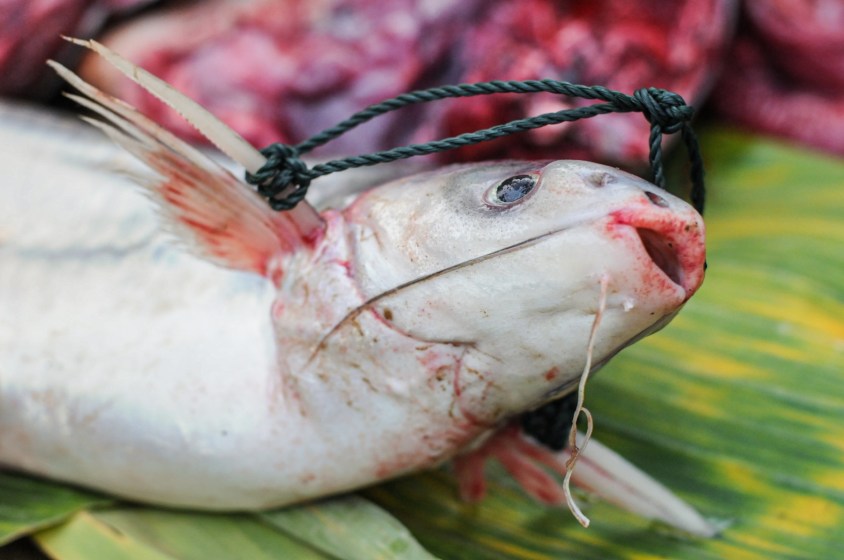
In practice, this means that many animals suffocate slowly and painfully. In some cases, they are still cut open and gutted.
The suffering of the fish receives little attention.
We encounter images of abused dogs, anxious mice in test laboratories or the fear-filled eyes of a mink on a fur farm almost every day on video platforms, websites or on social networks.
But the hundred million fish cause less outrage. In his new book “What A Fish Knows”, the ethologist Jonathan Balcome addresses this controversy: “Fish live below our surface of perception and so we do not perceive the suffering of the animals. They practically swim under our radar.“
How we deal with fish is not just irresponsible for the author.

They often die through a loophole in the law without protective measures for stunning and slaughter.
The problem: The fish is a largely unexplored living being and there is no consensus about the pain sensation of the animals. A large number of studies have shown that the animal is able to feel pain like any other living being. These state that fish carry out complex thinking processes and their blood pressure and pulse would increase immensely under stress. In addition, the animals are social and trust their peers and prefer individual members of their flock.

Other studies judge that this is not the case and that the animals do not share our feeling of pain. Because there is no clear state of science, the paragraph in the Animal Welfare Slaughter Ordinance plays such a big role in animal welfare for fish.
So it says in paragraph 1, paragraph 3, number 4:
” The provisions of this ordinance do not apply to large-scale catches of fish, provided that, according to the state of the art, stunning is either not possible or would only be possible with a disproportionate amount of effort “. (see »gesetze-im-internet.de/bundesrecht/tierschlv_2013/otal. pdf).
In commercial fishing, this paragraph is always interpreted to the detriment of fish.

The last agonizing minutes in a fish’s life!
Overall, more than a billion fish and crustaceans are caught in commercial fishing worldwide every year, according to Fish Count, a UK organization. The German fleet alone is lined up with 219,001 tonnes from the seas every year – herring, small pelagic species, mackerel, shrimp and cod are the main victims in this country.

The bodies of the animals are ruthlessly crushed in the nets. Fish that are higher up in the nets suffocate in the air as no anesthetic is required. Some of those who survived the transport of water on board are still processed alive. Other fish are stored and prepared in a state between chilled and still alive.
My comment: 80 percent of the fish on the German market is imported. A third of this comes from illegal fishing.
They are caught in huge nets on the open sea. If they are pulled out of the water, they suffer a painful reduction in pressure. The swim bladder burst and the eyes gush out of the caves due to the enormous internal pressure. Many fish are still alive when cut and gutted.
But the fish also suffer beyond the mass catch. During the fishing process, fish inevitably experience pain, stress and fear of death if they get caught in the hook, are pulled out of the water and are suffocated or gutted while alive.
There are about five million recreational anglers in Germany.
In principle, they are not allowed to kill the animals just for fun without the so-called intention to sell them, but practices that are contrary to animal welfare, such as fishing or “catch and release”, are practiced in disguise.
Prohibitions of particularly cruel fishing methods in the fisheries laws and regulations of the countries do not help if surveillance on lonely shores and on commercial fishing ponds is not possible.
Since 2018 it has been possible to catch fish in EU waters with electricity: electric fishing uses nets with small electrodes attached to them.
Fishing is an insane cruelty to animals. Thanks to overfishing, there will probably be more plastic than fish in the oceans by 2050.
In the meantime, the oceans have become so polluted and poisoned that fish are considered to be harmful to health.
The only positive thing about overfishing: once all fish have been murdered, none can be barbarously tortured.
My best regards to all, Venus

In March 1994, Sea Shepherd acquired the British ship SWITZER MERCATOR and renamed it WHALES FOREVER. The ship was brought directly to the Netherlands to be repaired and refitted.
WHALES FOREVER became the target of two arson attacks during its short but turbulent time at Sea Shepherd. While the first attack did little damage, the second act of sabotage triggered a fire and explosion in the engine room. Due to the extensive repairs, it took a month longer to get the ship going again.
The WHALES FOREVER subsequently left the Netherlands and opposed illegal whaling on the coast of Northern Norway, which triggered widespread coverage in the European media.
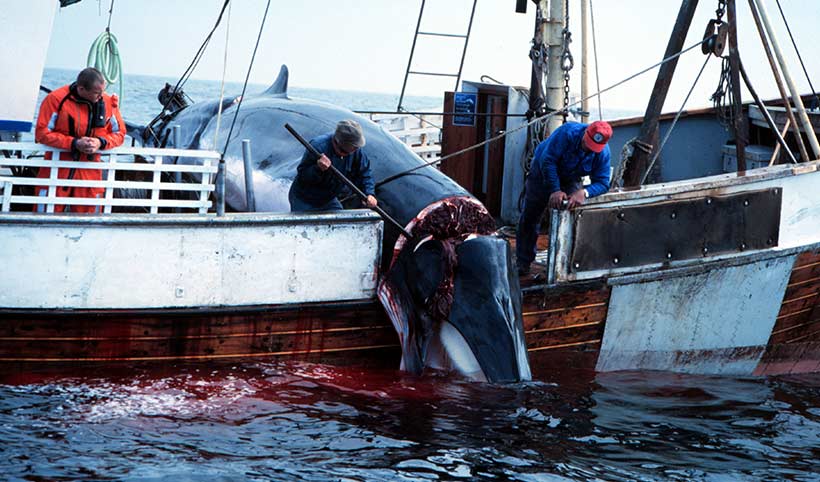
The Norwegian Navy ship ANDENES intercepted the WHALES FOREVER and tried several times to damage its propeller, but Captain Watson was able to maneuver the ANDENES over and over again.
Frustrated, the ANDENES captain misjudged his next approach and rammed the Sea Shepherd ship. The impact smashed the bow of the WHALES FOREVER and tore a leak into a gas tank, spilling hundreds of gallons of fuel on the deck and soaking three crew members.
During the collision, the propeller was also blocked by a rope that the ANDENES pulled behind it.
The WHALES FOREVER team reacted quickly to remove the gasoline and thus avoid the risk of an explosion. At the same time, Sea Shepherd divers went into the water and cut the rope from the screw.
Although the ANDENES fired two cannons at the WHALES FOREVER and detonated four water bombs in front of its hull, the WHALES FOREVER managed to prevent the Norwegian Navy from boarding and to return to the Scottish Shetland Islands.
When the damaged ship was brought to dry dock in Bremerhaven, it turned out that the water bombs had caused massive damage.
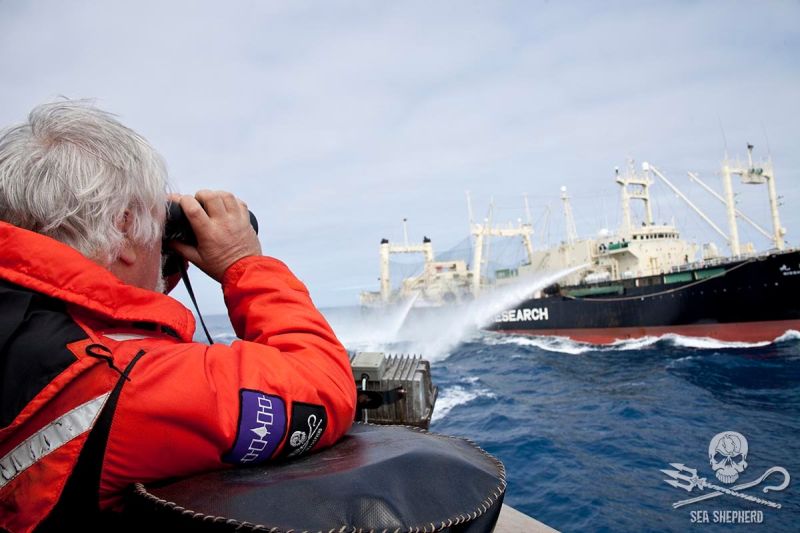
In October 1994 the WHALES FOREVER set off for Florida, where Captain Watson sold the ship a few months later. He ended up getting more money for the ship than he originally paid for it.
In less than 12 months, WHALES FOREVER had managed to make a name for itself in the media and repeatedly drew public attention to illegal whaling in Norway.
Photo: © Sea Shepherd
My comment: Every year the same! The hunting season in Norway started again on April 1st.
Norway hunts for whales in large quantities, although the meat is not more popular.
Norway sets the quotas itself and also slaughters significant quantities of female minke whales.
The quota is so high that Norway kills more whales than Japan and Iceland combined. Since 1993, around 12,000 whales have been killed (“officially”).
A very large proportion of the females are pregnant, so the rate is much higher than officially stated.
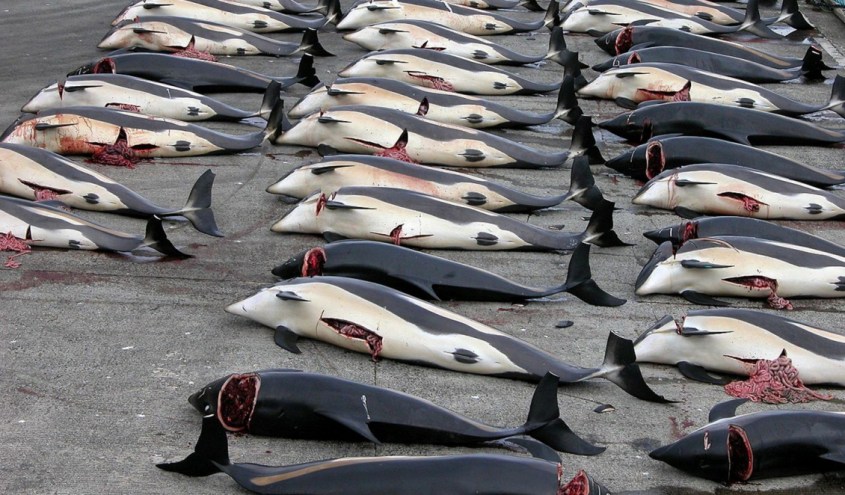
The whales will have to suffer for a long time when they go whaling. The agony can last from a few minutes to 2 hours.
The victim tries to escape with the harpoon in her body and loses a lot of blood and is in great pain. A whale is often fired at the whale’s head several times and some animals are still alive when they are brought on board and only then are they killed.
Norway has long known that whaling is no longer worthwhile for its own country, and yet they are sticking to whaling. The question is why this is so.
They have been trying to export whale meat to Japan for several years, but Japan`s stocks are also overcrowded with whale meat.
The prices are sometimes in the basement and the Norwegian fishermen even pay extra.
In addition, the government has paid the equivalent of 2.4 million euros to the whaling industry since the 1990s. It is therefore clear that slaughtering whales is not worthwhile.
And so the question of WHY remains unanswered.

The hunters of Germany also cannot provide a logical answer for the annual mass murder of 600,000 foxes or 96,000 wild boars.
There is no logical reason for hunting on the 21st century.
It is driven by psychopaths and is simply a secondary form of mental illness.
My best regards to all, Venus
No to aid for the cancellation of the bullfighting season!

🐃All bullfights in March were canceled. Madrid, Valencia, Castellón, Murcia, Arnedo … 21 bullfights are already affected and 120 bulls saved because of it
Now the bullfighting sector is asking the government for support to save the season. The Toro de Lidia Foundation and the Minister of Culture José Manuel Rodríguez Uribe requested an emergency meeting. We will not let it happen!

The bullfighting sector, devastated: fairs suspended, thousands of tickets to return, San Isidro in the air … As has been done with sports events and schools, the bullring is being considered places of risk of contagion.
Thus, Madrid, Valencia, Castellón, Murcia and Arnedo have already canceled all the celebrations scheduled for March. There are already 21 bullfights affected, and 120 bulls that, for the moment, are saved! But the bullfighting sector, which is beginning to recognize that the coronavirus is going to be a severe blow to bullfighting, especially for bullfighters, ranchers and bullfighting entrepreneurs, it has begun to react: the Toro de Lidia Foundation has already requested the Minister of Culture, José Manuel Rodríguez Uribe, an emergency meeting “to be able to study the possibility of starting contingency, recovery and support plans for the industry as soon as possible.” We will not allow it!

Now or never! Let’s use the opportunity to eradicate animal abuse once and for all. Join the petition to the Minister of Culture, José Manuel Rodríguez Uribe, so that he does not allocate a single euro from public coffers to financially help the bullfighting sector.
The European Central Bank recognizes that the economic crisis that is going to trigger the coronavirus may have the magnitude of the great financial crisis of 2008. Public administrations across the country need to develop a package of measures so that companies do not suffer from liquidity problems due to the cessation of activities. Help for families has also been announced.
We need your help to demand that the government prioritize and not allocate funds to finance the bullfighting rescue. To do this, we ask that you dedicate less than two minutes of your time to perform the following action.
Send a letter to the Ministry of Culture and Sports – In this link is the petition-letter.
https://www.animanaturalis.org/n/45356/no-a-las-ayudas-por-la-cancelacion-de-la-temporada-taurina

And I mean …those are the unexpected damages of the Omnipotent Corona Virus.
Nobody expected them, not even those who created it.
No bullfights, no environmentally harmful world trips, maybe no safaris, and soon there will be no more animal transports.
An animal friendly virus … this corona …
Everyone stays at home and waits for better times. The environment and animals benefit greatly from it.
WHO speaks of an extremely dangerous pandemic!!
Confirmed cases 80,754, including active infections 17,721, cured cases 59,897, deaths 3,136.
With 7, 75 billion human animals … 3000 deaths are the doom of the world.
My best Regards to all, Venus
Arosa village prohibits advertising for fur products.

The sophisticated holiday resort in Graubünden, Switzerland, known for guaranteed snow and wonderful ski slopes is now making headlines because the municipality has decided to ban all advertising in the village for fur products in the future.
FOUR PAWS congratulates the Arosa municipal board on this decision and congratulates on this courageous, innovative and far-sighted action. Arosa is a holiday resort in the Alpental Schanfigg in the Swiss canton of Graubünden. The place is known for its lakes, ski slopes and hiking trails such as the “Squirrels Way”.

This means that Arosa has a lot of tourism all year round.

The holiday destination is therefore very trendy. Because even large luxury brands such as Chanel, Burberry and Gucci have been doing without furs for some time.
FOUR PAWS sees the ban on advertising fur products as an important signal for other tourist locations to do the same to Arosa.
Pascal Jenny, Arosa’s tourism director, explains the decision for fur-free advertising in the village as follows: «Arosa is a pioneer and already shows with the Arosa Bear Country how animal welfare and tourism work together in an exemplary manner. This advertising ban is a logical next step on this path. »
In the opinion of FOUR PAWS, the decision shows that ethical fashion and animal welfare have also become enormously important in tourism. Instead of real fur cruelty to animals, modern consumers today also want sustainability and innovation in this area.
«It is really a forward-looking message that Arosa is no longer advertising fur products. Hopefully many Swiss tourism destinations and municipalities will follow this example. Arosa advertises with sustainable tourism and shows impressively that it can be put into action ».
Alexandra Mandoki, Country Head of FOUR PAWS Switzerland.
The fur industry kills more than 100 million animals each year. Mink, fox and raccoon dogs suffer on fur farms in tiny wire cages, other species die a cruel death by falling. High amounts of dangerous chemicals are used to process fur for fur fashion.
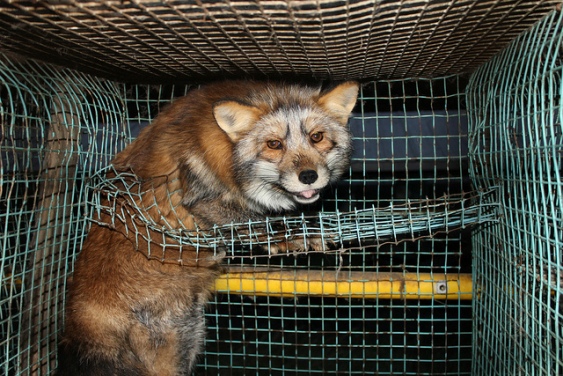
FOUR PAWS has been working internationally on the subject of fur for many years and is committed to an import ban on fur products in Switzerland.
And I mean…Thanks to responsible for tourism in the village Arosa.
Switzerland has banned the hobby of hunting in the canton of Geneva since 1974, with a popular vote.
Since then they have only received positive results on the regulation of wild animal populations in the canton.
In Zurich, animals have lawyers! that is the Swiss Antoine F. Goetschel, who officially has the job of the animal advocate for the Canton of Zurich.
The Swiss have banned transito animal transports through their country, I quote from the Swiss Transport Regulations:
A transit ban applies for the transit of cattle, pigs, sheep, goats, horses and poultry by truck through Switzerland.
And in Switzerland the journey time for animal transports from the loading point may not exceed six hours (Art. 15 Para. 1 TSchG).
https://www.tierimrecht.org/de/recht/lexikon-tierschutzrecht/Transporte/
I live just an hour from Switzerland and visit the country at least three times a year.
And I like to do it!
Thanks Switzerland!
My best regards to all, Venus

Will you help Ccso Gaon rescue these dogs?
Sharing for Ccso Gaon.


Ccso Gaon, a group of activists in Korea, have been working to close down dog farm/slaughterhouses for several years now. With a tip from an informant, on New Year’s Day, January 1, they went to find a dog farm located below the Highway in Dangjin.


They were able to meet with the dog farm owner and convinced him to sign an agreement to completely close down his dog farm within 3 to 6 months. They can rescue all the 40-50 dogs/puppies there right now, but they have no facilities to keep them and they do not have financial resources to take on rescues.


Click HERE to see the photos and videos.
Would you please help them rescue the dogs? At least some of them? It is freezing cold in Korea and the dogs are kept in raised wire cages with no protection from harsh weather. For now, all they could do is put plastic covers around their raised wire cages to block some of the winds. They are heartbroken that they cannot rescue any of them now.
You can donate by paypal: ccsogaon@daum.net
🧡Ccso Gaon is funded entirely by donations.
👉 https://www.facebook.com/groups/ccsogaon/
|
|||||||
|

