Category: Uncategorized

Don’t Palm Them Off. Progress Video for Orangutan In 2019.

palm oil cost


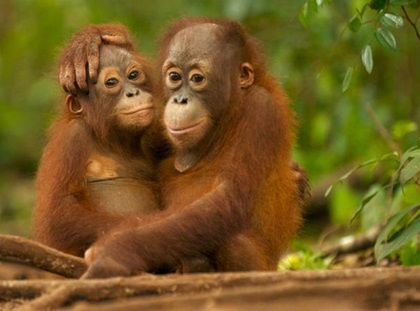
There are many animal species that should be given (much better, or even basic protection from the devastation caused by the human species. Witnessing these majestic beings gradually being wiped out due to industries such as Palm Oil is an insult to all of us who care. Orangutans, and trying to help and protect them, means that they have a special little space hidden away somewhere within my soul. I hate the human race; they claim superiority and a ‘superior being’ type status; whilst in my opinion; they are in fact the masters of destruction of this planet; and that is nothing to be ‘superior’ or proud about.

The following video shows the work of one of the Orangutan charities which I personally support. It shows the great work that they have been doing during 2019 to save and relocate these wonderful beings back into their forest homes. Please support them if you can and help a species which is being destroyed by the wants of some humans which is so offset by the dedicated and wonderful work of other humans who have ‘it’ within them.

Regards Mark

http://orangutan.or.id/


Video link – https://www.youtube.com/watch?v=UVUx3Z0UNJU&feature=youtu.be

Here are some great Orangutan facts – check out more with lots of great pictures at:

https://www.wwf.org.uk/learn/fascinating-facts/orangutans?gclsrc=aw.ds&&gclid=EAIaIQobChMIxf6_1tTu5gIVxbTtCh0DOwFlEAAYAyAAEgIj5_D_BwE&gclsrc=aw.ds

There are 3 species of orangutan

The Bornean, the Sumatran and the recently confirmed new species (as of 2017), the Tapanuli. These great apes are only found in the wild on the islands of Borneo and Sumatra.

All three species are critically endangered, with just over 100,000 Bornean, fewer than 14,000 Sumatran, and less than  800 Tapanuli orangutans left. 

Although they might look fairly similar with their fluffy ginger fur, Bornean orangutans have darker red coats and rounder faces than their Sumatran cousins.

But they do have some similarities – adult males have a beard and moustache – and adult female Sumatran orangutans also have beards.

Orangutans have an arm span of about 2.2 m (over 7 ft) from fingertip to fingertip.

Young orangutans stay with their mother until they reach around 7 years old. They spend this time learning everything from her – including what’s good to eat.

Infants are so attached to their mums that they ride on her body and sleep in her nest until they develop their own skills to survive on their own.

Because of this long learning curve, orangutans only have young once every 7 – 9 years, which is the longest birth interval of any land mammal.

Some adult male orangutans develop flaps of fatty tissue on both sides of their face – known as flanges – which develop when they’re fully mature, at around 35 years old.

Orangutans can live to over 30 years old – and many live to 50.

Studies show that some females may consider flanges when selecting a mate.
palm3

Orangutans like to be comfortable. They make a sleeping platform, or nest, every night.

An orangutan makes its nest in around 10 minutes, by pulling several large branches together, using smaller branches for a mattress and binding the structure together by weaving in more supple branches. In wet weather, they sometimes add a roof.

As orangutans make a new nest to sleep in every night, we actually use their nests to estimate their population size in any given area. We count nests both from the ground and the air as they’re much easier to spot than elusive orangutans.

As you might have seen in Our Planet, some Sumatran orangutans use tools – like sticks to get termites, ants or bees out of tree holes.

These clever creatures have also been observed making a ‘glove’ out of leaves when handling prickly fruits or thorny branches.

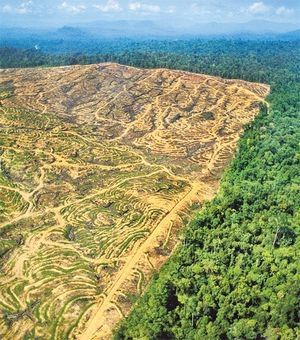
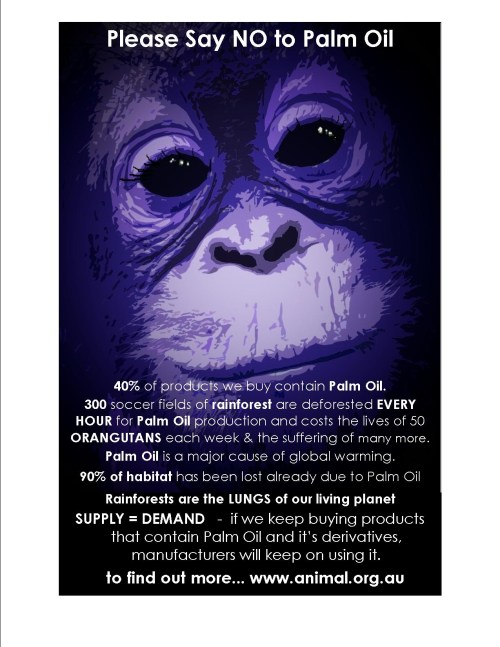
It’s estimated that over 100,000 Bornean orangutans were lost between 1999 and 2015. The main threat is the loss or fragmentation of their forest habitat, caused by logging for timber materials, forest fires and making way for oil palm plantations.

Oil palm trees produce palm oil – an edible vegetable oil – which is used in many products, from toothpaste to pizza. Indonesia and Malaysia make up over 85% of the global supply of palm oil.

Cutting down pristine rainforest to make more palm oil is incredibly unsustainable and releases lots of carbon into the atmosphere. But the good news is that we can produce palm oil sustainably – protecting species like the orangutan – if we ensure that it is deforestation free. This means planting on already degraded land rather than replacing jungle with oil palm.  And palm oil itself yields far more oil than other crops such as olive oil or sunflower oil – so it needs far less land to produce the same amount of oil.

As consumers, we can fight to only buy sustainable palm oil. Boycotting isn’t the answer; demanding more action is.
 

palm oil 3.jpg


Check out a lot more info about these fantastic primates at:

https://en.wikipedia.org/wiki/Orangutan


palm1


Conservation status


Deforestation for palm oil production in Indonesia. 80% of Indonesian logging is performed illegally due to weak law enforcement and high levels of corruption.[80]

The Sumatran and Bornean species are both critically endangered[81][82] according to the IUCN Red List of mammals, and both are listed on Appendix I of CITES.[81][82] The IUCN estimated in 2016 that around 100,000 orangutans survive in the wild (in 1973 there were 288,500), and their population is expected to further decrease to as few as 47,000 individuals by 2025.[83]

The Bornean orangutan population declined by 60% in the past 60 years and is projected to decline by 82% over 75 years. Its range has become patchy throughout Borneo, being largely extirpated from various parts of the island, including the southeast.[82] The largest remaining population is found in the forest around the Sabangau River, but this environment is at risk.[84]

Sumatran orangutan populations declined by 80% in 75 years.[81] This species is now found only in the northern part of Sumatra, with most of the population inhabiting the Leuser Ecosystem.[81] In late March 2012, a once-significant population in northern Sumatra were reported to be threatened with approaching forest fires and might be wiped out entirely within a matter of weeks.[85]

Estimates between 2000 and 2003 found 7,300 Sumatran orangutans[81] and between 45,000 and 69,000 Bornean orangutans[82] remain in the wild. A 2007 study by the Government of Indonesia noted a total wild population of 61,234 orangutans, 54,567 of which were found on the island of Borneo in 2004. The table below shows a breakdown of the species and subspecies and their estimated populations from this, or (in the case of P. tapanuliensis) a more recent, report:[86][87]

Give them back their home – Now !
pepsi 6

palm oil greenpeace uk.jpg

USA: Petition To SIGN: Justice for 21 Horses Hunted Down and Massacred.

usa-flagge-im-grunge-stil-auf-einem-weißen-hintergrund

SIGN: Justice for 21 Horses Hunted Down and Massacred

Posted by Katie Valentine

SIGN: Justice for 21 Horses Hunted Down and Massacred


Petition Link – https://ladyfreethinker.org/sign-justice-for-15-hunted-down-and-massacred/?utm_source=Newsletter&utm_medium=Email

PETITION TARGET: Floyd County, Kentucky Sheriff’s Office

In an appalling act of cruelty, a shooter gunned down dozens of innocent horses, including newborn foals and pregnant mares, near an abandoned strip mine in Floyd County, Ky.

The shooter mercilessly fired bullets into the animals at their most vulnerable moments, including one horse who was eating and died with grass in his mouth. According to Megan Goble, whose family owns the property the horses were massacred on, two pregnant mares miscarried after they were shot.

It looked like a battlefield for just horses,” said Floyd County Sherrif John Hunt. “We counted 15 that we found dead. All 15 appeared to us to have been shot.”

Later, 6 more dead horses were discovered, bringing the total to 21 animals slain.

It seems as if the killer deliberately separated and terrified the horses shortly before shooting them.

“I was just sick to my stomach by the thought of what those horses had to go through,” said President and CEO of the Kentucky Humane Society Lori Recmon. “It looks like maybe they had been run and then dispersed and shot. They’re herd animals, so to separate them and then shoot them is probably terrifying for them. Then, after I was sad and sickened, I just got angry.”

Prior to the slaughter, roughly 30 horses routinely wandered the remote Eastern Kentucky area. According to locals, people frequently visited the horses to feed them and watch them frolic in the woods. Through one deplorable act, the shooter decimated that population.

As long as the person responsible for the brutal death these horses walks free, he or she poses a continued threat to horses and all other living beings. Whoever murdered these beautiful creatures must be brought to justice before they hunt and kill anyone else.

Sign this petition encouraging the Floyd County Sheriff’s Office to treat this case with the severity it deserves by using every available resource to identify and arrest the individual(s) behind this gruesome crime.

There is a $15,000 reward for information leading to the capture of the suspected shooter. Investigators urge anyone with information about this case to call the Floyd County Sheriff’s Office at (606) 886-6171. 


Australia: Its Very Hot But Sydney Harbour Still Gives Go Ahead for Fireworks !

Australian flag painted by brush hand paints. Art Aussie flag. Watercolor flag. Australia art vector flag.


… and these people are in charge of a crisis !

Sydney Harbour New Year’s Eve fireworks display WILL go ahead as the Rural Fire Service gives the green light despite total fire ban

  • The Sydney Harbour New Year’s Eve fireworks display has been approved
  • Comes despite the state’s deputy premier urging authorities to scrap the event
  • ‘Sydney Harbour fireworks have been approved to proceed tomorrow,’ RFS said
  • Parramatta, Armidale and Huskisson have cancelled or postponed fireworks 
  • The Sydney Harbour New Year’s Eve fireworks display has been approved despite the state’s deputy premier urging authorities to scrap the event.
  • The NSW Rural Fire Service on Monday evening said it had given approval for the fireworks display to go ahead in Sydney Harbour.
  • ‘The Sydney Harbour fireworks have been approved to proceed tomorrow,’ the RFS said on social media on Monday evening.
  • ‘The NSW Rural Fire Service and Fire and Rescue NSW are assessing a number of other total fire ban exemptions.’


https://www.dailymail.co.uk/news/article-7836475/Sydney-Harbour-New-Years-Eve-fireworks-display-ahead-RFS-gives-green-light.html

Fireworks explode over the Sydney Harbour Bridge during the midnight display on New Year's Eve on Sydney Harbour on January 1, 2019

stop feuerwerkarticle

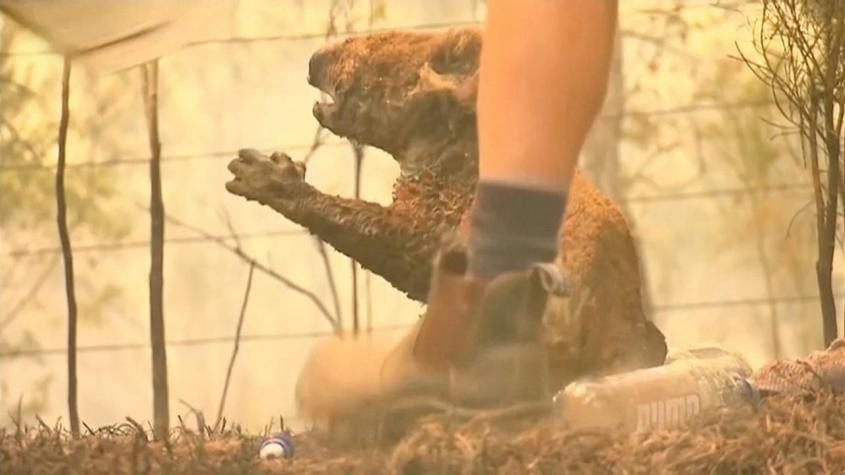
koala in flammeng

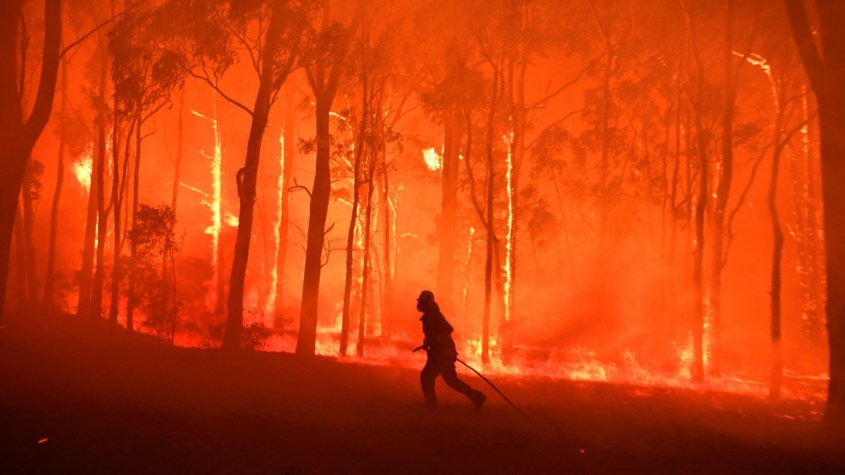
australien brändepg

koala in flammeng

Greece: Donkeys continue to be abused as taxis


PETA’s motto is in part: animals are not there to entertain us or exploit them in any other way.

greece

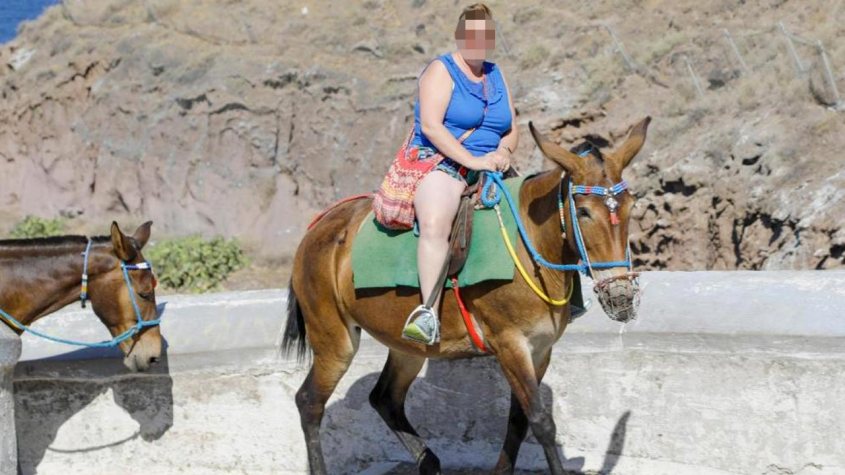
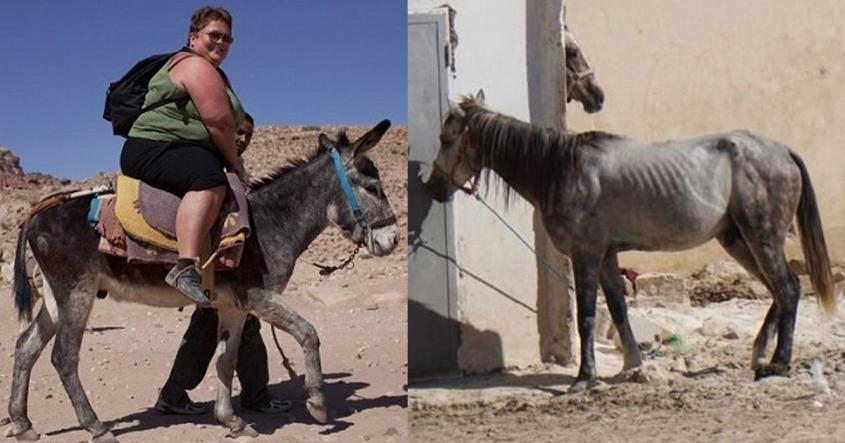
A video released today by PETA shows that donkeys and mules are still abused on the Greek holiday island Santorin as “donkey taxis”. Although the Greek Ministry of Rural Development banned rides -after PETA’s appeal- last year for tourists weighing over 100 kilograms, the animals still have to carry some heavyweight people.

Despite international protests, media reports and publications, the holiday island still sticks to its “animal tradition”. The four-legged animals are often brutally beaten with sticks and maltreated by inexperienced riders.

Dicke Touristin auf Esel. in Santorinijpg

On the pictures from September this year, it can be seen that some animals – sometimes driven by whistle-blowers by the donkey guides – stumble and thus also become a danger for walkers; in part, tourists fled to wall projections to avoid them.
The animal rights organization is now calling on the responsible Greek politicians with an online petition to prohibit tourist donkey riding altogether.

“In Firá exhausted donkeys and mules with bloody wounds are still driven up and down the steep, slippery steps from morning to night. But even for humans, this stupid tourist attraction is dangerous: Again and again, strollers were pushed aside, and also PETA’s eyewitness had to avoid the partly unattended animals several times, so as not to be injured. We appeal to the legislator to act responsibly and finally ban these ride.said Sylvie Bunz, Special Project Manager at PETA.

_Überladener Esel Santorini

Peta also criticized that the donkeys on Santorini do not rest even at night: they are used early in the morning to carry heavy garbage bags.
This is also recorded on the video-recordings. Worst of all, if the donkeys are too weak and no longer fit, they are often abandoned and left to their own devices.

Pferd in knaller SDonne-Santorini

Background information

The animal rights organization revealed already in 2018 (we also reported about that: https://worldanimalsvoice.com/2018/09/14/greece-satisfied-tourists-tormented-animals/) the abuses of the supposed tourist attraction.

Although the ascent with the cable car is possible, about a year later several hundred donkeys and mules need to be taken several times a day suffer with stupid tourists on their backs who have to overcome more than 500 steps to the city of Firá.

Esel-Santorin-PETA-D1

Although the Greek Ministry set a weight limit, PETA’s new research shows that the donkey leaders do not abide by the scheme and that there are no controls. In addition, many tourists are visibly overwhelmed with the animals: they rammed their heels into their flanks to make them go, or they pull down the stairs.

Esel mit Wunde im Rücken-Santorinijpg

Bad saddles and provisional girths made of plastic hoses scrub on the sensitive skin of donkeys and mules. Most of the animals have skin lesions ranging from sores to open, bloody wounds under the abdomen and at the tail. Some quadrupeds have eye injuries.
Others put on tight “muzzles” that cause injury to humans and animals through pointed wire ends.

2019-11-06-Maulkorb-Santorin-c-PETA-D

While the animals persevere in the Mediterranean sun and have to wait for the next tour, the owners refuse to give them essential items such as water, shade or weather protection.

esel allein pg

The Europe-wide renowned horse expert and non-fiction author Ingolf Bender wrote for PETA an “animal welfare expert opinion” on the problem; He criticizes the consistently poor equipment and considers it as “gross animal welfare” to use the animals for several hours without food and water.
“We appeal to all travelers to distance themselves from supposed attractions with animals and to make their journey animal-friendly,” said Bender.

esel santoriniSantorini: The donkeys have open wounds where flies settle
 

In contrast to horses, signs of pain, anxiety or illness in donkeys are difficult to recognize. When faced with a potential danger, root their feet on the ground to analyze the situation.
Often, this behavior is considered “stubbornness,” although donkeys are in fact simply scared at such moments.

https://wildbeimwild.com/kunterbunt/griechenland-esel-und-maultiere-weiterhin-gequaelt

Please sign and share: https://www.peta.de/Santorin-2019


My comment: What did the greek government expect?
That donkey riders weigh the fat tourists before they get on the animals?

Or that the pet traders are waived on a taxi round for a monster body, if no one controls them?
This law was so incomplete and offered many tricks and shorts right from the start, so that only one who has never been to Greece would believe it could work.

Animals as a tourist attraction – which country does not have it? a pure torture!


The dirty media network
is full of photos with “nostalgic” animal memories, but the truth behind the beautiful pictures is cruel: Animals are chained, penned, maltreated, hunted and – if not useful – killed.

dicke auf esselpgplease turn around: donkey on monster woman!

 

My best regards to all, Venus

And the real holocaust continues…


cartoon-south-korea-pg


Nothing to see here: Rivers along Korean border run red with blood after massive pig cull.

blutroter Fluß Schweine KoreajpgThe river in South Korea ran red with blood. © Yeoncheon Imjin River Civic Network / AFP


Heavy rainfall has been blamed for the spread of vast amounts of pig’s blood into rivers along the Korean border this week, following a cull of some 47,000 hogs amid an outbreak of African swine fever (ASF).

blutroter Fluß, Korea schweinejpg© Yeoncheon Imjin River Civic Network / AFP
 

“It made many people living in the area anxious and worried,” said Lee Seok-woo, who heads the NGO Yeoncheon Imjin River Civic Network.

A local NGO claims that blood from a nearby burial site, where some 47,000 pig carcasses had been disposed of, had seeped into the Imjin River due to heavy rainfall. South Korean authorities claim that the pigs had already been disinfected before being slaughtered and that there was a delay in the production of plastic containers for the carcasses.

schweine im Container, Korea pg© Yeoncheon Imjin River Civic Network / AFP
 

“What was also hard to endure was the odor. I heard many farmers couldn’t work because of the unbearable smell. This should not have happened”  said Lee Seok-Woo.


South Korea has culled around 380,000 pigs since the recent outbreak of ASF began. There is currently no antidote or vaccine for the complex disease, which has ravaged swine herds across Asia and upended markets as a result.

African swine fever is not harmful to humans but highly infectious and almost 100 percent fatal in pigs.

schweine in Korea, totjpg© Yeoncheon Imjin River Civic Network / AFP
 

For its part, Seoul claims that the blood flowing into the streams had been “dealt with properly” through the use of suction pumps and various other devices. Authorities claim the local water table and potable supply has not been tainted.

“We have built banks and other facilities so that the polluted water does not flow into the downstream region,” the ministry said, adding:

“As of now, there is no blood in the stream.”

Quarter of world pig population could be wiped out this year alone, animal health expert warns.

https://on.rt.com/a582


My comment: 836,865 wild boars were killed in the hunting season 2017/2018 in Germany, 42 percent more than in the previous year.
There have even been premiums per pig’s head, about 60 euros.
For a disease that has not yet occurred in Germany.
For a disease that is 100% safe for human animals.

A massacre, which soon leads to the extinction of wild boars, so that man protects his breeding animals.
Squaring the circle, means that.

China laments that it will lose half of its herds due to the fever by the end of 2019 (which would result in a significant decline in the size of total EU pork production).
So far, China has pre-emptively culled 1 million pigs due to African swine fever.

The known propagation pathways of African swine fever are not wild boars as carriers, but hunting tourists and meat consumers who leave contaminated food leftovers in the landscape. Boars are now looking for food in the dumpster of the parking lots and so the disease is predominantly spread.

But the majority of the media around the world is on the meat mafia side and focusing the importance of the South Korean massacre on public health threats rather than on a mass murder, committed on behalf of a criminal economy and consumer society.

This means that once there is no animal blood flowing into the rivers and violence becomes invisible again, the matter is cleared, and this fascist system continues its Animals Holocaust undisturbed. And not only in South Korea.

My best regards to all, Venus

Nice day with good news


Flag of Czech Republic, Grunge Abstract Brush Stroke Isolated On A White Background. Vector Illustration.


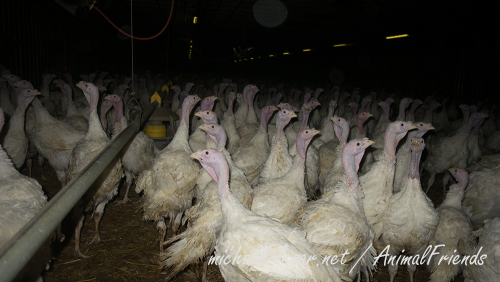
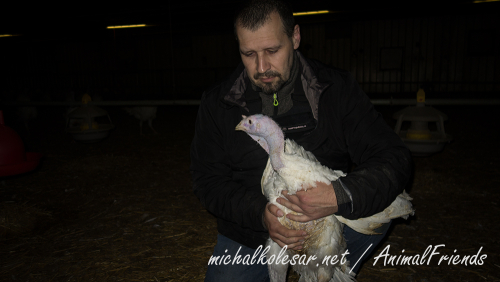
The driver stops the car on the edge of the forest, we get out and take our tools. He drives away we approach the object and try to hide in the shadow of the forest, where is silence. The closer we are to the factory farm, the worse the smell gets. The stink means that the buildings are full of animals. What a sad confirmation.

Czech_turkeys_oct

When the watchers get on their spots we check the transmitters connection and Lukas goes inside the area with me. We avoid cameras while trying to find a way to get into one of the halls. It takes us quite a while. Through a narrow window I stretch myself in. Lukas waits outside by the window.

I take one turkey in my arms, then another, I comfort them to let them know it all will be better and then hand them over to Lukas.

Czech_turkeys_o

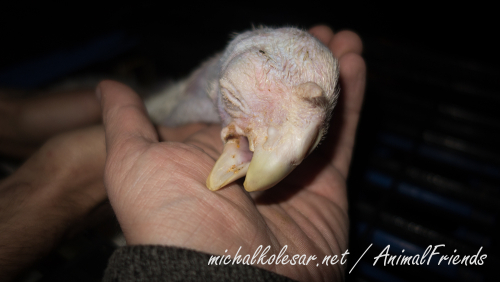
On our way to safe home, we finally have time to check them properly. As I took one of them, it seemed she had strange head, but there was no time for us to focus on that. Now we can see how horribly deformed her head is. It’s like a view from a horror movie. How could she survive with such disability? I don’t know, but she made it.

Czech_turkeys_oct19c

I visited her in her new home a few days after. I saw how grateful she was for the touch, care and feather cleansing, how she enjoyed the sun and grass (the second rescued turkey as well) and I realized that even though I don’t know how she will handle it, she’s doing fine now.

Thanks to all who provided homes and all who help us.

Open Rescue of Two Turkeys (Czech Republic)

…… and in the name of the animals, we thank the brave activists for this animal liberation. It is symbolic and reminiscent of the millions of other turkeys that live as slaves on wretched farms to serve as food for us, a still more miserable species.

My best regards to all, Venus

A message to Eurogroup for animals

from Venus

The EU Commission’s right-hand man is the Eurogroup for Animals.
On their website states: We create a favorable political environment!
and further … “it is of the utmost importance to show that as a membership organization we keep our promises”.

The 8hour campaign (1.2 million votes) in 2012 failed because of the rejection of the then corrupt Commissioner John Dali.

Has the Eurogroup contemplated how to honor its promises to EU-Citisens if the Commission now ignores the 1.5 million votes in the “End of Cage Age” Campaign?
The “case John Dalli” may have forgotten the employees of the Eurogroup, they like to suppress sad defeats.

This case should always be a warning sign of how easy it is to betray the animals and those who want a better world for them.
But in this game are also involved those who make big promises, even though they know that they have no power to make big changes in animal suffering under the EU Commission. And by that I mean the Eurogroup for Animals!

The 36 employees of Eurogroup working for the Commission for good money should be sparing with their promises and nice words. The Eurogroup can not make any promise, because they do not take any decision.
They preach visions and missions into their web site but the thing is very simple: if the commission (even now like under Dalli back then) does not abolish caging, in spite of 1.5 million votes, then they should not give us lectures on trust or active animal welfare, but they have only to answer one simple question: what is their right of existence?

Those who participate in the moral and political EU format are cheated and betrayed,  so like the animals are.
The Eurogroup is just as weak as we are, the citizens of the EU, the Groupe is powerless, as we are, with the only difference that they are paid to sell illusions, campaigns, visions and hopes in an area, this of animal welfare, which the EU does not care at all.

“We exist because European citizens believe animals deserve a voice” says the groupe.

Indeed! there are demonstrably 1.5 million EU citizens who want to give the voiceless, the suffering, the enslaved beings a voice, a better world.
But no one believes that this can be done with the Eurogroup.
With the employer of the Eurogroup anyway not.

I got this message from Compassion in World Farming today:

Our ground-breaking European Citizen’s Initiative (ECI) achieved over 1.5 million signatures calling for a total EU ban on keeping farm animals in cages.

170 organisations, united by Compassion in World Farming, came together to make this happen. An unprecedented pan-European movement for farm animal welfare!

So what’s next? The UK Parliament (with 389,057 signatures ) is now expected to debate a ban on farm cages. And, to force the European Commission to act, at least 1 million ECI signatures must be validated.

This process could take three months, and then we’ll submit the petition.

We’ll keep you fully updated on progress and new ways you can get involved!”

After this message, I had the same bitter feeling as back then in the 8hours campaign.
Unfortunately, the bad sides of history are always repeating themselves.
The Dallis, the corrupt commissars and their naive servants.

Venus