Category: Uncategorized

England: Eurovision and Animal Welfare (Kept Animals) Bill. Jo Lumley Tells Rishi To Get A Grip. !

I am starting off with a different gripe tonight.  Wednesday, I think it was, I sat through the second round of Eurovision song contest qualifiers.  After 4 songs, I went out to take some painkillers for my back; only then did I realise that actually they also helped me get through the rest of the qualifying songs:

https://www.walesonline.co.uk/lifestyle/tv/eurovision-2023-grand-final-full-26894815

My cat could probably write, and sing, something better.  The whole second qualifier was, well, rather bad in my opinion.  I had to throw the telly out of the window before the end.

But something I really cannot get a grip with is why Australia is taking part in the Eurovision song contest ? – Australia IS NOT part of Europe: so why are they in it ?

ausatralia part of europe – Search (bing.com)

If you have a response, then please send it to  Markisconfused.co.uk.com.abc.??

I found this – Why is Australia in Eurovision 2023? | What to Watch

So, gripe over, give me the Cure anytime.

On to more important things.

Joanne and I had the pleasure of spending an evening with Joanna at an animal rights event several years ago.

Joanna Lumley leads celebrities urging Rishi Sunak to keep animal welfare vows

The TV star leads a host of celebrities and animal welfare campaigners calling on the Government to deliver on its pledges about protecting animals and cracking down on abuse

Joanna Lumley leads celebrities urging Rishi Sunak to keep animal welfare vows – Mirror Online

Actress Dame Joanna Lumley today urges Rishi Sunak to keep Tory pledges on boosting animal welfare.

The Absolutely Fabulous star is among celebrities to sign a letter calling on the Prime Minister to deliver on Conservative promises made in 2021 – including to drive through new legislation to tackle abuse of animals and bolster protections.

Dame Joanna, 77, told the Mirror: “Animals are being utterly let down by the Government’s dismaying failure to deliver the plans it promised two years ago.

“I urge the Prime Minister to progress vital animal protection measures, including the Kept Animals Bill and a ban on the import of cruel fur, as a matter of the utmost importance.”

The letter, which was also signed by Pop Idol singer Will Young, TV presenter Kirsty Gallacher and Countdown’s Susie Dent, tells the Tory leader: “Britain prides itself on being a nation of animal lovers and in May 2021 the Government pledged to reinforce our country’s position ‘as a global champion of animal rights’ with the publication of its Action Plan for Animal Welfare.

“The plan promised the animal-loving British public it would deliver improvements in the lives and wellbeing of millions of animals.

“But two years on, we and the animals we care so deeply about have been badly let down.”

The current version of the legislation, the Animal Welfare (Kept Animals) Bill, is stuck in the Commons.

If passed, it aims to tackle cruel puppy smuggling, live exports, banning keeping monkeys as pets and improving zoo regulations.

But a separate letter from 25 animal charities and campaign groups tells the PM the legislation has “been left languishing as the Government’s Kept Animals Bill has not been given parliamentary time for over 17 months”.

It adds: “Our patience, and our trust, has now been exhausted.

“The Kept Animals Bill, and the majority of the Action Plan, now appears to be little more than an inconvenience to a government that believes it can quietly abandon its promises.

“Animal issues matter to voters.”

Humane Society International’s senior campaigns director Claire Bass said: “The Government’s apparent disinterest and unwillingness to deliver its own Action Plan for animals is frankly baffling.

“MPs tell us they receive more constituent correspondence calling for better animal protection than any other issue, so passing legislation like the Kept Animals Bill and a ban on fur imports should be an easy and obvious choice in terms of popular policy.

“But instead, we and animals are enduring endless delays, seemingly deprioritised by this Government despite huge public concern.

“We urge Mr Sunak to remember his party’s promises and start delivering the action that animals deserve and voters expect.”

People for the Ethical Treatment of Animals vice-president Elisa Allen said: “Animals are in peril and the Government has seemingly abandoned them as time is running out for it to make good on its word.”

RSPCA chief executive Chris Sherwood claimed that “animals have been left in limbo by continued inaction on key animal welfare issues”.

Regards Mark

UK General Election in about 12 months – oh, and animal welfare people vote – so lets get moving !

Night boat to Eurovision.
UK: 12/5/23. Letter To Mark From Steve at Cruelty Free International (CFI). Appears The UK Government HAS BEEN SECRETLY Granting Licenses For Cosmetic Testing Since Feb. 2019. Information and Action Links Below.

Update 12/5/23 – I have been contacted directly by Steve at Cruelty Free International regarding the issue of UK animal testing for cosmetics.  I show his full response below which covers how the UK governmentHome Office disclosed that it had been secretly granting licences to test for cosmetics since February 2019”.

I have also included additional info from the CFI site and also a link to the site.  They have actions which you can take, so I suggest that a visit there is a good starter.  Obviously, people can write to their own MP’s about this all based on the info provided.

Regards Mark.

Comment:


Hi Mark

Re: https://worldanimalsvoice.com/2023/05/11/uk-official-victory-stuff-europe-animal-testing-for-cosmetics-will-not-resume-in-the-uk-government-statement/

Cruelty Free International issued the following statement yesterday:

“Unfortunately, the Prime Minister is misinformed about the Government’s position on animal testing for cosmetics. A policy banning such tests was first introduced in 1998. However, in a letter to Cruelty Free International in August 2021, the Home Office admitted that the policy had ‘changed’ (i.e. been abandoned), to bring the UK into line with an EU ruling in a case called Symrise.

“When Cruelty Free International challenged the new approach in a recent judicial review, the Home Office disclosed that it had been secretly granting licences to test for cosmetics since February 2019. A High Court judge ruled that legally it was entitled to, based on his interpretation of EU general chemicals legislation known as REACH and its relationship with the EU Cosmetics Regulation.

“Importantly, however, the judge also said that there was nothing to prevent the Government from reinstating the policy ban. This is what the Government said in 2015 in the context of another judicial review:

‘… For the avoidance of any doubt, we are advising you that the current UK ban on testing cosmetics in animals is an absolute ban… No licence authorising the testing of cosmetics (finished products or ingredients) has been issued since 1998 … The UK’s policy ban remains in place even where EU legislation would appear to require or permit such testing’.

“The Government also said separately that the policy applied to worker safety testing. The Prime Minister’s statement refers to tests ‘for the consumer’. Whether labelled as consumer or worker safety, the animal tests are identical. The Government is now unquestionably once more allowing cosmetics testing on animals for the benefit of consumers.

“The 2015 statements constitute the policy the Government abandoned in 2019, paving the way for cosmetics testing on animals once again.

All the PM needs to do is to reinstate the policy. The Government does not have to slavishly follow legislation coming from the EU. It should do what the overwhelming majority of British people want.”

Please let me know if you need any further information.

Regards

Steve

Additional:

UK government admits it secretly abandoned cosmetics animal testing ban in 2019 | Cruelty Free International

The UK government has admitted that it secretly abandoned the UK’s ban on animal testing for cosmetics in 2019 – but as part of the ruling in our Judicial Review of the policy, a High Court judge has told the Home Office that it can reinstate the ban.

Click on the above link to continue reading more from CFI.

CFI website:

https://crueltyfreeinternational.org/

Regards Mark

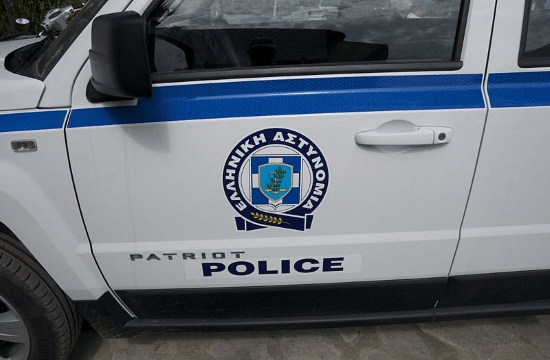
Greece: Mandatory Training of Police Officers in Animal Rights Begins in Greece.

Mandatory training of police officers in animal rights begins in Greece on Wednesday

Hellenic Police officers across the country will begin mandatory training in animal rights issues as of Wednesday, it was announced on Tuesday, ANA reports.

At least one police officer per police station will acquire the knowledge and skills to deal with cases related to animal abuse, be they strays, home pets, working or game animals, exotic species, and others, noted the police.

The task of training the officers has been undertaken by the instructors of Zero Stray Academy and the Zero Stray Pawject organization at no cost to the Greek state, in collaboration with the Hellenic Police’s education and continuing education directorates.

Regarding the number of violations of animal protection legislation in the first four months of 2023, 705 cases were drawn up, 138 people were arrested, and 659 fines totaling 3,317,800 euros were imposed.

Tornos News | Mandatory training of police officers in animal rights begins in Greece on Wednesday

Regards Mark

Iceland: End in Sight for Iceland’s Barbaric (Horse) Blood Farms.

Check out all of our past posts relating to this issue at:

https://worldanimalsvoice.com/?s=iceland+blood+farm

Click below on ‘Watch on YouTube’ to view videos.

End in sight for Iceland’s barbaric blood farms

11 May 2023

AWF

The EFTA Surveillance Authority (ESA) has ruled on the complaint logged in by Eurogroup for Animals and other animal protection organisations regarding blood farming in Iceland, and it is crystal clear: Iceland is in breach of EU rules on the protection of animals used for scientific purposes.

It is important to note that, as a member of the European Free Trade Association (EFTA) Iceland has to comply with the rules of the European Economic Area (EEA), most of which are aligned with those of the EU.

Following the findings of an investigation into Icelandic blood farms led by Animal Welfare Foundation and Tierschutzbund Zürich (AWF|TSB), Eurogroup for Animals, together with 16 animal protection organisations, decided to file an official complaint with the EFTA Surveillance Authority (ESA), arguing that Iceland did not properly apply its legislation on the protection of animals used for scientific purposes, which is derived from the EU Directive on the same topic. 

On Icelandic blood farms the blood of mares is collected to extract a hormone called  Equine Chorionic Gonadotropin (eCG), or Pregnant Mare Serum Gonadotropin (PMSG), which is used in industrial animal breeding to increase the reproductive performance of farmed animals. The semi-wild horses are subjected to violence, risk numerous injuries and repeated trauma. The amount of blood collected – five litres per week – exceeds any international guidelines existing on the topic. A more recent investigation by AWF|TSB demonstrated that nothing has changed since 2019. 

The argument brought up in the complaint was that blood collection for the production of eCG should not be approved by the Icelandic authorities as it does not respect the 3 Rs principle (Replacement, Reduction and Refinement) on which the relevant EU Directive is based, and thus the Icelandic law on the protection of animals used for scientific purposes. 

Indeed, according to this principle, animal experiments must, whenever possible, be replaced by alternative methods that do not involve live animals. In the case of PMSG, these alternatives exist: producers can rely on a number of hormone-free methods, authorised synthetic medicinal products, as well as on informed management techniques. The decision paves the way to further contest this cruel practice in the EU, where the relevant EU Directive is not properly enforced by all Member States.

ESA’s decision clarifies that we don’t need to discuss further what to do about blood farming, it is illegal under EU rules.

Blood farming is a double pain: mares suffer through violent and excessive blood collection so that animal farming can further intensify, with all the animal suffering that goes with it. We hope that after this, Iceland will put an end to this cruel practice. The upcoming revision of the EU animal welfare legislation also provides an opportunity for the EU to act: we call on the European Commission to use this opportunity to propose a ban on the production, the import and the use of PMSG in the EU.”

Reineke Hameleers, CEO of Eurogroup for Animals

Read more on products derived from equines. 

Regards Mark

UK: A Disgusting Government – The government has allowed animal testing for makeup ingredients to resume despite a 25-year ban. So People Campaign and Fight For What ?

Reproduced from a BBC article – link given at end.

Animal tests for makeup resume after 25-year ban

By Esme Stallard

Climate and Science Reporter, BBC News

5 May 2023

The government has allowed animal testing for makeup ingredients to resume despite a 25-year ban.

It changed a policy on animal testing to align with EU chemical rules, according to a High Court ruling.

The High Court said on Friday that the government was acting legally after a case was brought by animal rights activists.

More than 80 brands have said they are “dismayed” by the government’s new position.

A Home Office spokesperson told the BBC: “We are pleased that the High Court has agreed with the Government’s position in this case. The government is committed to the protection of animals in science”.

Animal testing for makeup or its ingredients had been completely banned in the UK since 1998. Animal testing had only been allowed if the benefits gained from the research outweighed any animal suffering, for example for medicines.

But in 2020 the European Chemicals Agency (ECHA), an EU agency which oversees chemical regulation, ruled that companies needed to test some ingredients used in cosmetics on animals to ensure they were safe for workers manufacturing the ingredients.

During the case it was revealed that since 2019 the government had been issuing licences for animal testing of cosmetic ingredients in line with EU chemical rules, which it retained despite leaving the EU in 2020.

This could include testing chemicals commonly found in foundations and concealers by forcing rats to inhale or ingest them.

It is not known how many such licenses were issued or to whom.

Cruelty Free International (CFI), which brought the case, argued this was illegal and in breach of the animal testing ban for makeup and its ingredients, which has stood since 1998.

Mr Justice Linden ruled in favour of the government, saying that the change in policy still met existing laws, although he said it was “regrettable” the public had not been informed.

The change in the government’s position has been heavily criticised by major beauty and cosmetic brands, including Unilever, Body Shop and Boots. Most major brands have long campaigned to end animal testing.

Cruelty Free International said it was “outrageous” that the government had effectively lifted the ban.

Christopher Davis, director of activism and sustainability at the Body Shop said they would “campaign vigorously” against the changes.

“Allowing animal testing for cosmetics would be a devastating blow to the millions of people who have supported campaigns to end this appalling practice,” he told the BBC after the ruling.

The ingredients that may be tested on animals include homosalate – a common sunscreen ingredient used already in many foundations and skincare products.

In low doses homosalate is safe but in higher concentrations the evidence for its impact on the human immune system are inconclusive.

Manufacturers can now apply for licenses to undertake animal testing before production begins, to ensure the safety of workers. But they still cannot undertake any animal testing to check the safety of the makeup for consumers. This should be done using other methods.

Mr Justice Linden said that nothing was stopping the government from introducing an absolute ban on animal testing of makeup products if it desired.

Cruelty Free International CEO Michelle Thew said: “The case shows clearly that [the government] was prioritising the interests of contract-testing companies over those of animals and the wishes of the vast majority of British people who are strongly opposed to cosmetics testing.”

CFI said it would appeal the decision made by the court and ask the government to reinstate the complete ban in the UK.Dr Julia Fentem, head of the safety and environmental assurance centre at Unilever – one of the world’s largest cosmetic companies – said tests potentially required under the new policy were “unnecessary”, and that safety tests could be carried out without animal involvement.

A new chemicals strategy is expected to be published this year outlining the government’s position on the use and testing of chemicals in the UK – which may include further guidance to cosmetic companies.

Animal tests for makeup resume after 25-year ban – BBC News

Also read  Animal testing for make-up restarts in UK after 25-year ban (msn.com)

Regards Mark

Adidas called on to drop kangaroo leather after Nike and Puma announce phase-out.

Adidas called on to drop kangaroo leather after Nike and Puma announce phase-out

21 April 2023

LAV

Eurogroup for Animals and 6 animal welfare and conservation organisations sent a letter to the CEO of Adidas, asking the company to stop the production of shoes using kangaroo leather.

This initiative follows the encouraging announcements by Nike and Puma to end the use of “k-leather” in their lines.

In Australia 1.6 million kangaroos are killed each year, raising serious animal welfare concerns. In addition, kangaroo populations are already suffering from the consequences of climate change such as droughts, floods and bushfires while the methods to estimate populations are questionable. 

Kangaroo derived products, including leather, are exported to various regions including the European Union. The EU represents an important market for athletic shoes, and several brands continue to produce football shoes made of kangaroo leather, also called k-leather. Athletic shoes made from synthetic materials have proven high performance, making the use of kangaroo leather totally dispensable.

In March, Puma and Nike announced they will end the production of athletic shoes using kangaroo leather. We welcome this crucial shift for the protection and conservation of this iconic Australian species. However, Adidas continues to produce and sell k-leather shoes, despite the serious concerns raised by animal welfare organisations over cruel methods used to kill kangaroos, and despite EU consumers’ demands for cruelty-free products. 

Eurogroup for Animals and our members LAV, GAIA, Voiceless and World Animal Protection, as well as Kangaroos Alive and Pro Wildlife, are therefore calling on the CEO of Adidas to discontinue the use of kangaroo leather in the brands products. 

Read the open letter to Bjørn Gulden, CEO of Adidas.

Regards Mark

Why do people enjoy wearing violent suffering and decomp?

With thanks to Stacey – Mark

Go here and listen:

Why do people enjoy wearing violent suffering and decomp? | Our Compass (our-compass.org)

Why do people enjoy wearing violent suffering and decomp?

APRIL 18, 2023

Source Real Fur Film

Actions

Please sign petition HERE to Ban Fur Farms in Canada

Related, please sign petition demanding department store Dillard’s be fur-free HERE

You can also send Dillard’s a message via their Contact Us page or via their floating Feedback button on the right-hand side of their site

Please visit HERE to reserve your free ticket for the private screening of Real Fur: “A documentary uncovering the true cost of fur in the fashion industry.”

Background

Fur farms are not only cruel to animals but also pollute the planet and cause zoonotic diseases. Contrary to the belief that real fur is “natural” and better for the environment, fur production actually destroys the environment in various ways. 

Over 75 percent of zoonotic diseases (according to the WHO) are caused because of close proximity to animals kept on farms.

In November 2021, the Animal Save Movement joined a global movement to ban fur farms. We took part in the #MakeFurFarmsHistory campaign which included protests in over 10 countries and a letter-writing campaign to ban fur farms in Canada. 

Thanks to these actions and the support of the community, a bill was introduced into Canada’s parliament that calls for a federal ban on fur farms. 

Curious to learn more about fur in the fashion industry? Want to find out how you can take action to help animals on fur farms? Join us and our friends at Arise Productions for the private screening of Real Fur – a documentary uncovering the true cost of fur in the fashion industry.

See the award-winning documentary film, meet director Taimoor Choudhry, and hear from prominent animal rights leaders: Camille Labchuk, Lesley Fox, Ashley Byrne, and Jenny McQueen, who are part of a discussion panel.

When: April 25 at 4:30PM PDT/ 7:30PM EDT
Where: Online on Eventive 
How: Reserve your free ticket HERE

And FYI: for those people who are so superficial and need to demonstrate to the world their healthy portfolios, do what other people do and buy a sports team or have a school named after you, there is ZERO legitimacy to fur. ZERO.

And for others with lesser incomes who buy “fur-lined” products, remember that animals suffer just as much for a “little” fur, they aren’t just a “little” dead. And for those who opt for faux fur, it’s important to note that many times, real fur is actually disguised as fake fur when real fur costs less (do remember that the life of the animal is priceless), please see The Guardian’s How To Tell If Faux Fur Is Actually Real Furthermore, some items are not required to include labels that designate fur as real or faux. Just leave it out altogether.

I became vegan after watching a documentary on fur, it was after seeing a dog tortured for his fur that I became aware that ALL animal exploitation is related, the cows who are forcibly impregnated overandoverandoverandover until their abused bodies no longer produce milk at a profitable level and who are then violently killed, suffer as mink do, who are forced to endure squalor, neglect, and disease, and then who are agonizingly gassed for their fur.

… In other words, don’t feign shock about fur if you’re still eating animals, the foundation of animal exploitation fuels and includes ALL animal exploitation, if you eat “bacon”, you’re deliberately supporting animals being anally electrocuted so their fur isn’t damaged during the “killing phase” of “fur farming”. And the US fur industry (used to if no longer) reprehensibly promotes that, since they kill animals onsite, they’re more “humane” than “food farming” slaughterhouses where animals are forced to endure further trauma via transport. Imagine using the death industry as a benchmark of ethics for your death industry.

Why do people conveniently neglect the THIRD option, which is to NOT SUPPORT ANY?

Because it’s really sad that I have to say this: stealing another’s fur is depraved, nothing but selfish, privileged, greedy, and barbarically cruel.

There is a special corner of hell reserved for those humans. Enjoy the bonfire. SL

Download Your FREE Vegan PDF HERE

Order a FREE vegan kit HERE

Dairy-Free Info HERE

Take the Dairy-Free Challenge HERE

Click HERE for more Dairy-Free

Fish alternatives can be found HERE

Learn about eggs HERE

Find bacon alternatives HERE and HERE

Take PETA’s Cruelty-Free Shopping Guide along with you next time you head to the store! The handy guide will help you find humane products at a glance. Order a FREE copy HERE

Searching for Cruelty-Free Cosmetics, Personal-Care Products, Vegan Products, or more?
Click 
HERE to search.

Free PDF of Vegan & Cruelty-Free Products/Companies HERE

Click HERE to find out How to Wear Vegan

Want to do more than go vegan? Help others to do so! Click below for nominal, or no, fees to vegan literature that you can use to convince others that veganism is the only compassionate route to being an animal friend:

PETA HERE

Vegan Outreach HERE

Get your FREE Activist Kit from PETA, including stickers, leaflets, and guide HERE

People see what justifies or suits their choices
Oblivious to the suffering of others
And to those of more
Enlightened voices

Karen Lyons Kalmenson

Regards Mark

EU: New statistics shows science in the EU still impacts on millions of animals.

7 April 2023

In the year of the onset of the pandemic, many scientific projects that had planned to use animals were cancelled or postponed, though a number of new studies involving animals were carried out for projects studying COVID-19.

The European Commission has published its statistical report on the use of animals for scientific purposes in the 27 EU Member States and Norway in 2020. This is the first year that data from the United Kingdom – a major user of animals – are no longer included. Four of the 12 countries that saw an increase in the number of animals used, attribute the increase to additional research projects related to COVID-19. 

In 2020, 7,938,064 animals were used for the first time in research, testing and education in the EU-27 and Norway. Although this represents a decrease of 7.5% compared to 2019, multiple factors relating to the COVID-19 pandemic makes comparisons with previous years difficult. National measures due to the COVID-19 pandemic were at least partly responsible for the decrease in the number of animals used for scientific purposes in 11 Member States. 1.8 million animals used for scientific purposes were genetically altered, including mice, zebrafish and other species of fish, rats, amphibians, domestic fowl, rabbits, and pigs.

Another 686,628 animals were reported to be used for the creation and maintenance of genetically altered (GA) animal lines, representing an increase of 4% from 2019. In contrast to previous years, marmosets and tamarins were not reported to be used for the creation of new GA animal lines in 2020. It should be noted, however, that animals used for the maintenance of GA animal lines not displaying a harmful phenotype or not genotyped using an invasive method remain outside the scope of the annual statistical reporting. Also, the European Commission acknowledges that the accurate reporting of animals involved in the maintenance of existing GA lines continues to be particularly challenging.

The report describes considerable new increases in uses of many species. The use of horses, donkeys and cross-breeds increased by 176%, and the use of cats continued the upward trend, increasing by a further 15%. The use of hamsters and other carnivores increased by 66% and 59% respectively. The use of dogs and non-human primates, however, decreased by 16% and 10% respectively. There was also a significant decrease of 90% in the use of cephalopods, which had seen a major increase in 2019.

The main species used for scientific purposes were mice, fish, rats and birds, which together represented 91% of the total number of animals. As in previous years, more than 70% of animals were used for research purposes, of which approximately 40% were used for basic research and 30% for translational and applied research. A further 17% of uses of animals were for regulatory purposes to satisfy legal requirements. The percentage of uses that caused ‘severe’ suffering remained around 10% (796,750 uses). 

Non-human primates continue to be used in the largest numbers to satisfy regulatory requirements for medicinal products for human use (59%), and also for routine production, mostly for blood based products (13%), for studying human infectious disorders (11%), and for other basic research (4%). 81% of the non-human primates used for scientific purposes were born in Asia and Africa, before being transported to laboratories in the EU. Although the Directive encourages movement towards only using non-human primates who have been bred, ultimately, in self-sustaining colonies, the proportion of non-human primates coming from self-sustaining colonies is still low, and decreased by 15% from the previous year. However, inaccurate reporting of information, and a misunderstanding of the term ‘self-sustaining colony’ may have resulted in some fluctuation in numbers over time. 

The use of an animal in any procedure where a validated alternative method, that either avoids the use of animals altogether, or reduces their use and suffering, will always be of particular concern. Nearly 42,000 mice were used in 2020 for the production of monoclonal antibodies using the mouse ascites method, mainly in France (95%). The continued use of this method is of serious concern, even more so as the figure actually represents an increase of 12% from the previous year, and because alternative approaches are available to replace the mouse ascites method. A more positive trend is seen in the uses of rabbits for pyrogenicity tests, which decreased by 21%, but it is clear that more efforts should be made to speed up the transition to non-animal methods.

As in previous years, Germany, France, Spain, Italy, Belgium, the Netherlands, Sweden and Denmark remain the EU Member States with the highest number of animals used for scientific purposes, with more than 5.3 million animals used between them in 2020. However, a recent opinion poll carried out in these 8 Member States highlighted the public’s strong desire to accelerate the full replacement of animals used for scientific purposes and transition to non-animal science.

Regards Mark