Mountain Rescue dog honoured for 11 years of service
A retired search dog who was believed to have been the oldest working Mountain Rescue dog in the UK is being honoured for her service.
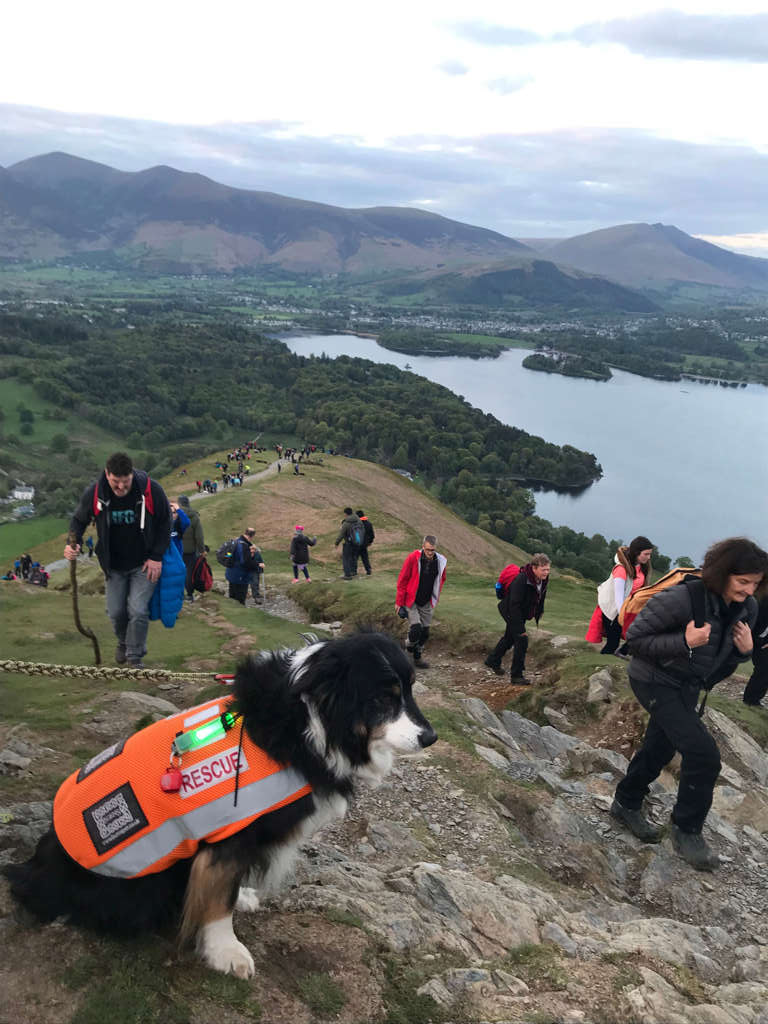
Border collie Skye’s dogged devotion saw her carry out 200 searches during 11 years working in the Lake District, before retiring in 2020 aged 14.
On Thursday, Skye will be given the PDSA Order of Merit, described as an “animal OBE”, for her work.
During her service, Skye and handler John Leadbetter, 49, carried out searches in all weathers to help locate missing people.
Mr Leadbetter said: “Skye means everything to me, she’s my best friend on the fells and we’re life-long partners.
Skye checks hikers to ensure their safety.
Her long and distinguished career has not only seen her protect and help people in danger, her ambassadorial work has helped to raise important funds and increase awareness
PDSA director general Jan McLoughlin
“To see her receive the PDSA Order of Merit is a truly humbling and touching experience, and it’s a wonderful recognition of the time and hard work that search dogs and their teams dedicate to mountain safety.“To say we’re chuffed is an understatement!”
Skye is the 36th animal to receive the PDSA Order of Merit, which was set up by the charity in 2014 to recognise animals for their exceptional contribution to society.
PDSA director general Jan McLoughlin said: “We’re incredibly proud to be honouring Skye with our PDSA Order of Merit.
“Her exceptional skills and outstanding devotion above and beyond that of normal companionship make her a very worthy recipient, and we feel this is a fitting tribute to her lifetime of dedication and hard work.
“Her long and distinguished career has not only seen her protect and help people in danger, her ambassadorial work has helped to raise important funds and increase awareness of the incredible work these Mountain Rescue teams perform.”
Skye began her training as a puppy with Bowland Pennine Mountain Rescue Team and went on to qualify with the Lake District Mountain Rescue Search Dog Association in 2009.
She attended searches all over the Lake District as well as going further afield to Lancashire, the Pennines and Scotland.
Now almost 16, she is enjoying her retirement with Mr Leadbetter and his family, who say she still loves to get out on the hills and fells but at a slightly slower pace these days.
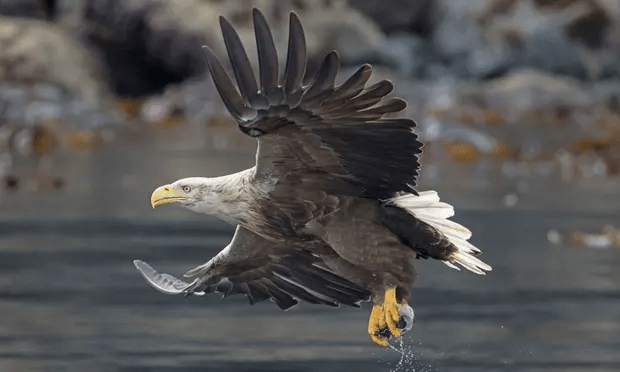
‘Living in a nature-depleted country, seeing such a large predator in the wild takes the breath away.’ A white-tailed eagle, the UK’s largest bird of prey. Photograph: Mike Crutch/Forestry England/PA
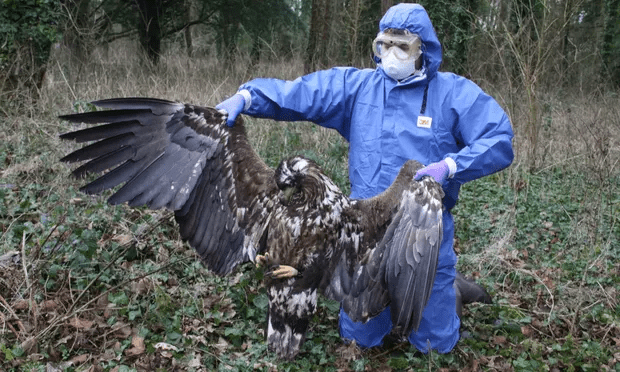
Dorset police launched an investigation into the eagle’s death after it was found on an unnamed estate in January. Photograph: Dorset Police/PA
Dead eagle found in Dorset was poisoned but case closed, police confirm
Rare white-tailed eagle had high level of rodenticide in its system but no further police action will be taken
A rare white-tailed eagle found dead in Dorset was poisoned, police have confirmed – but they have shut the case, in a decision the RSPB has called “baffling”.
The eagle was one reintroduced on the Isle of Wight, where a successful programme has been taking place since summer 2019. The white-tailed eagles had become extinct in the UK in the early 20th century after they were poisoned and shot by gamekeepers.
Those who run shoots are often opposed to birds of prey being in the area, as when they fly over a shoot, the birds scatter. They also occasionally prey on game birds.
The eagle was found dead on an unnamed estate in Dorset in January, and police launched an investigation into its death. Many conservationists in the area suspected it had been poisoned.
The toxicology results have confirmed the eagle had high levels of brodifacoum, a rodenticide, in its system. But police have closed the investigation and will not be naming the estate on which the dead eagle was found.
A spokesperson for Dorset police said: “An investigation under section 1 of the Wildlife Countryside Act 1981 was carried out in conjunction with the RSPB, Natural England, National Wildlife Crime Unit and the Roy Dennis Wildlife Foundation. A detailed examination and tests have been carried out on the bird, which were inconclusive, and it has therefore not been possible to confirm that any criminal offence has been committed.
“While high levels of brodifacoum were detected, it has not been possible to establish whether this was as a result of a deliberate act or due to secondary rodenticide poisoning. As a result, no further police action will be taken in relation to this report.”
An RSPB spokesperson said: “We are completely baffled by the decision of Dorset police to end the white-tailed eagle investigation so prematurely.
“Brodifacoum – the rodent poison that killed the eagle – is highly toxic and it is clear that it was either used incompetently or with intent to kill the eagle – either way an illegal act.”
Regards Mark
*** Additional information relating to the above: ***
Excellent article from ‘The Guardian’ (London as always:
‘Loder told the Guardian he did not feel he was influenced by the money from the estate, and his distaste for eagles in his constituency was because he had fears for their impact on farming. He said he had spent much time campaigning for animal welfare since being elected’.
MP who said eagles not welcome in constituency received funds from shooting estate
This article is more than 1 month old
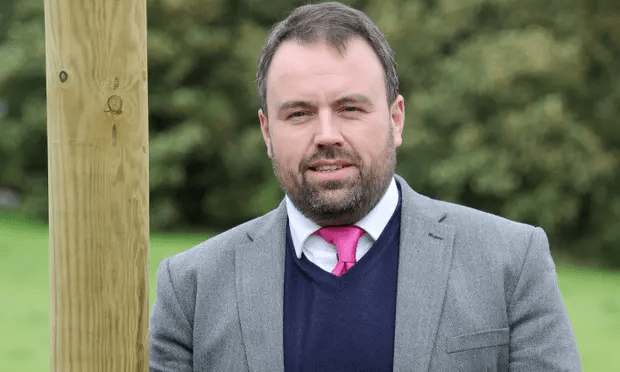
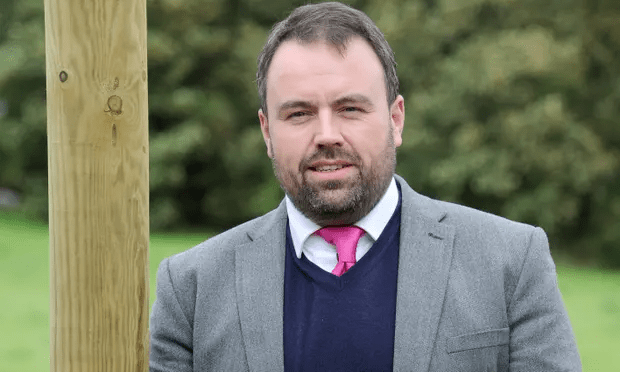
West Dorset MP Chris Loder caused outrage when he seemed to imply police should not prioritise eagle death
A Conservative MP who said eagles are not welcome in his constituency had his election campaign funded by a shooting estate, the Guardian can reveal.
The West Dorset MP, Chris Loder, caused outrage when he seemed to imply police should not be prioritising the investigation of the recent death of an endangered white-tailed eagle, found dead on an estate in his constituency.
After police confirmed there was a multi-agency investigation into the death of the eagle, including a toxicology report, Loder said: “Dorset is not the place for eagles to be reintroduced. I’m not challenging government for more money for Dorset so it goes on this.” He added that officers should be focusing on crimes such as those involving county lines gangs instead.
The eagle was one reintroduced on the Isle of Wight, where a successful programme has been taking place since summer 2019. The eagle went extinct in the UK in the early 20th century after they were continually poisoned and shot by gamekeepers.
Loder’s 2019 election campaign benefited from a £14,000 donation from the Ilchester Estates, which runs shoots in his constituency. Those who run shoots are often opposed to birds of prey being in the area, as when they fly over a shoot, the birds scatter, disappointing those who paid to kill them. They also occasionally predate on game birds.
The estates are run by Charlotte Townshend, an aristocrat worth almost £500m who has both farming and shooting interests. She also says she is the only person other than the Queen who is allowed to own swans.
Neither Townshend nor a spokesperson for the Ilchester Estates could be reached for comment, and there is no suggestion the eagle died on their land, nor because of anyone associated with the estate. The police have not as of yet revealed where the eagle was found.
Loder told the Guardian he did not feel he was influenced by the money from the estate, and his distaste for eagles in his constituency was because he had fears for their impact on farming. He said he had spent much time campaigning for animal welfare since being elected.
Loder added: “My views on sea eagles come from me being a farmers’ son and my continued best efforts to represent the needs of West Dorset’s farming community. I am not convinced that sea eagles being here are in their best interests. No briefing or consultation has taken place with me or others that I know of by Natural England, campaigners, nor the RSPB to explain how these risks are managed, nor to inform the farming community that indeed these birds are in Dorset.
“My policy views are formed in the best interests of the rural community I represent, which is also my home and where I was brought up. Any suggestion that I have been unduly influenced in this view is completely wrong.”
The Guardian understands that the government is considering action to stop raptor persecution on shooting estates by tightening licences in problem areas. There were 137 cases of confirmed raptor persecution in 2020, according to the RSPB.
Rebecca Pow, an environment minister, said: “There is always more we can do to tackle wildlife crime and we will carefully consider all of the UN’s recommendations – including those relating to raptor persecution – to help us build on the positive progress we have already made. Defra [the Department for Environment, Food and Rural Affairs] sits on the police-led Raptor Persecution Priority Delivery Group, which takes forward activities to raise awareness and facilitate intelligence and incident reporting, leading to increased prevention and enforcement activity.”
Luke Steele, the executive director of Wild Moors and a campaigner against raptor persecution, urged that this crackdown be implemented “without delay”, adding: “Birds of prey including eagles, hen harriers and red kites have a rightful place and an important ecological role in the British countryside. To persecute them to preserve game birds for sports shooting flies in the face of the 68% of the public who support reintroduction of birds of prey.”
The sight of a magnificent white-tailed eagle has once again become common for those lucky enough to live in the flight path of those recently introduced to the Isle of Wight. Thousands of Britons have seen and heard the giant two-metre wings beating overhead, and seen the cruel-beaked birds dramatically dive for fish. For us, living in a nature-depleted country, seeing such a large predator in the wild takes the breath away.
White-tailed eagles were driven to extinction in Britain in the early 20th century, and persecution by landowners was the leading cause. Shot at and poisoned by those hoping to protect their game birds, Britain’s largest bird of prey didn’t stand a chance.
Yet thanks to the work of conservationists, these raptors are now frequently spotted in the skies above the Isle of Wight and Scotland – and sometimes even further afield. It’s the result of years of breeding programmes and negotiations with the Scottish and English governments.
But the tragedy that originally robbed us of perhaps our most awesome airborne predator looks as though it could repeat itself. Two of these giants have now been found dead on estates in Dorset and Sussex. While the cause of death has not been established, the multi-agency police investigation suggests that foul play could have been involved.
Currently, officers are conducting toxicology reports, suggesting they believe the eagles could have been poisoned.
Sadly, this is all too common. In 2020 there were 137 confirmed incidents of raptor persecution, according to RSPB figures. However, these are only instances where a body is found quickly enough to determine the cause of death. Many more tagged birds of prey simply disappear, never to be seen again. A 2019 study found that of 58 hen harriers tagged over 10 years, 72% were either “confirmed to have been illegally killed or disappeared suddenly with no evidence of a tag malfunction.”
Gamekeepers have previously been found to be behind the poisoning of our raptors, as they prey on grouse and other birds stocked by estates for shooting parties. A bird of prey soaring above a shoot also makes the birds scatter, disappointing those who have paid to kill them. After a series of poisonings of rare white-tailed eagles on grouse estates in Scotland, the Scottish government took action, suspending general shooting licences in the hope it would reduce these crimes. But sources at the Home Office have told me it is very difficult to secure prosecutions for the crime of taking an endangered bird out of the sky.
And for many of the Conservative MPs who represent constituencies full of shooting estates and the homes of the landed gentry, wildlife crime is not a priority. Chris Loder, MP for West Dorset, has said that eagles are not welcome in his constituency and suggested that the police shouldn’t even be investigating their deaths.
Member of Parliament (MP) Loder says he does not feel he was influenced by the money he received from the estate. Photograph: Finnbarr Webster/Getty Images
He said: “Dorset is not the place for eagles to be reintroduced. I’m not challenging government for more money for Dorset so it goes on this. I don’t condone this at all, but I want Dorset police to focus on county lines rather than spend time and resources on this.” The local wildlife crime team pointed out to their representative that county lines gangs are not in their jurisdiction, that they work overtime to help Britain’s wildlife, and that wildlife crime is often linked to other serious crimes, including gun offences.
What message is Loder sending to those who want to kill wildlife in west Dorset? The MP has essentially given them a free pass, and signalled that eagles are not welcome in the skies above his constituency. And, despite what Loder says, eagles were not reintroduced specifically to Dorset; rather they flew out of the constituencies of wildlife-friendly MPs into those represented by the likes of Loder.
His constituents could benefit from the eagles if they were to be reintroduced – a study found that those released on the Isle of Mull in Scotland brought millions to the economy, as people travelled to see the birds and spent money in local businesses.
But his attitude perhaps comes as no surprise. Of the 10 biggest landowners in Dorset, eight are country estate owners, and many of these host shoots. This is not to say they had anything directly to do with the raptor deaths, but it perhaps shows why the MP is likely to consider the traditional concerns of the landed gentry over the right of everyday British people to enjoy wildlife.
The problem is, there is no way to meaningfully help these birds recover and properly repopulate in the UK if there are no real consequences for those who kill them. Unless those who own estates are properly held to account for poisoned birds found on their land – perhaps having their shooting licences suspended until they can get a handle on crimes occurring under their noses – this will likely keep happening.
There are few things that make me shake with anger more than the idea of a rare and magnificent bird curling up to die, a burning stomach full of poison, never to fly again. But even those who do not feel so strongly about this matter should take issue with the fact that criminals are getting away with destroying our wildlife and the country’s natural legacy, and we are seemingly powerless to stop it.
Until those who own estates are held to account for what happens on their land, I am afraid history may repeat itself and we may once again see our largest bird of prey silently slip into extinction.
Helena Horton is an environment reporter for the Guardian
WAV Comment: well said Helana; with you and your comment all the way.
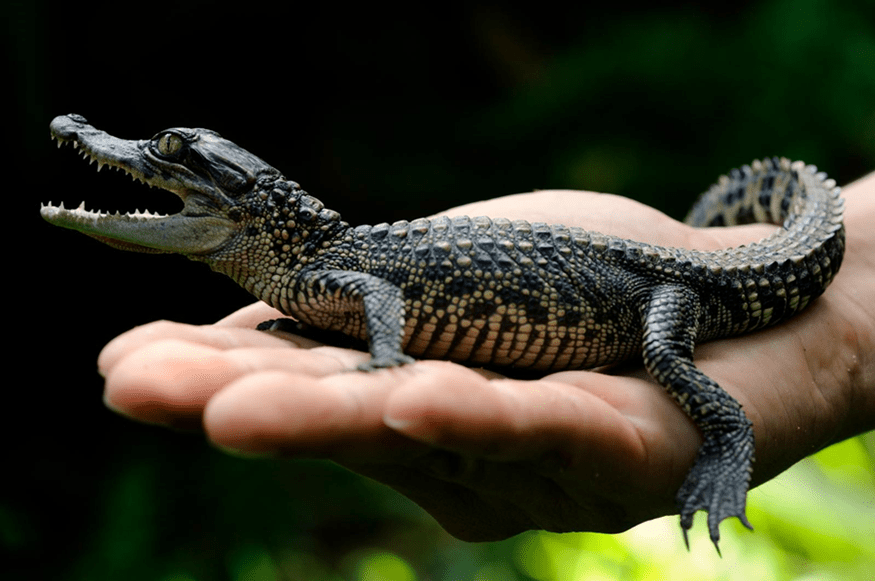
Siamese crocodiles are one of the rarest reptiles on Earth. Wiped out from 99% of their former range. Driven to the brink of extinction.
They have a truly tragic past – taken from the wild in their hundreds and cross-bred with other crocodile species to keep up with a rampant demand for the international skin trade. There are now just a few hundred left.
In fact, they were thought to be extinct until they were rediscovered in Cambodia in 2000 in a series of surveys led by FFI.
They are practically the definition of a neglected species.
Well, that is until a few years ago.
Thanks to your incredible support – we are starting to turn their fate around. FFI and our local partners are carrying out a crucial captive breeding programme in Cambodia, releasing hundreds of Siamese crocodiles into the wild.
Our aim is to double the wild population over the next few years – this could provide an incredible lifeline for the species.
This is ground-breaking news – providing evidence that released Siamese crocodiles are not only able to survive in the wild, but also nest, raising hope for Siamese crocodile conservation across Cambodia.
And the good news doesn’t stop there – last year, a team of community wardens working with FFI to protect Siamese crocodiles in Cambodia’s Chhay Reap received a prestigious international ranger award for their dedicated conservation work. We still have a long way to go to secure the future of these rare reptiles, but this is certainly a great step in the right direction. With your support, we can continue to fund our crucial captive breeding and monitoring programme, helping these incredible creatures to thrive in the wild once again.
Video Description: “Shine On You Crazy Diamond” is a nine-part Pink Floyd composition written by Roger Waters, Richard Wright and David Gilmour. It is a tribute to former band member Syd Barrett. The song was first performed on their 1974 French tour, and recorded for their 1975 concept album Wish You Were Here. The song was intended to be a side-long composition (like “Atom Heart Mother” and “Echoes”), but was ultimately split into two parts and used to bookend the album, with new material composed that was more relevant to this song, and to the situation in which the band found themselves.
Enjoy the video and superb music from one of the best.
.. it would appear that given the news today, 29/3/22; including a decision by Natural England to designate the location as a ‘Site of Special Scientific Interest’ (SSSI) – have led developers to withdraw their planning application.
The long-awaited entertainment destination was set to open in 2025 – occupying a 1,245 acre site.
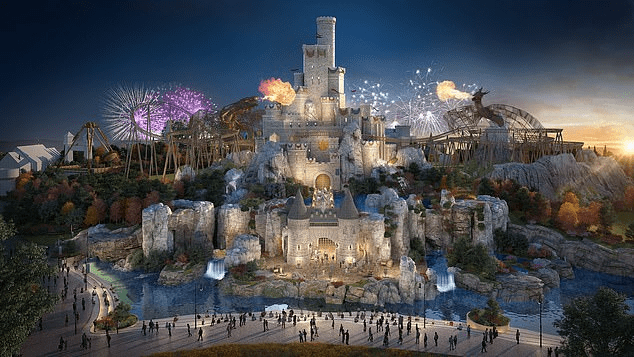
Recent artist impressions showed flood lights illuminating a huge medieval-themed castle and lava waterfalls.
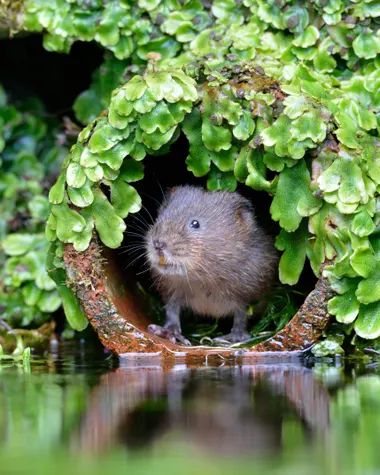
This comes after the brownfield site – the size of 136 Wembley Stadiums – was deemed a SSSI by Natural England due to its abundance of wildlife including otters, water voles, and rare birds and insects.
Following this decision, in a letter sent to the Infrastructure Planning Inspectorate late last year, Gerbeau said there would not be ‘material changes’ to the resort’s application – instead suggesting there would be ‘subtle changes in the green infrastructure strategy’.
But it appears that bosses have decided to reassess the situation altogether.
However Gerbeau is confident that bosses will resubmit their application towards the end of the year.
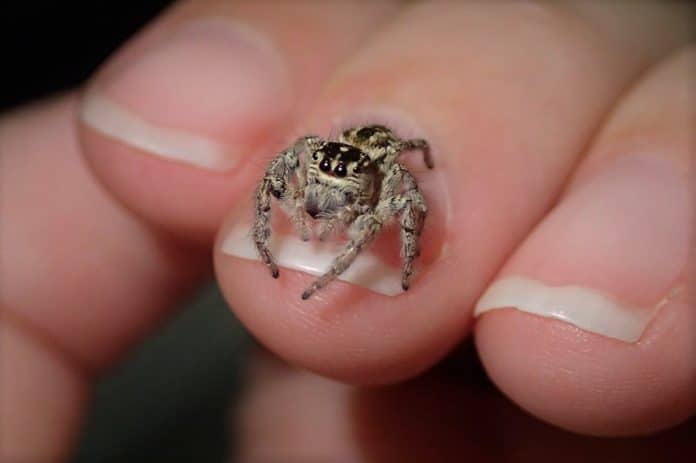
But at the moment, the tiny 1cm jumping spider, the water voles, the common Buzzard, plus a host of other wildlife at this SSSI have gained more time for environmentalists and campaigners to act in their support – which of course we very much welcome.
There is much more info, including graphics, in the following article links which I have provided.
Regards Mark (and all the wildlife)
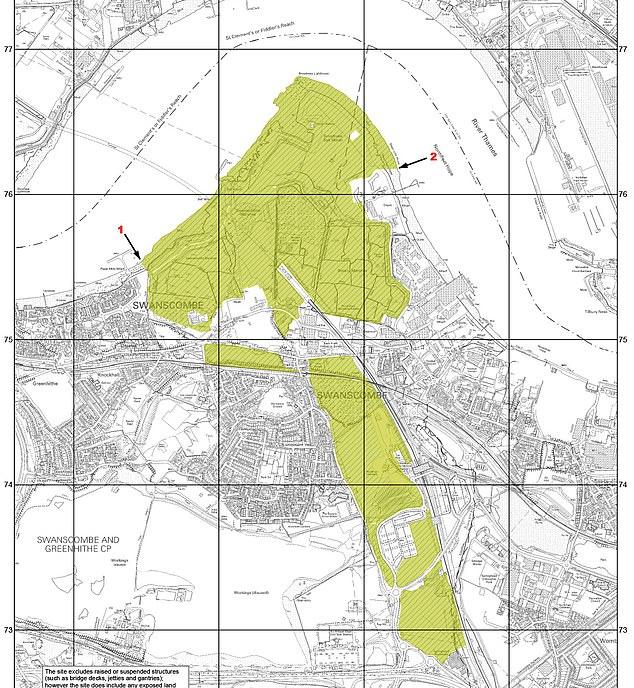
Environmentalists fear the proposed London Resort mega-attraction, dubbed the ‘British Disneyland’, on the Swanscombe Peninsula, Kent, would harm wildlife – including a critically endangered jumping spider
The Swanscombe Peninsula, Kent (pictured above) was designated a site of special scientific interest earlier this year
News 29/3/22:
Plans for £3.5billion British Disneyland theme park in Kent are DROPPED after delays caused by green activists and planning battle with furious locals
But numerous obstacles – including a decision by Natural England to designate the location as a Site of Special Scientific Interest (SSSI) – have led developers to withdraw their planning application.
Just weeks earlier, the BBC and ITV both pulled out of the plans amid concerns from wildlife experts over the impact of the park on a tiny spider just 1cm long.
The backlash from nature lovers around the distinguished jumping spider – a critically endangered species found in just one other part of the UK – killed off both broadcasters’ interest in the scheme.
Chief Executive of the London Resort, PY Gerbeau, said today: ‘In the best interests of the London Resort, we are withdrawing the current application; as a result of the classification of Tilbury as a Freeport which has meant revisions are required in moving the ferry terminal from Tilbury to Grays.
A colossal theme park on the outskirts of London has been derailed, in a temporary victory for environmental campaigners.
Plans for a park big enough to rival Disney – covering land equivalent to 136 Wembley Stadiums – have been in the works since 2014, and a planning application hearing was due to start today.
But the London Resort company announced it is withdrawing its current application for the park on the Swanscombe peninsula on the Thames in North Kent – an area that was designated a ‘site of special scientific interest’ (SSSI) last year because of its exceptional range of wildlife.
Plans to build a £3.5 billion theme park in the UK to rival Disneyland were today dropped after a series of delays caused by green activists and a planning battle with furious locals
I know this area very well; having been born near to Dartford, one of the ‘local’ towns.
When I was a youngster, I used to play football on an area which is now under threat by this proposal.
This is a report from the ‘Guardian’ newspaper dated 26th March 22. It is great to see that the tiny ‘jumping spider’, around only 1cm large, could be amongst other fauna and flora which pulls the plug on Frisbeeland. Fingers crossed.
But we are all to aware of politics and the work of lobbyists. When we need them most to protect endangered species; sites of ‘Special Scientific Interest’ suddenly get dismissed and overlooked in attempts to get the bulldozers and cranes moving in.
Who knows what will happen here very soon; but as a local; I know that many people are opposed to the project; with them rather watching the water voles and common buzzards flying overhead, in preference to snow white and all the other aliens which could possibly make this site their home.
Just for the record; Swanscombe, was thee site where ‘Swanscombe Man’ was found – Swanscombe – Wikipedia – Bone fragments and tools, representing the earliest humans known to have lived in England, have been found from 1935 onwards at the Barnfield Pit about 2 km (1 mile) outside the village. This site is now the Swanscombe Heritage Park. Swanscombe Man (now thought to be female) was a late Homo erectus or an early Archaic Homo sapiens.[2] According to the Natural History Museum, however, the remains are those of a 400,000-year-old early Neanderthal woman.
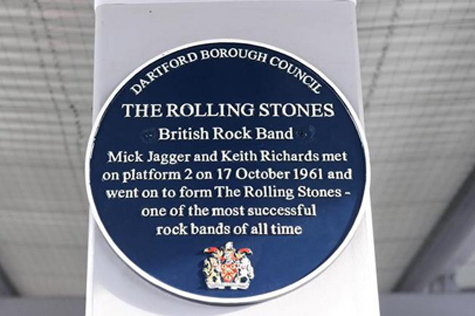
And, being an old Rocker, Dartford was the town where Mick Jagger and Keith Richards first met (at the station) and went on to form the ‘Rolling Stones’. Mick was a student at the LSE (London School of Economics); central London being about 20 miles away. There is a plaque at Dartford station to celebrate the first meet.
Wild horses, tiny jumping spiders, marsh harriers etc; being close to central London, there are times when the right decisions need to be made for environmental protection, rather than the plastic popcorn facility that some wish to see.
We await the investigation results with interest.
Personally, give me the jumpers, fliers and wild horses any time !
Regards Mark (WAV)
Species such as the water vole live on the peninsula. Photograph: Our Wild Life Photography/Alamy
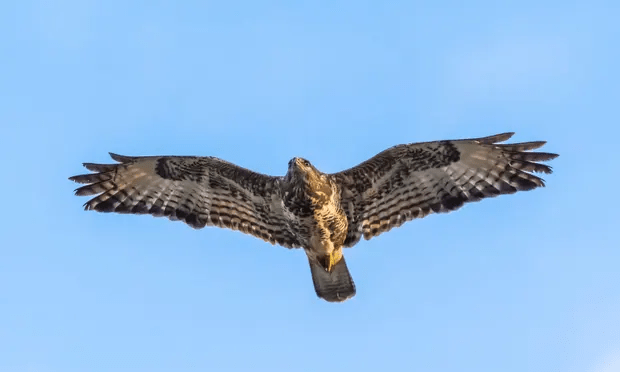
Campaigners say animals such as the common buzzard will lose their homes if the park is built. Photograph: Geoff Smith/Alamy
Evan Bowen-Jones, chief executive of Kent Wildlife Trust, said that if built, the theme park would represent one of the single biggest losses of protected land in the UK. “We would lose an urban oasis – home to species that range from jumping spiders to marsh harriers – for plastic dinosaurs, fairground rides, and yet more gridlock and pollution at a time when the importance of nature to human wellbeing has never been clearer,” he said last week.
Rollercoasters v water voles: ‘Disney-on-Thames’ plan could devastate wildlife
Proposed theme park the size of 136 Wembleys will threaten protected species and local jobs, say campaigners
It promises to be one of Britain’s most unusual planning battles. On one side is an array of endangered wildlife that includes a species of jumping spider. On the other are backers of a theme park that they claim will rival Disneyland in its size and ambition.
The park, called the London Resort, would be built on the Swanscombe peninsula on the Thames, near Gravesend, where it would cover land equivalent to 136 Wembley stadiums and would include themed rides, a water park, conference venues, hotels and a shopping centre.
However, the project is highly controversial – as will be revealed this week when preliminary hearings are held. Crucially, the theme park is being proposed as a “nationally significant infrastructure project” (NSIP) – a designation usually reserved for major roads, power plants or airports.Species such as the water vole live on the peninsula. Photograph: Our Wild Life Photography/Alamy
NSIPs are finally approved or rejected by the government, not by local authorities, which has raised fears that the decision over the fate of the London Resort is being moved away from community politicians and handed to ministers. “It is a real concern,” said Donna Zimmer, of the Save Swanscombe Peninsula campaign.
In addition, a large chunk of the peninsula has recently been designated a “site of special scientific interest” (SSSI) because of its wide range of rare plants and wildlife.
These include marsh harriers, spoonbills, otters, a wide variety of orchids, and more than 1,700 invertebrate species, including a quarter of the UK’s water beetle species and more than 200 species that are considered of conservation importance.
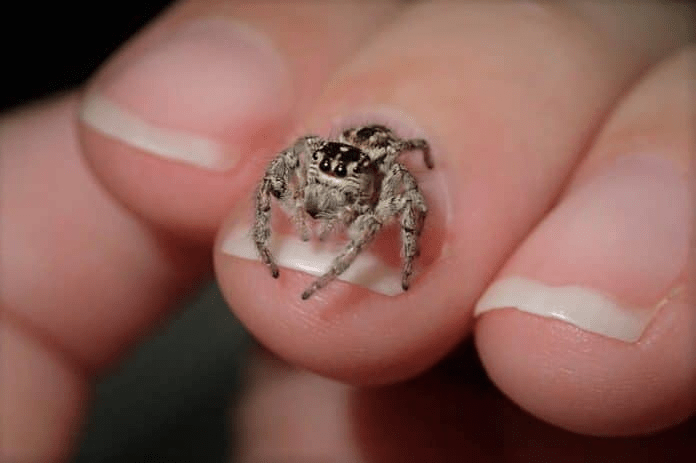
For good measure, the peninsula is one of only two places in the UK where the critically endangered distinguished jumping spider – Attulus distinguendus – has its home. The distinguished jumping spider is tiny (about 1cm long) and does not spin webs to catch prey but uses its excellent eyesight and an ability to leap distances of more than 10 times its own length to bring down its quarry.
The prospect of a theme park being built on one of only two sites in the UK where Attulus distinguendus is found, and which also supports many other key species, has outraged conservationists. Evan Bowen-Jones, chief executive of Kent Wildlife Trust, said that if built, the theme park would represent one of the single biggest losses of protected land in the UK. “We would lose an urban oasis – home to species that range from jumping spiders to marsh harriers – for plastic dinosaurs, fairground rides, and yet more gridlock and pollution at a time when the importance of nature to human wellbeing has never been clearer,” he said last week.
The London Resort was originally proposed in 2014 and has been subject to widespread delays since then, hold-ups that have infuriated the project’s opponents as well as local MP Gareth Johnson, who initially backed the scheme but is now opposed to it.
“Many of us were excited when this proposal was made public,” said Johnson, the Conservative MP for Dartford. “There could have been huge benefits to the area, if the project was approached in the right way. Instead, we have seen endless delays and uncertainty for local residents and businesses in the area. Enough is enough. Dartford can do better than this theme park,” he said.
Other groups that were initially involved with the project have also withdrawn involvement. These include the BBC and ITV, whose shows would have provided themes for some resort’ rides. One remaining group, Paramount Entertainment, is still linked to the project and is the focus of a campaign by local people who want it to quit as well.
For its part, the company says that the resort would generate 6,000 direct and many more indirect jobs within its first year. But this claim was countered by Craig Bennett, chief executive of The Wildlife Trusts. “The resort would not only wipe out the SSSI here, it would also destroy the local industrial park where about 3,000 people work. Most of these individuals have skilled jobs. These would be lost and replaced with low-skilled, seasonal jobs at the theme park.”A London Resort spokesman denied the project would cause ecological damage. “Huge parts of the land are contaminated. It is largely a brownfield, former industrial site which has been unmanaged, with zero investment for improvement, for decades,” he said, adding that London Resort was committed to investing over £150m to enhance the habitat and would be creating the world’s only carbon neutral theme parks. He also said the project was supported by most local residents and businesses.
London Resort added that it had formally objected to the designation of the peninsula SSSI status and said that the BBC and ITV had not pulled out the project but had merely ended commercial agreements for use of their Intellectual Property.
It is expected that at this week’s planning meeting, the London Resort company will seek to have further delays made to the planning process, while opponents will vigorously oppose such a move.“If further delays are blocked, then we will get a final decision about the project far sooner and, hopefully, one that will block the building of the resort,” said Chris Rose, a campaign consultant who has been involved in coordinating opposition to the project.
The issue for the government is straightforward, added Nicky Britton-Williams, wilder towns officer for Kent Wildlife Trust. “If the government follows through on all of the commitments that ministers have made to the need to protect nature and tackle the climate emergency and put the necessary policies and plans in place, I cannot see how this project could possibly get consent.”
She added: “However, stranger things have happened in politics.”
Around 4,000 wild animals in Ukraine’s Mykolaiv zoo are trapped amid shelling by Russian forces. Thewalkway between the tiger and polar bear enclosure was damaged after the first rocket that landed on the zoo, on February 27.
Updated Mar 24, 2022 | 12:53 AM IST
Mykolaive: The Mykolaiv Zoo bills itself as the best in Ukraine, but now the 4,000 wild animals it holds are trapped in a whole new sense, with Russian rockets landing among them. As air raid sirens wail across the city, which holds a key river crossing Russian troops need to pursue their push towards Ukraine’s top Black Sea port of Odessa, a leopard brushes nervously against the bars of his cage.
It is difficult to tell whether the Amur leopard, “the rarest subspecies” of the big cat, is rattled by the piercing sound or the unusual sight of strangers, more than three weeks after the zoo was closed to visitors, said zoologist Viktor Dyakonov.
The first rocket that landed on the zoo, on February 27, tore up the walkway between the tiger and polar bear enclosures, and is now on display in the museum of the zoo founded more than 120 years ago. No one was wounded, neither among the staff nor the animals. But the episode was “very stressful”, with a tank battle 600 metres (650 yards) from the zoo, said the museum’s director, Volodymyr Topchyi. Since then, three more rockets have landed in the zoo, including one in an aviary.
The other two landed near the zoo’s administrative offices and staff said they were cluster munitions the Russians call the Uragan or “Hurricane”. The United Nations, Amnesty International and Human Rights Watch have condemned the use of cluster munitions by Russian forces, particularly in northeastern Ukraine, a type of weapon that is banned by the 2008 Oslo Convention which Moscow never signed.
Cluster munitions spread explosive bomblets over a wide area, making them an imprecise weapon that can cause extensive injuries among civilians. As many of the bomblets don’t explode upon impact, they can cause death and mutilation among civilians long after hostilities are over.
– Too risky to evacuate –
Of the some 400 species present in the zoo, nearly half are on the international red list of threatened species, according to Topchyi, the zoo’s director. But their evacuation via the bridge across the Buh river to territory held by Ukrainian forces is not feasible, he said. “There aren’t enough vehicles to transport the animals and the only road towards Odessa is clogged with traffic,” said Topchyi. “And it’s still very cold. If we take the giraffes, the elephants and the hippopotamuses … there’s a risk they won’t survive,” he added.
Topchyi ruled out abandoning the animals, and praised the “heroic” work of about 100 staff members who continue to take care of their charges, even sleeping at the zoo to reduce the number of dangerous trips across the city. That is the case for zoologist Dyakonov, along with his wife, a veterinarian.
“To come from where I live I have to cross a bridge that is raised and lowered at random times, so there is no certainty that I’ll be able to make it to work,” he said. “That’s why my wife and I decided to say at the zoo for a while, while the situation is so unstable,” he added.
Overall, the zoo’s animals are “leading a quiet life” said Olga, a caretaker, as she watched a female hippopotamus, Rikky, snort as she lazily swam around her pool. “Our animals are eating and reproducing, they’re doing fine,” said Topchyi. On March 8, despite intense bombardments, a female leopard gave birth. “It’s springtime, births will begin,” he said. Even though closed to visitors, the public has continued to buy tickets, with people posting on Facebook about their support for the zoo
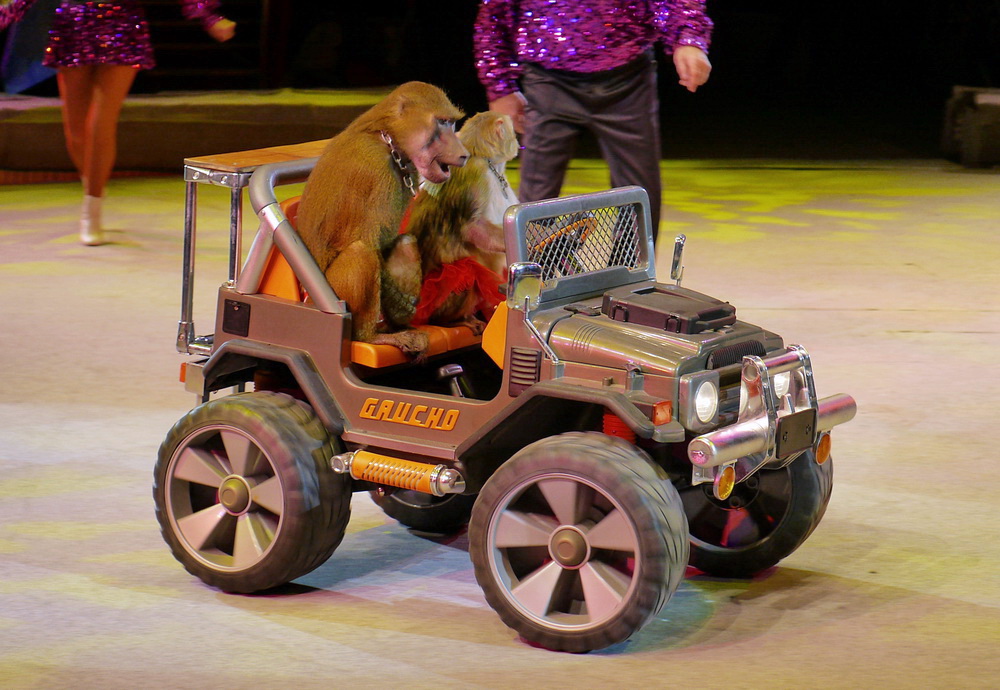
The Armenian parliament on Wednesday passed in the second and final reading an animal rights bill effectively ending the use of wild animals in live circuses.
The government-drafted bill, among other things, will prohibit performances with wild animals in circuses.
The draft law was adopted in a vote of 60 for and 27 abstentions.
The list of the wild animals will be defined by a competent body.












 World Animals Voice