Urge the COP26 Climate Summit to Serve a 100% Vegan Menu
The 26th Conference of the Parties (COP26) climate summit is fast approaching. Urge the president of COP26 – Alok Sharma – to set a meaningful example during this time of climate emergency by serving a fully vegan menu at the event.
Eating Vegan Is Better for the Environment
The fishing, meat, dairy, and egg industries are not only cruel to animals but also cause catastrophic damage to the environment. For decades, the United Nations has identified animal agriculture as a leading cause of deforestation, pollution, ocean dead zones, habitat loss, species extinction, and zoonotic disease spread.
Plant-based foods have a far smaller carbon footprint than their animal-derived equivalents, even when comparing imported plant proteins to flesh from grass-fed, locally farmed animals. And a switch to vegan eating can reduce food-related carbon emissions by 73%. Quite simply, eating meat and dairy is part of what got us into this mess.
The COP26 Climate Summit Should Set an Example
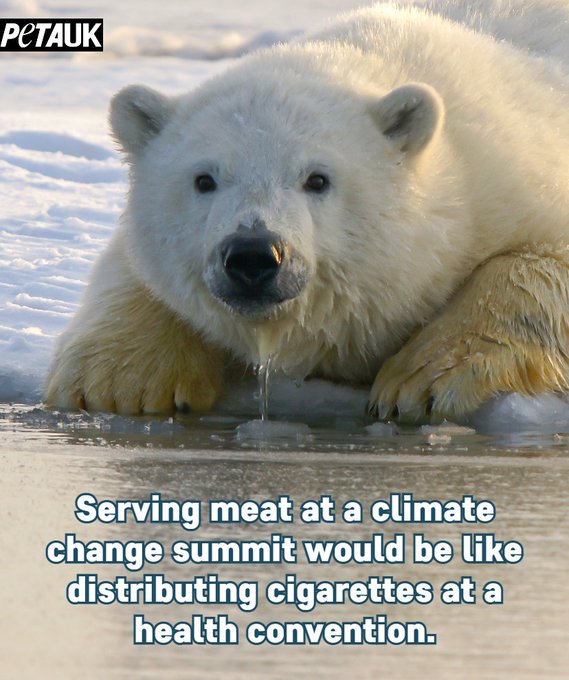
Given everything we now know about the devastating impact of animal agriculture on the environment, serving meat, dairy, or eggs at a climate change summit would be like distributing cigarettes at a health convention.
Plants are the way forward, and a vegan menu would not only allow attendees to dine with a clear conscience but also set an important example for the world to follow.
Take action and tell Alok Sharma, president of COP26, to set an example and only serve vegan food at the event:
Tennis legend Venus Williams detailed the extent of her health transformation since adopting a vegan lifestyle a decade ago.
Ditching meat and dairy helped her athletic performance and enabled her to better cope with an autoimmune disease affecting her joints, she told Insider.
‘Plant-based definitely changed my life’
Williams, who was once world number one in the sport, said her plant-based diet made her skin ‘amazing’.
Furthermore, it helped immensely after she was diagnosed with autoimmune disease, Sjögren’s Syndrome.
As it causes joint pain and fatigue, the diagnosis threatened her future as an athlete.
She said: “Living with an autoimmune disease, things can get a little tricky and you can be on loads of medicine, and that’s not something that I want to do.
“So to be able to control as much as I can, what’s happening in my body, my inflammation levels, through what I eat – is a godsend.”
Venus Williams
It’s not the first time the iconic Olympian and Grand-Slam champion has spoken out about the host of benefits that come with switching to plant-based.
Upon launching her own vegan protein shake company Happy Vegan, she said she needed to ‘take back control’ of her health.
‘Happy Viking was created to fuel your inner fighter, your inner Viking, while feeling happy and satisfied about what you put in your body’, she told Insider.
Moreover, she is an investor in the vegan grocery store, PlantX.
Vegan ‘junk food junkie’
Williams is a self-confessed ‘junk food junkie’, adding: ‘I’ve never met a French fry that wasn’t vegan’. It can be difficult traveling for tournaments and planning meals around it.
Moreover, there is a lot of processed vegan ‘junk food’ out there, she explained.
Williams said: “I’m definitely not a robot. You can reward yourself and have fun eating as well.
“There are so many more athletes doing it and sometimes they ask me how to do it. So, I tell them, ‘Hey, sometimes you just have to have some pie.”
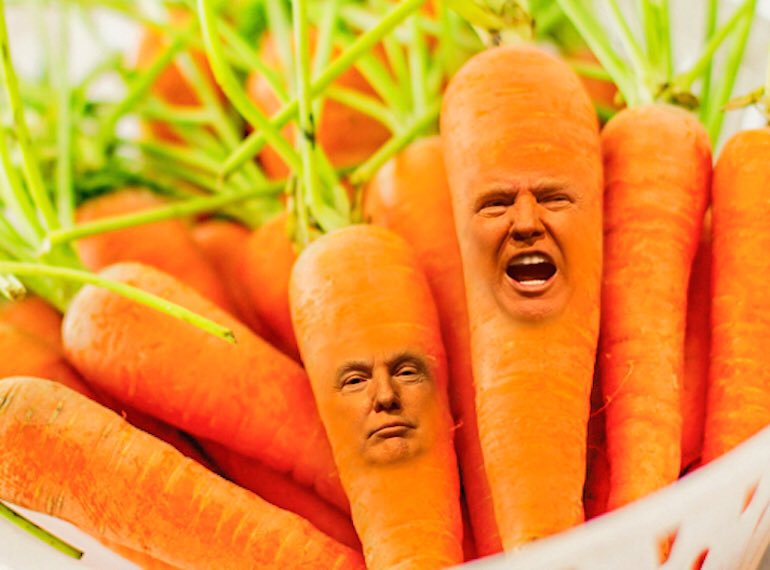
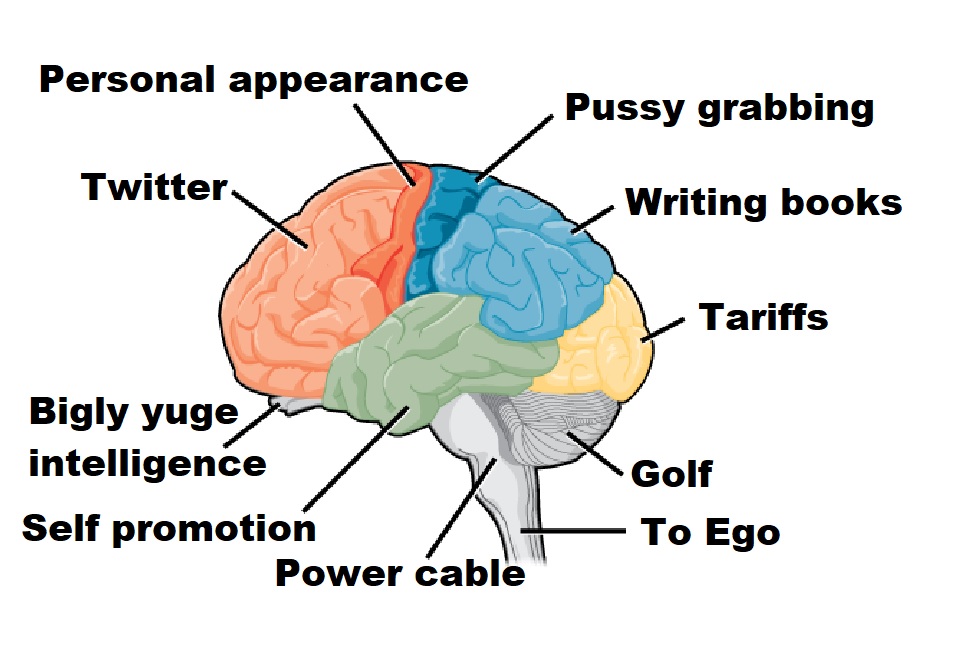
WAV Comment: So now the ex, one off President is also a Neurologist as well as a golf player. Much could be said about him and ‘brain cells’, or a lack of; but we will keep our opinions to ourselves about this.
Trump – going vegan loses brain cells:
‘If I lose one brain cell, we’re f***ed’: What Trump said when Stephanie Grisham suggested he go vegan for charity because it ‘screws with body chemistry’
Former President Donald Trump apparently thinks a meat-free diet impairs a person’s cognitive function, ex-White House Press Secretary Stephanie Grisham claims in an excerpt from her new tell-all book published Friday.
He told her that switching to a vegan diet ‘messes with your body chemistry’ and feared it would make him lose ‘brain cells.’
Great American Food
In 2019 he was widely mocked for providing the Clemson University Tigers NCAA team with ‘great American food’ to celebrate their victory – which included McDonalds, Wendy’s and Domino’s served with formal White House silverware.
He ran into trouble over his diet a short while later in 2020, during a February trip to India. Vegetarian Prime Minister Modi was planning to serve a meat-free dinner.
One White House source told CNN at the time, ‘I have never seen him eat a vegetable.’
Read it all; Dim Wit vegans may have cognitive problems with clicking on the following link; but please try:
WAV Comment – over many decades campaigning for the rights of animals, I have seen my fair share of disturbing things. Sadly, this expose by PeTA at one of the Nippon Ham facilities in Japan is just another very disturbing investigation which has revealed the horrendous suffering of pigs.
I am providing information and links below; including video footage.
This is disgusting, the human filth that undertakes this cruelty on a daily basis cannot be classified as ‘normal’ human beings; they are the kind that dominated in prisoner camps in the past. This campaign needs your full support and actions. Please do it.
Crosspost please to as many contacts as you can;
Regards Mark
Piglets Slammed Into Concrete, Left to Die at Nippon Ham Farm in Japan
A new PETA video exposé of Japan’s leading pork producer, Nippon Ham, reveals that piglets and their mothers endure horrific abuse. While the company claims to care about human happiness and the “joy of eating,” it’s obviously not concerned about animal welfare. Pigs who are raised and killed for food don’t experience joy or anything else that would make their lives worth living.
Their lives are full of pain and suffering. See for yourself:
Very disturbing Video footage – But Must Be Watched:
Workers at Nippon Ham grab piglets by their sensitive ears and toss them around like inanimate objects.
Those who aren’t considered “profitable,” because they’re too small or sick, are thrown out like garbage.
Workers typically kill unwanted piglets by swinging them in the air and bashing their heads on the concrete floor or by injecting them in the heart with disinfectant. One piglet writhed in agony for five minutes after a worker poisoned him this way.
Another languished for an hour and finally died after a worker bashed his head against the concrete floor.
Piglets at Nippon Ham are taken away from their mothers when they’re as young as 22 days old, just as they are on most pig farms. Workers castrate them and chop their tails off without any pain relievers. A worker was caught on camera cutting into a young pig’s scrotum and yanking out his testicles with his fingers.
Suffering and Nowhere to Turn
Mother pigs, or sows, are forced to spend most of their miserable lives crammed inside metal crates that are so small they can’t even turn around. Their muscles atrophy and they’re constantly stiff and sore. They have no choice but to urinate, defecate, eat, and sleep all in the same cramped crate. Workers were even seen beating them with a heavy piece of the metal frame.
The traumatized sows had to endure the sight of their own piglets’ suffering right in front of them. Their babies squealed and thrashed violently while workers crudely castrated them or cut off their tails, and there was nothing that the mother pigs could do.
Born Into a Life of Abuse
Thousands of sows are confined and repeatedly raped via artificial insemination. They deliver litter after litter of piglets, who are always torn away from them to be raised for meat or breeding. When sows who aren’t forced to live on filthy factory farms are about to give birth, they make a nest in the dirt and cover it with soft grass and leaves. But at Nippon Ham, pregnant pigs have to stand on uncomfortable metal grates. After several years of round-the-clock imprisonment and frequent inseminations and pregnancies, they become exhausted and they’re sent to slaughter.
You Can Help Stop Cruelty to Pigs
Cruelty is pervasive in the meat industry, which treats animals as commodities rather than as living, feeling beings. There’s no need for anyone to eat ham, bacon, sausage, or any other animal-based foods—tasty vegan options are available at most restaurants, stores, and cafeterias today. It’s easier than ever to leave pigs and other animals off your plate.
Will you help pigs by refusing to buy pork and other animal-derived foods?
I watched the PETA video and it truly made me sick to my stomach. If it is within my power, I WILL NOT buy any Nippon Ham product. The people treating those poor pigs like that should be fired.
Thank you for your comment. – yes, disgusting ! – WAV
1 In 5 Kids In The UK Are Vegan Or Want To Be, Survey Finds
Are young people leading the plant-based movement?
Nearly 60 percent of children in the UK are vegan or vegetarian or want to be, a new survey has found.
BBC Good Foodsurveyed 1,004 children between the ages of five and 16.
The global food media brand discovered that 8 percent of participants were eating a fully plant-based diet. A further 13 percent were vegetarian.
Additionally, 15 percent of children said they would like to become vegan, and roughly one in five (21 percent) said the same about vegetarianism.
Reports didn’t clarify what the children’s reasons were for eating plant-based food. But sustainability was on their minds for at least part of the research. The survey found that 44 percent of kids said they hope that no food is packaged in plastic in 10 years’ time.
Christine Hayes, Editor of BBC Good Food, commented: “It was fascinating to survey children’s eating habits, behaviours and opinions around food.”
“They are passionate about exploring alternative diets and methods of food production that could be more sustainable for the planet,” Hayes added.
Young people leading the way
The recent findings reaffirm the widely held belief that young people are leading the charge toward plant-based living.
A 2019 BritainThinks report concluded that Gen Z and Millenials are slightly more likely to be vegan than older age groups.
And earlier this week, it was reported that a majority of young people (aged 15 to 20) were taking action to help fight the climate crisis. Specifically, 26 percent of participants said they eat plant-based to help protect the planet.
30% Of Brits Are Now Eating Less Or No Meat At All, New Survey Finds
Animal welfare, environmental, and health reasons are motivating Brits to adjust their diets
Anew survey has indicated that the eating habits of people in the UK are changing, with more individuals ditching meat in favor of vegan food.
The survey
Market research website Appinio hosted the survey, which included 1,000 participants from the UK.
Five hundred women and 500 men took part, and the average age of participants was 41.1.
Just 68.6 percent of participants said they were omnivores.
Four percent were vegan, and 8.7 percent were vegetarian. These figures are notably higher than they have been in previous years.
For instance, in 2019, research found that just over 1 percent of people in Great Britain identified as vegan.
Eating more plan
The recent Appinio survey also found that 5.4 percent of participants were pescatarian (meaning they don’t eat meat besides fish). Further, 11.4 percent said they were flexitarian, referring to those who actively try to reduce their meat intake and eat primarily plant-based food.
The survey asked participants whether they would consider replacing some of the meat in their diets with plant-based alternatives. Of the 800 participants who responded to the question, half said yes. And 6.8 percent said they ‘want to switch to plant-based meat entirely’.
Respondents also explained why they have purchased plant-based meat, dairy-free alternatives, or other vegan options in the past. The leading motivator was health, with 46.3 percent saying they believed the vegan options are better for you.
Animal welfare and environmental reasons also played a part, with around a third of participants selecting those responses.
Only 1 In 10 Young People Trust Adults To Help Solve The Climate Crisis
Young people are cutting energy and water use and eating plant-based for environmental reasons
Many young people are determined to tackle the climate crisis, new research shows, but don’t believe adults will step up to the plate.
About the study
Analysis firm United Minds conducted the study on behalf of Electrolux, the world’s second-largest home appliance maker.
Electrolux wanted to learn more about young people’s outlook on sustainable living, and use this information to guide its own environmental targets. The global study was made up of a quantitative survey as well as in-depth interviews.
It included nearly 14,000 people aged 15 to 20. The respondents were from 13 countries: Argentina, Australia, Brazil, Chile, France, Germany, Israel, Poland, Sweden, Thailand, UK, USA, and Vietnam.
The findings
More than half of the respondents felt that sustainability is the single most important issue faced by society today. And 59 percent said they are ‘very anxious’ about the matter.
Nearly 60 percent of young people said they are willing to ‘drastically’ change their lifestyle to protect the planet. Even more (74 percent) agreed that everyone must make a collective effort to become more sustainable. And young people predominantly trust in themselves to lead the charge towards a sustainable future, with 37 percent saying so.
Twenty-seven percent of respondents believed scientists will take on the responsibility, while 17 percent said influencers will.
But only one in 10 participants thought adults will lead the way.
Notably, 43 percent of respondents felt that young people will actually solve the climate emergency.
Eco-friendly actions
The young participants were already taking action to lighten their load on the planet. Fifty-six percent were reducing energy use at home, without around half limiting food waste and recycling.
Others were keeping water use down, buying second-hand clothes, and using eco-friendly transportation. Twenty-six percent of young people said they eat plant-based to help protect the planet.
The research mirrors similar data surrounding young people, diet, and the climate.
Gen Z and Millenials are the age groups that are mostly likely to be vegan or vegetarian, a BritainThinks report found. Further, it highlighted that more than a third of Gen Z vegetarians follow a meat-free diet for its lower impact on the planet. In general, Baby Boomers still consume the least amount of plant-based meat, according to a market report by Tastewise. But the trend is shifting. Tastewise found that Baby Boomers are consuming 57 percent more vegan meat compared to June 2019. Meanwhile, Gen X’s vegan meat consumption only increased by 4 percent in the last year.
‘It’s their future at stake’
“We believe there’s a big opportunity in combining different perspectives in order to shape a better future,” Tove Chevalley, Head of Electrolux Innovation Hub, said in a statement. “That’s why we want to involve young minds already today, as the actions we take today will define the future they will live in.”
Chevalley continued: “As the study shows, young people have a very determinant and proactive mindset when it comes to sustainability, it’s their future at stake and they want to be part, or actually take lead, in creating solutions for the future home.”
Sir Roger Gale said: ‘Brexit has presented us with the opportunity to reform our farming systems.
WAV Comment – For a very long time, welfare campaigners in the UK have been calling for this. ALL food should be clearly labelled to show production methods, nation of origin, and how the animal was slaughtered is clearly identified on the packaging. We very much welcome this decades (far too late) late legislation, but are hugely supported by the fact that so many Brits are demanding to see how their food is produced – and that animal welfare is a ‘high up the chain’ concern.
If you personally wish to get involved with, and submit to the consultation, then please go to;
At the moment, it is not compulsory to label meat as halal, so campaigners have argued that those who eat the products and care about animal welfare should be able to make the choice to buy meat killed in a more humane way [Stock image]
Welfare labels on meat to say how animal was killed: New law is in pipeline after campaign on halal and kosher livestock that isn’t stunned before slaughter
It currently not compulsory to label meat as halal but new bill could change that
Campaigners argue shoppers concerned with animal welfare should be able to make the choice to buy meat killed in a more humane way
The Bill is in the early stages and is currently the subject of a public consultation
Halal and kosher meat will have to be labelled in a victory for animal welfare campaigners.
As part of the proposed law, all meat will have to be marked with how the animal was killed.
Animals slaughtered to be compliant with kosher and halal rules are often killed without being stunned first and have their throats slit.
At the moment, it is not compulsory to label meat as halal, so campaigners have argued that those who eat the products and care about animal welfare should be able to make the choice to buy meat killed in a more humane way.
The Bill is currently in the early stages and is the subject of a public consultation. But ministers have privately said they aim to bring in the law – and that it is supported by the majority of the British public.
Animals slaughtered to be compliant with kosher and halal rules are often killed without being stunned first and have their throats slit. Pictured: A meat processing plant [Stock image] Photo – Getty Images
Victoria Prentis, minister for farming, fisheries and food, said: ‘As a nation, we care enormously about animal welfare and increasingly about environmental standards.
‘Consumer information and labelling are part of the toolbox that we have when it comes to creating a better food system for people and the planet. It is something that we will be considering in detail with industry and stakeholders in the weeks and months ahead.’
The Conservative Animal Welfare Foundation (CAWF), which the Prime Minister’s wife Carrie Johnson has long been a patron of, has been calling for this policy change for years.
Lorraine Platt, chairman of CAWF and a friend of Mrs Johnson, welcomed the news: ‘With the exception of whole eggs, there are currently no legal requirements to label products with information on how the animal was reared and slaughtered.
‘But the fact is the British public do care about these conditions – over 80 per cent of UK consumers are in favour of food labelling.
‘Where labelling does currently exist, consumers have been able to identify higher welfare products and subsequently many farmers have been rewarded with increased demand. It is our hope that through extending labelling to all farmed produce, we can help the growth of higher welfare farms in the UK.’
MPs have also been calling for the change. Sir Roger Gale said: ‘Brexit has presented us with the opportunity to reform our farming systems.
‘Transparency with consumers must be at the heart of these reforms and implementing labelling for animal welfare represents a critical step forward. In doing so we can empower consumers to make informed decisions about which farming systems they want to support – or avoid supporting.
‘There is an overwhelming democratic mandate for such a move, with around eight in ten British consumers stating animal welfare is an important consideration for them when shopping.’
Under new laws, there will also be stricter animal welfare labelling requirements – with how the animal was reared and cared for prominently displayed on the packaging.
This is part of a raft of legislation under the Animal Welfare Bill including plans to ban boiling lobsters alive and outlawing the sale and import of ‘cruel’ animal products such as fur and foie gras.
Halal meat is worth around £2.6billion a year in the UK, according to the Agriculture and Horticulture Development Board (AHDB).
It accounts for around 20 per cent of all lamb and mutton sold, despite Muslims only comprising around 5 per cent of the population.
This is because ‘halal consumers eat more meat per capita than the general population’, says the AHDB.
About 42 per cent of all halal meat is not stunned before slaughter, according to the Food Standards Agency.
Slaughter of kosher livestock – the method is known as shechita – is a small percentage of all animals killed accounting for only 0.5 per cent of all cattle, 0.1 per cent of sheep, 0.3 per cent of chickens.
Important Note – we have just tried to e mail and telephone the office of Alok Sharma, and everything seems to be closed down – we are even told the wrong number by phone; which we took from his official ‘contact’ area on his site !! – strange. Lets hope he is getting the message about all this. Thus, the action links given below may not now work at present. All I can say is keep trying now and again.
Regards Mark
WAV Comment – Is this not like inviting the senior arsonist as a principal guest to the firefighters annual ball ?
What the hell are these people on ? – and they call themselves experts and politicians who are supposed to be dealing with the climate situation !
The United Nations’ COP26 climate summit—which will be the largest summit that the U.K. has ever hosted—is fast approaching, and we learned that there’s a plan to serve animal-derived food at the convention, even though animal agriculture is devastating for animals and the planet.
Vegan foods have a far smaller carbon footprint than their animal-derived counterparts. Speak out today to ensure that the COP26 climate summit sets a good example for the world to follow. See action below.
The 26th United Nations Conference of the Parties (COP26) Climate Change Conference is fast approaching. Urge the president of COP26, Alok Sharma, to set a meaningful example during this climate crisis by serving a fully vegan menu at the event.
Eating Vegan Is Better for the Environment The fishing, meat, dairy, and egg industries are not only cruel to animals but also catastrophic for the environment. For decades, the U.N. has identified animal agriculture as a leading cause of deforestation, pollution, ocean dead zones, habitat loss, species extinction, and the spread of zoonotic diseases.
Vegan foods have a far smaller carbon footprint than their animal-derived counterparts—even when comparing imported plant proteins to flesh from grass-fed, locally farmed animals—and a switch to vegan eating can reduce food-related carbon emissions by 73%. Quite simply, eating meat and dairy is part of what got us into this mess.
Animals can feel pain in the same way as humans. Just like us, they value their lives and don’t want to suffer.
In her natural environment, a hen will cluck to her chicks before they even hatch while sitting on the eggs in her nest. They peep back to her and to each other through their shells. In the ways that matter, humans and other animals are the same. There is no moral justification for exploiting animals for human purposes.
The COP26 Climate Summit Should Set an Example Given everything that we now know about the devastating impact of animal agriculture on the environment, serving meat, dairy, or eggs at a climate change summit would be like distributing cigarettes at a health convention.
Plant foods are the way forward, and a vegan menu would not only allow attendees to dine with a clear conscience but also set an important example for the world to follow.
Take action and tell Sharma to serve only vegan food at the event.
It will be cost not kindness that ends animal agriculture – but when will we achieve vegan meat price parity?
As much as we care for animals, it’s likely that ‘price parity’ between plant-based and animal-derived meats will see the quickest changes made to our food system
We love cheap food. When asked, we nearly always say we prefer to buy products that are ethical, sustainable, and healthy. But research shows time and again that what actually drives most of our food choices are cost, convenience, and taste.
Most of all, it’s the price.
Vegan meat price parity
That’s why the question of ‘price parity’ is a hot topic in plant-based food. With price, especially a cheap price, such a driving force in our food choices, the cost of plant-based meats really matters.
It’s also why the European dairy lobby is trying to stop plant-based products being sold in ‘dairy’ packaging. If plant-based providers have to use different packaging, this could make plant-based alternatives more difficult to produce and, critically, more expensive to buy.
But lessons from other industries (such as electric cars) show that as technology develops and demand increases, price parity will arrive. But for plant-based meat products, when will that be? Can it really bring an end to the slaughter-based meat products that are currently cheaper and purchased more often?
‘Cheap food paradigm’
We love cheap food. As the UK government’s Behavioral Insights Team wrote in their report ‘A Menu For Change’, price (alongside convenience and taste) is the most important factor for people when shopping. This includes for healthier alternatives.
This isn’t our fault. Supermarkets, advertising, and government policies have spent 70 years creating what food expert Professor Tim Lang calls our ‘cheap food paradigm’.
This is especially in the UK and US. Along with Singapore, these are the three cheapest food markets in the world. In the UK, we spend only 8 percent of our household budget on food. This is the cheapest in Western Europe. Greeks spend 16 percent, Peruvians 26 percent, and Nigerians 59 percent.
This cheap food paradigm emerged during World War 2. Farmers were asked to grow more food, quickly and cheaply. They were the heroes feeding a country at war, and rebuilding afterward.
Farmers were doing what they were asked. They began using heavy chemicals and pesticides. They abandoned rotation farming and replaced them with monocultures. Food got increasingly cheap. There were supermarket price wars (continuing today). We lost touch with the true cost of food.
Last month’s Chatham House/UN report drove home the point: “Cheap food is driving destruction of the natural world.” The constant demand for economic growth has ‘sustained vicious circles’ of agricultural efficiency, coupled with ‘increased economic competition through the liberalization of trade’.
Cheap foods also tend to be more processed. In the UK, we eat the most ultra-processed foods in Europe, nearly 50 percent of our diets. Compare this to around 11 percent in Italy or 16 percent in Portugal. This massively increases the incidence of Type-2 diabetes and other serious health epidemics.
A price transformation
It’s obvious we need a food transformation. And that includes the price we pay for it.
What we should do is ask those who can afford more to pay more, while supporting those currently in food poverty to be able to buy better. But that’s another article!
So if we want to see change happen quickly, we have to get people off the slaughter-based meats and into the plant-based aisles. The quickest way to do that is through pricing.
So when will that happen? It will arrive in three stages.
Their analysis suggested that price parity between existing plant-based meats (for example, the Impossible Burger) and animal-derived meats would arrive sometime between 2021-23.
When this happened, they wrote, adoption of more plant-based eating “will tip and accelerate exponentially.”
It is why companies such as Impossible Foods keep slashing their prices to drive demand, knowing that ‘price parity’ will increase not only sales but awareness and acceptability.
Are we close to the tipping point?
At the moment, buying a vegan supermarket product twice a week would cost an additional £35 a year, a spokesperson for Insure4Sport, who produced research on cost comparisons, told The Times.
Right now, the early-adopter vegan and vegetarian or adventurous meat-eater will pay the premium price for the new plant-based alternatives. That won’t last.
The plant-based producers know they need to compete on price. Demand is growing. In 2019, demand for plant-based meats grew by 18 percent and 11 percent for the plant-based category overall, according to a study from The Good Food Institute.
More people than ever now support improved access to plant-based options. New research last week from The Vegan Society showed one in three (32 percent) believe the government should be promoting vegan and plant-based diets to address the current climate emergency.
Bill Gates recently urged people to buy plant-based products and drive down the price. “You can also send a signal to the market that people want zero-carbon alternatives and are willing to pay for them,” he told the BBC.
The science is in and experts agree that spices not only improve the flavour of our food but also enhance our health. This 2019 review stated:
“There is now ample evidence that spices and herbs possess antioxidant, anti-inflammatory, antitumorigenic, anticarcinogenic, and glucose- and cholesterol-lowering activities as well as properties that affect cognition and mood.”
So let’s take a look at five of the most popular spices and their individual superpowers.
1. Turmeric
A golden spice with a myriad of health benefits, turmeric is a true example of medicinal food.
The superhero compound in turmeric is called curcumin – a very strong antioxidant with anti-inflammatory properties. Its antioxidant capacity means it goes around disabling those pesky free radicals that can damage your cells, DNA, enzymes, fatty acids and lead to disease. On top of being a powerful antioxidant, curcumin also stimulates your body’s own defences and antioxidant compounds, making them more effective.
Turmeric has been shown to improve inflammatory bowel conditions such as Crohn’s, IBS or ulcerative colitis, has cancer-inhibiting properties, can protect the heart from cholesterol and may even reduce the symptoms of depression and improve mood.
A big problem is that it’s hard to get enough curcumin from the powder or root alone – even if you use it liberally. But there is a smart solution – always combine it with black pepper. Black pepper contains piperine, which increases our absorption of curcumin by up to 2,000 per cent! Many turmeric supplements contain piperine but it’s good to follow this rule in the kitchen too.
The sweet spice of cinnamon is just as sweet for our health, thanks to the compound cinnamaldehyde.
As well as being a healthy simple swap for sugar to sweeten dishes, several studies suggest it may lower blood sugar levels in those with type 2 diabetes. Cinnamon may also be good for our heart by reducing cholesterol and triglyceride levels, which, according to , is “especially important for people with diabetes who are at greater risk for developing heart disease.”
Studies show that cinnamon can also help with inflammation, fend off free radicals that can damage your cells, and fight bacteria.
One of the most popular ingredients in the world, ginger has a million uses and is amazing for your health.
Ginger contains several potent biochemicals of which gingerols – one of the phenolic compounds – have the strongest effects. Gingerols are very strong antioxidants, protecting our tissues from free radical damage and they have antimicrobial properties, helping fight infection. Gingerols hinder the production of inflammatory molecules in the body, thus being a natural anti-inflammatory, calming angry tissues in our joints, bowels or airways.
Probably the best-known benefit of ginger is that it can help you combat nausea – whether due to stomach upset, motion sickness, pregnancy or even chemotherapy, ginger is the hero you need.
Lower down the digestive tract, it can relieve bloating, cramping and general discomfort. Most people react well to ginger and enjoy its benefits but if you take very high doses, it can cause heartburn. However, small doses have actually been shown to prevent acid reflux and heartburn so it’s all about finding the right balance.
Ginger is a favourite in the time of colds and flus but it can even help with asthma and allergic coughs because it helps to relax the airway muscles so they don’t overly contract, which helpsyou breathe easier and cough less.
It also works wonders for relieving arthritis and has been shown to have a neuroprotective effect – helping to protect our nerves against damage and prevent neurodegenerative diseases such as Alzheimer’s and Parkinson’s.
Technically not a spice but garlic is too good to ignore. Garlic is a true powerhouse with many sulphur phytochemicals which are stronger than those in onions and offer a number of health benefits.
These phytochemicals act as antioxidants and help protect our bodies from free radicals, the nasty by-products of metabolism, including protecting your blood vessels. They are also anti-inflammatory and help to fight infection.
As well as protecting the walls of our veins and arteries, garlic’s sulphur compounds can do even more. Some of the phytochemicals slightly reduce blood clotting, which helps lower the risk of thrombosis – a blood clot blocking blood supply to a vital organ. If you’re already taking blood-thinning medication though, ask your GP about garlic to stay on the safe side!
Garlic can also moderately reduce the levels of triglycerides (fats) and cholesterol in the blood and helps lower blood pressure by relaxing blood vessel walls. If you’re worried about your heart, garlic is your friend!
Despite all these benefits, garlic is probably best known for its antibacterial properties and rightly so. It helps fight infection but has also been shown to be able to prevent infection by some bacteria and yeast.
Chilli peppers contain a compound called capsaicin. It’s what makes them spicy and it’s also what makes them super-spices. A 2015 review examined the health claims made by chilli pepper proponents and found that capsaicin “has intriguing potential for health promotion.”
Chilli peppers have been shown to have beneficial effects on metabolic health, insulin control and weight management, therefore reducing the risk of obesity, diabetes and cardiovascular disease. However, people who already regularly eat spicy food may not experience the same weight loss benefits.
Some studies also suggest that capsaicin has an anti-cancer effect as it “has been shown to alter the expression of several genes involved in cancer cell survival, growth arrest, angiogenesis and metastasis.” Although there have unfortunately been many studies exploring the effects of capsaicin on cancer in animals, more human data is needed.
But it is for its pain relief properties that capsaicin is most commonly lauded. By reducing the number of pain signals sent to the brain, it eases discomfort from conditions such as arthritis and migraines. For this reason, it can be found in many over-the-counter topical pain-relief lotions.
These are just five of many spices that have amazing health benefits and can form part of a healthy plant-based diet. There are many more so mix it up because you know what they say, variety is the spice of life. And if you’re looking for recipes including all of these spices and more, be sure to check out Vegan Recipe Club for some inspiration.










![At the moment, it is not compulsory to label meat as halal, so campaigners have argued that those who eat the products and care about animal welfare should be able to make the choice to buy meat killed in a more humane way [Stock image]](https://i.dailymail.co.uk/1s/2021/09/14/00/47878703-9987621-image-a-171_1631575414688.jpg)
![Animals slaughtered to be compliant with kosher and halal rules are often killed without being stunned first and have their throats slit. Pictured: A meat processing plant [Stock image]](https://i.dailymail.co.uk/1s/2021/09/14/00/47878679-9987621-image-a-172_1631575436527.jpg)




 World Animals Voice