Category: Vivisection

England: 71% of People Think Causing Pain and Suffering to Animals is Wrong, Animal Aid Poll Shows.

Posted on the 4th April 2022

A recent ‘One Poll’, commissioned by Animal Aid, has shown that the majority of people believe that it is always wrong to cause animals pain and suffering.

The poll asked the question, “Is it ever acceptable to cause pain and suffering to animals?”, to which 71% of people answered “no”. The results show, as Animal Aid suspected, that most people ‘want to be kind’ but are seemingly unaware that there are many things we do on a daily basis that cause animals pain and suffering – for the food we eat, for entertainment, in the wild, and in laboratories.

Most people wouldn’t dream of harming animals, but our daily actions can cause animals huge amounts of pain and suffering – from the food we eat, the entertainment we choose to attend, and from the products we buy and use.

What can you do ?

Animal Aid (e-activist.com)

In the second episode of our brand-new podcast, Conversations on Compassion, our hosts interview XCellR8 co-founder, Dr Carol Treasure about her journey into living with compassion. We learn everything from what inspired Carol on her journey, to the ethical implications of some scientific language – and if there’s such thing as an average day in the lab! Take a listen now

On Sunday 24th April it’s World Day for Animals in Laboratories and we’ll also be sharing some facts about some of the animals who currently suffer in laboratories – so keep an eye on our social media!

It has been hard to ignore the Cheltenham festival, which this year claimed the lives of four horses. Ahead of the Grand National, we’re asking people to support horses by not betting.

If you’re out and about in London, see if you can spot our adverts on London buses, a reminder that horse racing is a dead sport. We’d love to see your pictures, so do share these with us on social media – and be sure to tag us so we can see them!

This week, we’ll visit London, Bristol and Liverpool (Monday, Tuesday and Wednesday respectively) with our ‘ad-vans’. These will host mobile screenings of our brand-new film “71%”, narrated by the fantastic Benjamin Zephaniah – poet, author, musician and legend. You can watch the full film here!

Enjoy a compassionate Easter with animal-friendly treats for every bunny! 🐰

Find truffle-filled eggs, zesty chocolate bunnies, deliciously dark chocolate hens, white chocolate treats and much more! All proceeds go towards our work to help animals. 🙏

Hop on over the Animal Aid shop and fill your basket with vegan goodies galore

We want to say a big thank you to everyone who supported our campaign to #BanSnares! Together we have reached the target of 100,000 signatures – a month ahead of the deadline! We’ll update you with more details of this campaign in due course.

With kindness,

The Animal Aid team!

Website – Home – Animal Aid

Regards Mark

Enjoy ol Vic – a British icon:

Ecuador: Constitutional Court of Ecuador Recognizes Animal Rights in Landmark Ruling.

QUITO, Ecuador, March 23, 2022 /PRNewswire/ —

For the first time, the Constitutional Court of Ecuador has recognized the legal rights of nonhuman animals. The ruling not only elevates the legal status of nonhuman animals under Ecuador’s constitutional rights of nature but also requires that new legislation be drafted to protect the rights of animals.

Constitutional Court of Ecuador Recognizes Animal Rights in Landmark Ruling | Markets Insider (businessinsider.com)

“We hope and expect fundamental legal change for nonhuman animals in the United States isn’t far behind.”

The court’s ruling was the result of a habeas corpus action filed by Ana Beatriz Burbano Proaño on behalf of Estrellita, a woolly monkey who had lived in her home for 18 years. Environmental authorities had forcibly seized the monkey on the grounds that possessing a “wild animal” is prohibited by Ecuador law. Estrellita died within a month of being relocated to a zoo.

Ecuador was the first country to include a rights of nature provision in its national Constitution. When the case came before Ecuador’s Constitutional Court, the judges elected to consider several issues, including: the scope of the country’s rights of nature provision; whether animals qualify as the subject of rights; and whether Estrellita’s rights were violated. The Court found by a vote of seven to two that the scope of the rights of nature includes animals and thus animals are the subject of rights. The Court also indicated that habeas corpus could be an appropriate action for animals and that they may possess rights that derive from other sources in addition to the Constitution.

“This verdict raises animal rights to the level of the constitution, the highest law of Ecuador,” said leading Ecuadorian environmental lawyer Hugo Echeverría, who brought the case to the attention of NhRP. “While rights of nature were enshrined in the constitution, it was not clear prior to this decision whether individual animals could benefit from the rights of nature and be considered rights holders as a part of nature. The Court has stated that animals are subject of rights protected by rights of nature.”

Continue reading via the link given at the top.

Regards Mark

From George – A Guide Link To Cruelty Free Beauty Shopping.

WAV Comment – Supporter George has made contact with kind words about the Vegan info we are putting on the site.

In addition George has provided us with a link regarding cruelty free beauty shopping, and we repeat the link provided to us – please have a look and find out more.

Link:  A Guide to Cruelty-Free Beauty Shopping (jomashop.com)

As said, thanks George for your kind words and the supply of the link which we hope will be of great benefit to supporters.

We follow this with the news which has just arrived with us – a press release from our animal buddies at Gaia in Belgium.  Here below is a repeat of the press release:

Nine years after EU ban, animals will once again be dying in the name of beauty 

10 March 2022

GAIA

Press Release

On the ninth anniversary of the EU law preventing the sale of all cosmetics products tested on animals, animal protection NGOs Cruelty Free Europe, Eurogroup for Animals and GAIA will not be celebrating, as chemicals rules look set to render the bans meaningless. 

Yesterday, the organisations held a vigil for the cosmetics animal testing bans close to the headquarters of both the European Commission and Council in Brussels. They were joined by the French street artist Ckeja, who painted live throughout the vigil. 

Despite huge public support for the bans[1], cruel animal tests are now being required by European authorities, including on ingredients used solely in cosmetics. Proposals to extend the scope of chemical safety legislation under the Chemicals Strategy for Sustainability look set to massively increase the amount of regulatory animal testing taking place in Europe, including tests for cosmetics’ ingredients, namely make-up, shampoo, moisturiser, soap, perfume and toothpaste.  

A study carried out in 2021 by the European Centre for Alternatives to Animal Testing found that 63 chemical safety assessment dossiers in the EU’s chemicals database had used the results of new animal testing for cosmetics risk assessment, with this number looking set to increase as the European Chemicals Agency carries out more reviews. This is testing that has taken place since the bans[2] came into place. 

Europe’s leaders often trumpet how brilliant the EU’s cosmetics animal testing bans are – and how they were ground-breaking and a model for the world. However, we know that more and more animal testing is being required by regulators for ingredients in cosmetics, against the wishes of European consumers and cosmetics brands. But we can all stand up and say that we want our bans back and we want them strengthened by signing the Save Cruelty Free Cosmetics European Citizens’ Initiative at savecrueltyfree.eu. We have the power!

Kerry Postlewhite, Director of Public Affairs, Cruelty Free Europe

Non-animal approaches to ensure the safety of cosmetics and other consumer products have been routinely used in the EU for decades. There is no reason to test ingredients on animals when advanced non-animal assessment strategies are available and offer reliable alternatives to animal testing. With this ECI, we call on the European Commission to commit to actions that can ensure the protection of human health and the environment by managing chemicals without the use of animals, and to invest in human-based, non-animal approaches for regulatory decision-making.

Reineke Hameleers, CEO, Eurogroup for Animals

The 2013 EU trade ban on cosmetics tested on animals is in danger. It would be a real shame if the clock would be turned back.

Ann De Greef, CEO, GAIA

Notes to Editors  

[1] 74% of adults in EU Member States agree that animal testing for cosmetic products and their ingredients is unacceptable in all circumstances,  Savanta ComRes survey for Cruelty Free Europe, July 2020.

[2] As well as the 2013 ban on the sale of all cosmetics products tested on animals, the EU had previously banned the testing of cosmetics products on animals in 2004, and the testing of cosmetics ingredients on animals in 2009 – Ban on animals testing.

Video and photos of the Brussels event on Thursday 10 March are available here. Interviews are also available on request. 

ECI Cruelty Free Cosmetics 

Regards Mark

European Commission Disregards Wishes of the European Parliament by Failing to Take Concrete Steps to Phase Out Animal Experiments.

WAV Comment:  And who said that when big money and ‘favours’ are involved, some people ‘play it’ to ensure that they continue to get the perks; regardless of the rest ?

Whats more, the European Commission (EC) is made up of people who are UN ELECTED.

European Commission disregards wishes of the European Parliament by failing to take concrete steps to phase out animal experiments

2 March 2022

Press Release

In response to the European Commission follow-up to the European Parliament non-legislative resolution on plans and actions to accelerate a transition to innovation without the use of animals in research, regulatory testing and education, Eurogroup for Animals, Cruelty Free Europe and People for the Ethical Treatment of Animals Foundation issued a joint statement

Six months after the historic resolution of the European Parliament (EP) asking for an action plan to phase out the use of animals in science, the European Commission (EC) has failed to take note. The EP was resoundingly clear and nearly unanimous: an EU-wide Action Plan for the active phase-out of the use of animals in experiments with the inclusion of milestones and targets to incentivise progress towards the replacement of the use of animals is needed.

The EC provided, in a weak response, only a list of fragmented initiatives that could eventually lead to some reduction in the use of animals and it is not taking steps to implement the requested action plan to phase out animal experiments.

This leaves the EC with a status quo approach, leading to little impact and no sustainable reduction of the use of animals in areas where so much more can be achieved.

The efforts of the EC, even if slim at times, have helped to advance non-animal science and testing. However, we now need overarching scientific policies that can embrace the new science and technologies, making them the new normal in a stepwise approach.

To achieve sustainable changes towards a more effective and humane science, the current approach of the EC must set out broader coordination groups, as put forward by the EP, with clear objectives and processes for monitoring, assessing and ensuring progress and adapting strategies when appropriate.

Last September, the European Parliament took a strong stance for the phase out of the use of animals in Science, so the response from the Commission was eagerly awaited. A good element of this response is the intention of strengthening the private-public European Partnership for Alternative Approaches to Animal Testing. This partnership is essential to provide advice and build consensus in targeted areas of regulatory testing. But we need more: The action plan needs to involve Members States and the wider academic and industry community; it needs to establish concrete milestones and objectives for sustainable reductions of regulatory animal testing, but also of animal-based research and education, where the majority of animals are used.

Tilly Metz MEP (Greens/EFA, LU), President of the Intergroup on the Welfare and Conservation of Animals

The Commission foresees no change for the funding of projects that aim to use and/or further develop non-animal models under Horizon Europe, when compared to the previous framework Programme, H2020, which spent 0.5% of its total annual budget on the development of non-animal models. This is not the message we were expecting from a Commission that stresses its goal of phasing out the use of animals in scientific procedures. The EU will not accelerate the transition to non-animal science with such a low commitment.

Jytte Guteland MEP, (S&D, SE)

Notes

Resolution on plans and actions to accelerate the transition to innovation without the use of animals in research, regulatory testing and education

Eurogroup for Animals represents over eighty animal protection organisations in almost all EU Member States, the UK, Switzerland, Serbia, Norway, and Australia. Since its foundation in 1980, the organisation has succeeded in encouraging the EU to adopt higher legal standards for animal protection. Eurogroup for Animals reflects public opinion through its members and has both the scientific and technical expertise to provide authoritative advice on issues relating to animal protection. Eurogroup for Animals is a founding member of the World Federation for Animals which unites the animal protection movement at the global level.

People for the Ethical Treatment of Animals (PETA) Foundation along with the PETA international entities in France, Germany and the Netherlands, is dedicated to establishing and protecting the rights of animals. Working through education, research, legislative and policy change, outreach and international harmonisation, PETA seeks to accelerate the transition to animal-free science and advance the development and use of non-animal testing approaches to improve the protection of human health, the environment and animals.

Cruelty Free Europe is a Brussels-based network of animal protection groups working to bring animal testing to an end across Europe. With 19 associate members, we act as a force for animals in laboratories across the EU and the wider European neighbourhood. Working with elected Members of the European Parliament, governments, regulators, officials and supporters, our experts coordinate efforts to secure change for the animals currently suffering in experiments in Europe. We believe there is no rational moral justification for using animals in experiments. Instead, we champion progressive, humane scientific research and cruelty free living. 

Regards Mark

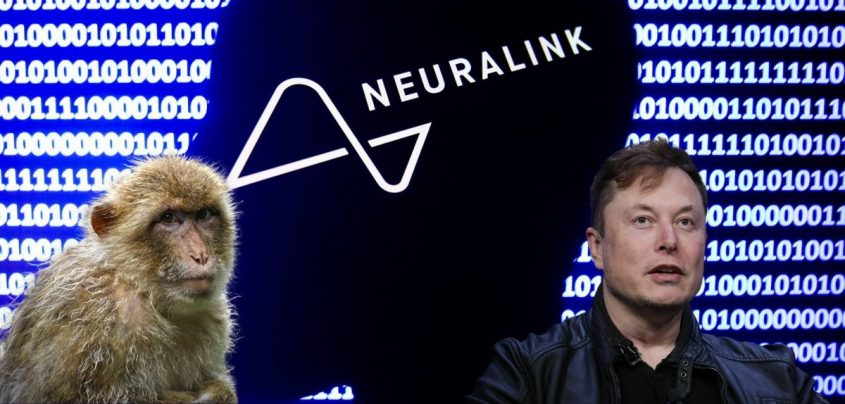
Lawsuit against Elon Musk’s Neuralink: 16 laboratory monkeys dead

A U.S. medical group has filed a lawsuit and federal complaint against UC Davis (University of California)  over sometimes-fatal monkey experiments at a lab funded by Elon Musk.

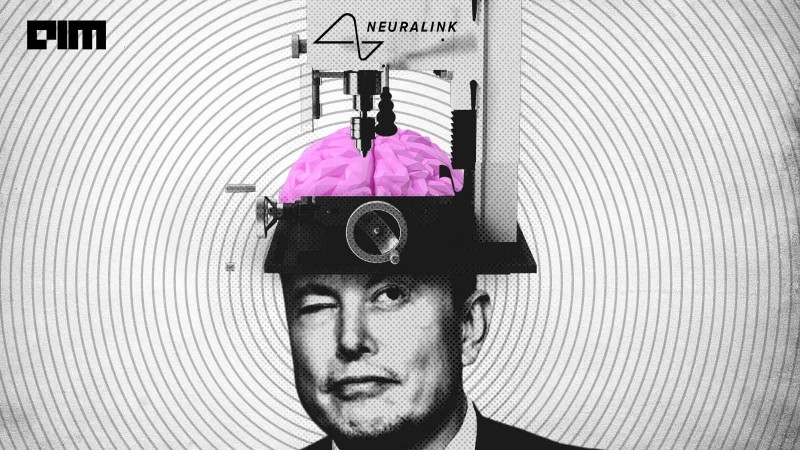
The animals had parts of their skulls removed in order to implant Neuralink electrodes in their brains.

Neuralink was founded in 2016 by Elon Musk.
His vision of the company’s goals is to use this start-up to develop high-bandwidth brain implants that could then communicate with phones and computers, for example.

In July 2021, the US broadcaster CNBC reported that the start-up Neuralink received 205 million US dollars from several investors.
These included Google Ventures, Peter Thiel’s Founders Fund and OpenAI CEO Sam Altman.

OpenAI LP is a company engaged in research into artificial intelligence and is funded by Microsoft, among others, in addition to the fact that Musk is also investing money in OpenAI-CEO.
Google Ventures is part of the investment arm of Alphabet Inc., the company formed in October 2015 through a reorganization of Google.
Thiel was a former Facebook investor, PayPal co-inventor and is considered one of the most successful founders and investors in Silicon Valley.
This brings the total investment in the company to $363 million.

Several US media have now reported that Musk had paid more than $1.4 million to the US University of California, Davis (UC Davis) by 2020.
The money funded a research partnership that allows for the use of laboratory facilities where university scientists helped the company test its technology on macaque monkeys.

The nonprofit organization Physicians Committee for Responsible Medicine (PCRM) has now filed a clearly worded lawsuit and federal complaint against UC Davis over suspected lethal monkey experiments at the Musk-funded lab.

The website of the PCRM, a national non-profit organization with more than 17,000 medical members, reports that “Elon Musk and Neuralink experimented on rats, pigs and monkeys to develop a new brain-computer interface (a system , which enables the human brain to communicate directly with a computer)”.

However, studies have shown that the development “of these interfaces can be achieved using human-relevant, non-animal and non-invasive methods,” according to information from the PCRM.
Invasive means to interfere with an organ for diagnostic purposes.

The allegations against Musk and Neuralink are immense and would confirm frightening events.
The lawsuit is based on nearly 600 pages of existing documents that were only released after the Medical Committee filed a first lawsuit for access to public records in 2021.
In addition, the Medical Committee filed a second lawsuit in Yolo County Superior Court against the release of documents to compel the university to release videos and photos of the monkeys. According to the PCRM’s website, the lawsuit states:

“Most of the animals had parts of their skulls removed in order to implant electrodes in their brains as part of Neuralink’s development of a ‘brain-machine interface’.”

The US website Daily Beast wrote to Musk about the findings and allegations.
He replied that Neuralink was doing everything possible to take care of “our animals”.

Continue reading “Lawsuit against Elon Musk’s Neuralink: 16 laboratory monkeys dead”

USA: 15 of 23 monkeys who have been planted with Elon Musk’s Neuralink chip have reportedly died.

Elon Musk’s neurotechnology company Neuralink has become the subject of a US federal complaint and lawsuit after “invasive and deadly brain experiments” were reportedly carried out on 23 monkeys – leaving 15 of them dead.

The Tesla billionaire’s firm – which aims to help paralysed individuals “by giving them the ability to control computers and mobile devices directly with their brains” – partnered with the University of California, Davis on the research, with $1.4 million allegedly given to the institution in funding.

However, the Physicians Committee for Responsible Medicine (PCRM) claims the university has violated the Animal Welfare Act and has complained to the US Department of Agriculture (USDA).

It has also filed a lawsuit ordering the release of videos and photographs of the animals, which the university is refusing to provide because they belong to Neuralink – a private company exempt from the Public Records Act.

Jeremy Beckham, research advocacy coordinator with the committee, said: “UC Davis may have handed over its publicly-funded facilities to a billionaire, but that doesn’t mean it can evade transparency requirements and violate federal animal welfare laws.”

The move comes after the PCRM obtained close to 600 pages of documents about the experiments through an initial lawsuit in 2021.

“The documents reveal that monkeys had their brains mutilated in shoddy experiments and were left to suffer and die,” Mr Beckham added.

According to the PCRM, the macaque monkeys weren’t provided with “adequate veterinary care” when they were dying, suffering infections, “facial trauma”, seizures and “recurring infections” in parts of the brain where the chips were implanted.

Meanwhile Insider, who have viewed the complaint filed with the USDA, describe one instance where a monkey was missing fingers and toes “possibly from self-mutilation or some other unspecified trauma” as part of the research, which is understood to have been carried out from 2017 to 2020.

In a statement to The New York Post, a spokesperson for the University of California, Davis said: “We strive to provide the best possible care to animals in our charge.

WAV Comment – !!! Best possible care ?? – Bullshit.

“Animal research is strictly regulated, and UC Davis follows all applicable laws and regulations including those of the US Department of Agriculture.”

They also told the outlet that they finished working with Neuralink in 2020.

It isn’t the only instance of monkeys being implanted with the company’s chip, as the organisation shared a video of a macaque named Pager playing a game of MindPong with the technology in April last year.

In December, Musk tweeted that “progress will accelerate” with Neuralink “when we have devices in humans … next year”.

Indy100 has approached Neuralink and Elon Musk for comment.

15 of 23 monkeys who have been planted with Elon Musk’s Neuralink chip have reportedly died (msn.com)

Regards Mark

USA: ‘Envigo’ (Lab Supplier) Puppy Mill Investigated By USDA, and 13 Violations of the Federal Animal Welfare Act Cited In Report Regarding Over 5,000 Dogs / Puppies. Take Action – Link Below.

Deprivation, Despair, and Death at Envigo | PETA Investigates

Introduction:

In July 2021, the U.S. Department of Agriculture (USDA) cited Envigo for 26 violations of the Animal Welfare Act. Federal veterinarians found 15 dogs denied treatment for “severe dental disease,” wounds, yellow discharge around the eyes, and more; a “depressed” puppy covered with feces in a waste pan; dogs denied food for days while nursing puppies; and much more. To view the USDA’s inspection reports, click here.

Based on PETA’s evidence, a team of USDA officials conducted a multiday inspection of the puppy mill in October 2021. The USDA corroborated PETA’s findings and cited Envigo for 13 more violations, including 11 repeat violations.

Inspectors found that a puppy and some dogs were deprived of veterinary care for an eye infection, crusted and oozing sores on their paws, and other eye and foot ailments; that puppies died after falling into a drain or getting their head trapped in a cage door; and that puppies’ legs and feet fell through the cage floors. According to the report, workers medicated dogs without consulting the facility’s sole full-time veterinarian; took no steps to prevent fights among dogs, resulting in a puppy found eviscerated in an enclosure with nine littermates and staff unaware that another dog was biting and wounding another; and, in just two months, put down nine dogs who were injured when their leg or tail was pulled through a kennel wall by other dogs. The USDA found moldy feces in dog enclosures, up to 6 inches of feces piled in a gutter, and an “overpowering fecal odor” and “strong sewage odor” in the facility. To view this inspection report, click here.

PETA’s undercover investigation found 5,000 beagle dogs and puppies confined to small, barren kennels and cages 24/7 at a massive factory farm in Virginia, operated by Envigo.

Based on PETA’s evidence, a team of U.S. Department of Agriculture (USDA) officials conducted a multiday inspection of the puppy mill.

The USDA just released its report. Inspectors corroborated PETA’s findings and cited Envigo for 13 violations of the federal Animal Welfare Act (AWA). Inspectors found that a puppy and some dogs were deprived of veterinary care for an eye infection, crusted and oozing sores on their paws, and other eye and foot ailments; that puppies died after falling into a drain or getting their head trapped in a cage door; and that puppies’ legs and feet fell through the cage floors.

According to the report, workers medicated dogs without consulting the facility’s sole full-time veterinarian; took no steps to prevent fights among dogs, resulting in a puppy found eviscerated in an enclosure with nine littermates and staff unaware that another dog was biting and wounding another; and put down nine dogs who were injured when their leg or tail was pulled through a kennel wall by other dogs. The USDA found moldy feces in dog enclosures, up to 6 inches of feces piled in a gutter, and an “overpowering fecal odor” and “strong sewage odor” in the facility.

Last July, the USDA cited Envigo for 26 violations of the AWA, after finding dogs denied treatment for “severe dental disease,” wounds, yellow discharge around the eyes, and more; a “depressed” puppy covered with feces in a waste pan; mother dogs denied food for days while nursing puppies; and more.

The USDA is authorized by law to suspend Envigo’s license for 21 days and any confiscate animals who are suffering as a result of violations of the AWA. Yet the agency has taken no action in this case to render aid to these animals or stop the violations.

TAKE ACTION:

Deprivation, Despair, and Death at Envigo | PETA Investigates

Regards Mark

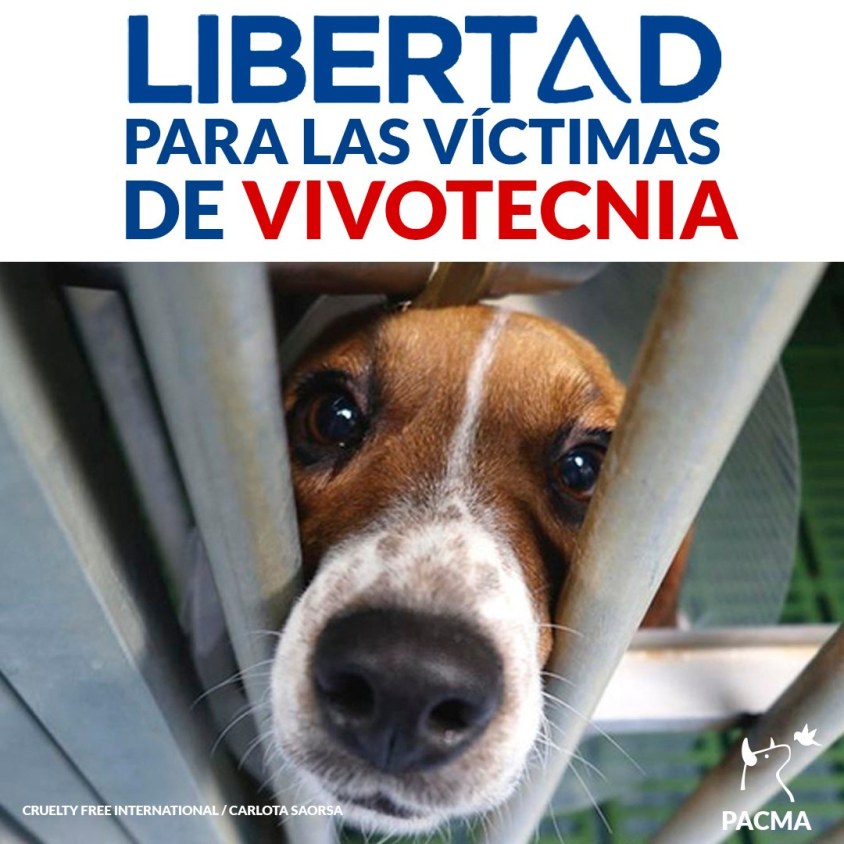
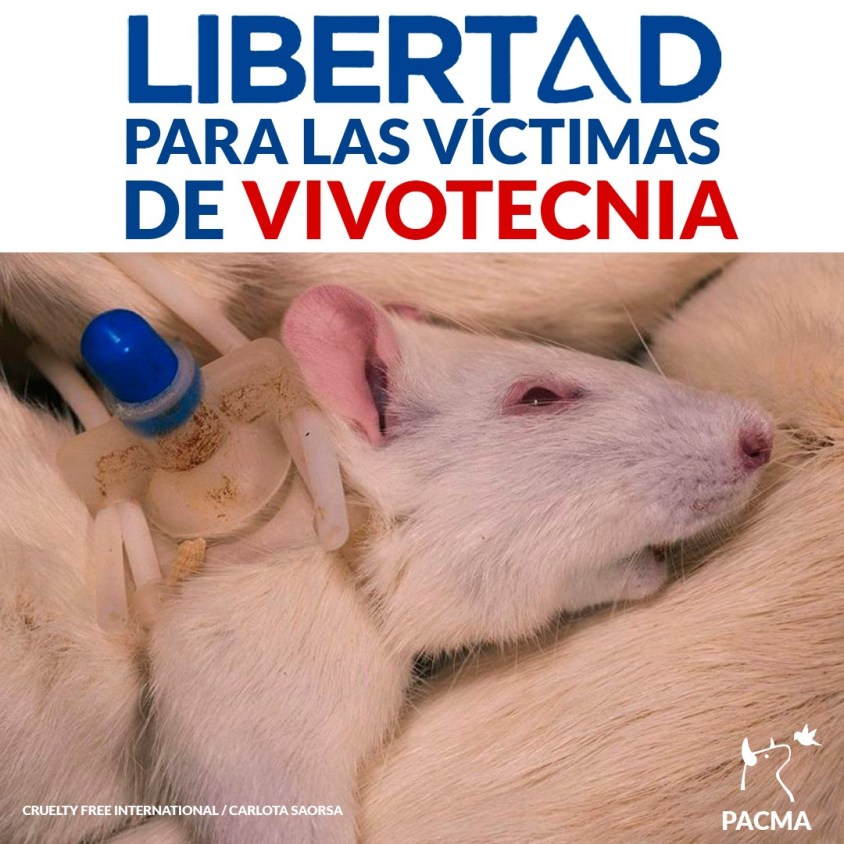
We demand freedom for the victims of Vivotecnia

Vienna, February 8th, 2022- Report from the “Association against animal factories”

Update: Dogs Still At Risk From Animal Experimentation Death!
The University of Barcelona is sticking to the killing of the beagle puppies, animal rights activists protested on site – at least 6 dogs are said to have been rescued.

The “Association against animal factories” (VGT) reported on the local and international outrage after the discovery of a case of animal testing on behalf of the University of Barcelona.

A total of 38 beagle puppies were to be used and given varying doses of a drug over 28 days.
Animal rights activists have been working for weeks with strong support from the population to ensure that the dogs are placed in a loving home after the experiment.
Even high-ranking politicians in Spain have already spoken out.

However, these demands continue to be ignored by the university and the contract laboratory.
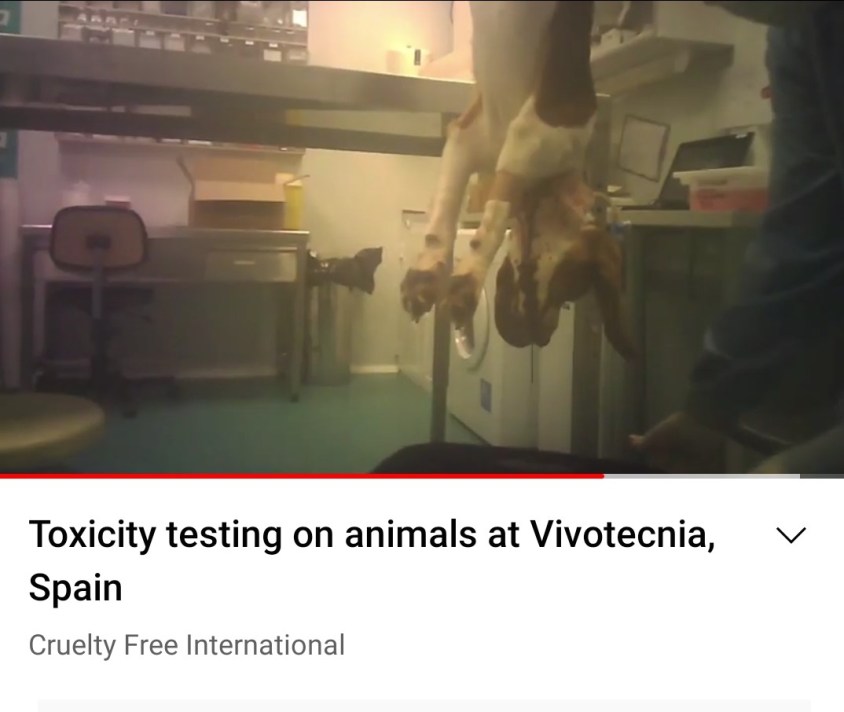
Only six dogs are to be adopted – the rest are to be “slaughtered” and cut up after the end of the trial.

The animals remain behind the walls of the laboratory, being tortured and mistreated every second of their tragic lives.

What does the contract laboratory say

Those responsible now argue that the killing and cutting up of the animals were already stipulated in the test contract. While local animal rights activists and international animal experimentation critics advocate minimally invasive biopsies to save the lives of the dogs, the university and laboratory remain merciless.

The fact that a laboratory that has already been conspicuous for animal cruelty in the past is commissioned is still part of the criticism.

https://worldanimalsvoice.com/2021/09/24/horror-laboratory-vivotecnia-in-spain-a-crime-in-which-all-the-workers-were-involved/

“Stress, violence and poor housing conditions in the laboratory not only cause animal suffering, they can also render test results unusable.
For example, stomach ulcers can be triggered by medication or by stress and pain!
This fact is inexplicably often ignored in the animal testing industry,” explains VGT campaigner Denise Kubala.

We support the tireless efforts of local animal rights activists in Barcelona who continue to fight for the lives of beagle puppies.
Universities should set an example when it comes to research.
Instead, the University of Barcelona hires a lab that has repeatedly violated EU and Spanish laws.
The published recordings from there are difficult to bear, but they illustrate the need to finally act and to promote and establish non-animal methods comprehensively.

https://fb.watch/b2x9VfK1cG/

With the ECI we can show the EU that something must finally be done!
Everyone who hasn’t signed yet, please sign and share now

Petition: https://eci.ec.europa.eu/019/public/#/screen/home

https://vgt.at/presse/news/2022/news20220208ff.php

And I mean…The University of Barcelona claims that the killing of the 32 dogs was necessary in order to be able to research the effect and safety of the tested preparation through autopsies.

And because the university does not have any space to carry out such animal experiments, the company Vivotecnia was commissioned to do it. The university’s statement goes on to say that there is currently no known alternative that could replace this type of research.

However, the Vivotecnia company was banned from lab work by the Madrid regional government after a video by animal rights organization “Cruelty Free International” showed the lab’s staff brutally and illegally treating the animals, further calling into question their research methods.

There can be no question of research, it is about business between politicians and private companies!
We demand an immediate end to the outdated, dangerous and cruel animal toxicity tests and the closure of the lab. These tests bring no safety for humans and for animals only a cruel life and an even more cruel death.

We stand in solidarity with the animal rights activists in Spain who are trying to save these animals.
Thank you for your courage, perseverance and fighting spirit.

My best regards to all, Venus

Frogs regrow amputated legs in breakthrough experiment.

Frogs regrow amputated legs in breakthrough experiment (msn.com)

An African clawed frog with normal limbs.
© Provided by Live Science An African clawed frog with normal limbs.

Scientists have regrown frogs’ amputated legs after giving them a “cocktail” of drugs encased in a silicon stump. 

African clawed frogs (Xenopus laevis) are like humans in that they can’t naturally regrow lost limbs. In the new study, researchers successfully coaxed the frogs to grow replacement limbs in 18 months following a treatment that lasted just 24 hours. While there’s a massive difference between frogs and humans, the finding raises the possibility that in the future, humans could also regrow limbs.

“It’s exciting to see that the drugs we selected were helping to create an almost complete limb,” first author Nirosha Murugan, a research affiliate at Tufts University in Massachusetts, said in a statement. “The fact that it required only a brief exposure to the drugs to set in motion a months-long regeneration process suggests that frogs and perhaps other animals may have dormant regenerative

Animals have natural abilities to regenerate themselves. For example, human bodies close open wounds and can even use stem cells to regrow parts of the liver. Some animals, such as salamanders, can regrow whole limbs and other missing parts. The mechanisms behind limb regeneration are not fully understood, but neither humans nor adult frogs are capable of regrowing legs and arms, perhaps because those limbs are so complex. 

Both humans and frogs cover an open amputation wound in scar tissue to stop further blood loss and infection. Humans have developed prosthetic replacement limbs but scientists have been unable to recover or reverse the loss of a major limb like an arm or leg. 

The latest research used multiple drugs to regenerate lost limb tissue. The team surgically amputated frogs’ legs and then applied a silicone cap they called a “BioDome” to each frog’s wound. The cap released a cocktail of five drugs, including growth hormones, that perfomed different roles, such as encouraging nerves and muscles to grow. One of the drugs also prevented the frogs’ bodies from producing collagen, which normally causes wounds to scar over.

“Using the BioDome cap in the first 24 hours helps mimic an amniotic-like environment, which, along with the right drugs, allows the rebuilding process to proceed without the interference of scar tissue,” co-author David Kaplan, a professor of engineering at Tufts University, said in the statement. 

Embryos and fetuses develop in an amniotic sac during pregnancy. The team was able to trigger some of the same molecular pathways in the frogs that are used when an embryo is growing and taking shape. 

The new legs looked similar to normal legs with similar bone structure, except for the toes, which lacked underlying bones. The frogs were able to use their new leg to swim like a regular leg. 

The findings were published Jan. 26 in the journal Science Advances

Originally published on Live Science.

Regards Mark

Monkey on loose in Pennsylvania after crash on way to laboratory

The last of the monkeys that escaped from a truck after it had crashed on a Pennsylvanian highway have been accounted for and three have been euthanised.

Several monkeys had escaped following Friday’s collision between the pickup truck transporting them and a dump truck, but only one had remained unaccounted for as of Saturday morning, prompting the Pennsylvania Game Commission and other agencies to launch a search for it in frigid weather.

Officials later released the photo of one of the primates perched in a tree in the freezing cold night.

The macaques, originally from Mauritius, were brought to New York by plane on Friday, according to the WNEP television station.

They were to be transported by truck to a laboratory in Florida. Long-tailed macaques, also known as cynomolgus monkeys, can cost up to $10,000, according to a New York Times report, and are in high demand for vaccine research.

Kristen Nordlund, a spokesperson with the federal Centers for Disease Control and Prevention, said in an email on Saturday evening that all 100 of the cynomolgus macaques had since been accounted for and three were euthanised.

The email did not elaborate on why the three were euthanised or how all came to be accounted for. But Nordlund said those euthanised were done so humanely (??)

The shipment of monkeys was en route to a quarantine facility after arriving on Friday morning at New York’s Kennedy airport from Mauritius, police said.

The location of the quarantine facility and the type of research for which the monkeys were apparently destined weren’t clear, but cynomolgus monkeys are often used in medical studies.

A 2015 paper posted on the website of the National Center for Biotechnology Information referred to them as the most widely used primate in preclinical toxicology studies.

Earlier, police had earlier urged people not to look for or capture any monkey.

State trooper Lauren Lesher had said the concern was “due to it not being a domesticated animal and them being in an unknown territory. It is hard to say how they would react to a human approaching them.”(!!!)

Crates of live monkeys lie after an accident on State Route 54 at the Interstate 80 intersection while police search for more monkeys. Image: dpa

The collision occurred on Friday afternoon near Danville, in Montour county, on a state highway near an Interstate 80 exit.

The drivers of the trucks weren’t harmed and a passenger was transported to a medical centre for treatment of suspected minor injuries, according to the state police’s crash report.

Crates littered the road as troopers searched for the monkeys, rifles in hand. Firefighters used thermal imaging to try to locate the animals and a helicopter also assisted.

https://www.theguardian.com/us-news/2022/jan/23/last-of-escaped-monkeys-accounted-for-and-three-euthanised-after-crash-in-pennsylvania

And I mean…We want to correct the language of the reports´: There are no “laboratory monkeys”.
There are only captive animals that are abused by unscrupulous people for senseless laboratory experiments.

Solidarity with the escaped torture victim!!

If you see him, don’t call anyone, the death penalty awaits him for breaking their fascist rules when he tried to exercise his right to freedom.
We hope and wish that he can live a good life now.

My best regards to all, Venus