Category: Vivisection

EU: Animal protection organisations and cosmetics brands defend animal testing bans.

Animal protection organisations and cosmetics brands defend animal testing bans

2 December 2020

This morning, close to 500 brands and animal protection organisations sent an open letter to the EU Parliament, Commission and Council calling on them to uphold the cosmetics regulation bans.

The animal testing and marketing bans included in the EU Cosmetics Regulation have been used as the gold standard around the world: setting the precedent for products and ingredients to be sold without subjecting animals to cruel tests. These bans have now been dealt a devastating blow following a series of decisions taken by the European Chemicals Agency (ECHA), with support from the European Commission and the ECHA Board of Appeal. 

ECHA’s decision totally contradicts the European Parliament’s call in May 2018 for a worldwide ban on testing cosmetics on animals by 2023. ECHA is now requiring some widely used cosmetics ingredients to be tested on thousands of animals to be in line with the Registration, Evaluation, Authorisation and Restriction of Chemicals regulation (REACH). This undermines the purpose and value of the EU Cosmetics Regulation, and it could also impact non-EU countries, potentially compromising the legislative development of  their own animal testing bans.

One of the principal objectives of the Cosmetics Regulation is the protection of human health, with the intention that this be safeguarded in all situations. The ingredients at the centre of ECHA’s decisions have a long history of safe use by consumers and have been handled safely in factories for many years. It is perfectly possible to use exposure-based weight-of-evidence assessments, employing a variety of non-animal data, to fill any perceived critical information gaps.

The EU ambitions for chemical safety cannot be addressed with more animal testing. The Commission’s future policy for chemicals regulation – the Chemicals Strategy for Sustainability – is set to greatly expand testing requirements for cosmetics and other chemicals. Animal-free safety assessment approaches will be an absolute necessity to guarantee the safety of humans, animals and the environment under the goals of the EU Green Deal.

“At a time where we clearly need concerted actions and strategies to move towards more effective and humane science, it is disappointing to see the only historical  ban on animal tests being shredded. We hope the Commission, the Parliament, and the Council do everything in their power to uphold the will of the public and enforce the animal testing ban for cosmetics. Moreover, it is high time for the Commission to lead the way towards human-relevant science and formulate a strategy to phase out the use of animals for other testing purposes, research and education in all scientific areas” commented  Reineke Hamelleers, CEO, Eurogroup for Animals.

The open letter and list of signatories can be downloaded here.

Letter and signatories:

To: David Maria Sassoli, President, European Parliament
Charles Michel, President, European Council
Ursula von der Leyen, President, European Commission
Cosmetics Animal Testing Ban Effectively Shredded
The EU Cosmetics Regulation animal testing and marketing bans have been used as the gold
standard around the world – setting the precedent for cosmetics products and ingredients to be
used safely without subjecting animals to cruel and unnecessary tests. These bans have now been
dealt a devastating blow following a series of regulatory decisions made by the European
Chemicals Agency (ECHA), with support from the European Commission and ECHA’s own
Board of Appeal.
ECHA is now requiring some widely used cosmetics ingredients (and ingredients used in many
other types of consumer products) to be tested on thousands of animals under the guise of the
Registration, Evaluation, Authorisation and Restriction of Chemicals (REACH) regulation. As a
direct result of these decisions, the use of thousands of rats and rabbits in tests is required, some
of whom will be force-fed a cosmetics ingredient throughout pregnancy before they and their
unborn offspring are killed and dissected. REACH must not be used to circumvent the Cosmetics
Regulation and render the cosmetics testing and marketing bans meaningless.
The approach of ECHA and the Commission is at odds with the European Parliament’s call in
May 2018 for a worldwide ban on testing cosmetics on animals by 2023. It undermines the
purpose and value of the Cosmetics Regulation, which many of us have worked determinedly
over many years to shape, implement, and leverage with non-EU countries in developing their
own cosmetics legislation. The approach also has consequences for citizens around the globe
who want to purchase cruelty-free products: 84% of respondents to a recent global survey said
they would not buy a cosmetics product if they knew it (or one of its ingredients) had been tested
on animals.
1
The bans are further threatened by the Commission’s future policy for chemicals regulation – the
Chemicals Strategy for Sustainability – which is set to expand testing requirements for
substances including cosmetics ingredients, at the cost of potentially thousands of animals’ lives.
One of the principal objectives of the Cosmetics Regulation is the protection of human health,
with the intention that this be safeguarded in all situations. The ingredients at the centre of
ECHA’s decisions have a long history of safe use by consumers and have been handled safely in
factories for many years. It is perfectly possible to use exposure-based weight-of-evidence
assessments, using a variety of non-animal data, to fill any perceived critical information gaps in
order to be assured of the safety of these ingredients.
Indeed, as clarified by the Court of Justice of the European Union in the 2016 European
Federation for Cosmetics Ingredients case, new safety-assessment data for cosmetics substances
imported into the EU must rely only on non-animal assessment methods. Logically, precisely the
same approach must be adopted for testing within the EU, whether under REACH or any other
EU legislation.
We, the undersigned, call for the EU cosmetics animal testing ban to be upheld as intended, with
no new tests on animals allowed.

1 Frame. Fact or fiction? Mapping perceptions of animal testing. https://frame.org.uk/wpcontent/uploads/2020/06/FRAME-report_final.pdf. Published June 2020. Accessed 13 November 2020.

Can they ignore this ?


24K Cosmetics ADDA, Spain
28 Litsea ANIMAL, Portugal
4organic Animalia, Finland
Abela Animals Without Borders, Croatia
Above Beyond Group Ltd Cruelty Free Europe
actiMare natural cosmetics Cruelty Free International
AD skin synergy Diervriendelijk Nederland
Adesse New York EcoVegAnimals, Bosnia
Aesop Eurogroup for Animals
Agilise Cosméticos European Coalition to End Animal Experiments
All About Good Vibes GAIA, Belgium
Alter-Native Humane Society International
Alucia Organics LAV, Italy
Alvend Laboratoire Menschen für Tierrechte – Bundesverband –
Amanda Murray NYC der Tierversuchsgegner e.V.*
Aqua Natural (*People for Animal Rights – German Association –
Aqua Natural Ltd. Against Vivisection)
Arctic Fox PETA Australia
AREU AREU PETA Deutschland e.V.
Argital PETA France
ARTONIT Cosmetics PETA Nederland
Assured Products Ltd. PETA UK
Astonish PETA US
Aurelia Probiotic Skincare SAFRIreland
Aurelia Skincare Ltd Stichting Proefdiervrij
Ava May Aromas Svoboda Zvířat, Czech Republic
Avon
Awake Organics Ltd.
Ayumi
B4U Laboratories
Baby Mantra
Bacana Skincare
Bara Cosmetics
BareFaced Beauty Ltd.
Barr Cosmetics
Bashia Cosmetics
Beauty Disrupted
Beauty Kitchen UK Ltd
Beauty Magic
Beauty Without Cruelty
beBIO
Bee Good Enterprises Ltd.
Bellapierre Cosmetics Ltd.
Bellati Naturals
Better Health Ltd.
BH Cosmetics
Biocosmetics
Biotakara
BIW BIW
Black Dahlia Lacquer
Black Sheep Organics
Blaq
Bliss Delights
Bluebird Skincare
blum organics
Body & Face St Cyrus
Body & Face St Cyrus Ltd
Bolt Beauty Limited
Bo-Po Nailpolish (Worx Toys)
Botanico Vida
Botanics
bPerfect Cosmetics
Bramley Products Ltd.
Brooks-Hill Limited
BrushBox
Buff Efforts
buScreen
Butterwhips Ltd
Cafuné
Capure Goat Milk Soap
Cemon Homeopathics Ltd
CHEMEXC S de RL
Dermacare
Chemical Manufacturing and
Exporting Company S de RL
Chez Lapin Goods
Childs Farm Ltd
Chistaya Linia
Christiane Heyn
Christine Valmy
Clean Beauty Distribution
CocoMak
Cocunat
COLORISI
Coloured Raine
Comette Cosmetics
Conscious Skincare
Cool & Nature M32 SL
Copaibe
Corinne Taylor Holistic
Therapy
Coruscare
Cosmondial
Crane + Wilton Ltd
Crowd Culture
Crystal Spring Consumer
Division Ltd
Cultivator Natural Products
Private Ltd.
Day Lily Paris
Della e Delle
Dermalogica
Desert Pea
Designer Lashes UK
Doers of London
Doers Skincare Limited
Dove
Dr Jackson Limited
Dr. Jacobs Naturals
Dr. Perry’s
DrTung’s
E Beauty Ltd.
Earth Conscious Ltd
Earth Sense
Eco Chic Chick
Ecoleaf
Ecotech
Eleni & Chris
Elidor
Elixir Treatments
Elizabeth Mott
ELLIS FAAS Cosmetics
Eloise Hall Ltd.
Emeis Holdings Pty Ltd
Emerge
Emma Hardie Ltd
Endemic Biotech S.L.
Enviro-works
epic beauty
EQ France
Equus Mare
Era Organics
Erui Cosmetics
Essante Organics
EXQUISITE Luxury Ltd
Extraordinarios Luxo Natural
Face Cult
Fair Squared
Faith in Nature Ltd.
Farryn Amber
FATFACE
FatFace UK Ltd
FFS Beauty Ltd.
FINE Deodorant
Floral Street Fragrance
FLOSLEK
Folly Fire
For Your Nails Only
Forest Herbs Research
Fragile Cosmetics
Frances Prescott
Franline Ltd
Friendly Soap Ltd.
Fuchsia Brands Pty Ltd
Fudco
Funky Soap Shop Ltd
Fushi Wellbeing Ltd
Fusion Body Art
Fysha
Gaia Skincare Limited
GEL.IT.UP by GIUP®
Gel.IT.UP Greece
Gelstory
Gestion
Comercial Integral Navalon SL
GHS Direct Ltd
Girls with Attitude
Good3
Green Beauty Cosmetics
Green Beaver Company
HAER Limited
HAKA Kunz
Hanaei Beauty Company
Happy Carrot Skincare Ltd
Hashtag Brothers
Here We Flo
Heroine
Hibisco cosmetica natural
Home and Body Company
Homethings
Hourglass Cosmetics
HOWND
I AM Cosmetic
i+m NATURKOSMETIK
BERLIN
IC Scandinavia AS
Ihana Skincare
Ikeda Group Pte Ltd
iLevel Lab
Imperial Bioscience Ltd
Inari Skincare Ltd.
Inlight Beauty & Wellness
InnoNature
InovAir Ltd (“Pairfum”)
Insphy
Institut Claude Bell
Internet Café-BG Ltd.
IRÉN
J Bloom Cosmetics
Java Cosmetics
Jax Wax
Jessica Laura Organics Ltd.
JL Cosmetica Natural
Jolie Vegan
Julie Clarke Candles
Kaia Naturals
Kalentin
Kama Soap
Karma Organic Spa
Kate Somerville
Kativa
Katmandu
Kiss the Moon Ltd
Kit and Kin
Koh Australia Pty Ltd
Kokoro Beauty and Lashes
Korah Tools
Kri Skincare Ltd
KUXTAL
Kylies
La petite main
Lab Phyto
Laber Organic Cosmetics
Laboratoire Hippocrate
La-Eva
Lano
Lanolips
Lanolips Pty Ltd
Laura Sanchez Makeup
Laviish
Leac de un Veac
Les Happy Curiennes
Li Cosmetic AG
LI Pigments
Lipstains Gold
Lisa Nail Lacquer
Lissea Limited
Little Danube Limited
Little Soap Company
Living Proof
LivOliv Cosmetics
Liz Earle
LLB Skin
Lock Stock & Barrel
Grooming Co Ltd
London Copywright
Look Fabulous Forever
Loopy Products Limited
Love Beauty & Planet
Love Henri Ltd
Love Home & Planet
Lovely Pop
Lucy Bee Ltd
Lukasz Romuk Wodoracki t/a
1stDrop
Luna Bronze
Luna Nectar
M32 Natural
Ma Sista Stuff
Made for Life Organics
Made in Youthland
Magic Lips
Maison de Navar
Mama Zebra Cosmetics
ManCave Ltd.
Marie Hunter Beauty
Mark Birch Trichlogist
Marks & Spencer PLC
Mary Jean Limited
Matana Skincare
Mawena
Maysama Ltd
Medeau
Mediterranean Tan
Melchior & Balthazar
Mervue Natural Skincare
Milton Keynes Products
Limited
Minoris Organik
MOB Beauty
Modern Botany
Molton Brown Limited
Mommy Makeup
Moss & Adams
Motherlylove Limited
MuLondon Ltd
Murad LLC
Myrtle & Maude Ltd.
Naissance
Nakin Skincare
Naroma
Natroma & The Natural
Soapworks
Natura
Natura &Co
Natura Cosméticos S/A
Natural by Nature Oils Ltd
Naturally Tribal Skincare Ltd
Nature Knows Best
Nazan Schnapp GmbH
Neal’s Yard (Natural
Remedies) Ltd
Neat Wholesale
Neo Make Up
NeoHair Ltd
New Look Cosmetics
Nomad Cosmetics
Nubian Heritage
Nursem
Oceane
October Fields
Ofra Cosmetics
Om Oils
One Chem
Orbit Pad
Organic and Nature
ORGANii
Ouidad
Pachamamai
Pai Skincare Ltd.
Paima Beauty
Pamoja Skincare Ltd
Passion Cosmetics Paris
Patricia Deleon Cosmetics
Paula’s Choice
Paws Beauty
Pee Safe
Perfect Girl
Persona Cosmetics
Pet Revolution Ltd
PHB Ethical Beauty Ltd
Phil Smith Be Gorgeous
Phil Smith Be Gorgeous Ltd
Planted
Planted Skincare
Pluscosmetica Duo
Poppy’s Natural Skincare
Popwhite
Power Health Products
Power Health Products Ltd
Power Pets Brands
Previa S.p.A.
PRIIA Cosmetics
Primal Essence
Procarton
Pure Argan Co Ltd
Pure Chemistry S.A.S.
Pure Essence Collection Ltd
Raen
Rawgaia
Releaf
Ren Clean Skincare
Renpure
Reviv Serums
Rhug Organic & Natural Ltd
Rhug Wild Beauty
Romilly Wilde
Rosenserien
Royal Tara Giftware Limited
rue Santé
Safe Nails
SAHARA International Group
Salt of the Earth
SAMAYA Ayurveda Limited
Sampure Minerals
Sana Jardin Limited
Sanjeevita
Sanoll Biokosmetik GmbH
Santaverde GmbH
Sapunta Malta
Sasy n Savy
Saving Face Limited
Schmidt’s Naturals
Secrets Cosmetiques
Seda
Sedal
Sensori Plus
Sepai Laboratories
Seraphine Botanicals
Seventh Generation
Shea Moisture
Shea Shea Bakery
Shea-Me Ltd
Silvan Skincare
Simple
Simple Alchemy
Siskyn Skincare
Sister & Co. Skin Food
six gldn
Skin Sapiens Ltd.
Skinny Sprinkles
SKN-RG Ltd.
Sky Organics
Smith England
Smol Ltd
Sno Eternelle
Soaper Delights
Sonia Orts
Spiezia Organics Ltd
Splosh Limited
St Ives
Starbrands S.A.C.
Stereo Color
Suave
Suds
Sue Marsh
Sugar Coated Ltd
Sugar StripEase
Sukrit Ayurveda
Suma
Suma Wholefoods
Sunsilk
Suntegrity Skincare
Sweden Eco
Synergy Biologics
Tailored Beauty
Tan Organic
Tandem Skincare
Tarsago Ltd
Tatcha
Technology
teethlovers
The 7 Virtues
The Aftercare Company
The Barberia
The Beauty of Eczema
The Bio-D Company Ltd
The Body & Face Place
The Body Shop
The Co-Operative Group
(CWS) Ltd
The Dartmoor Skincare
Company
The Good Garden
The Good Stuff
The Green People Company
The Konjac Sponge Company
Ltd
The London Oil Refining
Company Ltd
The Naissance Trading &
Innovation Co. Ltd.
The Natural Barber Co.
The Perfume Laboratory
The Pure Collection
The Victorian Garden OrganicSkincare
Thermitek Ltd
Think Beecause
Thunderbird Skin
Tolteca
Total Solutions Inc
Trebol Verde
TRUE Skincare Limited
Two Orchards Ltd
Two Plants
TYH London
Ultra Glow
Ultra Glow Cosmetics Ltd
Unilever
Urban Veda
Vegan Beauty Care
Velveit Cosmetics
Velvet & Sweet Pea’s
Purrfumery
Ville de Fleurs
Visage Pro
Watermans
Wax Melts International
Limited
White Rabbit Skincare Ltd.
Whitfords
Wiig
Wild & Wolf
Wilde Beauty Limited
Wildwash
Yaya Maria’s
Yes Nurse
Y-Not Natural
You & Oil
Young ePure
Zendium
Zeva Organics
Zoya Goes Pretty
Zyderma

Cruel corona animal experiments-business goes on

Senseless, cruel corona animal experiments

The well-known biologist, non-fiction author, and vaccination critic Clemens Arvay (“We can do it better”) recently posted on Facebook about the additional millions of cruel animal experiments for the completely senseless (the virus has already mutated 1000 times) and the highly dangerous new corona vaccination, which would directly genetically modify us humans and of which at least one human “guinea pig” has already died in Brazil (see, among others, in Heute. at https://www.heute.at/s/erster-teilnehmer-von-corona-impfstudie-gestorben-100108605):

“Locked up in cages. Vaccinated. Infected with the virus. Observed when sick. Killed after 7 days of infection, autopsied, and disposed of.

This is the fate of innumerable monkeys, brothers, and sisters.
I get sick studying all these vaccine studies. What a gruesome, by greed for money, and at the same time, hypocritical species is ours!
I will never finish my work, even if I would sometimes just turn away in disgust and move into a forest hut. (Clemens Arvay)”

And an initiative “Understanding animal experiments” installed by the pharmaceutical industry is lobbying for even more cruel animal experiments: “Without animal experiments, there is no corona vaccine” …”https://lokalo.de/artikel/214020/initiative-tierversuche-verhaben-ohne-tierversuche-kein-corona-impfstoff/ (!!!)

Therefore, please be sure to sign the “referendum for vaccination-free”, which will take place from 18.-25. January is in Austria to sign!

https://www.animal-spirit.at/news/grausame-corona-tierversuche

https://www.heute.at/s/erster-teilnehmer-von-corona-impfstudie-gestorben-100108605

And I mean…I don’t know about you, but the word corona creates anger of the highest order in me.
Because I think of Hans Christian Andersen’s fairy tale “The King’s New Clothes”.
The narrative is cited today as an example to criticize gullibility and the uncritical acceptance of alleged authorities and experts.

The deception is so great that hardly anyone dares to question it:
– Who checks the vaccines for reactions?
– Are reactions checked?
– Why are our general practitioners not allowed to vaccinate?
-Why tested on animals when animals are not getting the virus?

The ridiculous initiative “https://lokalo.de/artikel/214020/initiative-tierversuche-verhaben-ohne-tierversuche-kein-corona-impfstoff/…will work “comprehensively, up-to-date and fact-based” according to its own statements.
This means: “When developing vaccines, animal experiments … examine possible side effects”.

And then comes the news: “The first participant in the corona vaccination study died”!
Now we can collectively wonder again how many of us human “guinea pigs” will survive this vaccination war.

animal experiments

The animals were the first victims to fall in vain, as always.
Because they couldn’t fight back.
Maybe we can do it better

My best regards to all, Venus

Get Personally Involved: Survey on Experimental Models in Research; Take Part Link Below.

Survey on Experimental Models in Research

26 November 2020

This survey is centered on European research, and is an instrument to be made available freely to interested stakeholders to shape the public discourse on biomedical research.

It will be used to map the reality of the European biomedical research models – animal or non animal, tracing as accurately as possible the state, perspectives, needs, and expectations of those that made research their call.

An ever growing number of stakeholders, from within and outside research practice, participate in the shaping and definition of key research policies, each with specific agendas and values. A credible depiction of the reality, articulation, and complexity of European research will be a meaningful instrument to help the public dialogue remain focused on the effective needs of research itself, embedding outside considerations but not suffering undue influence.

The survey includes multiple questions on the use of animals in research. 

To take part – Click on the word ‘here’; or follow the EU Survey link given below.

Take the survey here.

EUSurvey – Survey (europa.eu)

Read more at source

EU Survey

Germany: Positive News – Animal-free method predicts nanoparticle toxicity for safer industrial materials.

Animal-free method predicts nanoparticle toxicity for safer industrial materials

26 November 2020

Germany:

At Helmholtz Zentrum München, the research group of Dr. Tobias Stöger, in collaboration with partners from the SmartNanoTox EU project, gathered insights on the toxicity of nanoparticles and managed to predict the spectrum of lung inflammation using only in vitro measurement and in silico modeling.

Our lungs are exposed to a multitude of hazardous airborne particles on a daily basis. Nanoparticles, due to their small size, may reach the sensitive alveolar region of the human lung and trigger inflammation even after a single inhalation leading to severe diseases such as heart disease, brain damage and lung cancer for prolonged exposure.

In manufacturing, toxic nanoparticles may be released into the environment during the production, processing, degradation or combustion of materials. Despite advances in models for nanotoxicology, currently neither in vitro nor in silico testing tools can reliably predict adverse outcomes or replace in vivo testing. In order to facilitate the introduction of safer materials into our lives, novel testing strategies are needed to predict the potential toxicity of industrial nanoparticles before and during the manufacturing process. 

Currently, safety testing relies heavily on animal studies.

While animal experimentation is still indispensable for mechanistic and chronic toxicological studies, they are less suited for predictive tests within a safe-by-design production of new materials. This study introduces an alternative animal-free testing strategy, capable for high-throughput testing and connectable with in silico modelling.

Read more at source

EurekAlert

EU: Leading Animal Protection Groups Join Forces for Animal Testing Bans.

Leading Animal Protection groups join forces for animal testing bans

23 November 2020

Following calls from EU authorities for cosmetics ingredients to be tested on animals, Europe’s leading animal protection groups have sent a joint statement to MEPs urging them to uphold the groundbreaking cosmetics testing and marketing bans.

Even though the testing of cosmetics ingredients on animals is banned under the EU Cosmetics Regulation, the European Chemicals Agency (ECHA) and the European Commission (EC) argued that even ingredients used exclusively in cosmetics may still be tested on animals under the REACH regulation (Registration, Evaluation, Authorisation and Restriction of Chemicals) if there is a possibility of workforce exposure during the manufacturing process. For cosmetics ingredients also used in other types of products, tests on animals may, they say, be required regardless of any potential for workforce exposure.

It is imperative that the purpose of the Cosmetics Regulation – that cosmetics products are safely brought to market using only non-animal data – be met without compromising the bans. For ingredients marketed under the Cosmetics Regulation that have a history of safe use by consumers and of controlled handling on the factory floor, robust protection of both workers and consumers is already enabled through a variety of non-animal assessment methods and the careful application of exposure assessments. When regulators decide that a new ingredient cannot be brought safely to market without animal testing, its introduction should be delayed until additional non-animal test methods are available.

The recent administrative decisions are not the end of the road for the cosmetics testing and marketing bans. We maintain that new safety assessment data for cosmetics substances imported into, manufactured or sold within the EU may only rely on non-animal assessment methods. The wishes of citizens and legislators are clear: ECHA and the European Commission must be held accountable and compelled to uphold the terms of the EU cosmetics animal test and marketing bans as originally intended.

As animal protection organisations, we call for the European Parliament and the European Commission to ensure that the following mandates are urgently carried out:

• The EU bans on animal testing for cosmetics and the marketing of ingredients tested on animals must be fully upheld and implemented as intended by the legislators. 

• EU test requirements – including requirements set out in REACH – must not undermine the bans but instead must apply a substance-tailored approach to ensure consumers, workers, and the environment are protected without further tests on animals. 

• The European Commission must devise a robust testing strategy for cosmetics ingredients using only available non-animal assessment strategies so that the implementation of the Chemicals Strategy for Sustainability reflects the overwhelming support for strengthening – rather than weakening – the protection of animals in Europe. 

The joint statement and list of signatories can be seen here.

ADI urges WHO to cut animal tests to tackle COVID-19.

ADI = Animal Defenders International

https://www.ad-international.org/about_us/

ADI urges WHO to cut animal tests to tackle COVID-19

16 November 2020

An open letter, spearheaded by ADI, is calling for the use of non-animal research methods in the search for a vaccine for COVID-19. Although animal testing is not required, and often unreliable, it is still taking place globally.

Animal Defenders International (ADI), a member of Eurogroup for Animals, has prompted an open letter directed to the World Health Organisation concerning animal tests. The letter calls for advanced non-animal research methods to be prioritised in order to accelerate the discovery and use of effective vaccines and treatments for COVID-19, and has been signed by nearly 100 experts, academics, and other concerned parties. It states that “significant funding and precious time is being spent on animal research…. despite the known species differences which make the results from such data unreliable when translated to humans.”

Usually, vaccine research and development takes up to 15-20 years, but thanks to international collaboration, a vaccine for the SARS-COV-2 virus might be available as soon as next year. Animal research is a major part of this process. The International Coalition of Medicines Regulatory Authorities (ICMRA) has now stated that efficacy tests using animals are not required before proceeding to human clinical trials. Despite this, these tests are still taking place, even alongside clinical trials in some cases.

Safety testing on animals, however, is still required. For these tests, animals are typically force-fed or injected with a substance while restrained, and suffer debilitating, even fatal, side effects. In all this, animal testing remains an unreliable way to predict the effects of drugs in humans due to species differences. More than 90% of drugs that prove promising in animal trials fail in humans, either due to lack of effectiveness or safety concerns.  Even though this issue is widely recognized, laboratories around the world continue to use animals to test possible vaccines for COVID-19. Jan Creamer, ADI President, states: “There is an urgent need to tackle and treat COVID-19 and other human disease with better, faster science. To provide safer, more effective treatments to help people, we need to move away from unreliable animal research and use advanced scientific methods, more relevant to humans.”

Dr Aryan Tavakkoli MRCP FRACP, a respiratory physician, mentions that the respiratory systems of animals used for COVID-19 research are known to be different from ours physiologically, so it is only logical that human-based methods be prioritised and used for testing treatments and vaccines. He also claims that with incredibly sophisticated methods such as human lung models that are now available, it is vital that resources and time are directed toward these to find treatments and a vaccine for this life-threatening virus.

Besides the open letter, ADI has also launched a petition to cut animal testing in the search of a COVID-19 vaccine.

To help out, you can sign the petition here.

Read more at source

ADI

USA: Legislation to Create NIH Center for Advancing Non-Animal Research Introduced in US Congress.

Legislation to Create NIH Center for Advancing Non-Animal Research Introduced in US Congress

9 November 2020

A New York-based nonprofit group, CAARE, that led the drive to create legislation to promote “cutting-edge methods” of research superior to animal-based testing, today lauded the announcement that the “Humane Research and Testing Act of 2020” has been introduced in US Congress.

Landmark bipartisan legislation to promote and fund scientifically advanced, human-relevant, non-animal methods through the establishment of a dedicated center under the National Institute of Health (NIH) was introduced by Congressional members Alcee Hastings (D-FL) and Vern Buchanan (R-FL).

Barbara Stagno, president of Citizens for Alternatives to Animal Research & Experimentation, commends the effort, noting: “CAARE is grateful to Representatives Hastings and Buchanan for introducing this legislation that has great promise to change the current paradigm of routine use of animals in laboratories when there are available alternatives, and gives real impetus to reducing animals by establishing a center exclusively for that purpose.”

The “Humane Research and Testing Act of 2020” would create a “dedicated center under the National Institutes of Health (NIH) to provide resources, funding and training to advance humane, cost-effective, and scientifically suitable non-animal methods,” Stagno added.

Because the exact number of animals used in U.S. research is unknown, ranging between 17 million and 100 million annually, the “Humane Research and Testing Act of 2020” is also designed to obtain that data, and requires the NIH to outline a plan for reducing those numbers.

Read more at source

Cision PRWeb

The worldwide trade in monkeys for research: a million-dollar business!

Many animal experimental establishments, such as pharmaceutical companies and universities, breed their animals themselves. Others order animal breeding from commercial “experimental” animals.
Just as one selects books or clothing from a catalog at a mail-order company, live animals are offered for sale at breeding companies.

On the Internet or in the catalog, experimenters can choose from a large selection of different species and breeds. Animals that have been operated on are even offered, e.g. Rats and mice with tied blood vessels or nerves, with the spleen or kidney removed, etc.
Or genetically modified animals in a wide variety of ways, e.g.

“Humanized mice” that have been “implanted” with a specific human gene.

There is no longer even talk of animals, but of “products” and “research models”.

The American Jackson Laboratory offers thousands of different strains of mice whose genome has been manipulated in such a way that the animals develop certain diseases such as cancer, diabetes, or obesity.

The world’s largest “experimental” animal breeder, the American company Charles River Laboratories, has a rodent and rabbit breeding facility in Sulzfeld in the Karlsruhe (Germany) district.

In Cologne, there is a branch of the American company Taconic, which breeds genetically modified mice.
Monkeys are partly bred for research in the German Primate Center (DPZ) in Göttingen (Germany).

Around 95% of the monkeys come from outside the EU.
The largest exporter is China, followed by Mauritius.

There wild monkeys are caught and reproduced in breeding facilities under unspeakable conditions.
The boys are sent to Europe and America to die in the laboratory. AirFrance is the main carrier of monkeys.
Animal experiments are carried out in the following areas:

Continue reading “The worldwide trade in monkeys for research: a million-dollar business!”

German animal experiments researchers: Frankenstein’s out of passion


After the scandal ruling by the Hamburg Higher Administrative Court, according to which the Hamburg animal testing laboratory is allowed to reopen the Laboratory of Pharmacology and Toxicology (LPT), Doctors Against Animal Experiments filed a criminal complaint against the LPT on suspicion of cruelty to animals.

The nationwide association wants to underline the urgency that the people responsible for the animal suffering documented on film must be brought to justice.

In October last year, covert recordings by SOKO Animal welfare from the LPT laboratory in the Lower Saxony district of Mienenbüttel brought scandalous conditions to the public: dogs lying in their own blood and monkeys writhing in primate chairs.
LPT manipulated studies.
For example, animals that have died in a series of experiments are said to have been swapped for living ones without having to properly note this or to take it into account in the further course of the study – with corresponding risks also for human health.

After the undercover investigation, the authorities withdrew the operator’s permission to keep animals because his reliability is not given –
This was done in January 2020 first at the Mienenbüttel location and in February at the headquarters in Hamburg-Neugraben.
Only the 3rd laboratory in Schleswig-Holstein remained unmolested.

In August of this year, the Hamburg Higher Administrative Court overturned the decision of the authorities and allowed animals to be kept at the headquarters in Hamburg-Neugraben again.

The nationwide association Doctors Against Animal Experiments considers the decision to be incomprehensible.
“Even if personnel changes have been made, this does not change the irresponsible behavior of the operator,” said Dr. med. vet. Corina Gericke, Vice Chairwoman of Doctors Against Animal Experiments.


In the opinion of the association, those responsible, especially the managing director Jost Leuschner, must at least be punished.
“The filmed evidence shows very clearly that the crime of cruelty to animals is present.
So the severity of the law has to take effect, otherwise, the animal welfare law degenerates into a laughing stock, ”explains Gericke.

Continue reading “German animal experiments researchers: Frankenstein’s out of passion”

USA: Workers Pry Baby Monkeys Away From Mothers, Electroshock Monkey Penises in Depraved Lab.

Workers Pry Baby Monkeys Away From Mothers, Electroshock Monkey Penises in Depraved Lab

Posted by Dan on September 17, 2020 | Permalink

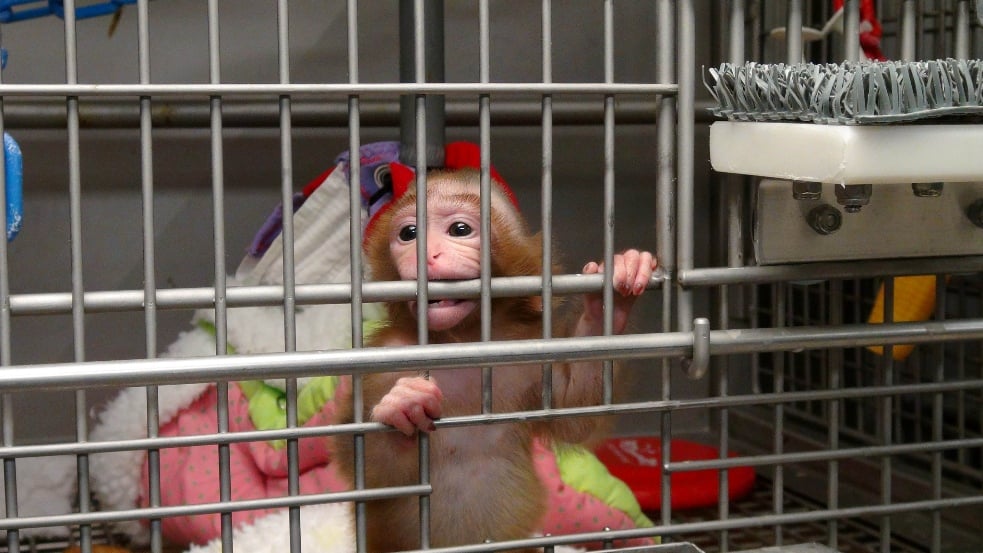
Image shows monkey at WNPRC

A six-month PETA US undercover investigation into the Wisconsin National Primate Research Center (WNPRC) – which keeps nearly 2,000 monkeys in barren steel cages and bleak, windowless rooms – found that highly intelligent animals were being neglected, driven mad by extreme long-term confinement, and attacked by their traumatised cagemates.

Severe Confinement, Constant Stress, and Mutilation

Monkeys at WNPRC spend every day and every night locked inside barren metal cages. They never feel the warmth of the sun on their backs or the earth beneath their feet. Stripped of their autonomy, they’re unable to make decisions regarding the most basic aspects of their lives. Constant, unremitting captivity causes these smart, sensitive animals extreme psychological distress, leading some to injure each other and themselves.

A baby monkey, named Cocoa by the PETA US investigator, was attacked by a severely stressed adult macaque, resulting in deep, painful cuts to her face.

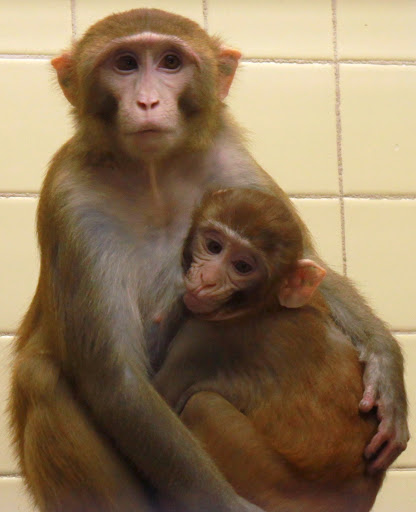
Months later, her wounds still had not fully healed, and she clung to her mother in fear.

Incompatible animals were forced to live together in just a few square feet of space, and a monkey named Ellie lost part of her ear in a fight with a cagemate.

Amputations of parts of fingers, toes, and tails were a common result of the traumatic injuries sustained by monkeys in WNPRC’s care. A worker said that some of these highly intelligent animals were caged alone “because they’re a**holes ” who “beat the crap out of” each other – completely ignoring that the fights were a result of the monkeys’ unnatural, barren living conditions.

One frustrated monkey, known only as r12050, mutilated his own leg down to the muscle. With nothing to occupy his mind, he picked and scratched compulsively at the open wound.

“We’re not supposed to say they look depressed .”

Highly intelligent, social macaques – who, in their natural habitats, explore and roam vast grasslands and lush forests – paced, circled, and shrieked in the never-ending lockdown. One monkey, named Sainte, rocked continuously from side to side, all alone and miserable in a small cage.

When they weren’t being simply warehoused, animals were used in painful procedures and experiments.

Workers euphemistically referred to certain monkeys as “semen donors,” but they had certainly not volunteered for the painful process. Typically, the monkeys are fitted with metal collars, and workers use poles that fasten onto the collars to pull them out of their cages by the neck. The monkeys are then strapped into a restraint chair, and experimenters electroshock their penises until they ejaculate.

Many different types of experiments were being carried out at this facility. One experimenter bred monkeys infected with Zika and simian immunodeficiency virus, which is similar to HIV. Infant macaques were deprived of food overnight for “cognitive testing” and cried endlessly when separated from their companions. A supervisor said that experimenters attempted to infect marmosets—small, delicate monkeys—with COVID-19 but that “nothing happened.”

See the full PETA US investigation here.

Monkeys Are Used in Experiments in the UK, Too – Help Them

In 2019, 2,850 procedures using primates took place in the UK. It’s time to relegate such cruel experiments to the history books.

We must shift away from all procedures using animals.

Sign our petition to support PETA’s Research Modernisation Deal.