Category: Vivisection

Animal testing for the German military – what a shame!

Hundreds of animals die every year for weapons experiments and surgical training

During surgery training or experiments with poison gas, the Military “consumed” thousands of animals in recent years.
A request in the German parliament now revealed comprehensive figures for the first time!

When it comes to animal experiments, pharmaceutical research institutions are usually the focus of the public. However, it is less well known that the German military “consumes” hundreds of pigs, rats, and mice in experiments every year.
This is also due to the fact that such experiments are not fully disclosed in the Federal Government’s publications on animal experiments.

The answer from the Defense Ministry to a request from the parliamentary group “Die Linke” (The Left Party ) now creates clarity.

According to this, the Bundeswehr has used more than 7,500 animals in experiments over the past two decades.

Between 2012 and 2019, the group spent almost two million euros on animal experiments for training and for military technology and military medical research.

Around 85 percent of the animals were rats and mice. There were also 590 guinea pigs, but also 27 monkeys, 144 dogs, and more than 300 pigs, sheep, goats, and horses (!!!).

The overview of the uses shows: rodents were exposed to nerve agents such as VX, soman, or mustard gas, pigs were seriously injured to simulate nerve damage or anemia, rabbits were injured to cartilage, and the long-term effects of radiation were investigated in mice.

Continue reading “Animal testing for the German military – what a shame!”

Minnesota, MCR factory: Breaks necks to earn money

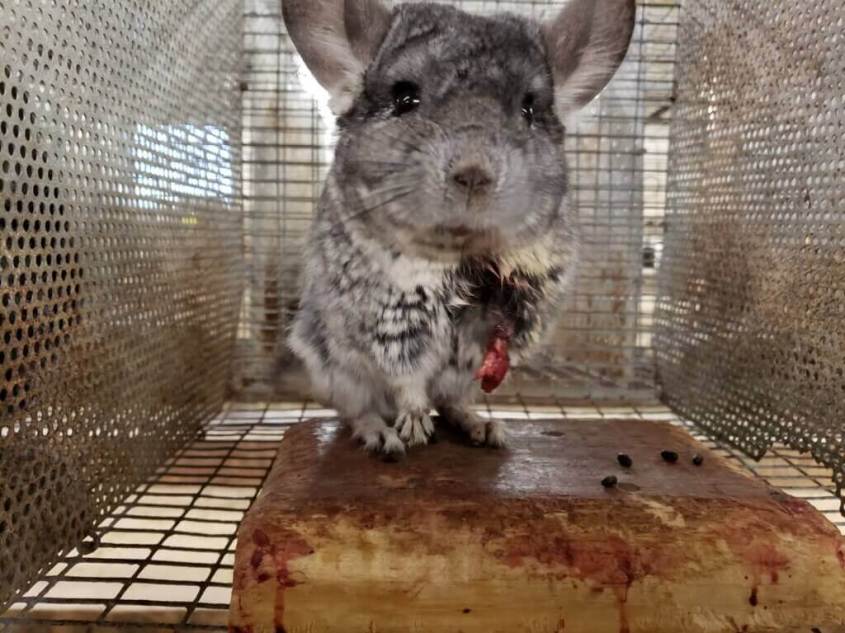
An undercover PETA investigation into Moulton Chinchilla Ranch (MCR), a huge chinchilla breeding factory in Chatfield, Minnesota that had approximately 1,000 chinchillas confined in wire-mesh floor cages in a shed that stank of ammonia, found that these exotic animals were denied not only everything that is natural and important to them but also the most basic needs, such as effective veterinary care for chronic infections and severe, life-threatening injuries that caused suffering and even death…

Based on PETA’s evidence, law enforcement agents conducted a raid on MCR and launched a criminal investigation.

Without escape

Chinchillas are active and curious animals, who love to run, jump and climb (activities that are extremely important to their physical and psychological health), but at MCR, they remained confined in small desolate, rusty cages with a wire mesh floor. They had nowhere to take refuge or hide, something extremely stressful and terrifying for these nocturnal prey animals.

Charlene was not treated for this excruciatingly painful foot injury, which resulted in a bloody stump with exposed bones. The PETA investigator rescued her. He took her to emergencies, she underwent surgery and she continues to heal.

The dirty shed was crammed with cages, the walls and ceiling covered with insect debris.

There were feces piled up just outside the shed, and some even entered the shed through a door. Many of these social animals, who in the wild live in herds of up to 100 individuals in the Andes Mountains, were locked up alone in cages. Others were so tightly packed into cages that they could barely move.

Some only had a piece of wood to sit on or chew on. No toys, no place to lie down, no environmental enrichment.

Deprived of everything that is meaningful to them, chinchillas in these stressful and inhumane conditions mutilated themselves and their cage mates, a sign of severe stress. One young animal had its ears practically bitten off.

Continue reading “Minnesota, MCR factory: Breaks necks to earn money”

Great News From Peta ! – China Announces New Cosmetics Regulations Without Animal Testing.

PETA is celebrating great news out of China! Beginning on May 1, the Chinese government will allow companies to apply for an exemption to market most imported “general cosmetics”—such as shampoo, body wash, lotion, and makeup—without the usually required animal testing.

This news comes after our determined campaign that ramped up in 2012, when PETA revealed that some formerly cruelty-free companies had quietly started paying the Chinese government to test their products on animals in order to sell them in China. Hundreds of thousands of animals each year have been subjected to tests in which products were forced down their throats, rubbed onto their raw skin, or applied to their sensitive eyes.

After uncovering this, PETA funded training for Chinese scientists in the use of non-animal methods. This work is paying off!

Read more about this breakthrough here. Please continue to support 100% cruelty-free companies when purchasing personal-care products by referring to our Beauty Without Bunnies database of more than 5,200 compassionate companies and brands that don’t test on animals anywhere in the world.

While you’re here, please do more for animals in labs:

TAKE ACTION:

Let’s End All Experiments on Animals! | PETA Action

Thank you for all that you’re doing to help animals!

Sincerely,

Kathy Guillermo
Senior Vice President
Laboratory Investigations Department
PETA

Regards Mark

European Court of Justice prevents tests on rabbits

Success in REACH chemical animal testing

In a groundbreaking ruling, the European Court of Justice ruled Esso Raffinage not to have to carry out a series of tests on rabbits. The oil company went to the highest European court because the authority ECHA wanted to force him to do the animal tests, even though the company had submitted other safety data.

As part of the REACH= (Registration, Evaluation, Authorisation, and Restriction of Chemicals) chemicals regulation, the chemical industry has to submit extensive data on its chemicals.

Oftentimes these involve animal testing. In one case, the European Chemicals Agency (ECHA) asked ExxonMobil subsidiary Esso Raffinage to conduct a developmental toxicity study on hundreds of rabbits.

The company presented evidence from other sources of the safety of its chemical in an attempt to avoid the rabbit tests.

The ECHA – represented by the member state Germany – insisted on the animal tests and Esso brought the case to the European Court of Justice (ECJ).
Our European umbrella organization, the European Coalition to End Animal Experiments (ECEAE), submitted detailed arguments against carrying out the test.

The ECJ ruled in favor of the oil company.

The judges emphasized that according to the REACH guideline, animal experiments can only be carried out as a “last resort”. The obligation of companies to adhere to this principle also applies if the ECHA has initially decided that animal experiments must be carried out.

ECHA is obliged to take into account the non-animal testing data proposed by the company.

A milestone in jurisprudence!
If Esso had lost, it would have opened the door to countless other REACH animal tests.

The positive verdict will hopefully encourage other chemical companies to refuse animal testing.

Dr. med. vet. Corina Gericke (Doctors Against Animal Testing)


And I mean...ExxonMobil, known in Europe as Esso, is the world’s largest oil company with an annual turnover of 228 billion US dollars, roughly equivalent to the gross domestic product of Sweden.
Exxon is making billions of dollars in oil sales.
At the same time, the group has been vehemently denying for years that burning oil has anything to do with climate change

ExxonMobil (Esso) fought with all means against the introduction of the first, binding international climate protection agreement (Kyoto Protocol), refused compensation for the damage to the Exxon Valdez, ignores human rights to this day, and is the only oil company to invest hardly a cent in the development of renewable energies.

The real business of the oil giant is “extract oil, process oil, sell oil” at any price.
Because oil means power.

And yet suddenly the company derives from its power a certain responsibility against senseless animal testing.
Esso sues in order not to have to conduct animal tests, wins, and hundreds of animals are spared a cruel fate.

We are amazed!
And we wonder what went wrong this time in the deal with their loyal german friends “ECHA”!
Which, fortunately, led to a very positive result.

And that is what always counts, the result!

My best regards to all, Venus

No, Elon Musk, there is nothing ‘cool’ about experimenting on animals – Musk has wired up a monkey’s brain with an implant to attempt to make it play video games with its mind !


No, Elon Musk, there is nothing ‘cool’ about experimenting on animals

Neuralink Corporation, a company Musk co-founded, has wired up a monkey’s brain with an implant to attempt to make it play video games with its mind – can this ever be acceptable?


Elon Musk, chief executive of Tesla and SpaceX, became the richest person in the world last month, according to Forbes. This week, he bought $1.5bn worth of Bitcoin, causing the price of the cryptocurrency to reach an all-time high. Love him or loathe him, what Musk does matters to millions. 

This is why it was so concerning to hear the news that Neuralink Corporation, a company Musk co-founded, has wired up a monkey’s brain with a tiny implant to attempt to make it play video games with its mind.

In a private speech given on the invitation-only social media app Clubhouse, Musk said: “One of the things we’re trying to figure out is whether we can have the monkeys playing mind pong with each other. That would be pretty cool.”

This is not the first time Neuralink Corporation has experimented on animals. The company has previously implanted wireless technologies into the brains of pigs. Musk described this as a “Fitbit in your skull with tiny wires”.

Despite the company’s claims that these experiments could help find cures for spinal cord injuries and neurological conditions, such as Alzheimer’s and dementia, many other scientists are less convinced.

Sadly, Musk’s actions are hardly an isolated incident. They reflect an increase in the number of experiments on animals taking place, despite mounting public concern and a growth in alternative approaches to scientific research. At leading laboratories in the US, experimenting on animals has increased by a staggering 73 per cent in recent years, while more experiments on animals are conducted in the UK than in any other country in Europe. The latest government figures revealed a total of 3.4 million experiments were completed during 2019, with more than half of these performed in universities, often paid for by the taxpayer. 

Take the recent outcry in Edinburgh, where the university was accused of using the widely discredited “forced swim” test to research antidepressants. This is where animals are placed in beakers of water from which they cannot escape, literally giving them the choice of sink or swim. While it’s unclear what provoking a drowning experience in small animals can teach us about the difficulties humans face battling depression, these experiments did raise awareness of some of the creative but barbaric ways we still employ, pushing the limits of animals in the UK. 

The harmful use of animals in experiments is not only cruel but so often ineffective. In fact, 90 per cent of drugs that successfully pass the preceding animal tests fail in human trials. Animals do not get many of the human diseases that people do, such as major types of heart disease, many types of cancer, HIV, Parkinson’s disease, or schizophrenia. Often the symptoms have to be simulated, to then be tested on. As a result, fewer than five per cent of medicines tested on animals lead to approved treatments within 20 years. 

Analysis of 27 “breakthroughs” in the UK also revealed there was a high degree of exaggeration by animal researchers in their findings. Most do not result in anything useful. Sadly, this hasn’t stopped the UK being the second biggest tester of dogs in Europe, including weed killer tests performed on beagles. Beagles are particularly useful to experimenters because they are a very trusting breed towards humans. These tests are unnecessary, cruel and not supported by the British public.

Yet, as we have seen at Neuralink Corporation, animals are increasingly not being used even to test medical or domestic products. Fifty seven per cent of experiments in universities are now believed to be in the area of basic research, much of it driven by the “curiosity” of university researchers. It can be a vicious cycle – many scientists need to perform experiments to be published but the data they are using for comparison is based on animal testing. 

It is obvious we all need to ask questions about the direction we are heading in. There are still too many examples of animal experiments being conducted, even when validated non-animal methods are available that are often cheaper, quicker and in many cases, more accurate.  

Science has performed admirably during the Covid-19 crisis, but whether it is in British universities or Silicon Valley, we can all clearly do more when it comes to achieving human-relevant science without suffering. 

Dr Katy Taylor is the director of science at Cruelty Free International

No, Elon Musk, there is nothing ‘cool’ about experimenting on animals | The Independent

Enjoy ! – Regards Mark

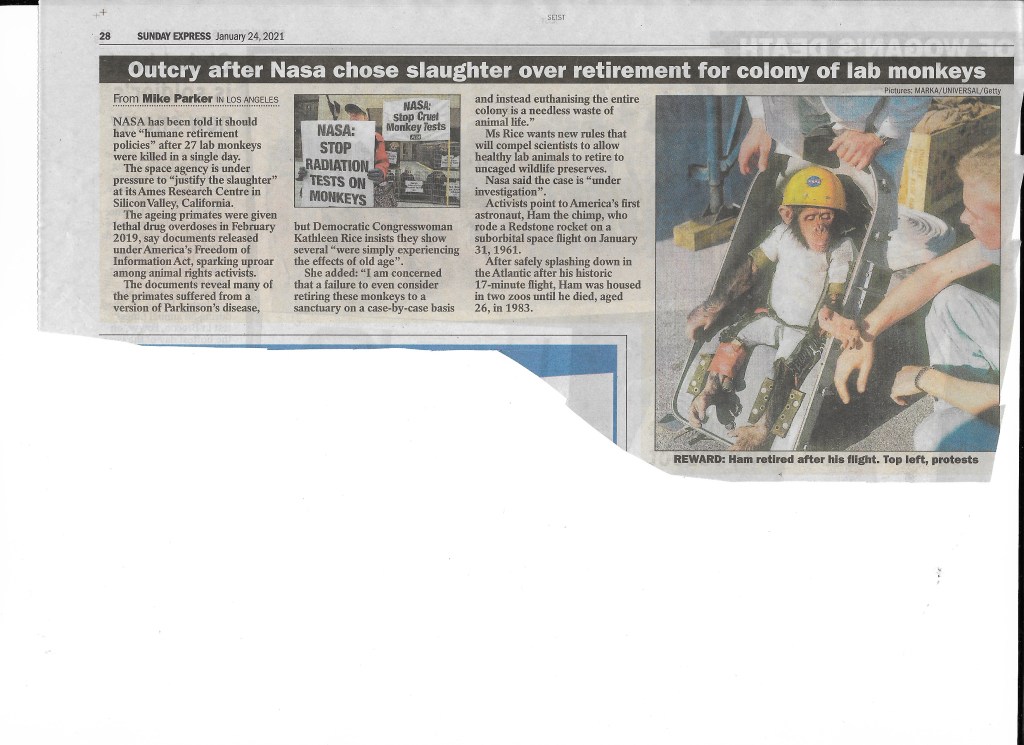
USA: NASA Murders 27 Lab Primates In Single Day Rather Than Retire Them To A Sanctuary.

WAV Comment – We will try to obtain more on this in the coming days.

Regards Mark

https://www.theguardian.com/world/2020/dec/22/nasa-killed-all-monkeys-on-single-day

Revealed: all 27 monkeys held at Nasa research center killed on single day in 2019

This article is more than 1 month old

27 primates euthanized at California facility

Outcry over revelation that animals were not sent to sanctuary

Every monkey held by Nasa was put to death on a single day last year, documents obtained by the Guardian show, in a move that has enraged animal welfare campaigners.

A total of 27 primates were euthanized by administrated drugs on 2 February last year at Nasa’s Ames research center in California’s Silicon Valley, it has emerged. The monkeys were ageing and 21 of them had Parkinson’s, according to documents released under freedom of information laws.

The decision to kill off the animals rather than move them to a sanctuary has been condemned by animal rights advocates and other observers.

The primates “were suffering the ethological deprivations and frustrations inherent in laboratory life”, said John Gluck, an expert in animal ethics at the University of New Mexico. Gluck added the monkeys were “apparently not considered worthy of a chance at a sanctuary life. Not even a try? Disposal instead of the expression of simple decency. Shame on those responsible.”

Kathleen Rice, a US House representative, has written to Jim Bridenstine, Nasa’s administrator, to demand an explanation for the deaths.

Rice, a New York Democrat, said she has been pushing for US government researchers to consider “humane retirement policies” for animals used in research.I look forward to an explanation from administrator Bridenstine on why these animals were forced to waste away in captivity and be euthanized rather than live out their lives in a sanctuary,” Rice told the Guardian.

Nasa has a long association with primates. Ham, a chimpanzee, received daily training before becoming the first great ape to be launched into space in 1961, successfully carrying out his brief mission before safely splashing down into the ocean.

But the monkeys euthanized last year weren’t used in any daring space missions or even for research – instead they were housed at the Ames facility in a joint care arrangement between Nasa and LifeSource BioMedical, a separate drug research entity which leases space at the center and housed the primates.

Stephanie Solis, the chief executive of LifeSource BioMedical, said the primates were given to the laboratory “years ago” after a sanctuary could not be found for them due to their age and poor health. “We agreed to accept the animals, acting as a sanctuary and providing all care at our own cost, until their advanced age and declining health resulted in a decision to humanely euthanize to avoid a poor quality of life,” she said.

Solis said no research was conducted on the primates while they were at Ames and that they were provided a “good remaining quality of life”.

In recent years the US government has started to phase out the use of primates in research, with the National Institutes of Health making a landmark decision in 2015 to retire all chimpanzees used in biomedical studies. Critics of the practice argue it is immoral and cruel to subject highly intelligent, social creatures so similar to humans to such conditions.

However, other labs continue to use monkeys in large numbers – a record 74,000 were used in experiments in 2017 – with scientists claiming they are far better than other animals, such as mice, for studying diseases that also afflict humans.

Even when monkeys are retired from research purposes, the task of rehoming them in appropriate sanctuaries still proves haphazard.

“What tragic afterthoughts these lives were,” said Mike Ryan, spokesman for Rise for Animals, the group that obtained the freedom of information documents on the Ames primate deaths. “Nasahas many strengths, but when it comes to animal welfare practices, they’re obsolete.”

A Nasa spokesperson said: “Nasa does not have any non-human primates in Nasa or Nasa-funded facilities.”

Taiwan: Be A Voice for Animals – The TFDA is Now Accepting Public Comments on a Regulation Through Till March 1.

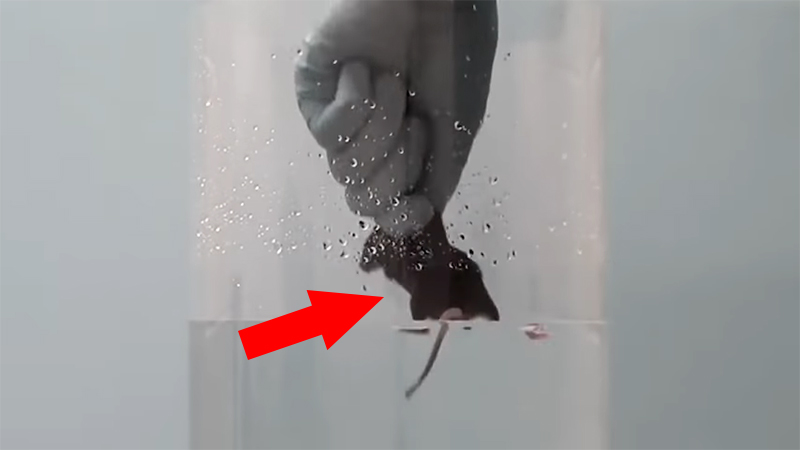
photo of forced swim test

As we told you earlier, after hearing from PETA, the Taiwan Food and Drug Administration (TFDA) took the historic step of deleting outrageous animal tests—including drowning mice and rats and making them run to exhaustion on an electrified treadmill—from its draft regulation for marketing foods and beverages using dubious anti-fatigue health claims.

The TFDA is now accepting public comments on the regulation through March 1, before finalizing its decision. Please contact the agency to help ensure that it deletes these animal tests in the final version of the regulation.

ACT NOW to speak up for animals suffering in these experiments before the MARCH 1 deadline.

TAKE ACTION HERE:

URGENT: Help Finalize Taiwan Ban on Drowning, Shock Tests on Animals | PETA

URGENT: Help Finalize Taiwan Ban on Drowning, Shock Tests on Animals

Following years of pressure from PETA, the Taiwan Food and Drug Administration (TFDA) has announced a groundbreaking decision to delete all animal tests—including drowning mice and rats and making them run to exhaustion on an electrified treadmill—from its draft regulation for marketing foods and beverages using dubious anti-fatigue health claims.

The agency is now accepting public comments through March 1 before finalizing its decision, and it needs to hear from you.

Prior to the TFDA’s announcement of its decision to remove the animal tests from its draft regulation, the agency had endorsed these horrific experiments, which are irrelevant to human health, and PETA sent the TFDA a detailed scientific critique of these tests at the agency’s request.

If the final draft regulation is approved as is after the public comment period ends, for companies that want to make anti-fatigue health claims for marketing food and beverage products, only safe and effective human tests would be required and allowed.

Permanently removing animal testing from the draft regulation would save countless animals’ lives.

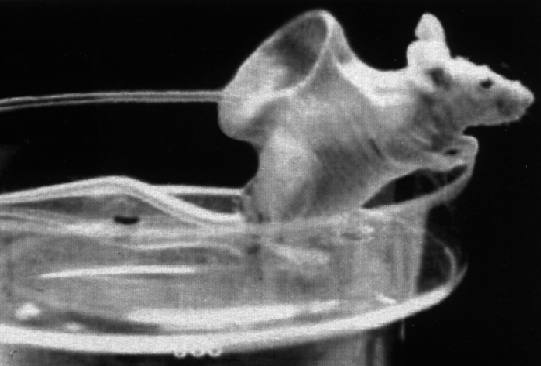
During the notorious forced swim test, experimenters fed mice or rats large quantities of the test foods and then starved them for up to 24 hours. Afterward, experimenters dropped them into beakers filled with water and observed how long they struggled before they drowned or remained underwater for eight consecutive seconds. If the animals learned to float and conserve energy, experimenters would stir the water to force them to struggle. To speed up the drowning process, experimenters tied lead wires to animals in order to make it harder for them to swim.

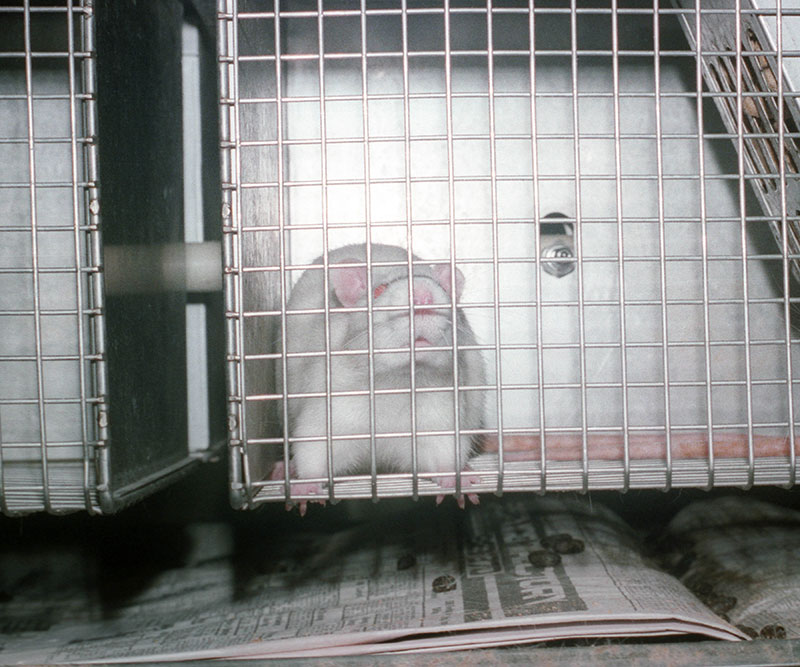
photo of rat in a cage

During the treadmill-running test, experimenters also fed rats large quantities of the test foods and then put the animals on treadmills equipped with electrified plates. Experimenters forced them to run at increasing speeds and on steepening inclines and observed how long it took for them to choose repeated electrocution over continuing to run. At the trials’ end, experimenters killed and dissected them.

Not only is animal experimentation cruel, it’s also a colossal failure. Specifically, 90% of animal tests fail to lead to treatments for humans and more than 95% of new pharmaceutical drugs that test safe and effective in animals fail in human clinical trials.

Rats, a preferred target of experimenters worldwide, are highly intelligent. They are natural students who excel at learning and understanding concepts and are at least as capable of thinking about problems and figuring them out as dogs. They have excellent memories, and once they learn a navigation route, they never forget it.

Please TAKE ACTION (link above) and let the TFDA know that you support its deletion of animal testing from the draft regulation for anti-fatigue health claims and that you support keeping such testing banned in the final version of the regulation.

Chile: HSI welcomes tough new Chilean bill to outlaw cosmetic testing on animals.

HSI welcomes tough new Chilean bill to outlaw cosmetic testing on animals

Humane Society International

HSI welcomes tough new Chilean bill to outlaw cosmetic testing on animals – Humane Society International

Chile is in the running to become the second South American country to prohibit animal testing for cosmetics following introduction of a federal bill in late December which, if passed, would prohibit new animal testing of both finished cosmetics and their ingredients, and severely restrict the import or sale of beauty products developed with reliance on new animal testing carried out anywhere in the world. Bill 13.966-11 was introduced by Deputy Vlado Mirosevic in close cooperation with HSI and our Chilean partner Te Protejo, with bipartisan support of government and opposition parliamentarians, as well as from several leaders in the beauty sector and cruelty-free domestic brands.

“We commend Deputy Vlado Mirosevic for his leadership in introducing a bill that will close the door on cruel cosmetics in Chile,” said Aviva Vetter, HSI cosmetics program manager for research & toxicology. “This bill brings us one step closer to ending animal suffering in the global beauty industry.”

Through the Animal-Free Safety Assessment (AFSA) Collaboration coordinated by HSI, leading brands are able to work behind the scenes with HSI and our partners to agree bill language, which can expedite movement of bills through the political process. The next step for the Chilean bill is review by the Health Commission in the Chamber of Deputies.

Since the launch of the 2017 Chilean branch of HSI’s global campaign to end cosmetic animal testing, HSI and Te Protejo have worked in close cooperation with decision makers to bring the country in line with the global cruelty-free trend. A 2019 public opinion poll by Inside Research on behalf of HSI and Te Protejo found that 74% of Chileans agree that testing cosmetics on animals is not worth the animals’ pain and suffering, and to date more than 100,000 Chileans have signed our petition supporting a ban.

Sign the pledge to be cruelty free:

HSI DonateHumane Society International (hsi.org)

Animal Testing in US: Regulatory Use and Routine Production

Terrifying: 111 million mice and rats annually for animal testing in the USA
Rodents, fish, and birds are not considered animals there
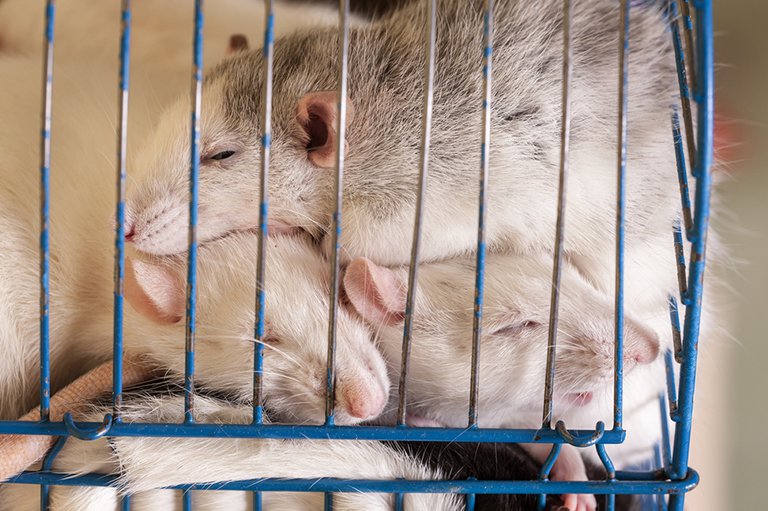
Mice and rats, the most common animals used in the laboratory, are not covered by the United States Animal Welfare Act and therefore do not appear in the official statistics of animals used for scientific purposes. A new analysis estimates that around 111 million mice and rats are subjected to animal testing annually in the United States.

The nationwide association Doctors Against Animal Experiments calls for better transparency of the animal experiment figures in the USA and in this country.

Most mice, rats, fish, and birds are not defined as “animals” in the American Animal Welfare Act since 1970.
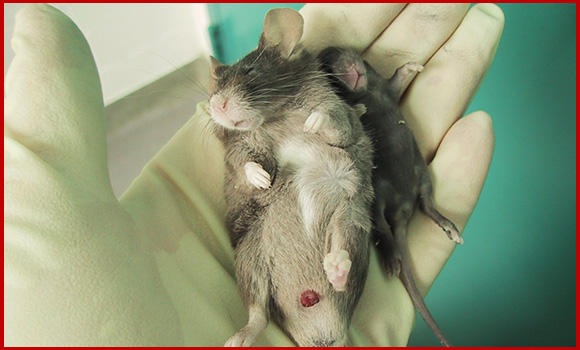
Because of this, the numbers of these animals do not appear in the country’s official animal experimentation statistics, although mice and rats are the most commonly used in animal experiments.

“The United States plans to end all animal testing for regulatory purposes such as toxicity testing by 2035, which we clearly welcome. In order to be able to estimate at all whether the country is getting closer to this goal, one must at least know how many animals are used for experiments each year, ” says Dr. Dilyana Filipova, a research assistant at Doctors Against Animal Experiments.

A recent study at the University of California San Francisco looked at this problem and found that over 111 million mice and rats suffer annually in American laboratories, in addition to the 780,070 animals from the official statistics.
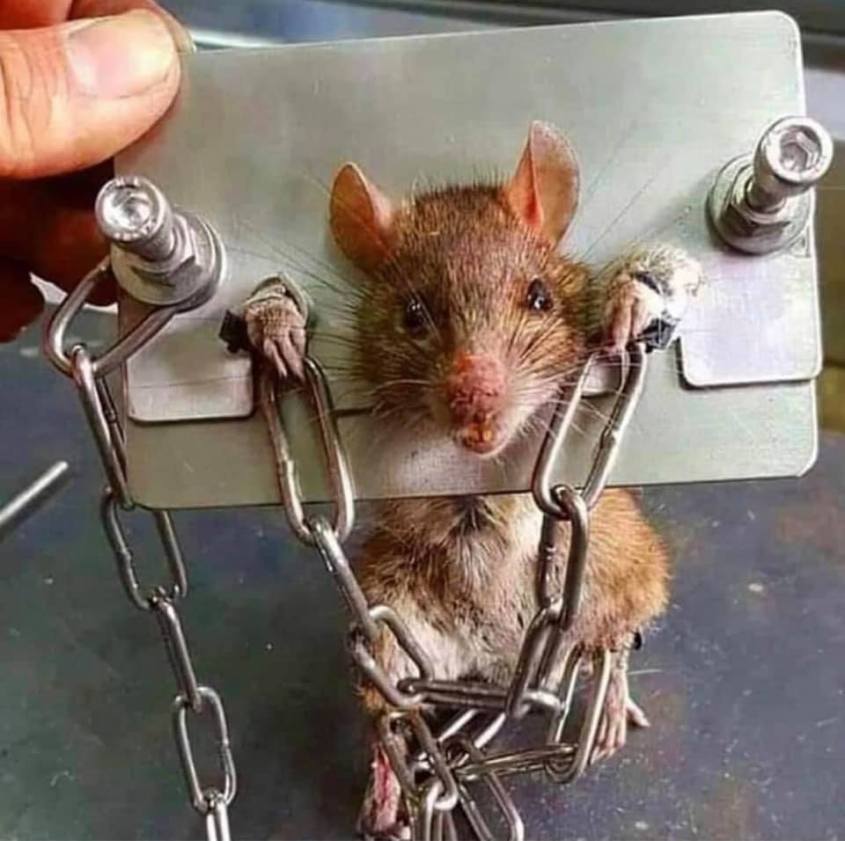
This includes dogs, cats, monkeys, rabbits, pigs, and sheep. The study author asked for information about the mice and rats used in experiments at 16 of the 30 best-funded research institutions using the Freedom of Information Act. In comparison to the approx. 39,000 “animals” defined in the Animal Welfare Act, around 5.6 million mice, and rats were used at these 16 institutes alone, which corresponds to 99.3% of all animals.

An extrapolation of this data using the animal numbers published in the annual statistics resulted in the staggering number of 111 million mice and rats.
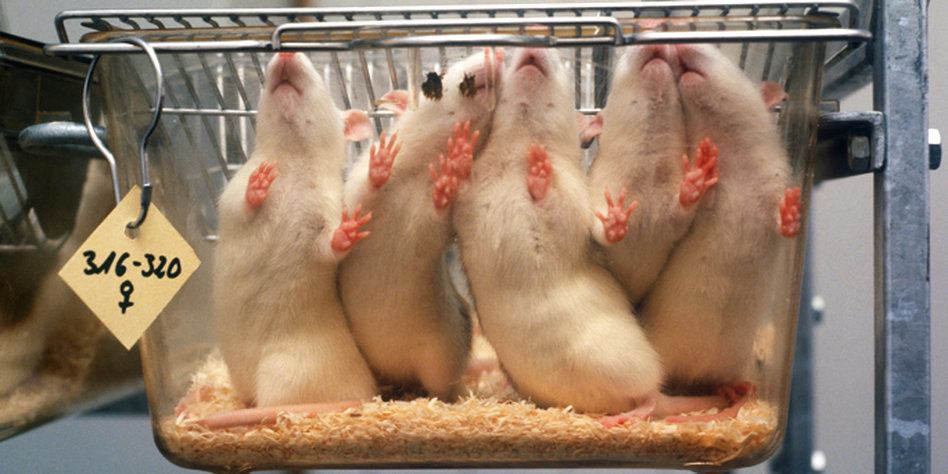
According to the study, over 44 million of them were subjected to painful attempts that would be classified as “moderate” and “severe” in Germany.
Previous projections of global animal consumption for the research came to a total of 17.3 million for the US in 2005 and 14.6 million for 2015, based on the number of publications in relation to countries with known animal numbers such as the EU.

Worldwide, these studies came to 115.2 (2005) and 192.1 million (2015) animals, including those killed for organ and tissue removal.

“When the current study shows the figure of 5.6 million rats and mice in 16 American institutes alone, it becomes clear that the older projections are far too low,” says Filipova.

In Germany, 78% of the total number of 2.9 million animals recorded are rats and mice, while the American study assumes a proportion of 99.3%.
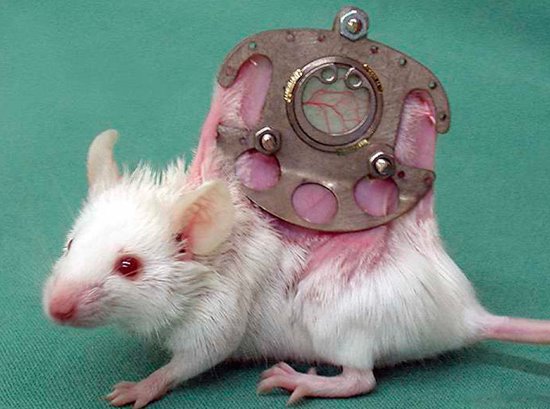

“It is not surprising when the life and death of animals that are not subject to the Animal Welfare Act and therefore not subject to official controls are dealt with much more laxly and there is greater ‘wear and tears’”, the biologist concludes.

“It is absolutely unacceptable that in the USA with at least 900 research institutions over 99% of all animals used for experiments fall through the cracks. The ability of rodents to experience pain and suffering has not been disputed in the scientific community for a long time, ” continued Filipova.

According to the official statistics of the Federal Ministry of Agriculture, 2.9 million animals were recorded in Germany in 2019.

2.3 million of them fell victim to animal experiments and about 700,000 animals were killed for tissue and organ removal.

But here, too, there is a large number of unreported animals that suffer and die invisibly in German laboratories: almost all invertebrates, all animals bred in advance, and animals that are not used in experiments due to their age, sex, and genetic characteristics.

An estimate by Doctors Against Animal Experiments comes to about 4.35 million vertebrates that are killed annually unused in German laboratories without appearing in the official statistics.

Doctors Against Animal Experiments are calling for all animal species used for research to be included in the American Animal Welfare Act and Statistics as a minimal first step. In Germany, the number of “committee animals” must be recorded.

The association also demands from the federal government a well-founded plan to exit the “animal experimentation” system with specific milestones and deadlines as well as massive support for innovative, human-based, animal experiment-free research methods.

And I mean… humanity has not yet overcome fascism!
Rats are burned, pigs are suffocated. Mice have to swim for their lives to the point of exhaustion, dogs are broken bones, monkeys are poisoned.
In order to obtain single multiple transgenic animals, which is quite common in current practice, up to 54 animals have to die because they do not have the desired genotype – they are disposed of like garbage.
This “committee” quote underscores how disrespectful and undignified animals are treated and how they are merely degraded to disposable items.

Animals would have to endure all of this suffering under the “guise of research”, although animal experiments do not provide security, but rather resemble a lottery.
Only various branches of the economy benefited from these experiments, but not science and certainly not the patients.

95 percent of the results from the experiments are not transferable to humans.
One wonders how far a person must have sunk in order to inflict such damage on animals in any laboratory.
And these beasts live among us.

The politicians tolerate and support these criminals, who, by the way, should be punished, because the killing of the unwanted animals by the experimenter is a criminal disregard of the established animal welfare, which demands a “reasonable” reason for it.

“Vivisection is the greatest and meanest cultural disgrace of the present day, morally and intellectually it is to be equated with the delusional delusion of witch trials, and no people who tolerate it have the right to call themselves a people of culture.”
Manfred Kyber (German writer, 1880-1933)

My best regards to all, Venus

Peta: Exposing Companies That Sell Animals to Labs.

Click on this link for a lot more information about suppliers:

Exposing Companies That Sell Animals to Laboratories | PETA

They’re designed to be anonymous. Tucked away in unassuming facilities in quiet communities such as Chatfield, Minnesota; Ewing, Illinois; New Sharon, Iowa; and Oxford, Michigan, not even their names—Moulton Chinchilla Ranch, Oak Hill Genetics, Ruby Fur Farm, and Oakwood Research Facility—betray the nature of their operations.

But Moulton Chinchilla, Oak Hill, Ruby Fur, Oakwood, and numerous others around the country form a vast, largely unknown network of businesses that breed and supply dogs, chinchillas, foxes, ferrets, pigs, rabbits, and other animals for experimentation laboratories. They peddle in misery. Suffering is their currency.

PETA has obtained video footage and photographs taken by federal inspectors that for the first time show the unsanitary, often putrid and abhorrent conditions of these decrepit facilities that breed, warehouse, and sell sentient beings for profit. The footage—along with federal inspection reports—shows definitively that suffering for animals destined for experimentation begins well before they arrive at the laboratories.

Maggots crawl through food. Green algae grows in water bowls. Feces piles up. Wounds fester. To these businesses, the animals are not sentient beings who feel and fear just as you and I do. They’re widgets, items produced at minimal cost and sold for maximum profit. Pain, suffering, and distress do not figure into the bottom line. They simply do not matter.