Category: Vivisection

USA: Legislation to Create NIH Center for Advancing Non-Animal Research Introduced in US Congress.

Legislation to Create NIH Center for Advancing Non-Animal Research Introduced in US Congress

9 November 2020

A New York-based nonprofit group, CAARE, that led the drive to create legislation to promote “cutting-edge methods” of research superior to animal-based testing, today lauded the announcement that the “Humane Research and Testing Act of 2020” has been introduced in US Congress.

Landmark bipartisan legislation to promote and fund scientifically advanced, human-relevant, non-animal methods through the establishment of a dedicated center under the National Institute of Health (NIH) was introduced by Congressional members Alcee Hastings (D-FL) and Vern Buchanan (R-FL).

Barbara Stagno, president of Citizens for Alternatives to Animal Research & Experimentation, commends the effort, noting: “CAARE is grateful to Representatives Hastings and Buchanan for introducing this legislation that has great promise to change the current paradigm of routine use of animals in laboratories when there are available alternatives, and gives real impetus to reducing animals by establishing a center exclusively for that purpose.”

The “Humane Research and Testing Act of 2020” would create a “dedicated center under the National Institutes of Health (NIH) to provide resources, funding and training to advance humane, cost-effective, and scientifically suitable non-animal methods,” Stagno added.

Because the exact number of animals used in U.S. research is unknown, ranging between 17 million and 100 million annually, the “Humane Research and Testing Act of 2020” is also designed to obtain that data, and requires the NIH to outline a plan for reducing those numbers.

Read more at source

Cision PRWeb

The worldwide trade in monkeys for research: a million-dollar business!

Many animal experimental establishments, such as pharmaceutical companies and universities, breed their animals themselves. Others order animal breeding from commercial “experimental” animals.
Just as one selects books or clothing from a catalog at a mail-order company, live animals are offered for sale at breeding companies.

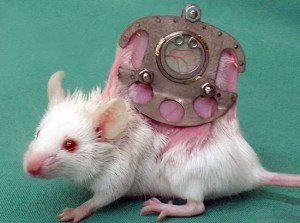
On the Internet or in the catalog, experimenters can choose from a large selection of different species and breeds. Animals that have been operated on are even offered, e.g. Rats and mice with tied blood vessels or nerves, with the spleen or kidney removed, etc.
Or genetically modified animals in a wide variety of ways, e.g.

“Humanized mice” that have been “implanted” with a specific human gene.

There is no longer even talk of animals, but of “products” and “research models”.

The American Jackson Laboratory offers thousands of different strains of mice whose genome has been manipulated in such a way that the animals develop certain diseases such as cancer, diabetes, or obesity.

The world’s largest “experimental” animal breeder, the American company Charles River Laboratories, has a rodent and rabbit breeding facility in Sulzfeld in the Karlsruhe (Germany) district.

In Cologne, there is a branch of the American company Taconic, which breeds genetically modified mice.
Monkeys are partly bred for research in the German Primate Center (DPZ) in Göttingen (Germany).

Around 95% of the monkeys come from outside the EU.
The largest exporter is China, followed by Mauritius.

There wild monkeys are caught and reproduced in breeding facilities under unspeakable conditions.
The boys are sent to Europe and America to die in the laboratory. AirFrance is the main carrier of monkeys.
Animal experiments are carried out in the following areas:

Continue reading “The worldwide trade in monkeys for research: a million-dollar business!”

German animal experiments researchers: Frankenstein’s out of passion


After the scandal ruling by the Hamburg Higher Administrative Court, according to which the Hamburg animal testing laboratory is allowed to reopen the Laboratory of Pharmacology and Toxicology (LPT), Doctors Against Animal Experiments filed a criminal complaint against the LPT on suspicion of cruelty to animals.

The nationwide association wants to underline the urgency that the people responsible for the animal suffering documented on film must be brought to justice.

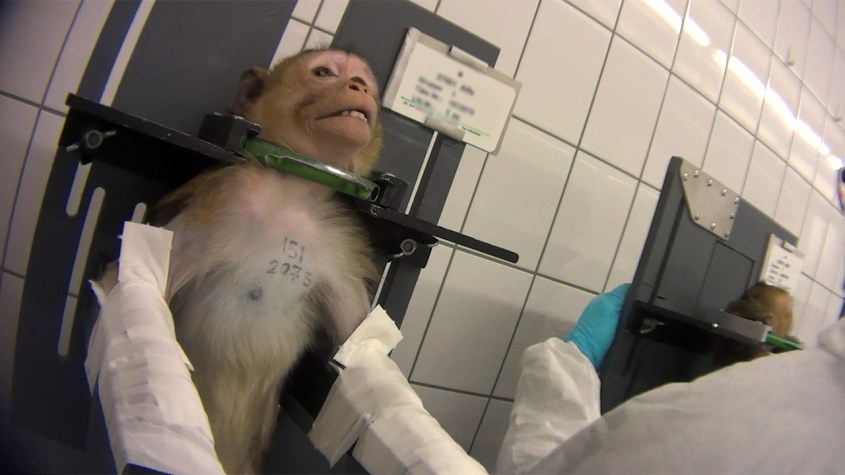
In October last year, covert recordings by SOKO Animal welfare from the LPT laboratory in the Lower Saxony district of Mienenbüttel brought scandalous conditions to the public: dogs lying in their own blood and monkeys writhing in primate chairs.
LPT manipulated studies.
For example, animals that have died in a series of experiments are said to have been swapped for living ones without having to properly note this or to take it into account in the further course of the study – with corresponding risks also for human health.

After the undercover investigation, the authorities withdrew the operator’s permission to keep animals because his reliability is not given –
This was done in January 2020 first at the Mienenbüttel location and in February at the headquarters in Hamburg-Neugraben.
Only the 3rd laboratory in Schleswig-Holstein remained unmolested.

In August of this year, the Hamburg Higher Administrative Court overturned the decision of the authorities and allowed animals to be kept at the headquarters in Hamburg-Neugraben again.

The nationwide association Doctors Against Animal Experiments considers the decision to be incomprehensible.
“Even if personnel changes have been made, this does not change the irresponsible behavior of the operator,” said Dr. med. vet. Corina Gericke, Vice Chairwoman of Doctors Against Animal Experiments.


In the opinion of the association, those responsible, especially the managing director Jost Leuschner, must at least be punished.
“The filmed evidence shows very clearly that the crime of cruelty to animals is present.
So the severity of the law has to take effect, otherwise, the animal welfare law degenerates into a laughing stock, ”explains Gericke.

Continue reading “German animal experiments researchers: Frankenstein’s out of passion”

USA: Workers Pry Baby Monkeys Away From Mothers, Electroshock Monkey Penises in Depraved Lab.

Workers Pry Baby Monkeys Away From Mothers, Electroshock Monkey Penises in Depraved Lab

Posted by Dan on September 17, 2020 | Permalink

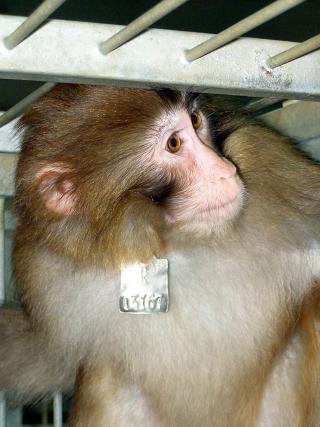
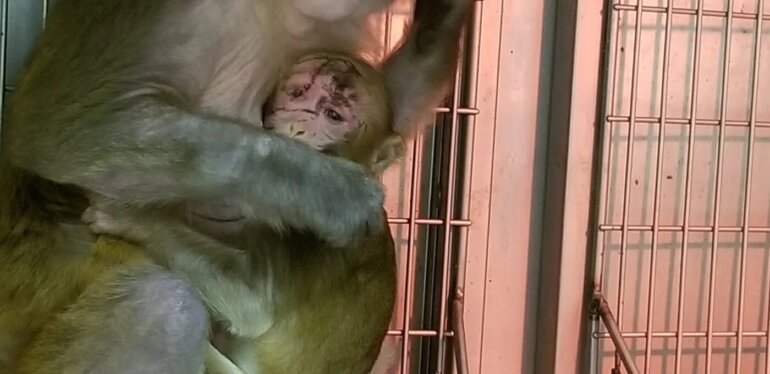
Image shows monkey at WNPRC

A six-month PETA US undercover investigation into the Wisconsin National Primate Research Center (WNPRC) – which keeps nearly 2,000 monkeys in barren steel cages and bleak, windowless rooms – found that highly intelligent animals were being neglected, driven mad by extreme long-term confinement, and attacked by their traumatised cagemates.

Severe Confinement, Constant Stress, and Mutilation

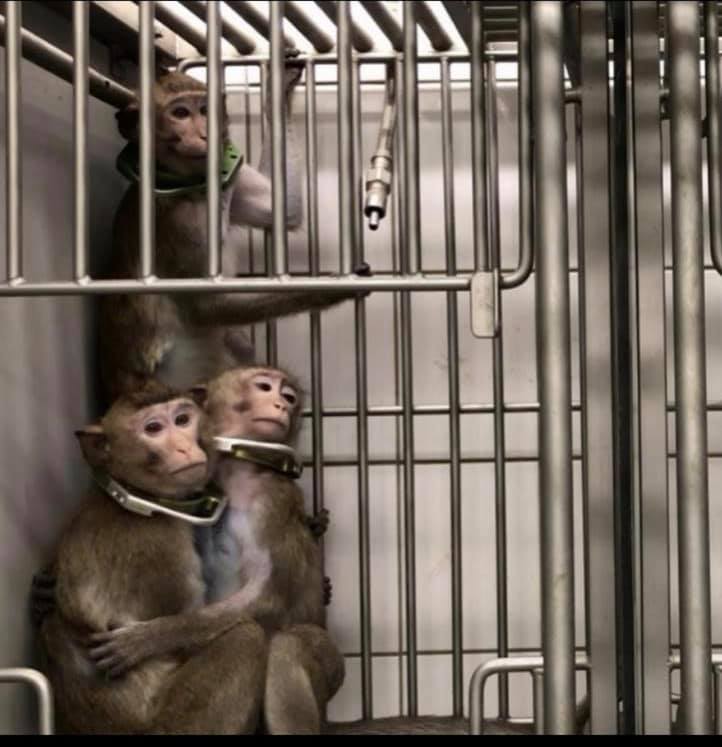
Monkeys at WNPRC spend every day and every night locked inside barren metal cages. They never feel the warmth of the sun on their backs or the earth beneath their feet. Stripped of their autonomy, they’re unable to make decisions regarding the most basic aspects of their lives. Constant, unremitting captivity causes these smart, sensitive animals extreme psychological distress, leading some to injure each other and themselves.

A baby monkey, named Cocoa by the PETA US investigator, was attacked by a severely stressed adult macaque, resulting in deep, painful cuts to her face.

Months later, her wounds still had not fully healed, and she clung to her mother in fear.

Incompatible animals were forced to live together in just a few square feet of space, and a monkey named Ellie lost part of her ear in a fight with a cagemate.

Amputations of parts of fingers, toes, and tails were a common result of the traumatic injuries sustained by monkeys in WNPRC’s care. A worker said that some of these highly intelligent animals were caged alone “because they’re a**holes ” who “beat the crap out of” each other – completely ignoring that the fights were a result of the monkeys’ unnatural, barren living conditions.

One frustrated monkey, known only as r12050, mutilated his own leg down to the muscle. With nothing to occupy his mind, he picked and scratched compulsively at the open wound.

“We’re not supposed to say they look depressed .”

Highly intelligent, social macaques – who, in their natural habitats, explore and roam vast grasslands and lush forests – paced, circled, and shrieked in the never-ending lockdown. One monkey, named Sainte, rocked continuously from side to side, all alone and miserable in a small cage.

When they weren’t being simply warehoused, animals were used in painful procedures and experiments.

Workers euphemistically referred to certain monkeys as “semen donors,” but they had certainly not volunteered for the painful process. Typically, the monkeys are fitted with metal collars, and workers use poles that fasten onto the collars to pull them out of their cages by the neck. The monkeys are then strapped into a restraint chair, and experimenters electroshock their penises until they ejaculate.

Many different types of experiments were being carried out at this facility. One experimenter bred monkeys infected with Zika and simian immunodeficiency virus, which is similar to HIV. Infant macaques were deprived of food overnight for “cognitive testing” and cried endlessly when separated from their companions. A supervisor said that experimenters attempted to infect marmosets—small, delicate monkeys—with COVID-19 but that “nothing happened.”

See the full PETA US investigation here.

Monkeys Are Used in Experiments in the UK, Too – Help Them

In 2019, 2,850 procedures using primates took place in the UK. It’s time to relegate such cruel experiments to the history books.

We must shift away from all procedures using animals.

Sign our petition to support PETA’s Research Modernisation Deal.

Scotland University Develops Alternative to Animal Testing.

Scotland University develops alternative to animal testing

8 October 2020

Researchers at the University of Dundee have proposed an alternative to animal testing by developing a “skin culture” which mimics living skin.

Founders Dr Robyn Hickerson and Dr Michael Conneely have secured funding for their ‘TenSkin™’ product, where human skin is stretched to an optimal tension to mimic the mechanobiology that exists in intact, living skin on the body.

This provides a state-of-the-art tool for skin biology research by allowing scientists to generate reliable and safe data without the need for animals.

Dr Conneely said: “The skin that covers our body is under tension, this has been known for a long time. “Other models don’t incorporate this tension, and this is why our product is more effective. When skin is removed from the body it contracts as the tension relaxes.

Animal testing is often a subject of ethical controversy, with many raising concerns about the reliability of the method. Ten Bio’s new approach aims to significantly reduce animal usage for skin related research.

Dr Hickerson added: “There is a disconnect between animals and humans when you’re trying to develop therapeutics. 

“While animals can serve as good analogues to study general principles, they often fail when it comes to specific details due to animal/human species differences. These details matter when it comes to developing safe and effective drugs for humans.

“Upwards of 90% of drugs that are proven safe and effective in animals fail during clinical trials. Our model will help reduce this costly failure rate.”

Read more at source

Deadline News

Regards Mark

A bone-on-a-chip device developed to tackle animal testing in medical research.

A bone-on-a-chip device developed to tackle animal testing in medical research

A bone-on-a-chip device, which grows human bone tissue in the laboratory, has been developed by engineers in hopes that it could reduce the need for tests on animals in medical research.

The researchers, led by the Department of Materials Science and Engineering of Sheffield University and the Insigneo Center for Solico Medicine, demonstrated how the bone-on-a-chip could be used to test new possible therapies for weakened or diseased bones through growing bone tissue – and published the information in the Frontiers in Bioengineering and Biotechnology.

Compared to existing experiments, which generally involve comprehensive in vivo evaluations involving animals, this new method has been developed in vitro, entirely in the laboratory, and eliminates the need to use animals in research.

The field of organ-on-a-chip’s goal is to create minuscule devices that contain tiny versions of organs, including liver, bone or lungs in the laboratory. The hope is that discovering ones that function in humans by testing experimental drugs on tiny copies of human organs rather than in animal models will have a higher success rate.

Read more at source

Zenopa

USA: the Mengele’s of the Primate Center in Wisconsin

For six months, PETA USA covertly investigated at the Wisconsin National Primate Research Center (WNPRC).

It is one of the most famous primate laboratories in the United States, which keeps nearly 2,000 monkeys in barren steel cages and bleak, windowless rooms. The investigation shows: The highly intelligent animals were grossly neglected, driven insane by the extreme conditions of their captivity, and attacked by traumatized conspecifics.

Baby monkey Cocoa was attacked by a stressed adult monkey who made deep, painful cuts on his face.


Monkeys at WNPRC spend every day and every night locked inside barren metal cages. They never feel the warmth of the sun on their backs or the earth beneath their feet. Stripped of their autonomy, they’re unable to make decisions regarding the most basic aspects of their lives. Constant, unremitting captivity causes these smart, sensitive animals extreme psychological distress, leading some to injure each other and themselves.

Incompatible animals were forced to live together in just a few square feet of space, and a monkey named Ellie lost part of her ear in a fight with a cage mate. A baby monkey named Cocoa by PETA’s investigators was attacked by a stressed adult macaque. Little Cocoa had deep cuts on her face that had not healed properly even months later.

The fingers, toes, or tails of many monkeys were so badly injured that some of them had to be amputated. One employee said some of the animals were kept solitary “because they are assholes who do not contract with the others”!!

Macaques roam wide grasslands and lush forests in their natural habitat. In the test laboratory of the WNPRC, however, they ran back and forth or in circles, screaming loudly.

Continue reading “USA: the Mengele’s of the Primate Center in Wisconsin”

the criminal business of the Pharma Mafia

“The vaccine against Covid-19 is being tested on rhesus monkeys”


“The current Corona crisis shows very clearly what a big mistake it was in the past not to adequately promote animal-free, human-based research methods such as human 3D lung models and multi-organ chips” (Dr. Gaby Neumann, spokeswoman for the association “Doctors Against Animal Experiments”.

Human animals never learn from their mistakes as other, non-human animals do.

Because in contrast to animals, humans want to secure their power and profit maximization.

However, only a few belong to this category, such as B.Gates for example.
He recognized that profit maximization can be achieved much better in the pharmaceutical sector than in the military-industrial complex.
What he’s doing there is lobbying at the top level for the Pharma Mafia, which for us, the human guinea pig, means being vaccinated, chipped, and allowed to live under total control in the future.

As for the laboratory animals, the cruel tests continue even though they do not get corona.

This is how the criminal logic of capitalism works.

And you can’t stop its devastating inventiveness

Whoever has the money has the power

My best regards to all, Venus

Tackling respiratory diseases with advanced NON-ANIMAL models.

Respiratory System: Facts, Function and Diseases | Live Science

Tackling respiratory diseases with advanced non-animal models

21 September 2020

A new JRC study describes almost 300 non-animal models used for research on respiratory diseases and the development of new drugs and therapies.

Respiratory diseases such as asthma, chronic obstructive pulmonary disease (COPD), cystic fibrosis, pulmonary fibrosis and lung cancer are the most common of all diseases and causes of death worldwide.

However, over 90% of new candidate drugs fail to make it through clinical trials and gain market approval. Although there are several reasons for this, limitations of animal models to capture critical aspects of human physiology and disease are being increasingly cited as a critical issue.

Attention is shifting therefore to non-animal models and methods based on human relevant tools and thinking to advance our understanding of respiratory diseases and offer new hope to patients.  

The study, coordinated by the JRC’s EU Reference Laboratory for alternatives to animal testing (EURL ECVAM), has produced a unique knowledge base that contains detailed descriptions of nearly 300 non-animal models being used for respiratory disease research.

The knowledge base is in an easy-to-use spreadsheet format and is freely available to download from the EURL ECVAM Collection in the JRC Data Catalogue.

In building the knowledge base, over 21,000 abstracts from the scientific literature were screened and from these, a total of 284 publications were selected that described the most representative and innovative models.

“To our knowledge this is the first time that such advanced non-animal models used in biomedical sciences have been systematically collected and analysed”, comments JRC scientist Laura Gribaldo. “It’s been a real challenge to put all the information together in a structured and easily accessible format since there is a huge amount of heterogeneous data out there spread over a plethora of different scientific journals and electronic resources.”

To our knowledge this is the first time that such advanced non-animal models used in biomedical sciences have been systematically collected and analysed.

Laura Gribaldo, JRC scientist

Regards Mark

Germany: Pigs mutilate as military training

The following scenario is so cruel that it is probably beyond your imagination: Against your will, you are fixed on an operating table, as if for an operation. But in truth, they have to serve as an exercise object. Surgeons stab them to cause severe, bleeding wounds and poke their stomachs.

Then they kill them. – A horror movie? Unfortunately not.

This unimaginable fate is still a cruel reality for pigs in the german military today.

In so-called live tissue training, also known as trauma training, the german military uses live pigs to replace people with war injuries. Even though there are already animal-free methods such as simulation models that depict human anatomy in a lifelike manner.
Mutilating pigs is of no use.

Each year, the German military mutilates live pigs in gruesome and deadly trauma training exercises for surgeons, even though studies confirm the superiority of human-patient simulators and regulators have blocked attempts by the U.S. Army and contractors to conduct this self-described live tissue training (LTT) in Germany.

During LTT, the German armed forces use pigs as stand-ins for troops wounded in combat, and military medical personnel practice surgeries on the live, bleeding animals. Not only is this inhumane, but these animals also have drastically different anatomy and physiology from that of humans, which makes maiming pigs irrelevant to human battlefield medicine.

Globally, LTT is the exception, not the rule.

In 2017, the U.S. Coast Guard, following a PETA eyewitness investigation and extensive discussions with us, ended what the agency’s leader at the time called “abhorrent” trauma training on animals in favor of advanced human-simulation technology.
A landmark study published by PETA and military medical experts in the journal Military Medicine also found that nearly three-quarters of NATO member states don’t use animals in their military medical pieces of training.

As part of a campaign against the abuse of animals in trauma training courses in NATO countries, PETA USA approached the German Armed Forces in 2010.
At that time, our partner organization was informed that the military worked with modern models, not with animals.
But a 2016 publication showed that animals are still being abused.

In 2020, PETA and our German affiliate fired off a letter to Germany’s defense minister calling for an end to all trauma training drills on animals, citing the widespread availability of anatomically accurate human-patient simulators and other realistic non-animal methods that can mimic severe bleeding, breathing difficulty, responses to medication, and even death in humans.

Things have long been different: after campaigns by PETA and its international partner organizations, the Polish military has already confirmed that it will no longer use animals for trauma training.
Poland has thus joined the almost three-quarters of the NATO countries that do not torture or kill animals in military exercises.
So all these countries see themselves in a position to work with modern simulators instead of suffering animals – then the German army can do that too.

Continue reading “Germany: Pigs mutilate as military training”