Category: Vivisection

China and cosmetics: less animal testing in sight

In 2012, PETA was able to show that some previously animal-free companies had started to market their products in China and to have the animal tests required by the Chinese authorities carried out approvingly.

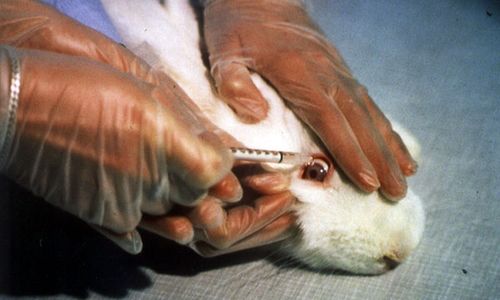
For such experiments, hundreds of thousands of animals are tortured every year in cruel, fatal poisoning tests in which substances are forcibly administered to them, chemicals are applied to their skin, or chemicals are dripped into their eyes.

The latest developments in China in animal testing for cosmetic products give hope for great animal-friendly improvements.

The Chinese government is now taking new steps and easing its requirements for cosmetic tests on animals.

In detail, it looks as if China will soon no longer require animal testing for imported cosmetics in the “Non-Special Use” category (e.g. shampoo, shower gel, body lotion, make-up) so that these products can be marketed in China.

In January of this year, a long-awaited new draft of the so-called Cosmetic Supervision and Regulation (CSAR), China’s outdated cosmetics regulation, was drawn up.

The final publication for implementation was delayed due to COVID-19, but the final draft has now been published and is currently being analyzed.
If it is passed, it would be possible in the future to market many imported cosmetic products in China that have not been tested on animals.
That would be a huge step forward and save countless animals from cruel experiments!

Unfortunately, however, it does not mean that animal testing is no longer carried out in China at all.

Companies that manufacture products in the “Special-Use” category must continue to have animal tests carried out for marketing in China, which means that animal tests are still required for these products – regardless of where the products were made.

This category includes special cosmetic products such as hair dyes, perm products, whitening products, sunscreens, or hair loss agents.

The passing of the CSAR would be a very important milestone, but the suffering of the animals would not end there and countless animals would still need our help.

https://www.peta.de/china-kosmetik-tierversuche-neue-regelung


And I mean… Companies that want to export cosmetics to China have to accept animal testing.
Without registration with the CFDA (China Food and Drug Administration), customs clearance is not possible – and therefore no market entry.

This regulation is now to be relaxed.
In addition, the Chinese government has approved two new cruelty-free testing methods
We are really happy.

Of course, there is still no ban on testing cosmetic products on animals, but at least and with the new regulation, companies can now officially decide freely whether to use methods that do not involve animal suffering

The animal rights organization Cruelty-Free International (CFI) sees this as a very important step.
It remains to be seen whether China will abandon animal testing for cosmetics altogether.

That would eventually increase China’s sales, because the many cosmetics companies that don’t want to sell their products there, for this reason, would do it again.

My best regards to all, Venus

Dubious deals again: EU Commission and European Chemicals Agency

The Board of Appeal of the European Chemicals Agency (ECHA) recently published two decisions on animal testing for cosmetics.

It stipulates that ingredients that are used exclusively for cosmetics may still be tested on animals under the REACH regulation. (Registration, Evaluation, Authorization, and Restriction of Chemicals)
In fact, animal testing for cosmetic ingredients has been banned since the EU Cosmetics Regulation came into force in 2013 – and thus the current decisions represent an absolute misinterpretation of the law, as they enable manufacturers and regulatory authorities to effectively ignore the ban.

What does all this mean for animals and what can we do about it?

The following will happen to the animals:
As a direct result of the decisions, over 5,500 rats, rabbits, and fish are used in new experiments.
Some of them are given a cosmetic ingredient repeatedly during pregnancy.
The animals themselves and their offspring are then killed and dissected.

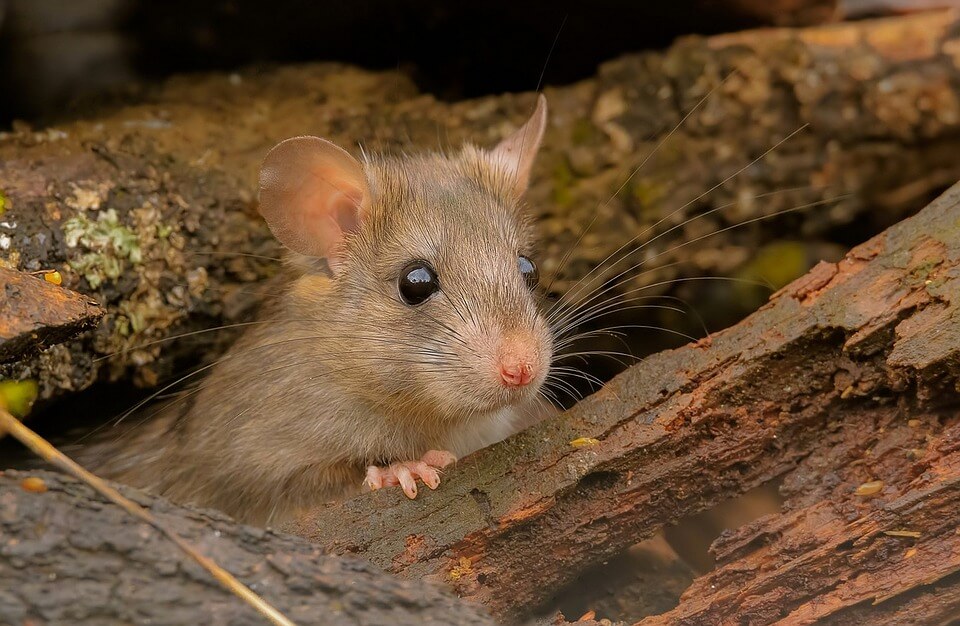
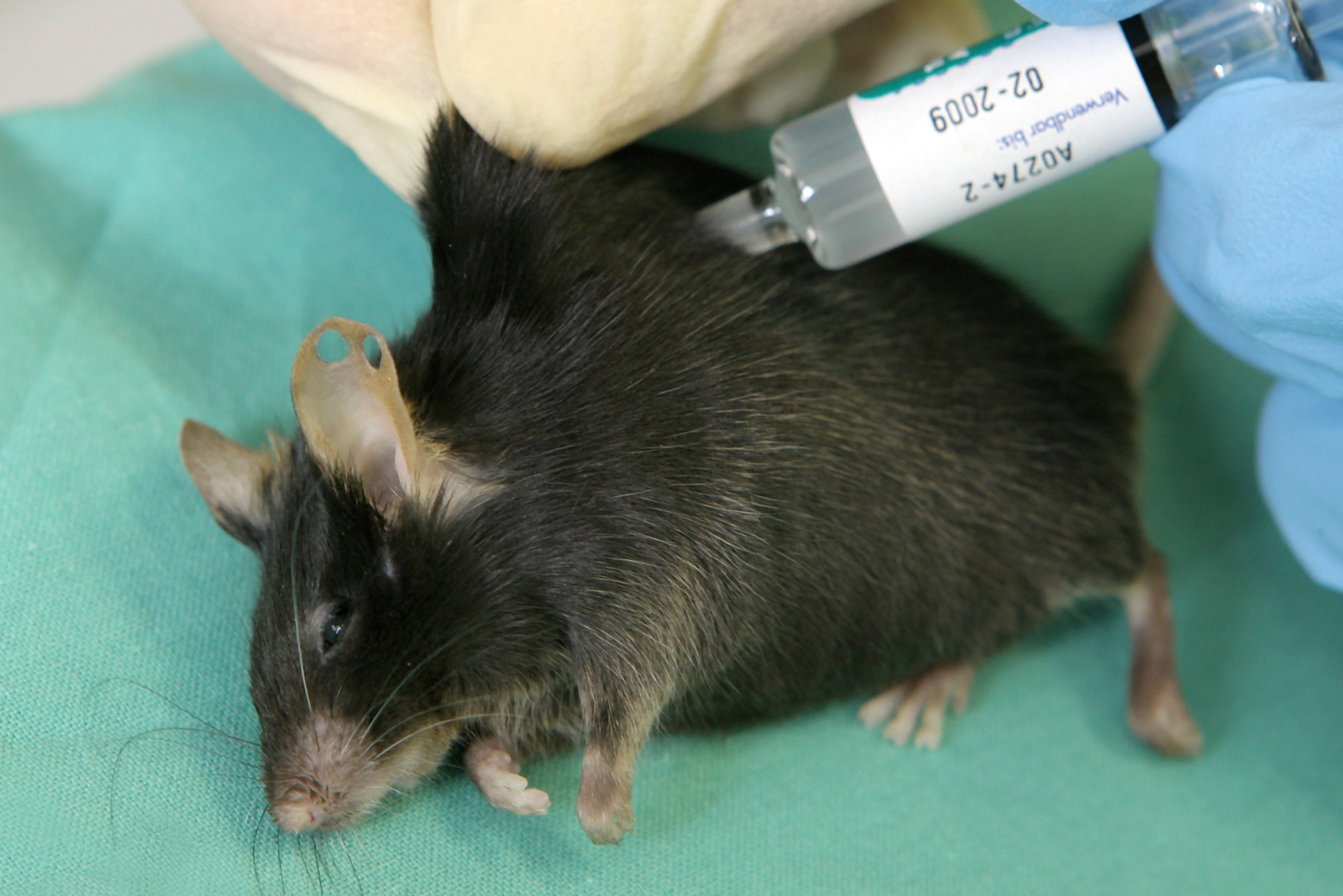
Maus Tierversuche

In addition, the decisions open the door to further animal testing, as hundreds of new cosmetic products come onto the market every year, the ingredients of which may then have to be tested on animals within the framework of REACH – at the expense of tens of thousands of animals.

Continue reading “Dubious deals again: EU Commission and European Chemicals Agency”

COLOMBIA WILL BAN ALL COSMETIC ANIMAL TESTING BY 2024. Well Done Them !

COLOMBIA WILL BAN ALL COSMETIC ANIMAL TESTING BY 2024

European Parliament to Support Global Cosmetic Animal Testing Ban

Colombia has banned the use of animal testing for cosmetics. The new law takes effect in 2024.

The ban prohibits the use of animals for testing cosmetics products and ingredients. It applies to imported or manufactured products.

The bill was introduced to the nation’s Congress in 2018 by House Representative Juan Carlos Losada. Colombia is the first nation in South America to enact such a ban.

“This humane and historic new law will spare the suffering of countless animals in needless cosmetics tests,” Jan Creamer said in a statement. Creamer is the president of the nonprofit animal welfare organization, Animal Defenders International (ADI).

Creamer continued: “Thank you, Colombia, for leading the way in Latin America. We hope to see other nations take similar action.” 

Losada believes that Colombia’s move away from animal testing could also improve its business standing in the international market. “The main purpose of the bill is to stop animal suffering in the cosmetics industry. [But it can also] enable Colombian companies to enter the European market, a region that has for years rejected such tests,” he said.

Is Animal Testing Necessary?

Across the globe, the public perception of cosmetic animal testing is changing.

In September 2018, the California Cruelty Free Cosmetics Act (SB1249) passed in California. This made California the first state to ban the sale of most animal-tested cosmetics. The law took effect in January 2020. Similar laws took effect this year in Nevada and Illinois, too.

Conscious consumers are largely driving the wave of change. Shoppers are increasingly opting for cruelty-free products. One survey found that almost half of women support a cosmetics animal testing ban. Additionally, UK-based beauty and cosmetics company The Body Shop gathered eight million signatures for their campaign to “end animal testing in cosmetics forever.” The campaign is said to be the largest in history for the cause.

Besides concerns surrounding animal health, evidence suggests that testing products on animals is not an effective method of risk assessment. An article by Forbes pointed out that animal testing—which is also notoriously expensive—accurately predicts human reactions to cosmetics only 40 to 60 percent of the time.

Outside of the beauty industry, animal testing for disease research can also be inaccurate. The animal rights organization People for the Ethical Treatment of Animals noted that 90 percent of National Institutes of Health animal experiments fail. Ninety-five percent of pharmaceutical drugs test safely on animals, but then show different results in human trials.

Germany is developing into the largest animal testing laboratory in the world.

Animal testing: Germany refuses to adapt to EU requirements – take action now!

Infringement proceedings are currently underway against Germany because EU requirements for the protection of animals in test laboratories have not yet been sufficiently implemented.

Eight years late, the federal government is now submitting completely inadequate draft laws, which, however, continue to ignore important animal welfare requirements. Call on the responsible minister to remedy the deficiencies!

Brussels / Stuttgart, August 16, 2018 – breaches of contract: The EU Commission, based in Brussels, has informed six European countries about inadequacies in the national legislation on the protection of animals in the test laboratories.

Each member state had to implement the EU directive “for the protection of animals used for scientific purposes” in its laws by 2012.

However, around eight years later, the Commission still found numerous shortcomings in the national laws of Estonia, Germany, Portugal, Romania, Slovakia, and Spain.

PETA Germany, together with PETA UK, has asked the responsible ministries to no longer allow experiments on animals and is starting an online petition.

8 years too late: BMEL (German Ministry of Food and Agriculture) presents draft laws! That is also inadequate!

In the summer of 2018, the EU Commission reprimanded those six EU countries for failing to implement various legislation on the protection of animals in test laboratories – including Germany.

Up until November 10, 2012, each EU member state had the task of implementing the “Directive 2010/63 / EU on the protection of animals used for scientific purposes” in its national legislation.

Now, almost eight years (!) after the deadline was exceeded, and with EU infringement proceedings on the back of its neck, the federal government is submitting corresponding drafts.

“Among other things, the German law allows that despite the requirements of the EU Animal Experiments Directive, no appropriate inspections are carried out in test laboratories,” said Dr. Christopher Faßbender, ecotoxicologist and research assistant at PETA Germany.
“In addition, the wording of the German legislation does not sufficiently specify the requirements for the expertise of the staff in such facilities and the presence of veterinarians.”

These are still more than inadequate and sometimes keep back doors open so that we can continue as before.

Continue reading “Germany is developing into the largest animal testing laboratory in the world.”

France: Investigation shows dogs bred for animal testing in France.

Investigation shows dogs bred for animal testing in France

12 August 2020

L214

Video Link – https://youtu.be/py1Pi48llVE

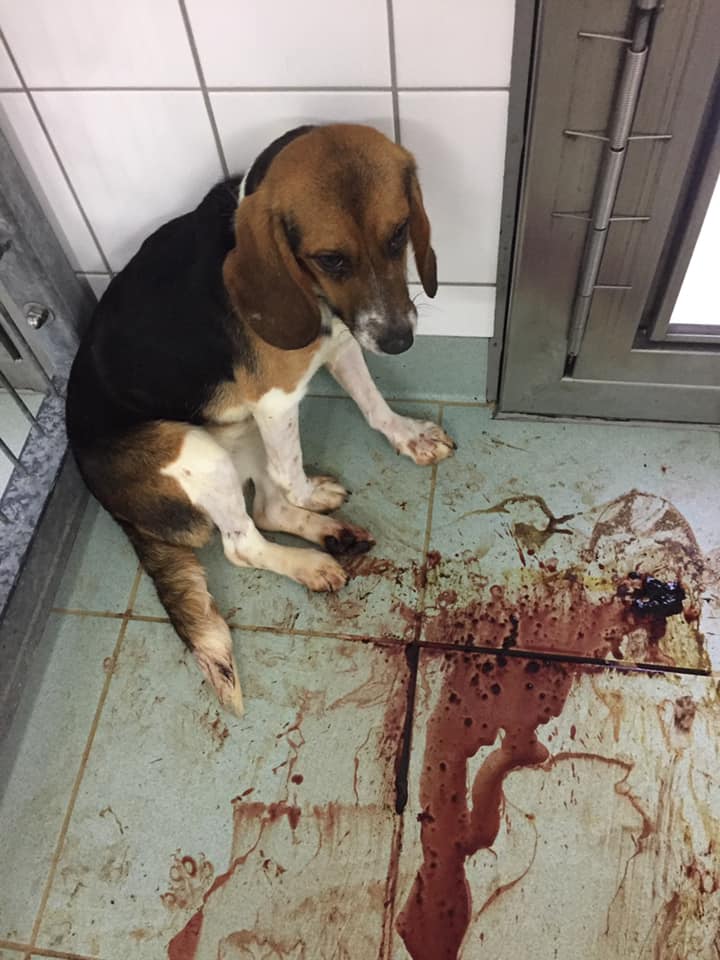
In Auvergne, a huge farm supplies between 1,000 and 2,000 Beagles each year to animal experimentation laboratories around the world.

In Gannat, there is a site inaccessible to the public, surrounded by fences, barbed wire, equipped with video surveillance and alarm systems. A high security prison? A military complex? No.

When we manage to glance through it to obtain a few images, we can see rows of dozens of small bare enclosures with access to concrete courtyards where beagles are locked up. These dogs are known for their gentle and affectionate character, but they will be sold as “laboratory equipment”.

According to official 2018 figures , in France, 2 million animals are used in laboratories. Rodents, fish, reptiles, macaques, marmosets, dogs, cats, horses undergo more or less invasive, more or less painful, more or less fatal experiments. However, there are alternatives to animal testing.

One of the measures of the referendum for animals, which L214 is carrying with many personalities and French NGOs, is the ban on animal testing when alternatives exist.

The post ‘Investigation shows dogs bred for animal testing in France’ is modified from an article published by L214 Éthique & Animaux in their original language.

https://blog.l214.com/2020/08/11/france-chiens-eleves-laboratoires-dexperimentation-animale

Stop Covance`s criminal lab experiments

We at Doctors Against Animal Experiments are committed to modern animal-free research and medicine. Animal experiments must no longer have a place in the 21st century!

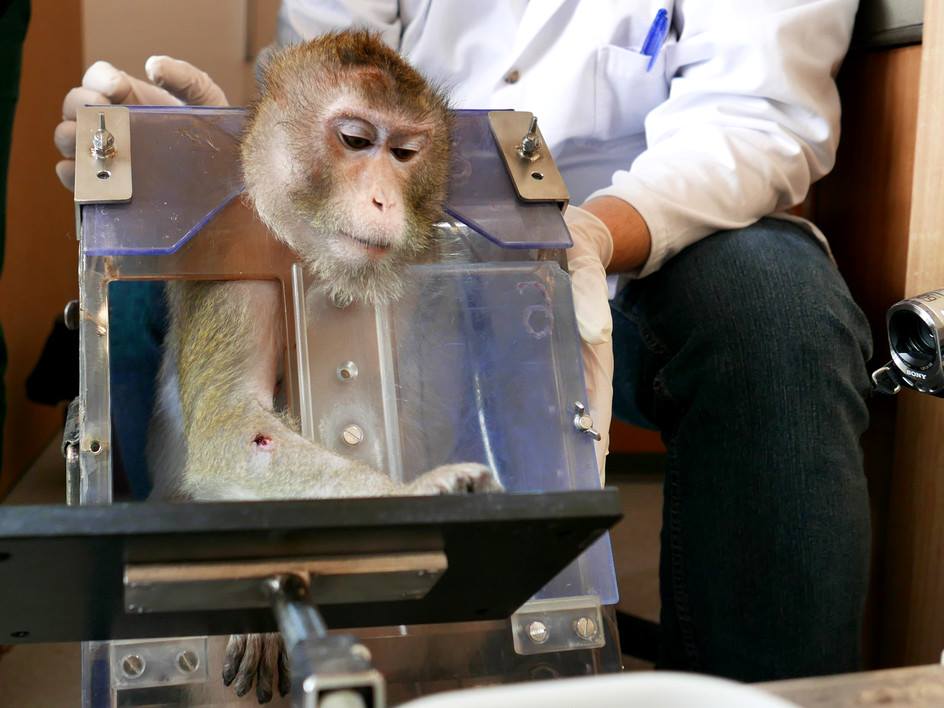
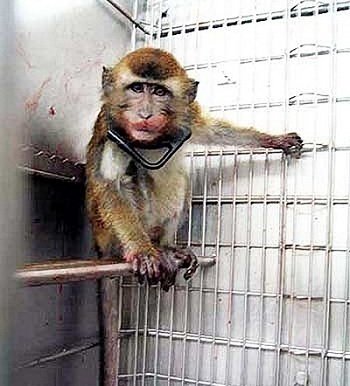
Afe im Laborstuhl n

The US company Covance operates in Münster, Germany,  one of the largest animal testing laboratories for monkeys in Europe.
Every year up to 2,000 monkeys are killed here in excruciating toxicity tests.

Covance is thus the largest “monkey consumer” in Germany!
Now the group wants to expand: A new building for animal stalls is to be built, an advertisement is looking for animal care personnel (!!!).

covance gebäude MünsterAnimal experiment factory “Covance Laboratories GmbH” in Münster, Germany
So soon more monkeys will suffer and die here!

Covance Inc. is one of the world’s largest contract research organizations with offices in 20 countries.
The branch in Münster specializes in reproductive toxicity tests on monkeys.

covance affe jpg

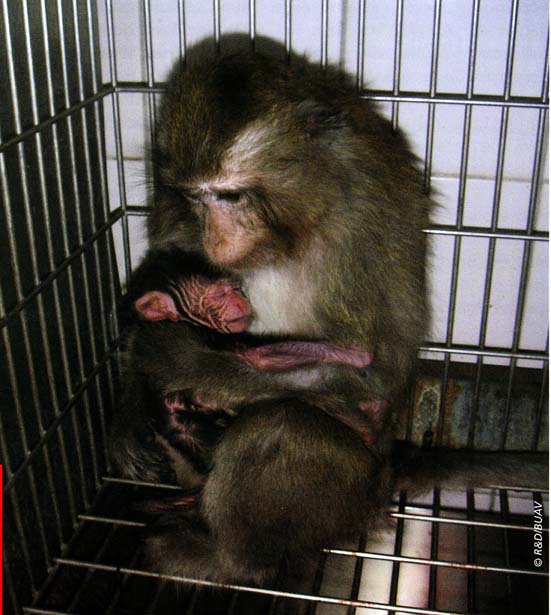
Pregnant monkeys are often given drugs or chemicals pumped into their stomachs or injected into the bloodstream daily to see the effect on their offspring.
The consequences can be stillbirths or malformations.

covance-mutter_u_kind
The substances are also given to male monkeys to test their fertility.
Such toxicity tests on our closest relatives are ethically unjustifiable and scientifically nonsensical, since the results only say something about the reaction of the monkeys, but do not allow predictions for humans.

Continue reading “Stop Covance`s criminal lab experiments”

USA: Constipation ‘Research’ on America’s cats include Snapping their Spines and Injecting Potato up their Backsides for “research”, sickening records show. US Taxpayers Pay $500,000-$1million (£782,000) Per Year for this waste and abuse.

FRIGHTENING experiments on America’s cats include snapping their spines and injecting potato up their bums for “research”, sickening records show.

Barbaric tests on moggies as young as six months old for constipation and incontinence experiments involve the implantation of electrodes to stimulate bladders and colons, say campaigners.

Gut-wrenching photos and video of cats being operated on to insert devices have been provided exclusively to The Sun by the White Coat Waste Project, which obtained them through the Freedom of Information Act (FOIA).

Thousands of dollars have been spent on the lab cats in the US, FOIA information shows

The group was given receipts showing that thousands of dollars are being spent on lab cats supplied for the Department of Veterans Affairs’ (VA) research.

These include a tabby called Milo; Oreo, a black and white cat; and tabbies Prince, Otis and Joey – all used for constipation research.

The FOIA info shows:

  • The VA buys healthy cats and performs invasive surgeries to implant electrodes to remotely stimulate their bladders or colons, severs some of the cats’ spinal cords, and then kills and dissects them.
  • It exposes bowels for electrode placement, before increasing pressure on the cats’ colon “in response to rectal stimulation”.
  • Artificial poos made from bran, potato flour and saline “are used for bowel experiments”.

The Veterans Department says it has been granted approval to use felines to help Americans with debilitating illnesses.

For example bladder-based research was needed as, “more than 15 million Americans face the challenges of incontinence, frequent urination, or dysfunctional voiding”, where people struggle to pass stools.

The electrodes are placed inside felines as part of constipation and bladder research

CATS ‘BIG ENOUGH FOR DEVICES’

This is “often related to spinal cord injury, diabetes, or ageing, which are common in the veteran population,” says the VA.

It aims to find “better ways to diagnose and treat the causes of these problems” by using devices “that can monitor bladder volume and pressure under everyday conditions and in people without sensation.

“Cats control their bladders in ways similar to how people do, and are large enough for devices developed with them to be scalable for human use.”

FAKE POO USED

But, the VA has been slammed by the White Coat Waste Projects as “taxpayers are being forced to pay over $500,000-$1million (£782,000) per year for this waste and abuse.

“Using the FOIA, we have obtained never-before-seen videos, photos and other documents detailing constipation experiments in a US govt lab.

“Cats are given spinal cord injuries, implanted with experimental devices, and then fake faeces are forced into their rectums.

“At the end, the cats are killed,” the group says.

Justin Goodman, vice president of advocacy and public policy at the taxpayer watchdog group, told The Sun: “Taxpayers shouldn’t be forced to pay millions for VA bureaucrats to buy healthy cats, cripple and mutilate them, and videotape their abuse in wasteful, bizarre and deadly constipation experiments.”

Gruesome pics show the cats being operated on to insert devices

Analysis of medical records obtained via the FOIA show the experiments and procedures cause the cats “distress, seizures, bloody urine, and depression”, the group found.

It’s accused the VA of “torturing cats as young as six months old in cruel and wasteful constipation and incontinence experiments”.

Instead of using animals, the tests “could be done in human volunteers which would give results directly related to people”, WCW urged.

From initial information released so far, two of the experiments show approval to “use and kill 35 cats”, the campaigners added.

Purchase receipts provided by the VA shows its researchers “typically buy cats for these experiments in August and September each year.

The VA insists the procedures help those with bladder and bowel control problems

“All of these tests are classified as painful experiments.”

Since January 2016, the VA’s constipation tests have cost taxpayers about $200,000 (£156,000) a year. This project is scheduled to run until December 2020.

These have been running alongside incontinence tests.

Mr Goodman said that after crucial lobbying “by our watchdog group and its over two million members, Congress has drawn a line in the sand.

“It has cut funding for the VA’s dog tests and directed it to phase-out its wasteful experiments on cats by 2025.

“But this taxpayer-funded horror show we’ve uncovered underscores that action is urgently needed right now.”

The VA has been urged to stop using animals for 'distressing' tests


The VA says on its website that it “is committed to supporting the research that is needed to improve medical care for Veterans”.

More than half of its research is “done with human subjects, computer models, analysis of existing data, or collection of data from biological systems other than vertebrate animals”.

Of the remainder, rats and mice are mainly used, while “less than five per cent of that last one per cent depends on living vertebrate animals involving dogs, cats, or nonhuman primates”.

Its animal testing is approved before going ahead, with “feedback provided by at least one boarded laboratory animal veterinarian” and it undergoes further reviewing.

The VA says that “cats are the smallest known species in which the control of bowel storage and emptying are managed as in humans.

“Research is to learn more about the neurophysiology mechanisms involved, so that better therapeutic approaches can be developed.”

Felines are also used for research on sleep, to help people suffering from sleep apnoea.


Talking of back passages – here above is a prime one.

Regards Mark

sweet news from Switzerland

After hearing from PETA affiliates, Switzerland-based chocolatier Barry Callebaut – the “world’s leading manufacturer of high-quality chocolate & cocoa products” – has announced that it will not conduct, fund, or commission any animal experiments, unless they are explicitly required by law.

In another kind move for animals, earlier this year, the multibillion-dollar company announced plans to open a completely vegan production facility in Schleswig-Holstein, Germany.

Image shows vegan chocolate© Barry Callebaut Group


By no longer contributing to any cruel and deadly experiments on animals, Barry Callebaut, which operates production facilities in the UK, joins the ranks of other progressive food-industry giants, including Barilla;

The Coca-Cola Company; General Mills; House Foods; Kikkoman; Lipton; Nissin Foods Holdings Co, Ltd; Ocean Spray; PepsiCo; POM Wonderful; Sapporo Holdings; Welch’s; and Yakult Honsha.


What Do Animals Endure in These Types of Experiments?

PETA US had uncovered experiments on animals published between 2007 and 2019 – which were not required by law – that Barry Callebaut contributed to.

As part of our campaign to end animal testing in the global food industry, PETA and our affiliates have exposed that for decades, manufacturers have pursued cruel laboratory tests in which thousands of animals have been cut open, tormented, and killed – all in misguided attempts to make marketing claims about products ranging from ramen noodles to chocolate bars to breakfast cereals to alcohol.


By pledging not to conduct experiments on animals after discussions with PETA US and PETA Germany, Barry Callebaut is committing to sparing other animals a similar fate.


The company also sets a progressive example for other food and drink producers to follow.

Conscientious shoppers play a huge part in driving the vegan revolution, and they don’t want to buy products that were cruelly tested on animals.

You Can Help Prevent Other Animals From Suffering in Experiments

Animals suffer in pointless food and drink industry tests in many countries all over the world.

PETA and our international affiliates are leading a global effort to spare the lives of thousands of animals used in deadly food-industry experiments and replace them with humane, effective, economical, and modern animal-free research tools.

https://www.peta.org.uk/blog/chocolate-barry-callebaut-bans-animal-testing/
 Learn more about food testing:  https://www.peta.org/features/victories-food-drink-companies-refuse-animal-tests/


And we say…Such news makes us very happy and confirms our struggle and all our efforts for a world without animal suffering and exploitation.

Thanks, PETA, thank you Barry Callebaut!!.
Chocolate has high quality only if it is not made from the suffering and death of animals.

My best regards to all, Venus

And again more animal experiments in Austria!


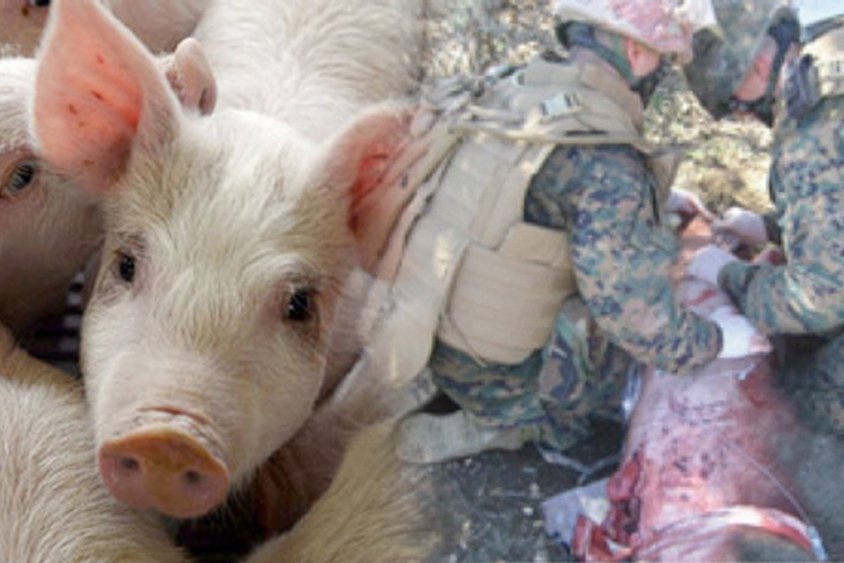
According to the statistics, 20,438 animals had to endure so much suffering that the experimenters themselves stated that; including 18 pigs for animal welfare and 171 chickens for veterinary medicine!

flagge-von-österreich-jpg

The animal experimentation industry repeats mantra-like that it is committed to the so-called 3R principle, that means: the number of animal experiments and the number of experimental animals per experiment should be reduced and animal suffering avoided.

-Tierversuche_master_reference

VGT (Association against animal factories) chairman Martin Balluch, himself a member of the Federal Committee for Animal Experiments says:

“Unfortunately, this strategy fails completely. The number of experimental animals used has been increasing steadily since 2000.
And instead of replacing animal experiments, they want to build a new animal experiment laboratory at the JKU (Johannes Kepler University) in Linz!
But not only that.

Animal suffering is also increasing, for purposes beyond any medical research for humans. Current animal experiment statistics show that 18 pigs suffered badly for animal welfare and 171 chickens also suffered heavily for veterinary research.
These animal experiments are the opposite of minimizing animal suffering! “

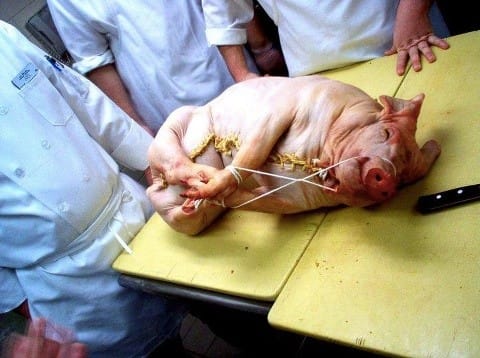
Tierversuche an Schwein_n

In 2018, “only” 17,841 animals had suffered severely, in 2019 there were already 20,438.

In addition, this information about the severity of the suffering is determined by the animal experimenters themselves. An objective review of this is not planned.

A representative survey published by the British market research institute ComRes on July 17, 2020, showed that almost three-quarters of EU citizens want the EU to provide a binding exit scenario from animal experiments.

70% also agreed that the full replacement of animal testing with non-animal testing methods should be an EU priority.

A total of 66% wanted the end of all animal experiments immediately. In this spirit, the majority of the Federal Council in Austria recently decided that research on animal testing should be promoted to the same extent as that with animal testing.
The Federal Government has not complied with this at all.

Continue reading “And again more animal experiments in Austria!”

“The question is not, can they reason? Nor, can they talk?  But can they suffer?” – the clear answer is YES.


Issues-Cruelty-and-Waste-of-Vivisection


The Cruelty and Waste of Animal Experimentation

The Issue

The word “vivisection,” or animal experimentation, does not begin to describe how hundreds of millions of animals are used in science every year, let alone capture the physical pain, deprivation and emotional distress experienced by animals who are cut up, poisoned, burned, irradiated, gassed, shocked, dismembered or genetically designed to suffer. Nor does it reflect the tragedy of each individual life—however short and brutal—caged in an artificial environment which deprives them of experiencing life as nature intended.

Millions of animals—primates, dogs and cats, rats and mice, rabbits, pigs, horses, birds, reptiles, amphibians, fish, and yes, guinea pigs—are sacrificed as a result of animal experimentation. They are used in basic and applied research, for the safety testing of products, to be bred or harvested from the wild to be killed and cut up for dissection, and as living factories of byproducts to be used as ingredients in drugs or laboratory experiments.

NAVS opposes the use of animals in scientific research and product testing for both ethical and scientific reasons. Animal experimentation is cruel. It is an outdated and inadequate methodology that can produce invalid, often misleading results. It wastes money and resources and sidetracks meaningful scientific progress.

Background

The practice of animal experimentation has been debated for centuries—seemingly pitting the pursuit of knowledge and human health against compassion for animals. Society has allowed animal experimentation because people have been convinced that it was a “necessary evil,” and that it was the only way to find cures for human diseases and to make drugs, cosmetics and other products safe. Secrecy and security have ensured that people are unaware of what happens behind the laboratory doors or wrongly trust that the laws intended to prohibit cruelty to animals include protection for animals used in research.

Defenders of animal experimentation argue that nonhuman animals are enough like humans to make them scientifically adequate models of human diseases or to test treatments or the safety of products.  They also contend that other species are different enough from people to make it ethically acceptable to use them in experiments.

NAVS argues that it is the way that humans and nonhuman animals are similar that provides the basis for the ethical objection to animal experimentation. Perhaps the English philosopher, Jeremy Bentham, said it best when he asked, “The question is not, can they reason? Nor, can they talk?  But can they suffer?”

There is little doubt that some breakthroughs in the past were made as a result of animal experimentation; but the questions being asked of science today are more complex and society has grown in its respect and appreciation for other sentient creatures, due in large part to studies of their behaviour and intelligence. Sophisticated technologies available today and under development promise new and better avenues for investigation. Many of these approaches offer human relevance and insight in ways that animal models have not, and cannot, provide.

How NAVS Helps

If people could witness what is done to animals in the name of science, they would share our outrage and impatience with the all too slow rate of progress in ending these practices. Since 1929, NAVS’ response to the cruel, archaic, wasteful and unnecessary practice of animal experimentation is to work towards the advancement of science without harming animals. We look to science to inspire, to inform, to heal and to help solve the world’s problems. Science is about discovery and exploration. Science replaces ignorance and superstition with knowledge. But scientific investigation that exploits innocent animals as objects to use and abuse, causing unspeakable suffering and death, is not progress. We know that every animal is amazing in their own way—intelligent, social, complex—designed by evolution to be the best at what they do and deserving to be treated with respect. Investing in more humane methods of scientific inquiry will lead to better science.

NAVS is a respected leader of advocates for animals and better, more humane science. We are dedicated to ending harmful, flawed and costly animal experiments through the advancement of smarter, human-relevant research and the promotion of animal-friendly changes to laws and policies:

  • We work with respected scientists to advance modern, human-relevant scientific methods that replace the use of animals through our support of the International Foundation for Ethical Research (IFER) and other promising collaborations with the scientific community.
  • NAVS’ Advocacy Center empowers supporters to take action that promotes greater protection for animals through the legal/legislative and policy-making processes.
  • We provide innovative teaching tools and resources that replace animal dissection while enhancing education in the life sciences. NAVS also provides incentives to encourage young scientists to pursue careers that advance science without harming animals.
  • NAVS’ Sanctuary Fund provides emergency financial assistance to support animals retired from laboratories and those threatened by natural and man-made disasters.


Text reproduced from the NAVS website.

https://www.navs.org/the-issues/the-cruelty-and-waste-of-vivisection/#.XxWzK3uSnIW


More WAV reading:

https://worldanimalsvoice.com/2020/07/19/uk-mauritius-paradise-lost-35-years-on-for-us-and-mauritius-still-supplies-primates-to-the-uk-for-research/ 


Sadistin Laborfrau mit Affen

Labor Markierung an Affe