Category: Vivisection

UK / Mauritius: ‘Paradise Lost’ – 35 Years On (for us) and Mauritius Still Supplies Primates to the UK for Research.

UK flagge aquarelljpg

I am going back a long time – around 1985 or near to that.

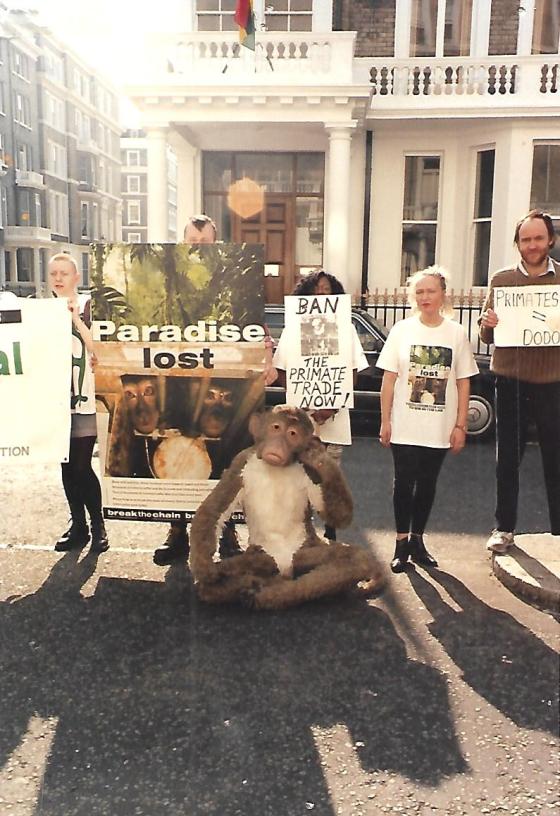
I was part of a local and effective animal rights group which had been formed by my Joanne – white ‘Paradise Lost’ T shirt; black pants; blonde tied back hair, see photos below.

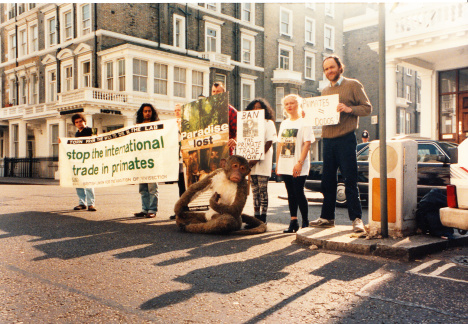
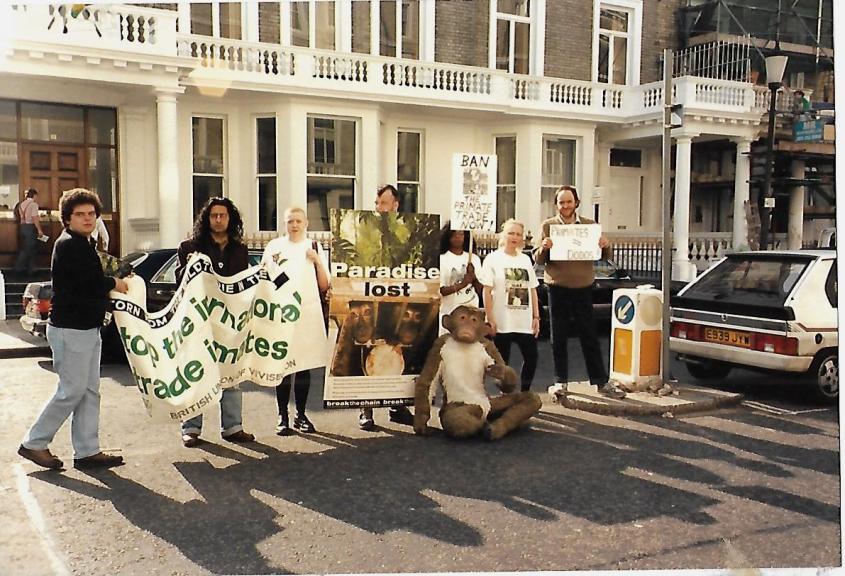
We decided a few of us (3 or 4) from our group would meet with other campaigners in central London to an impromptu demo for the BUAV ‘Paradise Lost’ campaign at the Mauritanian Embassy, which is located in central London; calling for the Mauritian government to stop the supply of research primates to European laboratories.

GLAD primate 1

We had with us our very impressive ‘sad lab primate’  on the day – a costume worn by one very agile campaigner, the sad face reflecting that it had been torn from the wild and was destined for lab research in another land – far away from its original home in Mauritius.

I was the group photographer on the day; and in my photos you can see Joanne – in a white ‘Paradise Lost’ T shirt; black pants; blonde tied back hair, and ‘Big Malc’ (Malcom) who you can just see the head of behind the big Paradise Lost poster; and Leanne; the dark haired girl between the two of them.  I don’t know who the other folk were; but we all got together and made our voices know outside the embassy.  All the photos are taken directly in front of the Mauritanian embassy.

GLAD primate 4

We attracted lots of Press; and the guys from the papers really loved our human sized sad primate; who ended up climbing and swinging from a few lamp posts for even more attention and media coverage of what was behind the demo.

GLAD primate 2

GLAD primate 3

‘Big Malc’ (behind and holding the poster / banner) was a member of the group and a great mate.  I last met him about eight or nine years ago in a supermarket.  He had all these Mauri type tattoos over his arms and face; and him and I were the only 2 people in the aisle.  I think all the shoppers had been frightened off by his appearance; but we stopped and had a really good chat.  He was the only guy I have ever seen eat a whole, raw Cauliflower when we did a stall in our local town.  Despite his big size and tattoos everywhere; he was one of the gentlest and lovely people you could ever wish to meet.

So, what, 35 years later, I was very annoyed (to be politically correct) to see this article in the national press a day or so ago.  Still primates are being imported into British labs which had their original home in Mauritius.  They are the long-tailed macaques –  6,120 from this (usually) paradise place.  35 years on since our demo in London, and STILL primates are being used in crap experiments.- now I guess the researchers have another excuse for their justification – and its called Covid,

35 years later and Mauritius is still giving innocent primates to the labs of the world. 

What do you do except produce a post like this to try and get a point across.

The figures are based on permits issued by the government-run Animal and Plant Health Agency (APHA). But activists say that more primates may also have been imported for lab tests from within the EU.

As the article says:  Britain has banned tests on wild primates but still allows them to be brought in and sold as pets and allows their offspring to be imported for research.  In other words, nothing has changed from when were on the streets of Ol’ London town all those years ago.

Here is the article for you to read more about the disgusting lab primate trade.  35 years ago it was ‘Paradise Lost’ for the primates; sadly, today it still is !

Regards Mark

Article Link:

https://www.independent.co.uk/news/uk/home-news/primates-monkeys-imported-lab-test-disease-virus-macaques-how-many-a9612376.html

Article:  from ‘The Independent’, London.

Primates imported to UK for laboratory experiments ‘triple in a year to 6,752’

The number of primates and primate parts imported into the UK for laboratory animal experiments has nearly tripled in a year to more than 6,700, figures suggest.

Experts warned the steep rise risks spreading diseases that could be fatal to humans. Monkeys can pass viruses including avian flu, Sars and vCJD to people.

Authorities handed out permits last year for an “unusually high” 6,752 monkeys and monkey tissue parts to be flown in and sent to laboratories, where chemicals or drugs would be tested on them. Primate-welfare workers are demanding to know why numbers shot up.

The animals – long-tailed macaques – were mostly from Mauritius (6,120), and another 632 were flown in from Vietnam.

The figures are based on permits issued by the government-run Animal and Plant Health Agency (APHA). But activists say that more primates may also have been imported for lab tests from within the EU, where there are several primate-breeding companies, but the agency does not have to record them.

Britain has banned tests on wild primates but still allows them to be brought in and sold as pets and allows their offspring to be imported for research.

In 2018 – the most recent data available – the number of experiments on primates in the UK rose by 8 per cent, to 3,170. Most of these – 2,900 – were carried out on long-tailed macaques, of which four-fifths were testing the toxicity of chemicals or drugs.

Sarah Kite, of Action for Primates (AfP), said the level of imports was unusually high, calling for the APHA to provide reasons for the sudden increase.

In 2018, 2,666 long-tailed macaques were imported to the UK from Mauritius and Vietnam, Cites data shows. In 2017, it was about 1,000. But last year, APHA permits were given for 6,790 imports, including 38 for “breeding”. Of these, 25 were squirrel monkeys and seven black lion tamarin monkeys.

The Department for Environment, Food and Rural Affairs said a number of tissue samples, such as blood or saliva, could be taken from one animal, but each sample could have a permit so the actual number of live animals imported was lower than 6,790.

Ms Kite said: “The UK has, over the years, continued to perpetuate a trade that centres on the cruel trapping of wild animals.”

Importing the offspring of wild animals for tests helps fund the capture of monkeys from their habitats, AfP says.

“The capture of wild monkeys inflicts significant suffering and distress. Primates are highly social animals, and trapping and removing them from their habitats, families and social groups is cruel. It can also result in injuries or even death,” she said.

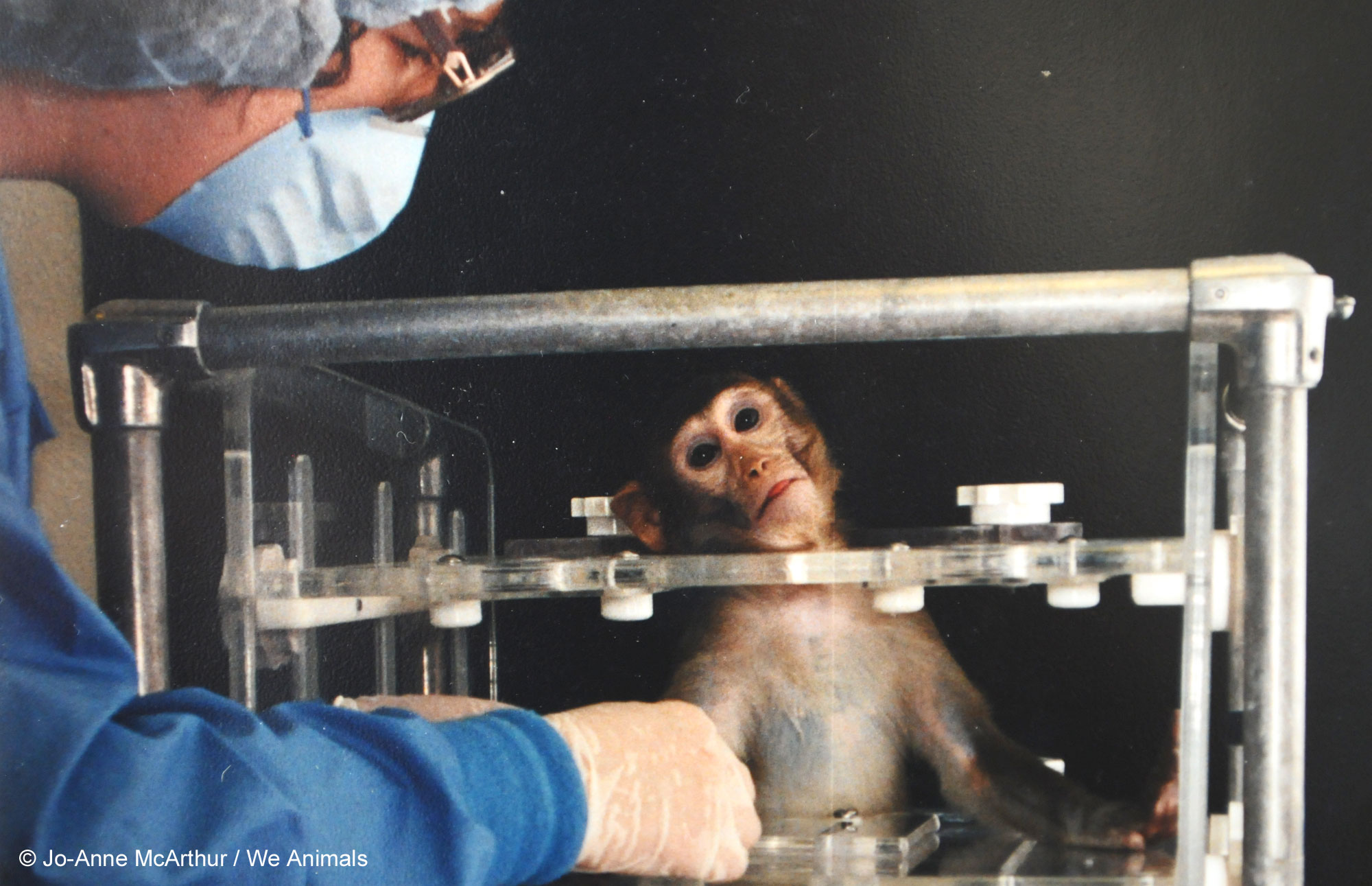
Globally, the long-tailed macaque is the most heavily traded primate and the most widely used in research. Experiments on them to assess their reactions to drugs or chemicals involve restraining the animals and injecting them with the drugs or force-feeding them through a tube down to the stomach.

The black lion tamarin, native to Sao Paulo in Brazil, is officially endangered.

Permits last for up to six months so some of the 6,790 animals may have been imported this year.

Monkeys bought for breeding will have gone to zoos or the pet trade, it is believed, after previous surveys found thousands of primates are kept as pets in the UK.

Ms Kite also warned of the disease risk, pointing out that the US banned imports of primates for the pet trade as long ago as 1975 because of the risk of disease.

The US Centres for Disease Control and Prevention states: “Non-human primates may carry infectious diseases that are dangerous and sometimes fatal to humans.”

It says they include Ebola, yellow fever, monkeypox and “other diseases not yet known or identified”. Last year a case of monkeypox was found in southwest England.

China has long been the key supplier of macaques for international research but the country’s ban on the trade and transport of wild animals following the coronavirus outbreak, along with the USA-China trade war, has effectively ended its trade, prompting countries such as the US to look for other sources for lab monkeys.

Africa and Mauritius are the next biggest suppliers of long-tailed macaques for research. But hundreds of primates are also captured each year from tropical rainforests in South America.

Action for Primates is part of the Campaign to End Wildlife Trade, a coalition calling on the UK government to fight for a global ban in wildlife trade at the G20 meeting in November and to end the import and export of wild animals into the UK.

The Independent’s Stop The Wildlife Trade campaign was launched by its proprietor Evgeny Lebedev to call for an end to high-risk wildlife markets and for an international effort to regulate the illegal trade in wild animals to reduce our risk of future pandemics.

A government spokesperson said: “The UK has one of the most comprehensive animal welfare systems in the world, and we are committed to the proper regulation of the use of animals in scientific research.

“All research must implement the 3Rs – replacement, reduction and refinement – which require that animals are replaced with non-animal alternatives wherever possible and the number of animals used is reduced to the minimum needed to achieve the results sought.

“For those animals which must be used, procedures are refined as much as possible to minimise their suffering.”

Article:

https://www.independent.co.uk/news/uk/home-news/primates-monkeys-imported-lab-test-disease-virus-macaques-how-many-a9612376.html

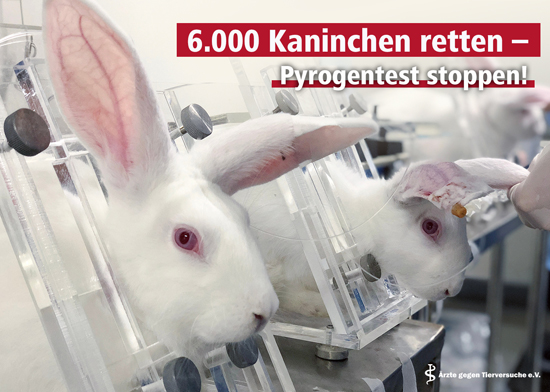
We want to stop the pyrogen test for rabbits

Around 6,000 rabbits suffer and die each year in the so-called pyrogen test. This is despite the fact that there has been a recognized test method free of animal testing for 10 years. This can no longer be tolerated!
The authorities must finally intervene and ban the rabbit pyrogen test!

Vaccines, infusion solutions, and other medical products must not contain so-called pyrogens. These are fever-inducing substances that e.g. are released by bacteria.
The European Pharmacopoeia prescribes a check of every production unit in order to protect patients from damage.

A test on rabbits has been standard for decades to test products for possible contamination by pyrogens.

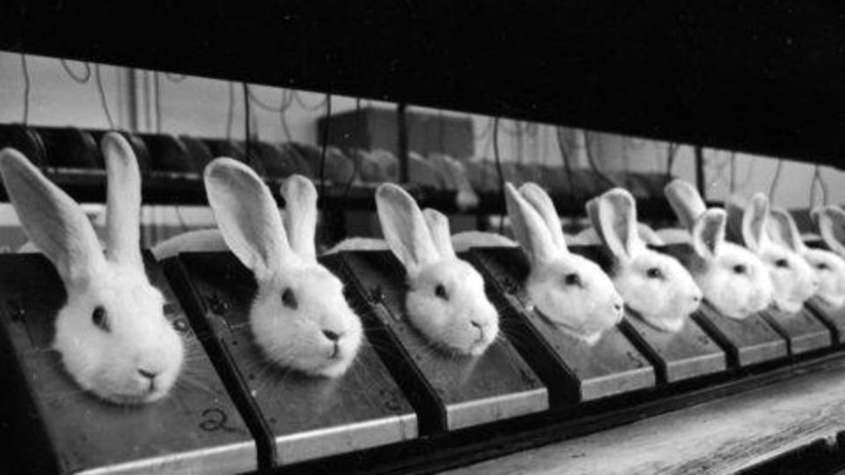
For this, rabbits are fixed in a small box in which they cannot move for several hours, and the test substance is injected into an ear vein. If they develop a fever, the production unit is not released for sale. After a certain “period of use”, the rabbits are killed.

pyrogen testg

In 2018, 6,291 rabbits were used in pyrogen tests nationwide. The numbers in the previous years were similarly high.

pyrogentest_visual_550px

An animal-free method, the monocyte activation test (MAT), which works with human blood, was developed 30 years ago and internationally validated in 2005.

In 2010 he was included in the European Pharmacopoeia.

One company that carries out the rabbit test is the LS laboratory in Bad Bocklet in northern Bavaria, Germany.
Here more than 82% of the rabbit tests in Germany are carried out.

It can no longer be accepted that even though an animal-free test method is recognized, thousands of rabbits still suffer and die for the pyrogen test in Germany alone.
The rabbit test must be deleted in the European Pharmacopoeia and the approval authorities must prohibit the test!

Please sign the petition: https://www.aerzte-gegen-tierversuche.de/de/helfen/kampagnen/3204


Comment and Information: A rabbit pyrogen test has been used since the 1940s. In this test, the rabbits are locked in full-body holders, then they are injected with a test substance into the blood and their body temperature is monitored. The possible effects on the animals range from fever to breathing problems to fatal shock.

Despite its long use, the rabbit pyrogen test has never been formally reliable to determine its reliability or relevance to humans. Rather, there are a number of well-documented drawbacks to this test, including significant differences in the sensitivity of the species and breed.

In the pharmaceutical industry, pyrogen determination is mandatory to prevent life-threatening fever reactions that can be caused by both microbial and non-microbial substances.

The monocyte activation test (MAT) was included in the European Pharmacopoeia (EP) in 2010 after the publication of international validations.

This test was developed as an alternative to animal-based methods and should offer a possibility to carry out pyrogen tests in a human in vitro system.
In addition, this determination can be carried out in vitro with greater speed and less expense than by animal experiments.

Despite all of these benefits, the Food and Drug Monitoring Agency (FDA) continues to rely on animal testing to assess the pyrogenic potential of new drugs and pharmaceuticals.

Pyrogen-Testing-1

Animal testing is a waste of time and money, associated with a high risk of our health.
And with senseless cruelty to animals that exclude ethics and humanity.

Without animal testing, medicine would be much further, because animal testing is stopping medical progress because of its false results.

My best regards to all, Venus

German Riems High-security laboratory: viruses, corpses, and pathogens

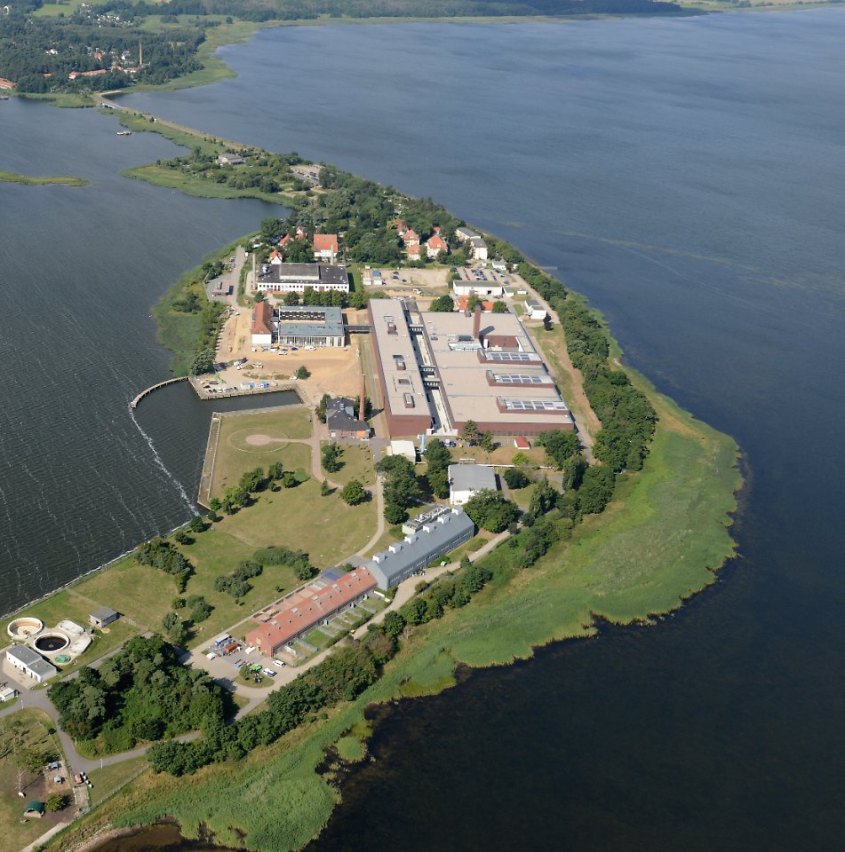
Insel-Riems-im-Greifswalder-Bodden Tierversuche

It is considered the most dangerous island in Germany: Riems has been researching animal diseases that can also threaten humans for more than 100 years. The Friedrich Loeffler Institute (FLI) high-security laboratory is located on the island, which lies in a foothill of the Baltic Sea, the Greifswalder Bodden, between Rügen and the mainland.

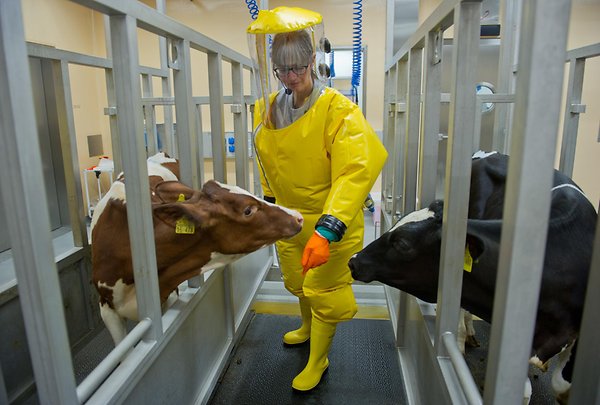
Researchers only enter high-security areas with overpressure suits

mitarbeiterin-riems

An employee of the Friedrich Löffler Institute checks the keeping of a calf in the research center of security level L4 on the island of Riems.


Nowhere in Europe are there similar laboratories and stables with the highest biosecurity level 4, in which large animals can be used to research pathogens that are highly dangerous for animals and humans.
The “Schweriner Volks Zeitung” (Local Newspaper) writes that comparable animal disease research facilities can only be found in Winnipeg in Canada and Geelong in Australia.

The scientists on Riems are investigating Crimean-Congo fever, Ebola, Sars, bird flu, and swine fever, for example.
“The work of the FLI focuses on the health and well-being of farm animals and the protection of humans from zoonoses. H. infections that can be transmitted between animals and humans, ” says the website of the Federal Institute.
For example, vaccines are also developed in laboratories (!!!)

In 2013, a new research complex was inaugurated on the island, which is connected to the mainland by a dam, which consists of 89 laboratories and 163 housing units.

At that time, the federal government invested around 300 million euros in the construction of the buildings.

The laboratories and research stables for cattle, pigs, or goats are equipped with self-sufficient ventilation and disposal systems. The specially trained researchers and zookeepers can only access the high-security areas with pressurized suits and locks.

sperrzone-riems

The area is monitored by video

Continue reading “German Riems High-security laboratory: viruses, corpses, and pathogens”

U.S.A: Stop Murray’s monkeys tortures

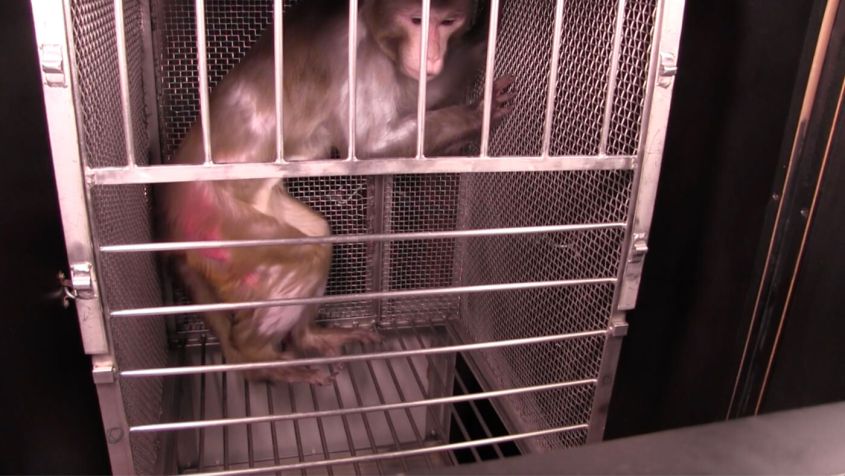
She saws open her victims’ skulls then injects toxins to burn brain cells, or suctions out parts of the brain. She sews them back up then places them in a small cage that probably reeks of the previous victim’s fear.

She then deliberately provokes their worst fears, just to see how they’ll react.

When she’s through with them, she kills them.

She’s Elisabeth Murray, and she calls herself a scientist.

tierexperimente png

Her victims are monkeys. She gets millions of your tax dollars to keep repeating this horror.

-monkey-experiments-1-scaled

PETA has obtained 43 hours of never-before-seen video of Murray’s twisted “emotional responsiveness” tests on dozens of monkeys at a National Institutes of Health (NIH) laboratory in Bethesda, Maryland.

The videos were recorded between February 2016 and November 2017.

Blood money and lots of it, for nothing.

Continue reading “U.S.A: Stop Murray’s monkeys tortures”

The ugly truth about “wonder weapon” botox

Video of the undercover investigation by the British animal rights organization Cruelty-Free International at the Wickham Laboratory, Hampshire.

“The BUAV (today = Cruelty-Free International) has carried out an undercover investigation inside a major UK animal laboratory and discovered the ugly truth about botox animal testing.

Our investigator found that at a lab in Hampshire around 74,000 mice a year are being subjected to cruel poisoning tests for botox. “

The Sloan Pharma company has its Botox preparation Neurobloc tested on 46,800 mice!

Protest directly at the company. We have prepared sample letters.

Botox is the trade name of one of the preparations from the neurotoxin botulinum toxin. The poison is used for medical, but mainly for cosmetic purposes.

botox-stock

A small injection and the wrinkles on the face have disappeared for a few months!!
But the price for youthful looks is still paid by thousands of mice – Europe alone at least 400,000 a year!

Botox Karikatur pg
Sloan Pharma alone received LD50 tests on 46,800 mice in 2019. The painful animal experiments are carried out at the Hamburg laboratory LPT, Germany  (We have often reported on LPT https://worldanimalsvoice.com/2020/05/21/germany-the-death-laboratory-lpt-is-now-history/)

Botulinum toxin is the most potent poison. Because of its dangerousness, each production unit is tested in painful animal tests, the so-called LD50 test on mice, before it goes on sale.

botox mausg
With our campaign launched in 2007, we have achieved that the public is aware of these terrible animal experiments and that more and more manufacturers are switching to methods that do not use animal experiments.

Success!

Continue reading “The ugly truth about “wonder weapon” botox”

Animal experiments offer to suffer, no security!


In this document, report the victims of the TGN1412 human test report.

TGN1412 led to a drug scandal by many in 2006.

TGN1412, which is used to treat I .a. Leukemia, arthritis, and multiple sclerosis led to permanent damage such as multi-organ failure and amputations for six subjects in the phase I trial.

Only a few minutes after the award, the subjects reported symptoms such as headache, severe hot flashes, and fever, followed by vomiting, severe pain, and symptoms of a severe inflammatory reaction. The subjects reported a feeling of “burning all over their bodies”.

They received only 1/500 of the dose that was found to be harmless in animal experiments (macaques).

Experimentation-animale-une-barbarie-injustifiee
This example shows that in human experiments after animal experiments we always start from zero.
That is why we call for animal-free and human-based research, e.g. with the multi-organ chip and a phase 0!

 Real Stories

And I mean…Animals are used for experiments because they cannot defend themselves in an organized manner and therefore they are on humans delivered.

That is the ethical basis for all animal experiments.

The life of a human being is no higher than that of an animal. There is no evidence or reason for this.
Anyone who claims that animals in captivity and experiments do not suffer is either clueless or makes money from it.

The main difference between humans and animals is that humans are able to feel pity. The person who does not have this quality towards animals is de facto an asshole.

The alone fact that experimenters are able to keep and torture animals at will, is a crime against any moral base.
Anyone who knows and has studied the history of the Nazi-Era knows how the animal experimenters tick. Their actions correspond 100% to the mass murderers of the time.
In every detail.
Even Zyklon B is still used to kill experimental animals.

Labor Markierung an Affe

It is not possible to keep behaviorally disordered people out of this area; therefore names, addresses, photos, and the crimes of the “researchers” must be made public.

My best regards to all, Venus

Breaking! – The Colombian Senate Votes To Ban Animal Testing For Cosmetics; Bill Now Moves To President’s Desk For Signature.

colom


WAV Comment – Congratulations to the Colombian Senate for a historic vote – proving that there is no need for animal testing in whatever shape or form.


Breaking! The Colombian Senate Votes To Ban Animal Testing For Cosmetics; Bill Now Moves To President’s Desk For Signature


https://worldanimalnews.com/breaking-the-colombian-senate-votes-to-ban-animal-testing-for-cosmetics-bill-now-moves-to-presidents-desk-for-signature/


Last week, the Colombian Senate voted to ban cosmetics testing on animals. The new bill, which will come into effect in 2024, prohibits the use of animals for the purpose of testing cosmetic products and their ingredients imported or manufactured in Colombia.

The Senate was almost unanimous in voting for the bill to pass. Congress sessions had been postponed due to COVID-19, but resumed virtually so that the bill and other legislative initiatives could be discussed.

With many multinational companies based in Colombia serving the Latin American market, the measure will also impact Pacific Alliance countries such as: Chile, Colombia, Mexico, and Peru.

Animal Defenders International (ADI) provided research and testimony in support of the bill that was introduced in 2018, and worked with House Representative and the author of the bill Juan Carlos Losada to advance the legislation. The bill is supported by the Colombian Government, National Association of Businessmen, and all 14 political parties.

“Supported by the public, we are delighted that this historic and anticipated initiative to protect animals has finally been approved,” Losada said in a statement.

The legislative text will now, and before June 20th, be reconciled in both Houses, in readiness for the President to sign into law.

“Today, Colombia becomes a better and more humane society, stated Senate co-author of the bill Richard Aguilar. “The prohibition of cosmetics testing on animals will avoid the suffering of thousands of sentient beings and lead to the development of new methods of research.”


Nearly 40 countries have ended the use of animals in cosmetics tests. The UK was the first country to introduce a ban in 1998, as well as India, Israel, New Zealand, and the 27 countries of the European Union.

In the United States, The Humane Cosmetics Act is before Congress and seeks to phase out animal testing for cosmetics, as well as the sale of animal-tested products.

Cosmetics tests on animals can include repeated, toxic doses of products to observe long-term poisonous effects on organs. The animals may be forced to inhale products, or have them pumped down their throats or applied to their skin. In skin sensitization tests to assess potential allergic reactions, researchers cause painful damage to the animals’ skin in order to test products.

Investigations undertaken by ADI have exposed terrible suffering of animals used in cosmetics testing, including racks of rabbits restrained while products are dripped into their eyes, also guinea pigs suffering raw and inflamed skin lesions.

Tests such as these are unnecessary!

Advanced scientific methods that do not involve harming animals are readily available and should be used. Such methods produce results that are more accurate and relevant to humans

You can help all animals and our planet by choosing compassion on your plate and in your glass. #GoVeg


USA: the case “Lattin”

PETA has obtained new records revealing that serial bird killer Christine Lattin, now at Louisiana State University (LSU), has embarked on another installment of her continuing effort to rid the world of joy with a new round of pointless experiments that involve killing and dismembering birds. This time, it appears that they may violate local bird protection laws.

christene Lattin 1 jpg

Lattin has tormented and killed birds in bizarre experiments since 2008. The mountain of bird carcasses left after past experiments have led to such banal “discoveries” as “birds do not like captivity” and “birds think crude oil tastes icky.”


That her sadistic experiments have not contributed to the promotion of science, however, is apparently no matter to the Louisiana Board of Regents, which awarded her more than $117,000 to torment and kill 184 wild-caught sparrows over a three-year span that began in June 2019.

christine Lattinjpg

Continue reading “USA: the case “Lattin””

USA: Take Action for 600 Primates, Destined for Labs, Shipped to US In Last Few Days.

american-flag-120402148


Urgent: We’ve received information that a Volga-Dnepr Airlines flight allegedly transporting more than 600 monkeys destined for experimentation arrived in Chicago on June 1.

Scroll down for more ways to take action.

Once monkeys arrive in the U.S., they are offloaded from the planes by cargo-handling agents and left trapped in the cramped wooden crates (which are often filled with feces and urine) on the tarmac or loaded with forklifts into a warehouse. These sensitive monkeys must then wait in fear until they’re loaded into trucks and transported to facilities for quarantine. Then they’re moved yet again to laboratories where more horrors await. They’re imprisoned in cramped cages and often cut open, poisoned, crippled, addicted to drugs, shocked, and killed.

We’ve received more reports that Volga-Dnepr Airlines, a Russian airline owned by the Volga-Dnepr Group, allegedly has plans to transport many more monkeys destined for imprisonment and experimentation in U.S. laboratories. But it’s refusing to confirm or deny this.


First, urge Volga-Dnepr Airlines to tell the truth and cancel all plans to transport monkeys destined for imprisonment and experimentation in U.S. laboratories!

Please Do Not Wait—Take Action Now

ACTION NOW:

https://support.peta.org/page/19679/action/1?utm_source=PETA::E-Mail&utm_medium=Alert&utm_campaign=0620::viv::PETA::E-Mail::Flight%20Reportedly%20Transporting%20Monkeys%20Arrived%20Today::::aa%20em&ea.url.id=488312&forwarded=true


Then, let your voice be heard on their Instagram, Facebook, and Twitter pages.

Finally, please share this alert far and wide!

Thank you for your compassion for animals.

Sincerely,

Kathy Guillermo
Senior Vice President
PETA


trump feb 2


Volga-Dnepr Airlines and the deportation of live monkeys

Monkey-Primate-Box-Cage-Crate-jpeg

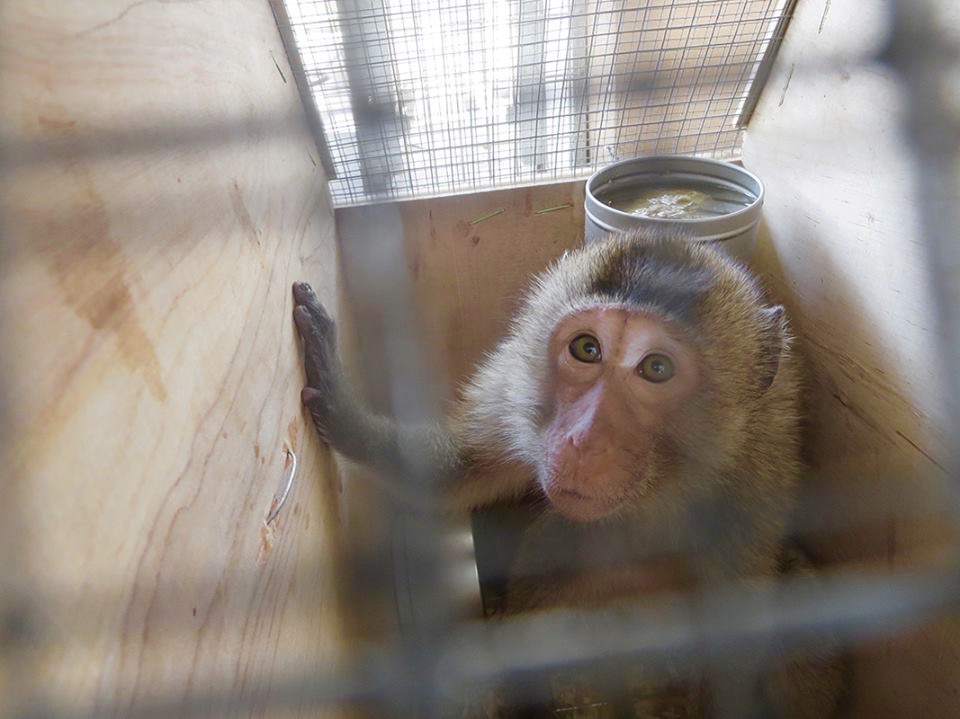
We have just received disturbing information alleging that more than 600 monkeys destined for laboratories will be shipped to Chicago on a Volga-Dnepr flight leaving Cambodia on May 29.

Please take action below right away!

russland jpg

We’ve received disturbing reports that the Russian airline Volga-Dnepr Airlines, under its parent company Volga-Dnepr Group, allegedly transported a shipment of monkeys for use in laboratories in the U.S. and maybe planning to do it again.

Insiders allegedly at Ted Stevens Anchorage International Airport reported that Volga-Dnepr Airlines transported a shipment of live monkeys from Cambodia to the U.S., where they will be sent to laboratories and used for cruel and deadly experiments.

We confirmed that the airline did indeed operate flight VI3236, which departed Phnom Penh International Airport in Cambodia on April 30, 2020, and arrived at George Bush Intercontinental/Houston Airport in the U.S. on May 1, 2020, after making two stops—at Khabarovsk Novy Airport in Russia and Ted Stevens Anchorage International Airport.

We were told that the cargo on board this flight was live monkeys destined for experimentation.

We contacted Volga-Dnepr Airlines’ executive team and global offices multiple times, but they are refusing to answer our questions about transporting monkeys for experimentation.

Volga-Dnepr Airlines: Come clean! Are you transporting monkeys to laboratories?

Monkey+NC+DB

Continue reading “Volga-Dnepr Airlines and the deportation of live monkeys”