Utah State University – Google Maps.

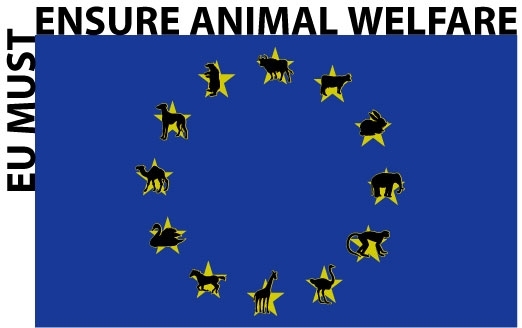
A newly published EU Life Sciences Strategy has the potential to significantly reshape the role of animals in biomedical and clinical research, safety testing and food systems innovation.
Whilst it presents several opportunities for increasing the uptake and development of non-animal methods, it omits any specific reference to animal welfare !
Read in full at:

THIS IS A VOLUNTEER RUN SITE, As the name suggests, our aim is to inform the world regarding any animal cruelty, abuse and suffering. ALL OF THE WORK undertaken is self financed – WE DO NOT GAIN ANYTHING FINANCIALLY, in fact we self fund in respect of our support for the animals. We do not ask for you to become members and support us financially; all we want is for you to visit us, maybe learn something new on an issue; and then leave us to take your own independent campaign work further. By undertaking this volunteer work, we hope we are a ‘World Animals Voice’, speaking for animals of the planet who suffer in silence; unable to represent themselves vocally or legally. What you get from us is the hard core reality of animal suffering; the reality, we do not dress it up with flowers to make it more pleasant. We have one aim, and that is to be the animals voice – nothing more, BUT NOTHING LESS – Thank You. WAV is based in Kent; England.
This is an issue that has been in the ‘animal rights’ camp for years; but we consider it is worth putting out info again.
https://www.peta.org/wp-content/uploads/2024/11/peta-correspondence-with-cairo-university-2012.pdf
A flood of whistleblower and student reports connected to a veterinary program at Cairo University and other universities across Egypt paints a picture of abuses to animals so grotesque and severe it appears to violate the nations constitution and law.
IT IS UNDERTOOD THAT THESE TYPE OF ABUSES MAY STILL BE CONTINUING
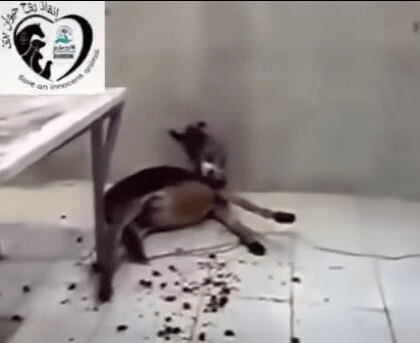
https://www.facebook.com/reel/1059624115455793
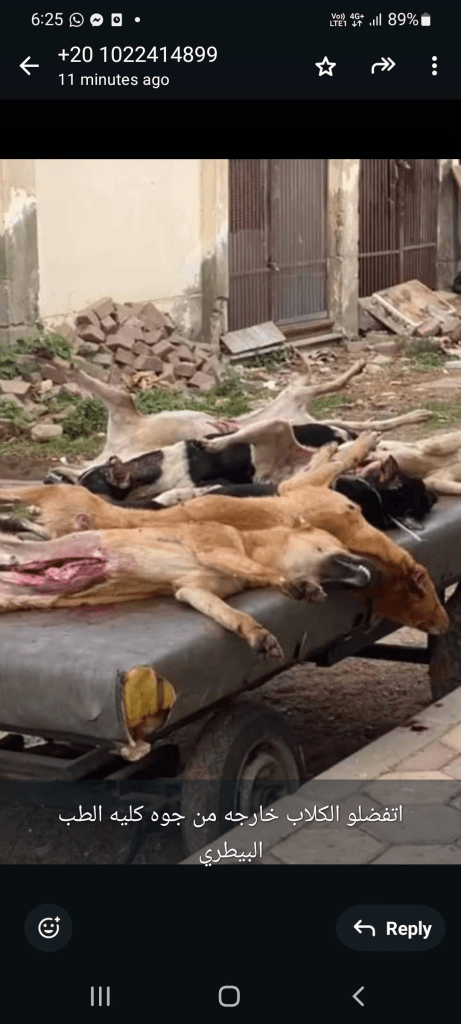

PETA has had a long time attacks at the ‘investigations’ performed at the Oregon National Primate Research Center for the work undertaken at the Hillsboro facility. Now PETA are claiming that the work undertaken is worse than anyone knew.
In a letter to the US Department of Agriculture – USDA, they say that leaders at the center are failing to report animal deaths and serious injuries to regulators – the USDA is responsible for being the regulator of animal laboratories.
Read the full story here:

Photo – Mike Perrault.

Co-legislators have now finalised an agreement on the ‘One Substance, One Assessment’ (OSOA) package; which is a crucial step towards a more ethical, transparent, and scientifically advanced approach to chemical safety assessment.
Understanding the Package.
Central to the OSOA package is the Common Data Platform on Chemicals; or the ‘CDPC’.
This is a new regulatory tool designed to centralise and streamline how chemical safety data is managed across EU agencies. The platform will link datasets from the European Chemicals Agency, the European Food Safety Authority, the European Medicines Agency and the European Environment Agency.

The CPDC aims to improve transparency, reduce the repeated duplications of testing and results data, and most critically, PROMOTE THE USE OF non-animal methods, such as in vitro modelling, read across techniques and in silico tools and supporting omics-based science.
Thin new approach will hopefully push forward the EU commitment to phase out animal testing, especially when it comes to chemicals.
Eurogroup for Animals, along with other NGO’s, very much welcomes this initiative; with the European Citizens Initiative gathering a petition in excess of 1.2 Million signatures; and sending a powerful message to EU law makers.
EU citizens have demanded; and now will be delivered with something that reflects that science in Europe reflects the highest innovations, transparency and ethical responsibility; such as reducing repeated animal testing.
Another ‘Animal Win’ fore people of the EU – your voice has been heard and now transformed into actions !
2 April 2025
The annual status report of the JRC’s EU reference laboratory for alternatives to animal testing (EURL ECVAM) highlights recent EU statistics on animals used for scientific purposes, which show an overall reduction of 5% of animal procedures in the EU and Norway from 2018 to 2022.
In parallel, the biotechnology sector has experienced rapid growth, with cutting edge technologies and innovation transforming many domains including biomedical research, development of medicines and in vitro testing. Data show that in 2021, the global biotechnology market was worth €720 billion with an annual growth rate higher than 18%.

Statistics on the use of animals for scientific purposes for EU and Norway, including re-uses, in 2022. © EU, 2025
Standards are needed to foster a robust biotech ecosystem and facilitate technology transfer from research to industry.
ECVAM’s work has been instrumental in driving standardisation efforts in the in vitro biotech sector, including contributing to the CEN-CENELEC Focus Group on Organ on Chip. The group delivered a roadmap identifying priorities for standardisation of this disruptive technology, which underpins a new generation of sophisticated non-animal models and methods set to transform research and regulatory testing.
Validation is essential for the development of standard tests using non-animal methods. To ensure an internationally recognised and harmonised approach, ECVAM is co-leading the project to revise the OECD Guidance Document (no. 34) on the validation and international acceptance of new or updated test methods for hazard assessment.
The UN Globally Harmonized System of Classification and Labeling of Chemicals (GHS) was created by the United Nations to classify chemicals by the hazards they might pose to humans or the environment, such as being corrosive or acutely toxic. The GHS is used worldwide to facilitate trade, and to ensure safe packaging, transport and use.
ECVAM is leading an informal working group to update GHS classification criteria for identifying chemicals that can mutate the DNA of germ cells, which develop into ova in women and sperm in men, and thus can carry over health effects into future generations. This work is also considering options for adapting criteria to make better use of non-animal data and to provide more protection from cancer-causing chemicals.
Through PRO-MaP, an initiative Promoting Reusable and Open Methods and Protocols, ECVAM has been driving improvements in methodological reporting and transparency in scientific publications, capitalising on innovation and improving health outcomes.
This work has been recently highlighted in an editorial of the journal Nature Methods, recognising the ECVAM Pro Map initiative as very valuable to the field.
ECVAM is supporting the preparation of the European Commission “Roadmap towards phasing out animal testing for chemical safety assessments”, to be published in 2026. It will serve as an actionable plan for accelerating the path towards replacing animal testing in the safety assessments of chemicals, including pharmaceuticals.
Finally, ECVAM has also made significant advances in promoting non-animal approaches in research and education, including the launch of its brand new Virtual Reality laboratory.
Other key initiatives include the development of the BioMedical Models Hub (BimmoH), an automated database that collects and organises information on non-animal models used in biomedical research, and the Student Ambassador Project, a self-sustaining movement to spread knowledge across European universities.