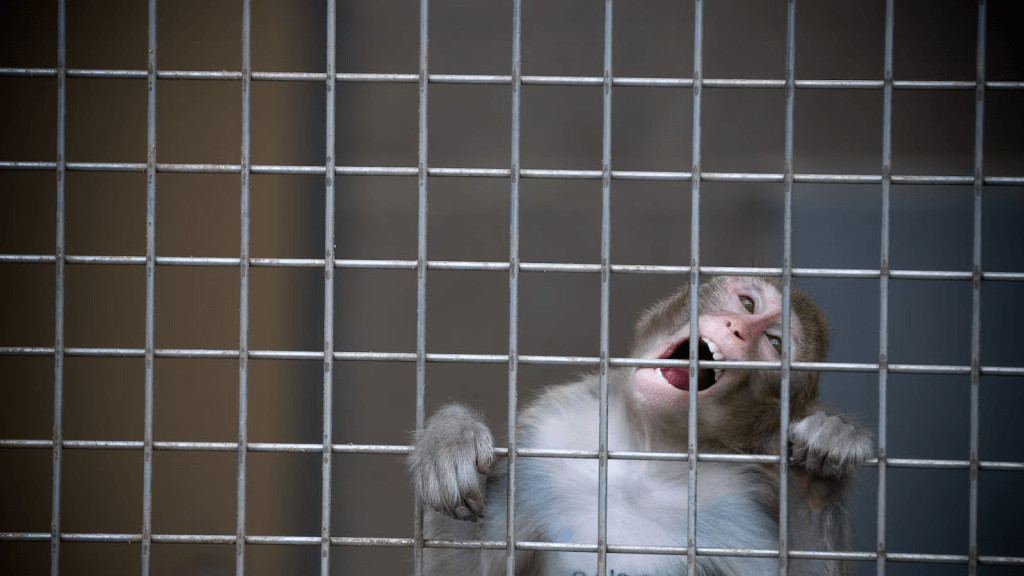
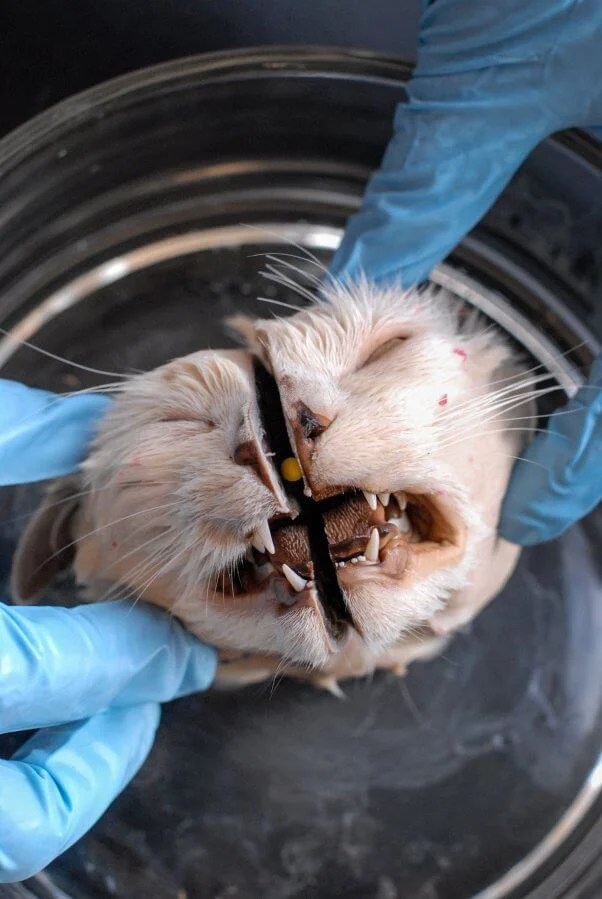
PETA has had a long time attacks at the ‘investigations’ performed at the Oregon National Primate Research Center for the work undertaken at the Hillsboro facility. Now PETA are claiming that the work undertaken is worse than anyone knew.
In a letter to the US Department of Agriculture – USDA, they say that leaders at the center are failing to report animal deaths and serious injuries to regulators – the USDA is responsible for being the regulator of animal laboratories.
Co-legislators have now finalised an agreement on the ‘One Substance, One Assessment’ (OSOA) package; which is a crucial step towards a more ethical, transparent, and scientifically advanced approach to chemical safety assessment.
Understanding the Package.
Central to the OSOA package is the Common Data Platform on Chemicals; or the ‘CDPC’.
This is a new regulatory tool designed to centralise and streamline how chemical safety data is managed across EU agencies. The platform will link datasets from the European Chemicals Agency, the European Food Safety Authority, the European Medicines Agency and the European Environment Agency.
The CPDC aims to improve transparency, reduce the repeated duplications of testing and results data, and most critically, PROMOTE THE USE OF non-animal methods, such as in vitro modelling, read across techniques and in silico tools and supporting omics-based science.
Thin new approach will hopefully push forward the EU commitment to phase out animal testing, especially when it comes to chemicals.
Eurogroup for Animals, along with other NGO’s, very much welcomes this initiative; with the European Citizens Initiative gathering a petition in excess of 1.2 Million signatures; and sending a powerful message to EU law makers.
EU citizens have demanded; and now will be delivered with something that reflects that science in Europe reflects the highest innovations, transparency and ethical responsibility; such as reducing repeated animal testing.
Another ‘Animal Win’ fore people of the EU – your voice has been heard and now transformed into actions !
The annual status report of the JRC’s EU reference laboratory for alternatives to animal testing (EURL ECVAM) highlights recent EU statistics on animals used for scientific purposes, which show an overall reduction of 5% of animal procedures in the EU and Norway from 2018 to 2022.
In parallel, the biotechnology sector has experienced rapid growth, with cutting edge technologies and innovation transforming many domains including biomedical research, development of medicines and in vitro testing. Data show that in 2021, the global biotechnology market was worth €720 billion with an annual growth rate higher than 18%.
Establishing standards for in vitro biotech innovation
Standards are needed to foster a robust biotech ecosystem and facilitate technology transfer from research to industry.
ECVAM’s work has been instrumental in driving standardisation efforts in the in vitro biotech sector, including contributing to the CEN-CENELEC Focus Group on Organ on Chip. The group delivered a roadmap identifying priorities for standardisation of this disruptive technology, which underpins a new generation of sophisticated non-animal models and methods set to transform research and regulatory testing.
Validation is essential for the development of standard tests using non-animal methods. To ensure an internationally recognised and harmonised approach, ECVAM is co-leading the project to revise the OECD Guidance Document (no. 34) on the validation and international acceptance of new or updated test methods for hazard assessment.
Better protection of workers and consumers from mutagenic chemicals
The UN Globally Harmonized System of Classification and Labeling of Chemicals (GHS) was created by the United Nations to classify chemicals by the hazards they might pose to humans or the environment, such as being corrosive or acutely toxic. The GHS is used worldwide to facilitate trade, and to ensure safe packaging, transport and use.
ECVAM is leading an informal working group to update GHS classification criteria for identifying chemicals that can mutate the DNA of germ cells, which develop into ova in women and sperm in men, and thus can carry over health effects into future generations. This work is also considering options for adapting criteria to make better use of non-animal data and to provide more protection from cancer-causing chemicals.
Supporting EU’s open science policy
Through PRO-MaP, an initiative Promoting Reusable and Open Methods and Protocols, ECVAM has been driving improvements in methodological reporting and transparency in scientific publications, capitalising on innovation and improving health outcomes.
This work has been recently highlighted in an editorial of the journal Nature Methods, recognising the ECVAM Pro Map initiative as very valuable to the field.
Upcoming roadmap on phasing out animal testing
ECVAM is supporting the preparation of the European Commission “Roadmap towards phasing out animal testing for chemical safety assessments”, to be published in 2026. It will serve as an actionable plan for accelerating the path towards replacing animal testing in the safety assessments of chemicals, including pharmaceuticals.
Alternatives in research and education
Finally, ECVAM has also made significant advances in promoting non-animal approaches in research and education, including the launch of its brand new Virtual Reality laboratory.
Other key initiatives include the development of the BioMedical Models Hub (BimmoH), an automated database that collects and organises information on non-animal models used in biomedical research, and the Student Ambassador Project, a self-sustaining movement to spread knowledge across European universities.
Animal rights group, Humane World for Animals, says it fears a revision of Europe’s regulations for chemical testing in Europe could lead to more animal testing.
Jun 13, 2025
A revision of the EU’s REACH regulation covering the ‘Registration, Evaluation, Authorisation and Restriction of Chemicals’ must clean up the chemicals risk assessment and the chemicals market, falling in line with the Clean Industrial Deal, argue animal rights advocates.
With decarbonisation and boosting competitiveness priorities for the EU, within the chemical testing industries, it should create a ‘simplified legislative framework to reduce the administrative burden for the industry, while still maintaining the safety of human health and the environment’.
While a revision of REACH is welcomed by animal advocacy groups, particularly the opportunity to introduce more non-animal testing methods, the proposals to date have not been met with glee.
CEFIC, the forum of chemical companies across Europe, has produced a 10-point action plan to simplify REACH. One pressing point for Humane World for Animals is its call for the last resort requirement to be put under a microscope and refined in greater detail.
“We really need to see a much better leveraging of the last resort requirement, which is already built within REACH, where, in theory, animal testing should only be done as a last resort. But we, along with a number of our collaborators, published a paper last year which indicated that this wasn’t really happening,” says Jay Ingram, Managing Director, Chemicals, R&T, Humane World for Animals.
“This really needs to be strengthened, there needs to be a lot more specificity around what “last resort” actually means and how it is demonstrated, both by registrants (industry), who are going to be proposing tests, but also by the regulatory bodies themselves, who will be requesting additional data.”
“It needs to be much stronger in terms of how we actually determine whether this last resort threshold has been reached – we really need to see strengthening on the enforcement of that last resort requirement,” he says.
Testing in complex areas
Ingram has also expressed his concerns that the revision of REACH could lead to an increase in testing on animals in some complex areas.
“We are also insisting that this revision of REACH doesn’t bring in new or expanded animal testing. There’s been a revision to the CLP regulation last year, which brought in new classification categories for endocrine disruption, amongst other things,” says Ingram.
“The issue is endocrine disruption is an extremely complex topic from a toxicological perspective, and we fear that this change to CLP will have a knock-on change to REACH, where they will be asking for a huge amount more animal testing to be done to determine the endocrine disruption potential of chemicals,” he explains.
“And not just new chemicals, but also ones that have already gone through the REACH process, and that all of this new data will be generated without a clear idea of how or whether it can be used to make safer decisions about chemicals.”
“There are non-animal methods for endocrine disruption that are available and are of good quality,” says Ingram as he explains how complex the topic of endocrine testing is and that we must better understand the use of the data from such testing before there is a call for an increase on animal testing – technology can play a role as a safe alternative here.
New approach methods
One of CEFIC’s action plans to simplify REACH includes the introduction of a new safety assessment scheme that supports an increased uptake of reliable animal-free safety assessment methods – New Approach Methodologies, or ‘NAMs’.
CEFIC’s suggestion is to ‘reduce the hazard focus of REACH, allowing more flexibility in achieving a high degree of safety’ and to remove ‘default requirements for animal testing wherever possible.’
It wants regulators to give greater justification on ‘why concerns cannot be addressed using exposure-based approaches or NAMs, such as when rejecting proposals for read-across, grouping, or NAMs to avoid animal tests.’ It also seeks to ‘adapt data requirements to utilise NAMs together with exposure considerations: a chemical can only cause harm if it can reach a target and interact with it.’
Could we see a rise in the use of NAMs in chemical testing with the correct revisions to REACH?
“On a positive side, the Commission is also working on the roadmap for phasing out animal testing, which is the result of Save Cruelty Free Cosmetics/End Animal Testing European Citizens’ Initiative (ECI),” says Antigoni Effraimidou, a senior strategist at Humane World for Animals.
She added: “We can see there’s already movement, which we feel is very positive to see, because it marks a landmark opening for the advanced chemical safety assessment, and it can also bring this cultural change in the scientific world that we are looking for, and hopefully also regulatory transformation.”
“There are some complex endpoints which the Commission feels that there will be a need also to develop new non-animal methods, but we do see this attitude from the policy makers, the willingness to go through that,” she said.
Introducing Ralph, the spokes-bunny of Humane Society International’s global campaign to ban animal testing for cosmetics. #SaveRalph is a powerful stop-motion animation short film featuring an all-star multinational cast including Taika Waititi, Ricky Gervais, Zac Efron, Olivia Munn, Pom Klementieff, Tricia Helfer and more.
In HSI’s ‘Save Ralph,’ a lovable spokesbunny makes a case for ending cosmetics animal testing
“Save Ralph” is a powerful stop-motion animation short film featuring Oscar winner Taika Waititi as the voice of Ralph, who is being interviewed for a documentary as he goes through his daily routine as a “tester” in a lab. “I’m a tester. My daddy was a tester, my mom, my brothers, my sisters, my kids. All testers,” he tells a documentary filmmaker voiced by actor and animal advocate Ricky Gervais. Ralph tells his interviewer that he is “doing it for the humans,” so long as “just one human can have the illusion of a safer lipstick or deodorant,” regardless of his own personal suffering.
When we worry about cruelty to animals, we’re often thinking not only of their suffering but also of the potential dangers to human society posed by animal abusers. As A. W. H. Bates, a coroner’s pathologist and scholar of animal ethics, writes, this was particularly true in nineteenth-century England, when some people were horrified at the notion that the doctors who cared for their families might also torture dogs.
Bates writes that efforts to address animal cruelty in British Parliament began in the first years of the nineteenth century. The growing London elite found the treatment of livestock disturbing. They also viewed the poor condition of these animals as signs of unfeelingness or active cruelty among the working class. Lawmakers debated whether viciousness toward animals led to violence against humans. But, at first, these concerns were directed only against the poor.
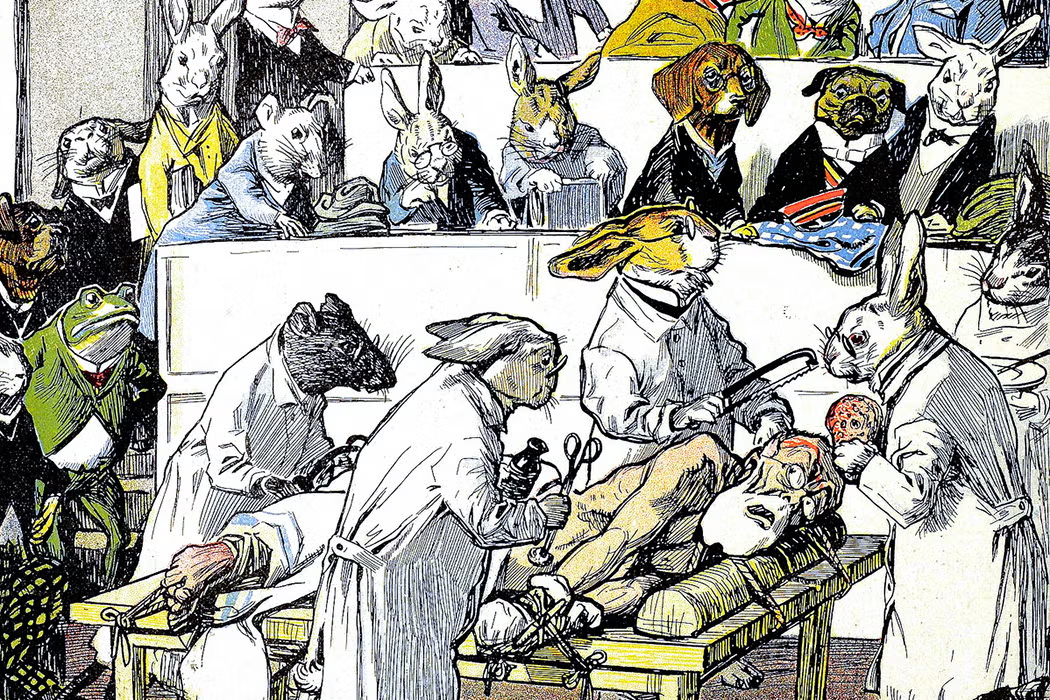
In 1824, scientific vivisection became the subject of similar scrutiny. That year, French physiologist François Magendie gave a public demonstration of cutting apart a live greyhound, which he allegedly nailed to a table, at an anatomy school in London. While British doctors also performed vivisections at that time, they were more popular among continental Europeans. Magendie’s actions stirred up an outcry based partly on anti-French sentiments.
British doctors generally decried Magendie’s demonstration as unnecessary and therefore cruel—and also as a damaging stain on their profession. But they still defended vivisection as acceptable if the experiments yielded valuable results.
Bates writes that concerns about vivisection grew over the decades. Opponents warned that the practice could make researchers and physicians callous toward all living creatures. In 1844, the Protestant Magazine printed a “caution to parents” to avoid any doctor who practiced it. And Queen Victoria herself privately referred to vivisection as “one of the worst signs of wickedness in human nature.”
The National Anti-Vivisection Society (NAVS), formed in 1875, blamed vivisection for an apparently increasing interest among scientists in experimenting on human beings, including condemned criminals and paupers.
Bates argues that the debate over vivisection reflected a continuing interest within the world of medicine in Aristotelian virtue ethics. While British society at this time was generally more attuned to utilitarian or deontological ethics, which focus on whether an action is right or wrong, the medical field concerned itself with the moral character of individual practitioners. This meant balancing qualities such as tenderness and resolution, for the purpose of carrying out difficult but necessary procedures without becoming inured to suffering.
Following this logic, some physiologists presented their work as an act of sacrifice, in one case writing that the process sometimes “so shatters them, that it requires all their power of will to carry the process through to the accomplishment of the aim.”
Ultimately, the battle over vivisection faded from public awareness largely because of shifting professional norms. Toward the end of the nineteenth century, animal experimentation increasingly became a specialization of dedicated physiologists rather than practicing doctors, freeing patients and parents from worries about their own physicians’ moral bearings.
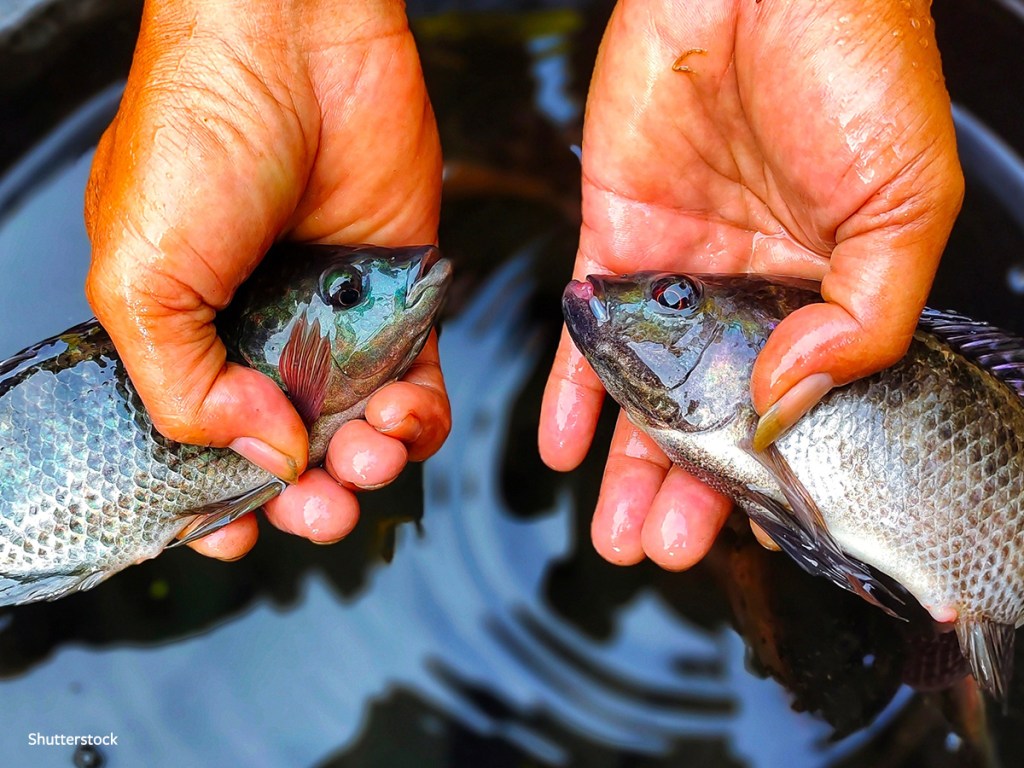
We live in a world where we share our homes with some species, eat others, and exploit still more in myriad ways, depending on what we’ve been taught about how we should see and treat different species, and whether we should consider ourselves superior to them. Unfortunately, the misguided belief that some species are worth our moral consideration and protection and others aren’t is known as speciesism, and it’s causing immeasurable harm.
What is Speciesism?
Speciesism is a form of discrimination that considers one species superior to others. This mindset is based on the belief that humans have the right to dominate, use, and kill non-human animals for their own benefit.
The term “speciesism” was coined in the 1970s by British psychologist and animal rights activist Richard Ryder, who introduced it in a pamphlet distributed as part of a campaign against animal experimentation in Oxford, England.
Why Is Speciesism a Form of Discrimination?
Like racism, sexism, homophobia, and all forms of discrimination against certain groups, speciesism devalues individuals based on arbitrary characteristics — and in the case of animals, their level of intelligence, their appearance, and if they have fur, feathers, and fins, or whether they walk on four legs instead of two.
This perspective perpetuates the idea that we have the right to use, exploit, and kill other animals simply because they’re different from us.
What Does Speciesism Look Like?
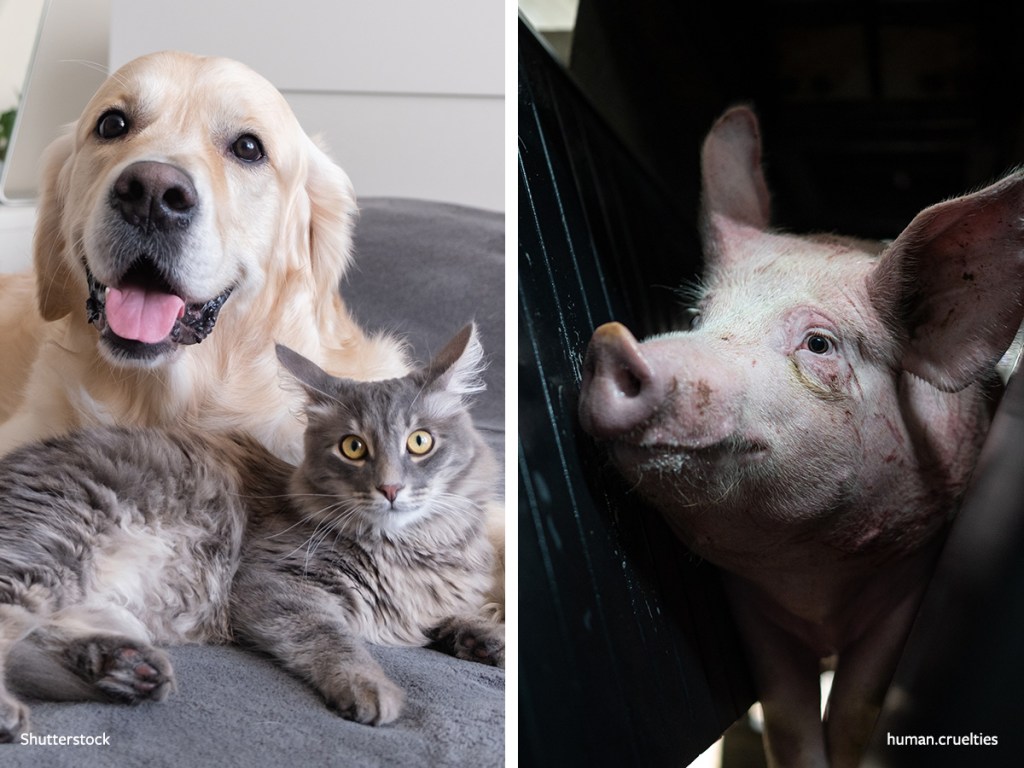
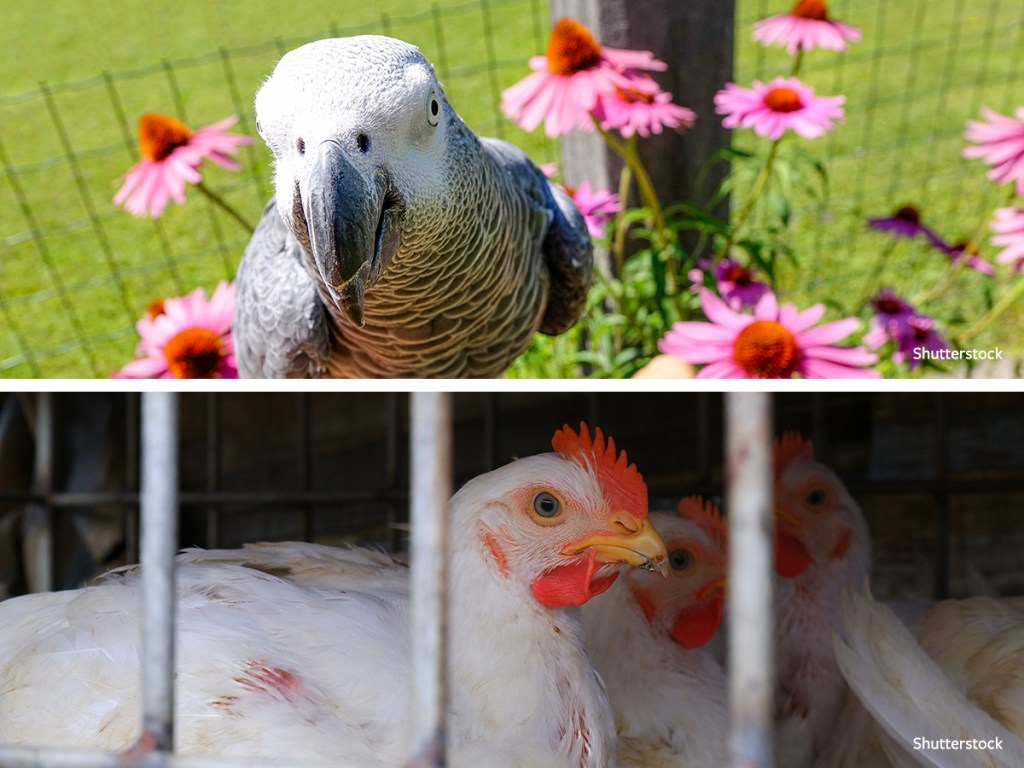
Speciesism is often the first form of discrimination we’re taught, and it manifests in two ways. The first is the belief in the supremacy of the human species over all other species. The second is viewing only certain species — such as animal companions and some wild animals — as worthy of care and protection, with some even considered part of our families. In contrast, most other animals are disregarded, and many are enslaved, tortured, and treated as commodities for food, entertainment, fashion, research, transportation, and much more.
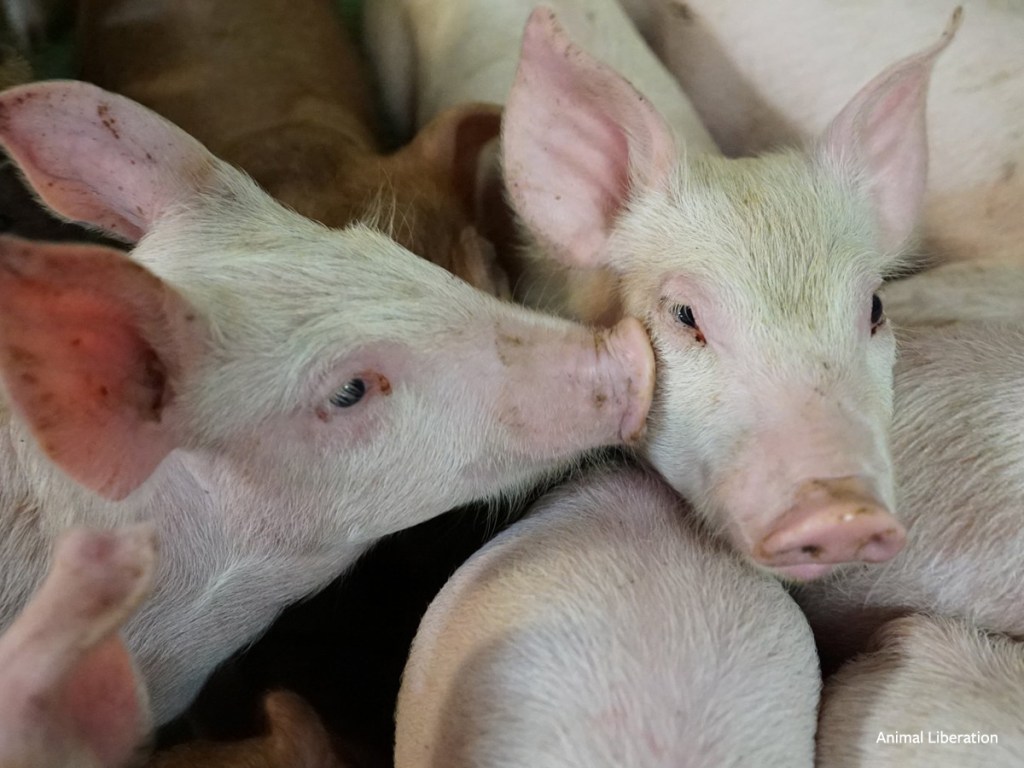
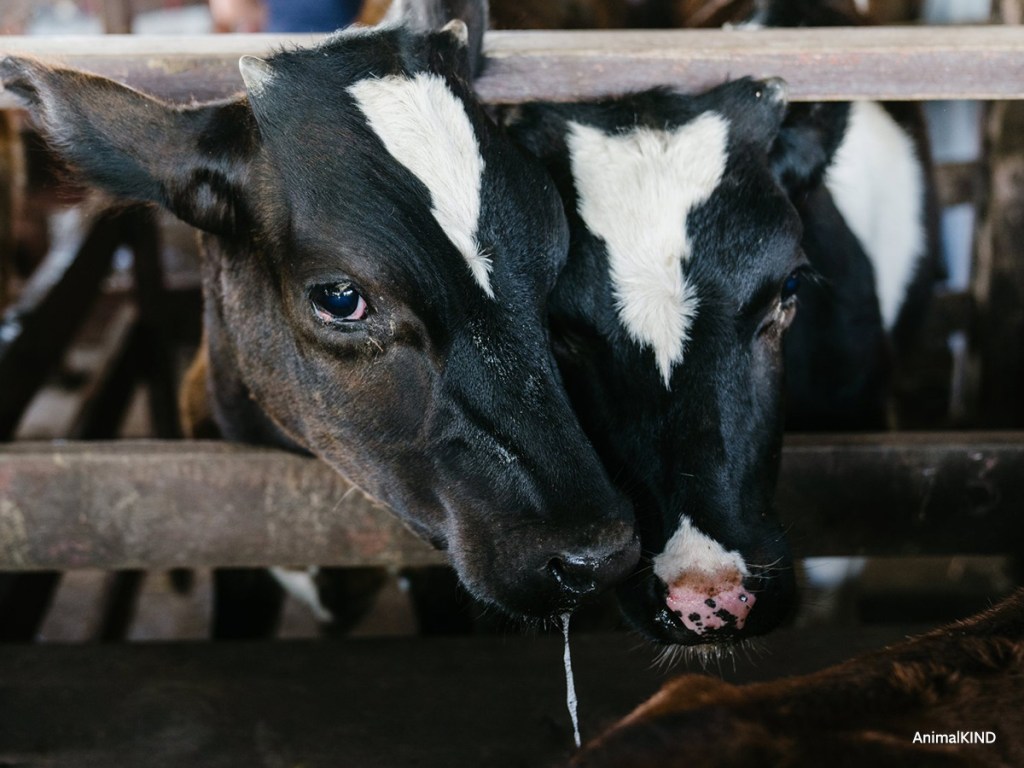
Farmed animals are often depicted in marketing for food products as trivial, cartoonish characters, which strips them of their dignity and status as feeling individuals with their own personalities and preferences. Small family farms tend to be romanticized as wholesome places where animals live happy lives and are cared for by farmers. In reality, the basis of all animal farming is the exploitation and killing of sentient beings. Still, humans have compartmentalized their ethical views, allowing us to rationalize the cruelty and violence inflicted on animals we might otherwise be fascinated by and care about, all for our pleasure, convenience, advancement, habits, traditions, and tastes. Although it has been scientifically proven that humans can survive and thrive on a plant-based diet, most continue to consume the flesh, milk, and eggs of animals because we’ve been conditioned to believe that it’s “normal, natural, and necessary.”
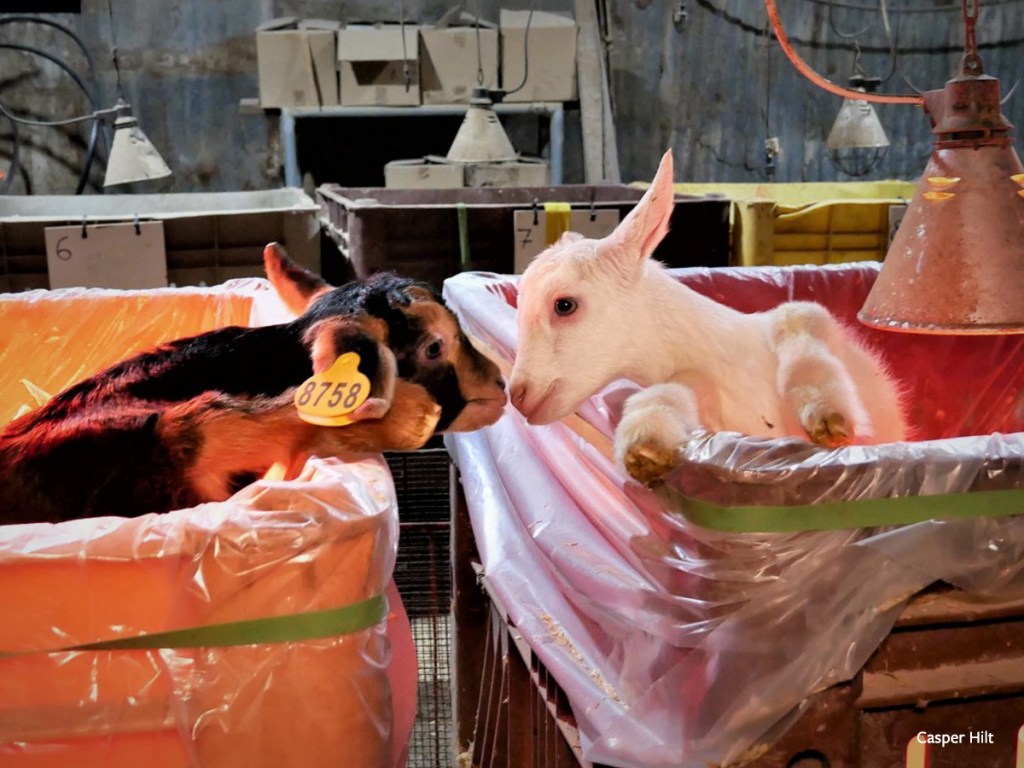
Animal companions and certain wild species are granted some legal protections, while all other animals are not. Cruel practices and mutilations without anesthesia, such as castration, tail docking, burning off horns, and extreme confinement, are inflicted on farmed animals like pigs, cows, chickens, goats, sheep, and turkeys, yet would be considered horrific abuse by most in Western culture if done to dogs or cats.
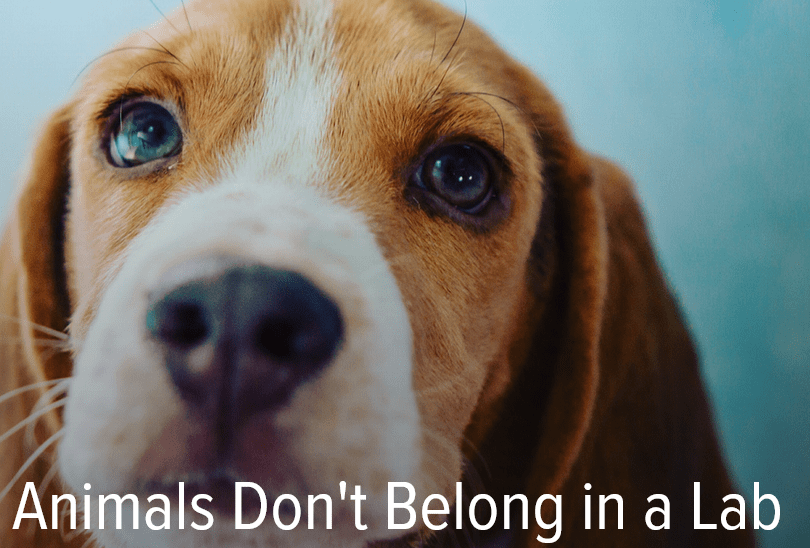
If we would never subject a dog or cat to these practices, nor send them to a slaughterhouse to end their life, we must recognize that no animal deserves to be used or enslaved by us, nor to have such pain and terror inflicted upon them. Even the desire to keep some animals as companions has led to their exploitation through breeding and selling, prioritizing profit over their well-being, which inevitably results in neglect, abuse, and often death. Beagle dogs and rabbits, usually seen as ‘pets,’ are also tormented and killed in research labs.
How is Speciesism Justified?
Humans often try to justify their oppression of animals by saying that humans are the most intelligent species. Yet many animal species possess sensory and physical abilities that humans do not have.
For example, bats use echolocation — the ability to use sound waves to navigate and find objects — to navigate in complete darkness. Tiny wrasse fish can recognize themselves and others in a mirror, joining chimpanzees and dolphins in this rare skill. Octopuses excel at problem-solving and camouflage, altering the texture and color of their skin to blend into their surroundings. Birds like the Arctic tern navigate thousands of miles using environmental cues, including the stars and the Earth’s magnetic field.
Chickens can recognize faces, form social bonds, and have memory and problem-solving skills on par with many other birds and mammals. Cows demonstrate empathy and many other complex emotions and can also solve puzzles. Pigs can navigate mazes and exhibit emotions and intelligence equivalent to a 3-year-old child.
Regardless, is intelligence truly the measure of whether someone deserves to be protected from harm by others? Some cognitively impaired humans are less intelligent than many animals. Does that mean we can also use and kill them? Of course not. No individual should be required to justify their right to safety and protection from human harm based on their cognitive or physical abilities.
How Can You Be Anti-Speciesist?
Whether human or non-human, each individual thinks and feels and has their own subjective experience of life, deserving the right to share this planet with us without being dominated by us. Unlike all forms of discrimination that focus on our differences, we must focus on what all species have in common — our will and desire to live and be free, and our capacity for pain, suffering, and joy.
If we would not tolerate discrimination and harm based on race, gender, or other differences, we must apply the same reasoning to speciesism and view it as equally unjust.
To embrace liberation, justice, and compassion for all Earthlings, live vegan—the principle that calls on humans to live without exploiting any other animals.
***********
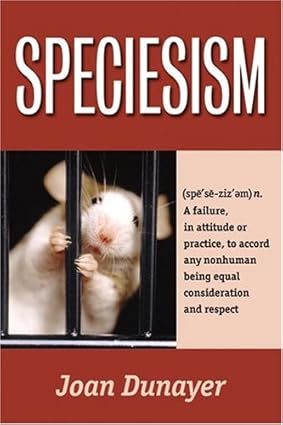
Excellent book on the subject, for more in-depth study:
Defining speciesism as “a failure, in attitude or practice, to accord any nonhuman being equal consideration and respect,” this brilliant work critiques speciesism both outside and within the animal rights movement. The author demonstrates that much of the moral philosophy, legal theory, and animal advocacy aimed at advancing nonhuman emancipation actually perpetuate speciesism. Speciesism examines philosophy, law, and activism in terms of three categories: “old speciesism,” “new speciesism,” and species equality.Old-speciesists limit rights to humans. Speciesism refutes their standard arguments against nonhuman rights. Current law is old-speciesist — legally, nonhumans have no rights. Dunayer shows that “animal laws” such as the Humane Slaughter Act afford nonhumans no meaningful protection. She also explains why welfarist campaigns are old-speciesist.
Instead of opposing the abuse or killing of nonhuman beings, such campaigns seek only to make abuse or killing less cruel; they propose alternative ways of violating nonhumans’ moral rights. Many organizations that consider themselves animal rights advocates engage in old-speciesist campaigns, which reinforce the property status of nonhumans rather than promoting their emancipation.New-speciesists espouse rights for only some nonhumans, those whose minds seem most like those of humans. In addition to devaluing most animals, new-speciesists give greater moral consideration and stronger basic rights to humans than they do to any nonhumans. They see animalkind as a hierarchy, with humans at the top.
Dunayer explains why she categorizes such theorists as Peter Singer, Tom Regan, and Steven Wise as new-speciesists.Nonspeciesists advocaterights for every sentient being. Speciesism makes the case that every creature with a nervous system should be regarded as sentient. The book provides compelling evidence of consciousness in animals often dismissed as insentient — such as fishes, insects, spiders, and snails. Dunayer argues that every sentient being should possess basic legal rights, including rights to life and liberty. Radically egalitarian, Speciesism envisions nonspeciesist thought, law, and action.