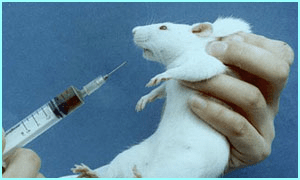
The Body Shop has teamed up with long-term partner Cruelty Free International to reignite its campaign against animal testing.
The UK banned animal testing for make-up and its ingredients in 1998, but the government says it has changed its policy to match rules in the EU where some animal testing is allowed.
To raise awareness of the changes and call for a reinstation of the full ban, The Body Shop and Cruelty Free International have launched a limited-edition version of their iconic heritage ‘Forever Against Animal Testing’ t-shirt. The shirt first appeared when the organisations campaigned on the issue in the early 1990s.
All profits from the sale of the products will go directly to Cruelty Free International to support its work.
The Court of Justice of the European Union has ruled against German chemicals company Symrise AG, who challenged a European Chemicals Agency request to perform animal testing on two cosmetic ingredients. This means additional animal testing may be demanded by regulators to assess the safety of cosmetic ingredients, despite the EU ban on animal testing for cosmetics in place since 2013.
In 2004, the EU responded to citizens’ long-standing concerns about animal testing for cosmetic products by introducing a ban to prohibit the testing of finished cosmetic products and cosmetic ingredients on animals. The testing ban was followed by another ban to prohibit the marketing of finished cosmetic products and ingredients in the EU which are tested on animals, which became fully effective in 2013.
Despite the bans, the European Chemicals Agency (ECHA) has established that in certain cases, widely used cosmetic ingredients with a long history of safe use must be tested on animals to comply with the Registration, Evaluation, Authorisation and Restriction of Chemicals (REACH) Regulation.
In 2018, the company Symrise AG challenged ECHA’s request to test two ingredients in its sunscreen product on 5,500 animals, refusing to carry out further animal testing that undermines the EU cosmetics bans. Following a legal battle between the two parties, the Court of Justice of the European Union has now delivered its official decision, dismissing the action brought by Symrise AG, and thus allowing ingredients used exclusively in cosmetics to be tested on animals under REACH to assess the safety risks of workers who may be exposed to the ingredients.
But the wishes of citizens are clear: animals must not suffer and die for the sake of cosmetics. The recent European Citizens Initiative (ECI) Save Cruelty Free Cosmetics – Commit to a Europe without animal testing gave clarity to EU citizens’ voices, calling on the Commission to protect and strengthen the cosmetics animal testing ban.
Following this ruling, it’s clearer than ever that we need a chemicals roadmap.
Eurogroup for Animals is deeply concerned by this decision, as it goes against the expectations and wishes of citizens and could lead to the demand of animal testing at the cost of thousands more animal lives. In its reply to the ECI Save Cruelty Free Cosmetics, the European Commission mentioned that its response might be affected by the Court’s ruling in the Symrise AG case. Now that the Court has ruled, we are regrettably witnessing a step backwards. This case will set a precedent that will pave the way for more animal testing of cosmetic ingredients to meet the requirement under REACH.
Scientists report first live birth of ‘chimeric’ monkey
Scientists have reported the first live birth of a “chimeric” monkey with stem cells taken from two embryos.
The embryos come from the same species of monkey – a crab-eating macaque – but are genetically distinct, the researchers said.
Chimeras are animals which contain groups of cells from two or more organisms with distinct types of DNA.
The baby monkey was born with “a high proportion” of donor cells – an average of 67% across the 26 different types of tissue, the scientists said.
This work could help us to generate more precise monkey models for studying neurological diseases as well as for other biomedicine studies
Zhen Liu, Chinese Academy of Sciences
The team in China, which has reported its work in the journal Cell, said its work has vast implications – from understanding more about devastating conditions such as motor neurone disease to finding ways to help conserve threatened species.
Senior author Zhen Liu, of the Chinese Academy of Sciences, said: “This is a long-sought goal in the field.”
He added: “This work could help us to generate more precise monkey models for studying neurological diseases as well as for other biomedicine studies.”
Chimeras are important for studying embryonic development, but research has largely been restricted to mice.
While monkeys have previously been created in the lab using donor cells, the researchers said these creatures had a much lower contribution of cells from embryos “so you cannot really call them chimeric animals”.
Professor Mu-Ming Poo, scientific director of the Institute of Neuroscience at the Chinese Academy of Sciences, said: “Just having several cells (that) are partially distributed all over the monkey body with no real formation or clear structures – you cannot really say that is chimera, strictly speaking.
“So the difference here is that now we have a very high level of contribution, with the donor cells forming a big part of the tissues (and) complex structures all over the monkey body.”
Stem cells are the body’s raw materials from which all other cells with specialised functions are generated.
For the study, the researchers used stem cell lines – a group of cells grown in a lab from a single stem cell – taken from a seven-day-old embryo.
These cells were then injected into embryos that were four to five days old.
The embryos were implanted into female macaques, resulting in 12 pregnancies and six live births.
Of the six, one baby monkey was born alive and managed to survive for 10 days.
Analysis showed this male newborn had donor stem cells in 26 different types of tissue, ranging from 21% to up to 92%.
Meanwhile, a foetus that was miscarried was also “substantially chimeric”, the researchers said, with stem cell-derived cells observed in the brain, heart, kidney, liver, and parts of the digestive system.
The researchers said that their work complied with the national ethical regulations in China. (which mean nothing !)
The health of the monkey is still a problem. If we want to produce a monkey model, we have to have a better chimera that can live longer
Professor Mu-Ming Poo, Chinese Academy of Sciences
They said that as of next steps, they want to explore “mechanisms that underlie the survival of the embryos in the host animals”.
Prof Poo said: “The health of the monkey is still a problem.
“If we want to produce a monkey model, we have to have a better chimera that can live longer.”
WAV Comment – I (Mark) have had Multiple Sclerosis (MS) for the last 25 years, and it causes me now one hell of a lot of problems. MS is a ‘neurological illness’ that happens, but which cannot be explained as to why in only some.
Animals DO NOT get MS.As a sufferer I have always campaigned against the use of animals in MS research. You don’t test Boeing 777 engines on a Spitfire; so if animals do not get MS, then why artificially ‘create’ it in animals and then test on them in them in some pathetic attempt to find a cure ? – for me, proper research would be to find out why animals don’t, and we do – and then move on from there.
Why test on animals when there are hundreds of human MS suffers waiting in line to put themselves forward as research tools in understanding more about this ? – surely they are better for the purpose.
20 years ago, 5 years after my diagnosis; I was informed that within the next 5 years the MS issue would be solved with the wonder cure. 20 further years on I / we are still waiting.
The reality is that this all comes down to money and funding research, whatever that really is. Prof. Poo and his chums just want to exhaust the funding pot whilst never really achieving ‘that cure’; sufferers live in daily hope that a cure will be found for their illness. The problem is that universities and departments like the national ethical regulations in China; ie probably a back street wet market type thing (where did they read Covid from ?) just keep on trying to justify animal research models without ever really making much progress. I guess if animals die or are killed in ‘research’, they they can just chuck them in a bin and continue; probably a bit harder with proper human MS sufferers who really do have MS which is not artificially created in them as it is with non MS suffering with animals.
It really gets my goat that money is endlessly paid out for often pointless ‘research’ using animals. I want to see positive, NON ANIMAL research; research that will provide real answers and hope fully which will lead to real cures.
This is what I mean; something positive without animal cruelty:
An animal rights protestor claims she had to be taken to hospital after being struck by a car while demonstrating outside a medical research facility.
Rachel Campbell was part of a silent protest when she said she was hit by an employee’s vehicle outside the controversial Charles River Laboratories near Tranent, East Lothian. Rachel was taking part in the demo with the activist group East Lothian Uncaged who were protesting against the use of animals at the facility on Tuesday afternoon.
The group is speaking out against animal testing carried out at the medical research facility, a process Charles River previously said was “a vital component” of research studies.
The 28-year-old protestor, from Glasgow, spoke to the East Lothian Courier slamming the incident saying she had to be taken to hospital in Paisley for treatment to injuries to her legs and back.
Rachel, who works as a carer, said: “I was just standing there with my sign. I was just so shocked, I didn’t see it coming. He hit my legs and I felt myself forced back. It didn’t knock me over but I managed to get out of the way. I think if I hadn’t been able to move he’d have knocked me down.
“He just drove off and I was in pain. We called the police and I went to A&E when I got home.” And in a Facebook update she added: “Thank you so much to everyone for your kind words, sending lots of love, we will keep fighting even harder. I might not be tougher than a mad man’s bumper, but one thing for sure is our spirit is not damaged.”
A spokesperson for East Lothian Uncaged posted: “Today we did a silent, peaceful protest outside Charles River Laboratories in Tranent in Scotland. At 5.05pm an employee driving a blue Vauxhall Mokka left the premises. He stopped his car a foot in front of one of our team, revved his engine loudly, then drove straight into her.
“Our team member has injuries to her legs and back and is on her way to A&E to be checked over. Thankfully her injuries are not so serious that she needed an ambulance. The incident has been reported to the police and our team member will press charges.
“Plenty of other cars drove out this afternoon without coming close to hitting any of our team, as we made sure we weren’t obstructing their exit. There is a Charles River security camera directly opposite which will have filmed the incident. Please share this everywhere so the world knows the kind of sick and twisted people Charles River employs.”
A Police Scotland spokesperson said: “Around 5.30pm on Tuesday, October 31, a report was made to police that a woman had been struck by a car in the area earlier in the day. Enquiries are at a very early stage.”
A Charles River Laboratories spokesperson said: “We are aware of an incident outside our facility on Tuesday, October 31. We recognise the right of individuals to freely, and safely, assemble and protest, and we have been in contact with local law enforcement and will cooperate with any requests they make.
“The work we do at our Edinburgh site is critically important to human health. Before the safety of a drug can be evaluated on humans, global regulatory agencies require animal research to ensure patient safety. Animal research is fundamental to understanding how to prevent and treat emerging infectious diseases, including the successful development of every COVID-19 vaccine, as well as treatments for cancer, diabetes, and a myriad of rare diseases. Charles River’s work is an essential component of the research that has led to these discoveries and has played a vital role in medical advances for humans as well as animals.
“Charles River is committed to animal welfare and exceeding international standards for care. We are also committed to replacing and reducing the number of animals used. We also partner with other companies to develop study designs that adopt this philosophy, known as the 3Rs,including the use of in vitro studies accepted by international authorities. As animal caregivers and scientific researchers, we are responsible to our clients and the public for the health and well-being of the animals in our care, and we strive to fulfill that responsibility while protecting patient safety on a daily basis.”
Students at Stirling University have called for an end to animal testing at the institution’s aquaculture department.
The pressure has been put on by the ‘Vegan and Animal Rights Society’ based on campus and follows the university coming under fire for killing more than 18,000 fish meant for scientific experiments.
European Parliament debates and votes on CLP revision
6 October 2023
The European Parliament held its long-awaited plenary vote on the revision of the Regulation on the Classification, Labelling and Packaging of chemical substances and mixtures (CLP) on 4 October. Although some new measures in the revised regulation are encouraging, other measures are still too weak and do not go far enough to reduce and ultimately phase out animal testing.
The CLP Regulation, one of the two cornerstones of the EU chemicals regulatory framework along with the regulation on the Registration, Evaluation, Authorisation and Restriction of Chemicals (REACH), requires companies to classify and label their substances and mixtures to ensure a high level of protection for human health and the environment.
In December 2022, the European Commission proposed a revision of the CLP Regulation, as announced in the EU Chemicals Strategy for Sustainability (CSS). The proposed CLP revision package consisted of a legislative proposal for the amendment of the CLP Regulation and a delegated act as a complement to the legislative proposal. While the delegated act has already entered into force in April 2023 following scrutiny by the European Parliament and the Council, the procedure of adopting the legislative proposal into EU law is still ongoing.
Eurogroup for Animals, in collaboration with its members and other animal protection NGOs, has been working hard over the last year by submitting amendments to both the CLP legal text itself and related guidance documents. In particular, we have sought to ensure that the revised legislative proposal is aligned with the CSS objective of reducing reliance on animal testing, with the EU goal of fully replacing the use of animals in science, and most recently with the European Commission’s 2023 announcement of a roadmap to replace animal testing in chemicals regulation. To this end, we have repeatedly called for the revision of the CLP Regulation to include concrete steps to better recognise and adopt non-animal methods, to prevent both new animal tests and an increase in existing tests, and to ensure that animal tests are truly considered as the last resort.
The plenary vote in Parliament follows a vote by the Environment Committee (ENVI) in early September, where various compromise amendments to the text of the CLP regulation were discussed and agreed. The plenary vote was the moment of truth for our lobbying efforts, as it would ultimately represent the Parliament’s position for later negotiations with the Council.
Following the vote, we welcome some of the new measures, such as improved wording on the use of non-animal methods and to allow the CLP Regulation to take into account future advances in animal-free science. In particular, Article 7 has been amended to read “non-animal, animal, and human testing”, along with a newly added paragraph clearly stating “tests using new approach methodologies shall also be considered”. In addition, Article 53 has been amended to include “the promotion of alternative methods for assessment of hazards of substances and mixtures”, expressly addressing it as a priority for future adaptations to the regulation.
However, we are concerned that other provisions of the Regulation are still too weak and do not sufficiently encourage the transition away from animal testing or maximise the use of existing non-animal methods available. In addition, there is still conflicting information in the revised CLP Regulation and related guidance documents with regard to new animal testing requirements. Although these files state that hazard classification under CLP does not lead to any new testing requirements, the recent introduction of new chemical hazard classes, such as endocrine disruptors, may potentially result in significant increases in new animal tests. Eurogroup for Animals and other NGOs called for wording allowing new animal tests to be removed, but this was rejected.
Eurogroup for Animals is continuing its work to achieve real-world measures towards animal-free regulatory testing and scientific innovation by pursuing our efforts on the CLP Regulation. For example, we will continue to lobby for the CLP to reach the same standards as the United Nations’ Globally Harmonized System of Classification and Labelling of Chemicals (GHS) in recognising and promoting non-animal methods, and on which CLP is based. We will also continue our work on the revision of the REACH Regulation, with a legislative proposal expected to be brought forward by the Commission by the end of this year, and strive to ensure that the Commission’s promised roadmap includes concrete steps to move away from animal testing in chemical safety assessment.
Finally, as part of the broader EU strategy and political mandate to transition to non-animal science, we will seek to ensure that modern, scientifically relevant, animal-free innovations continue to be implemented in research, training and education
New EFSA scientific opinion on the protection of cats and dogs in commercial breeding establishments
15 September 2023
Eurogroup for Animals welcomes the new scientific opinion from the European Food Safety Authority (EFSA), but notes that the apparent lack of scientific evidence for common sense approaches prevents further welfare improvements.
Evidence supports that cats and dogs used for breeding should not be kept permanently in boxes, crates or cages (whether multi-storey or not). Such confinement compromises their welfare, leading to abnormal behaviour and distress.
According to EFSA, further evidence is needed to support the fact that breeding dogs need an outdoor area for exercising and socialisation on a daily basis. It is at least acknowledged that such needs should be fulfilled regularly and preferably on a daily basis.
EFSA concluded that ideal housing temperature for the majority of adult cats is 15- 26°C. An ideal housing temperature in adult breeding dogs could not be provided due to the diversity of breeds and types of dogs. There is little or no research to conclude on the ideal housing temperatures for young kittens, pregnant bitches or puppies.
Although the role of light in regulating physiological, behavioural and hormonal parameters is widely known, EFSA believes there is insufficient scientific evidence to support the idea that access to daylight has an impact on the welfare of breeding dogs and cats.
Health
Specific focus was placed on welfare issues associated with reproduction, as well as breeding frequency.
EFSA concluded that no breeding should take place before skeletal maturity, even though puberty may happen first. On the frequency of pregnancy, it is advisable to assess the body condition score and general state of health to prevent exhaustion and, for queens over 6 years and bitches over 8 years, a check-up by a vet is recommended.
There is no universal approach to the minimum breeding age for bitches and queens, or to the minimum time between whelping. In the case of dogs, size is considered an important factor: for small breeds an age of 18 months is considered as fully grown, while for larger breeds, a prior check is necessary.
Painful surgical interventions
So-called cosmetic surgeries such as declawing to prevent scratching in cats (a perfectly natural and necessary behaviour), tail docking in dogs, ear cropping and debarking should never be performed unless necessary for the animal’s health.
Eurogroup for Animals welcomes EFSA’s conclusion on the clear impairment of dog and cat welfare during painful surgical procedures, as well as the irreversible damage caused by living permanently in boxes, crates and cages. Nevertheless it is regrettable that the lack of scientific evidence for what we could call common sense approaches may put a hold on improving inadequate living conditions.
New study reveals 4.2 million animals used in just three test categories for REACH – and numbers are still rising
28 July 2023
A recently published study, co-authored by the Centre for Alternatives to Animal Testing (CAAT), reveals that 4.2 million animals have been used to date to comply with the REACH Regulation in three test categories: repeated-dose toxicity, developmental toxicity, and reproductive toxicity.
The Registration, Evaluation, Authorisation and Restriction of Chemicals (REACH) Regulation (EC 1907/2006), which came into force across Europe 16 years ago, is the most important piece of EU legislation to protect human health and the environment from the risks that chemicals can pose. It requires the chemical industry to test the safety of all chemicals used in their products. Although animal testing is only allowed as a last resort for safety assessment, i.e. when there is no other non-animal method to obtain the safety information, a large number of animals are still used for this purpose. However, the exact number is neither clear nor publicly available. Therefore, the authors of the study identified the animals used under REACH for the above-mentioned test categories, which represent the majority of animal use under REACH. Based on a direct count of animals in REACH dossiers since 2009, the study shows that approximately 2.9 million animals have been used to date and a further 1.3 million animals are being used in ongoing chemical tests. As compliance checks continue, it is expected that more animal testing will be required.
The study provides clear evidence that the number of animals suffering and dying for chemical testing has been vastly underestimated. The figures for the three test categories analysed to date already far exceed the European Commission’s original estimate of 2.6 million animals that would be used for all test categories as a result of the implementation of the REACH Regulation. The main reason for this difference is that the European Commission’s estimate did not include offspring, although they represent most animals used for REACH. Other reasons include surplus animals to ensure sufficient survival to meet the minimum testing requirements, and additional test animal groups. The authors of the study continue to count all animals used for all test categories in order to obtain a direct estimate of animal use under REACH. Roughly speaking, the number of animals used for other test categories is estimated at between 0.6 and 3.2 million.
The figures are published to coincide with the European Commission’s revision of the REACH Regulation which is likely to expand and increase animal test requirements despite the legal requirement to only use animals as a last resort, the 2021 vote by the European Parliament to phase out such tests in favour of innovative animal-free science, and the well known limitations of animal tests. For instance, an additional 3.5 to 6.9 million animal tests are expected due to the 2022 amendment of REACH. Although the analysis of the use of non-animal test methods was beyond the scope of the study, the authors reported issues with the “read-across” approach (i.e. predicting toxicity by comparison with structurally similar chemicals that have already been tested). ECHA reports that in 75% of cases, read-across methods were rejected during compliance checks, often due to an unsatisfactory justification, triggering the request for animal use to cover the toxicity test.
It is clear the effects of chemicals on human health and the environment are still very poorly understood, with a staggering 70% of EU substances still ‘with poor characterisation of their hazards and exposures’. When we need to communicate or travel, do we resort to antique phones or vintage cars? Of course not. We use the most up-to-date models available, so why is the same not true for chemical safety and research, when such a critical objective- the protection of human health and the environment – is at stake? The implementation and use of non-animal approaches that provide more biologically relevant data is considered by the scientific community to be long overdue and urgently needed to overcome the problems of animal tests, which cannot reliably predict human safety.
In line with the Commission’s commitment to ultimately move to an animal-free regulatory system under chemicals legislation, it is time for regulators and stakeholders to move beyond rhetoric and leave the old ways behind, by taking action to i) make better use of existing methods and; ii) invest in the development of new scientifically advanced, non-animal approaches to better protect human health and the environment. This can and must be done in a risk-free, measured, intelligent way, not only to assess – but also to improve – protection levels for human health and the environment.
European Commission backs phase-out of animal use in experiments and chemicals tests but ignores citizens’ wishes on cosmetics
24 July 2023
The European Commission today kick-started a plan to phase out animal testing for chemicals across Europe but will not protect the EU ban on animal testing for cosmetics in response to the “Save Cruelty Free Cosmetics – Commit to a Europe Without Animal Testing” European citizens’ initiative (ECI) signed by 1.2 million European citizens.
While campaigners welcome the plan to ultimately eliminate animal testing for chemicals and the longer-term proposals to reduce and phase out the use of animals in research and education, outrageously, the Commission ignored citizens’ calls to uphold the ban on animal testing for cosmetics, a ban established by legislators over a decade ago.
Despite the introduction of an EU ban on animal testing for cosmetics ingredients in 2009, animal tests for chemicals handled by industrial workers or which may be released into the environment are still being required under the EU’s REACH (Registration, Evaluation, Authorisation and Restriction of Chemicals) regulation. Disturbingly, proposed updates to REACH indicate that animal testing for chemicals is set to surge over the coming years. Rather than waiting for the EU courts to resolve this issue in an ongoing case, citizens’ demands must be immediately addressed to prevent further animal suffering.
In the EU and Norway, a shocking 7.9 million animals suffered in laboratories in 2020 – among them rabbits, mice, cats, and dogs. Substances are forcibly administered down their throats, and they are infected with debilitating diseases, genetically manipulated, given brain damage through surgery, exposed to severe pain, and used in breeding programmes that perpetuate this cycle of suffering. Although the Commission is exploring actions to accelerate the development and use of non-animal methods, they do not constitute the root-and-branch reform demanded by EU citizens via the ECI.
The ECI was launched in August 2021 by animal protection groups Cruelty Free Europe, Eurogroup for Animals, the European Coalition to End Animal Experiments, Humane Society International/Europe, and People for the Ethical Treatment of Animals, with the backing of beauty brands The Body Shop and Dove. The ECI called for the strengthening and protection of the ban on animal testing for cosmetics, the transformation of chemicals regulations to bring an end to testing on animals, and a commitment to phasing out all testing on animals in Europe.
Positive commitments made by the Commission in response to the ECI include the following:
To develop a roadmap to end all mandated tests on animals for industrial chemicals, pesticides, biocides, and human and veterinary medicines
To explore the creation of an expert scientific committee to provide advice on the development and uptake of non-animal approaches
To propose an action of the European Research Area to coordinate national policies to replace the use of animals in laboratories and speed up development and implementation of non-animal methods
To organise one or more workshops with experts to determine future priority areas of research to accelerate the transition to animal-free science
Citizens will now expect that everyone involved works to ensure that the measures suggested by the Commission have maximum and meaningful impact, and we will continue to advocate for more action where it is needed.
“The people of Europe have made it clear that experimentation on animals has no place in our modern society. While we welcome positive actions to replace the use of animals in experiments and chemicals tests, we wholly condemn the Commission for failing to end the suffering of thousands of animals used in cosmetics tests. The Commission must now propose meaningful changes to existing legislation and policies to set member states, regulators, and assessment bodies on the path to phasing out all uses of animals in laboratories. Therefore, we are calling on all actors to pursue the goals of the ECI, commented Sabrina Engel, chair of the ECI organising committee.
In an open letter, over 100 European scientists from 16 EU countries have called on the European Commission and Member States to commit to establishing an EU roadmap to accelerate the transition to non-animal science.
“We are glad to see a commitment for a first roadmap to phase out animal testing, and proposed actions that prioritise a transition to non-animal science. However, the reply of the Commission falls short in delivering meaningful changes to animals in laboratories. Despite the persistent voices of EU citizens, animals will continue to be used for cosmetics testing, and we are missing a commitment for an overarching plan that completely eliminates the use of animals in science.
There is a scientific, ethical and economic opportunity to shift the landscape to allow for innovative and more humane and relevant research that better protects humans, animals and the environment. To fully respect the democratic process, we require more ambitious action.”