USA: Great News – Major Success in the USA: New Drugs NO LONGER Have to be Tested on Animals for Approval.

Major success in the USA: new drugs no longer have to be tested on animals for approval

7 February 2023

DAAE

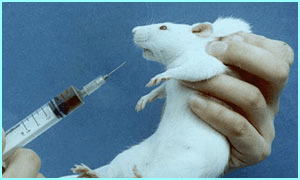
For the first time in more than 80 years, a change in U.S. law will allow new drugs to be tested using modern, animal-free, human-based methods.

Eurogroup for Animals welcomes this huge step forward and calls on the EU to follow suit by developing and implementing a strategy for human-relevant drug development without animal testing.

The new law, signed by U.S. President Joe Biden at the end of December 2022, allows the U.S. Food and Drug Administration (FDA) to approve new drugs without requiring animal data. Previously, pharmaceutical companies were required by law to test the safety and efficacy of their drug candidates in multiple animal studies, including toxicity tests on one rodent species such as a mouse or rat, and one nonrodent species such as a monkey or dog, before testing the drug candidates in human clinical trials.

A large amount of data clearly demonstrates the failure of the outdated system based on animal testing. On average, 92% of drug candidates that successfully pass all animal tests are later abandoned during human clinical trials, mainly because they do not work or cause significant side effects.”

Dr. Dilyana Filipova, scientist at Doctors Against Animal Experiments

Thanks to the new law, modern, human-relevant approaches, such as human mini-organs (“organoids”), organ-on-a-chip and computer-based methods can now be used for regulatory purposes in the U.S. instead of standard animal test methods. Many non-animal methods have already been shown to be more accurate and reliable than animal testing. For example, a recent study used a human-liver-chip to demonstrate the toxicity of several liver-damaging compounds, whereas previous animal tests had incorrectly classified the same compounds as harmless.

Such examples show the potential of this legislative change to not only save countless animals from barbaric testing and a cruel death, but also to ensure better safety for patient.”

Dr. Dilyana Filipova, scientist at Doctors Against Animal Experiments

However, animal testing is not banned under the new law and is still allowed as a possible testing approach. Nevertheless, it is a huge step forward that pharmaceutical companies will no longer be legally obliged to conduct animal tests, and will be free to use accurate, human-relevant, non-animal methods.

While the U.S. is introducing this modern, forward-looking legislation, some animal testing is still required by law  for drug approval in the EU.

Europe must follow the example of the U.S. as soon as possible, and end the use of animals in drug testing. If we want to develop better therapies and not fall behind in the global drug market, we should also rely on the most modern, successful and reliable human-based methods and not on pointless animal testing.”

Dr. Dilyana Filipova, scientist at Doctors Against Animal Experiments

Read more at source

Doctors Against Animal Experiments

Regards Mark

Malta: Quail Hunting Competition Must Not Go Ahead – From 3/2/23). ? More to come when we get info.

Malta – A quail hunting competition scheduled to take place at L-Aħrax, Mellieħa tomorrow (this was Friday 3/2 –  Mark) must not go ahead, three animal rights organisations have insisted.

FKNK, GħKNK Mellieħa and KRPE are organising a ‘field trial’, a competition which will see hunters search for some 180 quails that had been bred in captivity, using their dogs to flush them out before shooting them.

An international jury will judge the kills and issue prizes for a number of categories, with a focus on the dogs’ performance and obedience, in line with international rules for field trials.

Regards Mark

Continue reading at:

‘Stop The Slaughter’: Animal Rights Groups Insist Mellieħa Quail Hunting Contest Must Not Go Ahead (lovinmalta.com)

Brazil: Sinks Warship in Atlantic Despite Maritime Pollution Concerns.

Brazil sinks warship in Atlantic despite maritime pollution concerns

Brazil on Friday sank a decommissioned aircraft carrier, the Navy announced, despite environmental groups claiming the formerly French ship was packed with toxic materials.

Though defense officials said they would sink the vessel in the “safest area,” environmentalists criticized the decision, saying the aircraft carrier contains tons of asbestos, heavy metals and other toxic materials that could leach into the water and pollute the marine food chain.

Read the full article at:

Brazil sinks warship in Atlantic despite maritime pollution concerns (msn.com)

Regards Mark

Canada: Proposal to alter Food and Drugs Act could see animal-tested products outlawed in Canada.

Proposal to alter Food and Drugs Act could see animal-tested products outlawed in Canada

Canada could ban testing of cosmetics on animals, a move which some animal rights activists say makes them “very hopeful” for the future.

“There’s a lot of support from this across parties,” said Camille Labchuk, executive director of the organization Animal Justice.

The ban aims to change the Food and Drugs Act to outlaw the sale of cosmetics that were tested on animals or contain animal-tested ingredients. These include products such as make-up, nail polish and perfume.

Read more:

Canada trails other nations on banning animal-tested cosmetics. A new plan aims to change that | CBC Radio

Regards Mark

USA: Big Wins for Animals At Iditarod As More Sponsors Pull Out.

As the 2023 Iditarod dog-sled race approaches, we have some good news to share:

After hearing from PETA and over 40,000 of our supporters, Cue Health dropped its sponsorship of the deadly race! But that’s not all: Healthcare companies Capstone Clinic and Greenbrook TMS were also removed from the race’s sponsorship page after they heard from PETA supporters.

This is a huge victory for dogs used in the Iditarod, who are forced to pull heavy sleds for about 100 miles a day for nearly two weeks in subzero temperatures. More than 150 dogs have died in the race’s history, not counting all those who died during the off-season while chained outside in all weather conditions or those who were killed because they lacked the rare speed and stamina to make the grade.

Cue Health, Capstone Clinic, and Greenbrook TMS now join other companies—including Alaska Airlines, Chrysler, Coca-Cola, ExxonMobil, and Millennium Hotels and Resorts—that have already cut ties with the race, and the list will only grow.

Let’s end the Iditarod’s cruelty by urging the remaining sponsors to stop funding dog abuse.

Take action;

The Deadly Iditarod Race Should Be Terminated: Here’s Why (peta.org)

Thank you for speaking up for dogs suffering because of the Iditarod. Please help spread the word by forwarding this e-mail to everyone you know.

Sincerely;

Melanie Johnson
Manager
Animals in Entertainment Campaign
PETA

Regards Mark

England: The True COSTA Dairy – Undercover Investigation By Viva !

I am pushing this issue of future actions for Viva as in the video you can see the disgusting reality of the dairy industry in the UK. 

Viva! Campaigns have uncovered rampant cruelty at Kent’s Home Farm dairy and we need your help to expose the abhorrent reality of dairy farming to the British public.

You may not have heard of Home Farm, but you have heard of Costa Coffee. Home Farm supplies Freshways, who provide milk to Costa Coffee, one of the nation’s largest coffee shop chains.

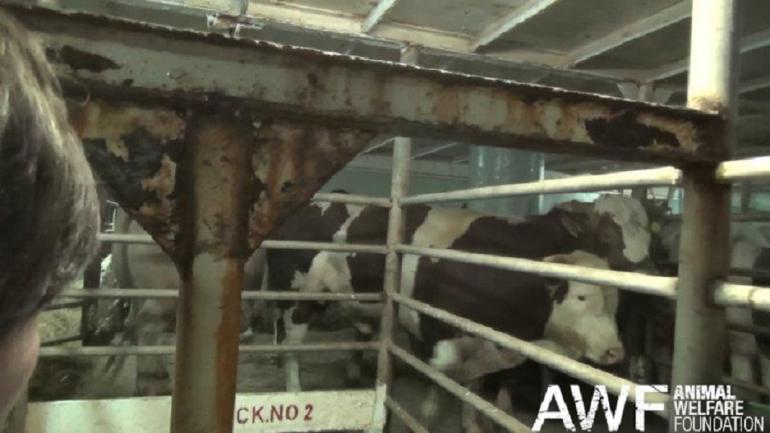
Viva! Campaigns investigated Home Farm in Kent after a tip-off. We are horrified by what we found there – but what happens here happens on thousands of farms across the UK, every single day. We found cows that were emaciated, lame and struggling to walk, others manhandled, slapped and shoved, and others visibly injured or in shackles.

Below – calf shot in head.

Above – dead calf in wheelie bin.

Above – shackled.

This is modern dairy farming! It’s unacceptable that animals are treated like this in 21st century Britain. Read on to find out how you can help!

Continue reading, with actions you can take at:

The True Costa Dairy | Viva! The Vegan Charity

Join Viva!’s nationwide Days of Action outside Costa Coffee

On 28 January, Viva! supporters joined in across the nation. Viva! received an incredible response from the general public. I’m hoping you’ll join us on our next Day of Action on Saturday 11 March to reach even more people and help them to swap to plant-based alternatives.

When: Saturday, 11 March 2023

Where: Nationwide outside Costa Coffee

Previous Viva! Days of Action have reached thousands upon thousands of people, encouraging many to make more ethical choices and go vegan. This time, situated outside Costa Coffee branches, from the largest cities to the smallest towns, we hope to change the way every single Costa Coffee customer thinks about dairy.

After all, it is no longer just an innocent little dash of milk when it dashes the innocence of a little calf against the hopeless iron bars of Home Farm.

Taking part in Viva!’s Day of Action against Costa Coffee is simple. Hold your own event outside your local Costa Coffee shop. Just fill out the form below! Read our FAQs further down if you have any questions.

The True Costa Dairy | Viva! The Vegan Charity

Regards Mark

and stop this suffering.

EU: Winning the race to the top: ensuring (new) EU animal welfare rules apply to imported products.

31 January 2023

Written by Reineke Hameleers

For the first time in over a decade, on the legislative side things are moving forward for animals in Europe, as the European Commission is working on the much needed revision of its animal welfare legislation.

This is certainly something to celebrate. European citizens have been calling for new or better rules on animal protection for years as we witnessed scandal after scandal, particularly concerning farmed animals. Dozens of exposés by animal welfare organisations and damning reports by the Commission’s own services, demonstrated beyond any doubt that too many of our existing laws on farm animal welfare are anachronistic, blatantly disregarded or only partially enforced. This has caused, and is still causing as I write, unspeakable suffering to billions of sentient beings. 

Besides, as time went by, it became increasingly clear that our animal welfare legislation is based on outdated scientific evidence. The most recent opinions produced by the European Food Safety Authority (EFSA) on animal welfare on farm and during transport, which should inspire the revision of EU legislation, point towards the same conclusion: the science has evolved. It is time for legislation to follow suit. The intention is there, finally. 

The European Citizens’ Initiative (ECI) “End the Cage Age” was an unprecedented success, which will possibly be mirrored by other ECIs and petitions on animal welfare that are gathering momentum. In its wake, the Commission committed to ending the use of cages in animal farming, which will require a profound rethinking of many existing intensive animal rearing systems (for laying hens, breeding sows, and rabbits, to name but a few). We are ready to use the best available science and defend best practices on animal welfare in the heated debates that certainly await us in the coming months and years. 

We cannot forget that the European Union, much as it is a major global exporter, still imports large amounts of animal products from other geographical regions. In many cases these products are the result of farming practices that would be illegal under EU animal welfare (as well as environmental and labour) legislation. If the EU continues importing animal products from countries with lower or poor animal welfare standards, arguably this poses a moral dilemma for European citizens who in the great majority do not want substandard animal welfare products in the EU market. 

This moral dilemma is only very marginally reflected in trade agreements. So far, only the Slaughter Regulation has been applicable to imported products. Things are not rosy: enforcing EU rules on the protection of animals at the time of killing has proven to be extremely problematic beyond the EU borders, as shown by several international audits and investigations. Certainly, much needs to be improved, yet this is the only way to go. 

Farmed animal welfare laws exist because the EU has acknowledged that animals are sentient beings deserving lives worth living. In light of this, the double standard that is currently in place for imports is untenable. 

It is often argued that WTO rules prohibit trade restrictions based on discriminatory standards as this could hamper equal chances for every nation to trade with each other on the global market. However, accepting imports from countries that do not comply with EU animal welfare rules arguably equates to violating the moral contract that the EU has established with its citizens. 

The successful precedents of the bans on EU imports of cat and dog fur and, more recently, certain seal products – which were declared compatible with WTO rules – clearly show that matters of animal welfare are primarily of moral concern for European citizens and as such they should be legally treated. If carefully constructed, trade restrictions aimed at protecting animal welfare can be compliant with WTO rules

Incidentally, it is often the case that products from countries with weaker rules for farmed animal welfare are cheaper. In the current scenario, where there is no obligation to label non-EU animal products, especially in processed food and in the hospitality industry, it is often impossible for consumers to determine the origin of what they are buying and eating. We are then faced with the paradox whereby citizens strongly demand even stricter rules for farmed animal welfare in the EU but as consumers they might be inadvertently supporting cruel farming practices elsewhere by buying low animal welfare products. 

One might wonder how big this moral issue can be. Looking at Eurostat data, we can only conclude that it is huge. Among the main exporters of animal products to the EU (beef, pig, poultry and lamb meats, eggs, fish from aquaculture) there are Brazil, Argentina, China, the United States, Ukraine, India, Vietnam and Australia. In these countries, farmed animal welfare standards are either vague, fragmentary, non-binding, or non-existent. And there’s more. 

Intensive animal agriculture is booming in many of these countries, a trend which, besides causing animal welfare problems, is environmentally unsustainable and a threat to public health. This should be all the more reason for the EU to impose its animal welfare rules on imports. Rather than seeing it as a barrier, the EU should approach this as a golden opportunity to promote higher-welfare and sustainable food production globally. Realistically, imposing requirements on imports will not force countries to change their entire animal welfare legislation straight away. However, as companies exporting to the EU are usually big corporations that are also pressured by NGOs to improve their animal welfare practices, their shift might eventually have a trickle down effect on federal and national legislations. 

In this way the EU will lead the race to the top on global farmed animal welfare standards, once again heeding the call from its citizens who clearly indicated they expect leadership on this. Nine out of 10 respondents to the 2016 special Eurobarometer said that they want imported products to comply with EU legislation. Additionally, citizens would like the EU to do more to promote its animal welfare standards worldwide.  

What does this mean in practice? Key aspects of the new and updated EU animal welfare legislation (on-farm rearing, transport, slaughter and labelling) should also be applied to imported products. This is the right thing to do, for so many reasons: it is what citizens want; it is a way to guarantee consumer rights; it will trigger positive changes worldwide; and it is compatible with WTO rules as it concerns the protection of public morals. Last, but not least, it will enable the EU to live up to its ambitions as global leader on animal welfare.

Regards Mark

EU: End animal testing European Citizens’ Initiative validated with over 1.2 million signatures.

26 January 2023

Signed, sealed, and delivered! The “Save Cruelty Free Cosmetics – Commit to a Europe Without Animal Testing” European citizens’ initiative (ECI) has smashed the requirement of gathering 1 million validated signatures, reaching over 1.2 million statements of support from European citizens.

The European Commission must now meet with campaigners and address citizens’ concerns. As over 10 million animals suffer in experiments in the EU every year and new non-animal technologies are being developed faster than ever before, the time for change is now.  

The days of forcing cosmetics ingredients down the throats of defenceless animals, intentionally infecting them with debilitating diseases, or drilling holes into their skulls must end – a radical rethink at the EU level is needed to support the transition.”

Sabrina Engel, chair of the ECI’s organising committee, PETA Germany

This European citizens’ initiative powerfully backs up the demand of the European Parliament to phase out animal testing for good. With the voice of the citizens added to the chorus, the Commission cannot ignore the loud calls to accelerate the transition to non-animal science.”

Tilly Metz, MEP, Greens–European Free Alliance

With the threat that the chemicals strategy poses to animals in laboratories, this ECI could not be timelier. From today, no additional animal tests should be requested to fill information gaps about chemicals. We need to move to safer and more humane safety assessments of chemicals.”

Sirpa Pietikäinen, MEP, European People’s Party

The message from citizens has never been clearer or more aligned with the voices of scientists, industry, NGOs, and politicians. Everyone understands that a plan to phase out animal experiments is a win-win situation for humans, other animals, and the environment. Now, the Commission should listen to citizens and finally make it happen.”

Anja Hazekamp, MEP, the Left

European citizens have been asking for cruelty-free cosmetics for a long time. This European citizens’ initiative is another reminder to the Commission that EU citizens will not stand by while loopholes in legislation are not closed to end all animal tests on cosmetics.”

Niels Fuglsang, Progressive Alliance of Socialists and Democrats

The ECI’s three critical asks call for robust implementation of the EU ban on animal testing for cosmetics ingredients, a full transition to non-animal methods for chemical safety tests, and committing to a plan to phase out all experiments on animals. 

The ECI was launched in August 2021 by Cruelty Free Europe, Eurogroup for Animals, the European Coalition to End Animal ExperimentsHumane Society International/Europe, and PETA, with the support of global beauty and personal-care companies The Body Shop, Dove. It has since been actively promoted by companies such as Lush and a coalition of groups and campaigners from every corner of Europe. Hundreds of celebrities also supported the campaign, including Sir Paul McCartney, Ricky Gervais, Finnish heavy metal band Lordi, Italian singer Red Canzian, French journalist Hugo Clément, and actor Evanna Lynch. 

No other ECI has ever received this level of support across so many different countries. To be successful, an ECI has to collect at least 1 million validated signatures and has to meet a minimum target across at least seven different EU countries. This ECI passed the minimum target in 22 different countries, demonstrating pan-European support for ending animal testing.   

Regards Mark