Netherlands: Haarlem Bans Meat Advertising In Public Spaces – Getting Low Quality Meat Off The Streets.

Getting low-quality meat off the streets: Haarlem bans meat advertising in public spaces

20 September 2022

In a historic first, the city of Haarlem in the Netherlands has banned advertising low-quality meat in public spaces, including on buses and billboards. While the finer details of this ban are still being discussed – namely, whether or not it will also apply to more sustainably-sourced meat, such as organic – it’s set to come into effect in 2024.

For the Dutch city, this is a fantastic step towards creating a better food environment, in which high-welfare options and sustainable alternatives to low-quality meat products are encouraged… mirroring the kind of action we’d like to see taken across the EU as a whole. It’s no secret that intensive livestock systems with low animal welfare standards produce greenhouse gas emissions on a staggering scale. In order to align the European food system with the planetary boundaries we should curb animal production and consumption by 70% by 2030 to slow the effects of climate change. 

Dietary change is a major piece of the puzzle

It’s critical to the future of our planet that industrial farming systems, especially those involving animals, are phased out. That’s why the concept of ‘less but better’ meat is central to the suggestions we’ve made to the European Commission for their Sustainable Food Systems Framework, and include:

Pushing low welfare animal products out of the market, such as fast-growing broiler chickens

Restricting advertising for animal products

Introducing compulsory animal welfare labelling – or ‘method-of-production labelling’ – in which information about how animals have been reared throughout their lifetime is made clear

By banning the advertising of low welfare animal meat, Haarlem will support its citizens in making better choices concerning the animal products they buy: championing better farming practices while supporting a more sustainable food system.

Haarlem is first… will the EU follow?

Beyond the horrible conditions animals face and the industry’s effects on the climate, intensive livestock systems are also connected to a host of other environmental and public health crises, related to pesticides, disease, food security and resilience, antibiotics, and more.

Its impacts can no longer be ignored. Haarlem has set the mark, and now it’s time for others to meet it. Because if one town can take the spotlight off cheap meat, why not the rest of the EU, too?

(5) Eurogroup For Animals on Twitter: “🇳🇱🍔 The city of Haarlem in the Netherlands has passed a motion to ban meat advertising in public spaces. This is a great step towards reduced meat consumption and the promotion of more sustainable food systems. https://t.co/yuTFQovb7a” / Twitter

Well done Haarlem, great job !

Regards Mark

UK; More About Zac Sacking.

Same.

We have attempted recently to ask UK government about the trade deal with Australia; as we have concerns about the welfare of animals.

Check it out at: Search Results for “australia free trade” – World Animals Voice

Tory peer Zac Goldsmith sacked as environment minister

Zac.

Tory peer Zac Goldsmith sacked as environment minister (msn.com)

Tory peer Zac Goldsmith has been sacked as an environment minister as part of a major overhaul of Government personnel under Liz Truss.

It is understood that Lord Goldsmith, a close ally of Ms Truss’s predecessor Boris Johnson, no longer holds the animal welfare brief.

However, he retains his job at the Foreign Office, where his responsibilities include the Pacific and international environment.

The dismissal comes despite Downing Street saying the reshuffle had been stopped, as politics largely ground to a halt during the period of mourning following the Queen’s death.

The sacking of the long-time environmentalist could add to concerns the new administration could turn away from green issues.

Lord Goldsmith himself warned against such a shift during the contest to replace Mr Johnson.

Speaking in Parliament in July, he said: “My hope … is to try very, very hard to shine a light on these issues and encourage the candidates that eventually make it to the top to just recognise that if they walk away from these issues, they not only will be punished by the electorate, they absolutely must be punished by the electorate.

“It is your duty and our duty, and everyone else’s duty, to punish any leader of any credible party that does not take these issues seriously because they simply do not merit the privilege of government.”

The Guardian reported that Lord Goldsmith said he was “very sad” to be going in a farewell letter to staff at the the Department for Environment, Food and Rural Affairs (Defra).

He wrote: “We have so much more to do to turn the tide here.

“The UK is, after all, one of the world’s most nature-depleted countries. But if Defra continues to get the backing you need and deserve across government, you can and you will turn the tide.”

The appointment of Ranil Jayawardena as Ms Truss’s Environment Secretary has raised concerns among environmental groups including Animal Rebellion.

Dr Alice Brough, 31, a livestock veterinarian from Gloucestershire, recently said: “Liz Truss and Ranil Jayawardena’s attitude of prioritising free trade, no matter the cost, has shown shocking neglect for British farmers, and therefore the rest of us struggling with the cost-of-living crisis.”

Mr Johnson made Lord Goldsmith a life peer shortly after voters dumped him as the MP for Richmond Park in a defeat to the Lib Dems in 2019.

It paved the way for Mr Johnson to hand Lord Goldsmith a job in Government, first in the Foreign Office before making him an environment minister.

Lord Goldsmith’s office has been contacted for comment.

Regards Mark

Associated – UK: Never Trust A Truss. New PM Gets Rid Of Great Environmantal and Animal Welfare Campaigner Zac Goldsmith. Truss and Cohort Rees Mogg Have No Interest In Animal Welfare. – World Animals Voice

EU: See Here 15 Members of the European Parliament Call On the EU To Ban the Export of Live Farmed Animals to Third (non EU) Nations.

On the occasion of Ban Live Exports Awareness Day 2022, fifteen Members of the European Parliament joined together today in a video-action calling on the European Union to ban the export of live farmed animals to third countries.

Regards Mark
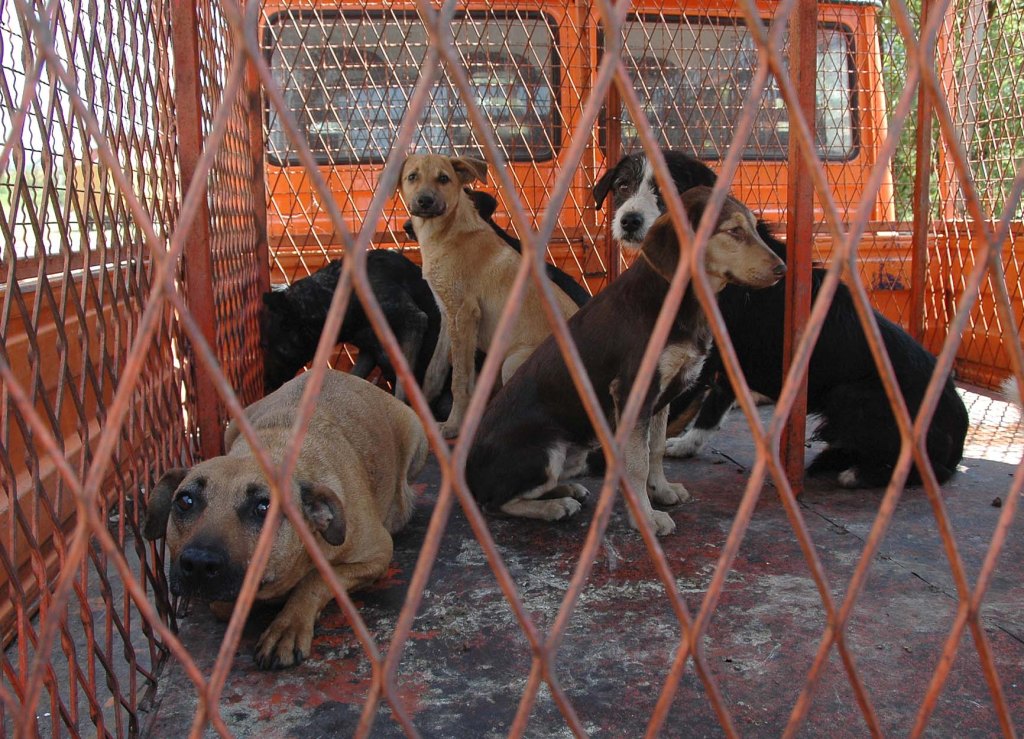
Mark (WAV), Ellie and Liza Protest against live animal exports.

UK: Will the once ‘green prince’ clash with his fracking-friendly government? – by Phoebe Weston.

Will the once ‘green prince’ clash with his fracking-friendly government?
by Phoebe Weston

I remember discovering as a child that then-Prince Charles spoke to his plants, and laughing about it with my mum. His courtiers also claimed he gives branches of trees a “friendly shake” to wish them well as he walks by. Even by today’s standards these practices still might seem pretty odd, but lots of Charles’s other “dotty” environmental views over the years have aged well.

Since his 20s, the new king has been banging on about plastic pollution and nature-based solutions. In 1970, he spoke about the “cancerous forms” of pollution – oil at sea, chemicals in rivers, air pollution from factories, cars and aeroplanes. Last year, the Washington Post said he could be the “21st century’s first eco-king”.

More recently, Charles revealed to the BBC he forgoes meat and fish for two days a week, and dairy for one day a week. His 50-year-old Aston Martin runs on surplus English white wine and cheese (no, really). Solar panels are now up on Clarence House, and he’s written a 336-page book in which he makes a “call to revolution”. He must be the first monarch to do so.

Charles has always genuinely taken the climate seriously which is much more than the rest of the royal family can profess to do – even if he does have an astronomical carbon footprint himself, living in mansions and travelling by private jet.

Until now he has shown no sign of slowing down. But now, as king, Charles is obliged to take an oath of silence. Will he continue to speak out on the environment from the throne? “Definitely not,” Jonathon Porritt, the environmentalist and Green politician, who also advised Charles as Prince of Wales, told my colleague Fiona Harvey.

But this green stuff is so ingrained in Charles, it could be hard for him to change the habit of a lifetime. With signs suggesting the UK government is moving in the wrong direction on climate change it might be difficult for him to not be active behind the scenes. He will meet with the prime minister once a week, and this is where King Charles III may have power to hold Liz Truss – or whoever else in the future – to account on the issues he cares about.

Of course, one of the Queen’s strengths was that we rarely knew what she believed in private, so the fact Charles has been so vocal about so many issues could be to his detriment. But equally, it also means the royal family could have an unlikely fanbase. Head cheerleader is my great-aunt Tina, who says she doesn’t really like the monarchy but messaged me this the other day: “King Charles will not like fracking or digging up more oil and gas in the north sea, or stopping the green levies, long live King Charles!!”.

It may seem a bit depressing that the best leadership on the environment is coming from an unelected monarch with questionable views about homeopathy and shaking hands with plants. Many of us are hoping that the green prince becomes a green king, but what a sad state of affairs that you have to rely on the monarchy to speak up for the destruction of the natural world.

Right now it feels like most of the government has a vow of silence on the environment. It would be great if those elected to be in power could speak up about these issues first. Especially when many obligations, such as cutting carbon emissions, are in fact enshrined in law – speaking about many of these issues shouldn’t be controversial.

Regards Mark
Same.

EU: EU fishery policy cannot continue to neglect fish welfare – opinion.

EU fishery policy cannot continue to neglect fish welfare

15 September 2022

Opinion

Written by Douglas Waley

The Common Fisheries Policy (CFP) sets the right foundational objectives for the management of fisheries and fish populations in the EU’s waters. Yet, to date, it still ignores fish welfare.

In October 2012 the Treaty on the Functioning of the European Union (TFEU) was published in the official journal of the EU, including the specific requirements that the formulation and implementation of Union fisheries policy, ‘since animals are sentient beings, pay full regard to the welfare requirements of animals’. More than a year later, in October 2013, the Common Fisheries Policy (CFP) was published, and it failed entirely to take up the commitments made in the TFEU to pay regard to the welfare of animals.

The absence of high level objectives or recognition of animal welfare in the CFP has played out across the subsequent years as a lack of action and lack of awareness, especially for the welfare of fish and aquatic invertebrates. Technical measures, rules on fishing gears and methods, have been established with fish population management in mind, and without regard for the capture experience, exhaustion, suffocation, or injury faced by the animals. 

Labelling requirements have been designed to give the consumer information that enables them to make choices based on localised environmental impacts, but not the information that enables consumers to make choices based on animal welfare or global environmental impacts. The wild capture fishery industry in particular has passed these years without developing an awareness of its animal welfare impacts or consumer expectations, and without improving practices to reduce welfare impacts.

The European Commission is now developing a report on how the CFP has functioned to date, and on emerging trends of importance to fisheries and aquaculture. Eurogroup for Animals has published its position paper here. We are making the case that the CFP, with its existing objectives, needs to be fully and properly implemented before reforming the legislation itself. The failures of not incorporating animal welfare need to be acknowledged now and specific actions taken immediately where tools are available. In the future, fisheries policy should be an integrated part of a Common Food Policy and as part of a transition to sustainable food chains.

See here our detailed report on the causes of animal welfare issues in wild capture fisheries, and the steps necessary to make improvements for captured animals.

The European Commission has opened a public consultation on the functioning of the CFP. The consultation is available here and is open until 23 September at midnight CET.

Regards Mark
Same.

USA: Texas Hunter (Must Be In Camo Trousers !) Kills Legendary Crocodile Whilst On ‘Holiday’.

WAV Comment – bet he wears combat trousers ! – his type (hunter saddos) always do; that is what makes them real men !

‘Hero’ hunter ???

Texas Hunter Catches Legendary ‘Man-Eating Dinosaur’ Crocodile on Holiday (msn.com)

“It was an experience I’ll never forget,” Wales wrote in a Facebook post he published on September 8. “A proper, man-eating dinosaur of a croc.” He included several photos of the huge animal, one of which shows it hung up under a canopy, dwarfing a couple of people standing nearby.

His Facebook post has attracted some controversy from users opposed to hunting, with one calling the killing “disgusting.”

Regards Mark
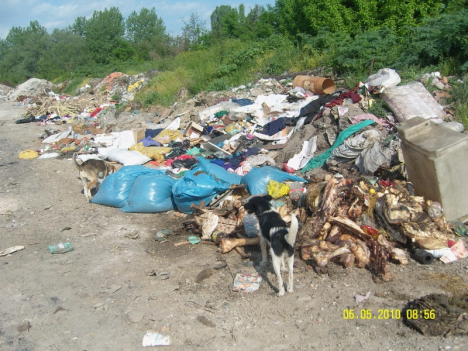
A stock photo shows a Nile crocodile with its mouth open in a sandy environment. A U.S. hunter has killed a 15-foot Nile crocodile in Zimbabwe, Africa.© Carl Jani/Getty

https://worldanimalsvoice.com/?s=trophy+hunter

Same.

Mexico: Demand Justice for Baby Bear Who Was Tortured and Strangled to Death!

The tragic killing of a five-month-old bear cub who wandered into a town in Mexico is almost beyond belief. Locals and members of law enforcement were documented smiling and laughing as a tiny, terrified bear cub was tortured and strangled to death. Please take action now to make sure every individual who inflicted harm on this endangered animal, as well as those who stood idly by, are charged and sentenced with the maximum penalty under the law.

Mexico News Daily shared the heartbreaking details of a young black bear cub who entered the town of Castaño, Coahuila in Mexico in search of water. In a mob-like fashion, residents of Castaño surrounded the terrified bear and callously celebrated as they tortured her. They tied her mouth and legs with rope and dragged her tiny body along the ground. They yanked at the ropes until she suffocated to death. Photos posted to social media show police smiling as the small bear suffered and took her last breaths.

The Federal Attorney for Environmental Protection (PROFEPA), a Federal environmental protection agency, stated that it was preparing a criminal complaint against those responsible for the killing of the endangered black bear, which could be classified as a “crime against biodiversity.” The agency said that the perpetrators could face jail time and fines and stressed that it is committed to the protection of wildlife.

Governor Miguel Ángel Riquelme Solís weighed in on the horrific event on Twitter and stated that the government of Coahuila “vigorously rejected the outrageous actions” of the individuals involved and indicated that “Profepa and the Coahuila environmental protection agency are in charge of the investigations into the death of an endangered specimen and the mistreatment to which it was subjected.” Governor Riquelme added that the State Attorney General’s Office (FGE) was also investigating and would seek to punish those responsible for abusing the animal.

Governor Riquelme, PROFEPA, and the State Attorney General’s Office appear to be taking this matter seriously. However, we must let all decision-makers know that the world is watching and demands justice for the endangered bear cub who was barbarically tortured and killed.

Contact Governor Miguel Ángel Riquelme Solís, Head of the State Attorney General Office, Dr. Gerardo Márquez Guevara, and PROFEPA to demand that the sentencing of every individual involved in the callous torture and killing of the endangered black bear cub is a top priority.

1. Speak out on social media. Leave a comment for Governor Miguel Ángel Riquelme Solís on FacebookInstagram, and Twitter.

Then, leave a comment for The Federal Attorney for Environmental Protection (PROFEPA) on FacebookInstagram, and Twitter.

You may use and personalize the following comment:

“The world demands justice for the helpless black bear cub who was tortured & killed in Castaño, Coahuila. All individuals involved, including law enforcement, must be charged & sentenced for the violent death of an endangered animal.”

2. Send a Letter. Send a message to State Attorney General of Coahuila, Dr. Gerardo Márquez Guevara, by filling out the form on this page.

Sign our alert to immediately deliver your comments to:

  • Dr. Gerardo Márquez Guevara — State Attorney General of Coahuila

In Defense of Animals fully expects and strongly urges all people involved in this campaign to act responsibly and lawfully and to respect the personal interests and privacy rights and concerns of any individuals who may be affected by, or become the subject of, your protests or related efforts.

Curacao: Animal Rights Ruling Against Curaçao Sea Aquarium – Verdict To Be Handed Down October 19.

Animal Rights ruling against Curaçao Sea Aquarium October 19

WILLEMSTAD – In the lawsuit filed by Animals Rights against Curaçao Sea Aquarium concerning the five dolphins that were transferred to the Fakieh Aquarium in Saudi Arabia in June, the verdict will be handed down on Wednesday 19 October.

Lawyer Bertie Braam stated during the summary proceedings on Wednesday that Animal Rights would like to see a collaboration with Seaquarium.  

Animal Rights started a lawsuit in early June against Seaquarium, the Ministry of Health, Environment and Nature (GMN), and Tursiops, the owner of the dolphins. According to the animal organization, the permit for the transport of the five dolphins should never have been issued.

Last week it was announced that dolphin Mosa has died at the Fakieh Aquarium. Camera images show how the dolphin swims against a wall at high speed. Mosa suffered serious injuries and died as a result of a considerable amount of blood in her lungs. 

According to Braam, animal welfare is a high priority for Animal Rights and therefore a collaboration between the two parties seems to be the best solution. In addition, according to the lawyer, it is also a good time to take a close look at the animal welfare legislation in Curaçao. Braam emphasizes to the local Dutch news site NU.cw that the welfare of dolphins is different on the island than in the Netherlands. “There is no organization here that is concerned with the welfare of the animals, we need Animal Rights from the Netherlands for that.”  

The lawyer sees two possible statements. “The judge can say that the treaty has been tested and that what happened around the case is in accordance with the treaty and then that’s the end of the story,” said Braam. But according to Braam, the judge can also annul the permit. If the permit is annulled, another solution must be sought. Animal Right hopes that the options for moving the animals to another facility will then be looked into. 

Animal Rights ruling against Curaçao Sea Aquarium October 19 – Curaçao Chronicle (curacaochronicle.com)

Regards Mark
EU: Press Release – European Parliament Calls for a More Ambitious Legislation on Imported Deforestation.

Amazon Destruction.

Same.

European Parliament calls for a more ambitious legislation on imported deforestation

14 September 2022

Press Release

On 13 September, the European Parliament adopted its position on the European Commission’s proposal on deforestation-free products. Eurogroup for Animals welcomes the inclusion of more animal products in the scope of the legislation, but regrets the exclusion of dairy and farmed fish production industries, as well as all other natural ecosystems destroyed by EU-driven deforestation.

Yesterday, the European Parliament (EP) voted for significant improvements of the European Commission’s proposal for a regulation on deforestation-free products. The EC had proposed a prohibition on placing on the EU market a very limited list of deforestation-risk commodities such as palm oil, wood, cocoa, coffee, beef, leather and major soy products. 

The Plenary voted to include more animal products such as the ones derived from cattle, swine, poultry and sheep. The inclusion is key as these animals are most often fed with soy which is the second driver of deforestation and it’s widely produced to serve as animal feed, and they are imported from countries with the highest deforestation rates. 

As trade in animal products fuels deforestation, the EP’s position is promising for the planet and the animals in regions of the world where intensive animal agriculture or economic activities are destroying precious natural ecosystems. Producers intending to export to the EU will be incentivised to switch to more sustainable production systems, less harmful to wild animals and to their habitats.

There is a real urgency for the EU to use unilateral measures to address the significant impact intensive livestock farming has on the planet and on the animals living on these farms and in these ecosystems. The EU must uphold its sustainable agenda and adopt such legislation when necessary

Reineke Hameleers, CEO, Eurogroup for Animals

The EP’s position is a step in the right direction but it failed to include the dairy and farmed fish production industries, as well as all other natural ecosystems destroyed by EU-driven deforestation. While the Report strengthened the EC’s proposal by enlarging the geographical scope to wooded lands, it failed to protect other ecosystems such as grasslands, wetlands, and savannahs, which are also destroyed by the EU’s consumption of soy and of imported animal products derived from soy-fed animals.

Eurogroup for Animals calls on the EC to conduct an impact assessment on the inclusion of wetlands and grasslands as soon as possible to close this loophole. 

All eyes are now on the Council as “trilogue” negotiations will start in the coming weeks. In this context, Eurogroup for Animals urges the Council to uphold the objectives of the Green Deal and thus agree with the European Parliament on a text encompassing a large scope of products including all soy-fed animals and all ecosystems destroyed by EU’s consumption of animal products.

Regards Mark
Forests – Lungs of the Planet

Australia: Man Killed By Pet (or Wild ?) Kangaroo.

Same.

WAV Comment: Do these statements by the police sort of really contradict each other ? – pet or wild ?

A police spokesperson told media they believed the man had been attacked by the kangaroo – a wild animal – earlier in the day.

Australian man killed by kangaroo he kept as pet, police say

Getty Images – Kangaroo attacks are rare in Australia

Australian man killed by kangaroo he kept as pet, police say

An Australian man has died after being attacked by a kangaroo he had been keeping as a pet, police say.

A relative found the 77-year-old man with serious injuries on Monday at his home in Redmond, about 400km (250 miles) south of Perth.

When the ambulance crew arrived at the rural property, the kangaroo prevented them from treating the man.

Police say they were forced to shoot the marsupial dead so paramedics could reach him. The man died at the scene.

A police spokesperson told media they believed the man had been attacked by the kangaroo – a wild animal – earlier in the day.

Australia is home to about 50 million kangaroos, which can weigh up to 90kg and grow to 2m tall.

But fatal attacks are rare – this is the first one reported in Australia since 1936.

Kangaroos have “a lot of weapons” such as sharp teeth, claws and powerful legs, kangaroo behaviour expert Graeme Coulson told the Australian Broadcasting Corporation.

“Certainly if they’re cornered or in some sort of distress, that can be quite dangerous,” Associate Professor Coulson said.

“The problem with kangaroos and people is we’re both upright animals, we stand on our two feet, and an upright stance like that is a challenge to the male kangaroo.”

In July, a kangaroo left a 67-year-old woman with cuts and a broken leg after it attacked her on a walk in Queensland.

And a three-year-old girl suffered serious head injuries in an attack in New South Wales in March.

Urban development across Australia is increasingly encroaching on wild kangaroo habitats.

Regards Mark
https://www.bbc.co.uk/news/world-australia-62884861