England: ‘Hell Tours’ – Your No. 1 Animal Travel Agency.

Hell Tours – your No. 1 Animal Travel Agency.

There’s just LESS THAN A WEEK TO GO until Ban Live Exports: International Awareness Day!

Will you stand up for animals on Tuesday 14th June?

This year we’re going all-out to highlight the horror of the ‘once in a lifetime’ trips that sheep, cattle, and pigs are forced to ensure during live export.

At CIWF UK, we’re all set for our ‘Hell Tours’ London Rally, which is taking place at Parliament Square, on June 14th from 12.30pm-2pm. And today we are launching a brand-new action to end the horror of live exports.

Action – send an e card to the secretary of state at Defra – Act to ban live exports (ciwf.org.uk)

Print off a placard and share a selfie online with #BANLIVEEXPORTS on June 14th!

I look forward to standing up, with you, for animals this Ban Live Exports: International Awareness Day.

Share the event (20+) Ban Live Exports London Rally | Facebook

Join the Hell Tours rally in London (20+) Ban Live Exports London Rally | Facebook

Sarah Moyes
Senior Campaigns Manager UK

Regards Mark

EU: Join the online consultation on Sustainable EU food system.

9 June 2022

News

The European Commission has opened a new consultation to inform the drafting of a Framework Sustainable Food Systems law.

Due end 2023, this law will be the key piece of legislation under the Farm to Fork Strategy whose objective is the sustainable transformation of the EU’s food system.

According to the Commission, “this framework law should promote policy coherence at EU and national level, mainstream sustainability in all food-related policies and strengthen the resilience of food systems.” 

Although animal welfare is part of the Farm to Fork strategy, it is not yet fully envisaged as an integral part of a food system’s sustainability. Furthermore, the Farm to Fork strategy recognises the need to move towards a more plant-based diet. However, few concrete measures have been proposed to date. It is, therefore, important for the Commission to receive numerous responses highlighting the importance and role of animal welfare in a sustainable food future and supporting a transition towards a more plant-based diet to keep the food system within planetary boundaries.

** The consultation is available here and is open until 21 July at midnight CET. **

Farm-to-Fork

Sustainable development

Regards Mark

EU: EU grinds and gasses hundreds of millions of chicks and ducklings every year.

1 June 2022

News

18 European NGOs have formed a coalition to demand the end of the killing of chicks and ducklings. This cruel practice is currently allowed under EU law but could be prohibited as part of the revision of EU legislation on farm “animal welfare,” which is slated to take place in 2023 – 2025.

In an open letter to the Council of the EU sent on 1 June 2022, the animal advocates urge the EU Ministers of Agriculture to support a ban on the systematic gassing and grinding of male chicks and female ducklings. EU citizens can also reach out to their Agriculture Minister with prepared draft messages via a new website launched today

For every hen raised for egg production purposes, one male chick is ground or gassed. Male chicks are deemed “unproductive” for the egg industry, as they do not lay eggs, and their meat has no economic value for the meat industry. For this reason, 330 million day-old male chicks are eliminated annually. As early as a few hours after hatching, male chicks are first sorted by workers, and while female chicks are sent to lay eggs on farms, the males are killed. Tens of millions of female ducklings suffer the same fate, given that the liver of female ducks is less desirable for foie gras production, and as a result, foie gras producers only raise and force-feed male ducks.

The killing of young animals at such a massive scale remains a secretive industry practice, which explains why images are so rarely disclosed, although they are shocking. These images show the elimination of male chicks by grinding or gassing, the two killing methods allowed under EU law, with some countries preferring one method over the other.

In 2015, following the publication of images displaying the systematic killing of chicks, the French government committed to support the development of in-ovo sexing technologies, which allow the detection of the sex of chicks before they hatch. In 2020, the French government announced a ban on the killing of day-old chicks. Similarly, the German government also committed to ban this practice.

In France, hatcheries have until the end of 2022 to transition to using in-ovo sexing devices and to end the systematic killing of male chicks. To ensure producers comply with the law, hatcheries have received 10 million euros in public funding to aid in transitioning to alternative methods. The cost of this new technology is estimated to increase the retail cost of eggs by only 1 cent per egg.

There are several reasons why a ban on the systematic killing of male chicks is attainable: the societal demand in support of a ban is high, alternatives to the systematic killing of male chicks exist, and two countries have already prohibited this practice. Last but not least, the revision of the EU legislation on the “welfare of farmed animals” represents an unprecedented opportunity to ban this practice throughout the EU.

The EU is currently revising its legislation on “farm animal welfare.” This revision is paramount. The European Commission, which is tasked with proposing a new legal act in 2023, is considering the possibility of prohibiting the systematic killing of chicks in the EU. Stella Kyriakides, the Commissioner for Health and Food Safety, who retains competence on the issue, said that “The killing of large numbers of day-old chicks is, of course, an ethical issue.”

Such a statement is largely supported by the results of the public consultation launched by the European Commission on the topic, as more than 94% of the almost 60,000 respondents declared they were in favor of a ban on the practice. Furthermore, these numbers resonate with public opinion, as only between 9 and 18% of citizens support grinding and gassing chicks and ducklings. 

The European Commission will propose new legislation to better regulate practices in animal agriculture; however, the Council of the EU will decide on the adoption of the reform. It is therefore crucial that each of the ministers of agriculture from all 27 Member States support this reform, to ensure it is adopted.

For this reason, 18 animal protection organisations are asking each of the ministers of agriculture from the Member States to support the efforts undertaken by France and Germany. Specifically, the organisations ask the ministers to extend the prohibition on the killing of male chicks to all of the EU, and to ensure that the new law also prohibits the killing of female ducklings, who, so far, have been unfairly excluded from these reforms.

Read more at source

Ask your Agriculture Minister to support a ban on chick & duck culling in EU law

Watch the video here:

https://player.vimeo.com/video/711613760?h=58270d54b4 

Regards Mark

Bulgaria: Well Done ! – Bulgaria bans the breeding and import of mink.

2 June 2022

CAAI

News

Live mink can no longer be legally imported or bred in Bulgaria, following concerns over threats to native ecosystems and biodiversity from escaped animals.

On 1 June, the Bulgarian Minister of Environment and Water Borislav Sandov announced that he had signed the order to bring the ban into effect.

The decision was taken based on concerns over the environment and biodiversity, as the risk of American mink (Neovison vison) escaping from fur farms poses a serious threat to native species.

Conditions at the only mink farm in our country are unfavourable and are the reason that in recent years mink have escaped to enter territories of wildlife and cause damage.

Borislav Sandov, Minister of Environment and Water

The American mink is now widespread throughout the European Union and has caused significant adverse impacts on native wildlife, after individuals escaped from fur farms. 

According to the Ministry, the species is included in the list of 100 most dangerous invasive alien species in Europe and is a priority invasive alien species for Bulgaria.

We thank Minister Sandov for this really important and very useful decision for the nature of Bulgaria. This decision is based on scientific and expert data on the damage from the breeding of the species American mink. At the same time, it is a solution that will prevent huge damage to wildlife and end the suffering of millions of American minks that are bred for their fur in cruel conditions! It’s just a ban order, but it’s so important to nature and the animals.

Petya Altimirska, head of CAAI

Whilst this ban will effectively render mink farming impossible in Bulgaria, it does not cover other species commonly farmed for their fur such as foxes, chinchillas and raccoon dogs.

Our member CAAI is calling for a wider ban on the breeding and keeping of any species for the purpose of fur farming in the country. 

The European Citizens’ Initiative Fur Free Europe asks for a ban on all fur farming and the placement of farmed fur products in the European Union. 

Citizens are invited to add their signature here.

Regards Mark

England: Latest Bird Photos From Pauline – 8/6/22.

Here are the latest bird photographs from Pauline which she took during her recent travels in Kent, England.

You can view all of her previous pictures by clicking and then further selecting from:

https://worldanimalsvoice.com/?s=pauline

Cuckoo
Wren
With a beak full of food flies

A Male Linnet
A Warbler

A young Great Tit ?

A Blackbird

Thanks Pauline as always for your great photos to share with us;

Regards Mark

England: WAV Write To UK Member of Parliament Over UK – Australia Free Trade Agreement (FTA).

Hi all; I have now completed and sent my letter today 8/6/22 (by e mail) to my Member of Parliament (England); you can read it below.

I have also sent him several pictures of sheep in Australia which have undergone ‘mulesing’ without any form of anaesthetic.

I hope the letter explains my position of the issue of a UK – Australia FTA;  and I now await response, which I will publish upon receipt.

Regards Mark

Dear Mr. Holloway Member of Parliament for Gravesham, Kent.

            You and I have met in the past, and you have also had letters from me relating to an issue that is very close to me – that of stopping live animal exports / transportation.  In lieu of the vote relating to Boris Johnson on 6/6/22; I now feel then need to write once again.

I have had the pleasure of knowing, working, and campaigning with Mr Philip Lymbery, Global CEO of Compassion In World Farming International, for over 30 years.  I recently met up with Phil at Ramsgate, when we joined the anti live export campaigners at a public meeting opposing the trade through the harbour.

There are two issues that I wish to bring to your attention; for me, important issues that will have a major influence on how I vote in future – and they are:

  1. Post Brexit Government promises to end live animal transport from the UK.

In June 2021, the UK government put forward legislation to ban the export of live animals for slaughter and fattening.  There was a Defra consultation on the issue; for which I personally submitted responses.  This consultation set the backdrop for the proposed legislation to ban animal exports.

The Animal Welfare (Kept Animals) Bill reached the House of Commons last autumn (2021), following massive public support and receiving cross party support from a number of MP’s.  BUT, despite intense lobbying since, the Bill has not been seen in Parliament since last November; and consequently it ran out of time to be passed in the 2021/22 Parliamentary session.

The dithering actions of the Conservative government and possibly opposition parties, means that today, 8/6/22, it is still legally possible for the export of live farmed animals to be undertaken from anywhere in the UK.  Exporter individuals such as Mr Onderwater, the Dutch exporter and haulier who has used Ramsgate so often in the past are effectively still legally able to use Kent ports for this sordid trade if they so wish.

Thus, I consider that the Animal Welfare (Kept Animals) Bill needs to be given priority in the new Parliamentary session in order that UK live animal exports can be confined to the history books which is the only place they now deserve.  I call on Mr Johnson, Mr Eustace and many other MP’s to give this issue the priority it deserves and get the legislation passed.  There are other issues which parliament should be acting on despite heating costs and the price of food; so please look at these other important issues and get the legislation through parliament.

On 14th June, there is yet again another ‘Ban Live Exports’ International Awareness Day, which will be supported in London by several MP’s. The issue of the day is to (continue) to raise the disgusting trade in live animals being shipped and transported by various means all over the world – Ban Live Exports International Awareness Day | Compassion in World Farming (ciwf.org.uk)  and Ban Live Exports | Compassion in World Farming (ciwf.org.uk)

Campaigners against the trade from all over the planet will be taking part and demanding their governments do not just ‘talk the talk’, but actually pass legislation to stop this abhorrent business for once and all.  Recent actions on awareness days have seen NGOs and campaigners in over 40 countries – from Brazil, to Australia, to South Korea – global actions have included solidarity marches through Kathmandu, a petition launch in New Zealand and a giant projection on the white cliffs of Dover here in England.

I request the action of Mr Boris Johnson MP; Prime Minister, to live up to his promise of ‘the best is yet to come’; and to thus get the Bill relating to live animal exports passed to prevent future sufferings from here in the UK; hopefully setting a standard to which other nations will adhere.

  • The UK Government has now signed a trade agreement with Australia – which one can only consider as bad news for British farmers and British animals.

We all saw how Liz Truss MP thought it, the agreement, was the best thing since sliced bread.

But, in its 2019 Election Manifesto, the Conservative party asserted us voters that:

“In ALL of our trade negotiations, we will NOT compromise on OUR high environmental protection, animal welfare and food standards”.

So, possibly you can write and tell me where you Conservatives subsequently went wrong; keeping in mind the following issue on the deal with Australia.  Do I need to state:

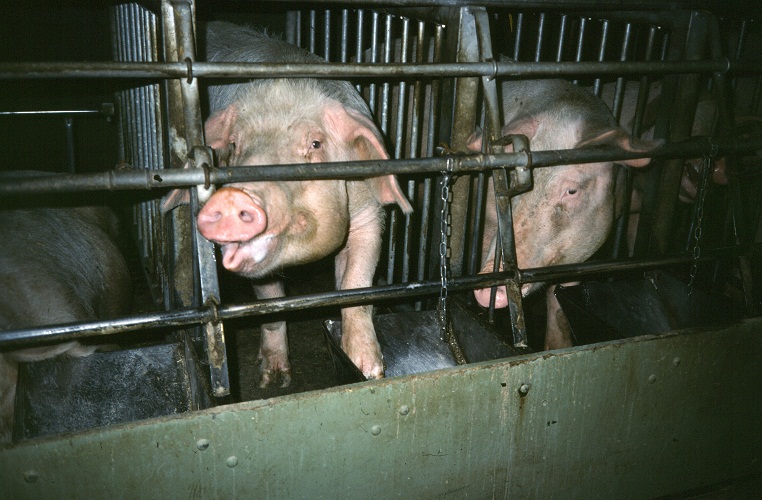
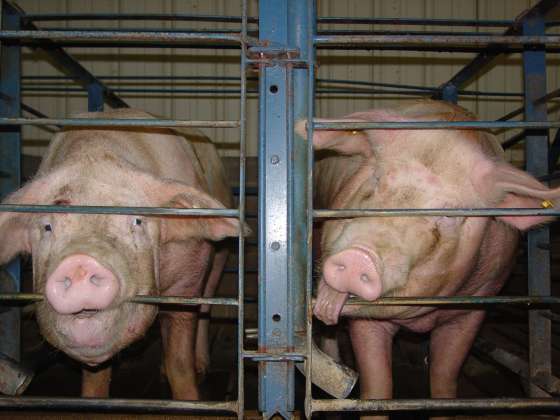
  • Australia still allows pigs to be kept in cages during early pregnancy, whilst sow stalls have been illegal in the UK since 1999.
  • Confining hens in barren cages is still legal; and common in Australia, when the UK banned such systems in 2012.
  • The use of antibiotics on farm animals is rife in Australia.  Australian farmers are known to use up to 16 times as many antibiotics on farms as we use here in the UK. 

In Australia, sheep are mutilated every year through ‘mulesing’; a process undertaken on sheep stations, and without anaesthetic for the animals involved, where large chunks of its skin at their rear end, under the tail, are cut away.  Please refer to attached pictures and see how abusive this is and the suffering endured by every animal involved – “we will not compromise on animal welfare standards” ! – it looks as if you have failed by not getting Australia to act on this as part of the trade negotiations just as one example.

Around 40% of Australian beef comes from cattle fattened on cruel, intensive feedlots; unlike those systems used in the UK.

Yet the new UK-Australia FTA fails to prohibit imports that don’t meet UK standards.  Liz Truss can smile and consider herself good at trade deals; but when it comes to those between the UK and Australia, I personally think otherwise.

Even before tax parries are removed, Australian products like beef and lamb will have huge tariff-free quotas.  The latest UN Food and Agriculture Organisation data shows UK imports of Australian beef are currently around 1,600 tonnes a year.  In the first year after the FTA is implemented, the tariff free quota on beef alone will be almost 22 times higher than this.

If this deal is ratified by the UK Parliament, higher welfare farming methods used in the UK, when compared to Australia, could immediately be undermined by cheap, factory farmed imports.  Remember Conservative promises – “we will not compromise on animal welfare standards”.  Cheap factory farmed imports from Australia will encourage low welfare standards and practices to continue over there.  These actions by Australian producers will thus put additional pressure on British producers to cut their standards as a result; which begs the question, where will the UK be in relation to very high standards that it always preaches.

The UK – Australia trade deal is a betrayal of us all; and of our high welfare British farmers who have improved standards throughout these islands.  Of course, it will be the farm animals that will suffer most as a result of this Conservative policy in which we were all informed by government, In ALL of our trade negotiations, we will NOT compromise on OUR high environmental protection, animal welfare and food standards”.

As a voter and animal welfare campaigner, I feel the need to inform you that I consider you have already failed in standards with your actions for a FTA with Australia.

I hope to hear from you in the near future;

Yours sincerely

Mark Johnson.

Sent by e mail 8/6/22.

Thanks to CIWF (London) for the following data:

England: ‘Political’ Day 7/6/22.

Hi all;

Today I am doing ‘political’; hopefully giving MP’s a difficult time re live exports and the UK- Australia Trade deal.

Will put out my letter on the site for all to see when I have completed it.

May do other posts later, but depends on time;

Regards Mark

Remember –

Dover, Kent, England Protest Action.

Canada: Poppy Barley’s New Accessory Collection Features First Vegan Products.

Poppy Barley’s new accessory collection features the Multitasker Backpack, Convertible Belt Bag, and Card Holder.

Canada-based luxury footwear and accessories brand Poppy Barley recently announced the launch of its first vegan line, PB Plant. The brand’s new line debuted with a new accessory collection—featuring the Multitasker Backpack (CAD$348), Convertible Belt Bag (CAD$158), and Card Holder (CAD$48)—made with Laguaro, Poppy Barley’s environmentally conscious cactus leather. Lined with cotton canvas, each accessory is ethically-crafted in solar-powered Mexican factories in line with the brand’s environmental and sustainability efforts. 

Founded by sisters Justine and Kendall Barber, Poppy Barley plans to introduce more innovative plant-based leathers in future collections. “Our customers have been asking for a leather alternative since day one, but there was never an option that we could stand behind—until now,” Justine Barber said. “After years of researching and testing, we discovered cactus leather basically next door to our manufacturing facility in Mexico. We finally found a leather alternative that wouldn’t compromise quality or our values when it comes to environmental impact. 

Made from cactus, not cows or plastic

Unlike traditional vegan leathers, Poppy Barley’s Laguaro is not made using plastics such as polyvinyl chloride (PVC) or polyurethane (PU). Instead, the leather is produced using harvested Mexican cactus leaves, leaving the rest of the cactus intact. Although the brand’s Laguaro leather is currently 80 percent biodegradable, Poppy Barley aims to reach 100 percent sustainability in the near future. “We believe the future of fashion has no choice but to consider the Earth and humanity, and we want to lead the way,” Justine Barber said. 

Plant-based vegan leathers 

Cactus leather made its global debut in 2019 after Mexican entrepreneurs Adrián López Velarde and Marte Cázarez launched Desserto, the first organic leather made entirely from the nopal (or prickly-pear) cactus. Since then, Desserto has been used to make the world’s first cactus-leather boxing gloves with plans in motion for handbags.

With an estimated worth of $85.05 billion by 2025, the faux leather industry has seen an increase in sustainable vegan leathers in recent years. Popular fashion brand Hugo Boss and retailer H&M have both introduced pineapple leather in their merchandise. In 2017, H&M also named “wineleather” made by Italian company Vegea Vegetal Leather a global changemaker. Vegan leather is also making its way into home decor. Last year, Canadian furniture designer Gus* Modern launched couches and lounge chairs made with Vegan AppleSkin Leather as part of its Fall 2020 collection.

Regards Mark

These New Luxury Vegan Leather Handbags Are Made from Cactus, Not Cows | VegNews

Beef Production Is Destroying The Amazon – Turns Out, Leather Is Too !

Beef Production Is Destroying the Amazon. Turns Out, Leather Is, Too. | VegNews

Beef production is a known driver of deforestation but a new report outlines the links between leather and Amazon destruction.

More than 100 fashion brands have been linked to deforestation by a new report compiled by Slow Factory with data provided by research group Stand.Earth. While the cattle industry has been the top driver of deforestation in the Amazon region, the link between leather and deforestation is less known. 

The group examined data from public or government sources—including 500,000 rows of customs data, websites, and annual reports—to find that due to a lack of transparency in various supply chains, leather products sold by more than 100 companies, including Zara, Asics, Adidas, and Clarks, could contribute to deforestation. 

“​​The Amazon rainforest is fast approaching the tipping point of irreversible ecosystem collapse, according to scientists,” the report states. “We’re calling on the world’s leading fashion brands to act immediately to protect the Amazon rainforest, its people, and our global climate future.”

Leather and deforestation

In the last decade, 16.5 million acres of the Brazilian Amazon rainforest biome have been lost, mostly due to the cattle industry. Brazil is home to the largest cattle herd in the world at 215 million animals and its leather products—80 percent of which are exported—accounted for $1.1 billion of slaughterhouse revenue in 2020. 

JBS is the largest cattle producer in the region and has been linked to illegal deforestation multiple times. Many of the 100 named companies source leather from JBS, either directly or indirectly, therefore contributing to deforestation. The report found that this issue is endemic to the Brazilian leather industry and tanneries such as Minerva and Fuga Couros, among others, are also contributors to deforestation. “Although none of these brands are deliberately choosing deforestation leather, they are working with manufacturers and tanneries that source from opaque supply chains and companies that have known links to cattle raised on recently deforested Amazon land,” the report states.

The report assessed the deforestation risk of the 100 named companies based on the number of links they had to Brazilian leather producers. One such company was Coach, which has a high risk of supporting deforestation with its 10 connections to the Brazilian leather industry. The company is also one of the 74 companies that have anti-deforestation policies in place and the report suggests that 30 percent of these companies are in breach of their own policies. 

According to the report, the Leather Working Group (LWG)—the world’s leading nonprofit in environmental certification of the leather industry—only links leather to tanneries and not farms or supply chains, making it incapable of guaranteeing that leather products are deforestation-free. “If you’re wearing leather shoes, a leather belt, or carrying a leather handbag, it’s highly likely that it was made from cowhide that contributed to the destruction of the Amazon rainforest,” the report states.

Vegan leather: a sustainable, compassionate choice 

Opacity in leather supply chains means that just about any leather product, regardless of brand, can be linked to deforestation. However, vegan leather—particularly the type made from plants and not plastic—is increasingly becoming a more accessible and sustainable option. And the choices are vast. 

Innovators worldwide are proving that just about anything can be turned into leather without the need to slaughter animals for their hides. In Mexico, entrepreneurs Adrián López Velarde and Marte Cázarez developed Desserto, a vegan leather made from nopal cactus leaves. Spanish designer Carmen Hijosa tackled the leather issue by looking to the pineapple industry, discovering that the would-be wasted leaves could be turned into a sustainable vegan leather she called Piñatex. In the fashion capital Milan, innovative startup Vegea is turning waste from the Italian wine industry into vegan leather that has been used in place of animal hides across industries. 

Fashion heavyweights are also getting into vegan leather, including Karl Lagerfeld, Louis Vuitton, and Hermès. Earlier this year, Gucci unveiled three shoe styles made with its own vegan leather. Inspired by Greek goddess of harvest Demeter, the new material (dubbed “Demetra”) is made from 77-percent plant-based raw materials, including wood pulp and viscose, and is tanned in the way leather would be but without animal cruelty or environmental harm.

Even brands named in the Slow Factory report are working to develop plant-based leathers to minimize their environmental impact, including Adidas. The athletic brand worked with eco-designer Stella McCartney to develop vegan versions of its iconic Stan Smith sneakers. Adidas and McCartney are also part of the Mylo Consortium, a group of fashion brands working with startup Bolt Threads to use its innovative Mylo vegan leather—which is made from mycelium, the fast-growing root systems of mushrooms. The partnership will result in new mushroom leather product launches in the coming months and hopefully, contribute to a shift away from Amazon-destroying animal leather in the years to come. 

Regards Mark

Beef Production Is Destroying the Amazon. Turns Out, Leather Is, Too. | VegNews