England 17/7. It is hot here today, and has been for most of the last week. Tomorrow and Tuesday, the Met Office has put out Red alerts – the very highest heat conditions which could be expected – like 40+ C for England ! – come on man; no its true, conditions which have never reached these temperatures before are expected in the next few days.
Southern Europe, Spain, Portugal and France have experienced even higher temperatures. Everyone is saying it is global waring causing this, but the other question is ‘anything being done abut it really ?’
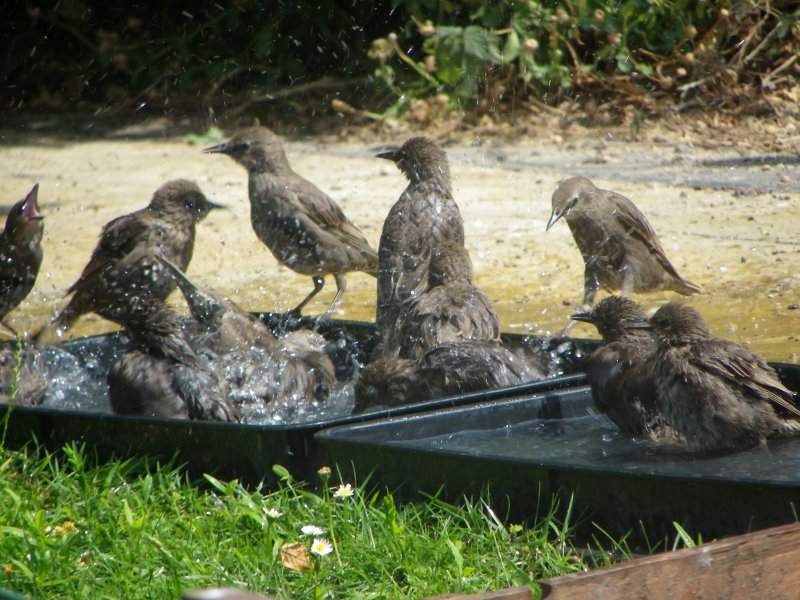
I went out this morning and put fresh water into all the water compartments that we have in the garden – currently about 7; in conditions like this especially everyone must ensure that animals have lots of fresh cool water to drink and bathe in. I took these pictures of all the birds enjoying their morning bath earlier, cleaning their feathers down and ridding themselves of all the dust, whilst having a good drink at the same time.
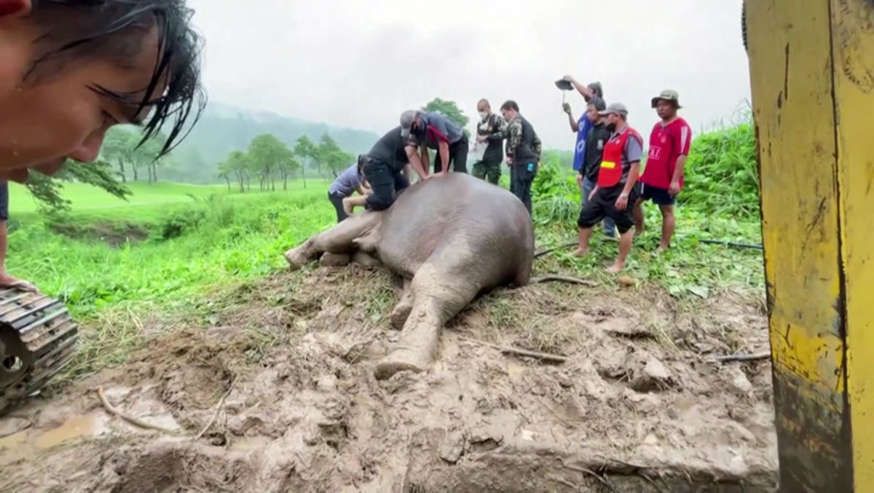
A lot of people from overseas would probably not associate London and the South east of England with Parakeets; but there are thousands of them flying freely in and around the area. Animal buddy Pauline sent me thee pictures of London area Parakeets – they don’t squark Cockney yet but I guess it is just a matter of time.
Talking of Cockney me old China’s, have a butchers at this and learn:
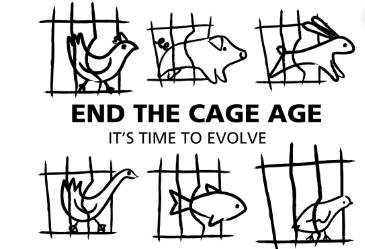
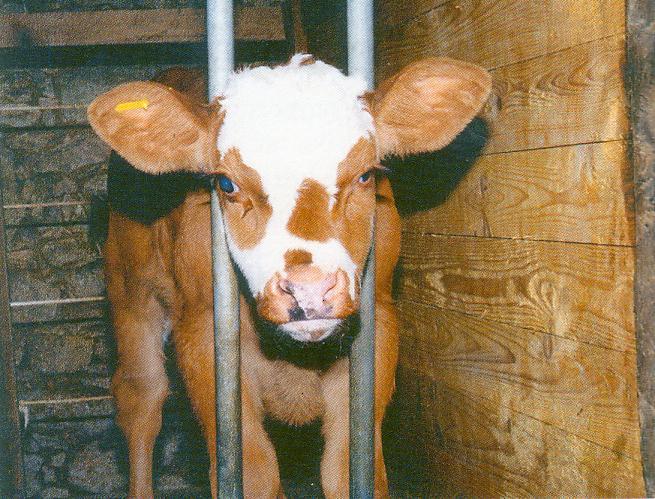
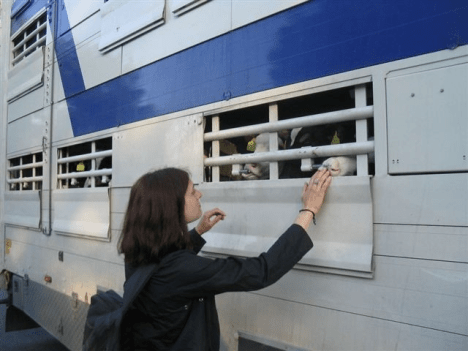
Joking aside, it is conditions like this, temperatures like this, which especially bring home the suffering that must be endured by crated animals all across Europe. It is now time to break the cages and liberate all the animals – you can do this (if you live in an EU member state) by adding your name to the citizens charter to free all the caged animals. Here is a link which provides all the details – watch the video and then take action:
The birds in the garden are free; they can bathe and wash down in stifling conditions like we are currently experiencing. Animals in cages do not have that pleasure; such is the want of man. Speak for them, break the cages and set them all free now. Please sign the petition (EU citizens) or pass to others that can.
So there we were; it was Friday (15/&7) afternoon and very hot (unusually for England – I think they call it ‘Global Warming’ Mr Trump). The lounge doors which go to the back garden were open to get a breeze through. We came in from another room when I was greeted with “Mark, there is a fox in your office !”.
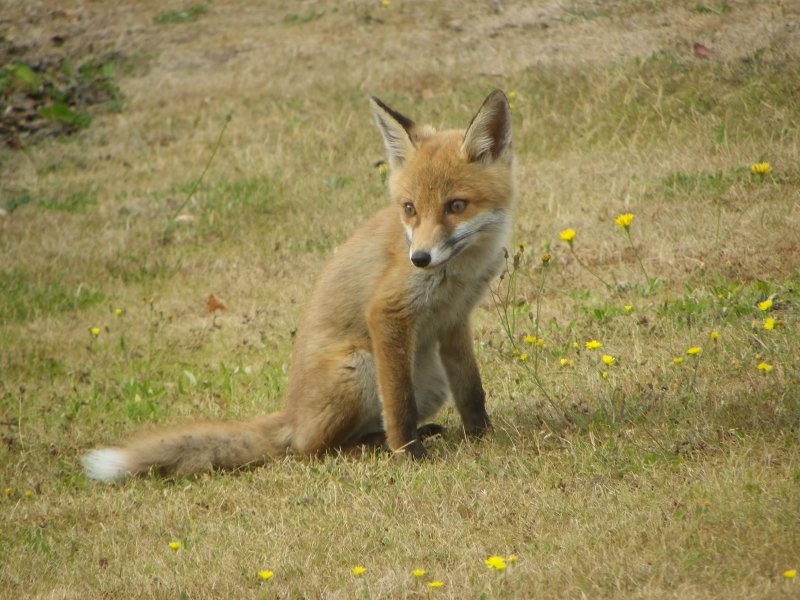
Sure enough, there was; a little cub who I think I had photographed with his mum in the garden a few weeks ago. If it was him, hen he is now out on his own searching round and getting to know places. He must have entered through the open doors at the rear, and then wandered into the office.
Luckily; he was in a fox friend zone which is totally anti hunt; so we laid a trail of fox biscuits indoors for him to eat, and which led back to the garden. He showed no signs of being scared of us in any way (a bit worrying if he meets the ‘wrong’ types); he was brazen and really chilled out; lying on the office floor for a while before making his way back outside.
I quickly grabbed a couple of shots of him both indoors and then outdoors when he was back in the garden. We threw him some extra food, which he took in his mouth and then headed off into the bushes. His mum would have been proud of him if he returned with all that food, but then again, maybe he scoffed it all himself !
He was beautiful and a real delight to see so close up. I have this thing with foxes coming into the building; at our previous place, a wild local fox used to come in, climb the stairs and then chill on the window sill for a while, whilst I was on the computer – you can see him here.
Chill out fox sits on the office window sill.
But, they are wild animals, not pets; and so must be treated that way. No touching or stroking; just watching and enjoying. Then they go and return to the wild where they belong.
WAV Comment – Stick the EU Commissioners and ‘Euro’ politicians into sow cages in Spain, being confined in a cage shut into a shed, suffering conditions and temperatures as they currently have, 44 degrees; lying in their own excrement unable to even turn round; then load them onto a livestock trailer and haul them across Europe, defecating and urinating all over each other for days;
THEN SEE SUDDENLY HOW QUICKLY THE LAWS WOULD BE CHANGED.
Mark.
Do you expect all mother pigs farmed in countries which claim to be world leaders in animal welfare to be able to move freely and express their natural behaviours? To be free from pain and suffering?
Nothing could be further from the truth. We went undercover on pig farms across four EU countries, including suppliers for world-renowned products like Parma and Bayonne Ham. The caged conditions we found were nothing short of hellish.
This new investigation is yet more strong evidence that there is poor welfare in a cage and no animal should be imprisoned behind bars.
In 2019, we exposed the grim reality for thousands of sows in the UK who were forced to give birth and rear their young in farrowing crates. Today’s findings show this same suffering endured by animals across Europe. And, in the EU, many sows are also trapped in cramped stalls for four weeks of pregnancy.
Last year, the European Commission committed to introduce legislation to phase out caged farming. But they’ve been lobbied hard by opponents of a ban, and the support of all EU member states is vital if we really are to free over 300 million animals from cages. Britain is no longer in the EU, but suffering knows no boundaries so we must urge Ministers across the continent to End the Cage Age.
Ending caged farming in the EU is also crucial to set a precedent for other parts of the world. Not least for the UK, where the Government has promised action but so far not even launched consultations on cages for sows and hens.
It’s bad enough that, trapped in a space little bigger than their own bodies, caged sows can barely move. But our investigation also exposed other appalling suffering mother pigs can endure in cages. We saw:
• Sows forced to lie in their own urine and faeces
• Sows performing abnormal behaviours such as repetitively biting the cage bars and chewing without food in their mouth
• Painful and preventable injuries
• Sows unable to interact normally with their piglets
The European Union is closer than ever to becoming the first cage-free region if the Commission’s legislative proposal is implemented. Every year, hundreds of millions of animals – sows, hens, rabbits, calves, quail, ducks, and geese – could have better lives. But we must act now to defeat the powerful factory farm lobbyists who don’t want to End the Cage Age.
On behalf of the 300 million caged animals across the European Union you are giving voice to, thank you.
Mandy Carter
Global Head of Campaigns
SEND THIS MESSAGE TO THE EU AGRICULTURE MINISTERS* – URGE THEM TO LEAD THE WORLD AND END THE CAGE AGE!
Every year, caged farming systems cause needless suffering to around 300 million animals in the EU. From sows kept in stalls or crates so small they cannot even turn around, to rabbits unable to perform a single hop, caged animals are forced to endure cruel confinement in a system that does not respect their natural, behavioural needs.
There is no doubt that cages are cruel. An abundance of robust scientific evidence supports this fact and, as a result, over 140 influential scientists backed the End the Cage Age European Citizens Initiative (ECI). Compassion in World Farming’s recent undercover investigation* is yet more shocking evidence that caged farming cannot meet the welfare needs of sentient beings.
As you know, on 30th June 2021, the European Commission pledged to present a legislative proposal by 2023 to phase out cages progressively and definitively throughout the EU, possibly commencing in 2027.† This came as a response to the largest-ever ECI for animals, which collected a record 1.4 million certified signatures and was supported by more than 170 animal, environmental and consumer protection organisations.
As a resident of the UK, I welcome the Commission’s historic decision, and am pleased that the EU is closer than ever to becoming the world’s first cage-free region for farmed animals. I urge you to support this commitment to phase out cages, and to set an example for the UK Government and governments globally. The cruelty of caged farming cannot continue.
I asked the question (to our contact ‘D’) if the cat was caught in the trap which could have been used normally to trap foxes instead. The answer came back – ‘NO – It was intentional’.
Our informant continued:
In some German states it is legal to kill pets (more than others) – dogs and cats “on the prowl”. That is the hunters’ official excuse, but it is usually 300 meters from the last building, in rural areas, where that is allowed.
In this case the huntress in question argued that on this day there had been pheasants released for their hunting party, and the cat had gone after them. Rubbish.
Happens quite a lot, it seems. Then the hunters apply what is called the three S, “schiessen – schaufeln – Schnauze halten” / “shoot – dig – shut up”.
Pets being shot is not popular, of course, so they usually get rid of the bodies and say nothing.
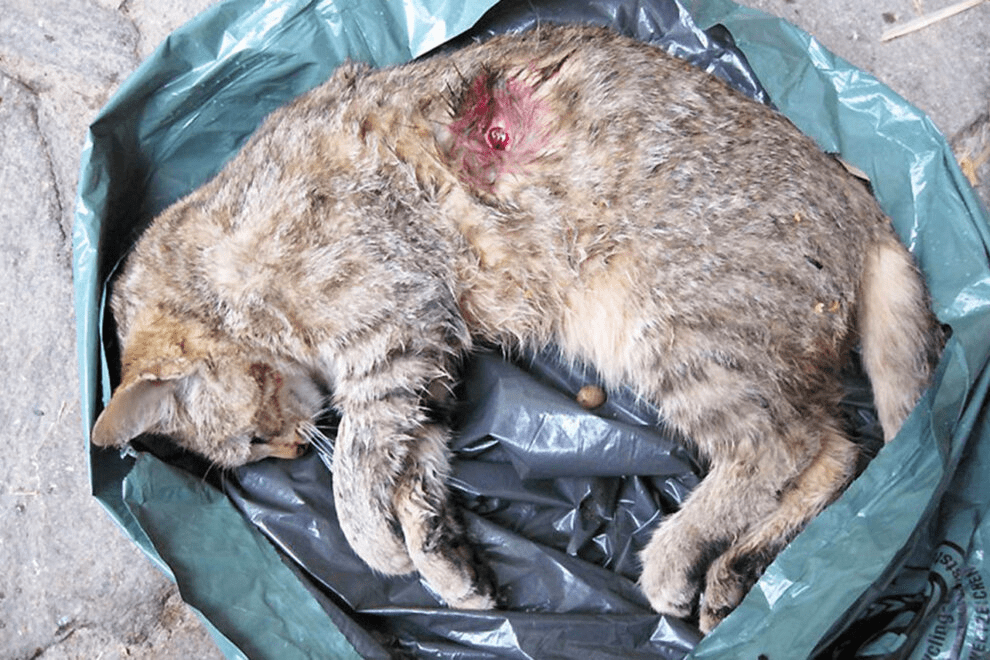
Trio of 3 hunters in Bavaria, near Augsburg, catch and shoot pet cat (with collar, and so someone’s beloved pet). The person doing it is a woman hunter: twice in the face, once in the body (discussing if they should shoot the cat again).
PETA Germany has reported this after receiving the video from a whistleblower, and the district court of Augsburg has issued a penalty order. The case is not closed yet. This apparently happened around Xmas 2020, but PETA only got wind of it this year.
D.
Peta Germany via our contact.
This has been forwarded from a contact/activist friend in Germany.
Video: Hunter shoots cat in cold blood in live trap with pistol
Original article from January 3, 2021
A whistleblower of PETA played us videos of incomprehensible animal cruelty: In it, a hunter brutally kills a cat with several shots from a pistol. The cat is literally tortured to death. Previously, the animal, which according to the information wore a collar and probably had a loving home, had been caught in a so-called live trap. We file a criminal complaint with the Augsburg Public Prosecutor’s Office.
Huntress shoots several times at defenseless cat in live trap – she suffers agony
This was what happened: Probably shortly before Christmas 2020, a group of hunters in a forest area west of Augsburg filmed themselves brutally torturing and killing a trapped cat: The video shows a black and white cat that has fallen into a live trap. It is not known how long the animal had been trapped without food, heat and water at that time.
Instead of releasing the frightened and visibly stressed animal or taking it to a shelter, a hunter starts killing the cat with a pistol while still trapped. After three shots to the animal’s head at close range, the panicked cat is seriously injured in agony, but is still conscious. The agony this cat must have endured is unimaginable.
We at PETA Germany file a criminal complaint against the animal abusers
This cruel cruelty to animals must not go unpunished and must be punished severely by law.
We also demand that the hunting license of the persons present be withdrawn immediately. In addition, we call for a nationwide ban on the shooting of dogs and cats, so that such and many similarly brutal death scenes, which often take place in the context of hunting, do not continue.
Regards Mark
Visitor friends comments – you can view them all on the right hand side under ‘COMMENTS’.
Stacey:
Evil, absolute human trash, a waste of oxygen & space, when she goes to hell, she’ll be the one hunted for eternity, her endless suffering in return for her psychopathy and apathy of others. POS
Visitor friends comments – you can view them all on the right hand side under ‘COMMENTS’.
Jack:
Enough of these “Traditions” animals are always abused and murdered because of religious traditions and others. Human beings are the most savage and low on the scale of evolution.
Spain’s Pamplona bull run returns in full force after 2-year COVID hiatus
7 Jul 2022 Sporting white clothing with red neckerchiefs, hundreds of brain dead don’t give a shit about much at all ‘thrill-seekers’ / animal abusers were chased through the narrow city-centre streets by raging, specially-bred fighting bulls to Pamplona’s bullring where the 800-metre course ends and the animals are then further abused and killed for the pleasure of these tossers.
Thursday’s run of the bulls lasted 2 minutes and 35 seconds. Three runners were taken to hospital due to injuries caused by falls, but unfortunately, nobody was gored, emergency services reported. The first bull run festival in the Spanish city kicked off following a two-year hiatus due to COVID restrictions
I feel it is necessary to show this which has been sent over from Stacey – you know that I always publish her articles when they are sent.
It does relate to Earthling Ed as per the above post, but shows his discussions with a student and strict carnivore at UC Berkley.
Ed says, “In today’s debate I end up in a heated discussion with a UC Berkeley student who defiantly tells me that he won’t give up eating chicken. The debate takes a series of strange and unusual turns and is filled with some very interesting arguments. How do you think it went?”
Going to lay down a few facts not exactly related to EE, but that are important to write.
Veganism is for non-human animals. Just animals, trillions of whom are violently killed YEARLY. Animals are the victims of human supremacy, humans are not the victims of human supremacy. There are thousands of groups, organizations, and movements for humans that EXCLUDE non-human animals, so people wanting to include humans in the ONE movement for animals confuse me:
Advocating for animal liberation, is animal liberation FROM HUMANS.
I’m vegan for animals. Who is vegan for humans?
Most vegans I know also advocate on behalf of humans, note keyword of “direct”, such as “active” below, although veganism has tangential benefits to humans (environment, health), since the focus is animals, these benefits are not required:
Vegans can directly limit human suffering (actively participate in human-focused causes, goals, movements).
Vegans can also NOT directly limit human suffering (not actively participate in human-focused causes, goals, movements).
Vegans canNOT, however, NOT directly limit animal suffering (as vegans, we consume pbd – plant based diets – and reject products tested on animals, entertainment using animals, clothing including animals, etc., and if you do not do these, you’re not vegan).
In other words, ANIMALS ARE THE FOCUS OF VEGANISM. Not humans.
I’m baffled that people want to include humans in the ONE movement that seeks to liberate animals from humans.
As to EE’s video above, at some point humans have to decide to be the intellectual giants they claim to be or continue being the absolutely foolish, greedy, violent killers they are. If we were not talking about the mass, incalculable suffering, and violent death required to violate and kill trillions of animals yearly, this would be parody. It’s embarrassing that humans devolve into comatose comedians when asked to apply ethics to the ones who deserve it the most. SL
In today’s debate I end up in a heated discussion with a UC Berkeley student who defiantly tells me that he won’t give up eating chicken. The debate takes a series of strange and unusual turns and is filled with some very interesting arguments. How do you think it went?
I.D.E.A. Studios launch collection is available HERE
If you find my work at universities valuable, you can become a regular supporter or make a one-off contribution through the following links (thank you!): Earthling Ed Support & Earthling Ed Patreon
Order my best-selling book This is Vegan Propaganda (& Other Lies the Meat Industry Tells You) here: Earthling Ed Book
Organise a speech or presentation at your company/education establishment: Earthling Ed Contact
Take PETA’s Cruelty-Free Shopping Guide along with you next time you head to the store! The handy guide will help you find humane products at a glance. Order a FREE copyHERE
Searching for Cruelty-Free Cosmetics, Personal-Care Products, Vegan Products, or more? Click HERE to search.
Free PDF of Vegan & Cruelty-Free Products/Companies HERE
Want to do more than go vegan? Help others to do so! Click below for nominal, or no, fees to vegan literature that you can use to convince others that veganism is the only compassionate route to being an animal friend:
WAV Comment: Lets face it, we always hear promises from all the Australian governments about how things are going to get better. Australian sheep have a bad time from the minute they are born until they have been live exported to and barbarically slaughtered in the dregs that are other parts of the world. And lets not forget the mulesing which takes place in the Australian farms; – hacking off chunks of flesh without any form of anaesthetic. And now the UK says it is setting up a trade deal with them ! – for example:
Pesticide limits in Australia are 200 times higher than the UK’s. Australia also have 144 licensed pesticides, whereas the UK only licenses 73 of these substances.
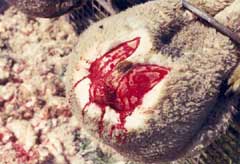
I’m writing to share shocking new footage filmed inside a Victorian shearing shed earlier this year. The video shows a ewe – injured during shearing and badly bleeding – being held between the knees of a shearer, who is crudely stitching up her gaping wound without administering any pain relief. The shearer then mops up her blood with her own fleece.
This is far from the first time cruelty has been documented at an Australian wool operation.
Hours of eyewitness footage compiled by PETA over the years shows shearers hitting sheep with closed fists and electric clippers, kneeling on their necks with their full weight, and slamming them into the floor.
Sheep deserve better, and Australians deserve to know the truth about wool jumpers. Will you please help us speak up for sheep by sharing this exposé far and wide?
Once people know better, they can do better. Sharing information is the first step towards creating a kinder world for animals.
Want to know more about wool? The wealthy wool industry loudly and consistently extolls the virtues of the material, so it can be hard to sort fact from fiction. That’s why we’ve launched a new website, WoolFacts.com, to help consumers and designers develop a deeper understanding of the impact wool production has on animals and the planet.
Veganism is a moral issue – you go there for the animals.
“I came across this story of a truck accident near Manchester, North England …” – Earthling Ed talks about his change from a KFC eater, through vegetarianism, to current Vegan, and being the co director of ‘Surge’, action for animals through a plant based diet.
28 Mar 2022 – Animal rights activist & YouTube superstar ‘Earthling Ed’ Winters joins Rich to make the moral and philosophical case for veganism. To read more about Ed and peruse the full show notes, go here👉🏾https://bit.ly/richroll670