Butchered Alive:Australian cattle killed overseas for leather shoes
Chilling scenes of abuse of Australian animals have been documented at Indonesian abattoirs this year, prompting a fresh set of complaints to be filed against Australia’s live-export industry, but consumers must take action as the government has shown no inclination to lift a finger.
The footage is a harrowing glimpse into the trade that supplies flesh to dangerous wet markets and skin to the global leather industry. Some of the facilities visited by PETA Asia investigators are even part of the Australian government’s Exporter Supply Chain Assurance System(ESCAS), dispelling all doubt about government inaction.
In the same month this abuse occurred, Australian Livestock Exporters’ Council(ALEC) CEO Mark Harvey-Sutton expressed his “full confidence in the standards the Australian industry upholds” (!!)
Watch the footage below and decide if you can say the same. If not, please stop buying leather right now!
Botched Stunning or None at All
PETA Asia investigators visited seven randomly selected abattoirs in Indonesia in April and May 2021 and filed an official complaint.
They found steers and bulls being forced into restraint boxes and shot in the head with captive-bolt guns. The cattle were often fully aware of what was happening to them. They slammed their bodies against the metal chute they were trapped in, in a futile attempt to turn around and escape.
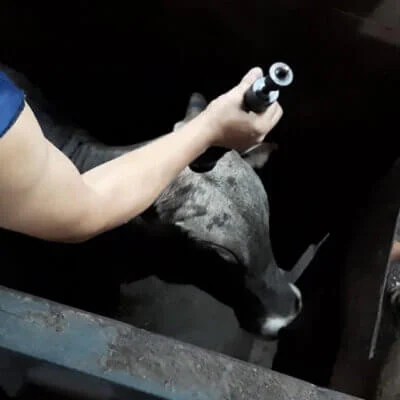
Workers repeatedly failed to stun cows adequately. Clearly still conscious after being shot in the head, one steer was jabbed 64 times in the face and on his torso with a steel rod to try to force him to stand back up so a worker could shoot him again.
Workers also violently twisted his tail until it was broken. In a last-ditch attempt to move the struggling, panicked steer, they pulled on his broken tail a dozen times.
Then there were those for whom stunning wasn’t even attempted at all. Some cattle were simply physically restrained before their throats were slit – which, believe it or not, is a killing method approved by the Australian government.
ALEC boasts on its website that 95% of Australian cattle in Indonesia are now stunned prior to slaughter. But based on what investigators saw, that’s not the case.
They found that 503 people with links to fossil fuel interests had been accredited for the climate summit.
These delegates are said to lobby for oil and gas industries, and campaigners say they should be banned.
“The fossil fuel industry has spent decades denying and delaying real action on the climate crisis, which is why this is such a huge problem,” says Murray Worthy from Global Witness.
“Their influence is one of the biggest reasons why 25 years of UN climate talks have not led to real cuts in global emissions.”
About 40,000 people are attending the COP. Brazil has the biggest official team of negotiators according to UN data, with 479 delegates.
So what counts as a fossil fuel lobbyist?
Global Witness, Corporate Accountability and others who have carried out the analysis define a fossil fuel lobbyist as someone who is part of a delegation of a trade association or is a member of a group that represents the interests of oil and gas companies.
Overall, they identified 503 people employed by or associated with these interests at the summit.
They also found that:
Fossil fuel lobbyists are members of 27 country delegations, including Canada and Russia
The fossil fuel lobby at COP is larger than the combined total of the eight delegations from the countries worst affected by climate change in the past 20 years
More than 100 fossil fuel companies are represented at COP, with 30 trade associations and membership organisations also present
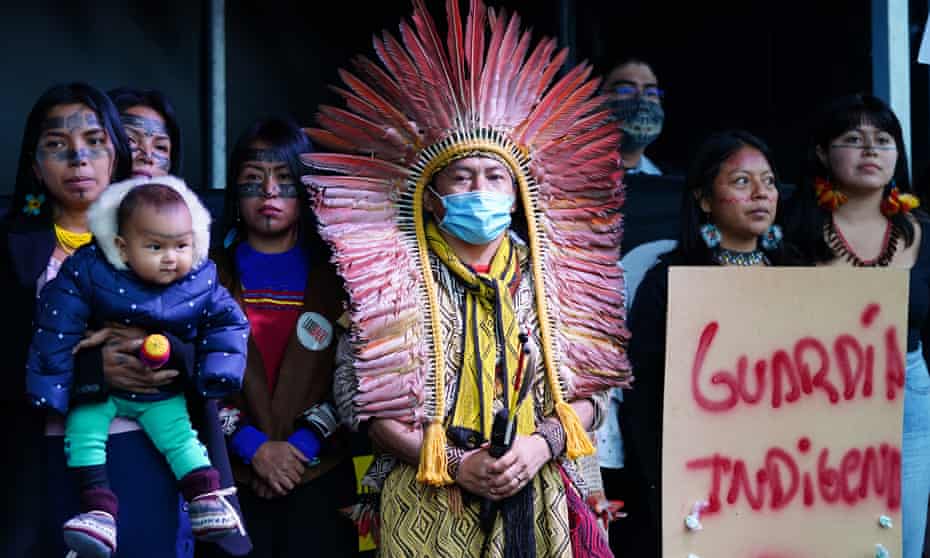
Fossil fuel lobbyists dwarf the UNFCCC’s official indigenous constituency by about two to one
According to Global Witness, IETA is backed by many major oil companies who promote offsetting and carbon trading as a way of allowing them to continue extracting oil and gas.
“This is an association that has an enormous number of fossil fuel company as its members. Its agenda is driven by fossil fuel companies and serves the interests of fossil fuel companies,” Mr Worthy said.
Cop26 legitimacy questioned as groups excluded from crucial talks
Communities and groups say being shut out of key negotiations will have dire consequences for millions
The legitimacy of the Cop26 climate summit has been called into question by civil society participants who say restrictions on access to negotiations are unprecedented and unjust.
As the Glasgow summit enters its second week, observers representing hundreds of environmental, academic, climate justice, indigenous and women’s rights organisations warn that excluding them from negotiating areas and speaking to negotiators could have dire consequences for millions of people.
Observers act as informal watchdogs of the summit – the eyes and ears of the public during negotiations to ensure proceedings are transparent and reflect the concerns of communities and groups most likely to be affected by decisions.
But their ability to observe, interact and intervene in negotiations on carbon markets, loss and damage and climate financing has been obstructed during the first week, the Guardian has been told.
“Civil society voices are critical to the outcome of Cop, but we’ve not been able to do our jobs. If participation and inclusion are the measure of legitimacy, then we’re on very shaky grounds,” said Tasneem Essop, the executive director of Climate Action Network (CAN), which represents more than 1,500 organisations in over 130 countries.
CAN is one of two environmental “constituencies” – loose networks of NGOs including youth groups, trade unions, indigenous peoples, business, agriculture, and gender – recognised by the UNFCCC.
Gina Cortes, a member of the Women and Gender Constituency, representing women’s groups, said they also had to “call out the deep inequities and deep injustices of this Cop”.
“There are thousands of activists who should be here but who are missing and there is a shocking degree of closing space for civil society and frontline voices … it is offensive, unjust and unacceptable,” said Cortes.
In the run-up to Cop26, the UK government had boasted that Glasgow would be the most inclusive summit on record.
In reality, about two-thirds of civil society organisations who usually send delegates to Cop have not travelled to Glasgow due to “vaccine apartheid”, changing travel rules, extortionate travel costs and Britain’s hostile immigration system.
Observers say the situation was most critical during the two-day leaders’ summit at the start of last week, when they were limited to one or two tickets per constituency despite six negotiating rooms operating simultaneously. In addition, work stations, offices and restaurants were also cordoned off, preventing observers from having face-to-face contact with negotiators.
“The level of restrictions was unprecedented,” said Sebastian Duyck, from the Centre for International Environmental Law. “It’s alarming, because the relationships we build at the start of Cop are crucial to the work we do after … the limited participation absolutely undermines the credibility of Cop.”
Indigenous activists on tackling the climate crisis: ‘We have done more than any government’ – video
Access has improved since the ticketing system was lifted, with one observer per constituency now technically allowed in each meeting room – if there’s enough space according to social distancing rules. But their ability to participate meaningfully remains limited.
Observers are particularly concerned about negotiations over carbon trading protocols, as governments and corporations look for ways to achieve net zero commitments using offsets.
“There’s a real risk that decisions made in these rooms will impact human rights in the most dramatic fashion, like we saw happen under the carbon trading mechanism under Kyoto. If we get a bad rule, it’s almost impossible to fix afterwards. The scale of carbon markets means there’s a greater threat to communities,” said Duyck.
This is a huge worry for indigenous communities, who comprise 6% of the global population but protect 80% of the planet’s biodiversity. “Without our voices this risks the creation of rules that will continue to violate human, territorial and spiritual rights of Indigenous Peoples,” said Eriel Deranger, an observer for Indigenous Climate Action.
The UK government points to the unprecedented challenges posed by the pandemic, and says access has been boosted by the new online platform that has so far been used by 12,000 people.
But for some, trying to follow what’s going on virtually, technical glitches have made access a “logistical nightmare”, said Hellen Kaneni, regional Africa coordinator for the international nonprofit Corporate Accountability. “Cop has never been credible but this year it’s much worse, access has been limited in so many ways, it’s horrible.”
Kaneni’s colleague Aderonke Ige from Nigeria, who made it to Glasgow for her first Cop despite the Covid restrictions, said she felt “disappointed and unfulfilled” after failing to get online and being denied access to the meeting rooms and offices of the African group negotiators.
A spokesperson said: “The UK is committed to hosting an inclusive Cop. Ensuring that the voices of those most affected by climate change are heard is a priority for the Cop26 presidency, and if we are to deliver for our planet, we need all countries and civil society to continue demonstrating their ideas and ambition in Glasgow.”
The success of this Cop will be judged over years to come. But according to Nathan Thanki from Demand Climate Justice (the second environmental constituency), the summit’s legitimacy had been seriously undermined by restrictions in access and the way rich countries had used Cop26 to make headline-grabbing announcements outside the UNFCCC’s pledge and review framework.
“It’s impossible to monitor these announcements, which means there’s no accountability to civil society or other countries. That’s the sorry situation at this summit.”
European Parliament AGRI Committee vote fails to promote animal welfare
27 October 2021-News-Eurogroup for Animals
In a disappointing move for animals, the Committee on Agriculture and Rural Development of the European Parliament adopted draft implementation report by Jeremy Decerle (Renew Europe, FR) on on-farm animal welfare.
Contradicts Farm To Fork
The report calls for future EU-wide animal welfare legislation that would be uniformly transposed in all Member States, but falls short of the Farm to Fork (F2F) ambition for a strong, improved animal welfare acquis with a broad revision of all existent regulations and directives.
Concentrates on economic interests of farmers
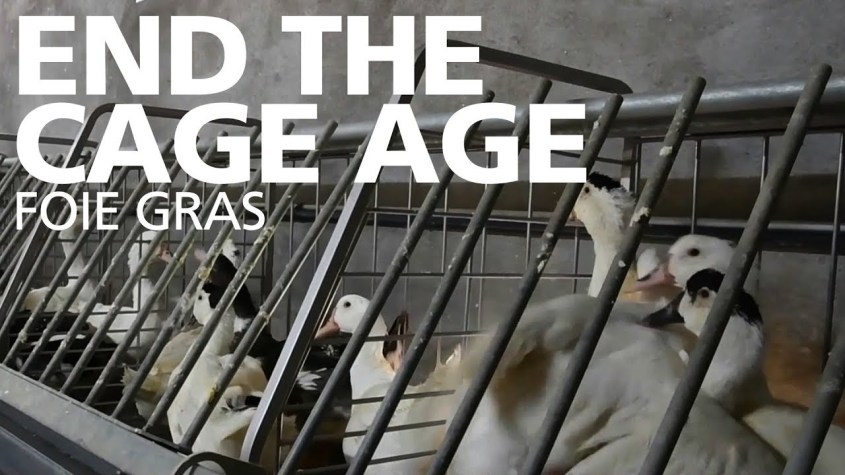
Whil it promotes the European Citizens’ Initiative to “end the cage age” (??), it continuously refers to farmers’ compliance with animal welfare standards as an “extra burden”.
Promotes further cruel production of foie gras
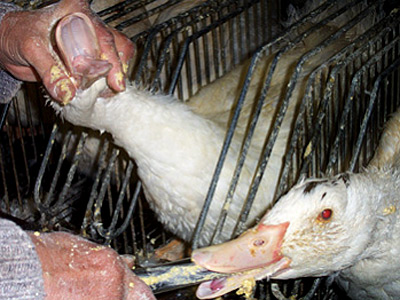
A disappointing amendment downplaying the intensivity and suffering of animals subjected to foie gras production wriggled its way into the report. The amendment claims that foie gras production respects animal welfare criteria (!!)
An overtly contradictory statement considering ducks and geese subjected to foie gras production are force fed and their bodies pushed beyond their biological parameters, resulting in intense pain, fear and suffering.
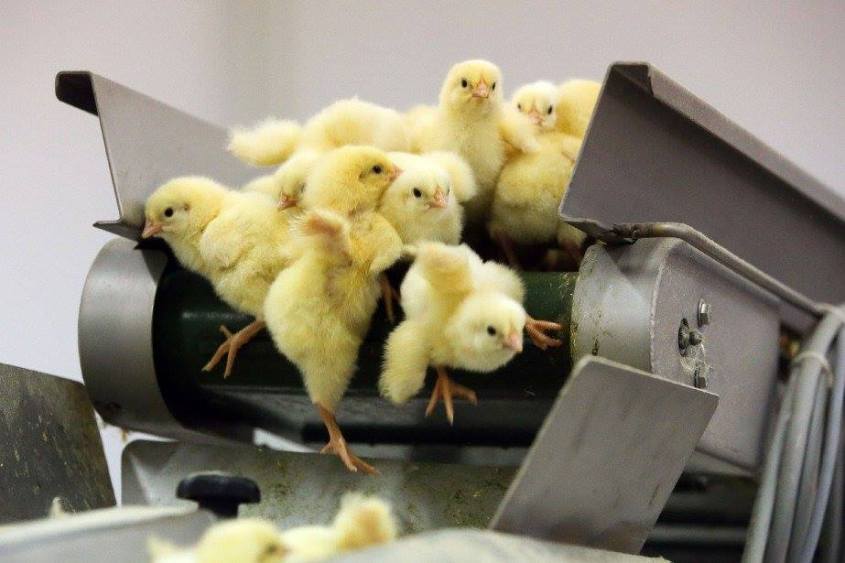
Amendments addressing the tragic practice of killing male chicks were also voted down.
Labelling remains voluntary
Labelling is a fundamental tool to ensure farmers receive fair compensation for improved animal welfare measures on farms and enable consumers to purchase products that align with their animal welfare ethics.
A mandatory “Method of Production +” (MOP+) label across all animal products and including rearing, transport and slaughter is key.
Unfortunately, MEPs decided to let the labelling of animal products remain voluntary, leaving dangerous room for manoeuvre to farmers and the industry.
Despite being a report on “on-farm animal welfare”, it does not go the distance to reflect its title. Instead, it tries to sugarcoat the realities of the changes that truly need to be implemented.
We need farmers to be ambitious and take a main role in implementing the F2F goals. The report will be voted on in plenary, possibly during the December session.
And I mean…What can one expect from an EU Parliament member who is also the chairman of the French agricultural union federation (Fédération nationale des syndicats d’exploitants agricoles)?
Quote: “While it promotes the European Citizens’ Initiative to” end the cage age “it continuously refers to farmers’ compliance with animal welfare standards as an “extra burden”.
What a hypocritical gang this EU is …
On April 15, 2021 the public hearing of the European Citizens’ Initiative (ECI) “End the Cage Age” took place in the European Parliament – we thought great!
During the three-hour meeting, the three EU Commissioners present welcomed the initiative with blah, blah, blah, with confidence that the Commission will govern quickly and positively and that “the initiative is an excellent example of democracy at its best Shape .”
Result: “At some point the Commission will examine whether the proposed legislation will come into force in 2027 !!”
Meanwhile, the Committee on Agriculture and Rural Development is creating its own business; for example deciding that foie gras meets all animal welfare criteria and rejecting amendments to end the brutal slaughter of male chicks.
If meat producers and agro-industry lobbyists occupy the most important positions in this unrestrained apparatus, no one can trust anyone to do something good for the animals
‘Tiger King’ Joe Exotic says he has ‘aggressive cancer’
OKLAHOMA CITY (AP) — The man known as “Tiger King,” who gained fame in a Netflix documentary following his conviction for trying to hire someone to kill an animal rights activist, says he has cancer.
“It is with a sad face that I have to tell you … that my prostate biopsy’s came back with an aggressive cancer,” Joe Exotic, who is being held at a federal prison in Fort Worth, Texas, wrote on a Twitter post Wednesday.
The blond mullet-wearing former Oklahoma zookeeper, whose real name is Joseph Maldonado-Passage, is known for his expletive-laden rants on YouTube and a failed 2018 Oklahoma gubernatorial campaign.
He was prominently featured in the popular documentary “Tiger King: Murder, Mayhem and Madness.”
A three-judge panel for the U.S. Court of Appeals for the 10th Circuit in Denver in July ordered Maldonado-Passage be resentenced to a shorter term, finding that the trial court wrongly treated the two convictions separately in calculating his prison term.
‘Greatest Show On Earth’ circus may return without animals
October 27, 2021
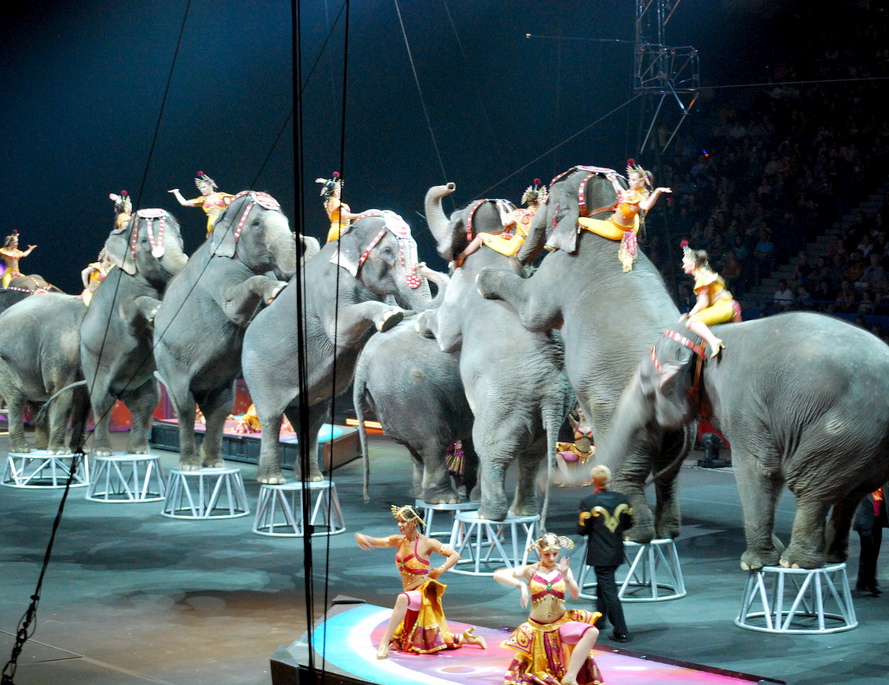
FORT LAUDERDALE, Fla. (AP) — Four years after the “Greatest Show On Earth” shut down, officials are planning to bring back the Ringling Bros. and Barnum & Bailey Circus — without animal acts.
An announcement is expected sometime next year, according to Nicole Zimmerman, a spokesperson for Feld Entertainment Inc. of Ellenton, Florida.
The three-ring circus shut down in May 2017 after a 146-year run.
People for the Ethical Treatment of Animals, which was behind many of the protests, said it is thrilled with the concept of a circus without animal acts.
“The exciting announcement sends a powerful message to the entire industry, something that PETA’s been saying for decades: Cruelty doesn’t belong in the circus or in any other form of entertainment,” the organization told the Herald-Tribune.
PETA and other groups maintained for years that the circus mistreated the animals featured in its shows.
I dont think we have any problem with people enjoying themselves at the circus – as long as there is all the fun but without the animal abuse that has happened in the past, and still continues with some.
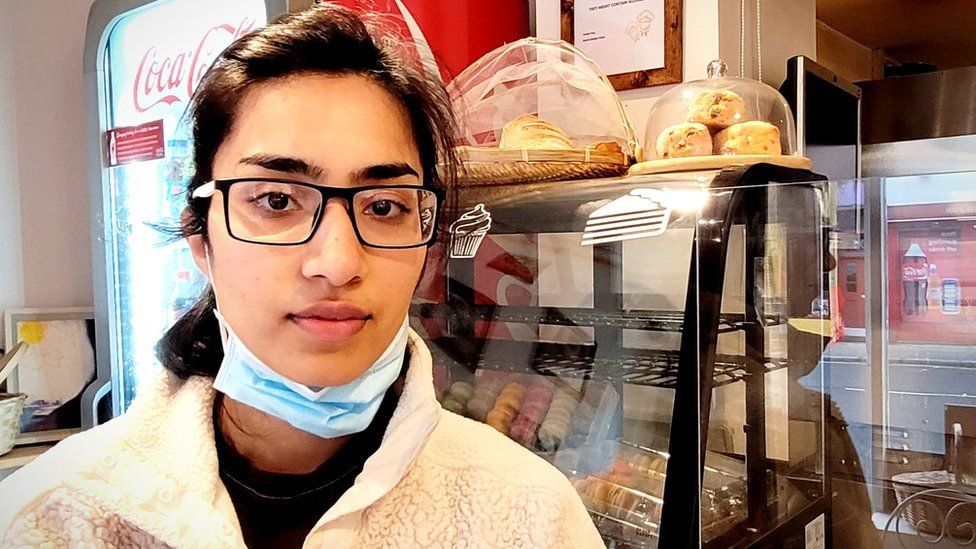
Arouge Salin served cakes and coffee to queues of shivering marchers on Saturday
Arouge Salin has worked at the Brave Bakers coffee shop on Saltmarket for around two months.
It was one of the few businesses in the area that had opted to stay open on Saturday – a move that paid off as tens of thousands of activists walked by.
The 25-year-old was one of three members of staff behind the counter delivering cinnamon twists and hot coffee to shivering customers who had been soaked in the rain.
“It started off quiet, but we had a queue outside the shop until the walk passed – it was non-stop from 15:30 until 18:00, and we normally shut at 17:30.
“We sold out of everything vegan – which never happens. The only thing we had left was our chicken and bacon bake which is usually the first thing to go.
“And we sold so many coffees that our machine jammed. I think people just wanted something warm.”
‘No problems’ with litter
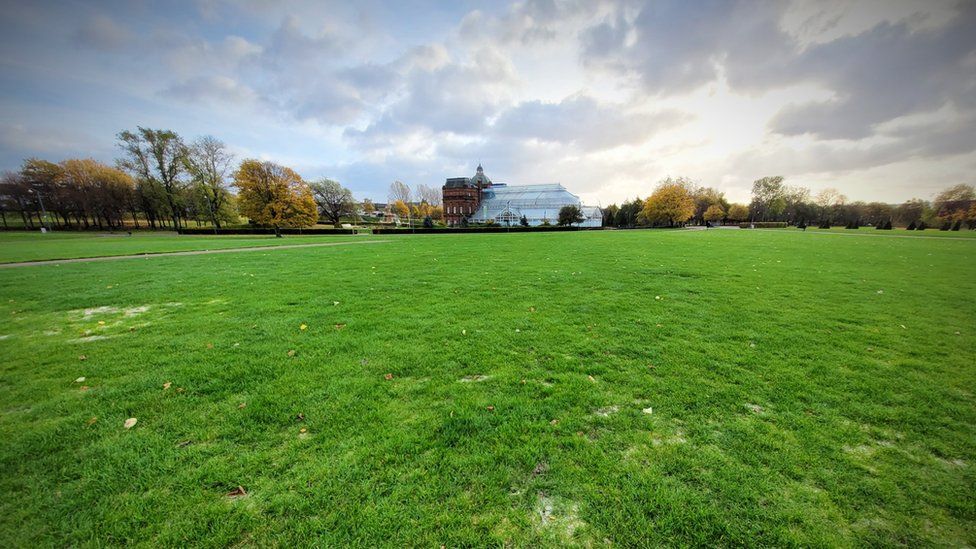
Council crews and event organisers took part in the clean up operation on Sunday morning.
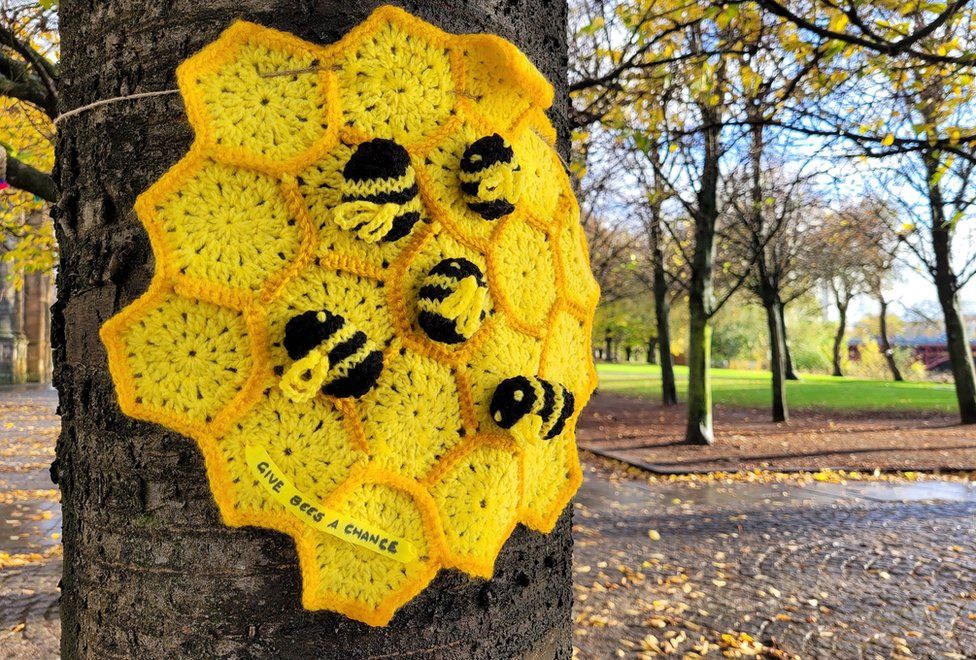
A yarn installation depicting flowers and bees at the entrance to Glasgow Green was removed by the council due to “high winds and wet weather”.
There was also a knitted sign which read “we’re watching you” – a phrase which has appeared on Extinction Rebellion campaign material.
A council spokeswoman said: “It is currently in storage for the owner to collect if they so wish.”
They added that overall, no problem areas had been identified and no “hotspots” were reported.
Glasgow Green on Sunday morning – a huge tribute to the respect of the environmental campaigners – others should take note of this !
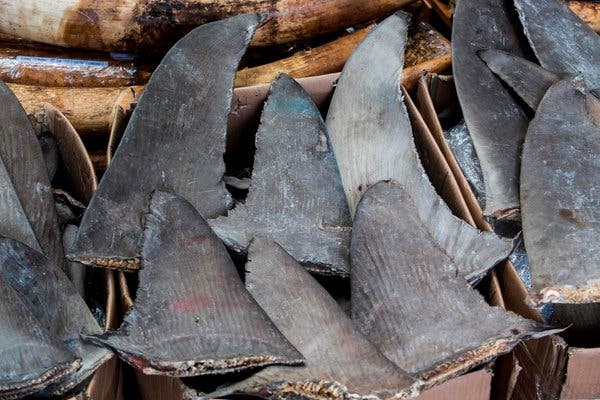
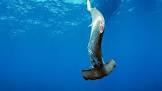
Every year, tens of millions of sharks end up in the fin trade.Credit…Isaac Lawrence/Agence France-Presse — Getty Images
A chance for European citizens to end the shark fin trade
4 November 2021
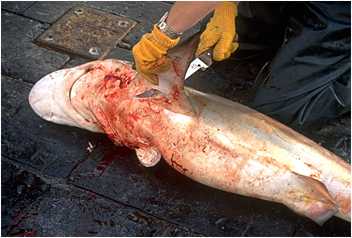
A group of citizens from across Europe have united and demand the end of the shark fin trade in the European Union (EU), so as to increase the protection of sharks. This trade relies on the cruel, unethical practice of cutting the fins off sharks and discarding the animal back into the ocean, oftentimes while it is still alive.
Every year, between 63 and 273 million sharks are killed, and many species are increasingly threatened worldwide. Europe is one of the major players in the global fin trade. Globally, sharks are targeted for their meat and liver oil, but the biggest threat remains shark finning. The steep erosion of shark populations across the globe has severe impacts, as many sharks are ‘apex predators’ and play an active role in maintaining healthy and productive marine ecosystems. Sharks commonly have their fins removed while alive on fishing boats, and are then left to asphyxiate or returned to die in the water.
The ‘Stop Finning — Stop the Trade’ European Citizens’ Initiative began collecting signatures on 1 February 2020. EU citizens have until 31 January 2022 to support the requested change by collecting one million votes to demand the end of shark fin trade in the European Union.
Specifically, EU citizens call to “end the trade of fins in the EU including the import, export and transit of fins other than if naturally attached to the animal’s body”. Should their endeavour succeed, the European Commission could then decide to propose a new regulation to achieve this goal.
Such a new regulation would go one big step further than the current EU legal framework, which aims to reduce the number of sharks fished by requiring — since 2013 and for all EU vessels — that fins remain attached to the carcass of the shark until unloading at port. However, fins can then be separated and traded locally or across the world. Soon after introduction of the regulation, fishing of sharks returned to previous levels. While a steep improvement from the EU’s former regulation, the current regulation still allows fins to be traded across Europe and EU fishers to feed Asia’s strong demand for shark fin soup.In June 2019, Canada became the first country of the G7 group to ban shark fin imports on its territory, and citizens around the world are increasingly requesting the end of such cruel and useless practices. Europe must follow suit.
European citizens have the power to demand that the EU’s decision makers enhance wildlife protection.At a time when the scientific community regularly rings the alarm bell regarding erosion of biodiversity erosion and the risks associated with climate change, we have no choice but to change our production and consumption patterns. It is high time to end the shark fin trade in Europe!
“The fight is not for us, not for our personal wants or needs. It is for every animal that has ever suffered and died in the vivisection labs, and for every animal that will suffer and die in those same labs unless we end this evil business now. The souls of the tortured dead cry out for justice, the cry of the living is for freedom. We can create that justice and we can deliver that freedom. The animals have no-one but us, we will not fail them.”
Barry. Sept 1998
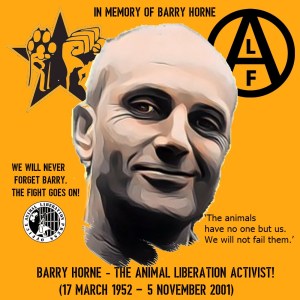
Barry Horne (17 March 1952 – 5 November 2001) The Animal Liberation Activist! Barry’s life- The third hunger strike
I want to go back to that 3rd hunger strike because nothing was ever the same after that.
Barry had gone on this hunger strike with more determination than ever. He’d recently been slammed with an 18 year prison sentence. I remember sitting in court, at his sentencing, and letting out a sigh of relief when the prosecution accepted that he had never intended to endanger or harm anyone but then the judge just carried on regardless with a savagely long sentence.
Barry never took anything lying down and carried on fighting from within prison. He knew that he had the strength and determination to take a hunger strike to its limits if necessary. There would be no backing down on this one unless the goverment delivered on its pre-election promises.
He set out to make a major breakthrough in the institutionalized support of vivisection and he was going to use his own life as the bargaining chip.
Tony Blair had made promises and Barry was simply taking him to task for it. If they ignored his demand to hold a total review of the vivisection industry then his death would be on their hands, to add to the millions of animal victims.
In the infamous catalogue of lies “New Labour, New Life” they promised amongst other things to hold a Royal Commission into vivisection.
For many it was a surprise to see Barry getting involved with politics but once again it soon became clear that he had a much wider vision than that – he wanted to send a clear message out to us – his friends – that in order to fight for animal liberation it was always necessary to make sacrifices and here he was showing that he was prepared to make the ultimate sacrifice.
By the time the hunger strike had reached day 60, the Home Office again agreed to meet with Barry’s representatives.
Barry’s health was rapidly declining, but this time he remained on hunger strike for over a week longer, not believing they were promising anything new.
There was a final communication by fax from Labour MP Kerry Pollard on the 66th day of the hunger strike, promising a parliamentary consultative body.
At this stage Barry became very ill and confused and was moved from York Hospital, where he was surrounded by friends and loved ones, back to the isolation of prison and subjected to normal “A Cat” prison visiting conditions.
Immediately George Howarth, the then Home Office minister responsible for animal experiments, stepped in to tell the media that Barry’s hunger strike had been a hoax and “We have not been negotiating with Barry Horne. Nothing has been offered”.
The Minister always made it clear the government would not give in to blackmail. “There has been no concession, no negotiation, no deal”. Barry never recovered from the effects of that hunger strike and he died because of it.
Nothing was ever heard from the all party animal welfare investigation.
Barry the man/Barry the animal liberation activist
For me there was no distinction between “Barry the man” and Barry the animal liberation activist. He had a wicked sense of humour, a mischievous smile, an incredible level of energy, dedication and sense of self-sacrifice.
He had a kind and gentle heart but also a burning sense of rage towards bullies – be they racist or animal abusers.
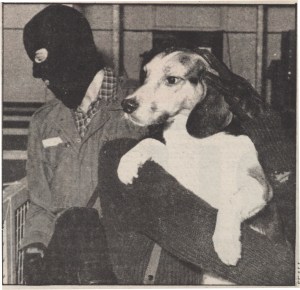
I’ll never forget his input into a raid we did together at Interfauna on St. Patrick’s night 1990, in which 82 beagles and 26 rabbits were liberated.
In any situation that I think back involving Barry he was always up there at the front – not one for hanging at the back. He always had a high level of frustration for those who he felt were not truly committed.
Not that he expected everyone to go down the road that he’d gone down, but what he did expect from people who considered themselves to be animal liberation activists was committment. He had high expectations.
He had that sense of urgency running through his veins. He was sensitive to the fact that animals are dying now – being around him you always got that feeling – it was often un-nerving to be around him.
He once told Nancy Phipps on a visit during that 3rd hunger strike, as his health was failing, that he was scared of dying and that, to me, was a sign of his courage that he could face up to such a fear.
Mike Hill, Jill Phipps and Tom Worby had no control over their deaths but Barry intentionally gave his life for the animals he cared so much about.
He didn’t want to die but now he is dead.
The Viva! Vegan Podcast and Vegan News Minisode – available every month!
In addition to the Viva! monthly Podcast, we now have a Vegan News Minisode!
Together, they’ve got you covered with the latest vegan news, the best celebrity and thought-leader interviews, expert vegan advice and more than a few laughs as well…
Co-hosted by Helen Wilson and Viva!’s head of comms Faye Lewis, each month they’ll be serving up some cracking in-depth chats with some of the most interesting figures in the vegan movement.
Each Podcast episode features a different individual – breaking down their vegan journey and recounting their highs and lows – followed by a candid chat between Helen and Faye on everything from mushroom-based leather alternatives to terrible cooking blunders.
In our Vegan News Minisode, we deep-dive into the world of vegan news and politics in a quick five-minute round-up of newsworthy events in veganism.
No matter where you are in your vegan journey, there’ll be something for you in the Viva! Vegan Podcast and the Vegan News Minisode.
Check out and listen to the Podcasts via this link:
 Workers also violently twisted his tail until it was broken. In a last-ditch attempt to move the struggling, panicked steer, they pulled on his broken tail a dozen times.