Even if it is popular among animal lovers on this day to ponder “OTHER ANIMALS”, and posts of this kind =how terrible is animal suffering = flood the internet , we would like to remind you, that the majority of the “other animals” never had basic rights on this planet even for an hour.
Therefore we dedicate the day to this animal and will try to describe its fate truthfully.
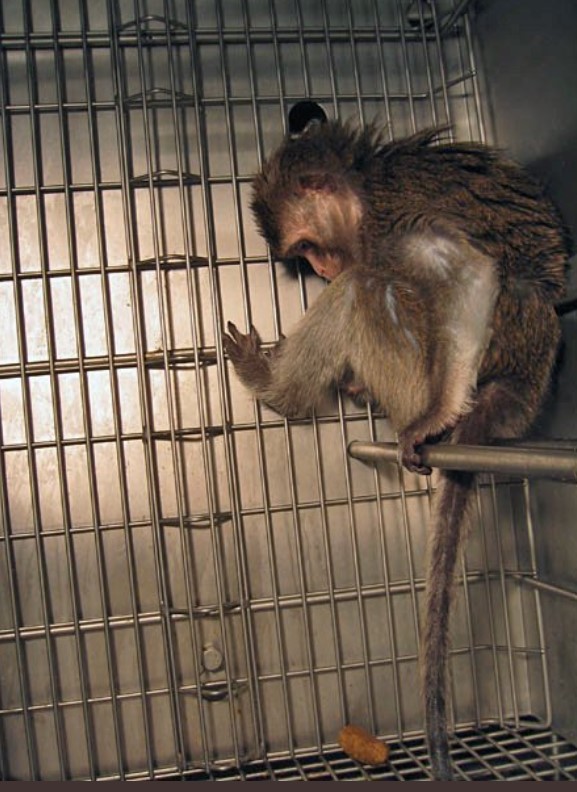
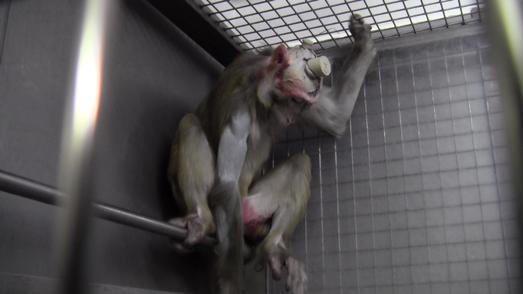
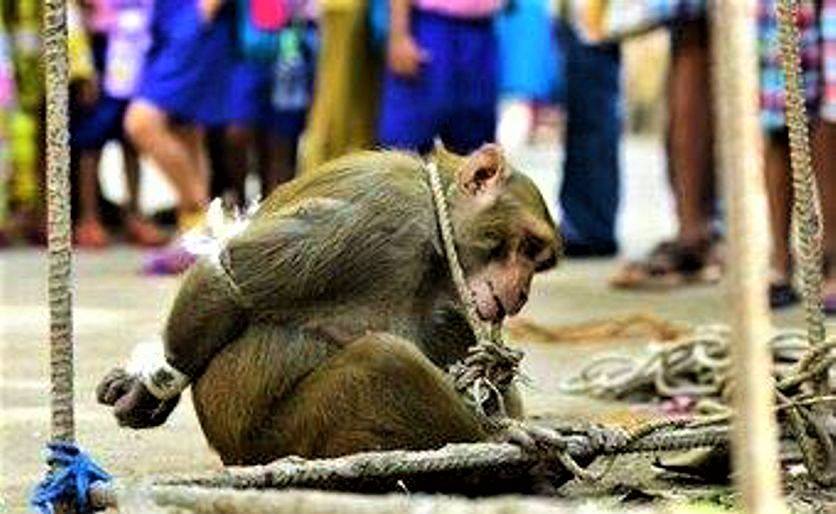
Let’s look at this photo!
It is an enslaved monkey who is forced to perform tricks and is therefore brutally abused beforehand.
No living being deserves to be mistreated like this!
Animals also have feelings and we can imagine how this monkey feels.
Robbed family, lifelong imprisonment and torture of the most brutal kind, an existence as an entertainment convict that no felon has to fear in his country.
He is given the right to life as long as he is useful as a slave.
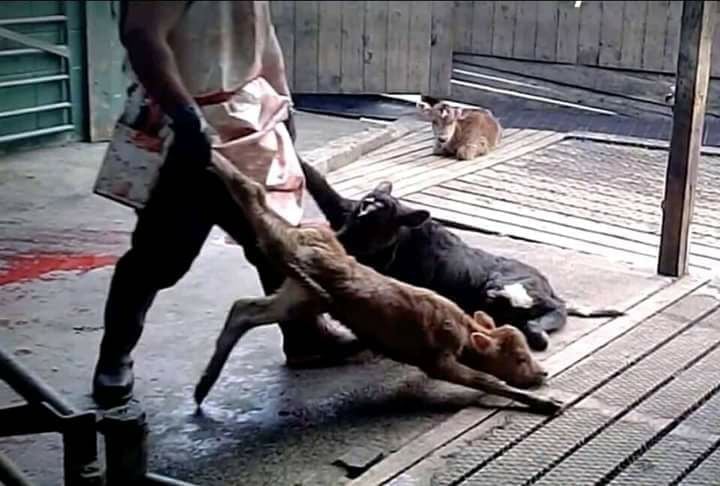
We treat animals like rubbish. Just throw them away or abuse them as we feel like it.
Although animals have just as much a right to their lives as we do.
But animal rights are nowhere in the world. Not a single animal, from mussels to chimpanzees, has a single right. Nowhere.
What animal laws regulate (if they exist at all and at best) is only to limit the power of disposition of humans to animals.
That is why we fight and demand for animals (at least for the thinking, feeling ones among them, i.e. those with consciousness) subjective rights in analogy to human rights, specifically at least the right to life, freedom, integrity; simply because they have a comparable interest rights as we humans have.
And we will not only do it on this one day of the year, but we fight tirelessly and uncompromisingly for basic rights for all feeling, thinking individuals.
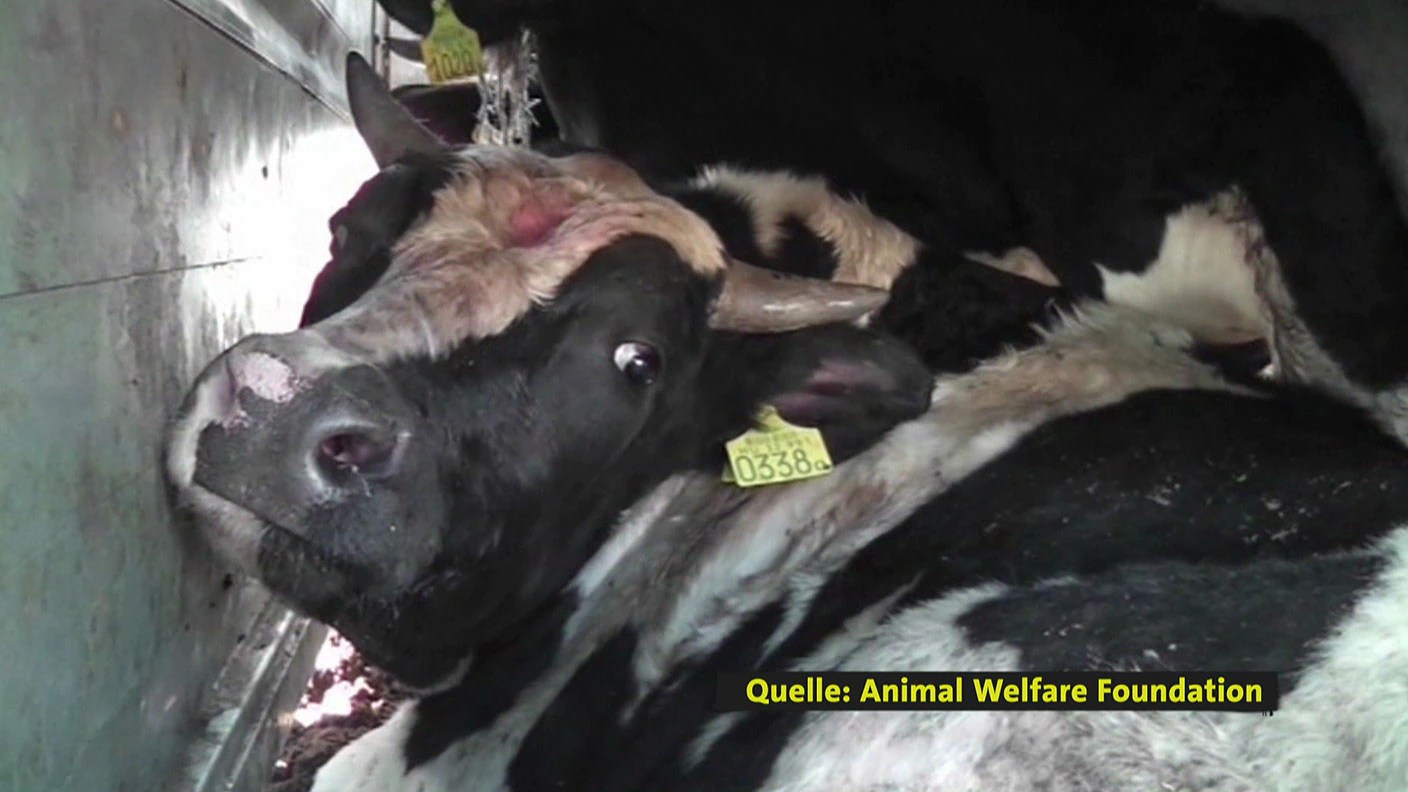
An Animals ‘Angels team accompanies a transport of bull calves to Turkey. The animal children come from the Czech Republic. They are still transported across the Bulgarian-Turkish border in an EU-approved truck.
At the border, however, they are loaded onto a Turkish truck. This truck does not meet the requirements of the EU for animal transport by a long way.
There are neither drinking troughs on board nor sufficient ventilation or litter for the 60 calves.
They have to stand or lie on the bare, slippery metal floor for the next 17 hours.
We accompany the young bulls from the Turkish border to their destination near Kirsehir in Central Anatolia.
During a longer stop, we watch them roll their tongues in despair – a typical sign of hunger.
Many thirstily lick the metal walls of the truck.
The last time they could have a drink at the Turkish border. The last time they ate was in Bulgaria. That was more than a day ago.
Many of the calves have clearly sunken flanks.
Erwin, who previously blinked at us with one eye (his other eye is infected, maybe from a blow or kick in the eye while driving), is now curled up on the dirty floor, exhausted.
Overall, according to our observations and calculations, they are at least 19 hours without water and almost 30 hours without food before they arrive exhausted at their destination the next morning.
There they will be fattened for the next few months before they make their last trip to the slaughterhouse.
This madness has to stop!
Animals are sentient beings – and the EU recognizes them as such.
But only on paper, because Erwin and all the other ‘farm animals’ do not notice any of this on the transports. This transport also shows once again that control outside the EU is not possible.
Who on site is interested in whether the animals are loaded onto unsuitable vehicles? Who will check and punish it accordingly? (!!!)
For us it is clear: The long animal transports to countries outside the EU must finally be banned!
With a detailed report on our observations on this transport, we continue to campaign for this export ban in the EU and its member countries.
Everything about our projects and missions: http://www.animals-angels.de Time to Act: For a better law to protect animals during transport
And I mean…The transports to third countries make up only a small part of the animal transports in the EU.
Because the grievances are particularly large and the images of them are particularly cruel, they keep making headlines in the media.
And yet! The animals also suffer terribly when they are transported within the EU and even within Germany.
Four million cattle, pigs, sheep and goats are transported from the EU to third countries every year and slaughtered there. These include 70,000 cattle from Germany.
For the entire EU, the numbers increase to 360 million pigs, cattle, sheep and goats and four billion poultry – every year!
In Germany, only one percent of all animal transports are checked on the road.
Article 3 of the EU Animal Transport Regulation states:
“Nobody may carry out or arrange for an animal to be transported if the animals could be injured or unnecessarily suffered in the process.”
Everything fits on paper!
The EU legislation has no time limit for Animal transport. With certain breaks, animals are allowed to go endlessly
be transported.
For horses and pigs, for example: 24 Hours of travel – 24 hours break in a supply station – 24 hours of travel – etc
That might still be bearable if the animals had as much space as in a stable.
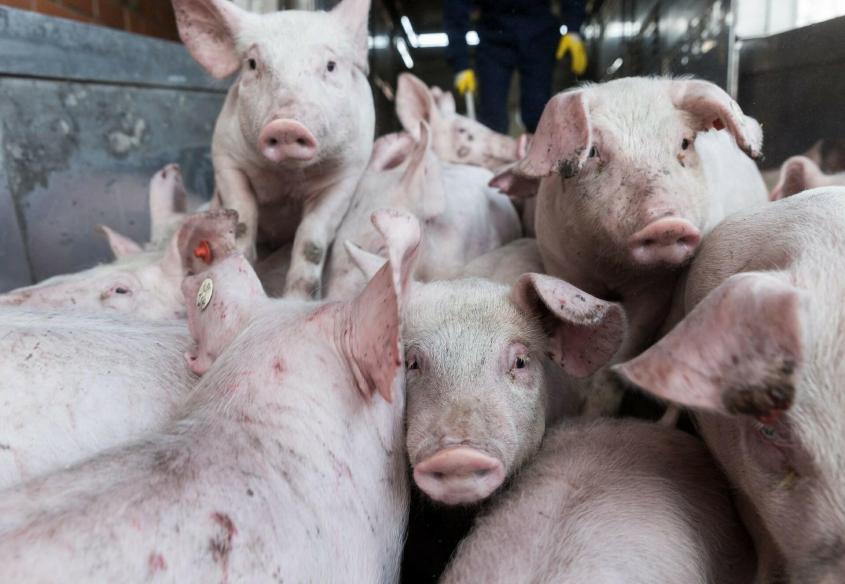
But a full-grown fattening pig has to get by on half a square meter in a truck; 1.6 square meters are provided for a cattle.
Animal welfare organizations have been calling for the requirements to be tightened and the transport time to be strictly limited to eight hours for years.
We still remember the 1.2 million votes of EU citizens for the 8hours campaign in 2014.
But the EU Commission has so far shown no willingness to realize it.
We have had anger about animal transport with Brussels for at least 10 years.
It is too naive to believe that it can be done with good words and showing them what is going on.
Those responsible know exactly what is going on during animal transport – they just don’t care.
It is an incredible crime, it is barbaric to treat animals like that in the 21st century and to preach an animal transport law that is not even worth the paper.
Worse still, we are allowing an incompetent, disinterested oligarchy to work in the service of the meat and dairy industry and constantly refuse to respect EU citizens’ desire for better animal welfare.
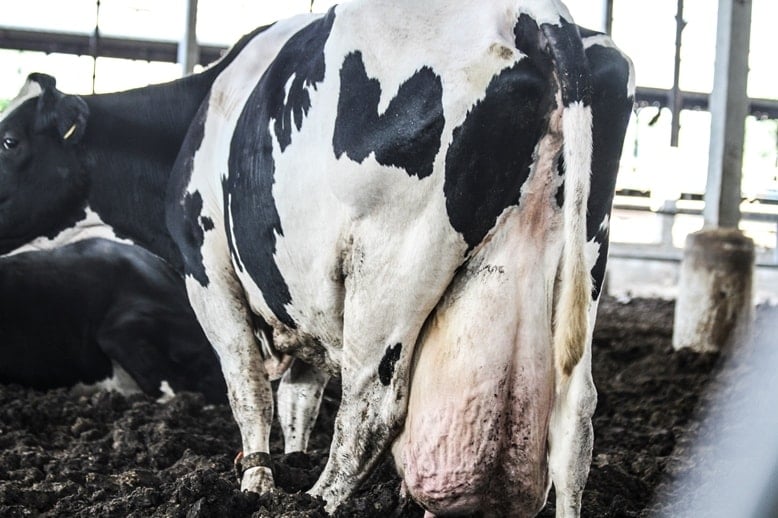
According to evolutionary history, the modern human has lived on this planet for about 200,000 years and has only been consuming dairy milk for the past 8,000 to 10,000 years. Hence, consuming dairy milk is not instinctive behavior nor it is essential to our well being.
This begs the question – who was the brilliant ancestor of ours that saw a cow’s udder, licked their lips, and started suckling?? And why did the others join?
Relative to human existence, the history of milk is considerably short – yet it is truly riveting. Power, corruption, greed, mass manipulation—all are present in the evolution of milk in our modern-day society.
Thanks to the bizarre thinking of that early human, most of us are guzzling down a substance not meant for human consumption. It’s time to leave cow’s milk to the textbooks, and of course, to baby cows.
Fast-forward through the evolution of lactase persistence in European regions (yes, all early humans were lactose intolerant past their toddler stage), domestication of dairy cows, the invention of cheesemaking, millions of people who died from milk-borne illnesses prior to the invention of pasteurization (a fourth of all food-borne illnesses in the US were attributed to cows’ milk prior to the early 1900s), and the invention of the glass milk bottle, and we find ourselves in 1922 with the seminal passing of the Capper-Volstead Act
It wasn’t until the 1950s that skim milk received some commercial attention, though this was in the form of a dry, powdered, ‘just add water!’ mix.
As awful as instant milk powder sounds today, we can’t blame our grandparents – instant was all the rage back then.
The industry also had plenty of skim milk to get rid of, as much of it was leftover from WWII when dry milk powder was used as a relief food. To chisel down this surplus, the industry employed skilled marketers to position skim milk as a weight-loss food.
Milk dealers received backing from physicians to pedal this product as a health food, and by the 1950s, skim milk had transformed from a waste byproduct to a trendy weight loss beverage mostly consumed by affluent society
In reality, farmers just need a way to get rid of (and profit of off) the skim milk they had made during the war effort … which tends to be a theme in milk’s history: made too much? Turn to clever marketing.
Let’s hop back to WWI – the global event that catapulted America’s century-long milk surplus into existence.
The US government started sending canned and powdered milk to soldiers overseas, and dairy farmers responded by ramping up production.
They invested in the latest equipment and even abandoned other forms of farming to dedicate their work to the war effort.
While the war ended, the milk production did not – creating a surplus and dangerously low milk prices. Throughout the 1930s, dairy farmers staged several strikes and unionized to demand a fair price for their milk. To appease these farmers, the government created federal programs to artificially drive demand.
The first of these programs included the 1940Federal Milk Program for Schools and federally subsidized milk advertising under the Works Progress Administration. In 1946, President Truman passed the National School Lunch Act, which mandated each lunch include between one and a half to two pints of whole milk.
Tennis legend Venus Williams detailed the extent of her health transformation since adopting a vegan lifestyle a decade ago.
Ditching meat and dairy helped her athletic performance and enabled her to better cope with an autoimmune disease affecting her joints, she told Insider.
‘Plant-based definitely changed my life’
Williams, who was once world number one in the sport, said her plant-based diet made her skin ‘amazing’.
Furthermore, it helped immensely after she was diagnosed with autoimmune disease, Sjögren’s Syndrome.
As it causes joint pain and fatigue, the diagnosis threatened her future as an athlete.
She said: “Living with an autoimmune disease, things can get a little tricky and you can be on loads of medicine, and that’s not something that I want to do.
“So to be able to control as much as I can, what’s happening in my body, my inflammation levels, through what I eat – is a godsend.”
Venus Williams
It’s not the first time the iconic Olympian and Grand-Slam champion has spoken out about the host of benefits that come with switching to plant-based.
Upon launching her own vegan protein shake company Happy Vegan, she said she needed to ‘take back control’ of her health.
‘Happy Viking was created to fuel your inner fighter, your inner Viking, while feeling happy and satisfied about what you put in your body’, she told Insider.
Moreover, she is an investor in the vegan grocery store, PlantX.
Vegan ‘junk food junkie’
Williams is a self-confessed ‘junk food junkie’, adding: ‘I’ve never met a French fry that wasn’t vegan’. It can be difficult traveling for tournaments and planning meals around it.
Moreover, there is a lot of processed vegan ‘junk food’ out there, she explained.
Williams said: “I’m definitely not a robot. You can reward yourself and have fun eating as well.
“There are so many more athletes doing it and sometimes they ask me how to do it. So, I tell them, ‘Hey, sometimes you just have to have some pie.”
Massive Pyeongtaek dog farms are under surveillance by animal rights group Watchdog!
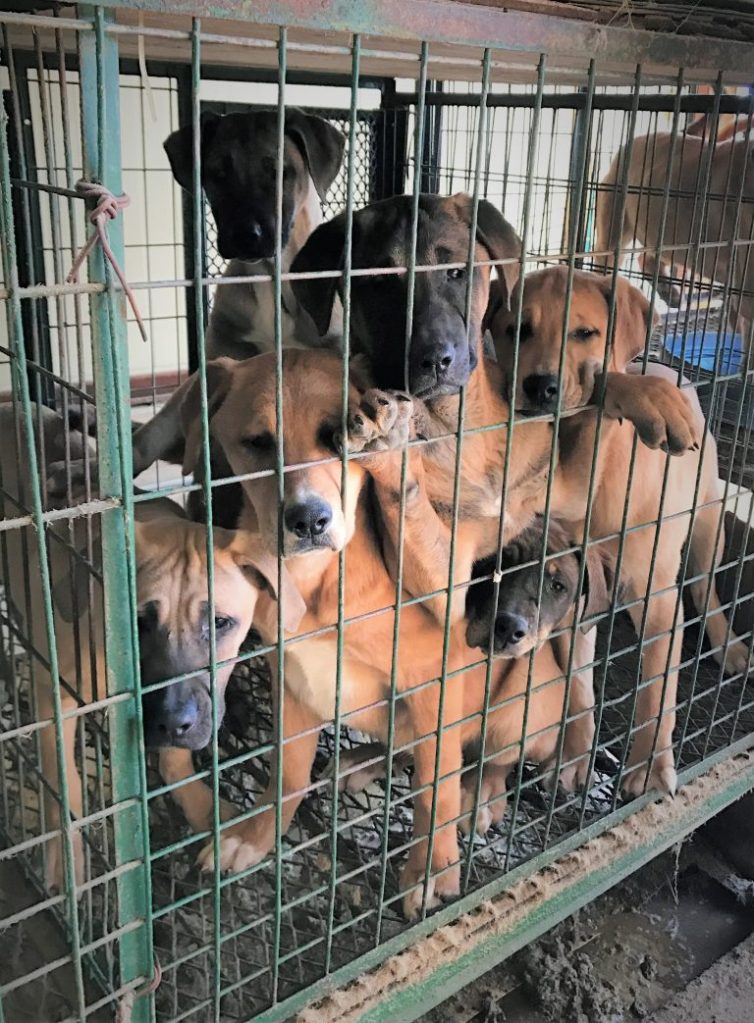
On both sides of the road in Pyeongtaek, Gyeonggi-do province is a dog farm complex large enough to potentially hold 10,000 dogs! Today, Watchdog is at that huge, industrialized dog farm complex, which has been operating for decades and never before been exposed by anyone.
The vicious dog farms in this complex have gone so far as to divide the normal size raised wire dog cages into thirds, making the cages even smaller and more tortuous for the dogs. Tosa dogs, bred in these raised wire cages the size of a plastic dog carrier, barely had room enough to even turn around.😭
Watchdog will be filing civil complaints against the dog farms that have the capacity to hold 10,000 dogs (an annual capacity of 30,000 dogs). Watchdog is committed to shutting these farms down!
Watchdog members are currently serving on a volunteer basis. The goal of the organization is to raise enough donations on an ongoing basis to enable them to hire full-time paid activists to expand and carry out their vision of the complete elimination of dog farms and slaughterhouses. With a dedicated full-time paid staff, Watchdog will be in a position to accomplish even more than they are currently doing.
Click HERE to see some of dog farms and dog slaughterhouses shut down by Watchdog.
Operations like this are only possible thanks through donations to CARE. Please help them continue their important work of shutting down the dog meat industry in South Korea by donating today. Thank you!
The organization “Doctors Against Animal Experiments” in a report on the vote of the EP against animal experiments was delighted and calls this news (caution: no decision) a historic step.
“The European Parliament voted on September 15, 2021 for a comprehensive plan to phase out animal testing The EU Parliament (EP) has passed a resolution calling on the EU Commission to present an action plan to get out of animal testing.
The resolution was passed by an overwhelming majority of 667 votes, 4 against and 16 abstentions. The nationwide association “Doctors Against Animal Experiments” is delighted “
Responsibility for the action plan should not lie in the hands of a few, but a high-level task force should be set up, which brings together various Directorates-General of the Commission and EU agencies as well as involving the Member States and relevant stakeholders. Targeted promotion of animal-free methods and training on these are also part of the requirement.
While the EP recognizes that the EU is striving to reduce and “refine” animal testing, an active, coordinated approach to reducing and ultimately eliminating animal testing has so far been totally lacking. With the request, the EP wants to actively promote the withdrawal from animal experiments.
The umbrella organizations Eurogroup for Animals and European Coalition to End Animal Experiments, of which Doctors Against Animal Experiments is a member, as well as Cruelty Free Europe, Humane Society International and PETA, which together unite over 100 member associations in Europe, have campaigned for the resolution and are calling for it now from the EU Commission to give it the highest priority.
The majority of EU citizens want to get out of animal testing.
This is also shown by the current European citizens’ initiative “Save Cruelty Free Cosmetics – For a Europe without animal testing”, which has already collected over 120,000 signatures within just three weeks.
“The vote in the EU Parliament is a historic moment for the anti-animal experimentation movement,” said Dr. med. vet. Corina Gericke,Vice-Chairwoman of Doctors Against Animal Experiments.
“The call from European citizens to phase out animal experiments and move on to research that is relevant to humans was heard. In addition to protecting animals, new advanced research systems are, above all, essential to achieve the Union’s environmental and human health objectives. With today’s vote in Parliament, we are making progress on all three fronts, ” concluded Gericke.
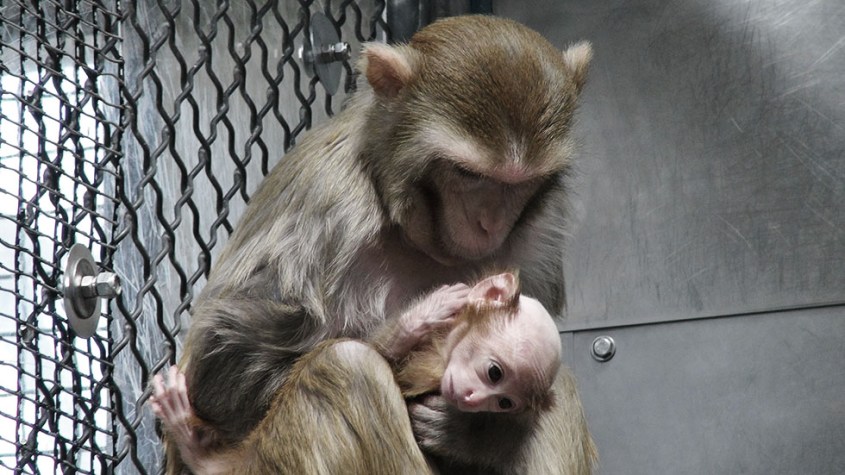
Almost ten million animals are “consumed” in animal experiments in EU laboratories every year – monkeys, dogs, cats, rabbits, rats, mice and animals of many other species.
In addition, there are around 12 million animals that are killed as “excess”, mostly because they do not have the desired genetic modification. This enormously high number has hardly changed in the last ten years.
And I mean…one thing must be clear: the EU Commissioners are not elected by EU citizens. Each of the 27 Member countries proposes its representative and, depending on the case, it is accepted.
The members of the EU Parliament are elected, but unfortunately have no executive power. Only the EU Commission has that, according to the statutes.
It can then decide on a proposal from Parliament whether it wants to comply with the request or not. The only thing the Commission is obliged to do is to justify its decision in any case.
We remember…The Danish EU parliamentarian Dan Jørgensen initiated the 8hours campaign and collected well over 1.1 million signatures by the beginning of 2012to limit the transport times of farm animals to a maximum of 8 hours.
At the same time, 395 EU parliamentarians and thus the majority of EU parliamentarians signed the corresponding written declaration 49/2011.
When the list of signatures was presented by the representatives of European animal welfare organizations and EU parliamentarians on June 7, 2012, Dalli (the then European Commissioner for Health and consumer protection) promised for 2014 a new EU bill for the protection of animals on transport.
Although his statements were recorded by a camera, Dalli distanced himself completely from his statements a short time later.
The member states have shown themselves to be unable and unwilling to push through this campaign, and the EU Commission, with its executive power, had the right to decide again what the lobbyists of the animal transport industry wanted.
This makes one thing clear: in the Monster EU, decisions are not made democratically, and when it comes to animals, those who were not democratically elected decide their fate.
We are also happy about the resolution of the EU parliamentarians to abolish animal experiments.
And we remain optimistic that by August 2022 the petition will not only have over 1 million votes (which would force the EU Commission to a legal act) but also act as a strong means of exerting pressure against lax decisions by lax commissioners
From the experience of the past, however, we should have already learned that positive results unfortunately cannot come only from good-willed people, but rather from fighting and working against those who do not respect the will and the voice of these people, although they are obliged to do so according to democratic rules.
Reuters reported on September 27, 2021, “South Korea’s President Moon Jae-in said on Monday there might be a need to prohibit dog meat consumption amid debate over the controversial practice and growing awareness of animal rights.
While no longer as common as before, dog meat is eaten mainly by older people and is served in some restaurants and can be bought at specific markets.
Moon made the remarks after being briefed by Prime Minister Kim Boo-kyum on efforts to improve the handling of abandoned animals and a mandatory registration system for dogs.
“After the briefing, he said time has come to carefully consider imposing a dog meat ban,” Moon’s spokeswoman Park Kyung-mee said in a statement.”
This is great news and gives us hope that perhaps finally changes will come and we will see the end of the horrific dog meat industry in South Korea. This is a sign that the Korean government is starting to feel the pressure from many decades of campaigns and hard work by animal advocates both in and outside of South Korea to end the shameful and cruel dog and cat meat cruelty.
However, while we celebrate this good news, this is not the time to slow our campaign and lose momentum.
Unfortunately, we have heard similarly encouraging news in the past, with few actual results. For example, while he was campaigning for the Presidential elections, Moon Jae-In made a campaign pledge to strengthen animal welfare.
But as President, he has done nothing to address the dog meat issue. It now seems like he may have suggested reforming the dog meat industry as a way to appeal to a domestic and international population which has become increasingly concerned with the cruelty to dogs and cats in South Korea. Regardless of his actual intentions, considering he will only be in office until May 10, 2022, at this point it is obvious that there is very little time remaining for him to actually bring the end to the dog meat consumption.
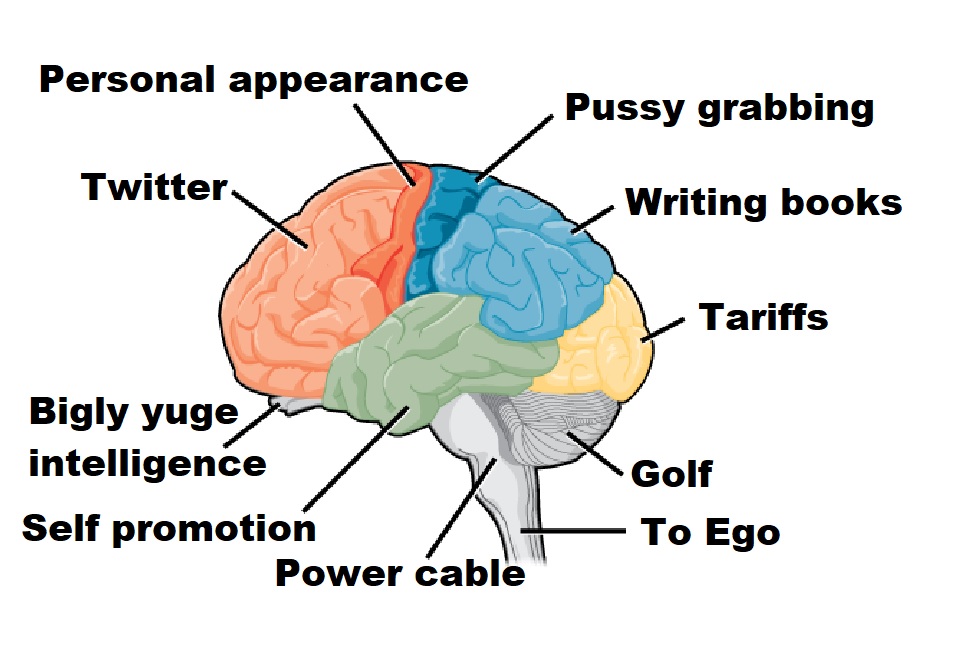
WAV Comment: So now the ex, one off President is also a Neurologist as well as a golf player. Much could be said about him and ‘brain cells’, or a lack of; but we will keep our opinions to ourselves about this.
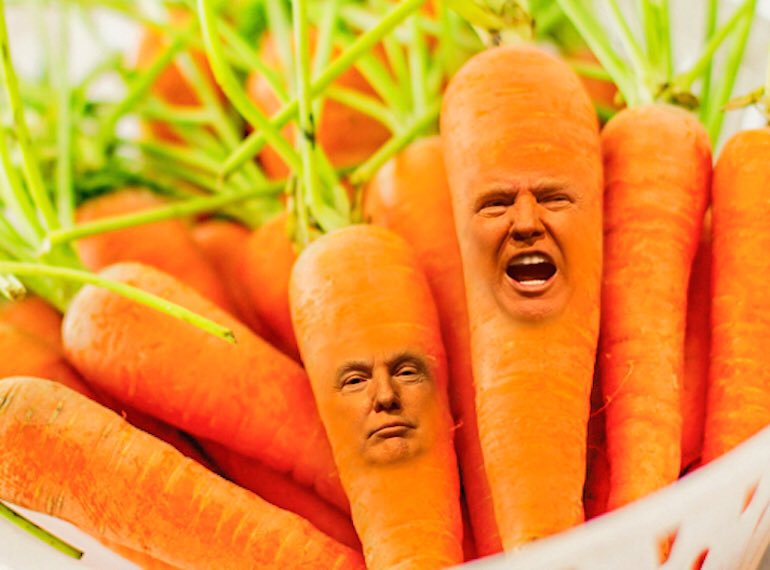
Trump – going vegan loses brain cells:
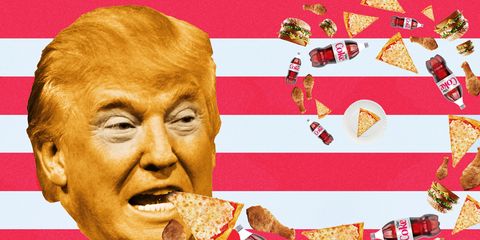
‘If I lose one brain cell, we’re f***ed’: What Trump said when Stephanie Grisham suggested he go vegan for charity because it ‘screws with body chemistry’
Former President Donald Trump apparently thinks a meat-free diet impairs a person’s cognitive function, ex-White House Press Secretary Stephanie Grisham claims in an excerpt from her new tell-all book published Friday.
He told her that switching to a vegan diet ‘messes with your body chemistry’ and feared it would make him lose ‘brain cells.’
Great American Food
In 2019 he was widely mocked for providing the Clemson University Tigers NCAA team with ‘great American food’ to celebrate their victory – which included McDonalds, Wendy’s and Domino’s served with formal White House silverware.
He ran into trouble over his diet a short while later in 2020, during a February trip to India. Vegetarian Prime Minister Modi was planning to serve a meat-free dinner.
One White House source told CNN at the time, ‘I have never seen him eat a vegetable.’
Read it all; Dim Wit vegans may have cognitive problems with clicking on the following link; but please try:
WAV Comment: This wonderful news, and we send congratulations to our animal friends at KARA (Korean Animal Rights) and all other campaigners who have worked tirelessly and shown endless tenacity in their work to help suffering animals.
This bill should now allow a lot more to be done in the defence of animals rights.
Thanks to everyone; global supporters; who have taken actions in the past – this is your victory.
As we said recently, with elections inn S. Korea next March, politicians need to get the message – you vote for them; and they can be dismissed as well as re elected if they do the things you aim for.
This is a scenario which applies globally; and in the end, often makes long fought campaigns end in legislative reality; as we can see here.
Keep up the pressure on your issue(s) and continue to fight the fight – in the end success will come.
Regards Mark
——————————————————–
Cabinet passes revision bill to grant legal status to animals
The Korea Herald (by Yonhap) News reported on September 28, 2021, “The Cabinet approved a revision to the civil law Tuesday that would grant animals legal status as individuals with lives that deserve to be protected.
The revision was proposed by the Ministry of Justice in July to add the new clause, “animals are not objects,” to Article 82 of the Civil Code.
Currently, animals are identified as “an object that takes up space” and are not separated from inanimate things, so animal abusers have been punished only for damaging property if they face a penalty at all.
The revision came after social consensus was reached on the need to improve animal protection amid a steady rise in the number of companion animals and heightened awareness of animal welfare. It will be submitted to the National Assembly Friday for a vote on its passage. The ministry expects relevant laws to get tough on animal abuse and mistreatment once the revision comes into force.”
ALSO:
SEOUL, Aug 19 (Reuters) – Jin-hui, a cream-coloured Pomeranian, was buried alive and left for dead in 2018 in the South Korean port city of Busan.
No charges were filed against its owner at the time, but animal abusers and those who abandon pets will soon face harsher punishment as South Korea plans to amend its civil code to grant animals legal status, Choung Jae-min, the justice ministry’s director-general of legal counsel, told Reuters in an interview.
The amendment, which must still be approved by parliament, likely during its next regular session in September, would make South Korea one of a handful of countries to recognise animals as beings, with a right to protection, enhanced welfare and respect for life.
The push for the amendment comes as the number of animal abuse cases increased to 914 in 2019 from 69 in 2010, data published by a lawmaker’s office showed, and the pet-owning population grew to more than 10 million people in the country of 52 million.
South Korea’s animal protection law states that anyone who abuses or is cruel to animals may be sentenced to a maximum of three years in prison or fined 30 million won ($25,494), but the standards to decide penalties have been low as the animals are treated as objects under the current legal system, Choung said.
Once the Civil Act declares animals are no longer simply things, judges and prosecutors will have more options when determining sentences, he said.
The proposal has met with scepticism from the Korea Pet Industry Retail Association, which pointed out there are already laws in place to protect animals.
“The revision will only call for means to regulate the industry by making it difficult to adopt pets, which will impact greatly not only the industry, but the society as a whole,” said the association’s director general, Kim Kyoung-seo.
Choung said the amended civil code will also pave the way for follow-up efforts such as life insurance packages for animals and the obligation to rescue and report roadkill.
It is likely the amendment will be passed, said lawmaker Park Hong-keun, who heads the animal welfare parliamentary forum, as there is widespread social consensus that animals should be protected and respected as living beings that coexist in harmony with people.
Animal rights groups welcomed the justice ministry’s plan, while calling for stricter penalties for those who abandon or torture animals, as well as a ban on dog meat.
“Abuse, abandonment, and neglect for pets have not improved in our society,” said Cheon Chin-kyung, head of Korea Animal Rights Advocates.
Despite a slight drop last year, animal abandonment has risen to 130,401 in 2020 from 89,732 cases in 2016, the Animal and Plant Quarantine Agency said. South Korea has an estimated 6 million pet dogs and 2.6 million cats.
Solemn with large, sad eyes, Jin-hui, which means “true light” in Korean, now enjoys spending time with other dogs at an animal shelter south of Seoul.
“Its owner lost his temper and told his kids to bury it alive. We barely managed to save it after a call, but the owner wasn’t punished as the dog was recognised as an object owned by him,” said Kim Gea-yeung, 55, manager of the shelter.
“Animals are certainly not objects.”
Click here for the full Korean Dogs latest newsletter:
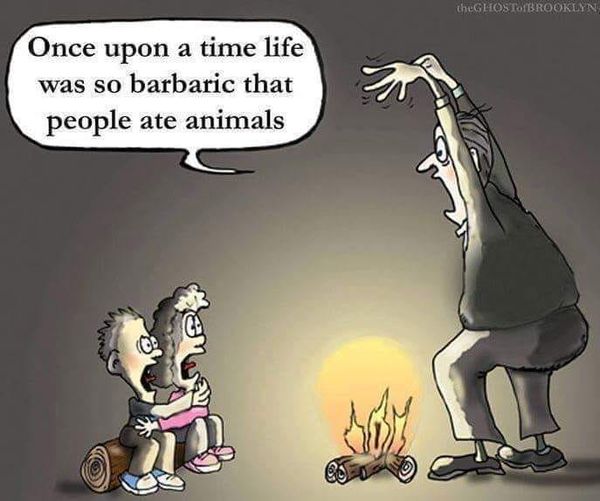
Leonardo da Vinci already said in the Renaissance era that… “the time shall come when all men such as he will be content with a vegetable diet, and will think on the murder of animals as now they think on the murder of men”.
And he also firmly believed that “the time would come when we condemn the eating of animals as much as we condemn the eating of our own kind today, the cannibalism.”
Why do we take so long to tell our children the truth … why don’t we teach our children from the beginning that animals have rights and are not born as a “happy meal”?
That animals have feelings like us and can also suffer?
And that our children shouldn’t be afraid to confirm their love for animals with a vegan diet?
The generations that will follow will hate us all for these crimes.
 Let’s look at this photo!
 They have to stand or lie on the bare, slippery metal floor for the next 17 hours.