60 seconds about circus

For many people, a visit to the circus is a welcome distraction from everyday life.
With the animals in the circus, on the other hand, it looks completely different.
They suffer from constant transport, inadequate and unsuitable husbandry conditions and from training that is based on violence and coercion.

Lifelong for your entertainment- Four Paws

Which animals are allowed in the circus?
In Germany in 2012, a total of more than 900 wild animals were kept in 141 of around 330 traveling circuses – camel-like animals are not even included here.
According to a recent EU-wide survey, Germany is the country with the most wildlife circuses, with an estimated 75 circus companies.
Nevertheless, there is so far no law in this country that fundamentally prohibits or even restricts the keeping of animals in the circus.
The Federal Ministry of Food and Agriculture (BMEL) presented a draft for a ban in autumn 2020, but it falls far short of the mark, as only the acquisition of certain species of wild animals in traveling circuses is to be banned.

Bad housing conditions and inadequate controls
In particular, a circus can never meet the demands of wild animals on their natural habitat.
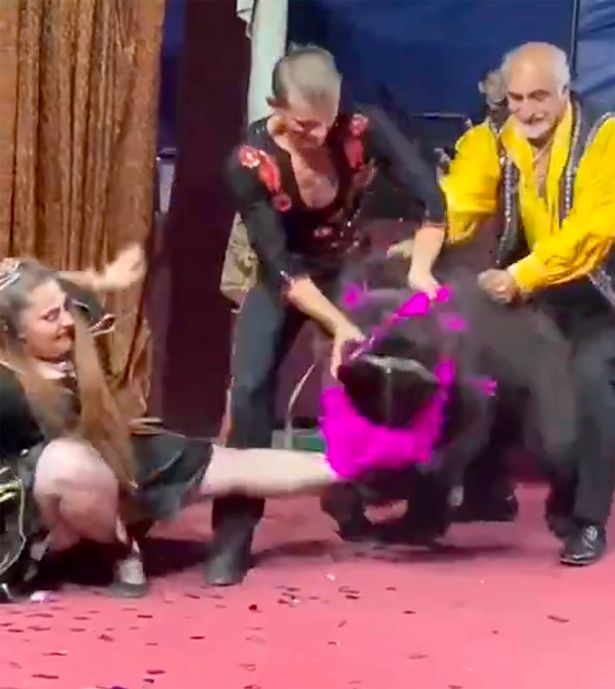
Violent dressage, tiny cage wagons and constant transports characterize the life of animals in the circus.

Constant changes of location and stressful transports
Up to 50 changes of location per year and the associated transport are associated with great stress and physical strain for the animals – especially for large mammals such as elephants, rhinos or giraffes.
Animal-friendly keeping of wild animals is impossible in traveling circuses because the basic needs of these animals cannot be met.

Continue reading “60 seconds about circus”

Mendip Farmers Hunt, Ston Easton: brutal attack on sabs

Mendip Hunt Sabs-Report

Mendip Farmers Hunt, Ston Easton, 11th Sep 2021
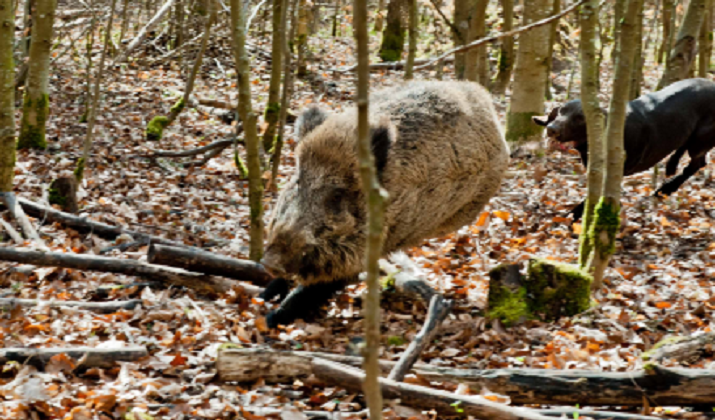
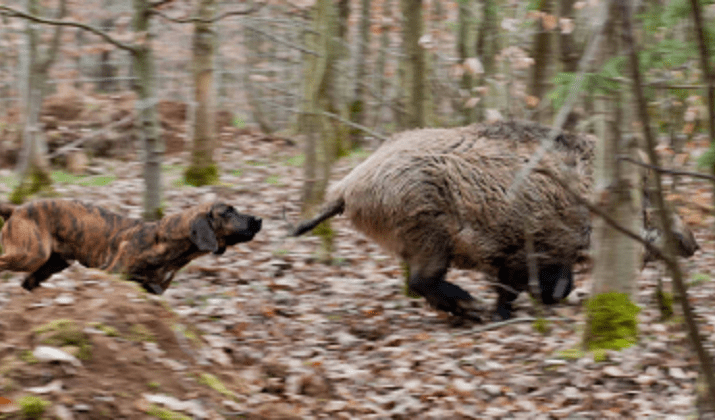
Thanks to local tip offs we were able to catch the Mendip Farmers Hunt out illegally hunting foxes and terrorising wildlife.

We hot-footed it off to Ston Easton (a linear village and civil parish in the English county of Somerset) to start our day.

Our supporter funded drone again proved to be worth it’s weight in gold, we were able to safely watch and record the vile blood thirsty hunt.

The hunt move off after the vicious attack on sabs.

With the drone, we watched them unboxing near a field of solar panels then separating themselves out around a maize field, lying in wait to flush fox cubs back into the maize to the jaws of the waiting, ill fed hounds.

These are the people who pass you in the street, stand next to you in a queue in Toolstation….horrible thought isn’t it?

Our two foot sabs caught up with Huntsman Hickmott on horseback with hounds et al on Thickthorne Lane. They turned into a field adjacent to Burnt House Farm where almost instantly the hounds picked up the scent of a fox and went into cry.

Our two foot sabs quickly made their way up the field on the public footpath following the terrible, overlapping, dreadful, screaming cacophony of the hounds now in fully cry.

Our two remaining sabs quickly made their way up the farm track, desperately spraying citronella both sides of the hedgerow and rating the hounds. The hounds began to hesitate and back off of the line but the hunts’ blood thirst was too strong.

Some of the gang of thug terriermen laughing post-attack as Hickmott departs with his hounds in the background.

Huntsman, Matthew Hickmott encouraged the hounds with voice calls, brrrs and fast horn blows and the remaining hounds poured through the hedgerow, across the dusty farm track and ran into the yard. The sound of encouragement from the field riders and hunt supporters was sickening to the core.

As these two sabs rounded the corner of the barn the dreadful sight of a fox being ripped apart alive by a pack of writhing hounds faced them. The hounds were packed in a chaotic pile all over the structure where the fox had taken cover. The screaming mass of hounds trampled over each other, climbing through, over and into the structure in the yard. On their right Tim Pullen and the approaching farmer. Ahead near the hounds Kevin Stevens.

Stevens, surprised at the swift appearance of our witnesses began to shout “GET OUT! THIS IS PRIVATE PROPERTY! GET OUT!” Then from behind a farm building on the left Matthew Hickmott walked forward on his horse his eyes on the still squirming, screaming hounds.

His satisfied expression changed instantly when he saw our sabs.

Continue reading “Mendip Farmers Hunt, Ston Easton: brutal attack on sabs”

How Many CO2 Emissions Does the Meat Industry Produce? (Hint: Way More Than You Think).

How Many CO2 Emissions Does the Meat Industry Produce? (Hint: Way More Than You Think)

What we eat impacts our planet – but how destructive is the meat industry?

The effects of the climate crisis are becoming more obvious and more severe. As a result, researchers are eager to dissect the climate breakdown, not only to better understand it, but to find ways to intervene. 

Carbon dioxide (CO2) is a leading driver of the issue. In fact, CO2 makes up the largest portion of anthropogenic (human caused) greenhouse gas emissions, according to the Intergovernmental Panel on Climate Change (IPCC). IPCC is the world’s leading authority on climate science. 

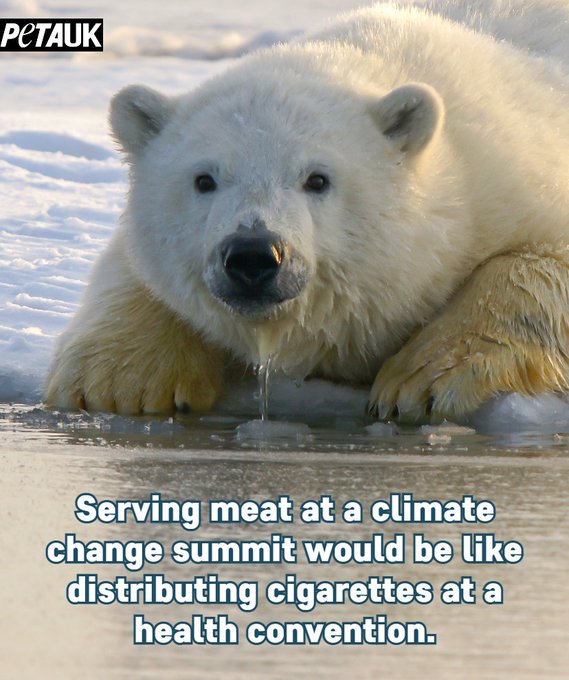
For decades, it’s been widely accepted that transportation is a huge part of the carbon problem, and it is. But another field’s carbon footprint is also problematic – the meat industry. But how many CO2 emissions does animal agriculture actually produce? And is it enough that we must curb our eating habits?

What is carbon dioxide?

Carbon dioxide is an acidic colorless gas that occurs naturally in the Earth’s atmosphere. Plants absorb carbon dioxide and release oxygen, making it integral to life on Earth.

CO2 is harmless in small amounts, but human activity causes levels of the gas to surge. Writing for Forbes, chemical engineer Robert Rapier highlighted that global carbon dioxide emissions have tripled in the last 55 years, sitting at 32.3 billion metric tons last year.

Why is carbon dioxide harmful?

CO2 is a greenhouse gas, meaning it creates a cover that traps heat in the Earth’s atmosphere. When concentrations are too high, the planet’s carbon cycle can’t process it efficiently enough. This causes global temperatures to increase, a phenomenon known as the greenhouse effect. 

Global climate change has led to loss of sea ice, rising sea levels, and more frequent and severe heat waves and droughts, according to NASA. Climate breakdown is also linked to stronger hurricanes, flash flooding, increased wildfires, erosion in coastal areas, ocean acidification, and biodiversity loss, the government agency highlights. 

“The effects of human-caused global warming are happening now, are irreversible on the timescale of people alive today, and will worsen in the decades to come,” NASA sums up.

How much carbon dioxide does meat produce?

Awareness of the transportation and fossil fuel industries’ impact on the environment has been growing for decades. But a sector that often slips under the radar is animal agriculture. 

According to the Food and Agriculture Organization of the United Nations (FAO), global livestock production makes up 14.5 percent of all anthropogenic (human caused) emissions – 7.1 gigatonnes of CO2 equivalent per year.

There is some debate surrounding the widely accepted FAO figure of 14.5 percent. Research published this year claims that this figure is ‘now out of date’. The article argues that the minimum estimate for animal agriculture’s emissions should be updated to 16.5 percent. 

“Some will contest the importance of a few percentage points. Yet even the difference between 14.5 and 16.5 percent is the difference between animal agriculture being responsible for close to one in seven, or one in six of all emissions,” the article reads.

Which foods have the lowest carbon footprint?

In 2019, researchers published the most comprehensive analysis to date of farming’s environmental impact. Looking at emissions per 100 grams of protein, beef emits just under 50kg of CO2 equivalents, according to the analysis. Lamb and mutton emit just under 20kg, while farmed prawns and pig meat emit 18.19kg and 7.61kg respectively. 

For context, grains emit 2.71kg of CO2 equivalents per 100g of protein and soybeans emit 1.98kg.  And peas – a common ingredient in plant-based meat (like Beyond Burgers) – emit just 0.44kg. 

Comparing emissions per kilogram of food (rather than per 100g of protein), plant-based sources are still significantly lower than animal-based ones. 

Producing a kilogram of beef emits 60kg of CO2 equivalents, the researchers concluded, while pea production emits just 1kg per kilogram of food. 

Lamb, poultry, and pork generate 20kg, 6kg, and 7kg of CO2 equivalents respectively. Contrastingly, root vegetables and apples both produce 0.4kg. Rice (4kg), tomatoes (1.4kg), nuts (0.3kg) and bananas (0.7kg), to name a few, also carry a smaller carbon footprint.

“A vegan diet is probably the single biggest way to reduce your impact on planet Earth, not just greenhouse gases, but global acidification, eutrophication, land use and water use,” Joseph Poore, who led the study, said in a statement. He added that the impact of ditching animal products is ‘far bigger’ than flying less or opting for an electric car. 

How Many CO2 Emissions Does the Meat Industry Produce? (Hint: Way More Than You Think) – Plant Based News

Regards Mark

The Unemployed Epidemiologist Who Predicted the Pandemic.

The Unemployed Epidemiologist Who Predicted the Pandemic by Stacey

With thanks to Stacey at ‘Our Compass’ as always;

Regards Mark

This is a 5 page post – pages can be selected from the numbers at the end.

Source The Nation

By Eamon Whalen

In early March 2020, Rob Wallace, an evolutionary biologist who had been adrift after an unceremonious exit from the University of Minnesota, flew to New Orleans and then got on a bus to Jackson, Miss., where he was scheduled to speak at an event on health and racial injustice. Wallace, who turned 50 this summer, has been studying and writing about infectious diseases and their origins for half his life. For almost as long, he’s been warning that the practices of industrial agriculture would lead to a deadly pandemic on the scale of Covid-19—or worse. “A pandemic may now be all but inevitable,” he wrote of the H5N1 avian influenza virus in 2007. ”In what would be a catastrophic failure on the part of governments and health ministries worldwide, millions may die.”

Before his trip to Jackson, Wallace had been closely monitoring the outbreak of a novel virus in Wuhan. Though he’d been spooked by a news report that showed a delivery driver in China practicing extreme social distancing, he went ahead with the trip. As an underpaid academic, he needed the money, and as an American, he didn’t expect anything to happen to him. “I too had been infused with a peculiarly American moment, wherein financial desperation meets imperial exceptionalism,” he wrote.

When Wallace returned from his trip, he threw himself back into writing and research with such fervor that he managed to ignore a pounding headache. When the shortness of breath started, his teenage son yelled at him through the computer screen to see a doctor. After he filled out an online questionnaire, Wallace was diagnosed with Covid-19 over the phone.

He’d been infected with something he’d been warning about for years, and like so many around the country and the world, all he could do was to hope to keep breathing. “No test. No antiviral. No masks and no gloves provided. No community health practitioner stopping by to check on me,” Wallace wrote.

“You can intellectually understand something but still not assimilate the oncoming damage,” he told me later, as he recalled the “sour vindication” of having his worst fears come true. “So there’s an aspect of rage, and an arrival at an understanding.”

I met Wallace for coffee on an afternoon in late June. We sat on benches under the shade on the campus of a liberal arts college near his home in St. Paul, Minn. He was dressed in a pale-red short-sleeve shirt, dark jeans, and sneakers. He wore rectangular black-rimmed glasses and a Minnesota Twins baseball hat and had a five o’clock shadow

Wallace looks more like a dad on the way to his kid’s Little League game than a lab-coat-wearing scientist who used to consult with the Centers for Disease Control and Prevention and the United Nations. That could be because he hasn’t had a job in academia for more than a decade, a circumstance he attributes to his decision to take the implications of his scholarship seriously.

That’s why the book Wallace published last October came with a provocative title—Dead Epidemiologists: On the Origins of Covid-19. Though there are many “brilliant, bright, amazing, and hardworking” epidemiologists whose work he cites, their impact is limited, Wallace said: “They are in the business of cleaning up the mess the system brought about, and that’s the extent to which they’re willing to go.” In his first essay on Covid, “Notes on a Novel Coronavirus,” published in January 2020, Wallace wrote that an epidemiologist is like a “stable boy with a shovel following around elephants at the circus.”

“As an epidemiologist, you’re supposed to want to put yourself out of business,” Wallace said. “Everyone has bills to pay; I understand that. But the extent to which your corruption might lead to a pathogen that could kill a billion people—that’s where my line is.” While he’s not the only Cassandra whose warnings of a pandemic like Covid-19 went unheeded, there are few as clear-eyed about where to direct the blame. “Agribusiness is at war with public health,” he wrote in the March 2020 essay “Covid-19 and the Circuits of Capital,” and if no serious action is taken, the interval before the next pandemic will be “far shorter…than the hundred-year lull since 1918.”

Animal welfare transport regulation of the EU is not able to protect animals

The animal welfare organization Animals ‘Angels published its report “100 Reasons to Revise Council Regulation EC 1/2005 on the Protection of Animals during Transport” this week.

The report combines Animals ‘Angels’ more than 20 years of experience in animal transport controls in the EU and worldwide with the results of scientific studies.

In “100 Reasons” Animals ‘Angels specifically uncovered the weaknesses of the EU Regulation (EC) No. 1/2005 on the protection of animals during transport and made over 100 specific demands” on the revision of the regulation that is currently taking place.

The existing EU laws are unable to adequately protect the animals being transported.

The main flaw of the regulation: it does not impose an absolute limit on the transport time.
Their implementation fails on many levels. Despite positive approaches, it cannot curb the suffering of the animals on the transports.

In 22 chapters, Animals’ Angels criticized parts of the ordinance on topics such as transport duration, loading density, transportability, temperature limit values, official controls, the sanction system and much more.
In addition to scientific findings, the report draws on countless empirical examples and first-hand information from actors such as veterinary and police officers, transporters, animal owners and drivers.

Animals’ Angels calls for a detailed revision of Regulation (EC) No. 1/2005 with the aim of ensuring the best possible protection for the animals being transported.

But above all, Animals’ Angels is calling for a rethink.
EU Treaties recognize animals as sentient beings.
It is high time to do justice to this recognition.
The revised Regulation on the protection of animals during transport has to reflect a morally acceptable treatment of animals that respectfully considers their life and their suffering as sentient beings.

Continue reading “Animal welfare transport regulation of the EU is not able to protect animals”

The Truth About Cows Raised for Human Consumption.

Watch, rage and repent

Regards Mark

The Truth About Cows Raised for Human Consumption (animalequality.org)


The public deserves the truth. For this reason, Animal Equality’s investigators take their cameras where the industry does not want you to see.

Animal Equality is committed to exposing the terrible fate of cows, calves, and steers exploited by both the meat industry and the–only seemingly less cruel–milk industry.

Our investigative team has captured images and footage from around the world showing the harsh living conditions, inherent suffering, and brutal abuse that farmed animals endure.

The evidence we have gathered over the years shows calves left outside to die in freezing temperatures in the US, calves beaten and force-fed in the UK, and pregnant cows slaughtered in Brazil.

In addition to documenting animal welfare issues, Animal Equality’s investigative team in Brazil has uncovered the devastating environmental impact of beef production in the Pantanal, one of the world’s most biodiverse areas.

Behind all of this suffering and destruction are industries that treat cows as money-making machines. It’s a system of endless suffering; calves separated from their mothers, females exploited for their milk, and males killed for their meat. That’s why the animal agriculture industry–relentless in its pursuit of profits–is so careful not to reveal what is happening behind closed doors.

The public deserves the truth. For this reason, Animal Equality’s investigators take their cameras where the industry does not want you to see: onto the trucks that transport cows across countries and continents, into the air above the Amazon Rainforest where forests are burned and cleared for cattle farming, and inside factory farms and slaughterhouses. 

Photo – Mark (WAV)

Vegan Meat Price Parity: Why Cost Not Kindness Will End Animal Agriculture.


Vegan Meat Price Parity: Why Cost Not Kindness Will End Animal Agriculture

‘It’s likely that ‘price parity’ between plant-based and animal-derived meats will see the quickest changes made to our food system’

by Dr. Alex Lockwood


It will be cost not kindness that ends animal agriculture – but when will we achieve vegan meat price parity?

As much as we care for animals, it’s likely that ‘price parity’ between plant-based and animal-derived meats will see the quickest changes made to our food system

We love cheap food. When asked, we nearly always say we prefer to buy products that are ethical, sustainable, and healthy. But research shows time and again that what actually drives most of our food choices are cost, convenience, and taste.

Most of all, it’s the price. 

Vegan meat price parity

That’s why the question of ‘price parity’ is a hot topic in plant-based food. With price, especially a cheap price, such a driving force in our food choices, the cost of plant-based meats really matters.

Right now, supermarket customers are paying almost 200 percent more for plant-based products in comparison to meat alternatives. 

It’s also why the European dairy lobby is trying to stop plant-based products being sold in ‘dairy’ packaging. If plant-based providers have to use different packaging, this could make plant-based alternatives more difficult to produce and, critically, more expensive to buy.

But lessons from other industries (such as electric cars) show that as technology develops and demand increases, price parity will arrive. But for plant-based meat products, when will that be? Can it really bring an end to the slaughter-based meat products that are currently cheaper and purchased more often?

‘Cheap food paradigm’

We love cheap food. As the UK government’s Behavioral Insights Team wrote in their report ‘A Menu For Change’, price (alongside convenience and taste) is the most important factor for people when shopping. This includes for healthier alternatives.

This isn’t our fault. Supermarkets, advertising, and government policies have spent 70 years creating what food expert Professor Tim Lang calls our ‘cheap food paradigm’. 

This is especially in the UK and US. Along with Singapore, these are the three cheapest food markets in the world. In the UK, we spend only 8 percent of our household budget on food. This is the cheapest in Western Europe. Greeks spend 16 percent, Peruvians 26 percent, and Nigerians 59 percent.

But when you learn that the UK also has the highest food poverty in Europe in terms of people being able to afford a healthy diet, you know something is wrong.

This cheap food paradigm emerged during World War 2. Farmers were asked to grow more food, quickly and cheaply. They were the heroes feeding a country at war, and rebuilding afterward. 

Farmers were doing what they were asked. They began using heavy chemicals and pesticides. They abandoned rotation farming and replaced them with monocultures. Food got increasingly cheap. There were supermarket price wars (continuing today). We lost touch with the true cost of food.

But at what cost?

The true cost of cheap food is a ‘spiraling public health crisis and environmental destruction’ – according to the RSA’s Food, Farming and Countryside Commission

Last month’s Chatham House/UN report drove home the point: “Cheap food is driving destruction of the natural world.” The constant demand for economic growth has ‘sustained vicious circles’ of agricultural efficiency, coupled with ‘increased economic competition through the liberalization of trade’.

Cheap foods also tend to be more processed. In the UK, we eat the most ultra-processed foods in Europe, nearly 50 percent of our diets. Compare this to around 11 percent in Italy or 16 percent in Portugal. This massively increases the incidence of Type-2 diabetes and other serious health epidemics.

A price transformation

It’s obvious we need a food transformation. And that includes the price we pay for it. 

What we should do is ask those who can afford more to pay more, while supporting those currently in food poverty to be able to buy better. But that’s another article!

We also know that a whole-foods plant-based diet can be much cheaper than a heavily processed, animal-based diet.

Right now, most meat-eaters overestimate the price of plant-based meat products. And they’re not wholly wrong. 

So if we want to see change happen quickly, we have to get people off the slaughter-based meats and into the plant-based aisles. The quickest way to do that is through pricing.

So when will that happen? It will arrive in three stages.

By 2023: Plant-Based Proteins

Back in 2019, the independent think tank Rethink X launched its report on the future of agriculture

Their analysis suggested that price parity between existing plant-based meats (for example, the Impossible Burger) and animal-derived meats would arrive sometime between 2021-23. 

When this happened, they wrote, adoption of more plant-based eating “will tip and accelerate exponentially.”

It is why companies such as Impossible Foods keep slashing their prices to drive demand, knowing that ‘price parity’ will increase not only sales but awareness and acceptability. 

Are we close to the tipping point?

At the moment, buying a vegan supermarket product twice a week would cost an additional £35 a year, a spokesperson for Insure4Sport, who produced research on cost comparisons, told The Times.

Right now, the early-adopter vegan and vegetarian or adventurous meat-eater will pay the premium price for the new plant-based alternatives. That won’t last.

The plant-based producers know they need to compete on price. Demand is growing. In 2019, demand for plant-based meats grew by 18 percent and 11 percent for the plant-based category overall, according to a study from The Good Food Institute.

More people than ever now support improved access to plant-based options. New research last week from The Vegan Society showed one in three (32 percent) believe the government should be promoting vegan and plant-based diets to address the current climate emergency.

Bill Gates recently urged people to buy plant-based products and drive down the price. “You can also send a signal to the market that people want zero-carbon alternatives and are willing to pay for them,” he told the BBC.

The supermarkets will drive this difference. If Tesco’s is setting a target for a 300 percent rise in vegan meat sales, they’ll still want to compete on price.

So perhaps Rethink X’s prediction that we will reach price parity for existing products by 2023 isn’t far off.

But what about the new world of cell-cultured meat, grown in a lab?

Continued on next page

Serbia: There is no excuse for cruelty to animals!

The Green Animal Welfare Forum and the RespekTiere association from Salburg (Austria) demonstrated against the unbearable animal rights situation in the Balkan state in front of the Serbian embassy in Vienna.

Animal rights and animal welfare are not part of the Serbian government’s agenda.
The policy of the Balkan state is attested to inactivity in animal welfare.

Dogs, cats, etc. are being hawked and are condemned to a dreary, unlawful life that is at the mercy of any human arbitrariness.
Like domestic animals, wild animals in private zoos, large and small, are condemned to all the agonies of pathetic animal husbandry.

“It’s great that Serbia wants to join the European Union.
Now is the perfect opportunity to prove that this country is ready for real change, “explains Cosma Stöger, chairwoman and spokeswoman for the Green Animal Welfare Forum, a network organization of Green Vienna, on the sidelines of the demo.
She adds: “I was allowed to accompany ‘RespekTiere’ to Serbia last year to get a picture of the situation.

What I saw there was at times indescribably shocking.”

“RespekTiere” Association has now* written a letter to the Serbian government in the Serbian language that supporters can send to Belgrade!

Serbia, the II. – concrete cases! Letter to the President, NOW !!

Now, after several protests in front of the embassy or consulate of Serbia, let’s move on to the next stage of the campaign!
We have drawn up a friendly but specific letter which is to be addressed to the decisive points; to the embassies in our countries, to the President of Serbia, to the Prime Minister and to the veterinary authority!
Please help everyone, from now on every vote counts!

Here is the letter to copy, please send it in the Serbian version!

Ladies and gentlemen!
Have a wonderful, good day!

I would like to ask you to finally give animal welfare a higher priority in your country!
The reward is certain: for people will know how to appreciate any such effort! Animal welfare is a major concern of the population – don’t look the other way and take action!

As a candidate for accession to the European Union, it must be high time to introduce the corresponding reforms.
Take the appropriate steps and you can be sure of applause from all sides!

If you do not do it, the protests against Serbia’s accession to the EU will not subside.
There is no excuse for cruelty to animals, you will surely agree! Stop Cruelty to Animals Now !!!

with best regards
Please put your letter in your own words or copy the template (wording as above):

Poštovane dame i gospodo!
Želim Vam prelepi dan!

Ovom prilikom bih želela da Vas zamolim da pružite svoju pomoć, da bi zaštita životinja u Vašoj zemlji konačno dobila veći značaj. Nagrada za to je izvesna: drugi ljudi će znati da cene svaki takav trud! Zaštita životinja je važno pitanje za stanovništvo – nemojte skretati pogled, nego budite aktivni! Za državu koja je candidate za pristupanje Evropskoj uniji sada je krajnje vreme da se pokrenu odgovarajuće reforme. Napravite odgovarajuće korake i biće Vam osiguran aplauz sa svih strana! Ako to ne učinite, protesti protiv pristupanja Srbije Evropskoj uniji neće utihnuti. Ne postoji opravdanje za mučenje životinja – sigurno ćete se složiti s time! Zaustavite mučenje životinja – zaustavite ga odmah !!!

Sa srdačnim pozdravom

Please write today !!! ** The animals have no voice, they need us !!!

Serbian Embassy in Vienna: consulate.vienna@mfa.rs
Serbian Embassy in Berlin: info@botschaft-serbien.de
Serbian Embassy in Bern: info@ambasadasrbije.ch

President Serbia, Aleksandar Vucic:
predstavkegradjana@predsednik.rs

Prime Minister Serbia, Ana Brnabić: predsednikvlade@gov.rs

Ministry of Veterinary Affairs (Uprava za veterinu, v.d. direktora: Emina Milakara) e-mail: vetuprava@minpolj.gov.rs

P.S: (Incidentally, this “now *” means a while ago, exactly two years. But the letter remains as a good letter to those responsible and can be sent at any time. The same applies to the “today !!! **”)

https://us12.campaign-archive.com/

And I mean…The street dogs in Serbia (perhaps with the weak exception of Belgrade) are among the poorest of the poor: the city does not take care of them or catch them, the residents complain about the strays, they are run over or mistreated in rows.
The status of four-legged friends in Serbia is rather low in terms of legislation.


The urban dog catchers, who continue to go about their “business” despite the Corona crisis, collect stray dogs and bring them to the urban institutions, a practical hell for animals.

All measures that endanger the life of the stray animals are actually illegal, because the stray problem was created by humans.

But there is also one thing to keep in mind: it’s not that people don’t like dogs, it’s that they are scared of them. In a country like Serbia, problems with dogs quickly become political problems.
Fear is deliberately stoked in the population in order to justify government actions.

It is very likely that the catastrophic situation with the stray in Serbia will be interpreted as a reason to refuse the country entry into the EU.

For the Serbian government it is still a national disgrace, which became known thanks to the massive protests across Europe, and is considered a grave disgrace for a country that has been standing at the EU door for a long time and begging to come in.

My best regards to all, Venus

France: in spite of the ban ortolane are still drowned and eated!

Before the law one could achieve a victory and enforce a ban on the questionable “culinary delights” after previous animal cruelty unparalleled, but unfortunately this un-tradition is still practiced illegally.

We are talking about a custom from France in which protected songbirds – Ortolane or garden bunting – are mistreated and eaten.


The garden bunting is a songbird that overwinters in Africa and flies thousands of kilometers to breed with us. The slightly larger than sparrow-sized bird with the yellow throat, also called Ortolan, was never common in Germany – and is becoming increasingly rare.
One reason for this is its flight route.

On their strenuous journey around the Mediterranean Sea, the animals have to make a stopover in southern France to recover.
That will doom for thousands of them.
Because the French love Ortolans. Not because they are beautiful to look at or because they sing adorable.
But because they taste good.
The animals end up as a precious specialty in the palate of wealthy gourmets.

The well-heeled French upper class has these animals caught and fattened for 3 weeks in the dark so that the little birdies put on fat and mutate into so-called “fat bangers”.

They are then drowned in Armagnac so that the birds can take in plenty of it.
Then the birds are fried in fat in a special saucepan and put into their mouths whole by gourmets with skin and bones and chewed.

Continue reading “France: in spite of the ban ortolane are still drowned and eated!”